Category: Satellite Operators

  • 24% Hong Kong viewers use TV boxes to stream pirated content: CASBAA

    24% Hong Kong viewers use TV boxes to stream pirated content: CASBAA

    MUMBAI: In a recent survey of the content viewing behaviour of Hong Kong consumers, released by CASBAA, the trade association for the video industry and ecosystem in Asia-Pacific, it was found that close to one in four consumers (24 per cent) use a TV box which can be used to stream pirated television and video content.

    These TV boxes are known as illicit streaming devices (ISD) and allow users to access thousands of pirated television channels and VOD content with the payment of one-time fee. TV boxes BossTV (9 per cent), Ubox (7 per cent), EVPad (6 per cent), Lingcod (5 per cent), and Magic Box (4 per cent), which come pre-loaded with applications allowing ‘plug-and-play’ access to pirated content, are among the most popular ISDs among Hong Kong consumers.

    “The ISD ecosystem is impacting all businesses involved in the production and distribution of legitimate content. ISD piracy is also organised crime, pure and simple, with crime syndicates making substantial illicit revenues from the provision of illegally re-transmitted TV channels and the sale of such ISDs,” said CASBAA chief executive officer Louis Boswell as quoted by DigitalTVEurope.com

    The survey also found that some of the world’s top e-retail stores and social media platforms are preferred destinations where Hong Kong consumers acquire their ISDs and other devices used for pirating video content.

    Of those consumers who own an ISD, about half of respondents (49 per cent) claim to have purchased their illicit streaming device from Sham Shui Po, a popular local electronics hotspot. The survey also found that some of the world’s top e-retail stores and social media platforms are preferred destinations where Hong Kong consumers acquire their ISDs and other devices used for pirating video content from. Additionally, ISDs are particularly favoured among 25 to 34-year-olds and high-income earners with university degrees.

    According to a quote given by CASBAA’s Coalition Against Piracy (CAP) MD Neil Gane to Advanced Television, “the damage that content theft does to the creative industries is without dispute. However, the damage done to consumers themselves, because of the nexus between content piracy and malware, is only beginning to be recognised. The piracy ecosystem is a hotbed for malware, whether purchasing ISDs from Sham Shui Po’s Golden Arcade or downloading content from infamous torrent sites. Unfortunately the appetite for free or paying cheap subscription rates for stolen content, blinkers some consumers from the real risks of malicious malware infection such as spyware.”

    CAP includes leading video content creators and distributors in Asia. Members include: beIN Sports, CASBAA, Discovery, The Walt Disney Company, Fox Networks Group, HBO Asia, NBCUniversal, Premier League, Turner Asia-Pacific, A&E Networks, Astro, BBC Worldwide, CANAL+, Cignal, La Liga, Media Partners Asia, National Basketball Association, PCCW Media, Singtel, Sony Pictures Television Networks Asia, TVB, True Visions, TV5MONDE, and Viacom International Media Networks.

    Also Read:

    CASBAA elects new board directors

    CASBAA lauds India; calls for more broadcast, satellite reforms

  • Did govt pressure nudge ABS-2 to shutter Indian TV channels on FTA DTH service?

    Did govt pressure nudge ABS-2 to shutter Indian TV channels on FTA DTH service?

    NEW DELHI: ABS has closed the doors from 1 May 2018 on Indian TV channels that were using the ABS-2 satellite-beamed FTA Ku-band platform. Apparent reason: Indian government pressure on local TV channels to stop using the ‘unlicenced’ platform that discouraged payment of carriage fee to the satellite operator, which was the origin of the business.

    The Bermuda-registered satellite operator’s ABS-2 signals — hosting on its South Asian beam a Nepalese and a Bangladeshi DTH services licenced in their respective countries — have been spilling over into India and a mix of Indian, Nepalese and Bangladeshi TV channels were available to Indians as a FTA service that was accessed via some plain vanilla hardware (read set-top boxes and antennae) at a nominal cost.

    On being petitioned by Indian distribution platforms, Ministry of Information and Broadcasting (MIB) in 2017 had asked Department of Space (DoS) to block the “unauthorised” DTH or KU-band ABS-2 service on the grounds of possible threat to national security — an allegation that was refuted by ABS citing international laws of ITU.

    Finally, when ABS took the decision to shut the doors on the Indian TV channels, there were 90 of them, mostly beaming content in non-Hindi Indian languages. These channels were using the FTA Ku-band platform to reach not only Indian audiences in southern and eastern parts of India but, probably, also those in Nepal and Bangladesh for additional eyeballs. Eyeballs meant advertising revenue for these TV channels.

    ABS last year had refuted Indian government charges saying “natural spillover” of satellite signals into neighbouring countries, outside the service area of the countries offering licensed DTH services, but falling within the coverage area of the satellite, was in “full compliance” of ITU provisions.

    With ABS discontinuing the Indian TV channels, Reliance Big TV (sold by Anil Ambani’s Reliance Communications to new investors) FTA DTH service yet to fully bloom and Doordarshan’s FreeDish platform locked in a policy logjam, free to air platforms and low-cost television viewing for people in the Indian hinterland seem to have run into air turbulence.

    According to industry experts, Indian hardware companies had devised a way to have two LNBs (low-noise box) in one single DTH antenna that was capable of receiving both ABS-2 and DD FreeDish services, resulting in sizable popularity of these two platforms that were accessed via a low-cost hardware. This was unlike the full-fledged subscription-based DTH services made available by the likes of Tata Sky, Dish TV, Videocon d2h and Sun TV.

    Also Read :

    Block illegal DTH FTA, space dept told

    Could India blocking ABS’ FTA TV signals lead to breach of ITU norms?

    Boeing delivers ABS-2A to optimise video services, DTH

  • Middle eastern audiences crave premium Arabic content: CABSAT 2018

    Middle eastern audiences crave premium Arabic content: CABSAT 2018

    MUMBAI: Demand for high quality Arabic content in the region has increased by almost 40% between 2011-2016, while western drama’s share of viewing decreased by an average of 55%, creating opportunities for regional producers to dominate the airwaves and secure their share of the market.

    According Khulud Abu Homos, CEO at Arab Format Lab – RITIX Group, the evolving viewing trends within the region will usher in dramatic changes to the local content seen on screens at home.

    “The Middle East market presents unique opportunities – and challenges – for producing rich content that can be adapted across markets. Similarly, unique cultural factors can impact broadcast programming, scheduling and timings.”

    Ahead of her keynote session held during CABSAT’s Content Congress in the Dubai World Trade Centre, 14-16 January 2018, Abu Homos will highlight how her regional content development company, Arab Format Lab, has made the creation and delivery of premium and socially relevant content a priority in order to corner a gap in the market created by an increasing demand for quality Arabic TV shows.

    “We have witnessed a dramatic change in viewing trends and content demand across the region, from Egypt, the Gulf countries and particularly Saudi Arabia. Audiences are craving premium Arabic content and there are openings for producing companies to step in. From adapting foreign content, to bringing international formats to be reproduced in Arabic and developing innovative original local content, there are many ways to improve what is delivered,” added Abu Homos.

    “Even something as simple as changing scheduling show times during Ramadan, when the viewing trends of audiences shift, can have a dramatic impact on advertising.”

    Also speaking at the Content Congress, Kaswara Alkhatib, CEO at UTURN Entertainment will highlight dramatic changes taking place within the digital and broadcast TV industry.

    “The digital video content industry is evolving and changing at a rapid pace. Because of this, and with it playing such an important role in how the youth digest content, it can be hard to master; changes in trends can turn in an instant.”

    As a leading Arabic entertainment network on YouTube, UTURN’s Alkhatib aims to highlight how to be a successful digital content producer, as well as examine the pitfalls to avoid when branching out into traditional broadcast TV.

    Added Alkhatib, “In the past year we witnessed online content creators migrating to TV with shows like ‘Tonight with Bader Saleh’, ‘One-door with Ibrahim Salih’ and ‘Youth Council with Omar Hussein’. What was interesting to note is they did not get the same success as online due to the different audience between TV and Online.”

    The Content Congress, the Middle East and Africa’s leading broadcast conference, and the co-located SATEXPO, delivering all satellite communication solutions and technologies to the MENA region, will both return as prominent features during the upcoming CABSAT, delivering high-level sessions streamlined into three tracks: technical, strategic and creative.

    More than 40 speakers are set to share their insights during the keynote presentations and panel discussions, representing industry heavyweights such as Facebook, BBC, iflix, WWE, UTURN, Cartoon Network Studios Arabia, Rotana Media Group, Viacom International Media Networks’ (VIMN), Turner Broadcasting, Cote Ouest, Cairo News Company, Discovery Networks and FremantleMedia.

    Similarly, SATEXPO’s line up will include high level speakers across broadcast, telecoms, aviation and maritime sectors with the keynote address delivered by HE Dr. Eng. Mohammed Nasser Al Ahbabi, Director General of the UAE Space Agency.

  • CASBAA lauds India; calls for more broadcast, satellite reforms

    CASBAA lauds India; calls for more broadcast, satellite reforms

    NEW DELHI: Asian pay TV industry organisation CASBAA, while applauding the Indian government for ease of doing business, exhorted policy makers to further streamline norms relating to the broadcast and satellite industries as it led to procedural delays impacting business.

    Speaking at the India Satcom 2017 forum here on Wednesday, Hong Kong-based CASBAA chairman Joe Welch said a great deal of attention has been paid to the power and infrastructure sectors, but “the key to … realisation of the prime minister’s vision of taking India up to a top-50 ranking (in ease of doing business) lies in improving business conditions in other sectors of the economy”, specifically satellite communications and broadcasting.

    Welch, who was chairing a session relating to ease of doing business in the broadcast and satellite sectors, observed that broadcasting business is heavily dependent on satellite links, and that “the single most crucial measure the government could take … would be to create conducive conditions for both the satellite operators and the broadcasters to be able to enter into long-term service agreements”.

    Currently, contracts for satellite capacity for DTH broadcasters are limited to a three-year term by Indian government regulation.

    “Striking long-term commercial deals in a marketplace that is less government-constrained would help increase business certainty for all the stakeholders”, he said.

    Satellite services are also important to achieving the Digital India dream – championed by prime minister Modi – as satellite services can help bring broadband and other related services to the hinterland of India, digitally connecting thousands of villages where cable or other modes of broadband delivery may pose logistic and financial challenges.

    Also Read:

    Govt assures ease in licensing norms to TV channels, satellite operators

    CASBAA forms ‘Coalition Against Piracy,’ hires content protection veteran Neil Gane

    Louis Boswell appointed CASBAA CEO 

    Fox’s Asia SVP Joe Welch named CASBAA board chairman

  • Govt assures ease in licensing norms to TV channels, satellite operators

    Govt assures ease in licensing norms to TV channels, satellite operators

    NEW DELHI: The Ministry of Communications (MoC) yesterday, while allaying concerns of the broadcast and satcom industries, assured that the government would further ease norms for doing business in India and that processes were underway for implementation soon to do away with multiple permissions for communications frequencies.

    While communications minister Manoj Sinha said that it was “time to take a fresh approach” to satcom policies, in conjunction with the department of space, the senior most official, secretary Aruna Sundararajan, stressed that soon the government would unveil a single window for frequency-related permissions.

    Speaking at an event organised by Broadband India Forum, called Satcom 2017 and themed ‘Accelerating Satellite Broadband for Inclusive Growth’, Sinha said that the role of satellites in “making available affordable broadband” had been witnessed in various parts of the world. He added it was time that the department of space takes a “fresh approach” to making use of technologies like satellites and cable-delivered broadband — which complement India’s multi-million rupees’ fibre optics network project or Bharat Net— to realse the dream of a digital India championed by PM Modi.

    Pointing out that India was on the threshold of becoming the “largest broadband economy in the world”, Sinha said, “Satellite communications has a special role to play.”

    Speaking earlier, Suderarajan echoed minister Sinha’s vision in making India truly digital and said that MoC was working with Ministry of Information and Broadcasting (MIB) and other related government organisations to create software, akin to a single-window, for various frequency-related approvals and permissions.

    “There are anomalies in frequency allocations (for TV channels and satellite ops),” MoC secretary said, adding that the ministry is in dialogue with other government agencies to remove such irritants so that the “extra burden of cost (on part of the industry players) could be done away with”.

    Both minister Sinha and Sunderarajan promised to take up with the the department of space, various concerns raised by TV channels and satellite operators, mostly foreign, relating to lengthy clearance processes, which were in sharp contrast to the PM Modi-led government’s claim of continuously easing norms for doing business.  

    “I understand that broadcasting has a problem as many agencies are involved. I can tell those present here that we are working with MIB to create a single software for approvals and permissions,” joint wireless advisor RB Prasad reiterated at another conference session, clarifying that an issue about ownership and management of the said portal is being presently discussed to close the matter.

    While stressing that proliferation of affordable broadband will empower Indians in general, which was the government’s target, the top MoC official informed that by the end of the year 100,000 gram panchayats or local village administrations will be broadband-enabled under the Bharat Net project. For the remaining of the targeted 650,000 villages, Sunderarajan said, “Satellite component will be important.”

    Meanwhile, TRAI chairman RS Sharma, speaking to reporters on the sidelines of the Satcom 2107 conference, said that while the open sky policy mandated that the service provider or anyone that wants to provide broadband will be able to contact satellite operators, there were still some “deficiencies” in the system. “That, we will need to work out,” he was quoted by PTI as saying. He, however, ruled out a separate consultation paper on the same. The new telecom policy, scheduled to be unveiled in the first quarter of 2018, will exemplify all those issues, Sharma noted.

    Also Read:

    MIB, TRAI allay industry fears on sat capacity leasing & content regulations

    TRAI sees merit in using satcom for broadband delivery

  • AsiaSat 5 & Eurovision to deliver Taipei event in 4K & HD from 19 Aug

    MUMBAI: Eurovision Media Services, in collaboration with its long-term satellite partner, Asia Satellite Telecommunications Company Limited (AsiaSat), will use AsiaSat 5 to deliver the Taipei 2017 Universiade across the Asia Pacific.

    The 29th Summer Universiade is an international sporting and cultural event staged biennially, with Taipei as this year’s host city between 19 and 30 August. The Universiade will include 21 competitive sports as well as one demonstration sport throughout 12 days of competitions, attended
    by talented youth athletes from around the world.

    Since 1999 Eurovision Media Services and AsiaSat have enjoyed a successful partnership that delivers top quality sports content to broadcasters and TV networks in 4K and HD. This new delivery on AsiaSat 5, an OU service platform, sees the strong relationship continuing into the future with other major events to come. AsiaSat 5 currently provides access to more than 800 million households via terrestrial networks and pay TV platforms in the Asia Pacific.

    “Eurovision is our long-standing partner in creating value for customers and their audience, especially where it comes to AsiaSat’s strength in delivering high quality live sports coverage,” said AsiaSat chief commercial officer Barrie Woolston.

    “We have collaborated with AsiaSat to deliver top quality, reliable services for major sporting events in the Asia Pacific,” said Eurovision chief operating officer Graham Warren.

  • 15 operational sats for communication, 26 under development

    NEW DELHI: Fifteen of the 42 currently operational satellites are being utilised to meet the requirements of the communication industry, the minister of state in the department of space Jitendra Singh has said.

    Singh told the Parliament that the operational satellites in orbit comprise 18 earth observation (including meteorological), 15 communication, seven navigational and two Space Science satellites. Another 26 satellites are currently under various stages of realisation.

    The minister said that a plan is in place to suitably augment the space infrastructure to ensure continuity of services and to meet further requirements in these areas.

    Satellite-based data and services are being used by various ministries/departments in planning, monitoring and evaluation of developmental activities in various sectors, which include agriculture, forestry and environment, water resources, urban and rural planning, asset mapping, mineral prospecting, ocean resources, meteorology, satellite communication, location based services, tele-education, tele-medicine and disaster management support.

    In order to step up the building of satellites, the Indian Space Research Organisation is involving a consortium of industries for assembly, integration and testing (AIT) of satellites, and the sub-systems and infrastructure are being provided by ISRO. The AIT of a navigation satellite is in progress and the satellite is getting ready for launch in second half of this year.

    In order to accelerate the use of satellites and its services, an outreach facility has been established in Hyderabad to cater to the requirements of capacity building in space-based applications. This facility caters to several activities like training, information kiosks, content generation, outsourcing and mass communication. The facility comprises a large number of thin client systems providing access to satellite data and various software tools for building applications for various developmental activities.

    ALSO READ :

    Communication facilities increased with 7 satellites in last 3 years

    TV channels’ failure to start in a yr: 18% permits cancelled

    Telangana govt. wishes to own satellite to air TV channels

    Transponder leasing yields Rs 7.5 bn for communication satellites

  • AsiaSat 9 set for 28 September launch

    MUMBAI: AsiaSat 9, AsiaSat’s most powerful satellite, is set for launch on 28 September Moscow time 09:50pm (29 September Baikonur time 00:50am, Hong Kong time 2:50am) on a Proton M/Breeze M rocket from Baikonur Cosmodrome, Kazakhstan, after being in storage at Space Systems Loral’s facility with its Pre-ship Review passed in April.

    AsiaSat 9, Asia’s next generation satellite, will replace AsiaSat 4 at 122 degrees East longitude. Designed  with  innovative  and  cutting  edge  features,  this  new  satellite  will  deliver  significantly improved performance and higher efficiency for customers’ services.

    New services on AsiaSat 9 include the world’s first dedicated Ku-band Myanmar beam and the new Ku-band Indonesia and Mongolia beams, in addition to two enhanced Ku-band beams serving Australasia and East Asia, and a C-band footprint that offers wider high-power coverage over Asia, Australasia and the Pacific region. AsiaSat 9’s five Ku-band beams are equipped with cross-strap beam switching capability to provide flexible coverage.

    “We are excited to announce the launch date of the AsiaSat 9 mission following the long-awaited return of Proton’s service and its recent successful launch in June.  With our newest satellite AsiaSat 9, we are primed to serve existing customers and new users as we reach a new milestone, presenting more  cost-efficient  opportunities,  enhanced  quality  and  faster  services  for  applications  through mobility,  broadband  data  networks,  and  DTH  services.  As  we  have  broadened  our  scope  and innovated to  provide  advanced satellite solutions,  we are confident  in the opportunities satellite services create for future broadcasting and communications throughout the Asia-Pacific region,” said AsiaSat president and CEO Andrew Jordan.

    Manufactured by Space Systems Loral, AsiaSat 9 is an SSL 1300E satellite equipped with 28 C-band and 32 Ku-band transponders, and a Ka-band payload. Unique features onboard the AsiaSat 9 spacecraft include the most powerful C-band TWTA at 110 watts, combined with special filter design to achieve higher bandwidth for higher throughput, an increase of 23 per cent across wider coverage; fitted hall effect thrusters and star tracker to achieve higher stability and reliability in satellite operation, and better performance at the edge of beam coverage.

    Also Read:

    Communication facilities increased with 7 satellites in last 3 years

    GSAT 17 to be inducted into INSAT/GSAT system after tests

    Transponder leasing yields Rs 7.5 bn for communication satellites 

    AsiaSat: 3S rev blunts numbers for fiscal 2016

    AsiaSat appoints Woolston & Cubbon

  • Communication facilities increased with 7 satellites in last 3 years

    NEW DELHI: Satellite Communication capability was augmented with seven more satellites in the last three years with GSAT-6, GSAT-9, GSAT-15, GSAT-16, GSAT-17, GSAT-18, and GSAT-19.

    Another major achievement since June 2014 has been the realisation of South Asia Satellite to enable South Asian countries to establish SATCOM based services such as Television/DTH, VSAT, e-governance, banking, tele-medicine & tele-education etc., with coverage over South Asia.

    The Parliament was told by the minister of state in the department of space Dr Jitendra Singh that the Indian Space Research Organisation (ISRO) had accomplished 41 missions, which includes 19 launch vehicle missions, 19 satellite missions and three technology demonstrator missions.

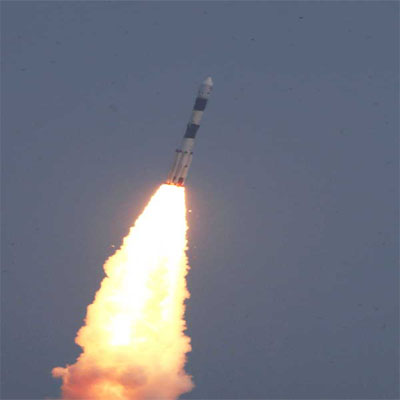
    A notable achievement has been the successful launch of the first developmental flight of GSLV-MkIII, which validated new version of Indigenous Cryogenic Engine. With this capability, it will be possible to launch upto 4-tonne class of communication satellites into Geosynchronous Transfer Orbits (GTO).

    ISRO has successfully enabled a host of applications using synergy of earth observation, communication and navigation satellites in governance and development.

    India has created a niche in the field of space science & technology with launch services, earth observation, communication & navigation and application of space technology for national development.

    Today, India stands one among the top six space faring nations in the world, the Minister said.

    The areas which are benefitted/ likely to be benefitted with the utilization of space technology and its applications include broadcasting and telecommunications.

    Also Read :

    India’s GSAT-17 communication satellite launched successfully

    32 free DTH educational channels on Dish TV & FreeDish start functioning

    GSAT 17 to be inducted into INSAT/GSAT system after tests

    Transponder leasing yields Rs 7.5 bn for communication satellites


  • Transponder leasing yields Rs 7.5 bn for communication satellites

    NEW DELHI: Communication satellites earned revenue of Rs 7.4668 billion through leasing of INSAT/ GSAT transponders in 2016-17.

    Minister in the department of space Jitendra Singh told the Parliament that 15 of the 42 Indian satellites in space are used for communication.

    Out of the others, four for meteorological observations, 14 for earth observations, seven for navigation, and two for space science purposes.

    The annual income from sale of remote sensing satellite data is Rs 251.7 million.

    The data and value added services derived from earth observation, meteorological, communication & navigation satellites are used to support various applications viz. resource monitoring, weather forecasting, disaster management, location based services, including societal applications.

    The expenses to realise and launching of these satellites are less than those of other countries, the Minister said.

    Also Read :

    MIB: No DPO request for infra sharing, DTH ops’ transponder demand up

    Transponder charges: Plan afoot to retain DTH services on Indian sats

    ISRO’s ‘South Asia Satellite’ to carry 12 ku-band transponders