Category: Satellite Operators

  • Globecast introduces virtual networking for high bandwidth IP-over-satellite connectivity for the enterprise market

    Globecast introduces virtual networking for high bandwidth IP-over-satellite connectivity for the enterprise market

    MUMBAI: Globecast, the global solutions provider for media, has announced Globecast Virtual Networking (GCVN), a new service offering that brings two-way, high bandwidth, IP-over-satellite connectivity to the enterprise market. It provides fast, reliable IP connectivity anywhere and anytime where terrestrial networks fail or are inconsistent.

    With GCVN, media event producers and content creators in the B2B space can easily deliver streaming, file transfers, Wi-Fi, 4K, 8K and 360-degree live content using native IP-based satellite transmission from remote locations via a premium quality, guaranteed high-bandwidth solution. It’s ideal for corporate productions, events with high attendance where cell service bandwidth is scarce, and many situations where Internet connectivity is uncertain. 

    In addition, GCVN is deployable for disaster recovery/disaster avoidance. It’s useful for when a potential customer needs to quickly deploy additional IP connectivity or augment a network with additional bandwidth to avoid any issues, without having to spend the time and money to change their full-time configuration. There is a growing need for temporary, premium quality, two-way IP networks for special projects. The global service is initially available in the US, via connectivity with Globecast’s Culver City Media Center.

    “We’ve developed Globecast Virtual Networking in direct response to the market demand for fast, reliable IP connectivity at any location. GCVN is perfect for corporate productions, music festivals and movie sets and events with high attendance where cell service bandwidth is scarce, or where Internet connectivity is uncertain,” explained Tim Jackson, Senior Vice President, Sales and Marketing the Americas at Globecast. “GCVN is a logical enhancement to our traditional distribution, contribution and media management services that utilize the satellite, fiber, cloud and infrastructure capabilities Globecast has provided for decades. The service comes with the same customer service and quality focus that we provide with all our offerings.”

    GCVN was born out of Globecast’s relationship with Santa Barbara-based CBTV, which provides news/event remote connectivity via satellite, specializing in Internet protocol networked transmissions. The two companies began working together in 2018 when CBTV started supplying RF/modem modulation, IP switching, and routing equipment to connect customers using the platform to Globecast’s Culver City Media Center.

    Jackson said, “From there, we took that offering and extended it, creating GCVN, a fully integrated service offering. It’s another example of how we are uniquely positioned to offer secure and reliable data delivery in what is a rapidly evolving market.”

  • Innovation is key in this age of constant change and disruption

    Innovation is key in this age of constant change and disruption

    MUMBAI: The Asia Video Industry Association (AVIA) welcomedover 180 delegates to the first Satellite Industry Forum (SIF) in Singapore since its rebrand from Casbaa in August 2018. On Monday, CEO Louis Boswell reiterated the importance of AVIA’s continued focus and support of the satellite industry in this period of great change and disruption, particularly in the areas of policy and regulation.

    SIFbrought togethermany of the mostinfluential leaders of the industry this year to discuss critical issues including regulatory discussions at WRC19, the raging spectrum wars among satellite operators, pricing, demand & supply, and the latest in “Newspace” activities.

    The need for innovation in order to stay relevant was a main point for keynote speaker, Steve Collar, CEO of SES. In his opening address, Steve said that“customers demand high quality video everywhere, anytime and on any screen. Satellite operators can play key roles in the digital era especially in integrating satellite with the Cloud andsupporting applications that will create more experience and value for the customers.”

    Pricing is still a challenge for the industry with overcapacity and increasing pressure on costs and this therefore increases the pressing need for innovation.  MitsutoshiAkao, Group President of Global Business Group of SKY Perfect JSAT noted that the “Asia region is a very tough market, so in order to survive, we need more cost-effective satellitesand that is one of the reasons we have launched a newhigh-throughput satellite.”

    The other prominent discussion of the day centred around spectrum wars. “Spectrum should be allocated to services that make highest and best use of it”, said Steve Collar. Chen Xun, EVP of APT Satellite added that a “C-band frequency war is inevitable. The industry has to fight harder to protect it especially in Asia where C-band is most viable.”  

    In the closing C-Suite panel,Lon Levin, President & CEO of GEOsharepredicted that “5G and the Internet of Things will happen faster than we are planning for.  This will be a great opportunity for satellite operators, many of which are already seeing an increase in data transmission business.  To take full advantage of the future flood of 5G needs, the satellite industry must develop ground segments that facilitate the transmission of 5G such that the choice between terrestrial and satellite becomes irrelevant.”

    Jim Simpson, CEO of Saturn Satellite Networks, advised that “in this era of dynamic change, the satellite industry needs to evaluate what it does best – delivering large amounts of capacity into areas without substantial terrestrial infrastructure, leveraging commercial electronics and taking advantage of economics and advancements, and focusing on market needs.”

    The Satellite Industry Forum was supported byAsiaSat, China Satellite Communications, Eutelsat, GEOshare, Hughes Network Systems, ILS, Integrasys, Marsh, Maxar, Newtec, NorthTelecom, Saturn Satellite Networks, SES, SpaceBridge, SKY Perfect JSAT Corporation and SpaceX.
     

  • WarnerMedia chooses AsiaSat as strategic partner for HD channels distribution in Asia Pacific

    WarnerMedia chooses AsiaSat as strategic partner for HD channels distribution in Asia Pacific

    MUMBAI: Asia Satellite Telecommunications Company Limited (AsiaSat), Asia’s leading satellite operator has been selected by WarnerMedia as a strategic partner for distributing regional HD services of CNN International, Cartoon Network, Boomerang and Warner TV, as well as HBO HD in South Asia, via AsiaSat 7 in the Asia-Pacific.

    AsiaSat has been distributing a total of five WarnerMedia SD channels on AsiaSat 7 (previously on AsiaSat 3S) since 1999. Since transmission, these channels have gained access to hundreds of rebroadcast networks and hotel networks across the region.

    To allow a smooth migration to HD service for its rebroadcast affiliates including pay TV platforms and hotel  networks  across  Asia  Pacific,  and  for  audiences  to  enjoy  a  more  compelling  viewing experience, WarnerMedia will migrate its HD services and consolidate them into its existing SD platform on AsiaSat 7.

    “The migration allows us to upgrade and streamline our services at the same time. Working together with AsiaSat, the new arrangement also allows us to offer our regional broadcast partners the chance for their viewers to enjoy our channels in HD,” said James Crossland, Senior Vice President of International Operations for Turner, a WarnerMedia company.

    From September, AsiaSat 7 will carry a total of eight HD and three SD channels of content from news, entertainment, to children, movies and drama. With migration of service to HD completed in the next few months, viewers across the region will be able to enjoy high-quality TV benefiting from the high penetration of AsiaSat 7 at 105.5°E, the world’s most watched orbital slot.

    “The media brands under WarnerMedia are some of the world’s most famous and most popular broadcast networks. We are very proud of our long-time partnership with WarnerMedia, which is one of the most valuable assets we have built over time. We look forward to continuing to support WarnerMedia in their service migration to HD on our high performance AsiaSat 7, and through our leading-edge broadcast solutions to serve audiences with ever better TV viewing experience,” said Ina Lui, Senior Vice President, Commercial, Business Development & Strategy of AsiaSat.

  • Amazon to launch satellites for broadband internet

    Amazon to launch satellites for broadband internet

    MUMBAI: An attempt by the e-commerce giant, Amazon to provide internet access is being made through its new initiative ‘Project Kuiper’ to build a network of over 3000 satellites, according to multiple filings made with the International Telecommunication Union last month.

    Amazon said in a statement that the long-term project will cater to people globally who lack basic access to broadband internet, the report mentioned.

    The company added that Project Kuiper will launch a constellation of low earth orbit satellites that will provide low-latency, high-speed broadband connectivity.  

    Amazon CEO Jeff Bezos is racing to pull his private space company Blue Origin out of start-up mode and move into production. Blue Origin is seeking to disrupt the legacy launch services market with reusable rocket technology.

  • GSat29, India’s communication satellite, launched

    GSat29, India’s communication satellite, launched

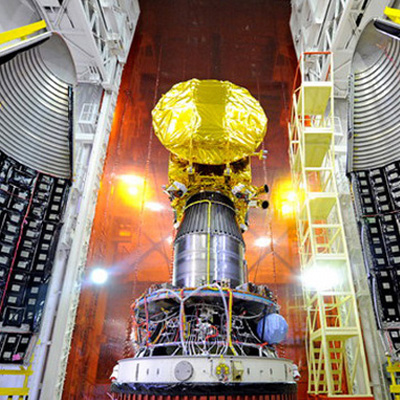
    MUMBAI: Precisely at 5.08 p.m. Wednesday the GSLV-Mk III rocket on its second developmental flight began its ascent with a strong deep growl that reverberated like a thunder roll breaking free from the second launch pad at the Satish Dhawan Space Centre (SDSC) in Sriharikota carrying communications satellite GSat29.

    The Indian space agency had flown a similar rocket on June 5, 2017, with GSAT-19 satellite. Prior to that ISRO had flown another rocket with 3.7-tonne dummy payload in 2014 to test its in-flight structural stability and aerodynamics, according to wire agency reports.

    According to Indian Space Research Organisation (ISRO), GSat29 with a life span of 10 years is a multi-beam satellite that carries Ka/Ku-band high throughput communication transponders intended to meet the communication requirements of users including those in remote areas.

    In addition, several new technologies such as Q/V-band payload, data transmission through optical communication link will be demonstrated. This will help in realising future advanced satellites, ISRO said.

    ISRO chairman K. Sivan said the launch was one of the “very important missions and a milestone” for India’s space programme.

    “This is GSLV-MkIII-D2 second developmental flight. It is going to launch very important and high throughput satellite GSAT-29. The satellite will be useful in Jammu and Kashmir and North East region for providing connectivity under the Centre’s Digital India programme”, Sivan was quoted by agencies as saying.

    According to the ISRO, the GSat29 satellite is intended to serve as a test bed for several new technologies. It is specifically designed to cater to communication requirements of users from remote areas of the country.

  • Satellite services provider Digisat Media upgrades to Forsway Odin F-50 hybrid router

    Satellite services provider Digisat Media upgrades to Forsway Odin F-50 hybrid router

    MUMBAI: Forsway, a global specialist of innovative solutions for combining satellite with existing terrestrial technologies to provide broadband to underserved regions, announced that it has delivered its innovative Odin F-50 hybrid satellite router to Digisat Media, furthering its partnership with the Spanish satellite services provider. The Forsway customer premises equipment and technology are supporting a Digisat Media managed network providing comprehensive services across Spain that delivers a bouquet of entertainment and content to hospitals nationwide.

    Digisat Media designs and operates a wide range of customised services involving satellite and internet services. The service provider furnishes complete solutions for education, TV in the cloud / via satellite, TV mobile units or mobile bank offices – in both public and private sectors. Digisat Media operations are also carried out in emerging markets where it is a leading player in reducing the digital divide.

    Digisat Media CEO Candido Calero said, “We are committed to our partnership to deliver entertainment and content for children in hospitals managing a network driven by Spain’s leading media group. The innovative services and solutions provided by technology partner Forsway are helping enable Digisat Media to deliver quality services and position for evolving market demands of today and tomorrow.”

    Forsway MD Tobias Forsell said,” We are pleased to deliver the Odin F-50 next generation satellite router to Digisat Media, further strengthening our long-term partnership in supporting Digisat’s operations. The unique Odin F-50 technology is highly complementary to Digisat Media’s operation, providing a robust, easy to manage and cost-efficient hardware with unique hybrid connectivity to provide broadband access across its extensive network.”

  • Telesat Successfully Launches Telstar 19 VANTAGE Bringing New High Throughput Ku and Ka-band Capacity across the Americas and Atlantic

    Telesat Successfully Launches Telstar 19 VANTAGE Bringing New High Throughput Ku and Ka-band Capacity across the Americas and Atlantic

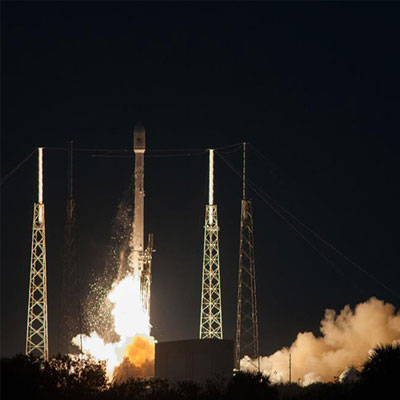
    MUMBAI: Telesat announced today the successful launch of its new Telstar 19 VANTAGE high throughput satellite (HTS) aboard a SpaceX Falcon 9 rocket. Liftoff occurred on Sunday, July 22nd, from Cape Canaveral Air Force Station. Built by SSL, a Maxar Technologies Company, Telstar 19 VANTAGE
    is the latest in a new generation of Telesat satellites with capacity optimized to serve the types of bandwidth intensive applications increasingly in demand by users worldwide.

    Operating from Telesat’s prime orbital location of 63 degrees West, the same as Telesat’s highly utilized Telstar 14R satellite, Telstar 19 VANTAGE will bring a new level of performance and value for satellite broadband requirements on land, at sea and in
    the air. It will have distinct zones of coverage across the Americas and Atlantic, combining broad regional beams and high throughput spot beams in Ku-band with additional HTS spot beams in Ka-band. Through these innovative capacity and coverage options, Telstar 19 VANTAGE will deliver important advantages to Telesat customers who serve growing consumer, enterprise and mobility markets.

    As previously announced, Hughes Network Systems LLC (Hughes) has signed a 15- year agreement for Telstar 19 VANTAGE Ka-band capacity that Hughes will utilize to expand its broadband satellite services for consumers and businesses in five South American countries. Hughes will refer to this capacity as “Hughes 63 West.”

    Telesat also has long-term contracts for the entire Ka-band capacity of Telstar 19
    VANTAGE over Northern Canada, including providing Bell Canada subsidiary Northwestel with the HTS spot beam capacity required to enhance broadband connectivity for all 25 communities in Nunavut, Canada’s northernmost territory.

    “The pre-launch agreements Telesat has secured with Hughes and Bell Canada, combined with strong interest from other leading satellite service providers across the Americas and Atlantic, confirm that Telstar 19 VANTAGE delivers superior performance and value for today’s bandwidth intensive applications,” said Dan Goldberg, Telesat’s President and CEO. “The design and capabilities of Telstar 19 VANTAGE enable our customers to provide more advanced satellite broadband to their end users. We would like to thank SpaceX for the successful launch of Telstar 19 VANTAGE and for their dedication and professionalism throughout this mission. In a few weeks, Telesat will again be working with SpaceX for the launch of our next satellite, Telstar 18 VANTAGE over Asia.”

  • ISRO gives nod to 27 satellites for future DTH, science demands

    ISRO gives nod to 27 satellites for future DTH, science demands

    MUMBAI: Indian Space Research Organisation (ISRO) has allowed three industries (two private and one government-run firm) to build 27 satellites in the next three years. This is to protect future demands for satellite capacity for DTH broadcasting and scientific missions as well.

    “The contract is for each of the three to make nine 1.6 tonne to 2-3 tonne satellites, which means they’ll make a total of nine every year and 27 by the end of three years,” according to a source from ISRO, as quoted by TOI.

    Alpha Design consortium that includes six SMEs- Newtech, Aidin, Aniara, DCX, Vinyas and Exseed Space- defence PSU Bharat Electronics Limited (BEL) and Tata Advanced systems make three satellites each per annum for the next three years as per the ISRO contract for satellites.

    The contract has the option of extending the same for another two years, which will add 18 more satellites to the count.

    Alpha Design CMD HS Shankar was quoted stating, “We signed similar agreements as the Tatas and BEL and I hope that creates the ecosystem to allow more industries in the future.”

  • MEASAT adds 3 channels from South Asia

    MEASAT adds 3 channels from South Asia

    MUMBAI: MEASAT satellite systems, on 2 July, expanded its video region in South Asia with the distribution of News24, Sagarmatha TV and Prime TV. The satellite system is a premium supplier of communication and video services to leading broadcasters, direct-to-home (DTH) platforms and telecom operators. MEASAT provides services to over 150 countries representing 80 per cent of the world’s population across Asia, Middle East, Africa, Europe and Australia, withcapacity across six communication satellites. MEASAT senior VP – sales Raj Malik said, “We are delighted to welcome and distribute News24, Sagarmatha TV and Prime TV via the MEASAT video distributionnetwork. The addition of these channels is testimonial to the trust broadcasters place on the strength of our distribution via our 91.5°E video hot slot.” Feeds of all the three channels are taken from Nepal. News 24 being the premium news channel shares ground breaking news of the region. Sagarmatha TV is thefirst Nepali news broadcast channel, dedicated to keep its audiences informed of events happening in Nepal and to display their culture to the multinational communities in America and around the world. Prime TV is one of the newest channel in Nepal which is designed to serve all genres from entertainment,infotainment, news and views. The 91.5°E prime video hot slot is home to the MEASAT-3, MEASAT-3a and MEASAT3b satellites, forming one of the region’s strongest video community.

  • MEASAT to display Next Generation Compression for UHD channels distribution

    MEASAT to display Next Generation Compression for UHD channels distribution

    MUMBAI: MEASAT Global Berhad (“MEASAT”) announced today a showcase in collaboration with NovelSat and V-Nova to demonstrate cutting-edge compression for Ultra High Definition (UHD) primary distribution over satellite. The new technology provides up to three (3) times bandwidth savings and will be demonstrated live at MEASAT’s booth in CommunicAsia 2018 from 26 – 28 June.

    MEASAT has also partnered with some of Asia’s leading UHD content creators for this must-see showcase. Fashion One 4K, Fun Box UHD, Insight UHD, Love Nature 4K and TravelXP 4K will display their UHD content on a stunning 86 inch 4K UHD TV sponsored by LG.

    The content will be encoded using V-Nova’s PERSEUS Plus codec at 50 fps, 4:2:0 8- bit colour depth and broadcast with DVB-S2 at 8 Mbps. The NovelSat NS4 based solution can deliver more information bit rates per MHz and raises the total transmission capacity. The feed will then be delivered via MEASAT-3 satellite at the 91.5°E orbital slot to CommunicAsia. This solution makes distribution of UHD channels more cost effective without compromising video quality.

    “One reason MEASAT is Asia’s preferred UHD partner is because of our commitment and belief in working with leading technology partners to provide innovative solutions to the market,” said Raj Malik, Senior Vice President – Sales. “With NovelSat and V-Nova, MEASAT continues to be on the cutting edge of broadcast technology and provide significant cost savings for UHD distribution across the Asia Pacific.”

    “Driven by more channels and more high resolution content, MEASAT is constantly on the lookout for solutions that help them manage increasing demand for satellite capacity,” said Ronen Sadan, AVP Marketing, NovelSat. “NovelSat NS4 offers the world’s most efficient satellite transmission technology, which makes it easier for MEASAT to expand their offering using much less bandwidth compared with other solutions.”

    “We are delighted to partner with MEASAT and NovelSat to deliver this monumental step forward in UHD primary distribution,” commented Guido Meardi, Founder and CEO of V- Nova. “Delivering live UHD at the quality consumers demand at just 8 Mbps is simply impossible with any other video codec and is another great showcase of how PERSEUS Plus can transform the economics of video delivery throughout the industry.”