Category: Satellite Operators

  • Satellite operators maintain positive outlook on the future of the industry

    Satellite operators maintain positive outlook on the future of the industry

    Mumbai: On 6 June, the Asia Video Industry Association (AVIA) annual satellite conference, the Satellite Industry Forum, has welcomed over 140 delegates and speakers including some of the satellite industry’s largest operators for a day of discussion on the challenges and growth opportunities of the satellite connectivity market valued at $11.2 billion in 2021, and projected to reach $22.1 billion by 2031.

    The conference opened with the regional operators on how they would fit in the rapidly evolving world of satellite. Raymond Chow, recently appointed as chief commercial officer, AsiaSat, provided an overview of AsiaSat’s business strategies and emphasised the importance to focus and improve AsiaSat’s video business to deliver content to the big screen and small screen. He also opined that customers understand that quality of service can be more important than a small difference in pricing. Being the first private satellite operator company in Indonesia with over 330Gbps capacity across three satellites for Indonesia, Malaysia and Philippines, PSN director of commercial Agus Budi Tjahjono is optimistic that PSN will become the biggest satellite capacity provider in the ASEAN region by the end of 2023. Besides sharing his optimism on the growth for demand for satellite communication, Global Business Group, group president & executive officer Space Business Unit Yukata Moriai, SKY Perfect JSAT, also foresees great opportunities in building highly integrated space network for both innovative communication and data collection, with plans to invest up to ¥150b ($1.1b) by 2030. Besides looking into the new domain of highly integrated space networks, SKY Perfect JSAT is also poised for an aggressive push into Earth Observation Space. Thaicom CEO Patompob (Nile) Suwansiri shared similar optimism in the Earth Observation Space and GEO special intelligence arena, especially in their home market. Thaicom is also expecting their first commercial partnership in the LEO satellite IOT business in Thailand with Globalstar in the coming months.

    While there is a trend from Satellite to Cloud, the role of satellite in video distribution is still a growing business, and to achieve this, Planetcast Media Services CEO Sanjay Duda highlighted the need for satellite companies to evolve their business to support the business plan of the video players. Echoing similar sentiments, A+E Networks Asia director-operations APAC Alistair Roseburgh, noted that satellite remains the choice of delivery for their core pay TV business. Diversification and experimentation in businesses is also more common compared to the past. While FAST (Free Ad-Supported TV) has not yet gained much traction in Asia, SatCom Industry Association director (technology & policy) Rajeev Gambhir, asked fellow panelists about their predictions and what more needs to be done. Alistair highlighted the need for more flexibility such as the pay as you go model which is commonly used by cloud services and the ability to launch and discontinue a service quickly depending on its popularity. While Sanjay stressed on the need for integration with other technologies to deliver seamless connectivity to the consumer.

    Building on the optimism on the future of the satellite industry, Eutelsat general manager (connectivity business unit) Cyril Dujardin, shared the firm’s commitment to building a stronger presence in the connectivity business – mainly their decision to invest in Oneweb. In the same panel hosted by Aviation Communications Advisors (ACA) CEO & principal consultant David Burner, Rivada Space Networks COO Mark Rigolle shared that the design and market segment for Rivada remains largely similar with LeoSat, except that there is greater market acceptance compared to the past and that their focus on funding is now from telco investors.

    In the Philippines where many areas are still unserved or underserved, the general sentiment from operators is that satellite technology will be a game changer. Quoting examples from the major presence and growth of ABS in Philippines, from the first acquisition of Mabuhay Satellite in 2009 to currently having five in-orbit satellites, Vincent Lim, MD, Asia Sales, ABS, pointed out that satellite technology remains as the main form of connectivity in Philippines although consumer broadband is starting to pick up. Agreeing, Brandon Seir, Chief Commercial Officer, Kacific Broadband Satellites, also noted the high cost of routing fibre, the only way to reach out to those places would be through satellite. MEASAT chief commercial officer Ganendra Selvaraj emphasised MEASAT’s commitment for digital inclusion, to provide opportunities to people and improve affordability through the community Wi-Fi model which has proven to be successful in Malaysia. General sentiment from the panel was that the Philippines market presents a huge opportunity, but more regional cooperation is needed.

    From a service provider’s perspective, SES sales manager- pacific Alan Cheng disagreed that there is an oversupply in the market and highlighted the desire for more capacity in the pacific region, drawing attention to the vast market that is not yet connected. Northtelecom CTIO Mahdi Nazari Mehrabi noted that although GSO operators might see LEO as a threat, which all three GSO operators denied in unison, it could be an opportunity and quoted Starlink as an example, and stressed the importance of great marketing to put traditional satellite industry for general consumers. Kacific Broadband Satellites corporate development director Beatrice Mok, added that it’s a fallacy that no contract and low pricing is unique to LEO and cautioned about the attractive pricing from new entrants trying to capture market share and that regulators also have a part to play in preventing predatory pricing in the satellite industry. Expanding on the point of why GSO operators do not see LEO as a threat, Intelsat director (Asia Pacific Sales) Robert Suber highlighted that, it’s telco and mobile network operators across the pacific which are worried that OTT and connectivity players are bypassing their network and eroding revenues.

    Wrapping up the conference, female leaders took the stage to discuss how to tackle the challenges in the industry and in particular, the lack of women in leadership roles. In the panel moderated by MarCom & Membership VP at GSOA, Jacinth Lau, deputy director (industry), Office for Space Technology & Industry (OSTIn) Irina Petrov, pointed to the lack of awareness of career opportunities amongst the younger generation, the lack of space technology degrees and courses at local tertiary institutions and the difficulties in securing talents due to global competition. Nevertheless, she was optimistic about Singapore’s focused efforts in investments of research around Singapore’s core strengths as an aviation and maritime hub and collaboration with universities and research institutes. Boeing Satellite CTO Rachelle Radpour elaborated not just on the need for diversity in the space industry, but it is also critical to ensure equal access to opportunities, work life balance, keeping a pipeline and culture which supports all stages of an employee’s career, regardless of their gender. TOTOTHEO MARITIME Co-CEO Despina Panayiotou Theodosiou highlighted the importance of having a role model for young women while also stressing the need for fresh ideas, patience and persistence to make changes.

  • MEASAT to expand beyond connectivity at Asia Tech x Singapore 2023

    MEASAT to expand beyond connectivity at Asia Tech x Singapore 2023

    Mumbai: MEASAT Global Berhad (MEASAT) – Malaysia’s leading satellite solutions provider, is expanding beyond its connectivity roots with a showcase of its latest satellite-enabled solutions at SatelliteAsia, Asia Tech x Singapore 2023 (ATxSG), Asia’s flagship tech event, from 7 to 9 June at the Singapore Expo exhibition centre. At the event, MEASAT will be conducting live demonstrations of new solutions, in collaboration with global industry leaders Amazon Web Services (AWS), Cisco Systems, Inc. (Cisco) and Hughes Network Systems (Hughes).

    “Having established our expertise in video broadcast and rural satellite broadband services, MEASAT is actively advancing our capabilities beyond connectivity to address the needs of our enterprise clients and rural consumers. We are proud to collaborate closely with global industry leaders such as AWS, Cisco and Hughes to develop our content, enterprise, cloud and security solutions, amongst others. These collaborative approaches optimise our ability to provide much more than high-speed satellite broadband and allows us to address customer pain points effectively,” said MEASAT chief operating officer Yau Chyong Lim.

    “Meanwhile, we are also collaborating with various partners to connect rural communities across Southeast Asia with satellite broadband and digital applications – implementing the knowledge gained from the success of CONNECTme NOW in Malaysia. At MEASAT, we are firm believers in the importance of closing the digital divide and improving rural access to the digital economy – not just in Malaysia, but everywhere we operate,” Lim added.

  • Gregory Ho joins the Asia Video Industry Association as senior advisor

    Gregory Ho joins the Asia Video Industry Association as senior advisor

    Mumbai: Corporate communications and branding media veteran Gregory Ho has been appointed senior advisor with the Asia Video Industry Association (AVIA).  

    In this full-time role, Ho will support AVIA CEO Louis Boswell and work closely with the teams in Singapore and Hong Kong, focussing particularly on the curation of AVIA events and conferences as well as  membership development and engagement. He will continue to be based in Singapore. 

    “As our industry continues to evolve during this period of tremendous flux and transition, I’m delighted to have Greg joining the team. His deep experience and understanding of our industry and his extensive  network of contacts will be a tremendous asset as we continuously strive to represent and support the  industry’s and our members’ needs including the opportunity to share, learn and engage with each other  through our various events and conferences,” said Boswell. 

    The AVIA membership includes key players in every segment across the entire video industry and ecosystem in Asia Pacific and facilitates opportunities for members to engage through a series of activities including eight industry conferences in 2023 as well as a select number of bespoke member events. 

    “I look forward to working with Louis and the small but mighty AVIA team as we continue to support the  industry and our members, shining the spotlight on growth opportunities and the most pressing  challenges through our events and conferences – sharing, discussing and debating what matters most to  us. I’m honoured to have this opportunity to give back to the industry that I love and has been my career  for the past three decades,” said Ho. 

    Ho most recently spent nine years with Warner Bros. Discovery in Hong Kong and Singapore where he led corporate communications and marketing for the media and entertainment conglomerate’s entire  portfolio of brands, services and businesses as well as Warner Bros., CNN, Cartoon Network and HBO,  across Asia Pacific. He also had a long spell with Sony Pictures Entertainment – which included leadership  roles overseeing marketing, communications, Ad sales, research, channel management and operations  for its networks in Asia. He began his career with positions at CNBC Asia and Mediacorp Singapore. 


  • Intelsat Commercial Aviation signs an agreement with Nelco to provide in-flight connectivity

    Intelsat Commercial Aviation signs an agreement with Nelco to provide in-flight connectivity

    Mumbai: Intelsat, the operator of integrated satellite and terrestrial networks and provider of inflight connectivity (IFC), announced the beginning of Intelsat’s inflight connectivity services in Indian skies through an agreement with satellite communication service provider Nelco.

    Intelsat’s airline partners and flyers will enjoy end-to-end broadband coverage on domestic and international aircraft flying to or from an Indian airport, as well as aircraft flying over the country.

    Intelsat president of commercial aviation Jeff Sare said, “In addition to expanding our service coverage area for current customer airlines, our agreement with Nelco opens the possibility for Intelsat to serve India’s domestic airlines.”

    “This is a fast-growing airline market, and there is considerable untapped potential for IFC growth,” he added.

    Intelsat’s IFC service provides airline passengers with a seamless at-home and in-office connectivity experience. Furthermore, it enables an airline to distinguish itself by improving the passenger experience, increasing passenger loyalty, and optimising flight operations.

    Nelco managing director & CEO PJ Nath said, “We are proud that Nelco has forged this relationship with in-flight connectivity pioneer Intelsat to offer Aero IFC services on their customer aircraft.”

    “As India’s leading Satcom service provider offering best-in-class services, we are now creating a great opportunity through this relationship with Intelsat for further growth of our Aero IFC services in the country in the coming years—and we intend to be a leader in this market in India.”

    Nelco has been providing Aero IFC services for over two years, with plans to expand these services to more airlines in collaboration with global partners.

    These services will be provided by Nelco via Intelsat’s IS-33e high throughput satellite.

    IS-33e, which was introduced in 2016, provides C and Ku-band connectivity to Asia, Europe, Africa, and the Middle East. Intelsat’s IS-33e satellite has been approved by Indian government regulators, paving the way for uninterrupted coverage with no blackout zones.

    The service is currently available to Intelsat partner airlines and their passengers on board aircraft.

  • Kacific Broadband Satellite appoints Vishaal Mathur as vice president of sales for south asia region

    Kacific Broadband Satellite appoints Vishaal Mathur as vice president of sales for south asia region

    Mumbai: Satellite operator Kacific Broadband Satellite International has appointed Vishaal Mathur as vice president of sales for the South Asia region.

    Vishaal will be responsible for providing high-throughput, reliable broadband connectivity via the Kacific1 satellite in Nepal, Bhutan, and Bangladesh, with a focus on NSPs, government agencies, disaster recovery, educational institutions, banks, defense, and maritime services.

    Kacific broadband satellites CCO Brandon Seir said, “Kacific plans to launch its second satellite in 2025, which shall cover most of the key markets in Southeast Asia, including India, providing affordable, high-speed, and reliable internet based on Ka-band with advanced technologies forming powerful spot beams.”

    Vishaal Mathur will also serve as a consultant to PT.Telkom Satellite of Indonesia as head of sales – Asia and as an honorary consultant to the newly launched Bharat24 (24 *7 Hindi News channel).

  • “India is the strongest media market in APAC”: Intelsat’s Bill O’Hara & Terry Bleakley

    “India is the strongest media market in APAC”: Intelsat’s Bill O’Hara & Terry Bleakley

    Bill O’Hara and Terry Bleakley make for an odd couple – they are as different as chalk and cheese. O’Hara is a true blood American, while Bleakley is from that distant land called New Zealand, and is a Kiwi. But they have one thing in common between them: the company they work for – global satellite major Intelsat. 

    As general manager of media, O’Hara leads global sales/revenue, marketing and product management. He has also been charged with increasing its $700 million a year top line while keeping a sharp eye on the bottomline. An industry veteran with nearly six years at his current firm, O’Hara has taken a stab at turning into an entrepreneur when for three years from 2013 onwards he ran a direct-to-consumer streaming service called KlowdTV. 

    Bleakley , on the other hand, has been a bird man for almost all of his working career, with organisations such as Panmsat, Intelsat, and then Measat., following which he came back to Intelsat to grow its Asian business. 

    The organisation is well positioned to grow, even more robustly, not just in Asia, but globally. With a fleet of more than 50 satellites in the sky, teleport gateways, terrestrial networking infrastructure and robust managed services, Intelsat claims that it offers the world’s most extensive and secure communications network. Its focus now is on building the future of global communications with the world’s first hybrid, multi-orbit, software-defined 5G network designed for simple, seamless, and secure coverage precisely when and where customers most need it. 

    Indiantelevision.com founder & editor-in-chief Anil Wanvari caught up with Bill and Terry during last month’s BroadcastAsia conference in Singapore to get insights on how Intelsat is gearing for the requirements of a data and IP-driven media industry going forward. 

    Edited Excerpts:

    On how the company is structured today.

    Terry: We went through financial restructuring and came out of it about two or three months ago. We shed about $8 billion of debt. We took our debt from $16 billion to about $7billion. We are receiving $4.8 billion for the clearing spectrum for the US government. We have received $1 billion of that payment already. And we are also owed $1 billion for the cost of clearing that spectrum. And those payments come by the timeline that has been set which is by end-2023. That takes our balance sheet down about $2 billion in debt, way down from when we hit $16 billion of debt. We bring in about $2 billion in revenue. That’s a really low debt structure for an organisation. You normally want a ratio of 3 to 4:1. So our balance sheet has been as strong as it has been since 2002. As we emerged from our financial restructuring from a public company to a private company, the creditors whose debt was shared got new equity. So it is now a private company from being a public company.  

    On how Intelsat evolved in response to move toward IP delivery for video customers.

    Bill: I think that while there are a lot of changes in this industry, the satellite is still central to distribution, regardless of whether the content originates as IP or is delivered as IP to the end consumer. We recognise this and our strategy is very much to be IP native, to plug ourselves into different parts of the ecosystem, where our customers are going. We are a very customer-focused company – always trying to move with our customers as they move along. For example, as our customers have moved to the cloud with greater velocity, we too have been forging cloud partnerships so that we can source content directly from the cloud, directly from folks like AWS. With it, we have a public partnership so that we can bring content either to the cloud or take it away from the cloud and distribute it to our customer base. 

    Our value position as a media business, however, is connecting an audience with content. And we do that today with cable TV distribution and direct-to-home. But tomorrow, especially with the acquisition and integration of our commercial aviation business, we can connect new viewers with other types of content, perhaps on board planes. So streaming partnerships with many of our content owners today, and our customers could be the way we distribute OTT content tomorrow to a new audience we have not capitalised on serving in the past. 

    Terry: Further let me give you some numbers on this. Go-Go Commercial Aviation, which we acquired around 18 months ago, has around 1700 connected commercially around the world. They have 1300 on the backlog, and they are getting an antenna put on top of them as Covid goes away. That represented, in 2019, precovid, 200 million passengers a year. That’s an audience that was not tapped into with the media. If you look at 2019, how many people travelled on airlines globally, it is 4.5 billion people a year. So if we can stream content, whether it is some of our broadcast partners who are going direct to consumers, and start reaching this audience for them, we think there’s a lot of value in that. 

    And there’s another play with telcos. We are also building a 5G core for our network going forward, and we are going open standards. We call it a unified network. And as we develop this 5G core satellite network that can run with other networks like Jio and Airtel and others, then the idea is that the experience of a person with a mobile phone, when they get on a plan, then it’s like roaming to another country. It’s a 5G native infrastructure that we have got there, they don’t have to put an SSID number, they connect and they don’t realise they are paying for a service to their provider, a roaming charge. So you get past the issue of payment to an aircraft which is expensive. They feel like they are getting it for free because they are roaming on to our service which is our roaming 5G core that is sitting on the aircraft. And a whole new audience comes in from there too. 

    Bill: So fundamentally when you put these ideas together: the content owner who is going direct to consumer, like any one of them have done – Paramount+, Discovery+, Disney+, any of these major players. Or it is with an MNO. By controlling the ecosystem that is on board the plane – both for connectivity and the end user experience – that is an audience that is highly desirable and hard to capture. That we have the exclusive ability to deliver through satellite. 

    On how the airlines’ in-house entertainment system will be impacted.

    Bill: I think this will be determined on an airline to airline basis. It’s a three-way partnership: the MNO, the content owner, us, and the airline. And different airlines have different strategies. 

    Terry: They pay a lot for those entertainment systems to get the content. So technically, if people can access their content when they get on board then they can reduce the cost of an airline to get content. We already are seeing hybrid systems in play in airlines wherein you have inflight entertainment, you have live TV as an option. So you can watch sports live. And this is being made thanks to advancements in connectivity to aircraft through satellites. In a high throughput satellite, the antenna can take a lot more megabits. It’s a lot more efficient in delivering real-time internet to an aircraft that you can now do these services. We think there’s a play where we can do streaming services. 

    On the strategic plan going forward.

    Bill: Our five-year strategic plan is to be an aggregator of networks. Somebody has to sit in the middle of all this. And with a universal terminal – with multi-orbit, multi-band capabilities to integrate low earth orbit (Leos), medium orbit (Meos) and geostationary earth orbit satellites (GEOs) – that is operating via standards – open standards – integrated into a 5G core, 3GPP compliant. All of these things add up to a scalable system that develops the right kind of connectivity at the right time for the right application with one terminal, one modem, and one integration into the broader telecom infrastructure. I believe that’s a very powerful place to be. And I think it takes a very specific entity to do it. I think we are in the best position to do so with our infrastructure and our geo play. 

    Terry: As far as open standards are concerned, you have to remember satellites in the past, and I am talking telecom, not broadcast…and now the two are converging again…and it’s happening greater today than it ever was thanks to the internet and video…Satellites have tended to be heterogeneous. Satellites have tended to be on the side of a network, with their standards, its proprietary hardware. And it’s not homogenous like the telecom industry. We have been pushing a standard to adopt within 3GPP to have satellites included in that so that we are no longer a pimple on the landscape. 

    And release 17 of 3Gpp which comes out in the next few weeks, they have got a thing called NTN which is non-terrestrial networks. That allows satellites to be a part of the 5G core going forward. So that’s massive because the benefits of that as we start getting economies of scale of mass silicon production for 5G chipsets. So a Snapdragon chipset for a mobile phone is $30 today. We pay $300 for the same silicon in satellite modems because they don’t have the same scale that a mobile phone has. Once we get 5G in there we can reduce our silicon costs by ten-fold. That makes us more relevant there and we stream into the network a lot more efficiently. 

    But two other standards are more relevant: Meth (metro ethernet). We are the first satellite operator to be accredited with Meth. The other part is a thing called Digital IF. Today, our IF is all analogue and there’s no open standard around how we can take it from an analogue play to a digital one. We chaired the forum and Digital IF has created its first standard and Microsoft has come on board, SES has come along. All of the antenna manufacturers have joined up. And we are an open standard that takes analogue IF (intermediate frequency) and converts it into digital. 

    We are a homogenous network and what can this translate into: today the annual spends on telecoms and pay TV is $1.6 trillion annually. We only have one per cent of that. As a satellite operator we represent a whole selling capacity of $1 billion a year. So with our unified network and what we are developing around that if we can go from a one per cent share to two per cent…it’s huge and it’s not that hard to do. And we believe that that’s what is about to come with the adoption of the 5G core that we are developing which will be able to interface with MNOs, which are these giants we want to be part of.

    On how the geo play will pan out.

    Terry: We are at 52 geostationary satellites. Six of these are high throughput. We are all around the globe. We have 30 in the Asia Pacific. Our satellites are in the spectrum of one year old to 15 year old. We have also been putting some into inclination. And for two others we performed scientific feats like using missing extension vehicles to extend their life. Part of our $2 billion build out to our unified network is a virtualisation of the network, software defined satellites. So we have ordered four software defined satellites – two with Airbus, two with Thales. They are being built at the moment. Two will sit over Asia, Indian Ocean. Two over the American region. And they will be online 2025. We also have eight satellites in the factory which are going to be used as part of our clearance for spectrum for 5G in North America. We have 12 satellites in the factory.  

    On their view about India. 

    Terry: We have three very large neighbourhoods in India. So IS-17 and IS-20 are two of the satellites that are covering India. We have high MSO penetration to cable TV headends, which is still a very strong business. We saw a shift of some channels to Insat, but the tier one channels resisted that. Our business in India is stable. However, we did see a growth in movement from SD to HD from 2018 to 2021. We still see potential there. So then we got NXT Digital from Thaicom. And they are kind of loving it because we can do so much more throughout per transponder. We have got HITs, SunTV, and Viacom18. Thanks to Covid some other channels could not sustain themselves because of the lack of advertising revenue and the content crunch. Overall channel count decreased. Some of them were forced to look at distribution options. 

    I believe we have seen a great big rebound. India, we believe it is the strongest media market in the Asia Pacific. 

  • Measat Satellite Systems elevates G Selvaraj as CCO & J Rao becomes AVP of network engineering & operations

    Measat Satellite Systems elevates G Selvaraj as CCO & J Rao becomes AVP of network engineering & operations

    Mumbai: Measat Satellite Systems on Friday has elevated Ganendra Selvaraj and Jeevan Rao to new roles. Selvaraj has been named the chief commercial officer (CCO) and Rao has been appointed as the associate vice president (AVP) of network engineering & operations.

    Selvaraj first joined Measat in 2004 and holds a Bachelor of Science in Aerospace Engineering from the University of Kansas. With close to 20 years of experience in the telecommunications industry, Ganendra has performed a broad spectrum of technical & commercial roles within Measat leading up to this appointment.

    In his new role, Selvaraj will oversee Measat’s sales, customer engineering, business development and corporate communications functions. As a member of Measat’s executive committee, he will focus on building the Measat customer base and expanding its commercial activities in support of the Measat Group’s long-term strategy.

    Rao has been with Measat since 2008 and holds a Bachelor of Engineering in Electrical Engineering (Mechatronics) from University Technology Malaysia & Master of Science in Communications and Network Engineering from University Putra Malaysia.

    With close to 25 years of experience in satellite communications, broadcast and telecommunications industry, he brings experience in both space and ground segments; video broadcasting and DTH; VSAT and cellular backhaul networks.

    In his new role, Rao will oversee Measat’s service delivery, network management centre, remote site support, system development and information technology departments.

  • AsiaSat taps into HERMES Live’s streaming service

    AsiaSat taps into HERMES Live’s streaming service

    NEW DELHI: Satellite solutions provider Asia Satellite Telecommunications Company (AsiaSat) has signed up Hong Kong-based live-streaming platform HERMES Live as its technology partner. Under the deal, HERMES Live will provide seamless live streaming service to AsiaSat customers across the world.

    The announcement comes at a time when digital transformation is fast reshaping the way audiences consume content. The partnership will enable AsiaSat to fulfil the ever-increasing demand of customers to distribute content flexibly and affordably while attaining the maximum reach. HERMES Live provides professional, broadcast-grade video-streaming for live events, including live sports, conferences, performances and education to a wide audience across all devices. It also allows simulcasting to social media channels.

    The platform has seamlessly broadcasted several major events to a global audience, including one of the region’s most anticipated charity concerts of popular Hong Kong singer Eason Chan, which was organised earlier this year in July. The event was streamed to as many as 100 media platforms across the globe.

    It also helped livestream the annual general meetings for listed companies, with Tricor offering Hong Kong’s first and only full-function platform that enables electronic general meetings with live streaming. Apart from this, it has also provided seamless coverage of virtual conferences, interviews and commercial events including Hong Kong FinTech Week 2020, Entrepreneur Day 2020, and Sotheby’s Hong Kong Sales Live Auction.

    “It is important for us to keep pace with digital transformation by growing our services into new areas that complement our core competencies in providing the best-in-class satellite capacity and transmission solutions. We are delighted to have HERMES Live as our technology partner to offer streaming service as part of our end-to-end media solutions,” said Ina Lui, senior vice president, commercial, business development and strategy of AsiaSat.

    “We’re excited that AsiaSat has selected HERMES Live as its technology partner to complement AsiaSat’s media solution portfolio with this innovative and technology proven platform to deliver streaming service based on customers’ specific requirements,” said Wilson Yuen, chief executive officer of HERMES Live Technology Ltd.

    AsiaSat's powerful stream of satellites – which includes AsiaSat 5, AsiaSat 6, AsiaSat 7, AsiaSat 8 and AsiaSat9 – provides access to over two-thirds of the world's population.  The new streaming service will add to AsiaSat’s end-to-end media and broadcast solutions which includes transponder capacity from some of Asia’s hotbird satellites, signal uplink, turnaround and downlink, multi-channel per carrier (MCPC) distribution platforms, fibre connectivity, playout and broadcast facilities, equipment hosting, ground equipment such as bandpass filters available for full time and occasional use.

  • AT&T DirecTV’s satellite woes

    AT&T DirecTV’s satellite woes

    MUMBAI: What happens when a DTH satellite turns rogue?

    Well, it has to be sent to the graveyard or junk orbit, which is 300 km above the geostationary orbit (35,786 km above the earth). That’s exactly what the AT&T-owned direct to home service provider DirecTV is dealing with. One of its satellites Spaceway-1 – located at 138.4 degrees west and built by Boeing –  has developed a malfunction in its batteries, which has put it in danger of exploding.

    The Boeing 702HP model spacecraft was functional from 2005 and had been providing high-definition TV services to US subscribers of DirecTV. It was later demoted to the status of a backup satellite. (Normally communications satellite have a life span of 14-16 years.)

    AT&T has now written to the Federal Communications Commission (FCC) seeking permission to allow it along with Boeing and Intelsat to deorbit and decommission the satellite between now and 25 February when the satellite would go into earth’s shadow or eclipse.

    It has told the FCC  that “Spaceway-1 suffered a major anomaly in December that resulted in significant thermal damage to its batteries.”

    The harm to the batteries is  grievous enough  to not support the pressure that would come on them were they to be switched on during the eclipse phase (the period when it enters the earth’s shadow and does not receive sunlight to charge its solar panels; currently the satellite is in the sunlight phase). However, AT&T confesses it cannot avoid switching on the batteries when it enters the eclipse phase as the satellite will not have enough power to be totally deorbited and decommissioned then. And if they are turned on there is a possibility of an explosion, which could possibly damage other satellites in the vicinity.

    AT&T has also informed the FCC that just raising the satellite to the graveyard orbit will take 21 days leaving it with just 7 days to vent out 73 kg of its propellant fuel which is nigh impossible. (For a satellite to be decommissioned it needs to discharge its fuel and normally, it takes two to three months for the task when the spacecraft reaches the end of its life.) Within the time period available to Spaceway-1 only a nominal portion of the fuel will have been removed. Hence, it has sought the FCC’s permission to waive off the complete propellant fuel venting requirement. “Authorising DirectTV’s emergency de-orbit operations will facilitate disposal of Spaceway-1 as safely as possible,” AT&T has pleaded.

    Obviously, AT&T and DirecTV are racing against a deadline. And the clock is ticking away. Hopefully, the Spaceway-1 will find its way to its final resting place in time.

  • ISRO sees rise in third party satellite launches

    ISRO sees rise in third party satellite launches

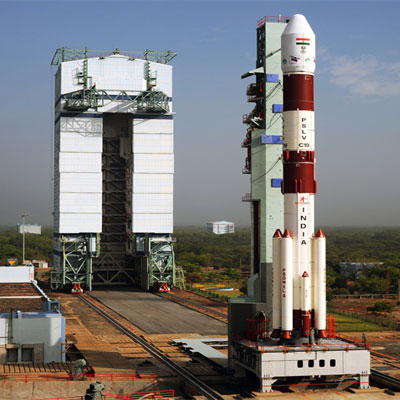
    MUMBAI: The Indian Space Research Organisation (ISRO) is slowly but surely making its mark as far as its satellite launch services are concerned. Consider: in 2018-19 it pocketed Rs 324.19 crore courtesy its launch capabilities as against Rs 232.56 crore in the year before. That’s a decent 35 per cent plus growth in income from launches.

    This information was given out in a reply to a question raised in the Rajya Sabha to union minister for atomic energy and space Jitendra Singh late last week.

    Singh further disclosed that ISRO earned Rs 1,245.17 crore during the last five years by launching satellites from 26 countries. Additionally, it has signed contracts with 10 countries –  the US, the UK, Germany, Canada, Singapore, Netherlands, Japan, Malaysia, Algeria, and France  over the same period under commercial arrangements.

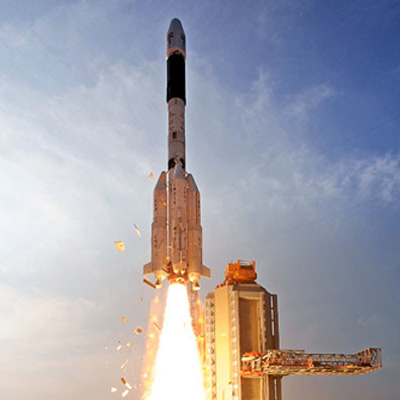
    India has till date put into orbit 319 foreign satellites.