Category: Satellite Operators

  • Asia Satellite Telecommunications holdings limited announcement of annual results

    Asia Satellite Telecommunications holdings limited announcement of annual results

    MUMBAI: Asia Satellite Telecommunications Holdings Limited (‘AsiaSat’ – SEHK: 1135), Asia’s leading satellite operator, today announces its 2013 annual results for the year ended 31 December 2013.

    A YEAR OF CHALLENGE AND OPPORTUNITY


    Financial Summary:

    *  Turnover from continuing operations    HK$1,498,631,000*    -16%

    *   Profit attributable to shareholders from continuing operations HK$747,520,000 -4%

    *  Earnings per share from continuing operations    HK$1.91 -4%

    *   Proposed final dividend per share

    *   Proposed special dividend per share    HK$0.80 HK$1.50    No change +50%


    * 2012 turnover included HK$311 million as a one-off revenue resulting from the enactment of the Finance Act in India in May 2012. Excluding the one-off revenue, the 2013 turnover achieved was relatively flat when compared with the previous year


    Operational Highlights:

    *  AsiaSat 6 and AsiaSat 8 on schedule for launch in mid 2014 to provide new C and Ku-band capacity for business growth

    *  AsiaSat 7 to fully replace AsiaSat 3S in Q2 2014 to offer enhanced power and coverage at 105.5?E

    *  Commencement of the preliminary design phase for AsiaSat 9, the AsiaSat 4’s replacement in 2017 to provide new coverage and services at 122?E

    *  New customer acquisitions and service expansion of existing customers reinforced AsiaSat’s leadership position in broadcasting service

    AsiaSat’s Chairman, Sherwood P. Dodge, said, “The launch of AsiaSat 6 and AsiaSat 8 will provide new revenue streams, as customers take advantage of the increased capacity which these powerful new satellites will bring.”


    “Acquiring new business in 2014 will remain a top priority. Our expanding satellite fleet and reputation for providing quality and reliable satellite capacity together with our commitment to our customers puts us in an excellent position to develop new business opportunities. The market remains highly competitive, but I believe our able management team and our high – quality services will enable us to move the business forward in 2014.”

     

    Click here for full result

  • MEASAT-3/3a HD platform tips 50

    MEASAT-3/3a HD platform tips 50

    MUMBAI: Good news for HD lovers. MEASAT Satellite Systems Sdn. Bhd. (MEASAT) has announced that the MEASAT-3/3a platform has become the first Asian C-Band satellite platform to exceed 50 high definition (HD) channels, confirming the maturing of the HD content business in Asia.


    MEASAT started offering HD distribution services on the MEASAT-3 satellite in July 2007. Working with a select group of channels, technology partners and uplink providers, MEASAT developed a flexible solution for the launch and distribution of HD channels across the Asia-Pacific region. The services were expanded in

    2009 with the launch of the collocated MEASAT-3a satellite. This strategy, underpinned by significant financial and technological investments and an innovative business model, helped develop the HD segment in Asia to what it is today.


    “In 2007, MEASAT had already developed the long-term vision to introduce tailor-made HD solutions to the Asian market,” said Encompass managing director Deepakjit Singh. “Encompass is now using the MEASAT MCPC platform at 91.5°E to distribute 20 premium HD channels across Asia.”


    “MEASAT had the vision and foresight to propose a partnership business model with leading teleports and MCPC platforms in which the Asian HD segment would be promoted jointly. This innovative approach has led to  Globecast  Asia  distributing  12  top  HD  channels  across  Asia.”  added  Globecast Asia senior VP sales Yew Weng Soo.


    “The coverage provided by RRsat’s MCPC platform on MEASAT-3/3a at 91.5°E extends across 102 countries across Asia, from Japan to Africa,” added RRsat chief commercial officer Lior Rival. “This coverage is an essential factor in RRsat’s decision to choose MEASAT as our Asian HD distribution partner for 10 high quality HD channels. This premium platform is an important part of our value-added media services portfolio that enables our customers to reach more places, in more ways on more devices.”


    “In collaboration with our partners we developed an innovative business model to help ‘jump start’ the Asian HD segment” said MEASAT CEO Paul Brown-Kenyon. “Through this collaboration, we announced the first Asian regional C-Band distribution of an HD channel in 2007. We are delighted to be able to celebrate the maturing of the HD segment with the announcement of the 50 HD channels on our platform this week. We continue to work with our partners and our customers to ensure that our services are tailored for channel operators, and the MEASAT-3/3a satellites are the key HD location for Asian HD content.”


    Today MEASAT works with the industry’s leading uplink providers, including Encompass Digital Media (Encompass), Globecast and RRsat America – Global Communications Network Inc (RRsat) with an HD video distribution solution tailor-made for the Asian market. In addition to the channels distributed by the uplink partners, the satellite also supports HD channels uplinked by the channel operator.

  • SES reaches 291 million TV homes worldwide, 151 million in Europe

    SES reaches 291 million TV homes worldwide, 151 million in Europe

    MUMBAI: SES has increased its reach in 2013 worldwide to 291 million and in Europe to 151 million TV homes. This represents an increase of 5 per cent both worldwide and in Europe, compared to the previous year, strongly driven by the development in Africa, Middle East and, especially, India (+ 18 percent) and in Asia-Pacific (+ 7 percent). The household reach in Latin America grew by 5 percent, in North America by 3 percent. These are the results of SES’ annual market research, including the detailed Satellite Monitor studies in Europe.

    The direct reach from the SES fleet to satellite homes grew from 99 million in 2012 to 106 million satellite TV homes in 2013. The indirect reach through the feed of cable networks from SES satellites grew slightly, from 152 to 153 million homes; the number of IPTV homes fed from SES satellites increased by 27 percent to 31 million. The strongest relative growth of the direct reach came from the Asia-Pacific region (+ 21 percent) and Africa, Middle East and India (+ 18 percent). These figures confirm satellite’s continuous increase in reach and its leading role as a broadcasting infrastructure in general and as digital and High Definition (HD) broadcasting infrastructure in particular.

    The SES Satellite Monitor results also emphasize again the important role of SES in Europe.  SES satellites service almost all cable and IPTV homes in Europe (95 percent) and a large majority of the European satellite HD homes (81 percent). The largest single DTH market for SES in Europe remains Germany, with 18 million ASTRA homes receiving their TV signal directly from the SES fleet.  SES transmits more than 6,200 TV channels, 1,800 of them in HD.

    “The results of this year’s SES Satellite Monitor and market research confirm again the strong role that SES is playing as a high performing video and TV broadcasting infrastructure”, said Ferdinand Kayser, Chief Commercial Officer (CCO) of SES. “Our strong growth is a direct result of our significant investments in new satellites especially in the highly important and dynamic emerging markets. We could also further take advantage of our strong infrastructure and service offerings in mature markets and realise further gains, on a high level, in Europe and North America.  As a leader in video broadcasting, DTH, digital transmission and HD, SES plays a critical role in the provision of communications infrastructure globally and is well positioned to further drive digitalisation and the deployment of high performing video neighbourhoods in mature as well as demanding emerging markets.”


  • Outdoor HD Joins MEASAT’s Neighborhood

    Outdoor HD Joins MEASAT’s Neighborhood

    MUMBAI: MEASAT Satellite Systems Sdn. Bhd. (“MEASAT”) announced today a three (3) year agreement with Globecast and Outdoor Channel for distribution on the MEASAT-3 satellite. Under the terms of the agreement, MEASAT will distribute Outdoor HD via MEASAT-3’s global C-band beam, covering 102 countries from Asia, Australia, Middle East, Europe and Africa.


    Outdoor Channel (Asia), The World Leader In Outdoor Entertainment, is a channel that features traditional and contemporary outdoor sports such as fishing, off-road, water sports, safari and a range of outdoor activities that thrill, inspire and entertain.


    “MEASAT’s partnership with Globecast continues to expand with the distribution of the Outdoor Channel,” shared Raj Malik, Senior Vice President – Sales & Marketing, MEASAT. “The Outdoor Channel, with its premium adventurous lifestyle programming, strengthens the variety of content offered from MEASAT’s
    91.5°E video neighbourhood.”


    “We appreciate the ongoing support we receive from our distribution and channel partners” he added.


  • ISRO launches its new Facebook and Twitter accounts

    ISRO launches its new Facebook and Twitter accounts

    BENGALURU: Social media is the strongest and best tool for communication. And even ISRO has understood its value. While it had earlier in October 2013 launched an experimental social media campaign on Facebook for ISRO’s Mars Orbiter Mission, it has now extended it further by creating another Facebook page and also has opened a Twitter account.

    While the earlier Facebook page on the Mars Orbiter Mission called ISROMOM will continue, the new social media pages (On Facebook and Twitter) can be reached from ISRO web portal or directly through www.facebook.com/isroofficial and www.twitter.com/isroofficial.

    The social media campaign aims at creating general awareness regarding the objectives, mission milestones and the accomplishments of ISRO.

    The page (www.facebook.com/isromom) was widely acclaimed as it garnered approximately three lakh followers in its two months of existence.

    The social media pages on Facebook and Twitter have been initiated for ISRO with the following objectives:

    a.Create awareness on the objectives, mission milestones and accomplishments of ISRO’s key programmes and initiatives.

    b.Provide mission updates in near real time.

    c.Maximise ISRO’s outreach through these social media platforms.

    ISRO has also re-affirmed, through a press note, that it does not take any responsibility for any content hosted on the fake and illegitimate social media pages bearing the names of ISRO, Mangalyaan, Bhuvan, etc.

  • SES, SpeedCast and AsiaSat come together to help Typhoon Haiyan survivors

    SES, SpeedCast and AsiaSat come together to help Typhoon Haiyan survivors

    MUMBAI: SES S.A. (NYSE Euronext Paris and Luxembourg Stock Exchange: SESG), SpeedCast, a leading satellite telecommunications service provider in Asia-Pacific, and AsiaSat, a commercial operator of communication spacecraft, have donated satellite and service capacity to enable NetHope, a consortium of 41 non-governmental organisations around the globe, to re-establish communication links to survivors of Typhoon Haiyan that killed at least 6,069 people in that country alone earlier in November 2013.

    Typhoon Haiyan in the Philippines was an exceptionally powerful tropical cyclone that devastated portions of Southeast Asia, particularly the Philippines. It is said to be the deadliest Philippine typhoon on record.

    By utilising the satellite capacity donated by SES and the uplink services and ground infrastructure provided by SpeedCast and AsiaSat, NetHope will be able to provide Typhoon Haiyan survivors access to information directly. The services and infrastructure will also support a number of other relief agencies and NGOs working in-country. 

    “Damage to critical telecommunications infrastructure has made disaster relief and rapid assessment of the situation difficult. Given that it may be weeks or months before terrestrial infrastructure is up and running, satellite connectivity is vital in providing immediate communication needs. SES is pleased to donate satellite capacity to support the people of the Philippines during their recovery from this terrible disaster,” said senior vice president, Commercial Americas at SES Elias Zaccack.

    SES is the world’s leading satellite operator with a fleet of 55 geostationary satellites. The company provides satellite communications services to broadcasters, content and internet service providers, mobile and fixed network operators and business and governmental organisations worldwide.

    “SpeedCast, SES and AsiaSat are providing vital aid directly to the areas that need it most with the help of NetHope. Since the Typhoon hit and we activated our response services, NetHope is now able to assist the relief efforts with communication services that can reach the most remote parts of the country,” said CEO of SpeedCast Pierre-Jean Beylier.

    “AsiaSat is pleased to take part in this initiative by offering uplink services from our Tai Po Earth Station. This effort in cooperation with our partners, will establish communication links needed to assist Typhoon Haiyan relief efforts in the Philippines,” remarked AsiaSat president and chief executive officer William Wade.

    The GVF’s Humanitarian Assistance & Disaster Response Programs helped to facilitate this combined industry response to Typhoon Haiyan in the Philippines. For more information, please refer to the press release attached. If you would like to speak to an SES spokesperson, please let me know.

  • SES-8 launched successfully; DTH players to benefit

    SES-8 launched successfully; DTH players to benefit

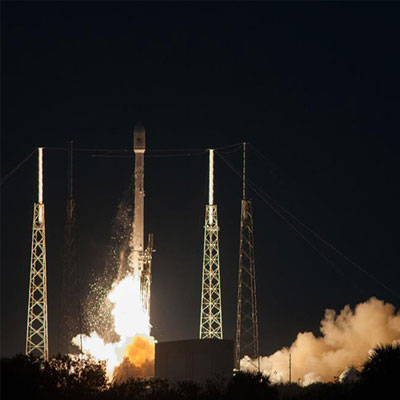
    MUMBAI: When it lifted off with almost perfection from the Cape Canaveral station in Florida in the US, communications satellite SES-8 was a personal victory for the creator of the Tesla vehicle Elon Musk. It was Musk’s company SpaceX’s first successful commercial launch using a Falcon 9 launch vehicle and it helped him break into the duopolistic satellite launch market which is dominated by European firm Arianespace and Russia’s International Launch Services  (which mainly uses Proton rockets). SpaceX has priced its launches in the $55-60 million range.

    While it was a personal landmark for Musk, it was also a victory for the Luxembourg-based SES Satellite management that gleefully watched the $100 million plus 3.1 tonne satellite being hurtled 50,000 miles above the earth into geostationary orbit. Built on a GEO-Star bus by Orbital Sciences, SES-8 is to be co-located with the NSS-6 satellite at 95 degrees east.

    The satellite has 33 Ku-band transponders and is targeting both south Asian and south East Asian clients. “The new satellites will enable improved coverage in fast-growing economies in south Asia and Indo-China,” says a press release from the company.

    In south Asia, it is aimed at providing much needed transmission capacity to India’s DTH and VSat service providers and government. Sources indicated that considering its location at 95 degrees east, one of the potential customers could be India’s first DTH services provider, the Essel group’s Dish TV that is currently beaming off NSS-6 and is also owned by SES. But all the deals will be done through Indian Space Research Organisation’s (ISRO) Antrix arm.

    SES also plans to launch SES-9 in 2015 at 108.2 degree East with extensive Ku-band capacity to give company to the existing SES-7 satellite in order to provide better DTH broadcasting services in South Asia along with north East Asia and Indonesia.

    Although, it was set for launch in early 2013, technical issues pushed the SES-8 to the end of the year.

  • Rs 800 crore earmarked for two communication satellites in current year

    Rs 800 crore earmarked for two communication satellites in current year

    NEW DELHI: A budget of Rs 800 crore has been set aside for the launch of the GSAT 15 and GSAT 16 communication satellites during 2013-14.

    However, the total budget for GSAT-15 is Rs 859.5 crore and the figure for GSAT-16 is Rs 865.5 crore.

    GSAT-15 is a geostationary communication satellite which will carry 24 Ku-band transponders and one GAGAN (GPS Aided Geo Augmented Navigation) payload. GSAT-15 satellite will support the existing Direct-To-Home (DTH) and Very Small Aperture Terminal (VSAT) services in the country and the GAGAN payload will be a part of GAGAN space segment to provide better air traffic management over Indian Air Space.

    GSAT-16 is a geostationary communication satellite which will carry 24 C-band, 12 Ku-band and 12 Upper Extended C-band transponders. GSAT-16 satellite will support satellite based telecommunication, television, VSAT and other services in the country.

    GSAT-15 and GSAT-16 satellites are targeted for launch during the 2014-16 timeframe. The two satellites were approved in July this year, Minister of State in Prime Minister’s Office V Narayansamy told Parliament.

    The revenue earned by ANTRIX Corporation, the commercial arm of the department, through leasing of INSAT/GSAT transponders during the year 2012-13 is approximately Rs 482.67 crore.

    This revenue accrues from service providers of Direct-To-Home (DTH) services, TV Uplink services, Digital Satellite News Gathering (DSNG) services and Very Small Aperture Terminal (VSAT) services. This revenue does not include the capacities provided to various societal applications such a tele-education, tele-medicine, Village Resource Center, Disaster Management and part of public broadcasting services, which are not of the nature of revenue-earning services.

    At present, there are nine operational INSAT/GSAT communication satellites: INSAT-3A, INSAT-3C, INSAT-3E, INSAT-4A, INSAT-4B, INSAT-4CR, GSAT-8, GSAT-10 and GSAT-12. The total number of transponders available at present from these satellites is 195 operating in C, Extended C, Ku, and S-bands.

    Transponders on communication satellites are leased to users after the launch and operationalisation of the satellite. The Department of Space leases the transponders on INSAT/GSAT satellites through ANTRIX.

  • GSAT signs new capacity on SES satellites NSS-11 and SES-9

    GSAT signs new capacity on SES satellites NSS-11 and SES-9

    MUMBAI: SES has announced that the Philippine direct-to-home (DTH) satellite TV provider Global Satellite (GSAT) has contracted its fourth transponder on NSS-11, cementing SES’ orbital position of 108.2 degrees east as one of Asia’s leading video neighbourhoods.

    The multi-year deal will see the transfer of current capacity usage by GSAT from NSS-11 to SES-9, currently scheduled for launch in 2015. When launched, SES-9 will be the largest SES satellite dedicated to the Asia-Pacific region. The new spacecraft will be providing expansion capacity for DTH, enterprise, mobility and government services across the region.

    GSAT, the satellite division of First United Broadcasting Corp (FUBC), launched its DTH service in 2008 on the NSS-11 Ku-band satellite, providing subscribers with access to an improved mix of international programmes including English, Mandarin, Korean, Tagalog, Japanese and Spanish channels. With this additional capacity, GSAT will be offering 12 high definition (HD) channels and 47 standard definition (SD) channels to more than 200,000 subscribers across the Philippine archipelago.

    FUBC president and CEO Philip J. Chien said, “Our ability to offer highly reliable DTH satellite TV to our growing base of subscribers in the Philippines is largely due to the comprehensive footprints of NSS-11, and, from 2015, SES-9. We are confident that SES’ expertise will enable us to grow in our market and increase both the quality and quantity of channels in our pay-TV offerings.”

    SES Asia-Pacific and the Middle East sr. VP commercial Deepak Mathur said, “We are delighted to confirm that GSAT, our long-term customer on NSS-11, will become a key anchor customer on SES-9. At SES, we are investing in new satellites to make sure that our customers enjoy business continuity, as well as delivering vital capacity to support their growth in some of the most dynamic media markets in the world.”

  • Eutelsat 21B satellite lofted in space, commercial launch by mid-Dec

    Eutelsat 21B satellite lofted in space, commercial launch by mid-Dec

    MUMBAI: Eutelsat 21B satellite, which will have a fleet of 40 transponders, was lofted into space on Sunday by an Ariane 5 rocket from Kourou, French Guiana.


    Manoeuvres to circularise the new satellite’s orbit and place it into its operational configuration are now underway, managed by Eutelsat from its Rambouillet teleport, using a global network of earth stations. This will be followed by in-orbit testing before Eutelsat 21B enters full commercial service in mid-December.

    Commenting after launch and first manoeuvres, Eutelsat CEO Michel de Rosen said, “Eutelsat 21B is the first of seven satellites we will launch by mid-2015 to increase our commercial flexibility and our overall resources by almost 30 per cent. We are delighted to see this new satellite on its way to an orbital location that is a point of reference for customers providing professional video, data and government applications in Europe, North Africa, the Middle East and Central Asia.”


    The 40-transponder Eutelsat 21B Ku-band satellite will occupy the 21.5° East position, which has become a location of choice for broadcasters, news agencies, telcos, enterprises and government administrations. Its deployment is expected to enable Eutelsat to expand capacity at this sought-after location by more than 50 per cent.

    The satellite will replace Eutelsat 21A which will continue commercial service at another orbital location. Eutelsat’s 70.5° East orbital position that sits at the crossroads between Europe, Africa, Asia and Australia.


    Eutelsat’s launch programme progresses with the lift-off, scheduled for early December, of the Eutelsat 70B satellite, designed to more than double resources at Eutelsat’s 70.5° East orbital position that sits at the crossroads between Europe, Africa, Asia and Australia.