Category: Satellite Operators

  • MEASAT  names Santosh Desai as sales director – Africa

    MEASAT names Santosh Desai as sales director – Africa

    NEW DELHI: MEASAT Satellite Systems has appointed Santosh Desai as sales director – Africa.

    Desai will be responsible for opening new markets in Africa, developing sales channels, and managing customer accounts for the company.

    Prior to joining Measat, Desai was head of products for satellite communications, media & managed services for a global telecommunications company based in India. 

    He holds a Bachelor Degree in Electronics & Telecommunications Engineering from Pune University and also completed an Executive Programme in International Business Management from Indian Institute of Management.

    Desai has more than 14 years of experience covering international projects, network operations, products, and sales in satellite and media.

  • Eutelsat & SES to develop technology for better broadcast-broadband ecosystem

    Eutelsat & SES to develop technology for better broadcast-broadband ecosystem

    MUMBAI: Satellite companies Eutelsat Communications and SES S.A, engaged in the global video distribution market, have launched a new, industry-wide initiative to develop and promote next-generation video technologies, standards and formats, focusing initially on the reception of satellite services on any screen and on converged broadcast-broadband technologies.


    Called the Future Video Initiative, this new project will assemble representative companies in the converged video value chain to ensure that users everywhere will be able to benefit from a consistent, high quality, state-of-the-art video experience anywhere, anytime and on any device.


    The Initiative was unveiled at the International Broadcasting Convention (IBC), one of the largest broadcast technology conventions, held annually in Amsterdam.


    Experience and feedback on services currently delivering content anywhere, anytime, on any device highlight the challenges of ensuring in parallel high user satisfaction and the largest technical reach. Users want consistent media quality across multiple devices; content distributors have to cope with an ever-increasing growth of media traffic on their networks and therefore want to optimise their investments through maximum audience reach at the most competitive distribution cost.


    The Future Video Initiative will seek to support existing initiatives, alliances, associations, roadmaps and technical standardisation bodies. Its initial scope of work will focus on promoting integrated hybrid broadcast-broadband solutions that increase the reach of HD and Ultra HD with the highest quality, while optimising network costs and meeting the promise of interactive services. It will also facilitate the reception of satellite services on any screen, at home and in public places.


    “Through this initiative, we want to send a clear signal to the industry and public that we need to drive digitalisation and the evolution of our broadcast-broadband ecosystems. The Future Video Initiative is open to all stakeholders and is a catalyst for digital development. The start of this initiative is underpinned by the commitment of two leading satellite operators to bring the best of their infrastructures to support the innovations, roadmaps, standardisations and frameworks necessary to respond to the future needs of consumers and deliver on time on the inclusive promise of a top-quality media experience for the broadest range of users,” said Eutelsat Communications CEO Michel de Rosen and SES CEO Karim Michel Sabbagh.

  • ISRO to receive Gandhi Peace Prize for 2014

    ISRO to receive Gandhi Peace Prize for 2014

    NEW DELHI: The Indian Space Research Organisation (ISRO) will receive the Gandhi Peace Prize for the year 2014.


    The prize will be presented by President Pranab Mukherjee at a function at Rashtrapati Bhavan. 


    The Gandhi Peace Prize was instituted by the Government in 1995 on the occasion of the 125th birth anniversary of Mahatma Gandhi.


    This annual award is given to individuals and institutions for their contributions towards social, economic and political transformation through non-violence and other Gandhian methods. 


    ISRO works with the vision to “harness space technology for national development, while pursuing space science research and planetary exploration.”


    Formed in 1969, ISRO superseded the erstwhile Indian National Committee for Space Research (INCOSPAR), which was established in 1962 by the efforts of independent India’s first Prime Minister Jawaharlal Nehru and his close aide and reputed scientist Dr. Vikram Sarabhai. The establishment of ISRO thus institutionalised space activities in India. 


    ISRO built India’s first satellite, Aryabhata, which was launched by the Soviet Union on 19 April in 1975. In 1980, Rohini became the first satellite to be placed in orbit by an Indian-made launch vehicle, SLV-3. ISRO subsequently developed two other rockets: the Polar Satellite Launch Vehicle (PSLV) for launching satellites into polar orbits and the Geosynchronous Satellite Launch Vehicle (GSLV) for placing satellites into geostationary orbits. These rockets have launched numerous communications satellites and earth observation satellites. Satellite navigation systems like Gagan and IRNSS have been deployed. In January 2014, ISRO successfully used an indigenous cryogenic engine in a GSLV-D5 launch of the GSAT-14.


    On 22 October, 2008, ISRO sent its first mission to the Moon, Chandrayaan-1. On 5 November, 2013, ISRO launched its Mars Orbiter Mission (MOM), which successfully entered Mars orbit on 24 September, 2014, making India the first nation to succeed on its first attempt, and ISRO the fourth space agency in the world and first Asian space agency to reach Mars orbit. 


    The space agency’s future plans include development of GSLV Mk III (for launch of heavier satellites), development of a reusable launch vehicle, human spaceflight, further lunar exploration, interplanetary probes, a solar spacecraft mission, etc.


    ISRO has conducted a variety of operations for both Indian and foreign clients. It has several field installations as assets, and co-operates with the international community as a part of several bilateral and multilateral agreements. As many as 41 foreign satellites have been launched by ISRO’s launch vehicles.

  • ST Teleport expands capacity and partnership with AsiaSat

    ST Teleport expands capacity and partnership with AsiaSat

    MUMBAI: Full-service satellite and fibre communications solutions provider ST Teleport, based in Singapore, has expanded its capacity commitment and strategic partnership with Asia Satellite Telecommunications (AsiaSat) to enhance service offerings to the VSAT and media sectors.


    ST Teleport recently expanded its C-band capacity in Asia with a new dedicated antenna for AsiaSat 4 at the orbital location of 122°E to provide leading-edge satellite-based service solutions for maritime, oil and gas, enterprise, and media businesses. In response to strong user demand for high-quality connectivity solutions for data and video services in Asia, both companies have further strengthened their collaboration to offer enhanced land/sea/air based VSAT services. 


    ST Teleport’s advanced earth station complex facilities in Singapore is now capable of connecting to AsiaSat’s comprehensive fleet of satellites, including the new Ku-band capacity on AsiaSat 8’s South East Asia and Middle East beams, to offer more choices to customers. The extension of the partnership will accelerate growth opportunities for ST Teleport and increase its offerings to customers looking for fast and flexible satellite communications solutions at competitive prices. 


    “Our partnership with AsiaSat will further strengthen both of our positions in the satellite communication services sector. Access to more AsiaSat capacity will enable ST Teleport to efficiently expand our services geographically and to serve more diverse industries and businesses. ST Teleport’s continuous upgrading of its network and capacity demonstrates its commitment to provide advanced and cost effective satellite solutions to our data, maritime and media clients locally and internationally,” said ST Teleport managing director Joseph Chan.


    “We are pleased with this expanded partnership with ST Teleport. We aim to bring a new level of high performance, cost-effective satellite solutions and comprehensive coverage to ST Teleport and their clients through this stronger partnership. This collaboration also underscores our commitment to working closer with our partners and clients to deliver the quality, value and choice of capacity that meet their service needs,” added AsiaSat vice president sales and business development Philip Balaam.

  • Fashion One launches new Ultra HD channel worldwide with MEASAT

    Fashion One launches new Ultra HD channel worldwide with MEASAT

    MUMBAI: Malaysian communication satellite operator, MEASAT and New York-based Fashion One Television LLC have launched Fashion One 4K, the first English language Ultra HD channel in the world on the MEASAT-3a satellite.


    Distributed free-to-air through the MEASAT-3a satellite at the 91.5 degrees East video hot slot, the channel will reach over 130 million viewers across Asia Pacific, Middle East, Australia and East Africa.


    Speaking on the launch Fashion One, Television LLC COO Gleb Livshits said, “We are tremendously excited to launch Fashion One 4K, the world’s first global Ultra HD channel dedicated to fashion and entertainment. We have invested heavily in producing Ultra HD content over the last two years, and I’m delighted that we are finally able to share the channel with our viewers.” 


    MEASAT CEO Paul Brown-Kenyon added, “Fashion One is a global lifestyle and entertainment TV network, supporting a large and rapidly expanding customer base.”


    “Our flexible solutions and collaborative approach led Fashion One to select MEASAT for the launch of Fashion One 4K. We look forward to working with more channels and content providers to help jump start this exciting new video segment,” Brown-Kenyon added.


    Fashion One 4K was launched concurrently on SES Satellite, reaching over 67 million households across North America at 103 degrees West (SES-3) and over 23 million households across South America at 47.5 degrees West (NSS-806). 


    Fashion One has been upgrading its production format from HD to ultra HD since 2014 and now owns an extensive library of ultra HD content with 100 per cent content rights.


    In Europe, the channel is broadcast under the brand Fashion 4K, reaching over 116 million households at 19.2 degrees East.

  • Thaicom promotes Paiboon Panuwattanawong as CEO

    Thaicom promotes Paiboon Panuwattanawong as CEO

    MUMBAI: Asian satellite operator Thaicom Plc has appointed Paiboon Panuwattanawong as the new CEO and authorised director of Thaicom, effective from October 1. 


    Panuwattanawong has been serving Thaicom for 23 years now with the last six years in the role of chief technical officer (CTO).


    The previous CEO, Suphajee Suthumpun, will serve as an adviser to support the new CEO during the leadership transition period from 1 October – 31 December.  


    During her four years at Thaicom, Suthumpun created sustainable growth and success for Thaicom and the Intouch Group. 


    Suthumpun’s efforts and accomplishments have been widely recognised and honoured by many reputable customers, Thai and international institutions alike.


    Over the past few years, the company has been implementing a succession plan in order to ensure business continuity. Panuwattanawong was identified as the natural successor to Suthumpun as CEO. 


    Bachelor of Engineering (Electronics) from Yale University, Panuwattanawong has also attended the Directors Certification Program at Thai Institute of Directors Association in 2009. 

  • ISRO successfully launches communication satellite GSLV-D6

    ISRO successfully launches communication satellite GSLV-D6

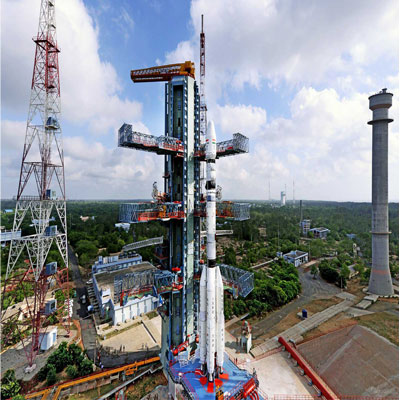
    MUMBAI: The Indian Space Research Organisation (ISRO) has successfully launched the communication satellite GSLV-D6. 


    GSLV-D6 will launch 2117 kg GSAT-6, an advanced communication satellite, into a GTO. GSAT-6 will provide S-band communication services in the country. After reaching GTO, GSAT-6 will use its own propulsion system to reach its final geostationary orbital home and will be stationed 0 at 83 East longitude.


    This is the ninth flight of India’s Geosynchronous Satellite Launch Vehicle (GSLV). It is also the fifth developmental flight of GSLV. This is the third time the indigenously developed Cryogenic Upper Stage (CUS) is being carried on-board during a GSLV flight.


    GSLV-D6 flight is significant since it intends to continue the testing of CUS. GSLV is designed to inject two ton class of communication satellites into Geosynchronous Transfer Orbit (GTO).


    GSLV-D6 was launched from the second launch pad at Satish Dhawan Space Centre SHAR (SDSC SHAR), Sriharikota.


    GSLV-D6 vehicle is configured with all its three stages including the CUS similar to the ones successfully flown during the previous GSLV-D5 mission in January 2014. GSLV-D5 successfully placed GSAT-14 satellite carried on-board in the intended GTO very accurately.


    The metallic payload fairing of GSLV-D6 has a diameter of 3.4 m. The overall length of GSLV-D6 is 49.1 m with a lift-off mass of 416 t.


    The CUS being flown in GSLV-D6 is designated as CUS-06. The main engine and two smaller steering engines of CUS together develop a nominal thrust of 73.55 kN in vacuum. During the flight, CUS fires for a nominal duration of 720 seconds.


    S-band telemetry and C-band transponders enable GSLV-D6 performance monitoring, tracking, range safety/flight safety and Preliminary Orbit Determination (POD).

  • Aircom Pacific leases transponders across AsiaSat fleet for in-flight entertainment delivery

    Aircom Pacific leases transponders across AsiaSat fleet for in-flight entertainment delivery

    MUMBAI: Asian satellite operator Asia Satellite Telecommunications Co. Ltd. (AsiaSat) has reached an agreement with in-flight entertainment and connectivity service provider Aircom Pacific, Inc. for using AsiaSat’s transponder capacity and uplinking services.


    Under the agreement, Aircom Pacific will use Ka-band and Ku-band capacity on AsiaSat 7 and AsiaSat 8 to deliver its in-flight entertainment and connectivity services for airlines flying routes over Asia. These services include Wifi broadband Internet, streaming TV and videos, streaming gaming, cellular connectivity, and real-time Duty Free shopping and travel services, enabling passengers to enjoy more comprehensive entertainment options during their flight while staying connected to their work and social networks at all times.


    “We chose AsiaSat as our satellite partner because it offers us the capacity, coverage and expertise in aero services necessary to ensure a successful implementation in the coming calendar year. The airline industry is intensely competitive. In-flight entertainment and connectivity will be the key for airlines to achieve differentiation and to boost passenger loyalty. Working with AsiaSat to launch this brand new range of in-flight services, we anticipate providing our partner airlines better value, improved and more convenient services to their passengers,” said Aircom Pacific chief marketing officer Alan Gallant.


    “Advanced satellite solutions are playing an increasingly important role in enabling in-flight service providers and airlines to offer the best possible entertainment and connectivity solution to their passengers. We are excited that AsiaSat’s satellite capacity was selected by Aircom Pacific to deliver more sophisticated in-flight communications and entertainment services that meet passengers’ growing demand for higher-quality entertainment and connectivity,” said AsiaSat vice president, sales and business development Philip Balaam.

  • ISRO to increase transponder capacity for Indian DTH players to use INSAT

    ISRO to increase transponder capacity for Indian DTH players to use INSAT

    NEW DELHI: With five Direct-to-Home (DTH) service providers using transponder capacity leased from foreign satellites, the Indian Space Research Organization (ISRO) is taking measures to augment satellite capacity in India so that these users have the option to migrate to the INSAT system. 


    Giving this information, Space Department Minister Jitenda Singh told the Lok Sabha today that ISRO has given a proposal for pricing of satellite transponders for public and non-government users.


    A proposal for continuing the existing method of transponder pricing, which is based on type of services, band of operations, coverage area, power level is under consideration. 


    There are 13 INSAT/GSAT satellites in orbit, out of which 11 are communication satellites and two are meteorological satellites. In INSAT/GSAT communication satellite systems, there are about 37 Government users and about 49 non-Government users. 


    The transponder characteristics in terms of power, coverage, frequency band, etc., vary according to the type of service, which requires differential pricing.  

  • ISRO spends Rs 9 crore to help States bring literacy to rural areas

    ISRO spends Rs 9 crore to help States bring literacy to rural areas

    NEW DELHI: A sum of approximately Rs 9 crore has been spent over the last three years by the Indian Space Research Organization (ISRO) to provide the necessary satellite bandwidth to respective State Governments under the Gramsat Scheme.


    The expenditure towards content generation and transmission is borne by the State Government of Gujarat, Madhya Pradesh, Orissa and Karnataka for the operation in their respective states. 


    The details of the programme transmitted under the scheme have been under the purview of the concerned State Government. Generally, these programmes cover areas such as mass education, tribal culture, anganwadi workers’ training, fisheries, forest and environment. 


    The State Governments concerned formulate the programmes to be transmitted on the Gramsat network and include programmes such as ‘Kuch Soche Kuch Samjhe’, ‘Bhor Honewali Hai’, Kahani Baba’, ‘Ek Tha Raja’, ‘Baat Hamari’, to promote tribal development and culture. 


    The dedicated Gramsat satellite is being used by ISRO in keeping in mind the urgent need to eradicate illiteracy in the rural belt.


    The Gramsat satellite carries six to eight high powered C-band transponders, which together with video compression techniques can disseminate regional and cultural specific audio-visual programmes of relevance in each of the regional languages through rebroadcast mode on an ordinary TV set.


    The high power in C-band has enabled even remote area viewers outside the reach of the TV transmitters to receive programmers of their choice in a direct reception mode with a simple dish antenna.


    The salient features of GRAMSAT projects are its communications networks are at the state level connecting the state capital to districts, blocks and enabling a reach to villages; providing computer connectivity data broadcasting, TV-broadcasting facilities having applications like e- governance, development information, teleconferencing, helping disaster management; and providing rural-education broadcasting.


    The Gramsat projects have an appropriate combination interactive training at district and block levels employing suitable configuration; broadcasting services for rural development; computer interconnectivity and data exchange services; and tele-health and tele-medicine services.