Category: Satellite Operators

  • Orbitaid fuels India’s space race with new 2m dollars R&D hub in Bengaluru

    Orbitaid fuels India’s space race with new 2m dollars R&D hub in Bengaluru

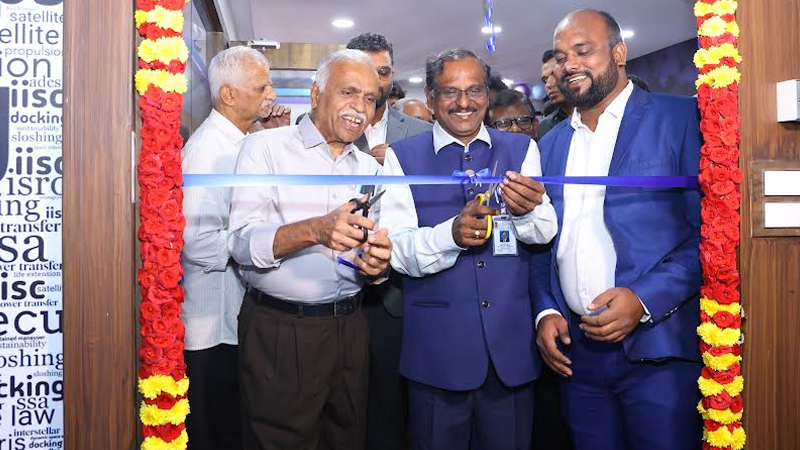
    MUMBAI: Talk about rocket fuel for ambition! India’s space dreams just got a top-up. Orbitaid Aerospace, the country’s first startup dedicated to On-Orbit Servicing and Refuelling (OOSR), has unveiled a sparkling new research and development facility in Bengaluru, setting the stage for India’s next big leap in space sustainability.

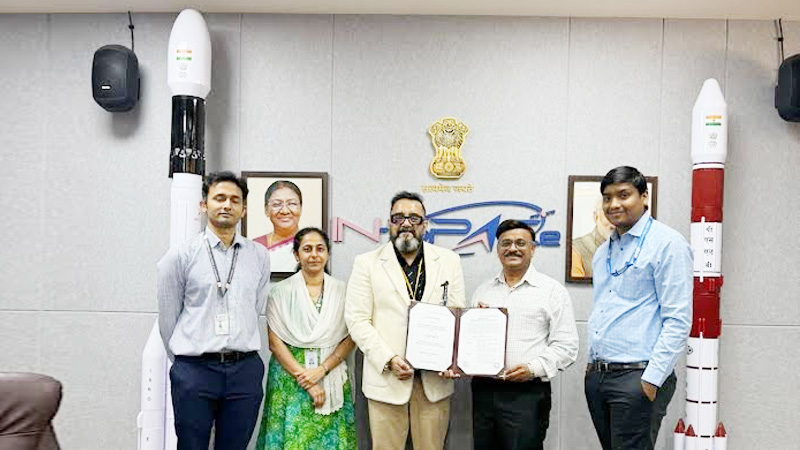
    The 2 million dollars, 6,500 square feet centre was inaugurated by none other than ISRO chairman Dr V. Narayanan, who called the initiative a timely boost for India’s growing private space ecosystem. The hub houses India’s largest commercial infrastructure for Rendezvous proximity operations and docking (RPOD), think of it as a cosmic pit stop where satellites can refuel and extend their lifespan instead of burning out.

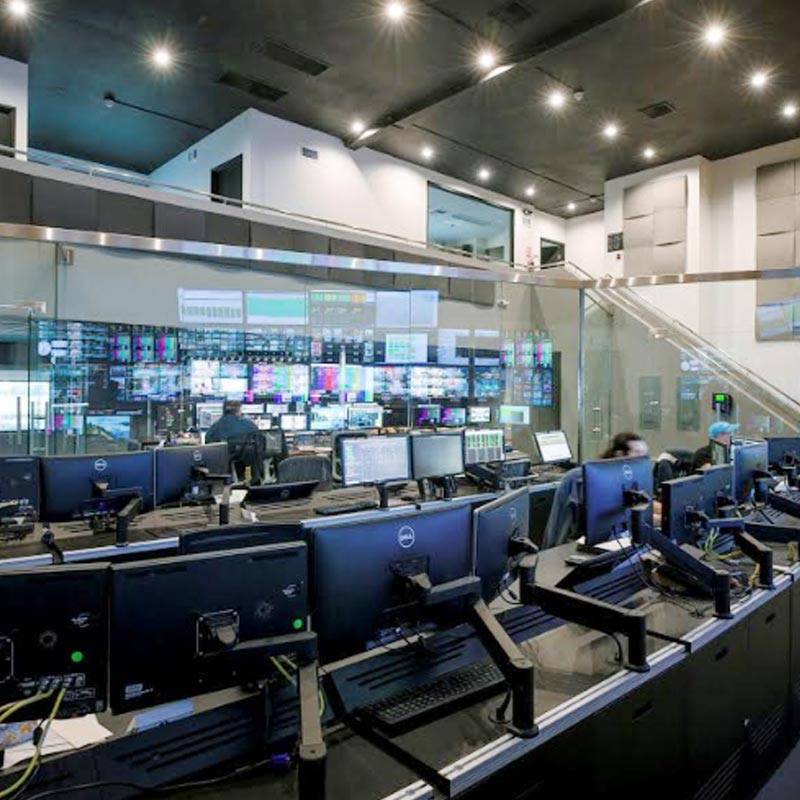
    Complete with a high-end control room, a class 10,000 cleanroom, and fuel-transfer facilities, the setup signals Orbitaid’s intent to play on the global stage. Dr Narayanan praised the effort, noting that docking and refuelling interfaces will be vital to India’s future missions and confirmed that ISRO is now welcoming private players to collaborate on such technologies.

    For Orbitaid, the new facility isn’t just a milestone, it’s a mission. Founder and ceo Sakthikumar Ramachandran said the company’s indigenously built SIDRP interface has reached technology readiness level 7, putting them in pole position to deliver life-extension services to satellites in India and beyond.

    And Bengaluru is only the beginning. The company plans to expand into Tamil Nadu with a manufacturing hub for propellant handling and satellite servicing, building what it calls a “circular economy” for space tech. Early backer Unicorn India Ventures, whose managing partner Bhaskar Majumdar lauded Orbitaid’s discipline and focus, is doubling down on support.

    The launch event drew dignitaries including the consuls general of Germany, Italy, and Switzerland, along with Startuptn and Unicorn India Ventures representatives. ISRO officials, defence leaders, academics, and space industry executives also turned up, underscoring how the startup has captured attention well beyond the launchpad.

  • SES seals Intelsat takeover, creating satellite giant with 120-bird fleet

    SES seals Intelsat takeover, creating satellite giant with 120-bird fleet

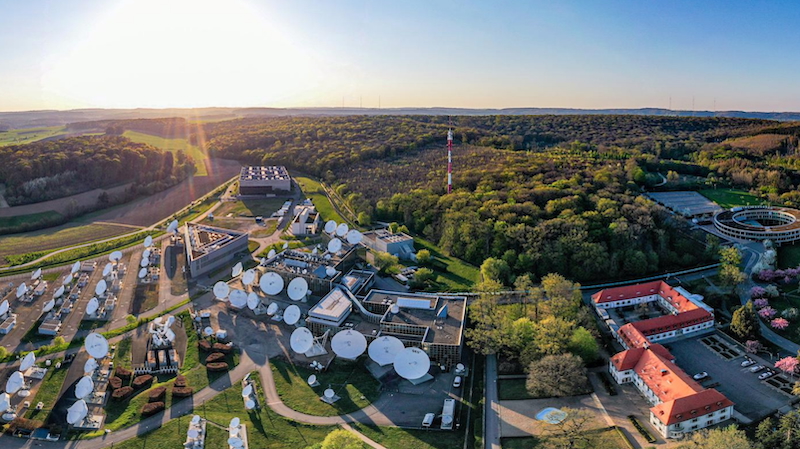
    LUXEMBOURG:  Satellite heavyweight SES has wrapped up its acquisition of Intelsat, creating a turbocharged space communications firm with a 120-strong satellite arsenal spanning geostationary (Geo), medium Earth orbit (Meo), and strategic access to low Earth orbit (Leo) assets. The announcement was made on 17 July 2025. 

    The deal instantly boosts SES’s clout in high-growth verticals, with around 60 per cent of revenues now flowing from aviation, maritime, government, and media clients. The expanded fleet includes roughly 90 Geo and nearly 30 Meo satellites, with the new entity operating across a rich spectrum of bands including C, Ku, Ka, military Ka, X, and UHF—enabling tailored, premium-grade connectivity solutions globally.

    “Today, we’re not just merging two companies — we’re creating a stronger company, built for the future. I want to extend a warm welcome to all new employees, customers, and partners,” said SES CEO Adel Al-Saleh. “In this new chapter, we are bringing together a powerful mix of talented people, network infrastructure, spectrum, innovation, and global relationships that will allow us to deliver next-generation connectivity and space-enabled services in smarter and quicker ways.”

    The financials are just as skyward. The merged outfit expects pro forma revenue of €3.7 billion growing at a low- to mid-single digit CAGR between 2024 and 2028. Adjusted EBITDA is pegged at €1.8 billion with mid-single digit growth including synergies, while adjusted free cash flow is set to top €1 billion by 2027–2028 (pre-IRIS2).

    A hefty €8 billion contract backlog provides strong revenue visibility, while cost synergies—valued at a net present value of €2.4 billion—are expected to deliver an annual run rate of €370 million, with 70 per cent realised within three years. Savings will come from merged fleets, streamlined ops, and smarter procurement.
    SES, which remains headquartered in Luxembourg and listed on both the Paris and Luxembourg bourses ), will maintain a key base in McLean, Virginia. The firm has set its sights firmly on emerging frontiers including IoT, direct-to-device comms, space situational awareness, quantum key distribution, and inter-satellite data relays. Annual capex (excluding IRIS2) is expected to average €600–650 million through 2028.

    SES has also signalled intent to raise its base dividend once it achieves sub-3x net leverage, expected within 12–18 months.

    Legal and financial advisors on the transaction read like a who’s who: SES leaned on Guggenheim Securities, Morgan Stanley, Deutsche Bank, and legal bigwigs from Gibson Dunn to Hogan Lovells. Intelsat was advised by PJT Partners, with legal counsel from Skadden, Wiley Rein, and Elvinger Hoss Prussen.

    The move solidifies SES’s place among the top tier of global satellite operators—now armed with more firepower, deeper pockets, and sharper intent to lead the new space race.

  • Elon Musk’s Starlink clears final regulatory hurdle in India

    Elon Musk’s Starlink clears final regulatory hurdle in India

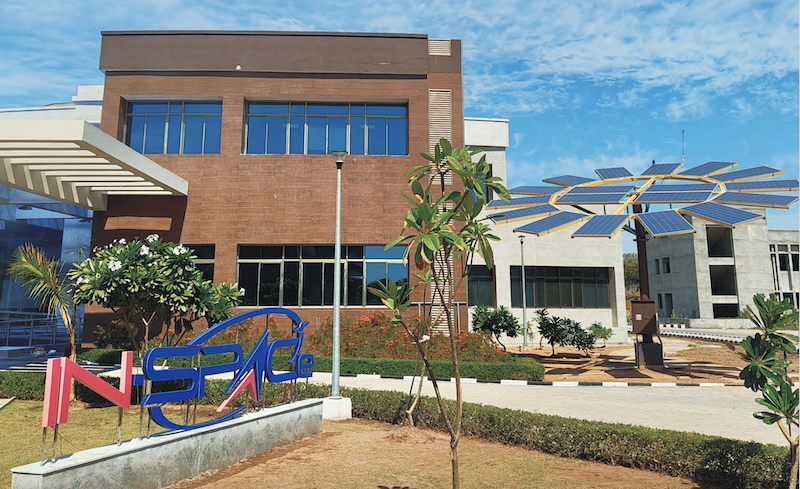
    MUMBAI: Elon Musk’s satellite internet venture Starlink has finally received the green light from India’s space regulator, In-Space, clearing the last major regulatory roadblock to launch commercial operations in the country.

    On 8 July, the Indian National Space Promotion and Authorisation Centre (In-Space) Igranted Starlink permission to operate its Gen1 non-Indian GSO and NGSO satellite constellation for broadband services over Indian territory. The authorisation is valid until July 7, 2030.

    The nod includes specific frequency band allocations. For gateway beams, Starlink can use uplink bands of 27.5–29.1 GHz and 29.5–30 GHz, and downlink bands of 17.8–18.6 GHz and 18.8–19.3 GHz. For user terminals, the uplink band is 14.0–14.5 GHz (LHCP), while the downlink is 10.7–12.7 GHz (RHCP).

    The approval follows Starlink’s receipt of a Global Mobile Personal Communication by Satellite (GMPCS) licence from the department of telecommunications (DoT), positioning it as the third player—after Eutelsat-OneWeb and Reliance Jio—to secure full clearance to provide satellite broadband in India.

    Next on the to-do list: acquiring administrative spectrum from the government, setting up ground stations, and passing security compliance trials. Starlink plans to establish three gateway stations across the country as part of its rollout.

    Sources say the DoT will soon allocate trial spectrum to facilitate security demonstrations. Final spectrum pricing and allocation guidelines are also expected shortly, following recent recommendations from TRAI.

    Starlink has already inked deals with Indian VSAT providers, signalling a B2B and B2G push ahead of a consumer rollout. Insiders hint that Starlink could soon begin offering direct-to-consumer connections via its website, though pricing is still under wraps. A promotional plan pegged at Rs 840 per month is reportedly on the table, but not officially confirmed.

    The road to India hasn’t been easy. Starlink has waited since 2022 for regulatory approvals, facing national security concerns and policy disputes with Jio over spectrum allocation. Eventually, the government backed Musk’s view that satellite spectrum should be assigned, not auctioned.

    Meanwhile, Amazon’s rival satcom venture, Project Kuiper, remains stuck in regulatory limbo. Despite completing operational and security checks, its application is still under review. Kuiper is proposing a more ambitious infrastructure plan, including 10 gateways and PoPs in Mumbai and Chennai—well ahead of Starlink’s three.

    India, the world’s second-largest internet market, is shaping up as a critical battleground for satellite broadband. With Musk’s firm now officially in the race, the stage is set for a high-stakes space-age showdown.

  • Intelsat shoots for the stars – and lands squarely in India’s broadcast orbit

    Intelsat shoots for the stars – and lands squarely in India’s broadcast orbit

    MUMBAI:  Global satellite heavyweight Intelsat has scored a milestone regulatory victory in India — one that opens up the floodgates for cross-border broadcast services, new business, and deeper foreign participation in the subcontinent’s satellite economy.

    In a landmark decision, the Indian National Space Promotion and Authorisation Centre (In-Space) has granted Intelsat permission to directly provide satellite bandwidth to Indian media and broadcast companies. The approval covers four of Intelsat’s geostationary satellites — IS-17, IS-20, IS-36 and IS-39 — all offering high-powered C-band coverage over India.

    This isn’t just regulatory housekeeping — it’s India’s formal nod to a new satellite playbook, and Intelsat is among the first foreign players to officially get a seat at the table.

    The green light gives Indian broadcasters access to Intelsat’s fleet for everything from live news uplinks and sports distribution to linear TV delivery and multi-region content sharing. It paves the way for enhanced scalability, quality, and coverage — especially important as India’s video consumption skyrockets across satellite, cable, and OTT.

    The newly authorised satellites support high-capacity, high-reliability services, giving Indian broadcasters a powerful backup or replacement for ageing domestic satellite capacity. Intelsat’s C-band services are known for their robustness — particularly valuable in monsoon-prone regions where signal integrity can be patchy.
    The approval has already translated into new revenue: three of India’s largest media networks — rumoured to include a mix of news, regional, and GEC (general entertainment channel) players — have signed contracts with Intelsat following the IIn-space go-ahead. The deals cover a mix of primary satellite carriage, content redistribution, and international footprint expansion.

    While the names remain under wraps (JioStar is rumoured to have taken up six C-band transponders), industry watchers say this move could trigger a domino effect, with other players lining up for capacity.

    This move also signals India’s growing openness to foreign satellite operators. Previously, non-Indian entities faced a labyrinth of regulatory hurdles — needing to lease capacity through Indian agencies or enter into convoluted sub-licensing arrangements. With In-Space actively streamlining permissions under India’s commercial space policy, the gates are now open for direct engagement, competitive pricing, and tech transfer.

    “This approval represents a significant step forward in Intelsat’s contribution to India’s space commerce sector, a source of great national pride,” said Intelsat regional vice-president for Asia Pacific Gaurav Kharod. “Our extensive satellite network with four satellites covering the region will provide Indian broadcasters with reliable, high-quality connectivity solutions that meet their evolving needs. This authorisation enables us to better serve our customers and contribute to India’s growing media landscape.”

    India is now one of the fastest-growing video markets in the world, with over 900 TV channels, tens of thousands of cable and DTH operators, and an exploding OTT sector. Satellite remains a crucial backbone for content distribution, particularly in rural and remote geographies where fibre is limited and terrestrial networks are patchy.

    For Intelsat — a company with a six-decade legacy and one of the largest integrated satellite-terrestrial networks globally — this opens up a vast new revenue corridor in south Asia. It also gives them pole position as Indian broadcasters look to upgrade infrastructure, meet rising bandwidth demands, and adopt cloud-connected satellite workflows.

    The firm has long provided secure communications to governments, enterprises, and NGOs. But with this regulatory leap, India’s broadcast sector becomes its newest playground.

    As India unlocks its space economy and media sector evolves beyond borders, Intelsat’s entry may just be the first of many new uplinks between Indian content and global audiences.

  • In-Space extends authorisation deadline for foreign satellites

    In-Space extends authorisation deadline for foreign satellites

    MUMBAI:  India’s space regulator, The Indian National Space Promotion & Authorisation Centre (In-Space),  has granted a six-month extension for foreign satellites to continue providing communication and broadcasting services in India without formal authorisation.

    In-Space announced on Monday that foreign satellite operators now have until 30 September to obtain regulatory approval, extending the previous 31 March deadline.

    The decision follows concerns that popular television channels including Star, Zee and Sony could face service disruptions from 1 April if the authorisation process remained unchanged.

    “The cut-off date for continuation of the provisioning of existing non-Indian satellites capacity and the associated lease contracts has been extended to 30 September 2025,” In-Space stated in its announcement.

    Existing lease agreements set to expire during this period may be extended until the new deadline using current processes. However, the regulator emphasised that any new foreign satellites or additional capacity from existing satellites will require immediate In-Space authorisation.

    From 1 October, only foreign satellites with proper authorisation will be permitted to provide capacity in India across all frequency bands.

    The extension primarily benefits existing satellite arrangements, including those operating through lease agreements with New Space India Ltd (NSIL)/Antrix or through direct C-Band capacity leases from non-Indian operators.

  • C-DOT-Silizium Circuits partner to develop LEO satellite components

    C-DOT-Silizium Circuits partner to develop LEO satellite components

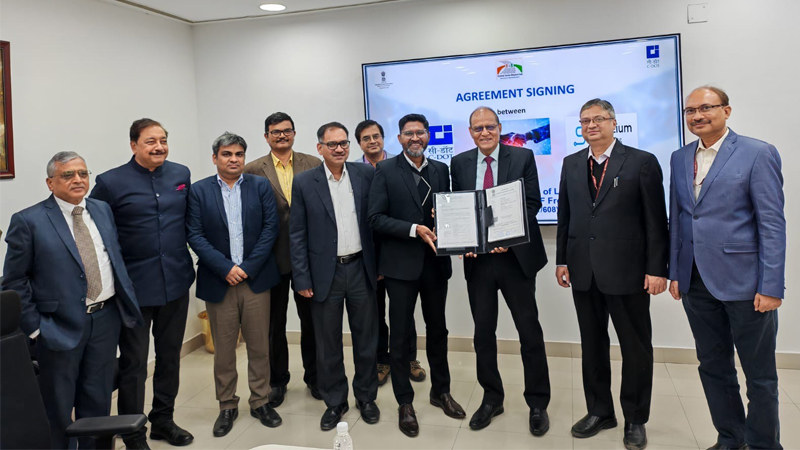
    MUMBAI: In a breakthrough collaboration poised to revolutionise India’s telecommunications sector, the Centre for Development of Telematics (C-DOT) and Silizium Circuits Pvt Ltd have joined hands to design and develop cutting-edge LEO satellite components and GNSS RF Front-End ASIC. This ambitious partnership signifies an exciting chapter in India’s pursuit of self-reliant, next-generation telecom technology, laying the groundwork for state-of-the-art advancements that will shape the future of connectivity.

    From the depths of innovation to the skies above, something transformative is being engineered—technology that not only strengthens India’s telecom infrastructure but also places the nation firmly on the global map of telecom leadership.

    Stay tuned, because this is just the beginning of something extraordinary.

    The agreement was signed under the Telecom Technology Development Fund (TTDF) scheme, launched by the department of telecommunications (DoT), Government of India. The scheme supports Indian startups, academic institutions, and R&D bodies in developing affordable and innovative telecommunication solutions to bridge the nation’s digital divide.

    Silizium Circuits, leveraging the support of TTDF, will focus on creating advanced semiconductor solutions addressing critical challenges in the satellite communication ecosystem, including power efficiency, high-speed data transmission, and signal integrity. By utilising its expertise in analog, RF, and mixed-signal technologies, the company will contribute to reliable, high-performance LEO satellite infrastructure. The project targets both the global market and India’s goal of enhancing urban and rural connectivity while strengthening next-generation broadband services.

    The agreement was formalised during a ceremony attended by C-DOT CEO, Rajkumar Upadhyay; Silizium Circuits, co-founder & CEO, Rijin John; C-DOT directors, Pankaj Kumar Dalela & Shikha Srivastava; and senior officials from DoT, including DDG (TTDF), Parag Agarwal, and DDG (SRI), Vinod Kumar.

    Upadhyay underlined the importance of developing own chips for communication needs and emphasised the support of C-DOT including its infrastructure during the project implementation.

    This partnership showcases India’s resolve to innovate and build indigenous solutions for satellite communication, advancing the country’s self-reliance in semiconductor technology and telecommunications.

  • Three Thaicom satellites permitted to provide services over India

    Three Thaicom satellites permitted to provide services over India

    MUMBAI: It’s being talked about as a bit of a regulatory breakthrough. 

    Thai communications  and satellite space tech firm Thaicom Public Co Ltd’s 100 per cent owned Indian subsidiary IPStar India Pvt Ltd (IPstar)  has got the go-ahead from the Indian National Space Promotion & Authorisation Centre (InSpace)  to provide services through its  satellites under India’s new space policy.

    Among the birds  that have got the go-ahead include: the ageing Thaicom-4 which was launched in 2005 and is also called IPstar! located at 119.5 degrees east, Thaicom 8 at 78.5 degrees east. The agency also granted an authorisation for Thaicom’s new satellite at 119.5 degrees East, Thaicom 9 , the next-generation satellite with software-defined high throughput technology that will be launched in 2025. 

    Thaicom’s satellite services will focus on delivering broadband satellite solutions to enhance India’s digital infrastructure, targeting not only rural markets but also underserved areas with connectivity challenges. This initiative aims to contribute to bridging the digital divide in the region while meet the growing and diverse demand for satellite services in India.

     Thaicom’s chief executive officer Patompob (Nile) Suwansiri stated that the company is dedicated to “serving India in the long term. We are convinced that our extensive knowledge in the satellite industry and commitment to broadband service delivery will enable us to meet India’s insatiable demand for broadband connectivity, he added. 

  • VMLLC secures IN-SPACe nod to market PT Telkomsat satellite in India

    VMLLC secures IN-SPACe nod to market PT Telkomsat satellite in India

    Mumbai: Vishal Mathur Consultants LLP (VMLLC) has earned authorisation from the Indian National Space Promotion and Authorisation Center (IN-SPACe) to market, promote, and lease PT Telkomsat’s C-band satellite capacity in India. This significant milestone enables VMLLC to serve HITS platforms and broadcasters by offering advanced satellite solutions tailored to the Indian market.

    VMLLC, founded by Vishal Mathur, a veteran in the satellite and media industry with over 25 years of expertise, is set to revolutionise India’s broadcasting ecosystem. Vishal Mathur’s rich career includes pivotal roles at leading organisations such as ESPN, Zee Telefilms Ltd., Satellite Operator SES, MEASAT, and Kacific Broadband.

    Reflecting on this achievement, Vishal Mathur remarked, “Our partnership with PT Telkomsat marks a new chapter in India’s satellite industry, offering innovative solutions to broadcasters and HITS platforms. With IN-SPACe’s support, we are excited to deliver reliable, high-quality C-band satellite services and enable India’s broadcasting sector to scale new heights.”

    The IN-SPACe authorisation empowers VMLLC to act as a vital bridge between PT Telkomsat and India’s growing broadcast industry, enhancing connectivity and operational efficiency for its partners.

    VMLLC’s entry into the Indian satellite market underscores its commitment to providing cutting-edge solutions while reinforcing its position as a trusted leader in the industry.


  • Avia’s inaugural ‘Japan in View’ highlights Japan’s future of digital entertainment

    Avia’s inaugural ‘Japan in View’ highlights Japan’s future of digital entertainment

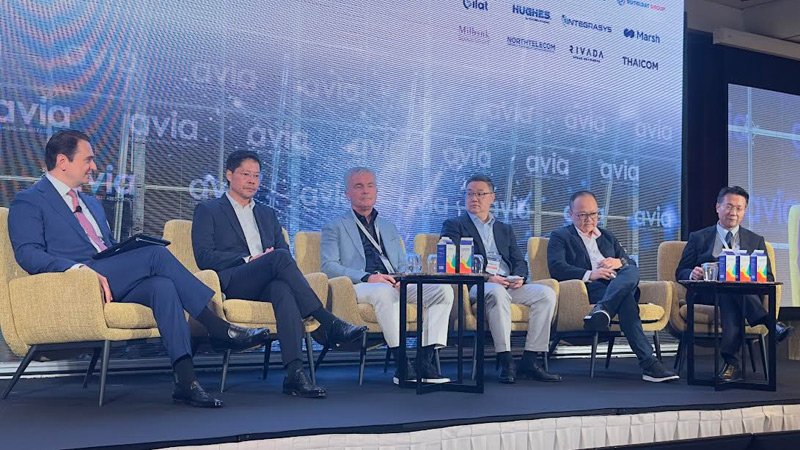
    Tokyo – The Asia Video Industry Association (AVIA) held its very first Japan focused industry event, Japan in View, on 29 October at the Andaz Tokyo, bringing together over 130 international and regional players from across the video and streaming industry.

    The conference opened and dove straight into the streaming potential of Japan, with TVer Inc., executive managing director & COO Shinjiro Ninagawa, sharing his ambitions of growing TVer to thrice as large as it was now, with the business doubling over the next two – three years. Dazn CEO (Japan, Asia) Yu Sasamoto, also said that Japan was still at the tipping point of the shift and transformation from traditional linear programming to digital services, and he expected more disruption from new players, with the landscape shifting significantly in the next five years.

    Ampd Analytics (an MPA company) VP, Sam Yousif further expanded on the opportunities for Japan, opening his session describing Japan as “a lucrative, consistently growing multi-billion-dollar industry with a complex competitive landscape and unique customer behaviour.” In Asia (excluding China), Japan was the largest Video On Demand (VOD) market in terms of revenue with $ 6 billion in 2024, almost two times bigger than the next biggest market, Australia. Revenue had also been growing near double digits every year in the past four years, with a Cagr of 17 per cent from 2020 – 2024. VOD consumers also had diverse options, both within and outside of the industry, with VOD only representing six per cent of their free time. Japanese consumers also exhibited unique viewing behaviour not seen across other markets, including a distinct preference for local content. 78 per cent of the total hours viewed on VOD in Japan was with Japanese content, with 93 per cent of VOD users consuming Japanese content and US content only at 16 per cent. And interestingly, there was also a large, shared economy where the top titles, mostly anime, were shared across all the platforms. “With so much content shared across so many platforms, it feels more like a streaming cooperation in Japan than a streaming war,” added Avia CEO Louis Boswell.

    However, beyond anime, panelists believed that Japan was only scratching the surface in terms of the international opportunity for the export of its content. “If the industry can turn and create content that can be appealing both for Japanese audiences and globally, it’s enormous value and enormous opportunity,” said Iconique Pictures executive producer David Shin.What was key was to take the wonderful stories that were indigenous to Japan and elevate them with a high level of storytelling that could propel the industry and that content overseas, added Shin.

    And with the success that Korean content has had internationally, Tving chief content officer Sun Hong Min shared that the foremost reason behind TVING’s impressive growth this year was their strategic partnership with leading content providers, that enabled them to offer a diverse arrangement of high-quality premium content that resonated deeply with their users. Min was also of the opinion that local content could resonate on a global scale by combining universal human elements with a narrative deeply rooted in local history, culture and sentiment.

    Partnerships were also key to growing the business for Warner Bros. Discovery general manager – Japan, Buddy Marini across both linear and streaming, having recently announced a new partnership with U-Next to launch Max in Japan. For local giant J:Com, general manager, media business division, Kaz Sasajima, the digital domain too represented room for growth, particularly in the space of professionally produced content. And wrapping up in the closing panel, for TV5Monde, managing director, APAC, Alexandre Muller, AI was presenting new possibilities, notably in terms of providing greater access to content across multiple languages. “Definitely the place to be is in Asia Pacific, and this is really where the growth is and I can see growth both in linear and as well as on OTT,” added Muller.

  • Gilat wins $4M contract to deliver connectivity to rural areas in Latin America

    Gilat wins $4M contract to deliver connectivity to rural areas in Latin America

    Mumbai: Gilat Satellite Networks a worldwide leader in satellite networking technology, solutions, and services, announced that it has secured approximately a $4 million contract to provide rural connectivity including banking transactions in Latin America for three years.

    Gilat provides critical connectivity for people living in remote areas who rely on the bank for payment services, as well as support services for senior citizens, families, and other underserved populations.  

    Gilat provides satellite communications solutions to distant branches, as well as satellite backup links, to ensure connectivity and business continuity. This is critical for the bank’s operation for core banking, e-mail, security, ATMs and Point of Sale.

    “We are very pleased to support essential banking services in the rural areas of Latin America” stated Gilat chief commercial officer Ron Levin. “Over the years, we have built a robust satellite network, continuously enhancing it with the latest technological advancements. This ensures that we consistently meet the high-quality standards required for business continuity, even in remote areas and in the face of potential disasters.”