Category: Satellite Launches

  • SpaceX successfully launches Thaicom 6 satellite to GTO

    SpaceX successfully launches Thaicom 6 satellite to GTO

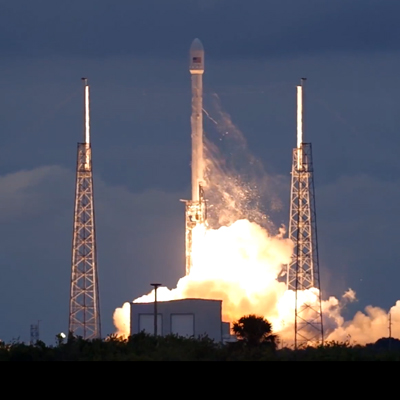
    FLORIDA: Today, Space Exploration Technologies (SpaceX) successfully launched the THAICOM 6 satellite for leading Asian satellite operator THAICOM.  Falcon 9 delivered THAICOM 6 to its targeted 295 x 90,000 km geosynchronous transfer orbit at 22.5 degrees inclination.  The Falcon 9 launch vehicle performed as expected, meeting 100% of mission objectives.


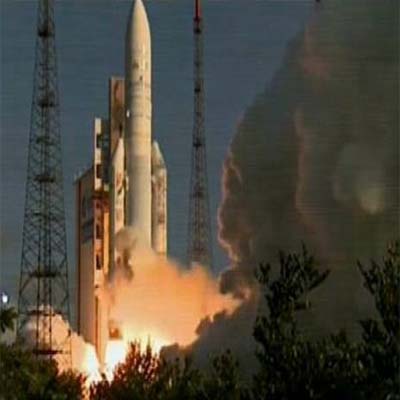
    Falcon 9 lifted off from Space Launch Complex 40 (SLC-40) at 5:06 PM Eastern Time.  Approximately 184 seconds into flight, Falcon 9’s second stage’s single Merlin vacuum engine ignited to begin a five minute, 35 second burn that delivered the THAICOM 6 satellite into its parking orbit. Eighteen minutes after injection into the parking orbit, the second stage engine relit for just over one minute to carry the THAICOM 6 satellite to its final geostationary transfer orbit.  The restart of the Falcon 9 second stage is a requirement for all geostationary transfer missions.


    “Today’s successful launch of the THAICOM 6 satellite marks the eighth successful flight in a row for Falcon 9,” said Gwynne Shotwell, President of SpaceX. “SpaceX greatly appreciates THAICOM’s support throughout this campaign and we look forward to a busy launch schedule in 2014.”   


    The THAICOM 6 mission marks Falcon 9’s second flight to a geosynchronous transfer orbit and begins a regular cadence of launches planned for SpaceX in 2014. SpaceX has nearly 50 launches on manifest, of which over 60% are for commercial customers. 


    This launch also marks the third of three qualification flights needed to certify the Falcon 9 to fly missions under the Evolved Expendable Launch Vehicle (EELV) program. Once Falcon 9 is certified, SpaceX will be eligible to compete to launch national security satellites for the U.S. Air Force.


  • ISRO’s GSLV D5  successfully launches GSAT-14

    ISRO’s GSLV D5 successfully launches GSAT-14

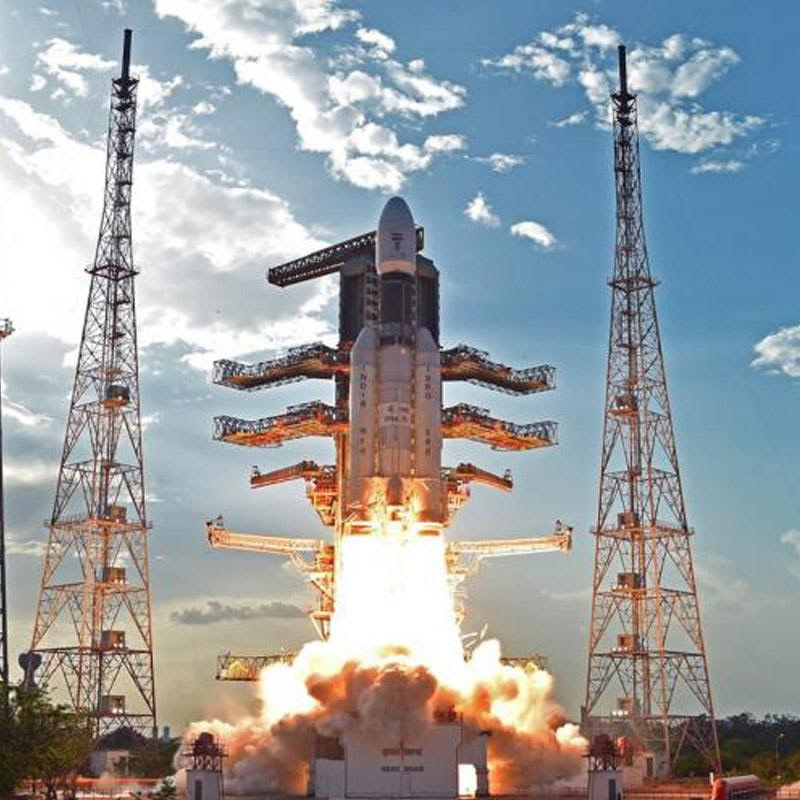
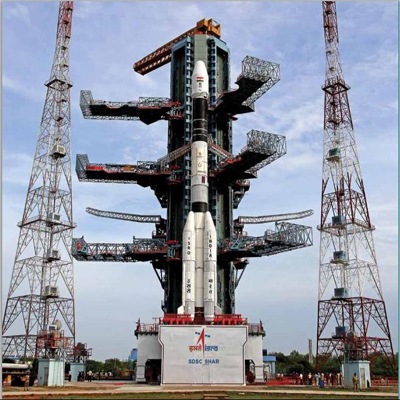
    MUMBAI: The first time it was about to launch in august 2013 a technical snag forced an abortion. But now Indian Space Research Organisation’s (ISRO) twenty third communication satellite GSAT-14 has been successfully launched on 5 January 2014 from launch vehicle Geosynchronous Satellite Launch Vehicle GSLV-D5 that is using an indigenous cryogenic engine for the first time. The launcher propelled the satellite into a Geosynchronous Transfer Orbit (GTO) after which it used its own propulsion system to settle itself at 74 degrees east longitude orbit.

    The mission was an important one for ISRO since India has been developing cryogenic engines or two decades but till now had been dependent on Russian ones. This launch puts India at a prominent position in space science at par with countries like the US and Russia. Previous attempts at launches using a cryogenic engine have ended up in a mess. The launch that was telecast live on DD National saw the rocket being propelled up into space with each stage crossing at its intended time. 

    ”Team ISRO has done it. The cryogenic engine has performed as predicted and injected GSAT- 14 in the intended orbit. This is an important day for science and technology and space technology in the country. 20 years of our effort in realising an indigenous crygoenic engine has now fructified. We have put in excruciating efforts of three and a half years after test flight of cryogenic stage in 2010,” said an ecatatic ISRO chairman K Radhakrishnan as the whole team rejoiced  when the the cryogenic stage was initiated and completed and years of ISRO’s hard work paid off. The launch cost approximately Rs 370 crore.

    The previous attempt to blast off GSLV into space was aborted following a fuel leak in its engine that developed hours before launch. ISRO worked on it and gave it a better metal covering following which it decided to give it another shot. A three stage rocket- the first stage runs on solid fuel, second on liquid fuel and third on the cryogenic engine – the GSLV-D5 carried the 1982 kgs GSAT-14 to replace GSAT-3 that wa decomissioned in 2010.

    The new satellite’s structure is based on ISRO’s two ton weighing (I-2k satellite bus). The satellite has six Ku band transponders (51.5 dBW EOC-EIRP), six C band transponders (36 dBW EOC-EIRP) and 2 Ka band transponders and will be co-located with INSAT-3C, INSAT-4CR and KALPANA-1.

    A 29 hour countdown began at 11: 16 am on 4 January and the launch was at 4: 18 pm on 5 January from the Satish Dhawan Space Centre at Sriharikota in Andhra Pradesh. The 17 minutes and 8 second flight launch is the first of 2014 after the postponement of Space X’s launch of Thaicom-6 from 3 January to between 6 to 9 January. The Elon Musk backed company decided to go in for a later liftoff as problems had emerged with Falcon-9 rocket’s fairing.

    This mission is likely to have a beneficial spinoff. It could lead to orders to build more rockets that can carry payloads of up to 5 tonne to Lower Earth Orbit. Till now ISRO has been using Polar Satellite Launch Vehicle (PSLV) that carries loads of around a tonne.

  • 2014’s first space mission to be India’s GSAT-14

    2014’s first space mission to be India’s GSAT-14

    MUMBAI: The first time it was about to launch in August 2013, a technical snag forced an abortion. But now, India’s Indian Space Research Organisation’s (ISRO’s)  twenty third communication satellite GSAT-14 by the is all set to be launched into space on 5 January 2014 on the Geosynchronous Satellite Launch Vehicle (GSLV)-D5.  The launcher will propel the bird into a Geosynchronous Transfer Orbit (GTS) after which it will use its own propulsion system to reach its geostationary orbital home at 74 degrees east longitude.


    The mission is important for ISRO which has been seeking to get a piece of the satellite launch action globally. But it has found things difficult since four out of the seven launches of GSLV have been failures and three previous attempts to use indigenous cryogenic engine have also ended up in a mess.


    The previous attempt to blast off GLSV into space in August 2013 was aborted following a fuel leak which developed in its engine hours before launch. ISRO worked on it and gave it a better metal covering, following which it has decided to give it another shot.


    A three stage rocket – the first stage runs on solid fuel, the second on liquid fuel and third on a cryogenic engine – the GSLV- D5 will be carrying the 1982 kgs (lift off mass) GSAT-14, which will be replacing GSAT-3 that was decommissioned in 2010. The new satellite’s structure is based on ISRO’s two ton weighing (I-2K satellite bus). The satellite has six Ku band (51.5 dBW EOC-EIRP) transponders, six C band (36 dBW EOC-EIRP) transponders and two Ka band beacons and will be co-located with INSAT-3C, INSAT-4CR and KALPANA-1.


    Most of the C- and Ku-band capacity on GSAT-14 will be utilized for long distance education and telemedicine, while the Ka band transponders will help in studying rain and atmospheric effects. This ninth operational geostationary satellite is expected to have a mission life of 12 years and will be able to provide enhanced broadcasting as compared to GSAT-3 for the whole of India.


    According to the ISRO website, the mission has three main objectives- to augment the in-orbit capacity of extended C and Ku-band transponders and to provide a platform for new experiments such as fiber optic gyro, active pixel sun sensor, Ka band beacon propagation studies and thermal control coating experiments.


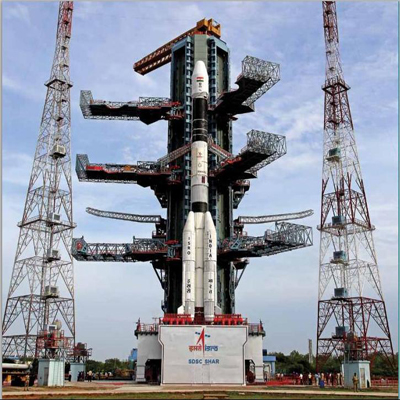
    The 29 hour countdown to the launch began at 11:18 am on 3 January with the launch time set as 4:18 pm on 4 January from its launch pad at Satish Dhawan Space Centre (SDSC SHAR) at Sriharikota in Andhra Pradesh. GSLV-D5 is expected to have a 17 minute, eight second flight duration. If successful, this will be 2014’s first space launch as SpaceX’s launch of Thaicom-6 has been postponed from 3 January to between 6 and 9 January. The Elon Musk backed company decided to go in for a later liftoff as problems had emerged with Falcon 9 rocket’s fairing.


    If ISRO’s GSLV-D5 successfully plants GSAT- 14 into orbit, it is likely to have a beneficial spinoff which it badly needs. It could lead to orders to build more rockets that can carry payloads of up to four tonnes. Till now ISRO has been using the Polar Satellite Launch Vehicle (PSLV) that carries loads of around a tonne.


    The mission will be telecast live on Doordarshan and on the web from 3: 52 pm on Sunday.

  • GSAT-7 Satellite placed in Geosynchronous Orbit

    GSAT-7 Satellite placed in Geosynchronous Orbit

    NEW DELHI: India’s advanced multi-band communication satellite GSAT-7, launched from Kourou, French Guyana in the early hours of 30 August and now has been successfully placed in the Geosynchronous Orbit with an altitude of about 36,000 km above Earth’s surface yesterday (3 September) morning, after successfully completing the last of the three orbit-raising maneuvers commanded from ISRO`s Master Control Facility (MCF) at Hassan.

    Later in the day, the communication antennae of GSAT-7, including the UHF Helix antenna, were deployed successfully. Following this, GSAT-7 was put in its final orbital configuration, stabilised on its three-axis by the momentum wheels.

    The GSAT-7 Satellite would reach its assigned orbital slot of 74 degree East longitude in the Geostationary Orbit within the next 10 days.

    On 14 September, the communication transponders in UHF, S, C and Ku bands are planned to be switched on.

    Based on current availability of hardware and components, the GSLV Vehicle assembly and checkout is expected to be completed at the Vehicle Assembly Building by the first week of December 2013 and the launch could take place by December 2013.

  • GSAT-15 and GSAT-16 get the go ahead from the Cabinet

    GSAT-15 and GSAT-16 get the go ahead from the Cabinet

    MUMBAI:Two Indian birds are on the way to Indian skies in the next two to three years (if launch schedules are kept). The Union Cabinet earlier today gave its approval to the proposals from the Indian Space Research Organisation (Isro) to enhance its satellite capacity through the GSAT-15 and GSAT-16 communication satellite projects. The government‘s nod now allows it to go ahead with its process to get a good launch partner as well as the required insurance cover for the two satellites.

    In the past decade, Isro has relied on commercial launch consortium Arianespace as its launch partner for a majority of its big bird communication launches from Kourou, French Guiana.

    GSat-15 and GSat-16 are part of Isro‘s efforts towards building in-orbit spare capacity to meet contingency requirements and to protect the services of existing users.

    GSat-15 (similar to GSat-10 which is yet to provide services to its clients despite a launch some nine months ago) is slated to be put together and launched in 18 months at an approved cost of Rs 859.5 crore. As compared to this, GSat-10 cost the agency around Rs 750 crore at the time of its launch in September 2012.

    GSat-15 will provide required redundant capacity, will augment Ku-band capacity, and shall provide in-orbit redundant requirement of safety of life operations benefitting civil aviation services in the country. It will be located at 93.5 degrees east with a payload of 24 Ku-band transponders with an EIRP of 52 dBW.

    On the other hand, GSAT-16 has an approved satellite production and launch budget of Rs 865.50 crore with a launch timeline of 24 months. It is targeted to meet contingency requirements, protect services of existing users and will augment and support existing telecommunication, television, VSAT and other satellite based services in the country

    The satellite will have 48 transponders providing C-band, extended C-band, and Ku-band frequencies (24 normal C, 12 extended C and 12 Ku-band). Its Ku-band beacon transmistter is expected to be the highest for an Indian satellite. G-Sat 16 is to be co-located with GSat-8 at 55 degrees East.

    Isro currently has nine operational INSAT/GSAT satellites in orbit with nearly 195 transponders providing different frequency bands to its customers.

    Its Insat 3D meteorological satellite has already been lined up for a 25 July launch using an Ariane 5 launch vehicle from Kourou, French Guiana.

  • Asiasat to launch 2 satellites, expand fleet to 6 in 2014

    Asiasat to launch 2 satellites, expand fleet to 6 in 2014

    MUMBAI: Space launch company Space Exploration Technologies (SpaceX) and AsiaSat has inked an agreement to launch in 2014 two communications satellites using SpaceX’s Falcon 9 rocket.


    The regional satellite operator in Asia will, thus, expand its fleet from four to six satellites in 2014.

    Asiasat president, CEO William Wade said, “We are pleased to have SpaceX as our launch partner for the two upcoming missions. We look forward to the timely and successful launches of AsiaSat 6 and AsiaSat 8, thereby expanding our fleet from four to six satellites in 2014 to provide more high quality and comprehensive satellite services in the Asia-Pacific region”.


    AsiaSat 6 and AsiaSat 8 are scheduled to launch in the first half of 2014 from SpaceX’s launch complex at Cape Canaveral Air Force Station in Florida, USA.

    Asiasat 6 will have 28 high-powered C-band transponders while Asiasat 8 will have 24 Ku-band transponders and a Ka-band beam. The high-powered transponders on the satellite will enable the use of small antennas on the ground. The two SS/L 1300 satellites will serve Asia, the Middle East and Australasia.

    SpaceX CEO, CTO Elon Musk said, “SpaceX is proud to be the choice of AsiaSat, a pioneer in advancing satellite communications in Asia. We are producing the most advanced launch vehicles in the world, and the international launch market has responded–commercial launches now represent over 60 per cent of our upcoming missions.”

  • Thailand may buy Shinsat from Temasek

    Thailand may buy Shinsat from Temasek

    MUMBAI: Thailand is putting pressure on Singapore to return satellites it acquired as part of a $3.8 billion purchase of ousted Prime Minister Thaksin Shinawatra’s telecom empire.

    Media reports state that Thais are going to the polls to vote if the country’s military-led government should buy back the nation’s satellite operator Shinsat.

    The five satellites are operated by Shin Satellite a unit of Shin which was sold to Singapore’s state investment firm Temasek last year.

    The Shin sale reports state led to street protests that led to Thaksin’s downfall and coup leader Sonthi Boonyaratglin has promised to get the assets back.

    Meanwhile nformation and Communications Technology Minister Sitthichai Pookaiyaudom ghas been quoted in reports saying that Shin Satellite’s concessions with the country could be revoked if Temasek is found to have used illegal nominees to buy Shin Corp last year.

    Bangkok is also said to be looking at legal options. Temasek executed the Shin deal through a complicated web of Thai holding companies, one of which, Kularb Kaew, may have broken rules against foreign companies using local ‘nominees’ to skirt a 49 per cent limit on foreign ownership.

  • Sirius Satellite Radio launches urban comedy channel

    Sirius Satellite Radio launches urban comedy channel

    MUMBAI: SIRIUS Satellite Radio announced the launch of its ‘exclusive urban comedy, entertainment and lifestyle channel’ The Foxxhole with actor and comedian Jamie Foxx.

    Foxx will take on the role of an executive producer, on-air host and contribute content for the channel. Marcus King who has worked with Foxx on many television series will also serve as executive producer.

    An official press release states that the 24/7 channel will feature urban comedy hits from a large number of comedians, and will create groundbreaking approaches to presenting comedy to radio listeners, as well as showcase music, skits, radio theater and more. The Foxxhole will launch on SIRIUS channel 106.

    “The Foxxhole will break new ground in comedy, blurring the lines between stand-up, sketch, and music,” said Foxx. “SIRIUS Satellite Radio gives me the opportunity to create urban entertainment and programming like you have never heard on the radio.” An added attraction is that Foxx will be heard on the channel daily with a segment featuring dispatches from Jamie no matter where he is in the world. Also, Foxx and his team of contributors will host a weekly show on the channel. The show will feature original comedy bits and explore new approaches to radio theater.

    Jamie Foxx is a triple threat in the world of entertainment and we are thrilled to have him make his radio home at SIRIUS,” said SIRIUS Satellite Radio president entertainment and sports Scott Greenstein. “SIRIUS has established itself as a leader in groundbreaking exclusive programming. The Foxxhole adds yet another compelling element to our channel lineup.”

    The Foxxhole joins a powerful lineup of comedy, music, variety and entertainment channels on SIRIUS, including Raw Dog: Comedy Uncensored, Blue Collar Comedy, Laugh Break, Eminem’s Shade 45, Hip-Hop Nation, and SIRIUS Hits 1.

  • PSLV launches four new satellites

    PSLV launches four new satellites

    MUMBAI: In its 10th launch on 10 January India’s Polar Satellite Launch Vehicle (PSLV) PSLV-C7 has successfully launched four satellites namely India’s Cartosat-2 and Space capsule Recovery Experiment (SRE-1), Indonesia’s Lapan-Tubsat and Argentina’s Pehuensat-1 into a 635 km high Polar Sun Synchronous Orbit (SSO).

    Isro claims to having used a Dual Launch Adopter (DLA) in PSLV for the first time to accommodate two primary satellites in tandem.

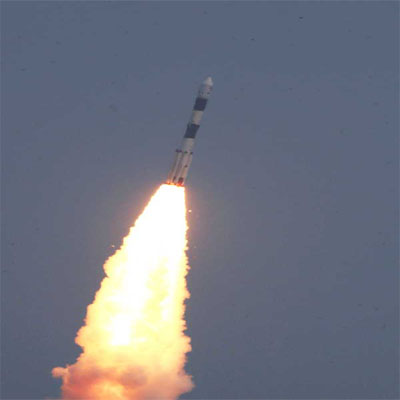
    PSLV-C7 lifted off from the first launch pad at SDSC Shar at 9:23 am with the ignition of the core first stage and four of the six strap-on motors. The remaining two strap-on motors were ignited 25 seconds after lift-off.

    The important flight events included the separation of the ground-lit strap-on motors, separation of air-lit strap-on motors and the first stage, ignition of the second stage, separation of the heatshield at about 121 km altitude after the vehicle had cleared the dense atmosphere, second stage separation, third stage ignition, third stage separation, fourth stage ignition and fourth stage cut-off.

    Cartosat-2 was the first satellite to be injected into orbit at 981.3 seconds after lift-off at an altitude of 639 km. DLA with the 6 kg Pehuensat-1 was separated about 45 seconds later followed by the 550 kg Space capsule Recovery Experiment (SRE-1) after 120 seconds and the 56 kg Lapan-Tubsat after 190 seconds.

    The four satellites have been placed in a polar orbit at an altitude of 637 km with an inclination of 97.9 degrees with respect to the equator. The initial signals indicate their normal health.

    After its separation from the DLA, the two solar arrays of Cartosat-2 were automatically deployed to generate the electrical power for the satellite. The satellite health is being continuously monitored from the Spacecraft Control Centre of Istrac at Bangalore with the help of its network of stations at Bangalore, Lucknow, Mauritius, Bearslake in Russia, Biak in Indonesia, as well as support from Svalbard ground station in Sweden for the initial phase of the Cartosat-2 mission.

    With Isro Satellite Centre (Isac), Bangalore, as the lead Centre, Cartosat-2 was realised with major contributions from Space Applications Centre (SAC), Ahmedabad, LPSC at Bangalore, and IISU, Thiruvanantha-puram. Istrac is responsible for initial and in-orbit operation of Cartosat-2. The National Remote Sensing Agency (NRSA), Hyderabad receives and processes the data from Cartosat-2.

    Space capsule Recovery Experiment (SRE-1): Space capsule Recovery Experiment (SRE-1), developed by Isro’s VSSC and Isac, is a 550 kg capsule, intended to demonstrate the technology of an orbiting platform for performing experiments in microgravity conditions. After the completion of the experiments, the capsule will de-orbited after a few days and recovered.

    Two days before de-orbiting, SRE-1 will be placed in a Repetitive Elliptical Orbit. Subsequently, it will be reoriented and deboost rocket is fired to make it reenter the earth’s atmosphere. SRE-1 will splashdown in the Bay of Bengal, east of Sriharikota coast.

    SRE-1 is being tracked and monitored by ground stations at Bangalore, Lucknow, Mauritius, Biak in Indonesia, Bearslake in Russia, Saskatoon in Canada and Svalbard in Sweden/Transo in Norway.

    Lapan-Tubsat and Pehuensat-1 were launched under commercial agreements. Lapan-Tubsat is a cooperative venture between Indonesian Space Agency, Lapan and Technical University of Berlin. It is an earth observation satellite besides a technical demonstrator in control systems.

    Pehuensat-1 is a 6 kg Argentinean nano-satellite meant to serve educational, technological and scientific fields. Its developed by University of Comahue of Argentina, AMSAT (Amateur Satellite Association of Argentina) and Argentina Association for Space Technology and is intended to provide an experiment platform to perform amateur radio experiments between colleges and universities of Argentina.
  • Worldspace launches Gujarati Radio station ‘Radio Umang’

    Worldspace launches Gujarati Radio station ‘Radio Umang’

    MUMBAI: Worldspace Satellite Radio , a satellite-based digital radio services has laucnhed the first ever 24-hour national Gujarati radio channel, Radio Umang.

    Channel No 111 on the Worldspace Satellite Radio Network, Radio Umang presents a platform, showcasing the diversity of Gujarat’s musical traditions – ranging from the tunes of the Garba and Dandia Raas to the Sugam Sangeet and Ghazals and more, asserts an official release.

    Worldspace managing director Shishir Lall said, “Radio Umang is our latest offering and the country’s first-ever 24-hour Gujarati channel and the ninth regional channel on the Worldspace Satellite Radio Network. Our refreshing advertising-free format, enables music aficionados to quench their thirst for quality radio programming in virtually any part of the country, thereby creating a truly pan-Indian radio experience.”

    Radio Umang joins a portfolio of Indian regional language channels at Worldspace which currently offers eight other dedicated regional radio channels with programming in Tamil (KL Radio), Malayalam (RM Radio), Telugu (Spandana), Kannada (Sparsha), Bengali (Tara), Punjabi (Tunak Punjabi) Urdu (Falak) and Marathi (Surabhi).

    Worldspace senior advisor content Velu Shankar said, “Radio Umang presents to its listeners opportunity and range of programs from folk music to modern Gujarati music, poetry and literature giving them a glimpse into the exciting world of Gujarati culture.”

    Some programs on Radio Umang are :

    – Suravali Ashit Ni – A show hosted by celebrity Ashit Desai as he takes listeners through some of his popular songs from various genres of Gujarati music every Saturday 9 to 11 pm.

    – Taajgi – A breakfast show hosted by radio entertainer Ajinkya Sampat. It will showcase Gujarati music from film songs to garba, folk songs and light music and will also provide interesting facts and trivia on music.

    – Be Ghadi Anand – An evening show with playback singer Hema Desai who would share interesting facts about Gujarati culture, literature and music.

    – Makhmali Mehfil – Host by Gujarati theatre actor Aanand Goradiya the show will celebrate the lilting rhythms of Gujarati ghazals from Purushottam Upadhyay and Ashit Desai to Manhar Udhas.Worldspace launches Gujarati Radio station ‘Radio Umang’