Category: Satellite Launches

  • ISRO mulling over using private enterprise for satellite launches

    ISRO mulling over using private enterprise for satellite launches

    NEW DELHI: The Indian Space Research Organzation (ISRO) is considering the possibility of involving Indian industry in a greater role to meet the increased national requirements and possible commercial demand for launch services.

    Discussions are being held with the Indian industry towards formulating a plan & strategy to enhance the capacity and capability of managing the Polar Satellite Launch Vehicle (PSLV) programme on an end to end basis.

    Space Minister Jitendra Singh told Parliament today that ISRO has been pursuing a conscious approach of building up and nurturing the industrial capabilities in the country to maximally support the Indian Space Programme.

    Through appropriate transfer of technology and hand-holding, ISRO is making focused efforts to consolidate and enhance participation of Indian industries for manufacturing and production of space related hardware such as rocket engine & stages, propellant tanks, spacecraft structures, solar panels, thermal control systems, electronic packages etc., required for satellites and launch vehicles.

    A provision exists for private players to operate communication satellites on their own in the country through an established mechanism called Committee for Authorising the establishment and operations of Indian Satellite Systems (CAISS).

  • ISRO seeks industry co-operation for space-based services

    ISRO seeks industry co-operation for space-based services

    NEW DELHI: India’s space agency, ISRO, has sought industry’s help and co-operation to realize India’s growing need for space-based services.

    ISRO Chairman and Department of Space (DoS) Secretary AS Kiran Kumar yesterday said in Bengalaru that to meet the increased demand for space-based services, it was imperative that ISRO joined hands with industries in an effort towards enhancing capacity.

    Kumar was speaking at a “Make in India” Conference on Enabling Spacecraft Systems Realisation through Industries (ESSRI- 2016) organised on June 23, 2016 at ISRO Satellite Centre, Bengaluru.

    An official government statement quoted Kumar as telling delegates that almost all the government departments and ministries had evinced keen interest in applying space technology for carrying out their mandates.

    He also emphasized on India’s great potential to capture a sizeable portion of the business in the international space market.

    ISRO earlier in the week put in space 20 satellites that included many belonging to foreign countries, including the US.

    The conference was organised to elicit industry support for spacecraft realisation on an end-to-end basis to meet the rapidly increasing national demand for space based services and the realisation of Prime Minister’s objective of “Make in India”.

    The government statement further added that over the years, a number of Indian industries have been actively participating in realising various sub-systems of spacecraft. A variety of models have been adopted by ISRO in outsourcing jobs to these vendors, but end-to-end realisation of spacecraft has not yet been realised. The Conference aimed to fill this gap.

    ISRO has announced that the Expression of Interest (EoI) for realising spacecraft on an end-to-end basis has been hosted on ISRO/ISAC websites and invited the industry to respond to it.

    During the conference, senior executives of ISRO gave an insight into the requirements of ISRO with respect to hardware, technologies, quality and delivery schedule and what was essential for them to be qualified vendors of ISRO.

    About 110 industries in aerospace business participated in the conference.

    However, as far as leasing out satellite capacity to Indian customers go, ISRO has been lagging behind in meeting the demands for KU-band transponders, while restricting foreign satellite companies’ access to the Indian market.

    In a report on satellite capacity over Indian skies versus demand, released in March 2016, Hong Kong-based Asian industry organization CASBAA had noted that over the last three years, for example, the number of transponders contracted by DTH operators have gone up from 73 to 78 with the share of transponders supplied by foreign operators going up to 75% as ISRO/Antrix has not been able to meet the need through domestic launches.

  • ISRO seeks industry co-operation for space-based services

    ISRO seeks industry co-operation for space-based services

    NEW DELHI: India’s space agency, ISRO, has sought industry’s help and co-operation to realize India’s growing need for space-based services.

    ISRO Chairman and Department of Space (DoS) Secretary AS Kiran Kumar yesterday said in Bengalaru that to meet the increased demand for space-based services, it was imperative that ISRO joined hands with industries in an effort towards enhancing capacity.

    Kumar was speaking at a “Make in India” Conference on Enabling Spacecraft Systems Realisation through Industries (ESSRI- 2016) organised on June 23, 2016 at ISRO Satellite Centre, Bengaluru.

    An official government statement quoted Kumar as telling delegates that almost all the government departments and ministries had evinced keen interest in applying space technology for carrying out their mandates.

    He also emphasized on India’s great potential to capture a sizeable portion of the business in the international space market.

    ISRO earlier in the week put in space 20 satellites that included many belonging to foreign countries, including the US.

    The conference was organised to elicit industry support for spacecraft realisation on an end-to-end basis to meet the rapidly increasing national demand for space based services and the realisation of Prime Minister’s objective of “Make in India”.

    The government statement further added that over the years, a number of Indian industries have been actively participating in realising various sub-systems of spacecraft. A variety of models have been adopted by ISRO in outsourcing jobs to these vendors, but end-to-end realisation of spacecraft has not yet been realised. The Conference aimed to fill this gap.

    ISRO has announced that the Expression of Interest (EoI) for realising spacecraft on an end-to-end basis has been hosted on ISRO/ISAC websites and invited the industry to respond to it.

    During the conference, senior executives of ISRO gave an insight into the requirements of ISRO with respect to hardware, technologies, quality and delivery schedule and what was essential for them to be qualified vendors of ISRO.

    About 110 industries in aerospace business participated in the conference.

    However, as far as leasing out satellite capacity to Indian customers go, ISRO has been lagging behind in meeting the demands for KU-band transponders, while restricting foreign satellite companies’ access to the Indian market.

    In a report on satellite capacity over Indian skies versus demand, released in March 2016, Hong Kong-based Asian industry organization CASBAA had noted that over the last three years, for example, the number of transponders contracted by DTH operators have gone up from 73 to 78 with the share of transponders supplied by foreign operators going up to 75% as ISRO/Antrix has not been able to meet the need through domestic launches.

  • ISRO successfully flight tested India’s Reusable Launch Vehicle-Technology Demonstrator (RLV-TD)

    ISRO successfully flight tested India’s Reusable Launch Vehicle-Technology Demonstrator (RLV-TD)

    MUMBAI: On May 23, 2016 ISRO successfully flight tested India’s first winged body aerospace vehicle operating in hypersonic flight regime.   

    In this experimental mission, the HS9 solid rocket booster carrying RLV-TD lifted off from the First Launch Pad at Satish Dhawan Space Centre, Sriharikota at 07:00hr IST.  After a successful flight of 91.1second, HS9 burn out occurred, following which both HS9 and RLV-TD mounted on its top coasted to a height of about 56 km. At that height, RLV-TD separated from HS9 booster and further ascended to a height of about 65km.  

    From that peak altitude of 65 km, RLV-TD began its descent followed by atmospheric re-entry at around Mach 5 (five times the speed of sound). The vehicle’s Navigation, Guidance and Control system accurately steered the vehicle during this phase for safe descent. After successfully surviving a high temperatures of re-entry with the help of its Thermal Protection System (TPS), RLV-TD successfully glided down to the defined landing spot over Bay of Bengal, at a distance of about 450km from Sriharikota, thereby fulfilling its mission objectives. The vehicle was successfully tracked during its flight from ground stations at Sriharikota and a shipborne terminal. Total flight duration from launch to landing of this mission of the delta winged RLV-TD, lasted for about 770seconds.

    In this flight, critical technologies such as autonomous navigation, guidance & control, reusable thermal protection system and re-entry mission management have been successfully validated.


  • ISRO successfully flight tested India’s Reusable Launch Vehicle-Technology Demonstrator (RLV-TD)

    ISRO successfully flight tested India’s Reusable Launch Vehicle-Technology Demonstrator (RLV-TD)

    MUMBAI: On May 23, 2016 ISRO successfully flight tested India’s first winged body aerospace vehicle operating in hypersonic flight regime.   

    In this experimental mission, the HS9 solid rocket booster carrying RLV-TD lifted off from the First Launch Pad at Satish Dhawan Space Centre, Sriharikota at 07:00hr IST.  After a successful flight of 91.1second, HS9 burn out occurred, following which both HS9 and RLV-TD mounted on its top coasted to a height of about 56 km. At that height, RLV-TD separated from HS9 booster and further ascended to a height of about 65km.  

    From that peak altitude of 65 km, RLV-TD began its descent followed by atmospheric re-entry at around Mach 5 (five times the speed of sound). The vehicle’s Navigation, Guidance and Control system accurately steered the vehicle during this phase for safe descent. After successfully surviving a high temperatures of re-entry with the help of its Thermal Protection System (TPS), RLV-TD successfully glided down to the defined landing spot over Bay of Bengal, at a distance of about 450km from Sriharikota, thereby fulfilling its mission objectives. The vehicle was successfully tracked during its flight from ground stations at Sriharikota and a shipborne terminal. Total flight duration from launch to landing of this mission of the delta winged RLV-TD, lasted for about 770seconds.

    In this flight, critical technologies such as autonomous navigation, guidance & control, reusable thermal protection system and re-entry mission management have been successfully validated.


  • Eutelsat 9B satellite soars into space

    Eutelsat 9B satellite soars into space

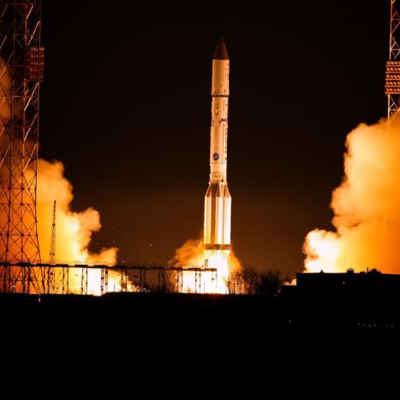
    MUMBAI: Eutelsat Communications’ Eutelsat 9B satellite was successfully launched into geosynchronous transfer orbit by ILS using a Proton rocket that lift off from the Baikonur Cosmodrome.


    Separation of Eutelsat’s new satellite occurred after a 9 hour 12 minute Proton flight. Partial deployment of the satellite’s solar panels, that represents the first critical post-launch operation, took place two hours later. Following further manoeuvres and in-orbit tests, Eutelsat 9B will be positioned at 9 degrees East in March to assume broadcasting of over 350 TV channels currently served at this position by Eutelsat 9A and provide expansion capacity for new services.


    Eutelsat 9B also marks an industry first as the host satellite for the inaugural data relay payload for the European Data Relay System (EDRS) being implemented through a Public Private Partnership (PPP) between ESA and Airbus Defence and Space.


    Commenting on the launch, Eutelsat chairman and CEO Michel de Rosen said, “Our congratulations to ILS and Krunichev for a flawless launch that sees a new Eutelsat satellite propelled on its way to geostationary orbit. This sophisticated satellite programme reflects outstanding collaboration between Eutelsat, ESA, Airbus Defence and Space, ILS and Krunichev. We look forward to putting Eutelsat 9B to work for the benefit of our broadcaster clients and to the inauguration of the ground-breaking European Data Relay System that is a powerful illustration of the complementarity of geostationary and low earth satellites for fast transmission of data flows back to earth.”

  • Eutelsat 9B satellite soars into space

    Eutelsat 9B satellite soars into space

    MUMBAI: Eutelsat Communications’ Eutelsat 9B satellite was successfully launched into geosynchronous transfer orbit by ILS using a Proton rocket that lift off from the Baikonur Cosmodrome.


    Separation of Eutelsat’s new satellite occurred after a 9 hour 12 minute Proton flight. Partial deployment of the satellite’s solar panels, that represents the first critical post-launch operation, took place two hours later. Following further manoeuvres and in-orbit tests, Eutelsat 9B will be positioned at 9 degrees East in March to assume broadcasting of over 350 TV channels currently served at this position by Eutelsat 9A and provide expansion capacity for new services.


    Eutelsat 9B also marks an industry first as the host satellite for the inaugural data relay payload for the European Data Relay System (EDRS) being implemented through a Public Private Partnership (PPP) between ESA and Airbus Defence and Space.


    Commenting on the launch, Eutelsat chairman and CEO Michel de Rosen said, “Our congratulations to ILS and Krunichev for a flawless launch that sees a new Eutelsat satellite propelled on its way to geostationary orbit. This sophisticated satellite programme reflects outstanding collaboration between Eutelsat, ESA, Airbus Defence and Space, ILS and Krunichev. We look forward to putting Eutelsat 9B to work for the benefit of our broadcaster clients and to the inauguration of the ground-breaking European Data Relay System that is a powerful illustration of the complementarity of geostationary and low earth satellites for fast transmission of data flows back to earth.”

  • Arianespace launches GSAT-15 successfully

    Arianespace launches GSAT-15 successfully

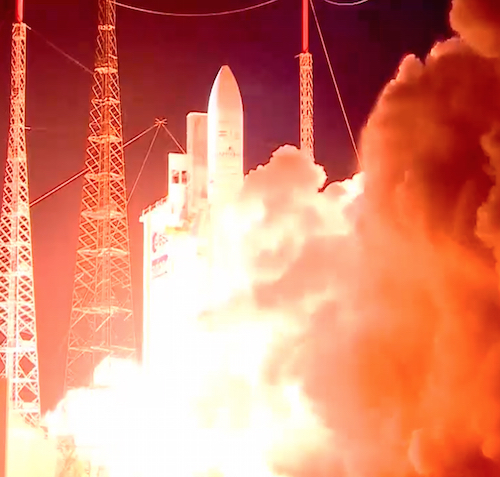
    MUMBAI: At 3:04 this morning, Arianespace’s A5 rocket blasted off from its launch pad in Kouru, French Guiana with its payload of two satellites Arabsat 6B (BADR7) and GSAT-15. The former found its slot in space 27 minutes later, while the latter attained its Geosynchronous Transfer Orbit (GTO) 43 minutes after launch.  It was a flawless launch on a perfect evening, said officials from ISRO and Arianespace.


    India’s satellite control centre at Hasan in Karnataka is in control of the satellite  at the time of writing and maneuvres over the next three days will see it attaining its geo-stationary orbit at 93.5 degrees East. It will be replacing two ageing satellites Insat3A and Insat 4B.


    GSAT-15 has 24 Ku-band transponders to serve the needs of DTH and satellite TV operators over India as well as  VSAT operators who provide DSNG operations to news channels. It  also carries the  GPS-Aided GEO Augmented Navigation (GAGAN) payload operating in L1 and L5 bands,  to enable communications for civil aviation and other location-based services.


    Speaking from Kouru ISRO Satellite Centre (ISAC) Director M Annadurai said two other  communication satellites GSAT-17 and GSAT-18 are getting ready for launch by an Ariane vehicle in the next year. “The realisation of both the satellites is in a very advanced stage,” he said.


  • ISRO’s GSAT-15 launch on 11 November; DTH to benefit

    ISRO’s GSAT-15 launch on 11 November; DTH to benefit

    NEW DELHI: Even as Indians are celebrating the festival of lights, a new bird  from the Indian Space Research Organisation (ISRO) is set to be blasted off into geostationary orbit come early 11 November from Kouro in French Guiana.  The satellite GSAT-15 – with its 24 Ku-band transponders – is going to provide a lifeline to India’s DTH television operators.


    It is currently waiting at the launch pad as a payload of an Ariane 5 Rocket  – launch firm Arianespace’s trusted launcher – in launch complex No 3 in Kouru. The satellite cost – including the launch fee – is at Rs 860 crore.


    The GSAT-15 will replace two older birds – INSAT-3A and INSAT-4B – both are which are at the fag end of their lives. INSAT 3A will expire in November while 4b will cease functioning later next year.


    Most of the transponder capacity on these two satellites is being utilized by Prasar Bharati’s DD and  DTH operators FreeDish and  Sun Direct, according to satellite TV tracker Lyngsat.


    GSAT-15 will thus see these services being shifted to its transponders, which will also serve the needs of VSAT operators who offer Digital satellite news gathering operations to India’s news channels. It will also be carrying as a GPS-Aided GEO Augmented Navigation (GAGAN) payload operating in L1 and L5 bands as  a backup service for airlines and other users of augmented GPS-based system.  According to ISRO, it has a design life of 12 years and its weight will be 3,164 kg at lift-off


    The Ariane-5 VA-227 launch vehicle, which will launch GSAT 15, will also carry Arabsat-6B for Arabsat, Saudi Arabia. Arabsat-6B, to be renamed BADR-7 once in orbit, will be the ninth satellite orbited by Arianespace for use by the operator Arabsat, based in Riyadh, Saudi Arabia. It is the initial sixth-generation satellite for Arabsat’s fleet, providing broadcast, broadband and telecommunications services over the Middle East, Africa and Central Asia.


    The Ariane 5 mission will have a total payload lift performance of 9,810 kg, Arianespace said. This includes the two satellites’ mass at liftoff – 5,798 kg for Arabsat-6B and 3,164 kg for GSAT-15 – along with launcher integration hardware and Ariane 5’s dual-passenger deployment system, it added.


    The launch is planned to take place during a launch window of 21:34 and 22:17 pm coordinated universal time (around 03:04 am IST).


    Interested viewers can watch it live on http://www.arianespace.tv.

  • ISRO successfully launches Astrosat along with six foreign satellites

    ISRO successfully launches Astrosat along with six foreign satellites

    MUMBAI: The Indian Space Research Organisation (ISRO) has been having a swell 2015. Just a few days after its Mars Orbiter completed a successful one year around the Red planet, ISRO has now launched its first dedicated multi wavelength space observatory along with six foreign customer satellites.


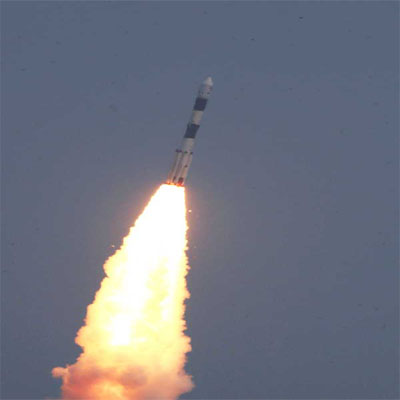
    In its 31st flight (PSLV-C30) conducted today (28 September, 2015), India’s Polar Satellite Launch Vehicle (PSLV) successfully launched Astrosat – multi wavelength space observatory and six foreign customer satellites into a 644.6 X 651.5 km orbit inclined at an angle of 6 deg to the equator. The achieved orbit is very close to the intended one. This was the thirtieth consecutive success for PSLV.


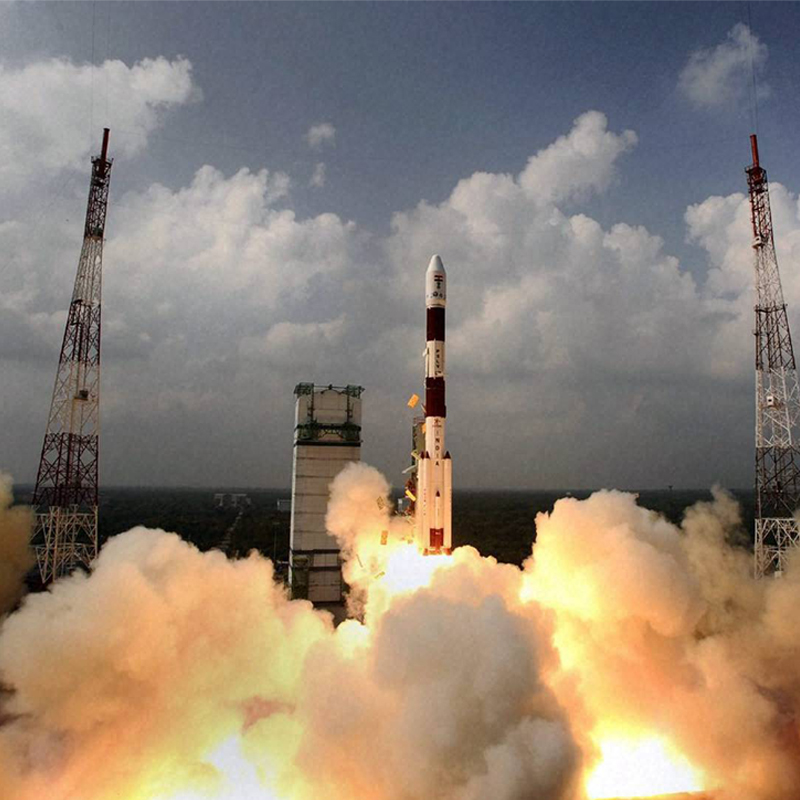
    PSLV was launched in its heaviest ‘XL’ version with six strap-on motors of the first stage. The launch took place from the First Launch Pad at the Satish Dhawan Space Centre SHAR (SDSC SHAR), Sriharikota, the spaceport of India.


    The 320 tonne, 45 m tall PSLV-C30 carrying seven satellites including the 1513 kg Astrosat, lifted off at 10:00 Hrs IST. About 22 minutes after lift-off, Astrosat was successfully placed in orbit and separated from the fourth stage of PSLV-C30. The separation of all the six co-passenger satellites was completed in the subsequent three minutes. The seven satellites carried by PSLV-C30 together weighed about 1631 kg at lift-off. 


    After a 50 hour smooth count down, the 320 ton PSLV-C28 was launched with the ignition of its first stage. The important flight events included the ignition and separation of the strap-ons, separation of the first stage, ignition of the second stage, separation of the payload fairing after the vehicle had cleared the dense atmosphere, second stage separation, third stage ignition and third stage separation, fourth stage ignition and fourth stage cut-off.  


    Through 30 successful flights during 1994-2015 period, PSLV has launched a total of 84 satellites including the seven satellites successfully launched today. The vehicle has repeatedly proved its reliability and versatility by successfully launching satellites into a variety of orbits including polar Sun Synchronous, Geosynchronous Transfer and Low Earth orbits of small inclination thereby emerging as the workhorse launch vehicle of India. 


    So far, 51 satellites have been launched by PSLV for customers from abroad. Today’s launch of six co-passenger satellites by PSLV-C30 was facilitated by Antrix Corporation Limited, the commercial arm of ISRO, a government of India Company under the Department of Space (DOS). 


    Soon after its separation from PSLV-C30, the two solar arrays of Astrosat were automatically deployed and the Spacecraft Control Centre at the Mission Operations Complex of ISRO Telemetry, Tracking and Command Network (ISTRAC) at Bangalore took control of Astrosat.


    Astrosat is India’s first dedicated multi wavelength space observatory. This scientific satellite mission endeavours for a more detailed understanding of our universe. Astrosat is designed to observe the universe in the Visible, Ultraviolet, low and high energy X-ray regions of the electromagnetic spectrum simultaneously with the help of its five payloads. 


    Astrosat was realised by ISRO with the participation of all major astronomy institutions including Inter University Centre for Astronomy and Astrophysics (IUCAA) of Pune, Tata Institute of Fundamental Research (TIFR) at Mumbai, Indian Institute of Astrophysics (IIAP) and Raman Research Institute (RRI) of Bangalore as well as some of the Universities in India and two institutions from Canada and the UK.


    In the coming days, Astrosat will be brought to the final operational configuration and all its five scientific payloads will be thoroughly tested before the commencement of regular operations.