Category: Satellite Launches

  • Govt satellite launches, including from India, to dominate future space market: Euroconsult

    Govt satellite launches, including from India, to dominate future space market: Euroconsult

    NEW DELHI: A major portion of satellites slated to be launched from 2016-2015 with launch mass over 50kg will be dominated by government satellites from countries like the US, Russia, India, China and Japan, according to Euroconsult.

    The 1,450 satellites over 50kg to be launched over 2016-2025 should represent a market of $250 billion for the space industry to build and launch.

    If satellites smaller than 50kg and the two mega constellations of OneWeb and SpaceX are also included in the number of launches, the total for the decade would grow precipitously to 9,000 units (vs. 1,480 launched in the past ten years), states extracts from the Euroconsult’s 19th edition of the report, `*Satellites to be Built & Launched over the next 10 Years’*, due to be published later in September.

    A price decrease is visible in this core market of the industry, driven by 11 commercial constellations using 370 small satellites to be deployed into low or medium Earth orbits for communication or Earth observation, the report says.

    “Huge growth in satellite count does not automatically translate to a large market,” Rachel Villain, Principal Advisor at Euroconsult and editor of the report, was quoted in a statement put on Euroconsult’s website.

    According to Villain, “As the price of the 7,550 future additional satellites is intrinsically low, the very reason for their existence, their market significance is small; they should represent no more than 8 per cent of the $270 billion to be spent building and launching the total of 9,000 satellites.”

    Euroconsult is a leading global consulting firm specializing in space markets. As a privately-owned, fully independent firm, it provides strategic consulting, develops comprehensive research and organizes executive-level annual summits and training programs for the satellite industry.

    Interestingly, over three quarters of the market remains with government satellites. The 880 satellites to be launched for civilian and military agencies in 60 countries represent a market of $193 billion.

    Governments dominate the space industry as established space countries replace and expand their in-orbit satellite systems and more countries acquire their first operational satellite systems, usually for communications or for Earth observation and imagery intelligence, Euroconsult statement says.

    “About 85 per cent of the government market will remain concentrated in the ten countries with an established space industry (U.S., Russia, China, Japan, India and five European countries). Other 50 countries engaged in space activities will launch twice the number of satellites that they did in the past ten years, that is almost 200 satellites. About half of these satellites will be procured from foreign manufacturers as domestic industry capabilities develop in these countries,” the Euroconsult statement asserts.

    In India, satellite launches are done by the state-controlled Indian Space & Research Organisation (ISRO) with some smaller satellites being built by rare private companies, but with dollops of help from ISRO, which has also launched foreign satellites in recent times, including American.

    In the commercial space sector, Euroconsult anticipates a total of 560 satellites to be launched over the decade by 40 companies. Most of these satellites will be for the replacement of the communications capacity currently in orbit. Over two-thirds of the commercial space market remains concentrated in geostationary orbit, the destination of almost 300 satellites operated by 30 companies for communications and broadcasting services.

    The 11 commercial constellations to be launched into non-geostationary orbits for communications services and Earth observation imagery should represent a market of $1.6 billion per year on average over the decade.
  • India’s weather satellite INSAT-3DR launched successfully

    India’s weather satellite INSAT-3DR launched successfully

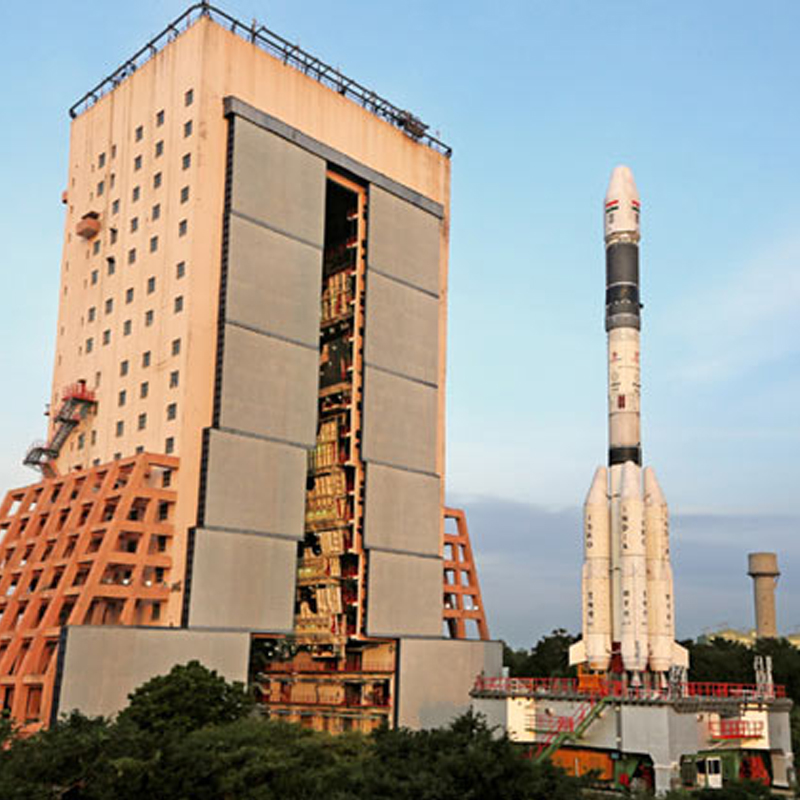
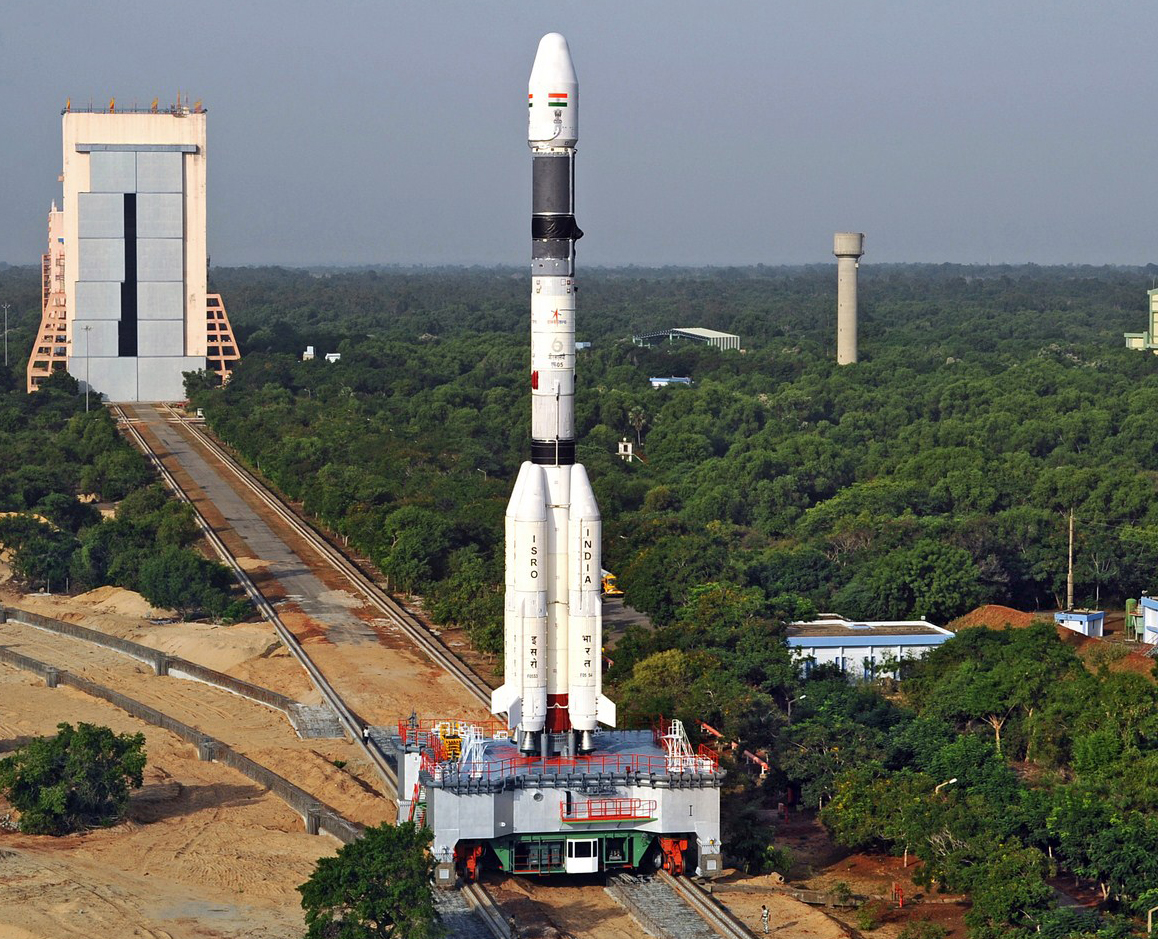
    MUMBAI: India’s Geosynchronous Satellite Launch Vehicle, equipped with the indigenous Cryogenic Upper Stage (CUS), on Thursday, successfully launched the country’s weather satellite INSAT-3DR, into a Geosynchronous Transfer Orbit (GTO) in its tenth flight (GSLV-F05). The achieved orbit is very close to the intended one.

    This flight of GSLV highlights the success of ISRO in mastering the highly complex cryogenic rocket propulsion technology

    The launch took place from the Second Launch Pad at the Satish Dhawan Space Centre SHAR (SDSC SHAR), Sriharikota, the spaceport of India. This was the first operational flight of GSLV equipped with CUS and the fourth to carry the indigenous CUS.

    This GSLV flight was the third consecutive success achieved by GSLV carrying indigenous CUS. The 2211-kg INSAT-3DR is the heaviest satellite to be launched from India.

    In its oval shaped GTO, the INSAT-3DR satellite is now orbiting the earth with a perigee (nearest point to the earth) of 169.76 km and an apogee (farthest point) of 36,080.5 km with an orbital inclination of 20.62 deg with respect to the equator.

    After a 29 hour 40 minutes countdown, the 415 tonne, 49 metre tall GSLV-F05 carrying INSAT-3DR, lifted off at the rescheduled time of 16:50 hrs IST. The 40-minute delay in the launch was due to an anomaly observed in the functioning of a pressure release valve in the liquid Oxygen filling ground segment which was resolved later.

    At 4.8 seconds before the countdown reached zero, the four liquid propellant strap-on stages of GSLV-F05, each carrying 42 tonne of liquid propellants, were ignited. At count zero, and after confirming the normal performance of all the four strap-on motors, the 139-tonne solid propellant first-stage core motor was ignited and GSLV lifted off. The major phases of the flight included the core motor burn-out, strap on burn-out, ignition of the second stage, separation of the core motor together with strap-ons, payload fairing separation, second stage separation, CUS ignition and its timely shut down after satisfactory performance.

    About 17 minutes after lift-off, INSAT-3DR was successfully placed in GTO.

    Soon after, the solar array of INSAT-3DR was automatically deployed and the Master Control Facility (MCF) at Hassan in Karnataka took control of the satellite.

    Like its predecessor INSAT-3D which is providing service from orbit since 2013, INSAT-3DR is an advanced meteorological (weather observation) satellite built by India to provide a variety inputs essential for accurate weather forecasting. For this, it is equipped with three payloads (instruments), namely, a Multispectral Imager, Sounder and weather Data Relay Transponder.

    INSAT-3DR also carries a satellite aided Search and Rescue Transponder that picks up and relays alert signals originating from distress beacons of maritime, aviation and land based users.

    In the coming days, INSAT-3DR’s orbit will be raised from its present GTO to the final circular Geostationary Orbit (GSO) by firing the satellite’s Liquid Apogee Motor (LAM) in stages. The satellite will be commissioned into service after the completion of orbit raising operations and the satellite’s positioning in its designated orbital slot of 74 degree East longitude in the GSO and in-orbit testing of its payloads.

  • India’s weather satellite INSAT-3DR launched successfully

    India’s weather satellite INSAT-3DR launched successfully

    MUMBAI: India’s Geosynchronous Satellite Launch Vehicle, equipped with the indigenous Cryogenic Upper Stage (CUS), on Thursday, successfully launched the country’s weather satellite INSAT-3DR, into a Geosynchronous Transfer Orbit (GTO) in its tenth flight (GSLV-F05). The achieved orbit is very close to the intended one.

    This flight of GSLV highlights the success of ISRO in mastering the highly complex cryogenic rocket propulsion technology

    The launch took place from the Second Launch Pad at the Satish Dhawan Space Centre SHAR (SDSC SHAR), Sriharikota, the spaceport of India. This was the first operational flight of GSLV equipped with CUS and the fourth to carry the indigenous CUS.

    This GSLV flight was the third consecutive success achieved by GSLV carrying indigenous CUS. The 2211-kg INSAT-3DR is the heaviest satellite to be launched from India.

    In its oval shaped GTO, the INSAT-3DR satellite is now orbiting the earth with a perigee (nearest point to the earth) of 169.76 km and an apogee (farthest point) of 36,080.5 km with an orbital inclination of 20.62 deg with respect to the equator.

    After a 29 hour 40 minutes countdown, the 415 tonne, 49 metre tall GSLV-F05 carrying INSAT-3DR, lifted off at the rescheduled time of 16:50 hrs IST. The 40-minute delay in the launch was due to an anomaly observed in the functioning of a pressure release valve in the liquid Oxygen filling ground segment which was resolved later.

    At 4.8 seconds before the countdown reached zero, the four liquid propellant strap-on stages of GSLV-F05, each carrying 42 tonne of liquid propellants, were ignited. At count zero, and after confirming the normal performance of all the four strap-on motors, the 139-tonne solid propellant first-stage core motor was ignited and GSLV lifted off. The major phases of the flight included the core motor burn-out, strap on burn-out, ignition of the second stage, separation of the core motor together with strap-ons, payload fairing separation, second stage separation, CUS ignition and its timely shut down after satisfactory performance.

    About 17 minutes after lift-off, INSAT-3DR was successfully placed in GTO.

    Soon after, the solar array of INSAT-3DR was automatically deployed and the Master Control Facility (MCF) at Hassan in Karnataka took control of the satellite.

    Like its predecessor INSAT-3D which is providing service from orbit since 2013, INSAT-3DR is an advanced meteorological (weather observation) satellite built by India to provide a variety inputs essential for accurate weather forecasting. For this, it is equipped with three payloads (instruments), namely, a Multispectral Imager, Sounder and weather Data Relay Transponder.

    INSAT-3DR also carries a satellite aided Search and Rescue Transponder that picks up and relays alert signals originating from distress beacons of maritime, aviation and land based users.

    In the coming days, INSAT-3DR’s orbit will be raised from its present GTO to the final circular Geostationary Orbit (GSO) by firing the satellite’s Liquid Apogee Motor (LAM) in stages. The satellite will be commissioned into service after the completion of orbit raising operations and the satellite’s positioning in its designated orbital slot of 74 degree East longitude in the GSO and in-orbit testing of its payloads.

  • Isro to outsource satellite manufacturing to private companies

    Isro to outsource satellite manufacturing to private companies

    MUMBAI: Now that it has been building and launching satellites for decades now, the Indian Space Research Organisation (Isro) has decided to outsource its technology to private companies to help them develop satellites. Isro wants to concentrate on research and deep space missions.

    The space organisation had earlier floated a tender to jointly manufacture a satellite and it has already received 40 responses. This move is being talked about as a first step by Isro to outsource its technology to serve domestic and international needs for satellite capacity.

    Based on its demand for space communications, India and Isro need to launch a satellite a month for the next five years or so. Some will be needed to replace ageing satellites, some will be new birds. There has been a great deal of demand from India’s DTH operators for capacity as they race to have enough transponders to deliver the spate of TV channel launches.

    Isro has stated that it will be handholding, jointly building, testing and certifying at least two nagivation satellites in the short term. Amongst the companies it is targeting include Planet Labx, Terra Labs, Spire Global, all of whom are its clients for whom it has launced satellites using its Polar Satellite Launch Vehicle.

    For Isro, a few firms based in Silicon Valley such as Planet Labs, Terra Labs and Spire Global are customers of Isro, using Isro launchers to hurl their satellites into space. Now, Isro is looking to expand the relationship with them and other firms like SpaceX to make satellites locally in India.

  • Isro to outsource satellite manufacturing to private companies

    Isro to outsource satellite manufacturing to private companies

    MUMBAI: Now that it has been building and launching satellites for decades now, the Indian Space Research Organisation (Isro) has decided to outsource its technology to private companies to help them develop satellites. Isro wants to concentrate on research and deep space missions.

    The space organisation had earlier floated a tender to jointly manufacture a satellite and it has already received 40 responses. This move is being talked about as a first step by Isro to outsource its technology to serve domestic and international needs for satellite capacity.

    Based on its demand for space communications, India and Isro need to launch a satellite a month for the next five years or so. Some will be needed to replace ageing satellites, some will be new birds. There has been a great deal of demand from India’s DTH operators for capacity as they race to have enough transponders to deliver the spate of TV channel launches.

    Isro has stated that it will be handholding, jointly building, testing and certifying at least two nagivation satellites in the short term. Amongst the companies it is targeting include Planet Labx, Terra Labs, Spire Global, all of whom are its clients for whom it has launced satellites using its Polar Satellite Launch Vehicle.

    For Isro, a few firms based in Silicon Valley such as Planet Labs, Terra Labs and Spire Global are customers of Isro, using Isro launchers to hurl their satellites into space. Now, Isro is looking to expand the relationship with them and other firms like SpaceX to make satellites locally in India.

  • ISRO test fires scramjet engine successfully

    ISRO test fires scramjet engine successfully

    MUMBAI: The Indian satellite launch program got a shot in the arm this morning at 6 am with the Indian Space Research Organisation (ISRO) successfully test firing its Supersonic Combustion Ramjet (scramjet) or air breathing engine from the spaceport of Sriharikota.

    Usually rocket engines carry both fuel and an oxidiser tank on board for combustion, scramjets use oxygen from the atmosphere The newly developed engines make the spacecraft’s weight ligher, smaller and faster – thereby reducing launch costs.

    Two scramjets were used on a RH-560 big sounding rocket that took off from the Satish Dhawan Space Centre. 11 km into space and 55 seconds into flight, the two scramjets were tested for six seconds. And the tests proved successful.

    Scientists from the Vikram Sarabhai Space Centre (VSSC) and Liquid Propulsion Systems Centre (LPSC) who were at Sriharikota had earlier told The Times of India that the Air-Breathing Propulsion System (ABPS) technology scramjets would be used to power the advanced reusable launch vehicle, which can return to earth after depositing the payload into its designation orbit.

    The scramjet test was planned for July 21 this year but was postponed as ISRO was assisting in the search operations to locate the missing IAF aircraft AN-32.

    After a smooth countdown of 12 hours, the solid rocket booster carrying the scramjet engines, lifted off at 0600 hrs (6:00 am) IST. The important flight events, namely, burn out of booster rocket stage, ignition of second stage solid rocket, functioning of Scramjet engines for 5 seconds followed by burn out of the second stage took place exactly as planned.

    After a flight of about 300 seconds, the vehicle touched down in the Bay of Bengal, approximately 320 km from Sriharikota. The vehicle was successfully tracked during its flight from the ground stations at Sriharikota.

    With this flight, critical technologies such as ignition of air breathing engines at supersonic speed, holding the flame at supersonic speed, air intake mechanism and fuel injection systems have been successfully demonstrated.

    The scramjet engine designed by ISRO uses Hydrogen as fuel and the Oxygen from the atmospheric air as the oxidiser. Today’s test was the maiden short duration experimental test of ISRO’s scramjet engine with a hypersonic flight at Mach 6. ISRO’s Advanced Technology Vehicle (ATV), which is an advanced sounding rocket, was the solid rocket booster used for today’s test of scramjet engines at supersonic conditions. ATV carrying scramjet engines weighed 3277 kg at lift-off.

    ATV is a two stage spin stabilised launcher with identical solid motors (based on Rohini RH560 sounding rocket) as the first as well as the second stage (booster and sustainer). The twin scramjet engines were mounted on the back of the second stage. Once the second stage reached the desired conditions for engine “Start-up”, necessary actions were initiated to ignite the Scramjet engines and they functioned for about 5 seconds. Today’s ATV flight operations were based on a pre-programmed sequence.

    Some of the technological challenges handled by ISRO during the development of Scramjet engine include the design and development of Hypersonic engine air intake, the supersonic combustor, development of materials withstanding very high temperatures, computational tools to simulate hypersonic flow, ensuring performance and operability of the engine across a wide range of flight speeds, proper thermal management and ground testing of the engines.

    India is the fourth country to demonstrate the flight testing of scramjet engine. The successful technology demonstration of air-breathing scramjet engines in flight by ISRO today is a modest yet important milestone in its endeavour to design and develop advanced air breathing engines including engines for ISRO’s future space transportation system.

  • ISRO test fires scramjet engine successfully

    ISRO test fires scramjet engine successfully

    MUMBAI: The Indian satellite launch program got a shot in the arm this morning at 6 am with the Indian Space Research Organisation (ISRO) successfully test firing its Supersonic Combustion Ramjet (scramjet) or air breathing engine from the spaceport of Sriharikota.

    Usually rocket engines carry both fuel and an oxidiser tank on board for combustion, scramjets use oxygen from the atmosphere The newly developed engines make the spacecraft’s weight ligher, smaller and faster – thereby reducing launch costs.

    Two scramjets were used on a RH-560 big sounding rocket that took off from the Satish Dhawan Space Centre. 11 km into space and 55 seconds into flight, the two scramjets were tested for six seconds. And the tests proved successful.

    Scientists from the Vikram Sarabhai Space Centre (VSSC) and Liquid Propulsion Systems Centre (LPSC) who were at Sriharikota had earlier told The Times of India that the Air-Breathing Propulsion System (ABPS) technology scramjets would be used to power the advanced reusable launch vehicle, which can return to earth after depositing the payload into its designation orbit.

    The scramjet test was planned for July 21 this year but was postponed as ISRO was assisting in the search operations to locate the missing IAF aircraft AN-32.

    After a smooth countdown of 12 hours, the solid rocket booster carrying the scramjet engines, lifted off at 0600 hrs (6:00 am) IST. The important flight events, namely, burn out of booster rocket stage, ignition of second stage solid rocket, functioning of Scramjet engines for 5 seconds followed by burn out of the second stage took place exactly as planned.

    After a flight of about 300 seconds, the vehicle touched down in the Bay of Bengal, approximately 320 km from Sriharikota. The vehicle was successfully tracked during its flight from the ground stations at Sriharikota.

    With this flight, critical technologies such as ignition of air breathing engines at supersonic speed, holding the flame at supersonic speed, air intake mechanism and fuel injection systems have been successfully demonstrated.

    The scramjet engine designed by ISRO uses Hydrogen as fuel and the Oxygen from the atmospheric air as the oxidiser. Today’s test was the maiden short duration experimental test of ISRO’s scramjet engine with a hypersonic flight at Mach 6. ISRO’s Advanced Technology Vehicle (ATV), which is an advanced sounding rocket, was the solid rocket booster used for today’s test of scramjet engines at supersonic conditions. ATV carrying scramjet engines weighed 3277 kg at lift-off.

    ATV is a two stage spin stabilised launcher with identical solid motors (based on Rohini RH560 sounding rocket) as the first as well as the second stage (booster and sustainer). The twin scramjet engines were mounted on the back of the second stage. Once the second stage reached the desired conditions for engine “Start-up”, necessary actions were initiated to ignite the Scramjet engines and they functioned for about 5 seconds. Today’s ATV flight operations were based on a pre-programmed sequence.

    Some of the technological challenges handled by ISRO during the development of Scramjet engine include the design and development of Hypersonic engine air intake, the supersonic combustor, development of materials withstanding very high temperatures, computational tools to simulate hypersonic flow, ensuring performance and operability of the engine across a wide range of flight speeds, proper thermal management and ground testing of the engines.

    India is the fourth country to demonstrate the flight testing of scramjet engine. The successful technology demonstration of air-breathing scramjet engines in flight by ISRO today is a modest yet important milestone in its endeavour to design and develop advanced air breathing engines including engines for ISRO’s future space transportation system.

  • Antrix earned Rs 230 crore during 2015-16 through commercial launch services

    Antrix earned Rs 230 crore during 2015-16 through commercial launch services

    NEW DELHI: Antrix, the commercial arm of the Indian Space Research Organisation (ISRO), earned revenue of approximately Rs 230 crore during 2015-16 through commercial launch services, which is about 0.6% of the global launch services market.

    The average annual revenue over the last three years according to the published reports available in the public domain on the international satellite market is approximately $200 billion (Rs 13 lakh crore), which includes the launch services market (Rs 0.37 lakh crore), satellite manufacturing (Rs 1.07 lakh crore), ground equipment (Rs.3.85 lakh crore) and satellite services (Rs. 8.17 lakh crore).

    Department of Space Minister Jitendra Singh told Parliament recently that ISRO is providing the launch capacity, when available, for launching satellites on a commercial basis through Antrix Corporation Limited.

    In order to meet the enhanced national requirements for launching satellites for earth observation, communication & navigation, ISRO is taking steps to increase the launch capacity. ISRO will continue to provide the launch capacity, when available, for commercial launch services. Towards stepping up the launch capacity, ISRO is in the process of exploring the possibility of enhanced involvement of Indian industry. Besides meeting the national demand, the industry can explore the opportunities for commercial launch services.

    India joining Missile Technology Control Regime (MTCR) would benefit India’s space development programme in strengthening international cooperation activities in high technology areas with other space faring nations, he said in reply to another question in Parliament.

    This will ease the procurements and supplies of export controlled high/ advanced technology items, components, materials, and equipment from other countries, especially MTCR partner states; and enhance commercial ventures in terms of export of sub-systems, satellites and commercial launch services etc.

    India as a major space faring nation and as a partner state in MTCR could play critical roles in various international fora such as UNCOPUOS, UN Conference on Disarmament (CD) and other space related international fora in major policy decisions relating to space applications, space security topics. India, as a Partner State of MTCR, can take part in the decision making process in ensuring non-proliferation of sensitive space technology related items, which are controlled through a list (called Technical Annex) and reviewed & revised annually through Technical Experts Meetings.

  • Antrix earned Rs 230 crore during 2015-16 through commercial launch services

    Antrix earned Rs 230 crore during 2015-16 through commercial launch services

    NEW DELHI: Antrix, the commercial arm of the Indian Space Research Organisation (ISRO), earned revenue of approximately Rs 230 crore during 2015-16 through commercial launch services, which is about 0.6% of the global launch services market.

    The average annual revenue over the last three years according to the published reports available in the public domain on the international satellite market is approximately $200 billion (Rs 13 lakh crore), which includes the launch services market (Rs 0.37 lakh crore), satellite manufacturing (Rs 1.07 lakh crore), ground equipment (Rs.3.85 lakh crore) and satellite services (Rs. 8.17 lakh crore).

    Department of Space Minister Jitendra Singh told Parliament recently that ISRO is providing the launch capacity, when available, for launching satellites on a commercial basis through Antrix Corporation Limited.

    In order to meet the enhanced national requirements for launching satellites for earth observation, communication & navigation, ISRO is taking steps to increase the launch capacity. ISRO will continue to provide the launch capacity, when available, for commercial launch services. Towards stepping up the launch capacity, ISRO is in the process of exploring the possibility of enhanced involvement of Indian industry. Besides meeting the national demand, the industry can explore the opportunities for commercial launch services.

    India joining Missile Technology Control Regime (MTCR) would benefit India’s space development programme in strengthening international cooperation activities in high technology areas with other space faring nations, he said in reply to another question in Parliament.

    This will ease the procurements and supplies of export controlled high/ advanced technology items, components, materials, and equipment from other countries, especially MTCR partner states; and enhance commercial ventures in terms of export of sub-systems, satellites and commercial launch services etc.

    India as a major space faring nation and as a partner state in MTCR could play critical roles in various international fora such as UNCOPUOS, UN Conference on Disarmament (CD) and other space related international fora in major policy decisions relating to space applications, space security topics. India, as a Partner State of MTCR, can take part in the decision making process in ensuring non-proliferation of sensitive space technology related items, which are controlled through a list (called Technical Annex) and reviewed & revised annually through Technical Experts Meetings.

  • ISRO mulling over using private enterprise for satellite launches

    ISRO mulling over using private enterprise for satellite launches

    NEW DELHI: The Indian Space Research Organzation (ISRO) is considering the possibility of involving Indian industry in a greater role to meet the increased national requirements and possible commercial demand for launch services.

    Discussions are being held with the Indian industry towards formulating a plan & strategy to enhance the capacity and capability of managing the Polar Satellite Launch Vehicle (PSLV) programme on an end to end basis.

    Space Minister Jitendra Singh told Parliament today that ISRO has been pursuing a conscious approach of building up and nurturing the industrial capabilities in the country to maximally support the Indian Space Programme.

    Through appropriate transfer of technology and hand-holding, ISRO is making focused efforts to consolidate and enhance participation of Indian industries for manufacturing and production of space related hardware such as rocket engine & stages, propellant tanks, spacecraft structures, solar panels, thermal control systems, electronic packages etc., required for satellites and launch vehicles.

    A provision exists for private players to operate communication satellites on their own in the country through an established mechanism called Committee for Authorising the establishment and operations of Indian Satellite Systems (CAISS).