Category: Satellite Launches

  • ISRO to launch 83 satellites on single rocket, create world record

    ISRO to launch 83 satellites on single rocket, create world record

    MUMBAI: The Indian space agency ISRO, in a move to set a world record, is planning to put into orbit 83 satellites — two Indian and 81 foreign — on a single rocket in early 2017, said a top official of Antrix Corporation, the commercial arm of Indian Space Research Organisation (ISRO).

    The official said the company’s order book stands at Rs 500 crore while negotiations are on for launch order for another Rs 500 crore.

    Antrix Corporation chairman-cum-managing director Rakesh Sasibhushan told IANS that, during the first quarter of 2017, ISRO planned plan to launch a single rocket carrying 83 satellites. Most foreign satellites were nano satellites, he said.

    He said all the 83 satellites will be put in a single orbit and hence there will not be any switching off and on of the rocket. The major challenge for the proposed mission is to hold the rocket in the same orbit till all the satellites are ejected. He said ISRO will use its Polar Satellite Launch Vehicle XL (PSLV-XL) rocket variant for the record launch.

    For ISRO, launch of multiple satellites at one go is not a new thing as it has done it several times in the past. According to Sasibhushan, the total payload/weight carried off into space by the PSLV-XL rocket will be around 1,600 kg.

    Meanwhile, ISRO is conducting high-altitude tests with its own cryogenic engine that is expected to power the heavier rocket Geosynchronous Satellite Launch Vehicle-Mk III (GSLV Mk III). The GSLV Mk III has a capacity to carry around four tonnes of load. The rocket is scheduled to be flown in January 2017.

    The GSLV Mk III rocket is expected to save precious foreign exchange for India as it pays to launch heavier satellites through foreign space agencies.

    ISRO chairman A.S. Kiran Kumar said the agency is looking forward to develop four-tonne communication satellites that will give the same output as a six-tonner.

  • GSAT-18 successfully launches, new capacity for DTH operators, TV channels

    GSAT-18 successfully launches, new capacity for DTH operators, TV channels

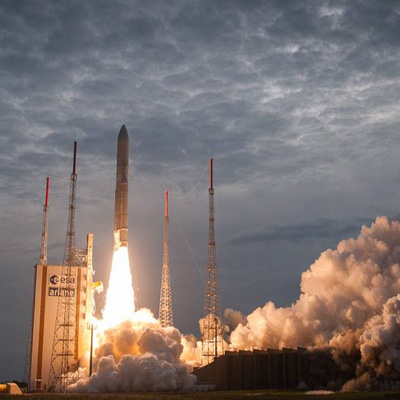
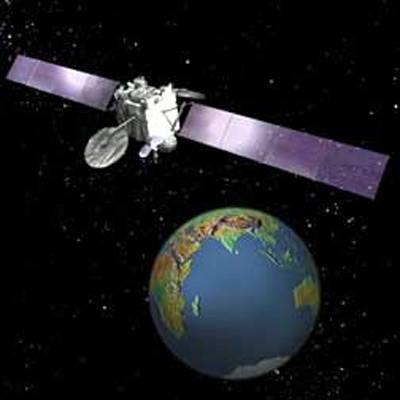
    MUMBAI: Indian DTH operators, television channels, VSAT and digital satellite news gathering providers are a happy lot because of a development in Kouro French Guiana this morning. The reason: the successful launch of Arianespace’s Ariane 5 VA 531 rocket with its passenger, the Indian Space Research Organisation’s GSAT-18 satellite. When the satellite starts ticking fully a few weeks later, its 48 transponders ranging from Ku-band, C-Band to extended C-Band will be beaming their signals over India to Indian TV viewers and companies.

    32:28 minutes after blasting off from the launch site, the 3,400 kg GSAT-18 was placed in geo-synchronous transfer orbit (GTO) this morning around 2:30 am. And, ISRO officials including the Indian ambassador in France Mohan Kumar leapt up, fisting the air in triumph.

    Following that, ISRO’s master control facility took charge of it and will perform operations which will result it being placed in a circular geo-stationary orbit. Following this, ISRO will deploy the solar panels – which will provide it power over its 15 year life – and antenna. The satellite will then be stabilized on three axis, placed at 74 degrees East longitude, and become part of ISRO’s 14 telecom fleet in space

    Later, it is planned to experimentally turn on the communication payloads of GSAT-18. After the successful completion of all the in-orbit tests, GSAT-18 will be ready for operational use.

    This was the Indian space organisation’s twentieth satellite mission through Arianespace. It will add to that count when it launches two more satellites – GSAT 11 and GSAT-11 – using Arianespace launchers in 2017.

    The VA 531 flight had another payload – Australia’s SkyMuster II satellite – which too was placed successfully in orbit. SkyMuster II aims to provide broadband facilities to remote locations in Australia.

    Prime minister Narendra Modi sent out his congratulatory message on Twitter to the scientists at ISRO.

  • GSAT-18 successfully launches, new capacity for DTH operators, TV channels

    GSAT-18 successfully launches, new capacity for DTH operators, TV channels

    MUMBAI: Indian DTH operators, television channels, VSAT and digital satellite news gathering providers are a happy lot because of a development in Kouro French Guiana this morning. The reason: the successful launch of Arianespace’s Ariane 5 VA 531 rocket with its passenger, the Indian Space Research Organisation’s GSAT-18 satellite. When the satellite starts ticking fully a few weeks later, its 48 transponders ranging from Ku-band, C-Band to extended C-Band will be beaming their signals over India to Indian TV viewers and companies.

    32:28 minutes after blasting off from the launch site, the 3,400 kg GSAT-18 was placed in geo-synchronous transfer orbit (GTO) this morning around 2:30 am. And, ISRO officials including the Indian ambassador in France Mohan Kumar leapt up, fisting the air in triumph.

    Following that, ISRO’s master control facility took charge of it and will perform operations which will result it being placed in a circular geo-stationary orbit. Following this, ISRO will deploy the solar panels – which will provide it power over its 15 year life – and antenna. The satellite will then be stabilized on three axis, placed at 74 degrees East longitude, and become part of ISRO’s 14 telecom fleet in space

    Later, it is planned to experimentally turn on the communication payloads of GSAT-18. After the successful completion of all the in-orbit tests, GSAT-18 will be ready for operational use.

    This was the Indian space organisation’s twentieth satellite mission through Arianespace. It will add to that count when it launches two more satellites – GSAT 11 and GSAT-11 – using Arianespace launchers in 2017.

    The VA 531 flight had another payload – Australia’s SkyMuster II satellite – which too was placed successfully in orbit. SkyMuster II aims to provide broadband facilities to remote locations in Australia.

    Prime minister Narendra Modi sent out his congratulatory message on Twitter to the scientists at ISRO.

  • Bad weather pushes forward GSAT-18 launch

    Bad weather pushes forward GSAT-18 launch

    MUMBAI: The nation – and communication satellite trackers – will have to wait for another day. The Indian Space Research Organisation (ISRO) has announced that the launch of its GSAT-18 communications satellite has been delayed by a day. According to its launch partner, Arianespace, the flight was forced to be postponed on account of unfavorable weather conditions.

    GSAT-18 was slated to be launched early 5 October 2016 morning (Indian standard time) by Arianespace using an Ariane 5 rocket from Kouro in French Guiana. Now, the launch date has been pushed forward to 6 October at 1:15 am.

    This is not the first time that GSAT-18’s launch has been delayed. It was initially to be launched on 12 July 2016 along with the Japanese satellite Superbird-8 but a shipping mishap which damaged the latter forced the cancellation of the liftoff. The Indian satellite has another passenger on board the Araine’s Fligh VA 231, Australia’s broadband satellite SkyMuster II.

    GSAT-18 is to be placed at 74 degrees east and has a payload of 24 C-band transponders, 12 upper extended C-band transponders, 12 Ku-band transponders and 2 Ku-Beacon transmitters. The bird has a lifespan of 15 years and it will primarily go to augment the capacity of DTH television, broadcast TV, as well as telecom services in India.

  • Bad weather pushes forward GSAT-18 launch

    Bad weather pushes forward GSAT-18 launch

    MUMBAI: The nation – and communication satellite trackers – will have to wait for another day. The Indian Space Research Organisation (ISRO) has announced that the launch of its GSAT-18 communications satellite has been delayed by a day. According to its launch partner, Arianespace, the flight was forced to be postponed on account of unfavorable weather conditions.

    GSAT-18 was slated to be launched early 5 October 2016 morning (Indian standard time) by Arianespace using an Ariane 5 rocket from Kouro in French Guiana. Now, the launch date has been pushed forward to 6 October at 1:15 am.

    This is not the first time that GSAT-18’s launch has been delayed. It was initially to be launched on 12 July 2016 along with the Japanese satellite Superbird-8 but a shipping mishap which damaged the latter forced the cancellation of the liftoff. The Indian satellite has another passenger on board the Araine’s Fligh VA 231, Australia’s broadband satellite SkyMuster II.

    GSAT-18 is to be placed at 74 degrees east and has a payload of 24 C-band transponders, 12 upper extended C-band transponders, 12 Ku-band transponders and 2 Ku-Beacon transmitters. The bird has a lifespan of 15 years and it will primarily go to augment the capacity of DTH television, broadcast TV, as well as telecom services in India.

  • ISRO’s PSLV-C35 takes off successfully, Scatsat1 launched

    ISRO’s PSLV-C35 takes off successfully, Scatsat1 launched

    MUMBAI: It’s another feather in ISRO’s cap. The Indian space outfit seems to be going from success to success. Earlier this morning at 9:12 am, its latest mission the PSLV-C35 lifted off immaculately from the Satish Dhawan Space Centre in Sriharikota. Around 17 minutes later, its fourth stage rocket engine was shut off and it launched one of its passengers, the ScatSat 1 satellite, into its orbit at height of 720 km., to the delight of ISRO scientists.

    Currently, the organization is waiting to fire the fourth stage engine again to send the remainder of its seven satellite payload into their orbit at a height of 670 km, between 11:25 and 11:28 am, according to ISRO updates.

    “This is a challenging two-in-one mission which puts India in a unique league of nations having the capability to achieve two different orbits in a single mission,” ISRO chairman AS Kiran Kumar was quoted as saying.

    Tweeted Prime minister Narendra Modi: “Moment of immense joy and pride for India. Congratulations to isro on successful launch of PSLV-C35/ScatSat1 & 7 co-passenger satellites. Our space scientists keep scripting history. Their innovative zeal has touched the lives of 125 crore Indians & made India proud worldwide.”

  • ISRO’s PSLV-C35 takes off successfully, Scatsat1 launched

    ISRO’s PSLV-C35 takes off successfully, Scatsat1 launched

    MUMBAI: It’s another feather in ISRO’s cap. The Indian space outfit seems to be going from success to success. Earlier this morning at 9:12 am, its latest mission the PSLV-C35 lifted off immaculately from the Satish Dhawan Space Centre in Sriharikota. Around 17 minutes later, its fourth stage rocket engine was shut off and it launched one of its passengers, the ScatSat 1 satellite, into its orbit at height of 720 km., to the delight of ISRO scientists.

    Currently, the organization is waiting to fire the fourth stage engine again to send the remainder of its seven satellite payload into their orbit at a height of 670 km, between 11:25 and 11:28 am, according to ISRO updates.

    “This is a challenging two-in-one mission which puts India in a unique league of nations having the capability to achieve two different orbits in a single mission,” ISRO chairman AS Kiran Kumar was quoted as saying.

    Tweeted Prime minister Narendra Modi: “Moment of immense joy and pride for India. Congratulations to isro on successful launch of PSLV-C35/ScatSat1 & 7 co-passenger satellites. Our space scientists keep scripting history. Their innovative zeal has touched the lives of 125 crore Indians & made India proud worldwide.”

  • ISRO to launch eight satellites using PSLV on 26 September

    ISRO to launch eight satellites using PSLV on 26 September

    MUMBAI: It will be the second satellite launch this month for the Indian Space Research Organisation (ISRO). On 26 September 2016 at exactly 9:12 am the PSLV C35 will blast off from the first launch pad of the Satish Dhawan Space Centre in Sriharikota, Andhra Pradesh. It will mark the 37th mission and 15 th flight of the PSLV in ‘XL’ configuration (with the use of solid strap-on motors) which will put eight satellites into orbit.

    ISRO will, with the PSLV C35, be undertaking its longest launch and probably most complicated mission ever attempted as it is using the same rocket to launch satellites into two different orbits. The Scatsat-1 satellite, weighing 371 kg for ocean and weather related studies, will be hurled into polar sun synchronous orbit at an altitude of 730 km 17 minutes after liftoff.

    Two Indian universities/ academic institute satellites (Pratham-10kg, IIT – Bombay and Pisat-5.25 kg, PES University, Bengaluru and its consortium) and five foreign satellites will be placed into a 670 km polar orbit. The five co-passenger satellites are from Algeria (three of them – Alsat-1B 103kg, Alsat-2B 117kg, Alsat-1N 7kg), Canada (NLS-19, 8kg) and the US (Pathfinder-44kg).

    What makes the mission complicated is that once Scatscat-1 is launched, the fourth stage engine of the PSLV-C35 will come to a halt. India’s space agency will then keep a tab on the engine health from the ground and will restart it after about 60 minutes for another 20 seconds which will give it the required thrust to take the rocket into the next orbit and release the payload of seven satellites. ISRO has planned to attempt ‘multiple burn technology’ as it is an effective method in cutting costs during satellite launches.

    Earlier this month on 8 September, IISRO had successfully launched its weather satellite INSAT-3DR, a two tonner, using the GSLV-F05, the tenth flight of India’s Geosynchronous Satellite Launch Vehicle (GSLV), The launch took place from the second launch pad at Satish Dhawan Space Centre. It was significant because it was the first operational flight of GSLV carrying Cryogenic Upper Stage (CUS). The indigenously developed CUS was carried on-board for the fourth time during a GSLV flight in the GSLV-F05 flight.

  • ISRO to launch eight satellites using PSLV on 26 September

    ISRO to launch eight satellites using PSLV on 26 September

    MUMBAI: It will be the second satellite launch this month for the Indian Space Research Organisation (ISRO). On 26 September 2016 at exactly 9:12 am the PSLV C35 will blast off from the first launch pad of the Satish Dhawan Space Centre in Sriharikota, Andhra Pradesh. It will mark the 37th mission and 15 th flight of the PSLV in ‘XL’ configuration (with the use of solid strap-on motors) which will put eight satellites into orbit.

    ISRO will, with the PSLV C35, be undertaking its longest launch and probably most complicated mission ever attempted as it is using the same rocket to launch satellites into two different orbits. The Scatsat-1 satellite, weighing 371 kg for ocean and weather related studies, will be hurled into polar sun synchronous orbit at an altitude of 730 km 17 minutes after liftoff.

    Two Indian universities/ academic institute satellites (Pratham-10kg, IIT – Bombay and Pisat-5.25 kg, PES University, Bengaluru and its consortium) and five foreign satellites will be placed into a 670 km polar orbit. The five co-passenger satellites are from Algeria (three of them – Alsat-1B 103kg, Alsat-2B 117kg, Alsat-1N 7kg), Canada (NLS-19, 8kg) and the US (Pathfinder-44kg).

    What makes the mission complicated is that once Scatscat-1 is launched, the fourth stage engine of the PSLV-C35 will come to a halt. India’s space agency will then keep a tab on the engine health from the ground and will restart it after about 60 minutes for another 20 seconds which will give it the required thrust to take the rocket into the next orbit and release the payload of seven satellites. ISRO has planned to attempt ‘multiple burn technology’ as it is an effective method in cutting costs during satellite launches.

    Earlier this month on 8 September, IISRO had successfully launched its weather satellite INSAT-3DR, a two tonner, using the GSLV-F05, the tenth flight of India’s Geosynchronous Satellite Launch Vehicle (GSLV), The launch took place from the second launch pad at Satish Dhawan Space Centre. It was significant because it was the first operational flight of GSLV carrying Cryogenic Upper Stage (CUS). The indigenously developed CUS was carried on-board for the fourth time during a GSLV flight in the GSLV-F05 flight.

  • Govt satellite launches, including from India, to dominate future space market: Euroconsult

    Govt satellite launches, including from India, to dominate future space market: Euroconsult

    NEW DELHI: A major portion of satellites slated to be launched from 2016-2015 with launch mass over 50kg will be dominated by government satellites from countries like the US, Russia, India, China and Japan, according to Euroconsult.

    The 1,450 satellites over 50kg to be launched over 2016-2025 should represent a market of $250 billion for the space industry to build and launch.

    If satellites smaller than 50kg and the two mega constellations of OneWeb and SpaceX are also included in the number of launches, the total for the decade would grow precipitously to 9,000 units (vs. 1,480 launched in the past ten years), states extracts from the Euroconsult’s 19th edition of the report, `*Satellites to be Built & Launched over the next 10 Years’*, due to be published later in September.

    A price decrease is visible in this core market of the industry, driven by 11 commercial constellations using 370 small satellites to be deployed into low or medium Earth orbits for communication or Earth observation, the report says.

    “Huge growth in satellite count does not automatically translate to a large market,” Rachel Villain, Principal Advisor at Euroconsult and editor of the report, was quoted in a statement put on Euroconsult’s website.

    According to Villain, “As the price of the 7,550 future additional satellites is intrinsically low, the very reason for their existence, their market significance is small; they should represent no more than 8 per cent of the $270 billion to be spent building and launching the total of 9,000 satellites.”

    Euroconsult is a leading global consulting firm specializing in space markets. As a privately-owned, fully independent firm, it provides strategic consulting, develops comprehensive research and organizes executive-level annual summits and training programs for the satellite industry.

    Interestingly, over three quarters of the market remains with government satellites. The 880 satellites to be launched for civilian and military agencies in 60 countries represent a market of $193 billion.

    Governments dominate the space industry as established space countries replace and expand their in-orbit satellite systems and more countries acquire their first operational satellite systems, usually for communications or for Earth observation and imagery intelligence, Euroconsult statement says.

    “About 85 per cent of the government market will remain concentrated in the ten countries with an established space industry (U.S., Russia, China, Japan, India and five European countries). Other 50 countries engaged in space activities will launch twice the number of satellites that they did in the past ten years, that is almost 200 satellites. About half of these satellites will be procured from foreign manufacturers as domestic industry capabilities develop in these countries,” the Euroconsult statement asserts.

    In India, satellite launches are done by the state-controlled Indian Space & Research Organisation (ISRO) with some smaller satellites being built by rare private companies, but with dollops of help from ISRO, which has also launched foreign satellites in recent times, including American.

    In the commercial space sector, Euroconsult anticipates a total of 560 satellites to be launched over the decade by 40 companies. Most of these satellites will be for the replacement of the communications capacity currently in orbit. Over two-thirds of the commercial space market remains concentrated in geostationary orbit, the destination of almost 300 satellites operated by 30 companies for communications and broadcasting services.

    The 11 commercial constellations to be launched into non-geostationary orbits for communications services and Earth observation imagery should represent a market of $1.6 billion per year on average over the decade.