Category: Satellite Launches

  • ISRO’s ‘South Asia Satellite’ to carry 12 ku-band transponders

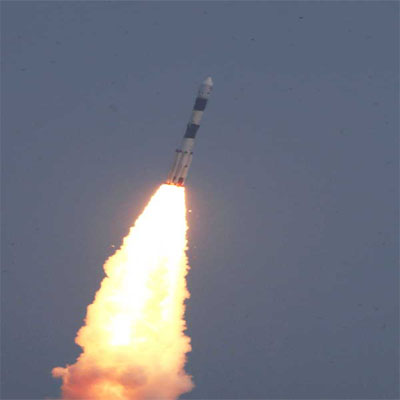
    MUMBAI: India has planned to launch the ‘South Asia Satellite’ on 5 May which will benefit all the neighbouring countries, except Pakistan, which is not a part of the project. Indian Space Research Organisation (ISRO) chairman A S Kiran Kumar told PTI that the launch would take place in the first week of May.

    ISRO scripted history in February 2017 by launching 104 satellites, including India’s weather observation Cartosat-2 Series, in a single mission onboard its dependable Polar rocket. So far, ISRO has launched 226 satellites, including 179 belonging to foreign countries.

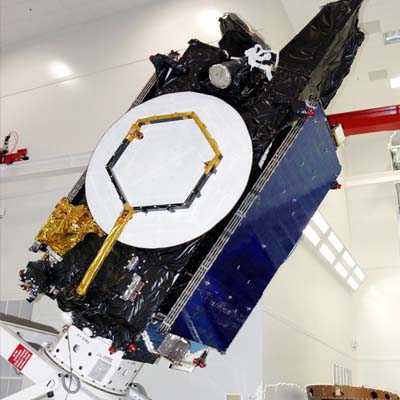
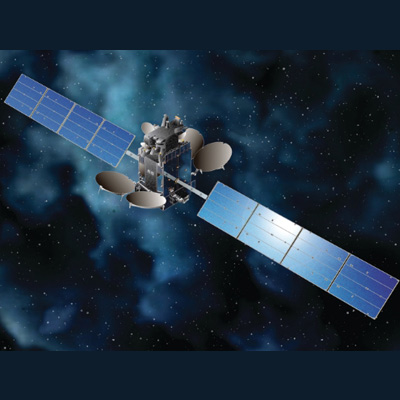
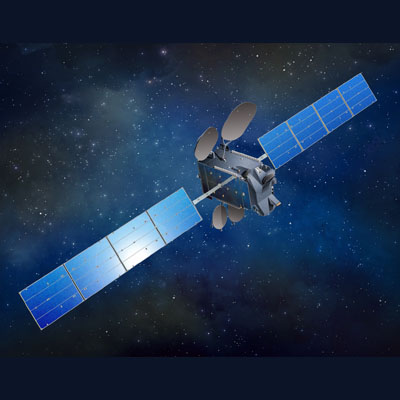
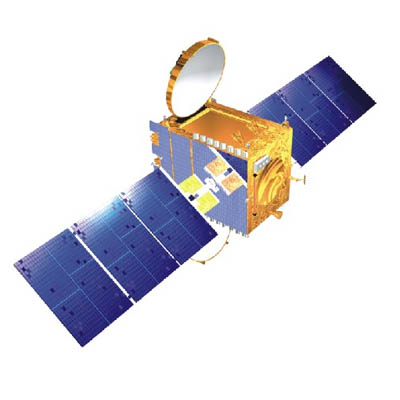
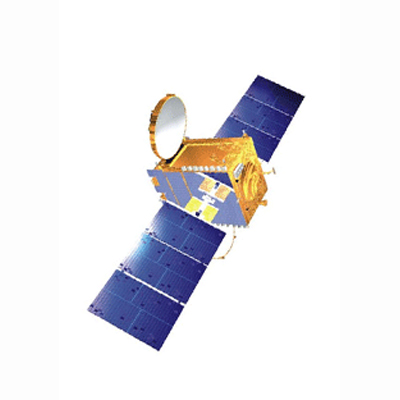
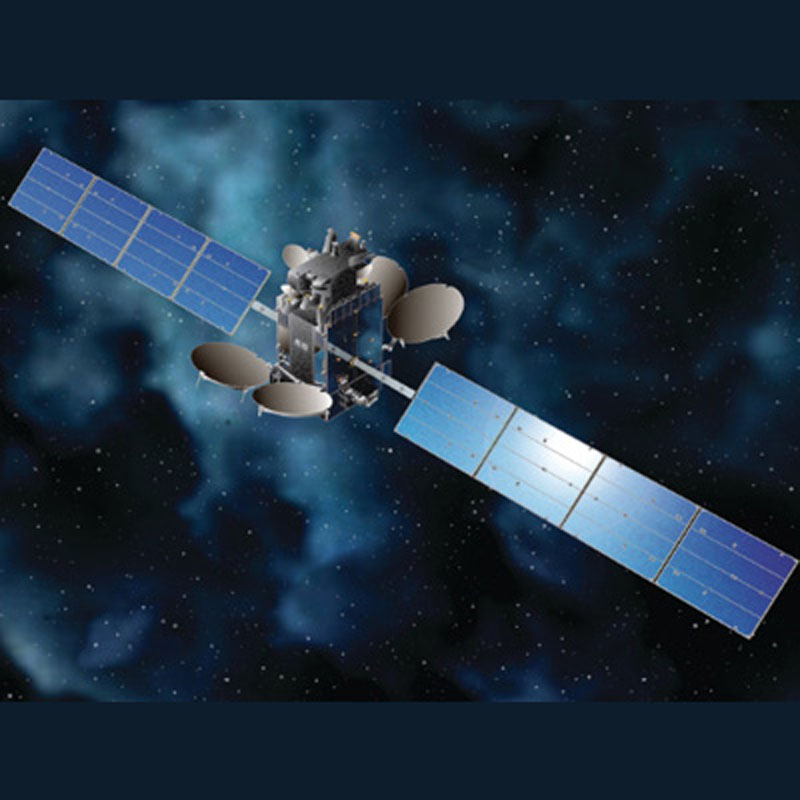
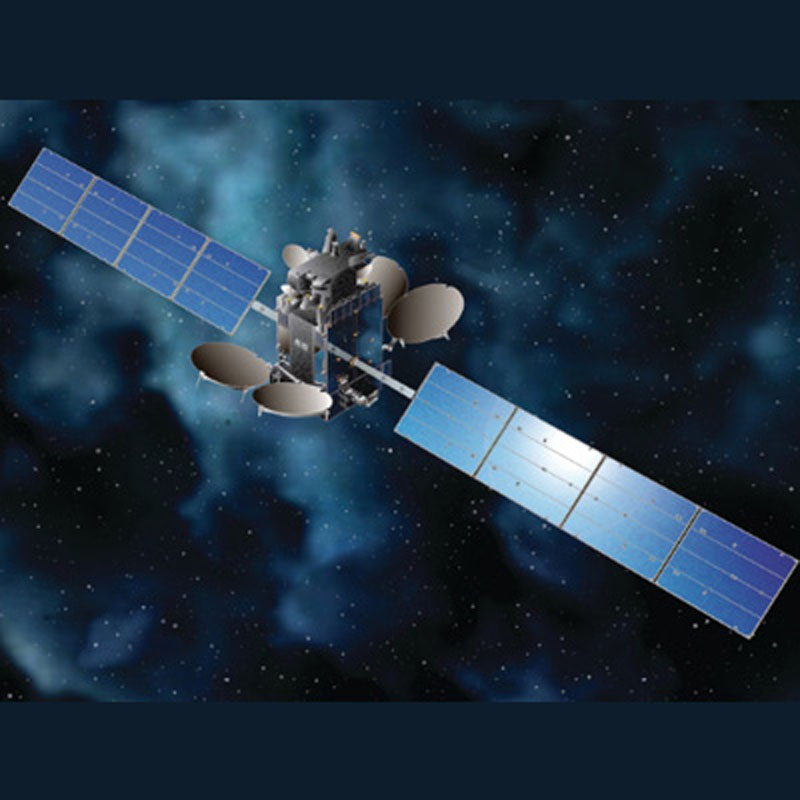
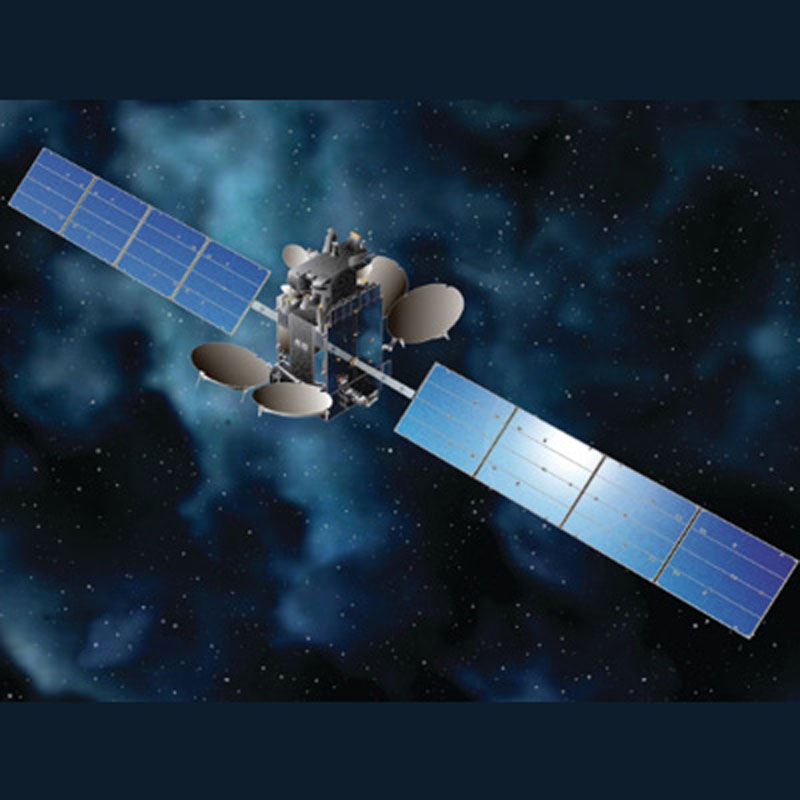
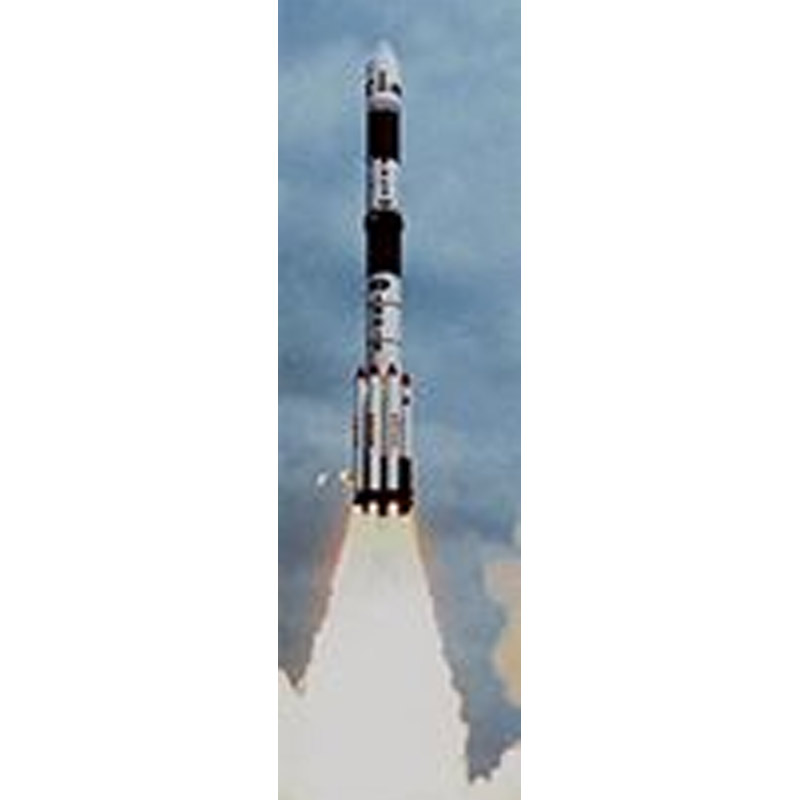
    ISRO sources said that the launch of this communication satellite (GSAT-9) has been scheduled on board the space agency’s rocket GSLV-09 from Sriharikota spaceport. Kumar said, the satellite, with a lift-off mass of 2,195 kg, would carry 12 ku-band transponders. Sources said the satellite has been designed for a mission life of more than 12 years.

    The satellite is meant for providing communication and disaster support, connectivity among states (countries of South Asia region). It will provide a significant capability to each of these participating states in terms of DTH, certain VSAT capacity plus linking among the states for both disaster information transfer and also in terms of library type of things.

    “So, there is a significant amount of inter-linking possible among the states (countries),” Kumar added. According to ISRO officials, there is a potential for each participating country to use a dedicated transponder with a capacity of 36 to 54 Mhz for its own internal use. Each country would be responsible for content generation and its use, the officials said.

    Also Read:

    MIB: No DPO request for infra sharing, DTH ops’ transponder demand up

    ISRO ready for nexGen vehicle, GSLV can launch 2.2 tonne satellites to GTO

    ISRO world record in 104-satellite launches on a single flight    


  • ISRO ready for nexGen vehicle, GSLV can launch 2.2 tonne satellites to GTO

    NEW DELHI: India, which already has the capacity to launch 1700 kg to Sun Synchronous Polar Orbit (600 km) with its Polar Satellite Launch Vehicle (PSLV), is all set to launch the next generation launch vehicle Geosynchronous Satellite Launch Vehicle (GSLV MkIII) with indigenous high thrust cryogenic stage to launch 4 tonne class of communication satellites to GTO.

    The Indian Space Research Organization is all set to make the first developmental flight in the second quarter of 2017, the space minister Jitendra Singh told the Parliament. The development of Semicryogenic engine has also been undertaken to further enhance the GTO payload capability of GSLV MkIII to 6 tonnes.

    The PSLV has proven its versatility in launching multi-satellite/multi-orbit missions as well as lunar (Chandrayaan-1) and interplanetary missions (Mars Orbiter Mission).

    Until now, PSLV has completed 38 consecutive successful missions, during which it has launched 46 Indian satellites (weighing ~ 43.2 tonnes) and 180 foreign satellites (weighing ~ 6.3 tonnes). It has already established itself as a preferred launch vehicle, in its class, in the global market for launch services, especially for smaller satellites.

    The GSLV, with indigenous cryogenic upper stage, has the capability to launch satellites up to 2.2 tonnes to Geosynchronous Transfer Orbit (GTO). GSLV has demonstrated its reliability through three consecutive successful missions in the past three years.

    The maximum GTO capability of other space launch agencies to launch satellites are: European Space Agency (ESA): 10.5 tonnes, US: 13.8 tonnes, Russia: 6.5 tonnes, China: 14 tonnes, and Japan: 8 tonnes.

    ISRO has proved the level of efficiency in the area of space science through – (i) planning, development & execution of Lunar mission ‘Chandrayaan-1’ and High resolution imaging & Systematic topographic mapping of the Moon; (ii) successful insertion of Mars Orbiter Mission (MOM) around the planet Mars in very first attempt, achieving all planned objectives and continuing the operations of MOM beyond its designed mission life of 6 months; (iii) placing India’s first observatory in space ‘Astrosat’, which enables simultaneous multi-wavelength observations (Ultraviolet to X-Ray) to study Stars and Galaxies; (iv) indigenous development & validation of several new technologies viz. autonomy, deep space communication, scientific instruments in space science missions.

    Future missions in space science include second mission to Moon ‘Chandrayaan-2’, consisting of an indigenous Orbiter, Lander & Rover and mission for solar studies ‘Aditya-L1’ to study the solar corona in different wavebands.

    The capability to set up a space station needs capability of lifting heavy payloads into space. While there is no specific plan for space station, ISRO is working towards this capability through launch vehicles using cryogenic and semi-cryogenic engines.

  • Hitachi Kokusai delivers SNG transmission uplink vehicle to JRTV

    MUMBAI: Broadcasting systems and surveillance system manufacturing company Hitachi Kokusai Electric Turkey Systems has announced the delivery and commissioning of a new satellite news gathering (SNG) transmission uplink vehicle to Jordanian state broadcaster, Jordan Radio and Television (JRTV).

    The broadcaster is known as a regional pioneer in satellite news gathering operations and this new SNG transmission vehicle will add further state-of-the-art production resources to its extensive field-based news team. Throughout this project, Hitachi Kokusai worked closely with its local partner, Amman-based HEAT for Engineering and Technology.

    Designed and built at Hitachi Kokusai design and manufacturing centre in Istanbul, the vehicle is a bespoke solution, designed to meet the exact SNG transmission needs of JRTV. Based on the Mercedes Sprinter van, the OB vehicle integrates a PDA 150 Ku Band Drive News antenna and 1:1 400W Ku Band TWTA and MPEG-2/4 HD compression system and a built-in automatic levelling system.

    Also, the vehicle includes a high-power air conditioning system, an uninterruptible power supply (UPS) system and a power generator, ensuring reliable standalone operation even in the most extreme Jordanian climate conditions.

    HEAT for Engineering and Technology founder and CEO Omar Hikmat said, “In order to support JRTV’s field-based production teams, we had a specific set of requirements from this vehicle. Hitachi’s ability to take a standard Mercedes vehicle and create a totally bespoke solution to our customer’s needs is impressive. It passed all JRTV’s acceptance tests with ease and already it is fully operational.”

    The sale of this vehicle to JRTV is seen as being strategically important to Hitachi Kokusai since JRTV is regarded as one of the leading regional broadcasters in terms of their application of new technologies.

  • ISRO to launch 103 satellites early Feb

    ISRO to launch 103 satellites early Feb

    NEW DELHI: Indian Space and Research Organisation (ISRO) will launch a record 103 satellites in one go using its workhorse PSLV-C37 in the first week of February, while the prime minister Narendra Modi’s pet South Asian satellite project will take off in March. Majority of the satellites (almost 100) set for launch in February are for foreign nations, including the U.S. and Germany.

    “We are making a century by launching over 100 satellites at one go,” a PTI report quoted S Somnath, Director of the Liquid Propulsion Systems Centre of the ISRO, as saying yesterday. The space agency had earlier planned a launch of 83 satellites in the last week of January, of which 80 were foreign. But with the addition of 20 more foreign satellites, the launch was delayed by a week and will now take place in first week of February, Somnath said.

    He, however, did not specify the number of countries that would launch its satellites in this mission, but said the list includes countries like the US and Germany. “These will be 100 micro-small satellites, which will be launched using a PSLV (Polar Satellite Launch Vehicle) – C37. The weight of the payload will be 1350 kgs, of which 500-600 kgs will be the satellite’s weight,” Somnath added in the PTI report.

    The launch will be a major feat in country’s space history as no exercise on this scale has been attempted before. Last year, ISRO launched 22 satellites at a go and this launch will have almost five times the number of crafts. The South Asian satellite will be a part of GSAT-9, which will be launched in March this year, said ISRO Associate Director M Nageshwara Rao.

    The communication satellite was to be launched in December 2016, but was slightly delayed as some other satellites are to be launched before that. PTI quoted unnamed sources saying talks with Afghanistan to have the country on-board for the project is in its final stages.

    Envisaged as a gift to its neighbours, the project, earlier known as SAARC satellite, faced stiff resistance from Pakistan. The neighbouring country wanted it to be launched under the aegis of the South Asian regional forum. It later backed out of the project. Apart from India, the satellite will benefit Sri Lanka, Maldives, Bangladesh, Nepal and Bhutan.

  • ISRO to launch 103 satellites early Feb

    ISRO to launch 103 satellites early Feb

    NEW DELHI: Indian Space and Research Organisation (ISRO) will launch a record 103 satellites in one go using its workhorse PSLV-C37 in the first week of February, while the prime minister Narendra Modi’s pet South Asian satellite project will take off in March. Majority of the satellites (almost 100) set for launch in February are for foreign nations, including the U.S. and Germany.

    “We are making a century by launching over 100 satellites at one go,” a PTI report quoted S Somnath, Director of the Liquid Propulsion Systems Centre of the ISRO, as saying yesterday. The space agency had earlier planned a launch of 83 satellites in the last week of January, of which 80 were foreign. But with the addition of 20 more foreign satellites, the launch was delayed by a week and will now take place in first week of February, Somnath said.

    He, however, did not specify the number of countries that would launch its satellites in this mission, but said the list includes countries like the US and Germany. “These will be 100 micro-small satellites, which will be launched using a PSLV (Polar Satellite Launch Vehicle) – C37. The weight of the payload will be 1350 kgs, of which 500-600 kgs will be the satellite’s weight,” Somnath added in the PTI report.

    The launch will be a major feat in country’s space history as no exercise on this scale has been attempted before. Last year, ISRO launched 22 satellites at a go and this launch will have almost five times the number of crafts. The South Asian satellite will be a part of GSAT-9, which will be launched in March this year, said ISRO Associate Director M Nageshwara Rao.

    The communication satellite was to be launched in December 2016, but was slightly delayed as some other satellites are to be launched before that. PTI quoted unnamed sources saying talks with Afghanistan to have the country on-board for the project is in its final stages.

    Envisaged as a gift to its neighbours, the project, earlier known as SAARC satellite, faced stiff resistance from Pakistan. The neighbouring country wanted it to be launched under the aegis of the South Asian regional forum. It later backed out of the project. Apart from India, the satellite will benefit Sri Lanka, Maldives, Bangladesh, Nepal and Bhutan.

  • ISRO launches RESOURCESAT-2A Remote Sensing Satellite

    ISRO launches RESOURCESAT-2A Remote Sensing Satellite

    NEW DELHI: The 1,235-kg RESOURCESAT-2A Satellite was launched successfully yesterday morning by the PSLV-C36, ISRO’s Polar Satellite Launch Vehicle, in its thirty eighth flight from the Satish Dhawan Space Centre SHAR, Sriharikota.

    This is the thirty seventh consecutively successful mission of PSLV.

    With this, the total number of satellites launched by India’s workhorse launch vehicle PSLV including today’s RESOURCESAT-2A has now reached 122, of which 43 are Indian and the remaining 79 are from abroad.

    After PSLV-C36 lift-off at 10:25 am IST from the First Launch Pad with the ignition of the first stage, the subsequent important flight events, namely, strap-on ignitions and separations, first stage separation, second stage ignition, payload fairing separation, second stage separation, third stage ignition and separation, fourth stage ignition and cut-off, took place as planned. After a flight of 17 minutes 05 seconds, the vehicle achieved a polar Sun Synchronous Orbit of 824 km height inclined at an angle of 98.725 degree to the equator (very close to the intended orbit) and 47 seconds later, RESOURCESAT-2A was separated from the PSLV fourth stage.

    After separation, the two solar arrays of RESOURCESAT-2A deployed automatically and ISRO’s Telemetry, Tracking and Command Network (ISTRAC) at Bangalore took over the control of the satellite. In the coming days, the satellite will be brought to its final operational configuration following which it will begin to provide imagery from its three cameras. The data sent by RESOURCESAT-2A will be useful for agricultural applications like crop area and crop production estimation, drought monitoring, soil mapping, cropping system analysis and farm advisories generation.

    Like its predecessors RESOURCESAT-1 and 2, RESOURCESAT-2A has a unique 3-Tier imaging system with Advanced Wide Field Sensor (AWiFS), Linear Imaging Self Scanner-3 (LISS-3) and Linear Imaging Self Scanner-4 (LISS-4) cameras. The AWiFS provides images with a sampling of 56 metres, a swath of 740 km and a revisit of five days whereas the LISS-3 provides 23.5 metre sampled images with 141 km swath and a ‘repitivity’ of 24 days. LISS-4 provides 5.8 metre sampled images with 70 km swath and a revisit of five days.

    Meanwhile, the Parliament was told yesterday that ISRO successfully carried out the first experimental mission of Reusable Launch Vehicle – Technology Demonstrator (RLV-TD) on 23 May 2016 from Sriharikota. In this mission, critical technologies such as autonomous navigation, guidance & control and reusable thermal protection system have been successfully demonstrated.
    The space minister Jitendra Singh said the Development of Reusable Launch Vehicle is a technical challenge and it involves the development of many cutting edge technologies. Presently, it is in the preliminary stage of total developmental process. A series of technology demonstration missions would be required before it is made operational.

  • ISRO launches RESOURCESAT-2A Remote Sensing Satellite

    ISRO launches RESOURCESAT-2A Remote Sensing Satellite

    NEW DELHI: The 1,235-kg RESOURCESAT-2A Satellite was launched successfully yesterday morning by the PSLV-C36, ISRO’s Polar Satellite Launch Vehicle, in its thirty eighth flight from the Satish Dhawan Space Centre SHAR, Sriharikota.

    This is the thirty seventh consecutively successful mission of PSLV.

    With this, the total number of satellites launched by India’s workhorse launch vehicle PSLV including today’s RESOURCESAT-2A has now reached 122, of which 43 are Indian and the remaining 79 are from abroad.

    After PSLV-C36 lift-off at 10:25 am IST from the First Launch Pad with the ignition of the first stage, the subsequent important flight events, namely, strap-on ignitions and separations, first stage separation, second stage ignition, payload fairing separation, second stage separation, third stage ignition and separation, fourth stage ignition and cut-off, took place as planned. After a flight of 17 minutes 05 seconds, the vehicle achieved a polar Sun Synchronous Orbit of 824 km height inclined at an angle of 98.725 degree to the equator (very close to the intended orbit) and 47 seconds later, RESOURCESAT-2A was separated from the PSLV fourth stage.

    After separation, the two solar arrays of RESOURCESAT-2A deployed automatically and ISRO’s Telemetry, Tracking and Command Network (ISTRAC) at Bangalore took over the control of the satellite. In the coming days, the satellite will be brought to its final operational configuration following which it will begin to provide imagery from its three cameras. The data sent by RESOURCESAT-2A will be useful for agricultural applications like crop area and crop production estimation, drought monitoring, soil mapping, cropping system analysis and farm advisories generation.

    Like its predecessors RESOURCESAT-1 and 2, RESOURCESAT-2A has a unique 3-Tier imaging system with Advanced Wide Field Sensor (AWiFS), Linear Imaging Self Scanner-3 (LISS-3) and Linear Imaging Self Scanner-4 (LISS-4) cameras. The AWiFS provides images with a sampling of 56 metres, a swath of 740 km and a revisit of five days whereas the LISS-3 provides 23.5 metre sampled images with 141 km swath and a ‘repitivity’ of 24 days. LISS-4 provides 5.8 metre sampled images with 70 km swath and a revisit of five days.

    Meanwhile, the Parliament was told yesterday that ISRO successfully carried out the first experimental mission of Reusable Launch Vehicle – Technology Demonstrator (RLV-TD) on 23 May 2016 from Sriharikota. In this mission, critical technologies such as autonomous navigation, guidance & control and reusable thermal protection system have been successfully demonstrated.
    The space minister Jitendra Singh said the Development of Reusable Launch Vehicle is a technical challenge and it involves the development of many cutting edge technologies. Presently, it is in the preliminary stage of total developmental process. A series of technology demonstration missions would be required before it is made operational.

  • DTH-aiding GSAT-19 launch plan under way

    DTH-aiding GSAT-19 launch plan under way

    NEW DELHI: The Indian Space Research Organisation is working towards putting into orbit an indigenous communication satellite GSAT-19, weighing 3.3 tonne and carrying Ka/Ku band payloads. Ku Band is suitable for direct-to-home platforms.

    The satellite assembly is in an advanced stage, the space minister Jitendra Singh told the Rajya Sabha yesterday.

    Meanwhile, the launch campaign for the first developmental flight of GSLV Mk-III commenced on 29 September 2016 at Satish Dhawan Space Centre (SDSC), Sriharikota.

    ISRO is working towards increasing the payload capacity of GSLV Mk-III beyond four tonnes in the coming years. The strategies identified to achieve the increased payload capacity include performance improvement of propulsion systems, inert mass optimisation and miniaturisation of avionics system.

    The Chandrayaan-2, comprising Orbiter, Lander and Rover, with a total payload mass of 3250 kg is planned to be launched on board GSLV Mk-II during the first quarter of 2018.

    Also read:

    http://www.indiantelevision.com/satellites/satellite-launches/isro-to-launch-83-satellites-on-single-rocket-create-world-record-161029

    http://www.indiantelevision.com/satellites/satellite-launches/gsat-18-successfully-launches-new-capacity-for-dth-operators-tv-channels-161006

  • DTH-aiding GSAT-19 launch plan under way

    DTH-aiding GSAT-19 launch plan under way

    NEW DELHI: The Indian Space Research Organisation is working towards putting into orbit an indigenous communication satellite GSAT-19, weighing 3.3 tonne and carrying Ka/Ku band payloads. Ku Band is suitable for direct-to-home platforms.

    The satellite assembly is in an advanced stage, the space minister Jitendra Singh told the Rajya Sabha yesterday.

    Meanwhile, the launch campaign for the first developmental flight of GSLV Mk-III commenced on 29 September 2016 at Satish Dhawan Space Centre (SDSC), Sriharikota.

    ISRO is working towards increasing the payload capacity of GSLV Mk-III beyond four tonnes in the coming years. The strategies identified to achieve the increased payload capacity include performance improvement of propulsion systems, inert mass optimisation and miniaturisation of avionics system.

    The Chandrayaan-2, comprising Orbiter, Lander and Rover, with a total payload mass of 3250 kg is planned to be launched on board GSLV Mk-II during the first quarter of 2018.

    Also read:

    http://www.indiantelevision.com/satellites/satellite-launches/isro-to-launch-83-satellites-on-single-rocket-create-world-record-161029

    http://www.indiantelevision.com/satellites/satellite-launches/gsat-18-successfully-launches-new-capacity-for-dth-operators-tv-channels-161006

  • ISRO to launch 83 satellites on single rocket, create world record

    ISRO to launch 83 satellites on single rocket, create world record

    MUMBAI: The Indian space agency ISRO, in a move to set a world record, is planning to put into orbit 83 satellites — two Indian and 81 foreign — on a single rocket in early 2017, said a top official of Antrix Corporation, the commercial arm of Indian Space Research Organisation (ISRO).

    The official said the company’s order book stands at Rs 500 crore while negotiations are on for launch order for another Rs 500 crore.

    Antrix Corporation chairman-cum-managing director Rakesh Sasibhushan told IANS that, during the first quarter of 2017, ISRO planned plan to launch a single rocket carrying 83 satellites. Most foreign satellites were nano satellites, he said.

    He said all the 83 satellites will be put in a single orbit and hence there will not be any switching off and on of the rocket. The major challenge for the proposed mission is to hold the rocket in the same orbit till all the satellites are ejected. He said ISRO will use its Polar Satellite Launch Vehicle XL (PSLV-XL) rocket variant for the record launch.

    For ISRO, launch of multiple satellites at one go is not a new thing as it has done it several times in the past. According to Sasibhushan, the total payload/weight carried off into space by the PSLV-XL rocket will be around 1,600 kg.

    Meanwhile, ISRO is conducting high-altitude tests with its own cryogenic engine that is expected to power the heavier rocket Geosynchronous Satellite Launch Vehicle-Mk III (GSLV Mk III). The GSLV Mk III has a capacity to carry around four tonnes of load. The rocket is scheduled to be flown in January 2017.

    The GSLV Mk III rocket is expected to save precious foreign exchange for India as it pays to launch heavier satellites through foreign space agencies.

    ISRO chairman A.S. Kiran Kumar said the agency is looking forward to develop four-tonne communication satellites that will give the same output as a six-tonner.