Category: Satellite Launches

  • ISRO launched 8 communication satellites over 4 years

    ISRO launched 8 communication satellites over 4 years

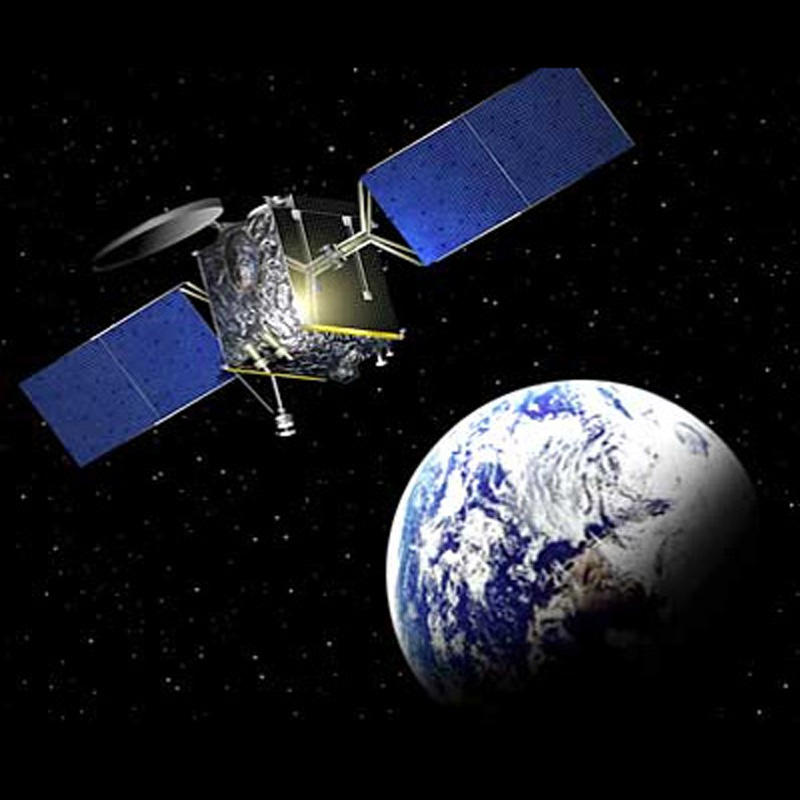
    NEW DELHI: Eight communication satellites were launched by India’s space agency ISRO over the last four years that carried transponders in various frequency bands of C, extended C, Ku, Ka and S for telecommunications, broadcast and mobile communication services.

    Navigation satellites were part of the indigenous constellation NavIC, India’s own regional navigation system. Navigation satellites carried navigation payloads in L and S-bands for providing position, navigation and timing services.

    Earth Observation satellites are used for deriving inputs for natural resource management, disaster management, cartographic applications, weather, climate and ocean studies.

    Communication Satellite

    8

    Navigational Satellite

    7

    Remote Sensing Satellite

    5

    Meteorological satellite

    2

    Science Satellite

    1

    Technology Demonstration/ Student Satellite

    9

    Astrosat (science payload) is a unique multi wavelength observatory in space, providing an opportunity for observation of celestial sources in ultra-violet, optical and X-ray wavelength bands.

    ISRO has also launched satellites for technology demonstration and student satellites to encourage the young generation to work in the field of space.

    This information was provided by the Minister of State in the Prime Minister’s Office for Personnel, Public Grievances and Pensions, Atomic Energy and Space, Dr Jitendra Singh, in Lok Sabha (Lower House of Parliament) on Wednesday.

    Also Read :

    ISRO readies GSAT-6A satellite for launch

    ISRO, DoT turf wars delaying connectivity reach: govt official

    ISRO to double annual satellite launch

  • ISRO readies GSAT-6A satellite for launch

    ISRO readies GSAT-6A satellite for launch

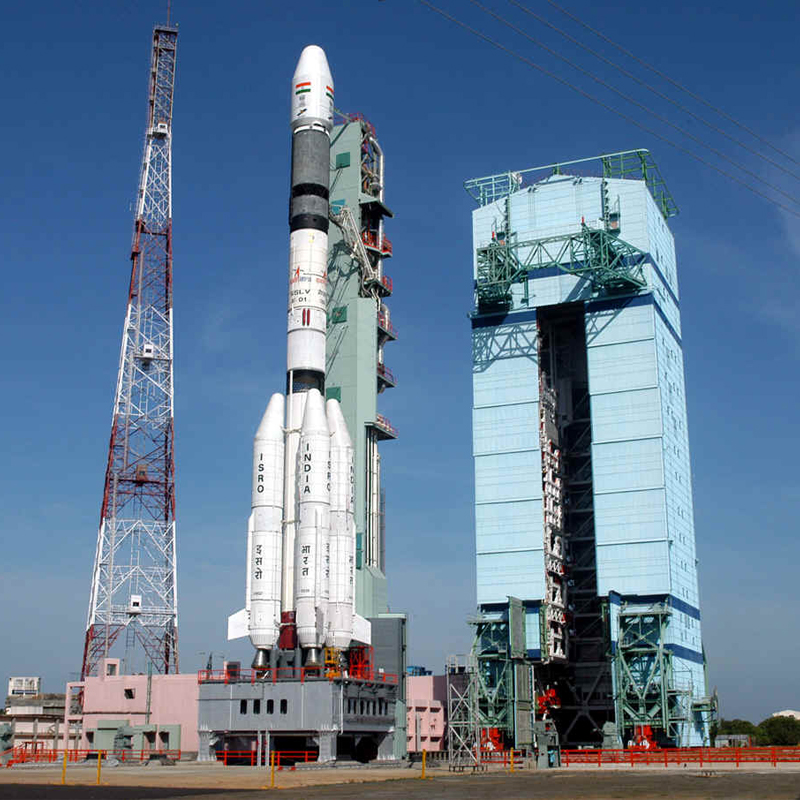
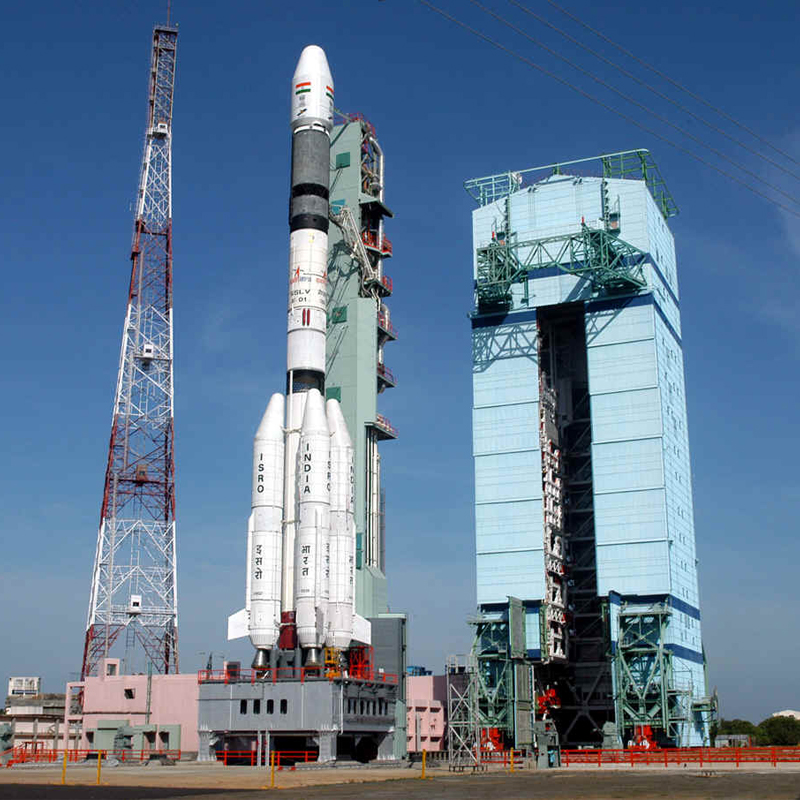
    MUMBAI: Indian Space Research Organisation (ISRO) is set to launch its high-power GSAT-6A communications satellite onboard GSLV Mk-II (GSLV F08) on 29 March 2018. The government-funded organisation will use one of its rockets for the launch, from the Sriharikota island site in Andhra Pradesh province on the edge of the Indian Ocean.

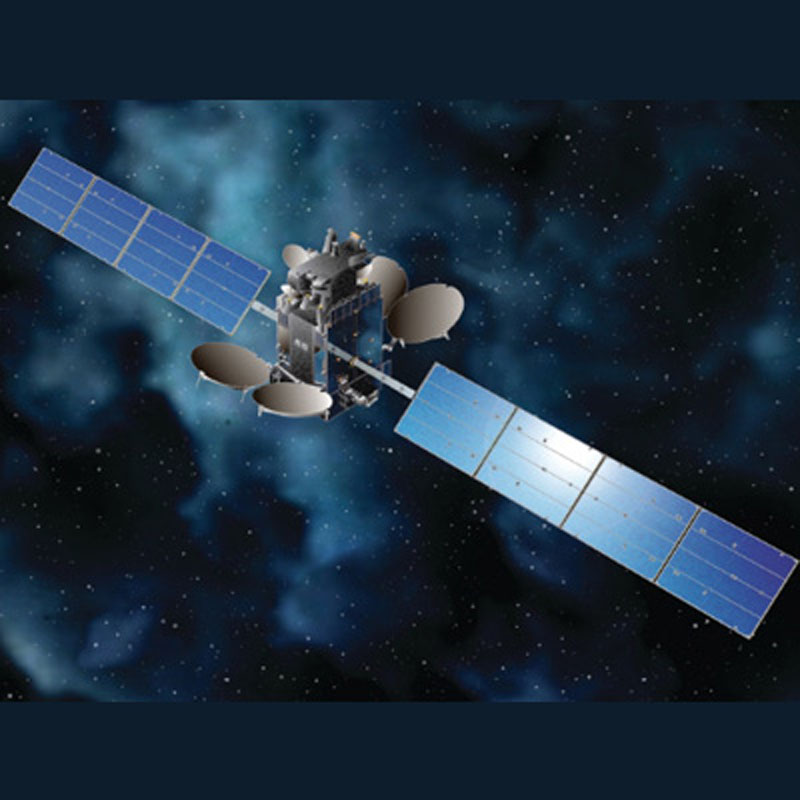
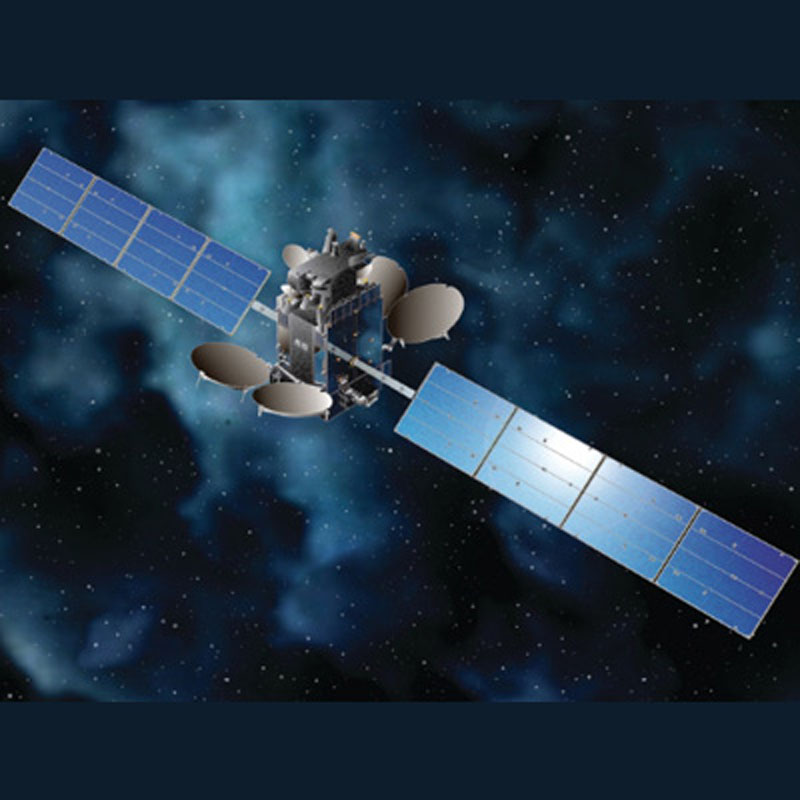
    The satellite is equipped with C-band and S-band transponders, which ISRO says will provide a platform for developing technologies such as demonstration of its massive 6m S-Band deployable antenna (the largest launched by India), which can then be used for mobile phones, vehicular communications and network management techniques as well as multimedia applications.

    It will be placed at 83 degrees East and have a life of nine to 10 years.

    This will be the Geosynchronous Satellite Launch Vehicle’s 12th flight and sixth flight with indigenous cryogenic stage. The rocket will take off from the second launch pad at the Satish Dhawan Space Centre.

    According to ISRO, GSAT-6A, weighing 2140kg, is a high-power S-band communication satellite, just like its predecessor GSAT-6.

    Also Read :

    ISRO, DoT turf wars delaying connectivity reach: govt official

    ISRO eyes 100th satellite on 12 Jan; GSAT-11 launch in April

    ISRO to double annual satellite launch

  • ISRO eyes 100th satellite on 12 Jan; GSAT-11 launch in April

    ISRO eyes 100th satellite on 12 Jan; GSAT-11 launch in April

    NEW DELHI: The Indian Space Research Organisation (ISRO) will launch its 100th satellite along with 30 others, including those from other countries, in a single mission on 12 January 2018 from Sriharikota It will be a milestone event in the country’s space history even as communications satellite GSAT-11 is being prepared for an April launch.

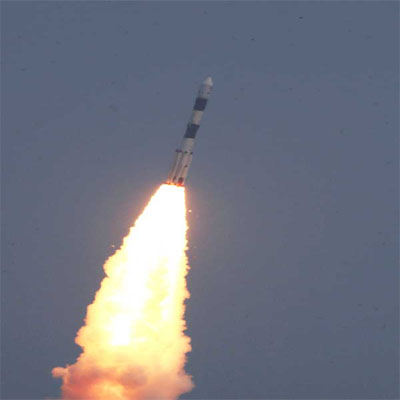
    ISRO said it was “back in the game” with the launch, the first Polar Satellite Launch Vehicle (PSLV) mission after the unsuccessful launch of the navigation satellite IRNSS-1H in August last, PTI stated Tuesday in a report from Bengaluru.

    “The 31 spacecrafts, including weather observation Cartosat-2 series satellite, will be launched by PSLV-C40,” ISRO Satellite Centre (ISAC) director M Annadurai said. Stating that 28 of the satellites were from other countries, the official noted that the launch of three Indian satellites during the mission would mark the roll out of the 100th satellite from ISRO.

    “When the last satellite is ejected out it will become the hundredth satellite…the first century we have done. It is the maiden century. So PSLV-C40 marks maiden century of Indian satellite….we are eagerly waiting for that,” the official was quoted in the PTI report as saying.

    PSLV-C40 will launch the 710 kg Cartosat-2 series satellite for earth observation and 30 co-passengers (together weighing about 613 kg) at lift-off on 12 January 12 at 9.28 am, ISRO said. It will be launched from the first launch pad of the Satish Dhawan Space Centre at Sriharikota, about 100 km from Chennai.

    The co-passenger satellites include one micro and nano-satellite each from India. Three micro and 25 nano satellites from six countries, (Canada, Finland, France, Republic of Korea, the UK and the USA) make up the other payload. Referring to the PSLV-C39 failure, Annadurai said ISRO had understood it and repeated tests had been conducted to ensure that such problems did not reoccur.

    On 31 August 2017, India’s mission to launch its backup navigation satellite IRNSS-1H on board PSLV-C39 failed after a technical fault in the final leg following a perfect launch. ISRO then said the heat shield did not separate and, as a result, IRNSS-1H got stuck in the fourth stage of the rocket.

    The total weight of all the 31 satellites carried on board PSLV-C40 is about 1323 kg.

    Regarding plans for the year, Annadurai said Chandrayaan-2 or Mission Moon was in the final stage of testing and integration of the orbiter, lander and rover, and was expected for launch this year.

    Also, IRNSS-1I, a follow-on satellite will be the first satellite whose assembly, integration and testing will be fully done by the private industry, he said, adding “we are enabling the private industry”.

    GSAT-11, a six-tonne class communication satellite, he said, was at the final leg of testing, and the launch target was April.

    ALSO READ:

    ISRO to double annual satellite launch

    Arianespace to launch ISRO-built DTH & telecom satellites

    ISRO gears up for GSAT-19, GSLV Mk III launch today

    ISRO stresses on indigenization; TRAI for Open Sky policy

  • ISRO to double annual satellite launch

    ISRO to double annual satellite launch

    NEW DELHI: The Indian Space Research Organisation (ISRO) plans to increase its satellite capacity by upping launches from next year to keep pace with demands from users and is also releasing request for proposals (RFP) for 30 satellites, top Indian government officials said. Five of these will be communication satellites catering to the TV and radio industry.

    According to ISRO chairman AS Kiran Kumar, who was speaking at a conference on the space industry eco-system here on Monday, the organisation would be doubling its launch frequency from 10 to approximately 20 in a year as the “space industry in India is significantly short of capacity” and behind “intended goals”.

    One of the aims was to increase transponder capacity to transmit more TV channels. Currently, 15 communication satellites are in orbit.

    He emphasised that with the increasing volumes, which are on offer by ISRO and other space agencies, it is an ideal opportunity for the industry to be a part of the global supply chain.

    “The world of space is rapidly changing with technological advancements and disruptive innovation. The key to success is to significantly reduce the cost of access to space in what will prove to be an immense opportunity for the Indian and global industries,” Kumar said.

    Pointing out that ISRO presently has 42 operational satellites and has set new benchmarks in lunar and Mars explorations, he said that in future the challenge will be to decrease the cost of access to space for optimal advantage of common people. Kumar added that India has demonstrated to the entire world its capabilities in satellite launch with comparative cost advantage compared to other foreign space agencies.

    While Kumar dwelt on efforts to augment satellite capacity, his colleague and ISRO Satellite Centre director Dr Annadurai announced, “RFP for 30 satellites will be released today (Monday)”, laying stress on the role of space technology in achieving sustainable development goals, disaster management and improving important governance objectives.

    Apart from other services, satellites are used by TV channels and telecoms service providers to beam their services to and fro from India. Though C-band satellite capacity is not so regulated, the KU-band capacity procurement on non-Indian satellites is restrictive. Indian direct to home operators at times have found it difficult to expand channel capacity in the absence of adequate KU-band transponders on Indian birds and long procedural delays encountered in acquiring capacity on foreign satellites – a scenario that has eased in recent times.

    ISRO has come a long way from setting up its first independent communication satellite of foreign origin in 1981 to becoming indigenous today.

    Japan Aerospace Exploration Agency (JAXA) president and Glavkosmos (Russia) deputy director-general also gave special addresses during the inaugural session reiterating their commitment to work with India in the space sector.

    The event, organised by FICCI, is being attended by key players and representatives from ISRO, the Indian space industry, Commerce Ministry’s DIPP, Ministry of External Affairs, Department of Space and international agencies from Japan, Russia, Singapore, USA, Germany, France and Thailand.

  • Private sector enters satellite building with ‘IRNSS replacement’ launch today

    Private sector enters satellite building with ‘IRNSS replacement’ launch today

    MUMBAI: India’s success in space exploration has been growing tremendously.

    One of the seven satellites in the constellation, as three rubidium atomic clocks on board had stopped functioning, the IRNSS- 1H satellite, weighing 1,425kg, will be launched from the second launch pad of the Satish Dhawan Space Centre at Sriharikota (Andhra Pradesh), on the ISRO’s launch vehicle PSLV-XL.

    The launch of India’s eighth navigational satellite IRNSS- 1H scheduled at 19:00 hrs today will mark the first time the private sector got actively involved in assembling and testing of a satellite. In the past, the private sector has supplied components for satellites, it has now been involved in the actual assembly.

    The Indian Regional Navigation Satellite System (IRNSS) is an independent regional navigation satellite system developed by India on par with US-based GPS. The system that offers services like terrestrial and marine navigation, disaster management, vehicle tracking and fleet management, navigation aide for hikers and travellers, visual and voice navigation for drivers, was named ‘NavIC’ (Navigation with Indian Constellation) by the prime minister Narendra Modi.

    The launch vehicle PSLV-C39 will use the ‘XL’ version of PSLV equipped with six strap-ons, each carrying 12 tons of propellant.

    ISRO chairman S Kiran Kumar said that a private company was for the first time involved in the integration of a satellite. Progressively, more such companies would be involved, he added. Subsystems of the payload and launch vehicle were being developed in collaboration with the industry, Kumar said.

    Around 25 per cent of the IRNSS-1H development work was successfully completed by a consortium led by Bengaluru-based Alpha Design Tecnologies, under the guidance of ISRO scientists.

    The need to launch this satellite came up after three atomic clocks on board ISRO’s first navigational satellite IRNSS-1A, launched in 2013, had stopped functioning. Imported from European aerospace manufacturer Astrium, the clocks are used to provide accurate locational data used in several earth-based applications, such as navigation and monitoring.

    The IRNSS-1H will be launched into a sub geosynchronous transfer orbit after which two solar panels of the satellite will be automatically deployed, and the master control facility at Hassan will perform orbit raising manoeuvres of the satellite.

    NavIC is useful for merchant ships in navigation and also during search and rescue operations. NavIC helps commuters to traverse distances and also enable transport operators to track their vehicles. The system is also helpful for railways in tracking trains and also giving an alert in the case of unmanned level crossing.

    NavIC is also used for other applications like location-based services, survey and alignment, time synchronised services. It provides two types of services — standard positioning service and restricted service.

  • GSAT 17 to be inducted into INSAT/GSAT system after tests

    GSAT 17 to be inducted into INSAT/GSAT system after tests

    NEW DELHI: The GSAT-17 launched last month is undergoing in-orbit tests after which it will be inducted into the INSAT/GSAT system for providing various communication services to the country in C, Extended-C and S-band.

    The communication satellite, with a lift-off mass of 3477 Kg – carrying communication, Data Relay Transponder (DRT), Search & Rescue Payload – was successfully launched on 29 June using Ariane-5 launch vehicle from Kourou launch base of Arianespace.

    Space department minister Jitendra Singh told the Parliament that the GSAT-17 carries a Data Relay Transponder for receiving meteorological, hydrological and oceanographic data from Automatic Weather Stations, Automatic Rain Gauges and Agro Met Stations and relaying back for down linking in extended C-Band.

    It also carries a Search & Rescue Payload, which picks up and relays the alert signals originating from the distress beacons of maritime, aviation and land based users to help in rescue services.

    Also Read :

    India’s GSAT-17 communication satellite launched successfully

    Arianespace to launch ISRO-built DTH & telecom satellites

    DTH-aiding GSAT-19 launch plan under way

  • India’s GSAT-17 communication satellite launched successfully

    India’s GSAT-17 communication satellite launched successfully

    MUMBAI: GSAT-17 became India’s third communication satellite to successfully reach orbit in the past two months. GSAT-17 was launched in the early morning hours using the European Ariane 5 Launch Vehicle from Kourou, French Guiana. The 3477 kg GSAT-17 carries communication payloads in C-band, Extended C-band and S-band for providing various services to the country.

    The satellite also carries equipment for meteorological data relay and satellite based search and rescue services. After its lift-off at 0245 hrs (2:45 am) IST and a flight lasting about 39 minutes, GSAT-17 separated from the Ariane 5 upper stage in an elliptical Geosynchronous Transfer Orbit (GTO) with a perigee (nearest point to Earth) of 249 km and an apogee (farthest point to Earth) of 35,920 km, inclined at an angle of 3 degrees to the equator.

    ISRO’s Master Control Facility (MCF) at Hassan in Karnataka took over the command and control of GSAT-17 immediately after its separation from the launch vehicle. Preliminary health checks of the satellite revealed its normal functioning.

    In the coming days, orbit raising manoeuvres will be performed to place GSAT-17 satellite in the Geostationary Orbit (36,000 km above the equator) by using the satellite’s propulsion system in steps.

    During the final stages of its orbit raising operations, the two solar arrays and both the antenna reflectors of GSAT-17 will be deployed. Following this, the satellite will be put in its final orbital configuration. GSAT-17 will be positioned at its designated orbital slot in the geostationary orbit and will be co-located with some of the Indian operational geostationary satellites. Later, it is planned to turn on the communication payloads of the satellite. After the successful completion of all the in-orbit tests, GSAT-17 will be ready for operational use.

  • Arianespace to launch ISRO-built DTH & telecom satellites

    MUMBAI: Preparations are afoot to launch two satellites aboard Arianespace’s workhorse Ariane 5 rocket for delivery to GTO (geosynchronous transfer orbit). Hellas Sat 3 / Inmarsat S EAN and GSAT-17 have been scheduled to lift off from the spaceport in Kourou, French Guiana, on 28 June (Wednesday), during a 77-minute window opening at 20:59 GMT (4:59 p.m. EDT).

    Encased in the 17-meter (55.8-foot) tall RUAG-manufactured fairing are the GSAT-17 and Hellas Sat 3 / Inmarsat S EAN satellites. GSAT-17, a 3,477-kg (7,665-pound) telecommunications satellite built by and for India, will launch in the lower position of the SYLDA payload adapter, Space Flight Insider reported.

    One of the aims of the Ariane 5 mission is the launch of two satellites on a single vehicle. On the top of the around 54.8-meter (180-foot) rocket is a pair of satellites destined to provide telecommunications and direct-to-home (DTH) television services to their respective markets.

    Sharing a single ride to orbit offers cost saving opportunities to the customers and is something at which Arianespace has become very adept. The France-based MNC has indeed been a leader in launching two large satellites to GTO for around 20 years.

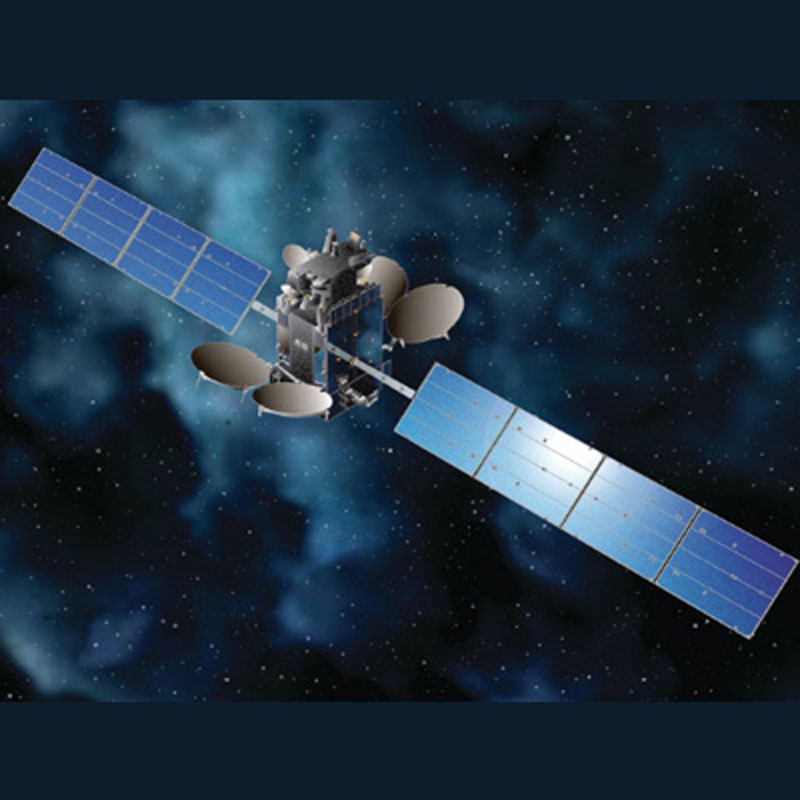
    GSAT-17, which has been built by the Indian Space Research Organization (ISRO), is constructed on the indigenous I-3K satellite bus. The chassis is outfitted with twin solar panels, capable of producing up to a total of 6,500 watts of DC power, tapering to 5,200 watts at the end of its 15-year design life. The satellite will provide telecommunications services, as well as support data relay and government functions, from its position at 93.5 degrees East via multiple C-band transponders.

    The first, Hellas Sat 3, was built for and will be operated by Hellas Sat. It will provide telecommunications and DTH television services to customers in Europe, the Middle East, and Sub-Saharan African countries.

  • SES 15 launches successfully on 18 May

    MUMBAI: SES announced that the SES-15 satellite was successfully launched onboard a Soyuz rocket from the Guiana Space Center in Kourou, French Guiana at 08:54 local time. This is SES’s first satellite to launch on a Soyuz rocket for a geostationary transfer orbit mission.

    SES-15 carries a hybrid payload, comprising Ku-band wide beams and Ku-band High Throughput Satellite (HTS) capability, with connectivity to gateways in Ka-band. SES’s first hybrid satellite will be located at the orbital position of 129 degrees West and is equipped with 16 Ku-band transponders (36 MHz equivalent) as well as HTS capabilities to serve North America, Mexico, Central America and the Caribbean.

    SES-15’s high throughput payload will deliver optimised and flexible coverage for major global inflight connectivity and entertainment (IFC/IFE) service providers, such as Global Eagle Entertainment, Gogo and Panasonic Avionics. In addition, SES-15 has a dedicated wide beam that is designed to enable IFC/IFE providers to deliver live TV content on all flight routes across the US, including Hawaii and Alaska, as well as Canada, the Caribbean and Mexico. This unique combination of beams allows IFC/IFE providers to optimise HTS capacity use for internet traffic and wide beam coverage for broadcast content.

    The satellite will also enable VSAT networks and other traffic intensive data applications in the government and maritime sectors.

    SES-15 will also carry a Wide Area Augmentation System (WAAS) hosted payload, which will enable the US Federal Aviation Administration (FAA) to augment the Global Positioning Systems (GPS) with the goal of improving accuracy, integrity and availability of the system for the aviation industry.

    The satellite is equipped with an electric propulsion system for orbit-raising and in-orbit maneuvers.

    “The successful launch of SES-15 is the first of our three planned hybrid satellites, which have both wide beams and high throughput capability. SES-15, along with the soon-to-be launched SES-14 hybrid satellite, and our existing in-orbit satellites, offer the most resilient aeronautical connectivity platform in North America,” said Martin Halliwell, Chief Technology Officer at SES. “SES-15 will allow us to strengthen our ability to provide next generation services in data-intensive markets such as maritime and corporate broadband.”

    “SES is a long-standing partner, and we are delighted to be part of its important journey in serving the ever-growing aeronautical and data markets by successfully launching SES-15 on a Soyuz rocket,” said Stephane Israël, Chief Executive Officer at Arianespace.

  • DTH satellite GSAT 9 (South Asia Sat) blasts off today

    MUMBAI: The countdown clock is ticking away. Come 5:30 pm IST, the evening of 5 May, and the Indian Space Research Organisation (ISRO) will have added another feather to its cap as  its indigenously developed satellite GSAT-9 lifts off from the second launch pad at the Satish Dhawan Space Center in Sriharikota  for its journey into geosynchronous orbit  as a payload on the Geosynchronous Satellite Launch Vehicle Mk II (GSLV-F09).

    The cost of the launch is estimated at around Rs 450 crore (USD 70 million)

    Labeled South Asia Sat, the 2,230 kg weighing satellite boasts 12 Ku-band transponders that will result in a swelling of capacity for India’s DTH television operators  and facilitate TV signal distribution  for its neighbors Nepal, Bhutan, Maldives, Sri Lanka, Bangladesh and Nepal (members of the South Asian Association for Regional Cooperation – SAARC).  

    The satellite also carries India’s fourth GPS aided GEO Augmented Navigation (GAGAN) payload that delivers correction signals for aircraft navigation systems to increase navigation accuracy to three meters, assisting in air traffic management and landing in tough weather and challenging terrain.

    GSAT 9 will be located at 48 degrees east and has a scheduled mission life of around 12  years.

    Also Read :

    ISRO’s ‘South Asia Satellite’ to carry 12 ku-band transponders

    MIB: No DPO request for infra sharing, DTH ops’ transponder demand up

    Could India blocking ABS’ FTA TV signals lead to breach of ITU norms?