Category: Satellite Launches

  • #Throwback2020: Success in space and satellites

    #Throwback2020: Success in space and satellites

    NEW DELHI: The pandemic may have slowed down life on earth, but it could not deter the world from looking beyond. As most activities came to a sudden halt, the space agencies across the globe persevered through the crisis. Some had to push back their crucial space missions, others struggled to keep them on track, while a few managed to script history.

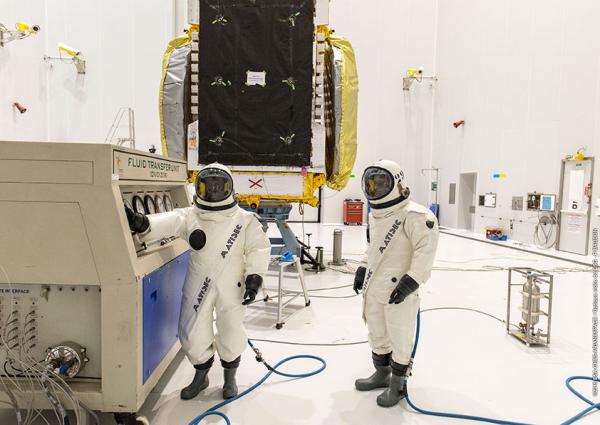
    Indian Space Research Organization (ISRO) began the year with the launch of a high-powered communication satellite GSAT-30 on-board a European rocket from French Guiana. It replaced the aging INSAT 4A to continue providing high quality television, telecommunication, broadcasting services to the Indian subcontinent with extended coverage over Asia and Australia.

    The lockdown ensured no further launch took place for the next ten months, until November, when India’s premier space agency returned to the launch pad to inject EOS-01–an earth observation satellite—into space along with nine other customer satellites. This was soon followed by the launch of the country's forty second communications satellite CMS-01 in December which replaced the aging GSAT-12.

    While ISRO managed to keep its regular satellite launches on track, the pandemic cast a shadow on its bigger space missions. This included a fresh bid to achieve a successful soft landing on the moon which Chandrayaan-2 had failed to achieve last year, and first of the two unmanned missions of Gaganyaan, India’s first human-spaceflight programme which was expected to take off this December. 

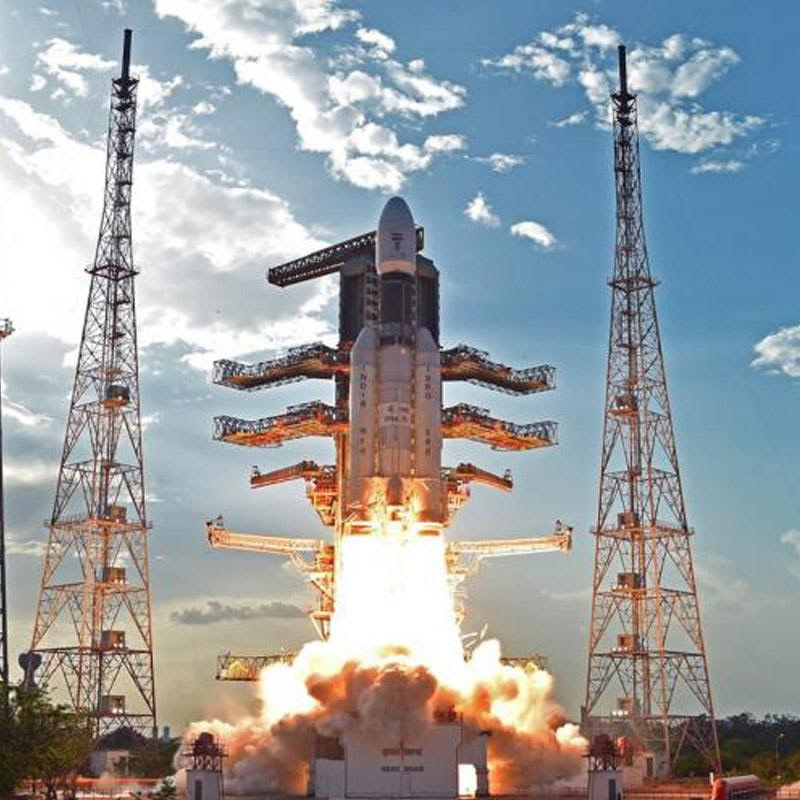
    Nonetheless, the groundwork for the 2022 Gaganyaan mission continued. The agency completed the selection of the astronauts and began their training. The process of human rating for GSLV MkIII selected for the historic mission also remained in progress. 

    Globally, as many as 101 orbital launches took place in this turbulent year. The US was top of the leader board with 40 successes out of 44. China came next with 33 successful launches out of 37 attempted. Russia had a perfect score with 16 satellites reaching their orbital locations. Ditto with Japan which had four immaculate launches, and Europe had four clear takeoffs and one failure with Iran and India acing it with two successes each.

    A large share of the launches were accounted for by low earth orbiting birds which were meant for earth observation, technology demonstration and to provide internet in select areas.

    Amongst the big communications birds which were sent into space included: Tiantong 1-02 (mobile communications, China), Galaxy 30 (Intelsat, communications, North America), BSat4b (Broadcasting Satellite System Corp, communications, Japan), Ekspress 80 and Ekspress 103 (Russian Satellite Communications Co, communications, Russia), Apstar 6D (APT Holdings; communications, China), JCSat 17 (Sky Perfect JSat Corp; communications, Japan), GSat30 (ISRO, communications, India, Kourou), and Eutlesat Konnect (Eutelsat, communications, Africa & Europe). Palapa N1 – a satellite owned by Palapa Satelit Nusantara Sejahtera, a joint venture between Indosat Ooredoo and Pasifik Satelit Nusantara, or PSN – met with a fiery end after its launch vehicle the Long March 3B had engine failure.

    The year will be noted for the achievement by the Mission Extension Vehicle MEV-1 which became the first telerobotically-operated spacecraft to service another satellite on-orbit when in February 2020 it completed the first phase of a five-year mission to extend the life of the Intelsat 901 (I-901) satellite. It was brought back from the graveyard orbit to a geosynschronous one by April 2020, opening up a future where human intervention is not needed for on-orbit satellite servicing, like it was for dealing with the Hubble telescope in the early 2000s.   

    2020 also marked the first time a private company successfully undertook a crewed mission into the low earth orbit. Elon Musk's SpaceX achieved the feat after it was able to put two astronauts into space aboard its spacecraft Crew Dragon, heradling a new chapter in commercial space operations. It was a busy year for the American aerospace manufacturer which injected as many as 26 satellites into space. The company is racing to get its Starlink constellation in operation to provide high speed internet connection from the skies.

    The year also witnessed the return of UK based broadband satellite communications company, OneWeb which put a total of 36 communication satellites into space on board a Russian Soyuz rocket. The satellite operator which recently emerged from bankruptcy is eyeing to build a massive constellation of over 650 satellites to beam internet service to people. Early this year, India’s Bharti Global had picked up a 45 per cent stake in the company.

    In the global space arena, Mars continued to allure the space agencies and three countries managed to keep their date—a brief time window which comes around every two years.

    The first was the United Arab Emirates (UAE) which scripted history with the successful launch of its spacecraft named Hope— the first-ever interplanetary mission by any Arab country. It was followed by the launch of Tianwen-1 by China in July and Perseverance rover by the United States a week later. All three spacecraft are expected to enter the Martian orbit early next year.

    However, the pandemic marred Europe and Russia's joint Mars mission and the launch of its first Mars rover, Rosalind Franklin probe, was postponed to 2022.

    Among other ground-breaking missions of 2020 was China’s Chang'e-5 lunar capsule which returned to Earth carrying fresh samples of moon rocks. China has now become just the third country to explore the moon's surface, after the US and the former Soviet Union, and the first to successfully return from the moon since Soviet Union’s Luna 24 spacecraft in 1976.

  • ISRO successfully launches communication satellite CMS-01

    ISRO successfully launches communication satellite CMS-01

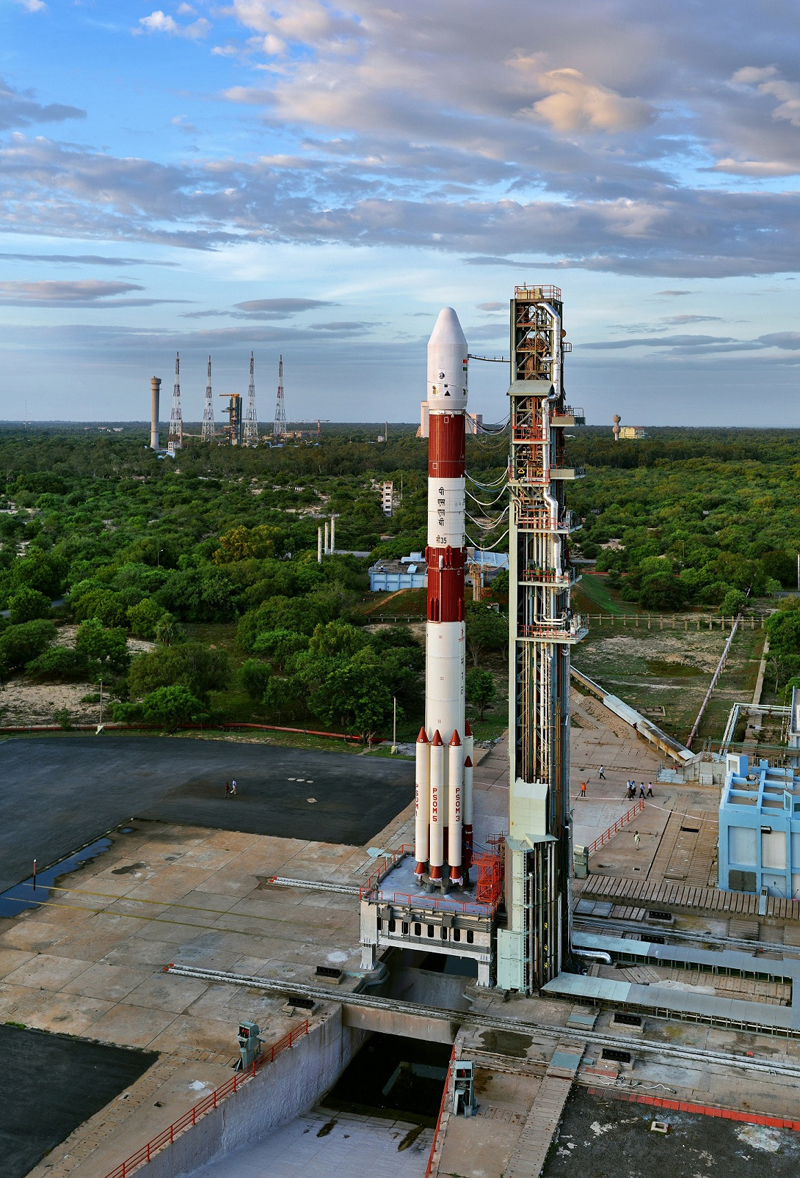
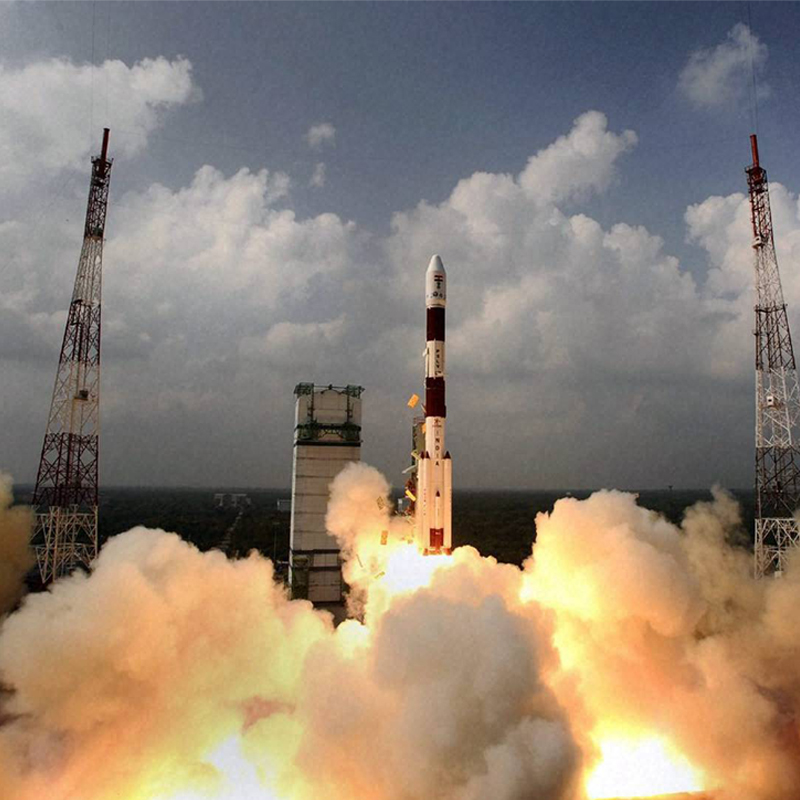
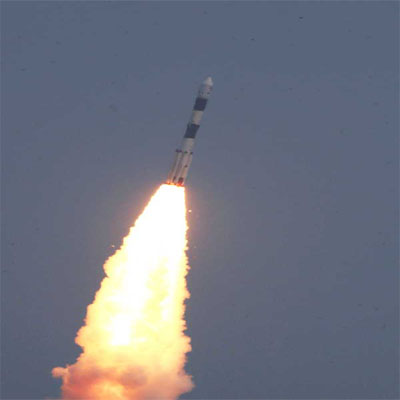
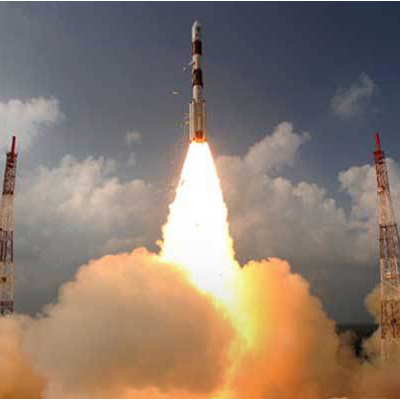
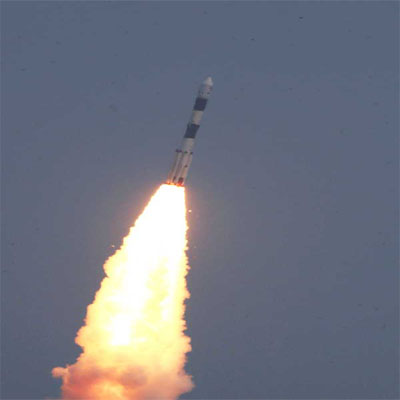
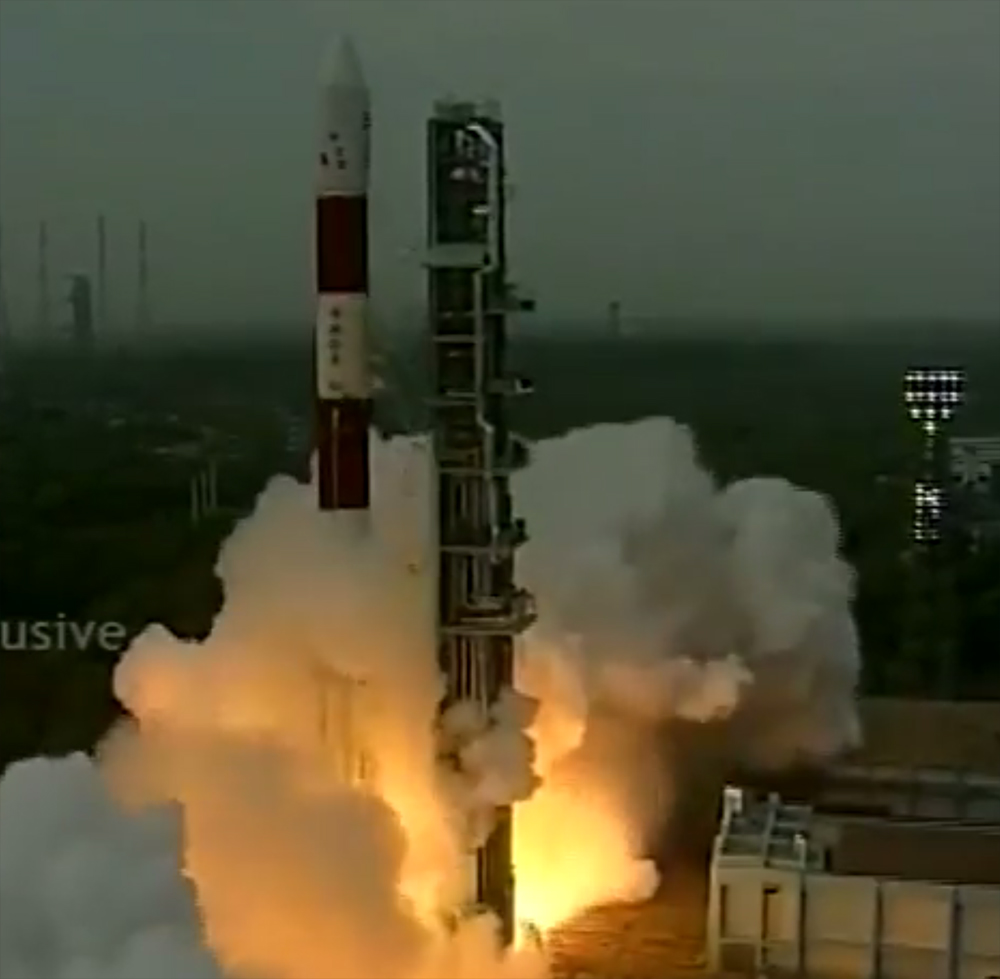
    NEW DELHI: The countdown before liftoff is always a heart-stopping moment during a satellite launch. And it was no different today at the Indian Space Research Organization's (ISRO's) second launch pad at Satish Dhawan Space Centre, Sriharikota. The space agency's scientists looked on nervously at their old workhorse, Polar Satellite Launch Vehicle, which had its forty second communications satellite CMS-01 as its payload.  However, at 3:41 pm, the  spacecraft took off as planned — in an almost picture perfect, blemish-free blastoff. And even more good news was to follow: 20 minutes after launch, the satellite separated successfully from the fourth stage of the rocket and was injected into   geosynchronous transfer orbit.

    "The satellite is functioning well and it will be placed in a specified slot in the next four days. Teams worked very well and safely under Covid2019  pandemic situation," said ISRO chairman Dr K Sivan.

    CMS-01 carries 12 Extended C band transponders which will strengthen the country's telecommunication services. The extended C band uses 3.4 to 3.7 GHz for downlink and 6.425 to 6.725 GHz for uplinks of the signals and is relatively less susceptible to rain fade and weather interference.

    With a mission life of seven years, the bird will provide coverage to the Indian mainland, Andaman &  Nicobar and Lakshadweep Islands. It will replace the ageing GSAT-12 which was launched in 2011.

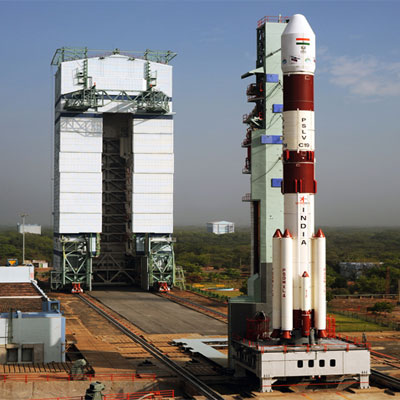
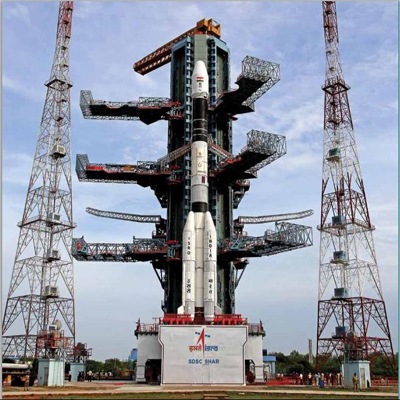
    The space agency had chosen the ‘XL’ variant of the 44m high PSLV with six strapons for its fifty second  flight. In the normal configuration, PSLV is a four stage/engine expendable rocket powered by solid and liquid fuels alternatively with six booster motors strapped on to the first stage to give higher thrust during the initial flight moments.

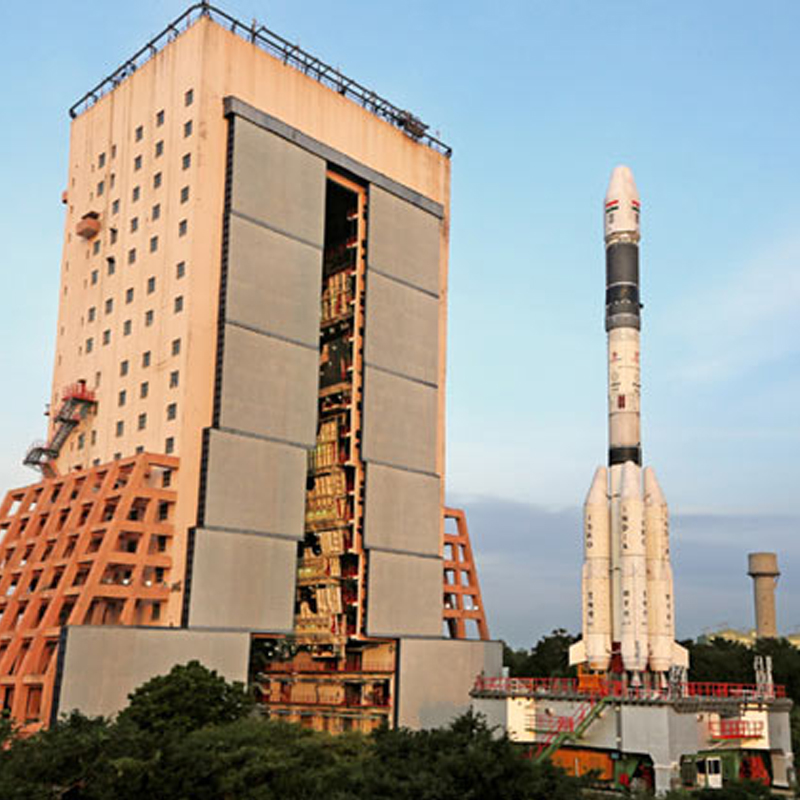
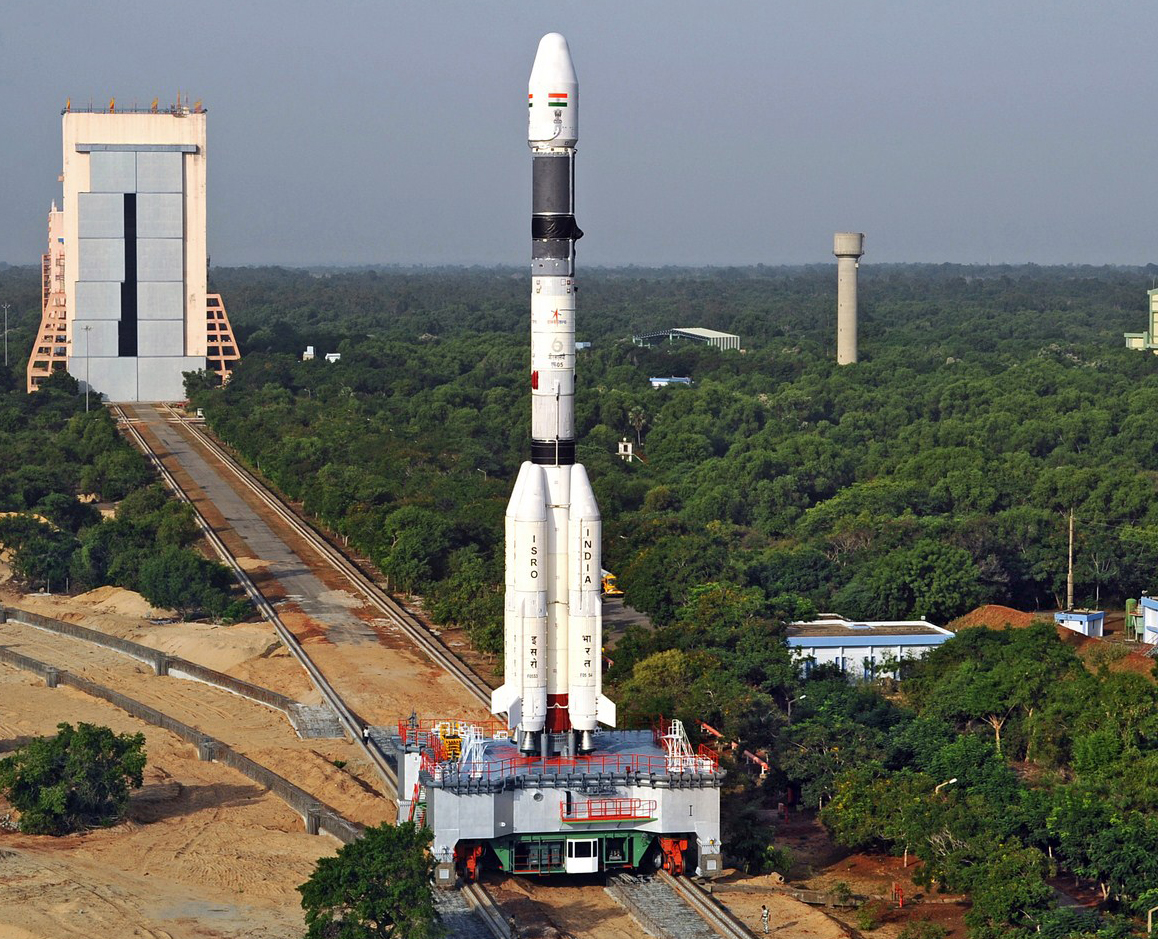
    The premier space agency is now preparing for the launch of new small rocket Small Satellite Launch Vehicle (SSLV) which will carry EOS-02 (Earth Observation Satellite). It will be followed by the launch of Geosynchronous Satellite Launch Vehicle-F10 (GSLV) which will carry EOS-3 in space.

    The other Indian satellites that are ready for launch are GISAT and Microsat-2A. The launch of GISAT-1  was earlier slated for 5 March, but was postponed due to technical reasons 24 hours before D-Day. 

  • ISRO gears up for PSLV’s fifty second flight

    ISRO gears up for PSLV’s fifty second flight

    NEW DELHI: The Indian Space Research Organization (ISRO) is all set to launch its forty second communication satellite from Sriharikota, on Thursday afternoon, subject to weather conditions.

    The launch is scheduled at 3:41 pm when the space agency’s old workhorse, the Polar Satellite Launch Vehicle (PSLV) will lift off from the second launch pad of the Satish Dhawan Space Centre, Sriharikota.

    The satellite on board is CMS-01, which carries 12 extended C band transponders to strengthen various telecommunication services. The Extended C band uses 3.4 to 3.7 GHz for their downlink and 6.425 to 6.725 GHz for uplinks of the signals and is somewhat less susceptible to rain fade and weather interference.

    It will provide coverage to the Indian mainland, Andaman and Nicobar, and Lakshadweep Islands and is expected to replace the aging GSAT-12 which was launched in 2011. The satellite weighs 1,410 kg and will be injected in the geostationary orbit. It will have a mission life of seven years.

    The space agency has chosen the ‘XL’ variant of the 44m high PSLV with six strap ons for its fifty second flight. In the normal configuration, PSLV is a four stage/engine expendable rocket powered by solid and liquid fuels alternatively with six booster motors strapped on to the first stage to give higher thrust during the initial flight moments.

    After the mission, ISRO will begin preparing for the launch of new small rocket Small Satellite Launch Vehicle (SSLV) which will carry EOS-02 (Earth Observation Satellite). It will be followed by the launch of Geosynchronous Satellite Launch Vehicle-F10 (GSLV) carrying EOS-3, ISRO chairman K Sivan had earlier told the media.

    The other Indian satellites that are ready for launch are GISAT and Microsat-2A. The deployment of the GISAT-1 satellite was earlier slated for 5 March, but was postponed due to technical reasons a day before the liftoff.

  • Arianespace launches GSAT-30 successfully

    Arianespace launches GSAT-30 successfully

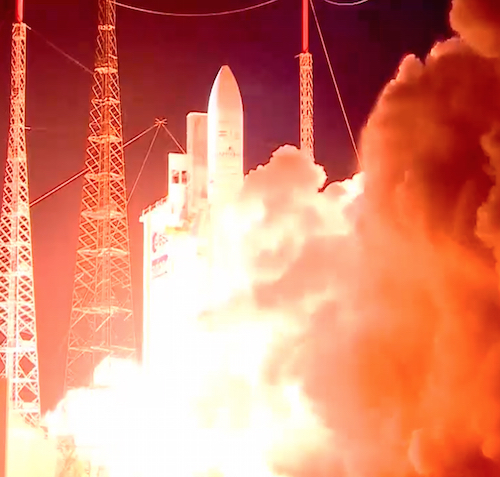
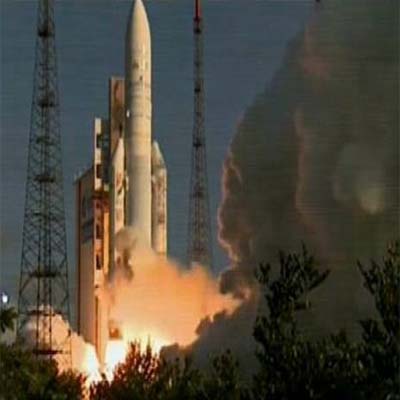
    MUMBAI: In the early hours of 17 January 2.35 am IST, Arianespace the commercial arm of the European Space Agency, successfully and flawlessly lifted off its two payloads Eutelsat Konnect and ISRO's GSAT-30, into space from the spaceport of Kourou, French Guiana using its Ariane 5 rocket.

    The 51.04 meter tall vehicle used for Arianespace’s VA251 flight had a mass of 780  tonnes and utilised 2.9 million tonnes of thrust from its solid fuel boosters and core engine as it powered its way through the earth’s atmosphere. It broke the sound barrier and was travelling at Mach 1 one minute into the launch.

    Almost two tonnes of fuel propellant were burnt per second, taking the rocket on its upward trajectory 70 km above earth in two minutes. Following this, the boosters fell away, with the Vulcan engine now kicking in taking the rocket higher still. Six minutes later this too detached, and the upper stage HM7B engine lit up, keeping the payloads going for another 17 minutes.

    28 minutes or so into the flight, and Eutelsat Konnect which is an electric satellite, was separated and placed in orbit 1000 km above the earth’s surface above Africa.

    10 minutes later it was the turn of the Indian satellite to be successfully separated to the loud cheers of all present in the control station at the spaceport near south America.

    The satellite will now be in the hands of ISRO scientists who will finally take it to its geostationary orbital location over the next month or so.

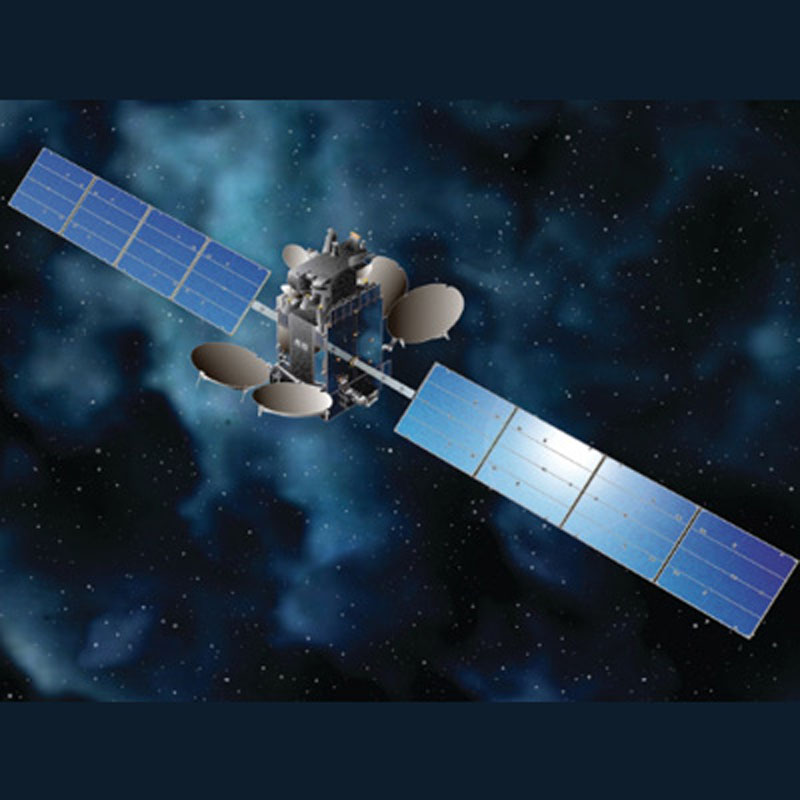
    GSAT 30 is set to replace Insat4A and provide DTH and telecommunications services through the 12 C band and 12 Ku band transponders it has on board.

    UR Rao Satellite Centre (URSC) director P Kunhikrishnan director who was present in Kouru during the launch was evidently happy at the flawless deployment of the satellite into space by Arianespace. Said he: “Isro has opened 2020 successfully with the launch of GSAT-30 by Arianespace; we did the same with GSAT 31 and Arianespace in 2019 as well. GSAT-30 joins the 18 satellite stream of ISRO. What is great, that the entire ISRO team put together the satellite in less than a year.”
    He specifically complimented the efforts of GSAT-30 project director V Ramanathan and his team.
     

  • ISRO to replace INSAT-4A with GSAT-30

    ISRO to replace INSAT-4A with GSAT-30

    Mumbai: The location: Kourou, French Guiana. The date: 17 January 2020. The time: 02:35 am IST. Indian Space Research Organisation (ISRO) scientists will be at their consoles, their brows creased in concentration as the countdown for the liftoff off its new generation communication satellite GSAT 30 off Arianespace’s Ariane 5 rocket begins. Weighing 3,375 kg, GSAT-30 is set to replace one of the early birds in the ISRO fleet, the ageing Insat 4A.

    Insat-4A was launched in 2005 with a lifespan of at least 12 years and has been operational way beyond that. Even though it is functioning fine, ISRO has decided to put in a replacement with advanced features and network strength. Amongst the two major  occupants and users of transponder capacity on Insat 4A are Tata Sky and Star India group.

    Along with GSAT 30, Arianespace will also be putting into orbit global operator Eutelsat’s Konnect satellite on the same launch vehicle. GSAT-30 is the lower passenger in the Ariane-5 spacecraft, with Konnect its copassenger being released first.  This will be Arianespace’s 107th Ariane 5 mission.

    To be positioned at a longitude of 83° East, GSAT-30 will provide high-quality television, telecommunications and broadcasting services over Indian mainland and islands. GSAT-30 is configured on ISRO’s enhanced I-3K platform to provide communications services from geostationary orbit in C- and Ku-band for a lifetime greater than 15 years. Last year, Arianespace had delivered the GSAT-31 into orbit.

    GSAT-30 will provide extended coverage in C-band to Gulf countries, a large part of Asia and Australia. The move will help Indian broadcasters beam their content to Gulf countries, large parts of Asia and Australia, as well as the Indian mainland.

    The GSAT-30 was speculated to launch in June last year, but was postponed to 2020 as India’s pioneer space agency got busy in launching military satellites in space in order to boost strategic assets in space as well as its moon mission.

    In its GSAT-30 launch kit, ISRO said: “GSAT will be extensively used for supporting VSAT networks, Television uplinking and teleport Services, Digital Satellite News Gathering (DSNG), DTH-television services cellular backhaul connectivity and many such applications”.

    Eutelesat Konnect on the other hand will offer total capacity of 75 Gbps and by next autumn will allow Eutelsat to provide Internet access services for companies and individuals alike at up to 100 Mbps. The satellite will help to fight against the digital divide by bringing broadband Internet across 40 countries in Africa and 15 countries across Europe.

    Produced by Thales Alenia Space, it is the first to use the company’s Spacebus NEO platform developed under the Neosat Partnership Project conducted by the European and French space agencies (ESA and CNES). Eutelsat Konnect will weight approximately 3,620 kg. at liftoff and is to operate from an orbital slot at 13 degrees East.

    The proceedings will of course be telecsast live online as well on DD. To watch a live, high-speed online transmission of the launch (including commentary in French and English from the launch site), go to arianespace.com or to youtube.com/arianespace on 16 January 2020, beginning 20 minutes before liftoff.

  • India’s communication satellite GSAT-31 launched successfully from French Guiana

    India’s communication satellite GSAT-31 launched successfully from French Guiana

    MUMBAI: India’s latest communication satellite, GSAT-31 was successfully launched from the Spaceport in French Guiana during the early hours today.

    With a lift-off mass of 2536 kg, GSAT-31 will augment the Ku-band transponder capacity in Geostationary Orbit. The satellite will provide continuity to operational services on some of the in-orbit satellites. GSAT-31 derives its heritage from ISRO’s earlier INSAT/GSAT satellite series.

    ISRO Chairman Dr K Sivan said, “GSAT-31 has a unique configuration of providing flexible frequency segments and flexible coverage. The satellite will provide communication services to Indian mainland and islands.”

    Dr. Sivan also remarked that “GSAT-31 will provide DTH Television Services, connectivity to VSATs for ATM, Stock-exchange, Digital Satellite News Gathering (DSNG) and e-governance applications. The satellite will also be used for bulk data transfer for a host of emerging telecommunication applications.”

    The launch vehicle Ariane 5 VA-247 lifted off from Kourou Launch Base, French Guiana at 2:31 am (IST) carrying India’s GSAT-31 and Saudi Geostationary Satellite 1/Hellas Sat 4 satellites, as scheduled.

    After a 42-min flight, GSAT-31 separated from the Ariane 5 upper stage in an elliptical Geosynchronous Transfer Orbit with a perigee (nearest point to Earth) of 250 km and an apogee (farthest point to Earth) of 35,850 km, inclined at an angle of 3.0 degree to the equator.

    After separation from Ariane-5 upper stage, the two solar arrays of GSAT-31 were automatically deployed in quick succession and ISRO's Master Control Facility at Hassan in Karnataka took over the command and control of GSAT-31 and found its health parameters normal.

    In the days ahead, scientists will undertake phase-wise orbit-raising manoeuvres to place the satellite in Geostationary Orbit (36,000 km above the equator) using its on-board propulsion system.

    During the final stages of its orbit raising operations, the antenna reflector of GSAT-31 will be deployed. Following this, the satellite will be put in its final orbital configuration. The satellite will be operational after the successful completion of all in-orbit tests.

  • Gsat-11, India’s heaviest comms satellite, launched

    Gsat-11, India’s heaviest comms satellite, launched

    NEW DELHI: Indian Space Research Organisation (ISRO)’s heaviest and most-advanced high throughput communication satellite GSAT- 11 was successfully launched from the Spaceport in French Guiana during the early hours of today.

    The launch vehicle Ariane 5 VA-246 lifted off from Kourou Launch Base, French Guiana at 2.07 am (IST) carrying India’s GSAT-11 and South Korea’s GEO-KOMPSAT-2A satellites, as scheduled. Ariane 5 is one of three launch vehicles operated by Arianespace along with Soyuz and Vega.

    After a 30-min flight, GSAT-11 separated from the Ariane 5 upper stage in an elliptical geosynchronous transfer orbit. The achieved orbit was very close to the intended one.

    The 5,854-kg GSAT-11 will provide high data rate connectivity to users of Indian mainland and islands through 32 user beams in Ku-band and 8 hub beams in Ka-band.

    “GSAT-11 will boost the broadband connectivity to rural and inaccessible gram panchayats in the country coming under the Bharat Net project, which is part of Digital India programme,” ISRO chairman Dr K Sivan said.

    The Bharat Net project aims to enhance the public welfare schemes like e-banking, e-health, e-governance and entertainment services among others.

    Sivan said GSAT-11 will act as a forerunner to all future high throughput communication satellites. “Today’s successful mission has boosted the confidence of the entire team,” he added.

    This 10th mission in 2018 reflects the availability and flexibility of Arianespace, which has performed a launch every two weeks since 6 November, the European company said on its website, adding since the launch of India’s APPLE experimental satellite on Ariane Flight L03 in 1981, Arianespace has won nearly all of India’s geostationary orbit launch contracts opened to non-Indian launch vehicles, and has signed 24 launch contracts with the Indian space agency.

    GSAT-11 is the 22nd satellite from ISRO to be launched by Arianespace, and the largest and heaviest satellite ever built by India’s space agency. Arianespace has two other ISRO satellites in its order book to launch: GSAT-30 and GSAT-31. The latter, GSAT-31, will be lifted by Arianespace early next year.

    GSAT-11 was initially planned for launch on 25 May 2018 but was rescheduled with the ISRO citing the need for additional technical checks.

  • ISRO to launch 3 satellites for high-speed bandwidth connectivity

    ISRO to launch 3 satellites for high-speed bandwidth connectivity

    MUMBAI: To provide high-speed bandwidth connectivity to rural areas, the Indian Space Research Organisation (ISRO) will launch three more satellites as a part of the government’s digital India programme, according to a report by the Press Trust of India.

    After the successful launch of two UK satellites by Indian rocket Polar Satellite Launch Vehicle (PSLV) on Sunday, ISRO Chairman K Sivan said, “The ISRO will launch three more satellites, which together will provide international level bandwidth speed.”

    According to Sivan, the satellites are AGSAT 20 (to be launched next year), GSAT 11, and GSAT 29. GSAT 19 has already been launched.

    Sivan informed that the space agency had planned a series of launches over the next six months. There will be a rocket launch mission every second week.

    Sivan also said earth observation satellites will also be launched in addition to the communication satellites. The much-awaited moon mission will happen next January.

    “The launch window for Chandrayaan-2 mission is planned between 3 January and 16 February 2019. We are aiming for 3 January. We do not expect any delay in the Chandrayaan-2 mission,” Sivan said.

    Sivan said that ISRO will be the certifying agency for the rocket carrying Indian astronauts.

    According to Antrix Corporation, chairman-cum-managing director S Rakesh, the revenue from the launch of two UK satellites is over Rs 220 crore. Sivan said that the ISRO would like to get the expertise of other countries in this regard.

    India on Sunday night successfully put into orbit British earth observation satellites NovaSAR and S1-4 in copybook style.

    The two satellites belonged to Surrey Satellite Technologies Ltd (SSTL), UK.

    Queried about the next commercial launch, Sivan said, “The next PSLV rocket will carry 30 small satellites from third parties apart from carrying an Indian satellite.”

  • Launch of SES-12 to assist Digital India vision

    Launch of SES-12 to assist Digital India vision

    MUMBAI: The successful launch of SES-12, which provides coverage over Asia will assist the acceleration of the country’s push towards a digital India and financial inclusion initiatives, according to a leading satellite industry expert as per a report by the Press Trust of India from London.

    SES Video EVP global sales Deepak Mathur said, “The successful launch of SES-12 recently would help support India’s growing direct-to-home (DTH) TV market, as more and more consumers in rural India embrace the medium.”

    The government’s vision to digitally empower India and transform connectivity in the country will see a push through the launch of the satellite, Mathur informed.

    The senior executive at SES, one of the world’s leading satellite operators, also pointed out that the satellite’s concentrated beams could also provide highly cost-effective capacity to enable in-flight connectivity services in line with the recent directive to allow mobile and internet services in Indian airspace by Telecom Regulatory Authority of India.

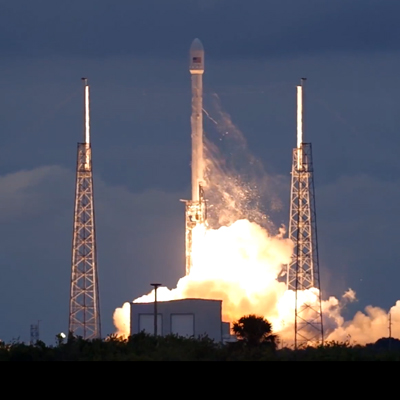
    SES-12, which is uniquely designed with state-of-the-art wide beams and high throughput beams, was successfully launched onboard a flight-proven SpaceX Falcon 9 rocket from Cape Canaveral in Florida, US, on 4 June 2018. Together with SES-8, it is expected to reach 18 million homes.

    This satellite will provide coverage from the Middle East to Australia. The combination of two satellites will offer powerful Ku-band wide beams for broadcast and media applications, and high throughput spot beams for providing internet connectivity, reliable cellular services and content targeted at specific language groups.

    The ever-increasing demand of audience will be addressed by the pay-TV operators as the satellite will provide reliability and scalability to elevate the viewing experience by adding more content and delivering good picture quality for high definition (HD) and ultra HD content.

    Mathur explained, “With its dual capabilities of both wide beams and high throughput spot beams, SES-12 will serve to enhance connectivity for people and businesses in remote and unconnected parts across Asia, where providing rural connectivity and eliminating the digital divide is a key priority for many governments. SES-12 also brings augmented capacity to enable satellite broadcasting and DTH services across Asia-Pacific.”

    Specifically over India, SES has five satellites – NSS-12, SES-8, NSS-6, SES-7 and SES-9 – currently operational. SES-12 will be replacing NSS-6 as the largest satellite to offer services and capacity over India.

    The company’s primary customer in the Indian market is Antrix, the commercial arm of the Indian Space Research Organisation (ISRO), with whom it has worked to help augment the enormous demand for satellite connectivity over India.

    Mathur also mentioned that ISRO has a pivotal role to play in the development of new space technologies and in making space more accessible, and affordable. SES is also exploring potential areas of collaboration with Indian partners to see how they both can work together to advance the development of space technologies.

  • ISRO’s Gsat-11 sent back from space centre ahead of May-end launch

    ISRO’s Gsat-11 sent back from space centre ahead of May-end launch

    NEW DELHI: In what was being touted as probably the last Indian satellite launch by a foreign space agency, ISRO’s heavy-duty GSAT-11 communications satellite has been sent back to India for “unexplained” reasons from the Europe-based launch pad, according to a media report from Paris.

    “India’s GSAT-11 high-throughput satellite, which arrived at Europe’s Guiana Space Center spaceport on March 30 in preparation for launch on an Ariane 5 rocket, has been returned to India following unexplained issues encountered at the spaceport, industry officials said,” SpaceIntelReport.com tweeted on 23 April 2018, adding the satellite was to be launched late-May via Ariane 5 that was scheduled to carry some other birds, too, including the Azerspace-2/Intelsat-38 satellite.

    However, till the time of writing this report, no confirmation or any additional information was available from India’s space agency ISRO, which has very ably been charting the country’s space policy and the visions of policy-makers and space scientists.

    GSAT-11, according to information put out by ISRO earlier, is a multi-beam high-throughput communications satellite operating in Ka and Ku bands employing a new bus. It provides 32 user beams in Ku band and eight gateway beams in Ka band, which would have gone a long way in strengthening India’s all-round communications, including TV and broadband services. The payload includes Ka x Ku band forward-link transponders and Ku x Ka band return-link transponders. According to Wikipedia, GSAT-11’s cost will be Rs 500 crore (Rs 5 billion).

    In a news report few days back, Times of India said that GSAT-11 was “so massive that each solar panel is over four metres long” and quoted ISRO chairman Dr K Sivan as saying that the heavy-duty Gsats would “provide high-bandwidth connectivity” of up to 100 gigabit per second and “high-speed internet connectivity in rural areas as well and help bridge the digital divide.”