Category: Satellite Launches

  • Arianespace to launch a satellite for Vietnam

    Arianespace to launch a satellite for Vietnam

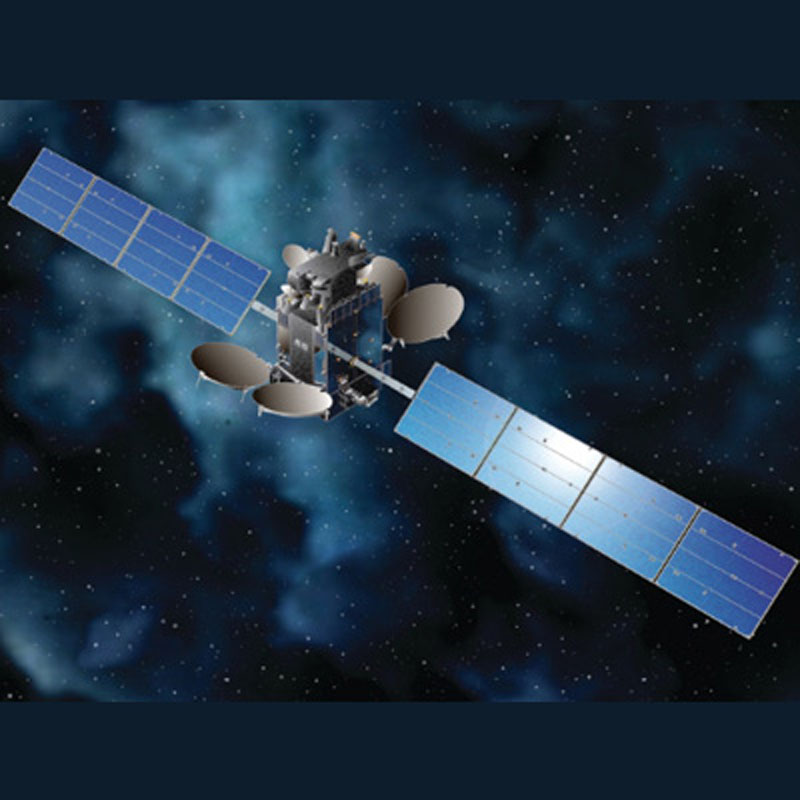
    MUMBAI: French satellite launch service provider Arianespace will launch in 2008 the Vinasat-1 satellite for Vietnam Posts and Telecommunications Corporation (VNPT). Vinasat-1 will be built by Lockheed Martin Commercial Space Systems (LMCSS).

    The first Vietnamese telecommunications satellite, Vinasat-1 will be launched on an Ariane 5 vehicle during the first half of 2008 from the Guiana Space Center, Europe’s Spaceport in Kourou, French Guiana.

    Vinasat-1 is the 275th contract won by Arianespace since the company’s founding in March 1980 and the 53rd launch for a satellite operator in the Asia-Pacific region. Vinasat-1 is the 39th satellite platform built by Lockheed Martin to be launched by Arianespace.

    Weighing about 2,600 kg at launch, Vinasat-1 will be positioned at 132 degrees East Longitude, and will offer a design life exceeding 15 years. Fitted with 20 C- and Ku-band transponders, the satellite will provide radio, television and telephone transmission services for all of Vietnam and the Asia Pacific region from its geostationary orbit.

    Arianespace CEO Jean-Yves Le Gall says, “We are delighted to be working with the people at LMCSS once again. This contract is the latest mark of recognition of the excellent service and solutions offered by Arianespace. We are also very honoured to be selected to orbit Vietnam’s first communications satellite, and we are very proud to be participating in the country’s economic development.”

    Lockheed Martin Commercial Space Systems president Ted Gavrilis said, “Lockheed Martin Commercial Space Systems is proud to join Arianespace’s highly professional launch team to ensure the successful launch of Vinasat-1.

    “We are confident that the expertise and heritage we bring to the Vinasat-1 programme, along with Arianespace’s outstanding launch service, will result in superior program execution for an on-time delivery of Vietnam’s first telecommunications spacecraft.”

  • Eutelsat’s Hot Bird 8 satellite set for August launch from Baikonur

    Eutelsat’s Hot Bird 8 satellite set for August launch from Baikonur

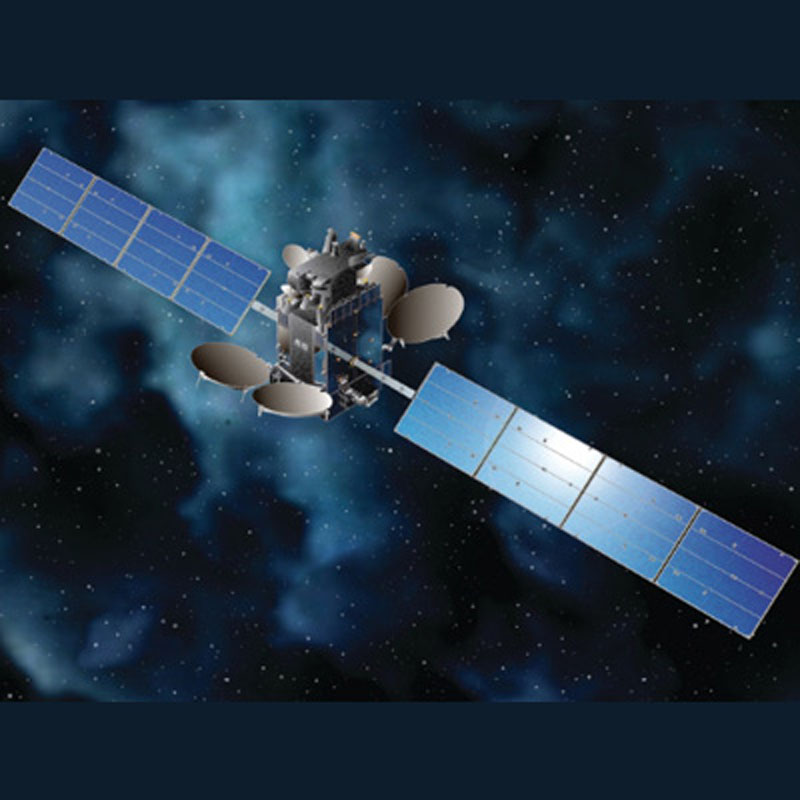
    MUMBAI: The Hot Bird 8 broadcasting satellite built by EADS Astrium for Eutelsat Communications has arrived at the Baikonur Cosmodrome for launch on a Proton M Breeze M vehicle provided by ILS. The launch is scheduled in the early hours of 5 August.

    Weighing in on the launchpad at 4.9 tonnes and equipped with 64 Ku-band transponders, Hot Bird 8 will be the largest satellite yet orbited by Eutelsat, states an official release.

    Designed for television and radio broadcasting it will be positioned at 13 degrees East, Eutelsat’s prime video neighbourhood, which delivers 950 television channels and 600 radio stations to 110 million cable and satellite homes in Europe, North Africa and the Middle East.

    The satellite’s mission is to replace the 20 transponders on the Hot Bird 3 satellite, which will continue service at a new location. In conjunction with Hot Bird 7A, which was launched in February 2006, it will also contribute to raising in-orbit redundancy at Eutelsat’s Hot Bird neighbourhood, the release adds.

    Eutelsat Communications is a leading satellite operator with capacity commercialised on 23 satellites providing coverage over the entire European continent, as well as the Middle East, Africa, India and significant parts of Asia and the Americas. The Group is one of the world’s three leading satellite operators in terms of revenues. Its satellites are used for broadcasting nearly 1,800 TV and 900 radio stations to more than 120 million cable and satellite homes.

  • Insat4c: ISRO gears up for 10-15 July launch

    Insat4c: ISRO gears up for 10-15 July launch

    MUMBAI: 10 to 15 July 2006. That’s the launch window that the Indian Space Research Organisation has set aside for the launch of DTH services satellite Insat 4C. According to ISRO chairman Madhavan Nair the indigeneously designed launch vehicle has been moved to the launch pad in Sriharikota.

    The GSLV Mark II is a 49-metre tall rocket weighing around 40 tonnes at lift-off. Its payload is the Insat 4C satellite, with 12 ku band transponders and a mission life span of 10 years.

    Most of the satellite’s capacity has been booked for DTH services by the Sun Network, National Informatics Centre and VSAT (very small aperture terminals) operators.

    The succesful launch of the GSLV will pitchfork India’s ISRO into an elite group of countries and groups with indigeneous satellite design and launch capabilities: United States, Russia, Japan, China and the European Space Agency (ESA).

    Nair was speaking to journalists at a satellite navigation conference which was held at its offices in Bangalore yesterday. He said that the launch window date will be kept, good weather permitting.

    Isro spokespersons have been pointing out that using indigeneous launch vehicles will result in a saving of about 30-40 per cent or Rs 1.5 billion in expenses per launch. With four satellites to be launched by GSLV Mark II and Mark III, the savings thus will be substantial. It will, however, be using the services of Arianespace to launch the Insat 4B satellite from Kouru in French Guiana next year.

    “With the commissioning of the Rs 3.5 billion ($75mn) second launch pad at Sriharikota, India is the only country to have such a state-of-the-art facility to launch different types of vehicles Ranging from PSLV (polar satellite launch vehicle), GSLV Mark-1, GSLV Mark-II to the upcoming GSLV Mark-III in the four-tonne class,” a top ISRO official is reported to have said sometime back.

  • Isro sets the launch of Insat 4C for mid-July

    Isro sets the launch of Insat 4C for mid-July

    MUMBAI: Indian Space Research Organisation (Isro) is targeting to launch Insat -4C in the second week of July, the latest in the Insat 4 series. The launch of this satellite is being seen as a big boost for the DTH operators.

    Kalanithi Maran’s Sun Group has booked space on Insat 4C for its direct-to-home (DTH) venture.

    Insat 4C will be put into orbit by the Geo-synchronous Satellite Launch Vehicle-5 (GSLV), which will blast off the from the launch pad at the Satish Dhawan Space Centre at Sriharikota. Insat 4C satellite will be used for broadcasting 150 TV channels through the direct-to-home platform. 

    “Preparations are on for the launch from the second launchpad,” Satish Dhawan Space Centre director Shar M Annamalai said.

    Isro officials say launch from a homegrown rocket meant cutting launch costs by one-third – if the same was to be launched from the spaceport of Kourou in French Guiana by an ariane vehicle, India has to pay 30 to 35 per cent more.

    According to media reports, it’s for the first time that India`s space agency is putting into space a two-tonne class satellite. Equipped with 12 high-powered KU band transponders, the 2,180 kg spacecraft is designed for a mission life of 10 years.

    On 22 December, last year, Isro had successfully placed Insat 4A in the Geostationary orbit with the Launch provider Ariane. 

    Launcher Ariane 5G also carried Meteosat weather Satellite for Eumetsat along with Insat 4A. This also marked Ariane the only commercial launcher in service capable of simultaneously launching two payloads.

    At present, besides DD Direct Plus managed by the pubcaster Prasar Bharati, the Subhash Chandra owned Dish TV and the soon to launch Tata-Sky service from the Tata-Star consortium, has leased all 12 Ku-band transponders on the Insat 4A satellite enabling to provide about 150 channels.

  • Panamsat launches US satellite for HDTV, IPTV

    Panamsat launches US satellite for HDTV, IPTV

    MUMBAI: Satellite provider PanAmSat has launched its Galaxy 16 satellite in the US.

    Launched into orbit by Sea Launch, Galaxy 16 is the 24th satellite in Panamsat’s fleet and its 11th over the US. The satellite, to be located at 99 degrees west longitude, will replace Galaxy 4R.

    Panamsat CEO Joe Wright says, “We promised customers that we would have the most extensive and reliable neighborhood of satellites in the US to deliver standard and HDTV television channels and Galaxy 16 expands on that reality.

    “We have also promised shareholders to build satellites in a capital efficient manner and to launch them with our customers’ design requirements. And that’s exactly what we’ve done: Galaxy 16 takes over for Galaxy 4R and the satellite is nearly sold out.

    “Galaxy 16 is a broadcasters’ dream satellite. With its remarkable power and expansive footprint reaching from Maine to Alaska and Hawaii, it can deliver today and tomorrow’s technological advancements. In addition to providing thevery clearest broadcast signal, this versatile spacecraft has the digital muscle to deliver IPTV, HDTV or VOD. Galaxy 16 is one blockbuster of a satellite for existing and emerging technologies.”

    With its 24 C-band and 24 Ku-band payloads, the satellite will be home to channels like ABC, Fox , Warner Bros., Buena Vista and Televisa as well as major customers such as National Public Radio (NPR) and Hughes Network Systems (HNS).

  • Worldspace unveils new satellite radio receiver Diva II

    Worldspace unveils new satellite radio receiver Diva II

    BANGALORE: Worldspace Satellite Radio has launched a new satellite radio receiver – the Diva II. The company promises enhanced sound quality and features to ensure a truly enriched satellite radio experience to the listeners with the launch.

    The Diva II is available in Elegant Black or Chic Silver and has a suggested retail price at Rs. 4,790 with a special introductory offer price of Rs. 2,499 only. Subscription packages are available in three options – Rs. 1000 for six months, Rs. 1800 for 12 months, and Rs. 3250 for 24 months, said an official release.

    The new satellite radio receiver is a stand-alone system that is also compatible with most music systems, presenting listeners an opportunity to tune in to over 40 radio channels playing the widest range of music, entertainment and news in uncluttered and distinctive programming formats, the release adds.

  • Panamsat unveils new solution for news delivery across the US

    Panamsat unveils new solution for news delivery across the US

    MUMBAI: Global satellite services provider Panamsat and On Call Communications have developed a new satellite-based communications solution to enable the coverage of breaking news and live events by local and independent news stations in the US. By using PanAmSat’s QuickSPOT on-demand satellite technology and On Call’s OnSpot auto-deploying broadband satellite communications systems, broadcasters can now report on breaking news events as they happen and then transmit the coverage to viewers in real time with unrivalled simplicity, mobility and cost-efficiency.

    Koce, a PBS-affiliate based in California, is using the new system to provide live news coverage to viewers of events that previously could only be pre-recorded. Koce says that the QuickSPOT/OnSPOT solution gives it the opportunity to deliver live remote broadcasts at far lower costs and convenience than anything it has been able to do in the past. Koce says that being live on the scene gives it a new dimension, covering the news as it happens, making the story much more ‘real’ to viewers. The recent fires in Southern California exemplified this as it reported from the field, delivering the latest updates from fire officials, what areas were being evacuated and what schools remained open. Thereffore the news was much more relevant to our viewers compared to something written and broadcast from the studio.

    The QuickSPOT/OnSPOT solution provides a cost-effective broadcast delivery system making it possible for smaller broadcasters to access the formerly cost-prohibitive world of live broadcasts. These stations can now avoid the expense of dedicated satellite space by paying only for their on-air time. And, no technical knowledge is required to operate the auto-deploying terminals.

    Panamsat executive VP, global sales and marketing Mike Antonovich says, “Through our work with OnCall, we’ve developed a truly game-changing broadcasting solution that transforms the world of satellite news gathering. By using smaller auto-pointing antennas in conjunction with the latest generation of digital encoding and compression and our bandwidth-on-demand provisioning service, live news coverage is now simpler, smarter and smaller then ever before. These lower-cost systems can now affordably be made available to support everyone from major market television stations to local community cable channels. Smaller communities benefit by getting up-to-the-minute reports on local weather, storm conditions and developing news events. And, independent stations can provide a wider variety of coverage and perspectives as they serve up their own live reports. It is a win-win for everyone—the broadcaster and the viewer.”

    On Call Communications specialises in providing quick deployments of mobile satellite telecommunications systems for broadcasting, disaster recovery and government applications. They design, integrate and install custom satellite communications networks.

  • Isro to ramp up number of satellite launches

    Isro to ramp up number of satellite launches

    BANGALORE: Indian Space Research Organisation (Isro) has responded positively to the increasing demand for satellite space. Speaking at the launch of the Satellite Integration and Testing Establishment (ISITE) facility in Bangalore, Isro chairman G Madhavan Nair hinted at Isro upping its ante in this area.

    “Presently, we are doing about one and a half Insat class satellites a year and one remote sensing satellite launch in every eighteen months. The demand from all segments is high and rising and we should actually be doing around four Insat class satellites, two to three remote sensing satellites and around three to four micro satellites of the around 100 kg payload,” said Nair.

    Nair added that Isro had its hands full with many projects including a couple of commercial satellites for Europe. He said Isro was expecting orders for two more satellites from this region.

  • Isro unveils Satellite Integration and Testing Establishment

    Isro unveils Satellite Integration and Testing Establishment

    BANGALORE: Finding the current facility too small and congested, Indian Space Research Organisation (ISRO) has come up with a brand new facility spread over 100 acres of land on the outskirts of Bangalore. The facility is christened ISRO Satellite Integration and Testing Establishment (ISITE).

    So far, Isro had to carry the satellite from one part of the complex to the other for various tests. The new facility at Marthahalli offers world class Assembly Integration and Test (AIT) complex bringing all spacecraft integration under one roof. A tested satellite comes out of the same door through which its knocked down parts go into.

    ISITE is equipped with world class facilities and will enable Isro to assemble, and carry out various tests and then pack the assembled satellite for dispatch to the launch site. Some of the state of art facilities and equipment include:

    (1) Assembly Integration & Test (AIT) Clean room – this is a huge room of size 54.6mts (about 179 feet) x 34.6m (about 113.5 feet) x 16.7m (about 55 feet) height which is maintained at a temperature of about 22 deg C (72 deg F) with a relative humidity of around 55, a cleanliness level of 1,000,000 class maintained at a positive pressure of 20 mbar.

    The bare structure of Insat 4B, which is scheduled for launch in January 2007, was under assembly when Indiantelevision.com visited the site. This room can integrate up to six satellites in various stages of assembly simultaneously of Insat 4B class and is equipped to integrate around 800 elements in the bare structure of the spacecraft. This area has an Electro Static Discharge (ESD) floor to dissipate the micro electric charges from human bodies which could effect some sensitive equipment in the room.

    (2) Comprehensive Assemble and Test Vacuum Chamber (CATVC) is capable of testing satellites under vacuum conditions and at temperatures as low as 173 deg K {(-)100 deg C or (-)343 deg F }. Satellites up to 4.5m diameter (about 14.75 feet) and 6 meters length (about 20 feet) having a weight of 3 metric tons can be tested in this Chamber which has Ariane-5 adapter interfaces.

    (3) Comprehensive Assembly and Test Vibration Facility: This test facility has a peak sine force of around 29 ton-force and a maximum bare table acceleration capacity of 75 gm.

    (4) Compact Antenna Test Facility (CATF): This is a 30 meter long (100 feet), 20 meter wide (67 feet) and 16m high (52 feet) chamber for testing of antenna in space simulated conditions. ISRO officials claim that no other facility in the world has a similar arrangement.

    The facility was officially thrown open by national security advisor M K Naraynan. Other dignitaries who were present to witness the inauguration included former Isro chairmen U R Rao and K Kasturirangan, secretary Department of Ocean Development P S Goel (formerly from Isro and one of the persons who conceived the idea for the Integration and Testing facility) and ISAC director K Shankara. On completion, the project is estimated to cost around Rs 4 billion.

  • Isro schedules Insat 4C launch for July

    Isro schedules Insat 4C launch for July

    MUMBAI: All indications point to the second half of the year being when we will see some fresh action on the direct-to-home (DTH) television services front. Even as the timeline for the Tata Sky DTH service looks to be June-July, the Indian Space Research Organisation (Isro) is all set to launch Insat 4C, the latest in the Insat series, in July.

    Kalanithi Maran’s Sun Group, which has booked space on Insat 4C, is negotiating with Isro for eight Ku-band transponders. Earlier Sun had indicated that it would start its Sun Direct DTH service with five transponders which it would ramp up to nine.

    “Sun now wants to start with eight transponders. The company is in discussions with Isro,” an industry source says.

    Though Insat 4C has a capacity of 12 Ku-band transponders, the problem with Isro is that it has got demand from other operators as well. The government requires four transponders for village telephony over a period of time. Even National Informatics Centre (NIC) has asked for four transponders to start with. “We have committed to giving them one transponder each. We may give some transponders to NIC on Insat 4B, which is slated for launch in the first quarter of 2007 as we have to coordinate with the launch vehicle (Arianespace’s commercial launcher Ariane 5),” says Isro contract management and legal services director SB Iyer.

    Isro will also be handing over two Ku-band transponders to media companies for digital satellite news gathering (DSNG) activities. “DSNG is a fast-growing segment. We are providing two transponders for DSNG operators,” Iyer says.

    With one-to-two transponders reserved for spare capacity, Sun may have to finally settle for less than what it wants. But Isro will allocate transponders to customers who are ready to take them first.

    Meanwhile, Anil Ambani’s Reliance has also booked space for its own DTH plans. As things stand now, there may be no room even on Insat 4B as the space on Insat 4B is reserved for Doordarshan which wants six Ku-band transponders at the minimum.

    Subhash Chandra’s Dish TV, which is on NSS satellite, has not yet indicated to Isro whether it wants space on the Insat series. BPCL, the other player which is waiting to launch, has also not applied to Isro for transponder space.

    Insat 4C will be put into orbit in July by the Geo-synchronous Satellite Launch Vehicle-5 (GSLV), to be launched from Isro’s Sriharikota facility.

    With 12 high power Ku-band transponders, Insat 4C is the first Indian satellite to exclusively offer DTH playout facilities. The satellite will have the capacity to beam about 150 television channels in all.

    The other two satellites of the Insat 4 series — 4A and 4B — have both Ku-band and C-band capacity, carrying 12 transponders of each. Insat 4A launched last December.

    Isro has already allocated all the 12 transponders on Insat 4A for Tata Sky, the 80:20 joint venture between the Tatas and Star Group.