Category: Satellite Launches

  • Measat-3 satellite successfully launched

    Measat-3 satellite successfully launched

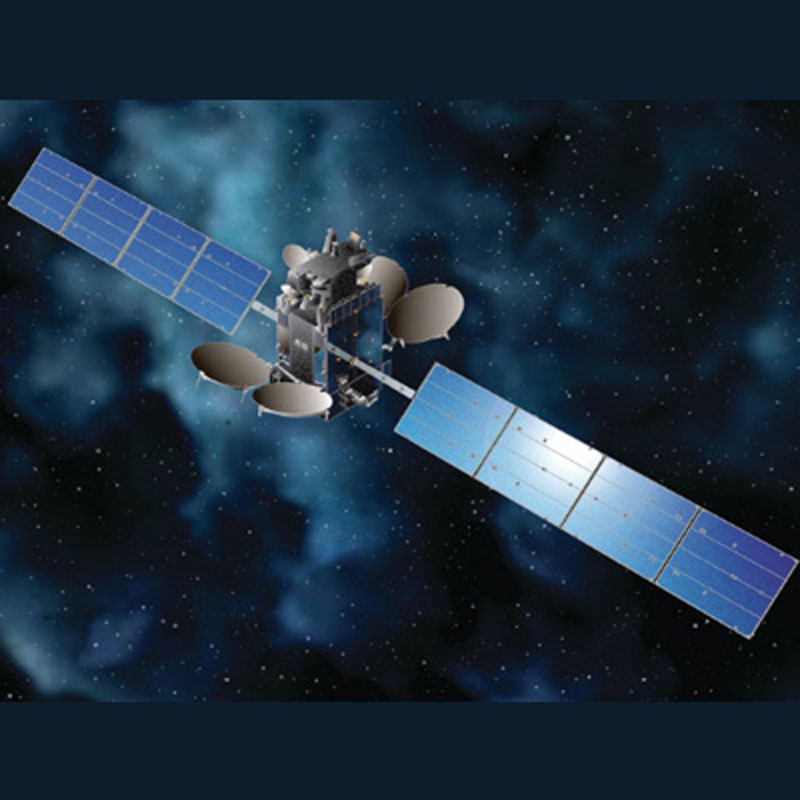
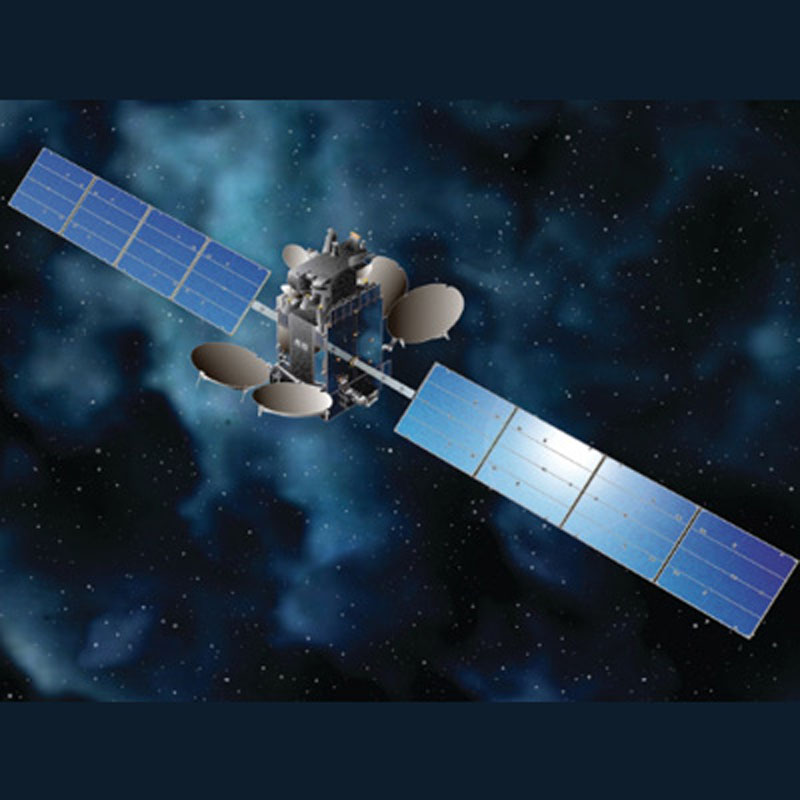
    MUMBAI: A Proton Breeze M launch vehicle, launched from the Baikonur Cosmodrome, Kazakhstan, successfully placed the Measat-3 satellite into orbit earlier today.

    After separation, the satellite will be manoeuvred into its orbital location and will undergo in-orbit testing. This is expected to be completed by 1 February, 2008.

    The project cost of the Measat-3 satellite is $ 280 million.

    Providing 300 per cent more capacity at the key 91.5E orbital location, Measat-3 is one of the region’s most technologically advanced satellites.

    Measat-3 has 24 Ku-band transponders and has been designed to provide capability for data services and Direct-to-Home (DTH) applications in Malaysia, Indonesia and the Indian Subcontinent. The satellite has been designed with a C-Band payload capable of reaching over 100 countries, representing 70 per cent of the world’s population, and the most powerful Ku-band DTH coverage for over 160 million TV households in the countries under its footprint.

    Measat-3’s launch opens up the options available to Indian operators looking to enter the DTH arena. Kalanithi Maran’s southern broadcast network Sun Group’s Sun Direct DTH service is ready to launch and is only waiting a satellite to beam off. Anil Ambani’s ADAG also has plans for a DTH service under the brand name Bluemagic, which is headed by the former CEO of Zee Group’s Dish TV, Sunil Khanna.

    It may be recalled that the unfortunate failure in July of the GSLV-F02 launch rocket carrying the Insat-4C communication satellite had wrecked the timetables for the launch of Sun Direct.

    Sun had booked seven high-power Ku-band transponders, six for DTH and one for DSNG (digital satellite news gathering), of the total 12 carried by the Indian Space Research Organisation’s Insat-4C.

    Said Measat’s COO, Paul Brown-Kenyon: “The launch of Measat-3 will enhance our ability to support Malaysian and international customers. It will not only augment capacity but also enhance redundancy capabilities for customers using the Measat-1 satellite. Planning is already underway for the launch of Measat- 1R, scheduled for end 2007 / early 2008, which is being developed to support and sustain future growth requirements for existing and prospective customers.”

    Currently operating a two satellite network, Measat provides video distribution services across East and South East Asia, Indochina, South Asia and Australia. The launch of Measat-3, and Measat-1R end 2007 / early 2008 will extend the reach of the Measat fleet, providing customers with a satellite able to reach Pay-TV operators in over 100 countries, representing more than 70 per cent of the world’s population. Leveraging facilities at the Measat Teleport and Broadcast Centre, and working with a select group of world-class media partners including Astro, Pacific Century Matrix and STT, Measat provides a complete range of broadcast services including video playout, up-linking, and video turnaround to and from the key European and North American markets.


  • Chinese broadcasting satellite SinoSat-2 fails

    Chinese broadcasting satellite SinoSat-2 fails

    MUMBAI : Asian giants India and China have reached a ground-breaking agreement to promote cooperation in civil nuclear energy. Maybe they should now consider extending that cooperation to space exploration as well.

    Four months ago, the launch of India’s first commercial communications satellite from home soil ended in failure after the the three-stage 414-tonne launch vehicle GSLV-F02 veered off course soon after lift-off, and ultimately crashed into the Bay of Bengal. The GSLV-F02 was carrying the state-of-the-art communication satellite Insat-4C, the second satellite in the Insat-4 series.

    China, meanwhile, suffered a setback of a different sort after its first direct-to-home broadcasting satellite, failed less than 10 days after launch, the South China Morning Post reported. While the launch of SinoSat-2, China’s first domestically made satellite, went off smoothly, the satellite’s solar panel faily shortly after it went into orbit, the newspaper reported, quoting sources familiar with the situation. The satellite has suffered a serious power failure and appeared beyond repair, the report added.

    At the time of launch, the Chinese government-run Xinhua News Agency had said SinoSat-2 would help to provide a broader coverage of TV signals and allow more digital and live broadcast TV services across the country.

    SinoSat-2 had been hyped as a broadcaster of digital television signals to China’s rural areas with no access to cable, and was meant to offer services directly to some 100 million households.

  • Worldspace launches Marathi radio station Surabhi

    Worldspace launches Marathi radio station Surabhi

    MUMBAI: Worldspacer Satellite Radio salutes the aura of the Maratha culture and pays tribute to one of the richest languages in India, through the first ever 24-hour national Marathi radio channel, “Surabhi.”

    Channel number 110 on the Worldspace Satellite Radio Network, ‘Surabhi’ offers listeners more than just foot-tapping Marathi music, it also presents a slice of Marathi culture and literature in an exciting magazine format that brings alive the diversity and heritage of Maharashtra, informs an official release.

    Radio ‘Surabhi’ captures the cultural ethos of the legendary Maratha tradition and the interests of Maharashtrians in poetry, literature and theatre. The channel recognises the various aspects of Marathi music that has a strong repertoire of film and non-film music with various genres enjoying equal popularity, the release adds.

    The channel will also have special shows for Bhaavgeet (songs with ‘bhaav’ – emotions), Abhangas (devotional songs), Powadas (patriotic songs), Natyasangeet (songs used in plays), Lavani and Lokgeet (folk songs) among several other sub-genres.

    Worldspace India’s MD Shishir Lall says, “‘Surabhi’ is our latest offering and the country’s first-ever 24-hour Marathi channel. At Worldspace we take great pleasure in celebrating the rich musical diversity of India and this forms an integral part of our strategy to create unique platforms that nurture regional music and culture. Our refreshing advertising-free format enables music aficionados to quench their thirst for quality radio programming in virtually any part of the country, thereby creating a truly pan-Indian radio experience.”

  • SES, Eutelsat in JV to serve mobile broadcast markets

    SES, Eutelsat in JV to serve mobile broadcast markets

    MUMBAI: Sateelite operators SES Global and Eutelsat have announced a joint investment in the first European satellite infrastructure for broadcasting video, radio and data to mobile devices and vehicle receivers.

    In view of the innovative nature of this market SES and Eutelsat have agreed to join forces to form a new company, which will operate and commercialise the S-band payload on W2A. The company will be set up by SES Astra and Eutelsat following approval from relevant regulatory agencies. The S-band space segment represents an investment of
    approximately 130 million euros.

    The S-band (2.0 and 2.2 GHz), which represents a new frequency band for both SES and Eutelsat, provides a set of frequencies optimised for supporting a wireless distribution network for delivering video and other services to mobile devices, including phones, PDAs, laptops and vehicle receivers. Mobile video services represent a large and currently undeveloped market in Europe, emerging today through existing terrestrial solutions.

    The development of mobile video services through a satellite-based hybrid network will provide content providers and operators with alternative or complementary solutions to terrestrial based networks and will bring the benefit of the universal coverage that satellites can provide.

    Eutelsat has commissioned the W2A satellite from Alcatel Alenia Space for launch on Sea Launch in the beginning of 2009. W2A will be operated at 10 degrees East, with a state-of the art S-band payload which will be an essential building-block for a hybrid infrastructure over Europe, combining satellite and terrestrial networks, to provide both universal coverage and indoor penetration for mobile video services. The S-band payload has also been optimised for a broad range of business applications such as security surveillance and other commercial data services including two-way communications.

    SES Global president and CEO Romain Bausch says, “This joint investment will allow for the development of new, innovative satellite delivered mobile broadcast services thereby enabling satellite to compete with as well as to complement terrestrial infrastructure solutions in the mobile television and radio distribution chain. Satellite provides a unique and highly efficient coverage and the joint investment will therefore increase choice and convenience for consumers, content providers and service providers.

    “Mobile applications form an important element of our strategic development plan, and by joining forces with Eutelsat, this infrastructure investment offers an attractive business opportunity in line with our internal investment hurdle rates.”

    Eutelsat chairman and CEO Giuliano Berretta says, “Digital content and the mobility afforded by new portable devices lie at the heart of the current dynamic in the communications landscape, bringing new revenue streams for electronics manufacturers, content and service providers, as well as new products for consumers.

    “Through a resource, which is optimised in terms of bandwidth and universal coverage, satellite services using S-band frequencies can make a vital contribution to the overall success of the mobile broadcasting market while the design of the S-band payload is also fully suited for two-way communications. By adding this new payload to a platform using our traditional set of Ku-band and C-band frequencies it has also been possible to put in place an efficient and cost-effective solution for entering a new frequency band.”

  • Tandberg shows range of solutions for IPTV video compression in Shanghai

    Tandberg shows range of solutions for IPTV video compression in Shanghai

    MUMBAI: Tandberg Television is looking to build on its business and technology lead in the Asian IPTV video head-end market.

    It demonstrated its full suite of live, on-demand and interactive solutions at the recently concluded IPTV World Forum Asia 2006 in Shanghai.

    The event gave delegates the chance to see why the annual IPTV leadership report, published earlier this month by the Multimedia Research Group (MRG), ranked TANDBERG Television as the leading IP video head-end supplier in Asia, as well as in EMEA and rest of world.

    Worldwide Tandberg Television says that it has been involved in more than 160 xDSL and FTTH deployments and there are over 2 million subscribers currently viewing IPTV thanks to the company’s technology.

    Tandberg Television’s executive VP and GM, Asia Pacific Graham Cradock says, “Asia has always been a very important market for us. According to research from In-Stat the Asia-Pacific IP video services market will grow nearly 80 per cent per year between now and 2010, with Asia accounting for half of all worldwide IPTV subscribers by the end of 2009. We’ve been working with IPTV operators in the region for over five years and our market-leading technology is allowing telcos to deploy IPTV services right across the continent, from Dubai to Osaka and from Delhi to Shanghai.”

    Tandberg Television will showcase its fully integrated IPTV head-end product line, which provides the industry’s widest selection of encoding and video processing technologies for streaming, transrating, transcoding, ultracompression and high density encoding. The company came to IPTV World Forum Asia following its launch of next-generation high definition (HD) and standard definition (SD) MPEG-4 AVC encoding solutions at IBC 2006.

    The move continues the firm’s momentum in the MPEG-4 AVC arena and brings a step change in digital video distribution by combining the broadest choice of density and enhanced features with the industry’s leading ‘picture quality versus performance’ through bandwidth improvements of up to 50% over currently deployed MPEG-4 AVC units.

    The firm adds that uts next-generation encoding solutions enable expanded telco TV business models, including the delivery of 2 full-resolution HDTV channels over ADSL2+@2km. The next-generation compression platform is being launched simultaneously across the Tandberg encoding family with the introduction of the new EN8030 MPEG-4 AVC SD and EN8090 MPEG-4 AVC SD/HD ultracompression broadcast encoders, alongside the introduction of new MPEG-4 AVC HD and SD ultracompression encoding modules for the Plex range of high density, multi-channel encoders.

  • XM Satellite Radio surpasses 7 million subscriber mark

    MUMBAI: US satellite radio service provider XM Satellite Radio has more than seven million subscribers. XM Satellite Radio CEO Hugh Panero says, “With more than seven million subscribers today, XM has achieved yet another major milestone as the leader in satellite radio” .

    XM broadcasts live daily from studios in Washington, DC, New York City, the Country Music Hall of Fame in Nashville, Toronto and Montreal. It has over 170 digital channels of choice from coast to coast. The genres cover commercial-free music channels, sports, talk, comedy, children’s and entertainment programming and the most advanced traffic and weather information.

  • Eutelsat reports marginal revenue growth

    Eutelsat reports marginal revenue growth

    MUMBAI: FGlobal Satellite operator Eutelsat has reported revenues for the year and fourth quarter ended 30 June, 2006. Revenues for the year stand at 791.1 million euros. This represents an increase of 5.4 per cent.

    Eutelsat CEO Giuliano Berretta said, “Thanks to the strong increase of our activities we have generated growth of 5.4 per cent, which exceeds our objective for 2005-2006. This performance highlights the quality of the execution of our strategy: to consolidate our leading position in European Union countries, and to optimise use of capacity through the creation and development of major new video positions, and the continued expansion of value added services.

    “In particular, our satellites today transmit more than 2,100 television channels, representing over 400 new channels compared to last year, of which more than half are from central and eastern Europe, Russia, the Middle East and Africa. In addition, our D-Star broadband service, for which the installed base of terminals grew over the year by nearly 30 per cent has benefitted from sustained demand from service providers in emerging markets and in regions in Europe not satisfactorily covered by terrestrial broadband networks.

    “Meanwhile, the 14.5 per cent growth in Multi-usage stresses the attractiveness of our satellites in this opportunistic segment. With a growing portfolio of activities across our markets, Eutelsat reaffirms its profile as one of the leading operators in the most profitable sectors of the industry, combining long-term visibility and growth.”

    In European Union countries served by the Hot Bird and Eurobird1 positions, the number of channels grew by 16.7 per cent year-over-year, from 1,051 channels to 1,227. Expansion was driven notably by the increased offer from blue chip pay-TV platforms, including Sky Italia, BSkyB and TPS.

    The launch of the Hot Bird 7A broadcast satellite increased capacity at the Hot Bird neighbourhood to 102 transponders and enabled replacement of Hot Bird. This event marked the last major phase in the switchover from analogue to digital at the Hot Bird position, with only four analogue channels broadcasting as of June

  • Failure analysis committee on GSLV-F02 constituted

    Failure analysis committee on GSLV-F02 constituted

    BANGALORE: Following the unsuccessful launch of Geosynchronous Satellite Launch Vehicle (GSLV-F02) with INSAT-4C on board from Satish Dhawan Space Centre SHAR (SDSC-SHAR), Sriharikota on 10 July, a Failure Analysis Committee has been constituted by Isro.

    Former director of SDSC-SHAR and presently senior advisor at the Centre chairs the Committee, K Narayana will head the team. According to an Isro release, the 15 member Committee includes experts from academic and research institutions besides those from various Centres of ISRO.

    The Committee will review the performance of all subsystems of GSLV-F02 from lift-off to the termination of flight, identify specific reasons for anomalies observed and recommend corrective measures for future course of action.

    The Committee is expected to submit its report in a month’s time.

  • If transponder space unavailable on Insat-4B, Sun might opt for Measat3

    If transponder space unavailable on Insat-4B, Sun might opt for Measat3

    MUMBAI: A day after the unfortunate failure of the GSLV-F02 launch rocket carrying the Insat-4C communication satellite, it is not just India’s space establishment that has been forced to relook its plans.

    For Kalanithi Maran’s southern broadcast network Sun Group, the mishap could well mean that the launch of its direct-to-home (DTH) service sees a change of satellite operator. Sun TV had booked seven high-power Ku-band transponders, six for DTH and one for DSNG (digital satellite news gathering), of the total 12 carried by the Indian Space Research Organisation’s Insat-4C.

    The big question now is this: If Isro is not able to provide Ku-band transponder space for his DTH venture Sun Direct, will Maran opt for an alternative satellite like Malaysia’s soon-to-be-launched Measat-3?

    Maran already has a running relationship with Measat’s parent company Astro, having stitched a deal last year for a $25 million joint venture to originate, aggregate and distribute television programming and channels for a global audience. Measat Broadcast Network Systems is a subsidiary of Astro company which has a 20-year exclusive licence for DTH transmission in Malaysia.

    Measat has scheduled a September launch for the Measat-3 satellite. The satellite will be shot into space atop a Proton rocket from the Baikonur Cosmodrome in Kazakhstan. Measat-3 will have 24 Ku-band transponders and has been designed to provide capability for data services and DTH applications in Malaysia, Indonesia, India and China.

    Maran, however, says he has got intimation from Isro that he will be provided with Ku-band transponders at the earliest. “Isro has assured us of providing alternate transponders to meet our DTH requirements. We have not made any request to Isro for taking space on Measat-3. We were, in any case, looking at a time frame between October-November,” the Sun Group promoter tells Indiantelevision.com.

    Has Maran been told which satellite will provide him the Ku-band transponders? “We will know from Isro in three to four days,” he says.

    For DTH providers who want to operate from foreign satellites, Isro will have to provide the approval and lease it out for them. Dish TV, for instance, is on NSS-6 with Isro’s backing as required by regulatory norms.

    For Isro’s commercial arm Antrix Corporation, hiring of foreign transponder space for a short time could be a possibility. There is a precedence of this having happened in the past.

    According to a report in Hindu Businessline, when Insat-2D failed, Isro bought transponder space on an Arabsat satellite. Isro has also provided temporary leases on Thaicom, GE-Americom, and even now on NSS, Businessline reported.

    At the moment though, Isro has not received any fresh proposal from Maran’s DTH company, Sun Direct TV, to lease out a satellite for them. Says Isro contract management and legal services director SB Iyer, “Sun has not asked us for a foreign satellite yet. The failure of Insat-4C is a brief setback which has put us behind 4-6 months. But we are recasting our programme by which we can accelerate the Ku-band capacity growth. We may be putting up larger satellites to boost the capacity.”

    So will Sun get space on Insat-4B, which is meant for Doordarshan’s DTH service like DD Direct Plus? “We haven’t taken any decision yet. DD, which is on NSS-6, has a low requirement,” says Iyer. Sun has asked up to eight transponders for its DTH service.

    Even if Sun gets Insat-4B, the launch of the satellite is expected to take place early next year. The commercial operations can, thus, commence only by the first quarter of next fiscal. “We have the flexibility to accommodate Sun. It is too early to comment on the steps we are going to take,” says Iyer.

  • GSLV to launch Insat-4C on 10 July

    GSLV to launch Insat-4C on 10 July

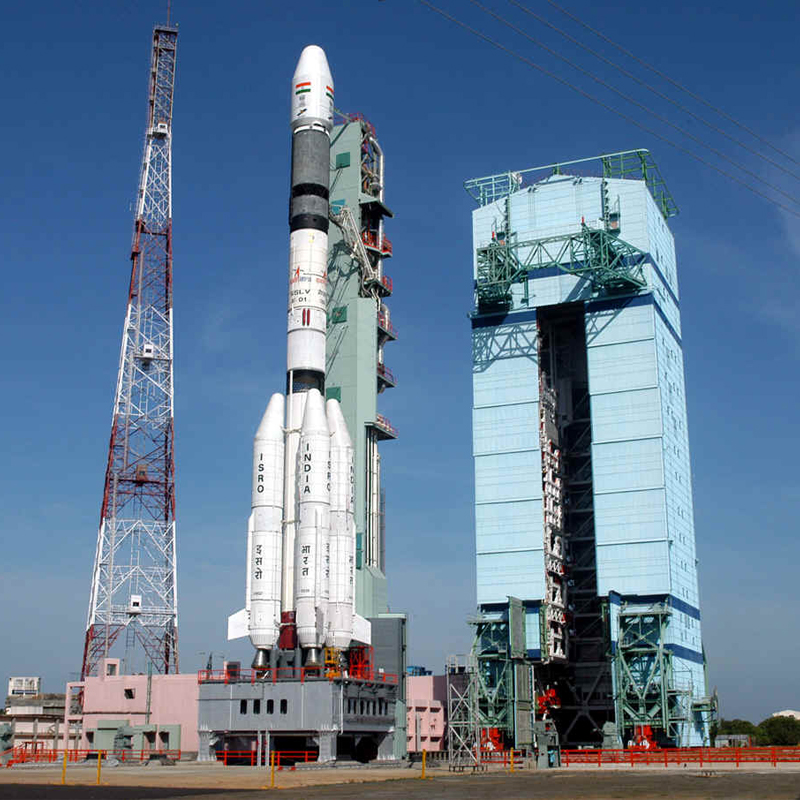
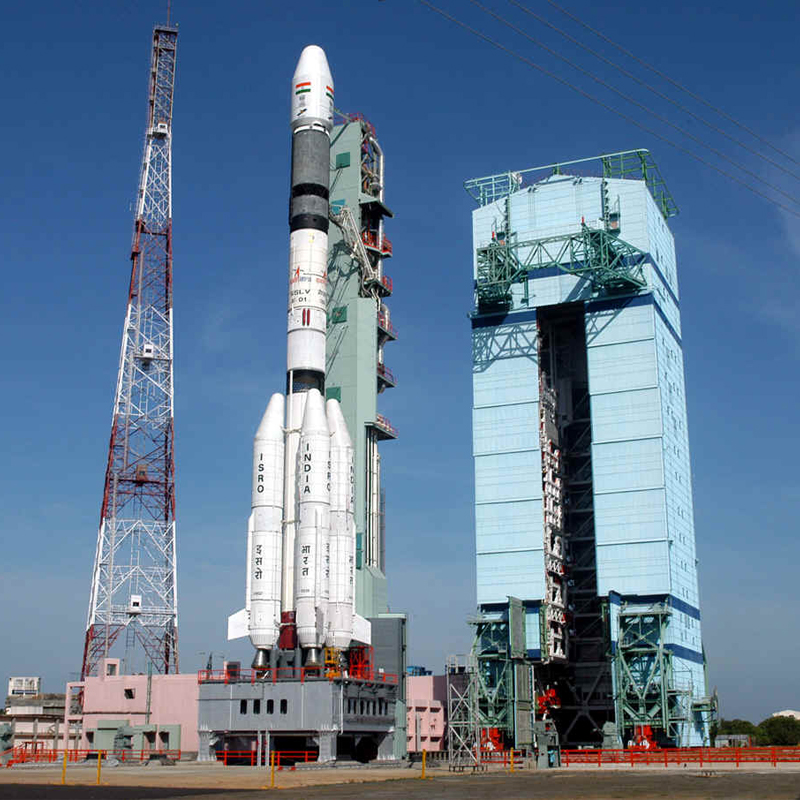
    MUMBAI: The countdown is on for the launch of GSLV-F02, which will be carrying the state-of-the-art communication satellite Insat-4C into space. The launch is expected to take place around 4:30 pm on Monday, 10 July, the Indian Space Research Organisation announced today.

    Preparations for the launch are proceeding satisfactorily at Satish Dhawan Space Centre (SDSC) SHAR, Sriharikota from the second launch pad. The launch vehicle systems have been integrated and checked out, Isro said in a statement issued today.

    Insat-4C was transported from Isro Satellite Centre, Bangalore to SDSC SHAR in the first week of June 2006 and since then, it has undergone detailed checks. After propellant filling, the spacecraft has been integrated with GSLV.

    The Mission Readiness Review is planned on 6 July, 2006 followed by the meeting of Launch Authorisation Board which will clear the launch. In the next few days, a complete checkout of the fully integrated launch vehicle along with satellite will be carried out. The final countdown and fuel filling for the liquid propellant stages are expected to commence on the morning of 9 July.

    Insat-4C is the second satellite in the Insat-4 series. The first, Insat-4A, was launched in December last year, from the spaceport of Kourou in French Guiana by an Ariane5 vehicle, which also carried the Meteosat weather Satellite for Eumetsat.

    Isro spokespersons have been pointing out that using indigeneous launch vehicles will result in a saving of about 30-40 per cent or Rs 1.5 billion in expenses per launch. With four satellites to be launched by GSLV Mark II and Mark III, the savings thus will be substantial. Isro will, however, be using the services of Arianespace to launch the Insat 4B satellite from Kouru next year.

    “With the commissioning of the Rs 3.5 billion ($75million) second launch pad at Sriharikota, India is the only country to have such a state-of-the-art facility to launch different types of vehicles Ranging from PSLV (polar satellite launch vehicle), GSLV Mark-1, GSLV Mark-II to the upcoming GSLV Mark-III in the four-tonne class,” a top Isro official is reported to have said sometime back.

    It’s for the first time that India’s space agency is putting into orbit a two-tonne class satellite. Equipped with 12 high-powered Ku band transponders (Like the earlier Insat-4A), the 2,180 kg spacecraft is designed for a mission life of 10 years.

    Insat-4C is designed to provide direct-to-home (DTH) television services, facilitate video picture transmission (VPT) and digital satellite news gathering (DSNG) as well as to serve the National Informatics Centre (NIC) for its VSAT connectivity. The 2,168 kg Insat-4C has a mission life of ten years.

    Insat-4C will be used for broadcasting 150 TV channels through the DTH platform. Kalanithi Maran’s Sun Group has booked space on Insat 4C for its DTH venture Sun Direct. All the Ku-band transponders on the Insat 4A satellite, meanwhile, have been leased to the Tata-Star consortium, which will soon be launching the Tata Sky DTH service.

    Other than Tata Sky and Sun Direct, there is also Anil Ambani’s DTH venture Reliance Bluemagic, which will be rolling out in due course.

    At present, DD Direct Plus managed by the pubcaster Prasar Bharati and the Subhash Chandra owned Dish TV are the two operators offering DTH services in the country.

    Salient features of Insat-4C:

    Orbit: Geostationary (74 degree East Longitude)
    Co-located with Insat-3C, KALPANA-1 and EDUSAT
    Lift-off Mass: 2,168 kg
    Mission: 10 years
    Communication Payloads: 12 Ku-band 36 MHz bandwidth Transponders employing 140 W Travelling Wave Tube Amplifiers (TWTAs) to provide an Effective Isotropic Radiated Power (EIRP) of 51.5 dBW at Edge of Coverage (EOC) with footprint covering Indian mainland; Ku-band Beacon as an aid to users to lock on to the satellite signal