Category: Satellite Launches

  • India launches its heftiest satellite yet

    India launches its heftiest satellite yet

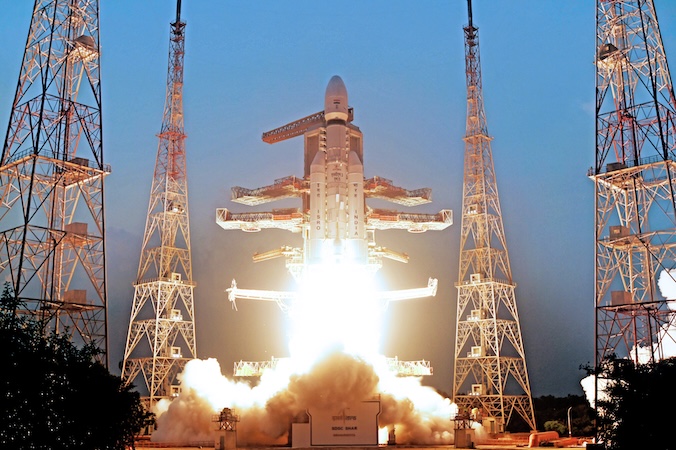
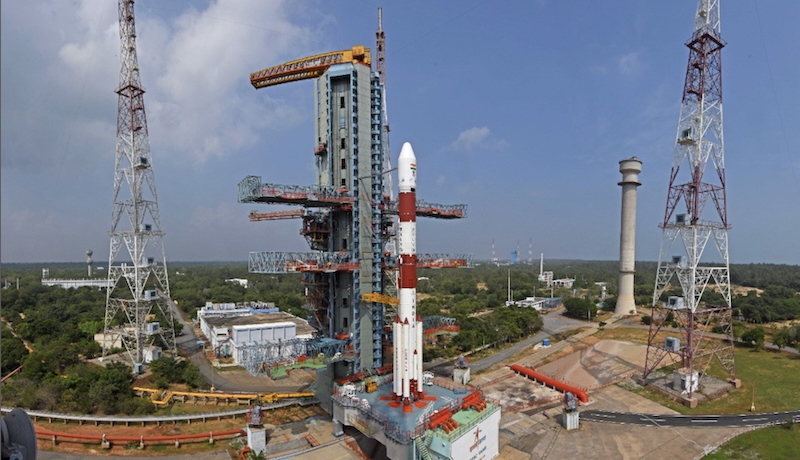
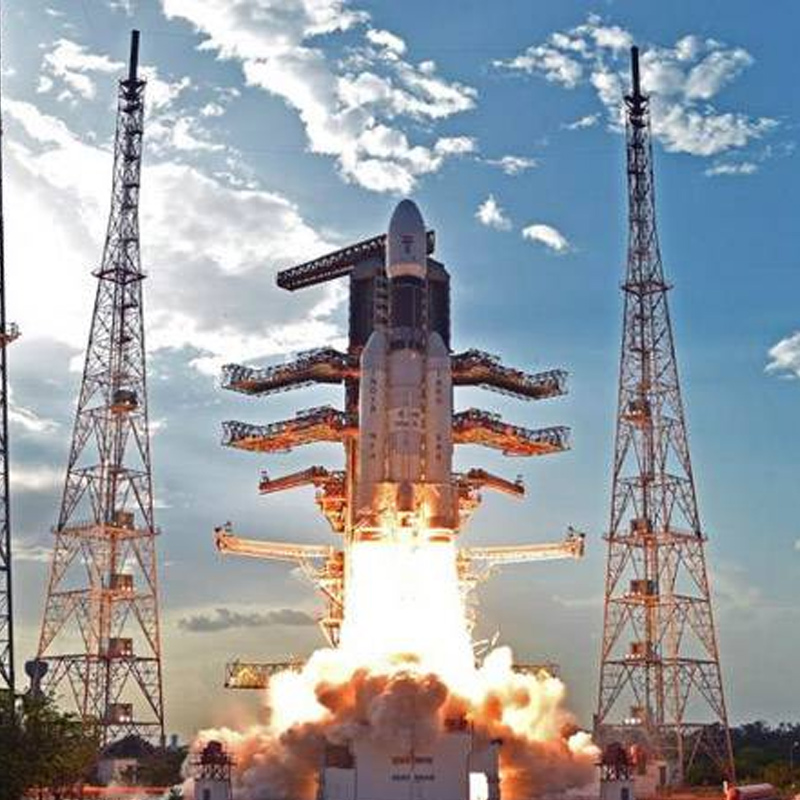
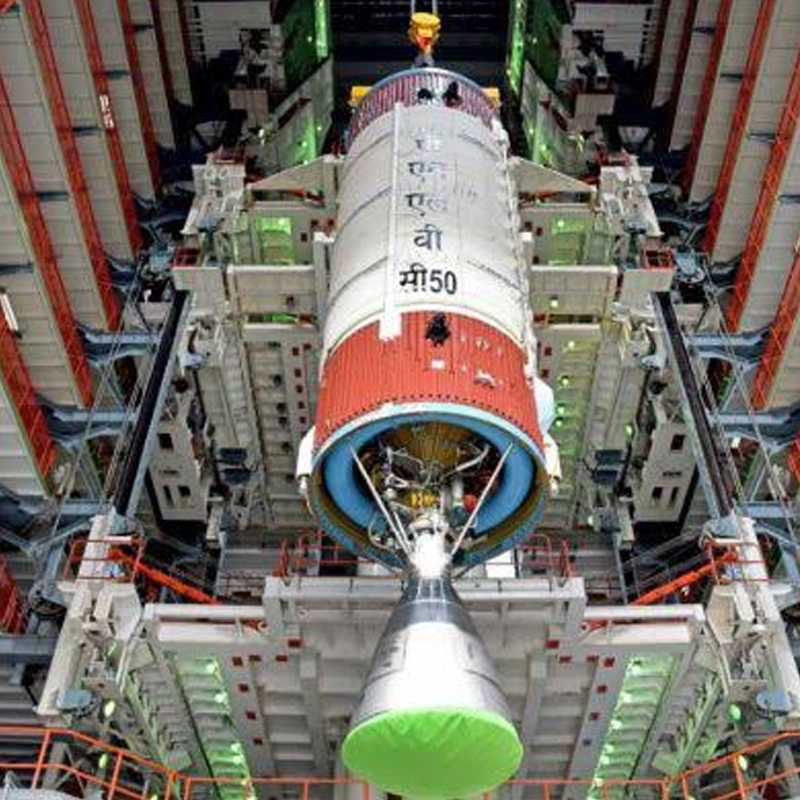
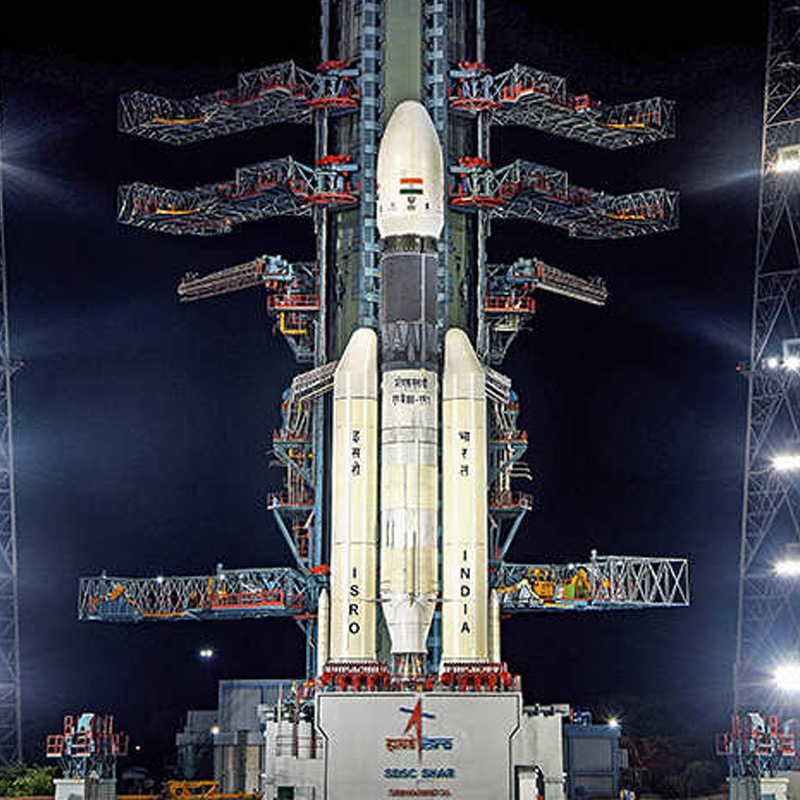
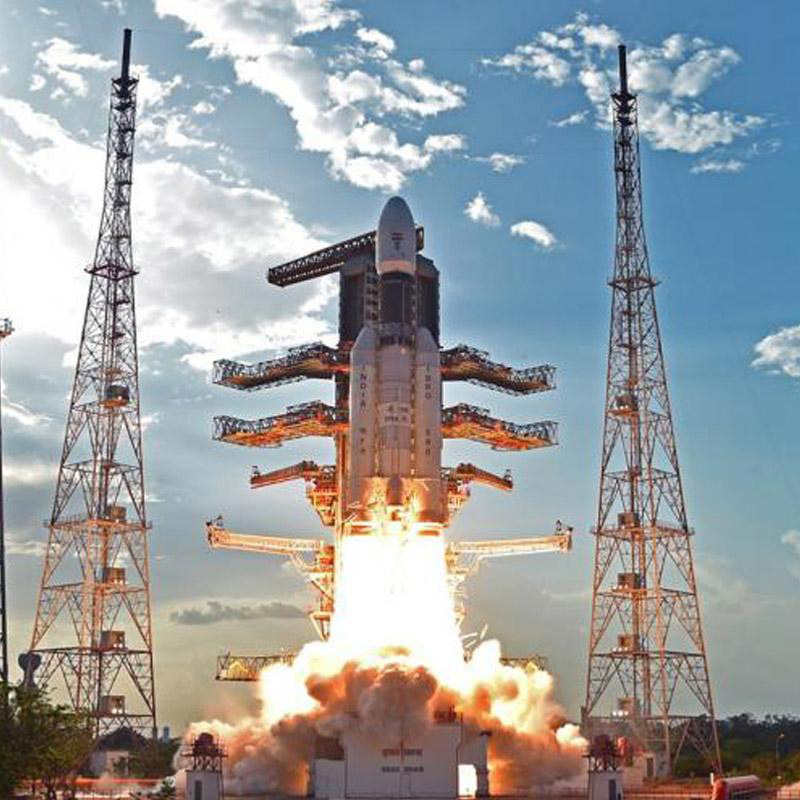
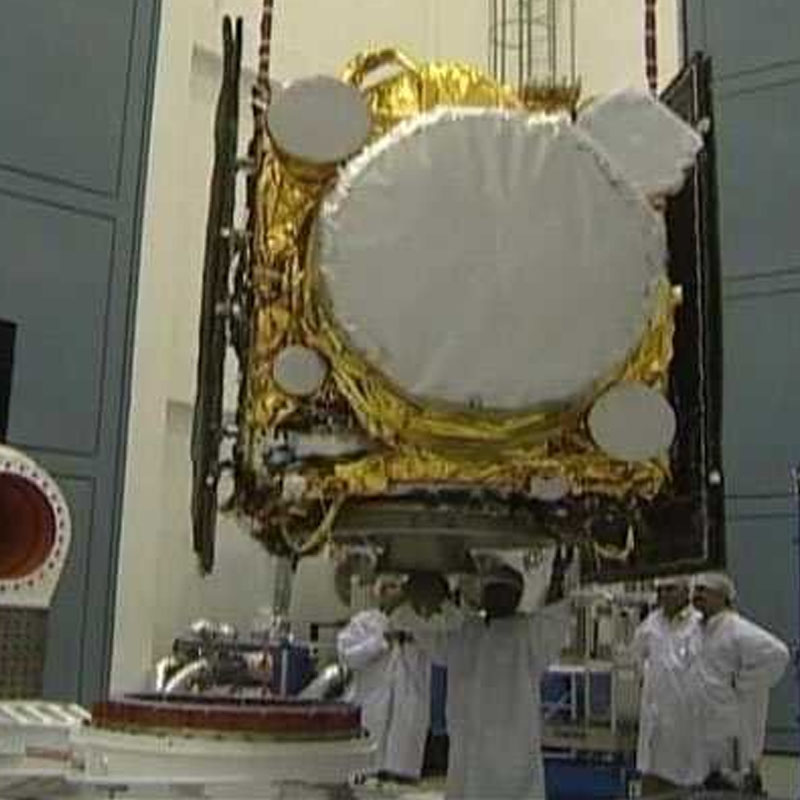
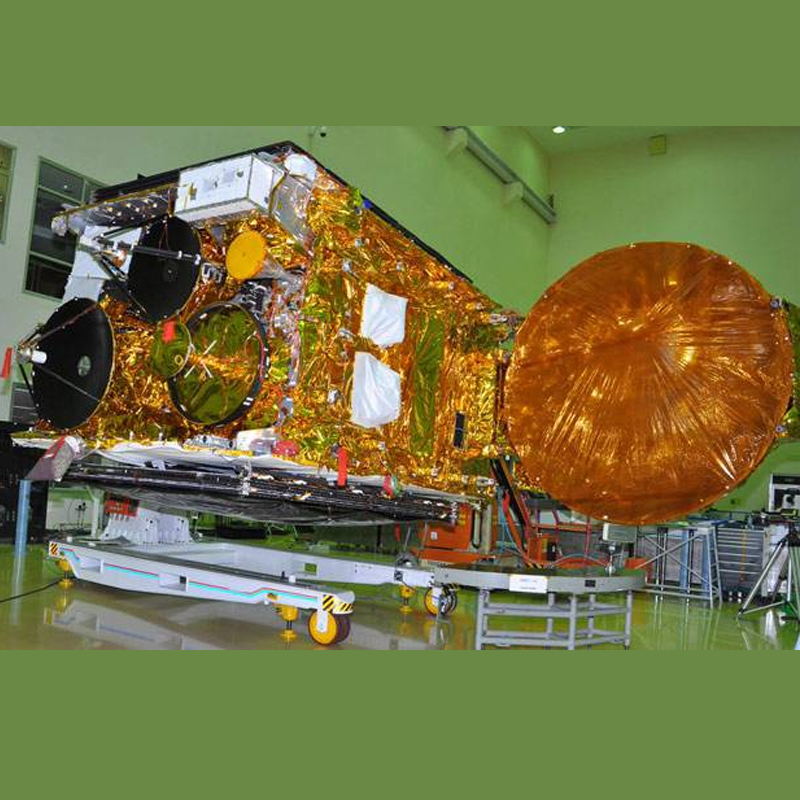
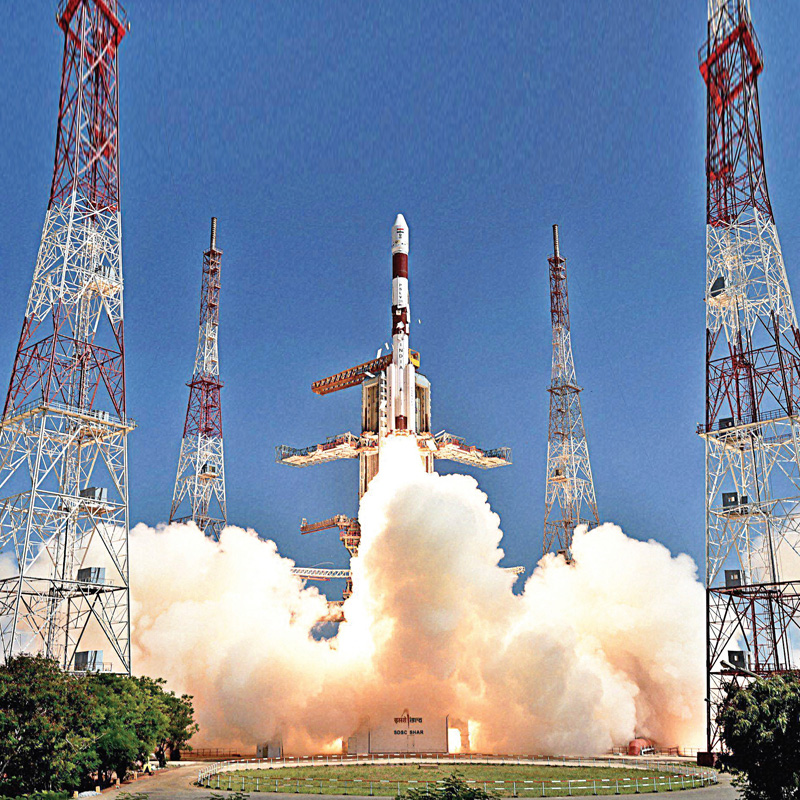
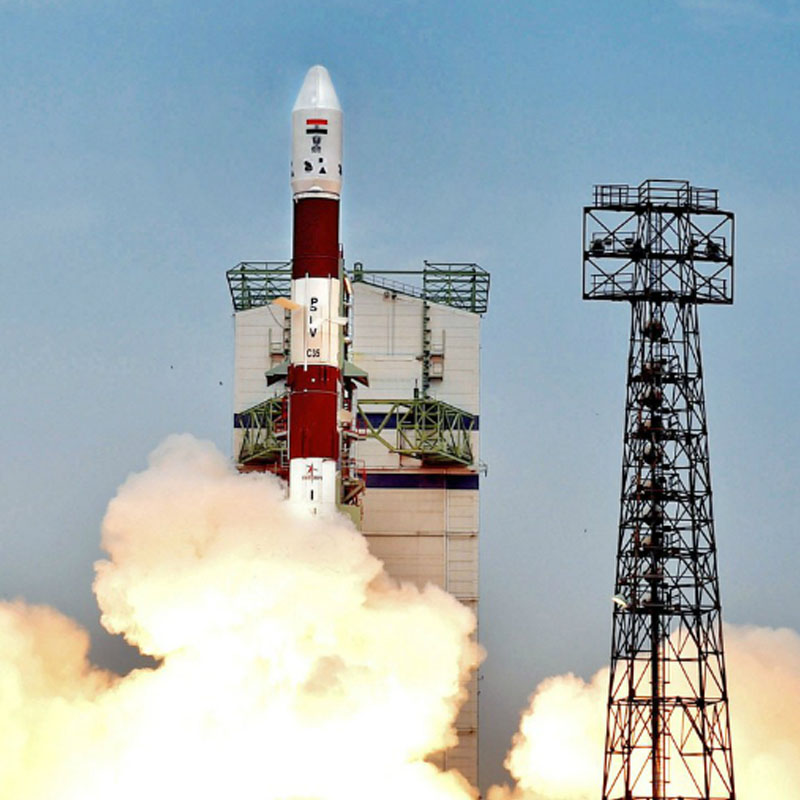
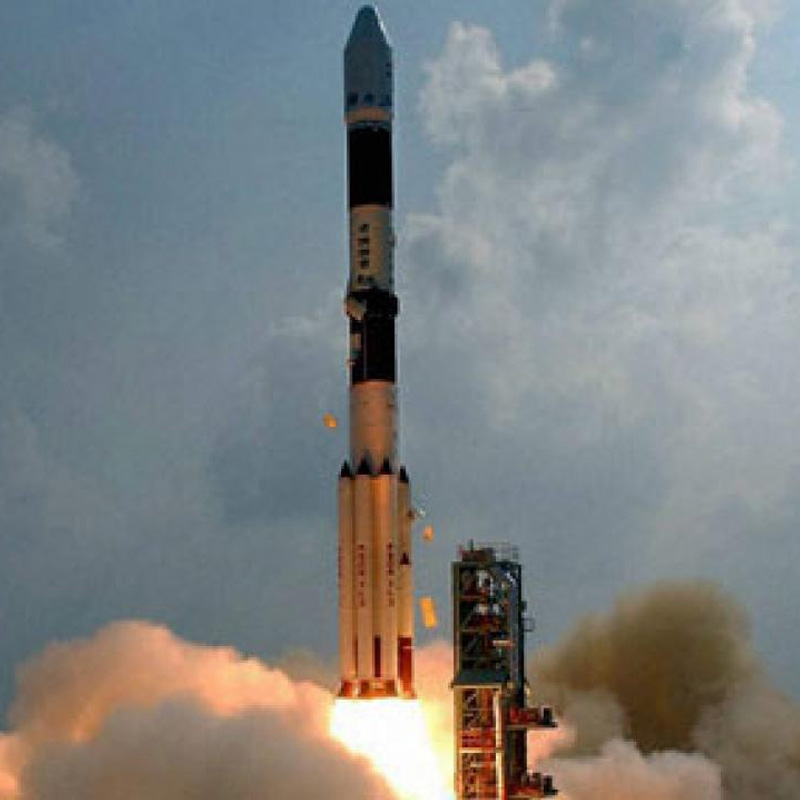
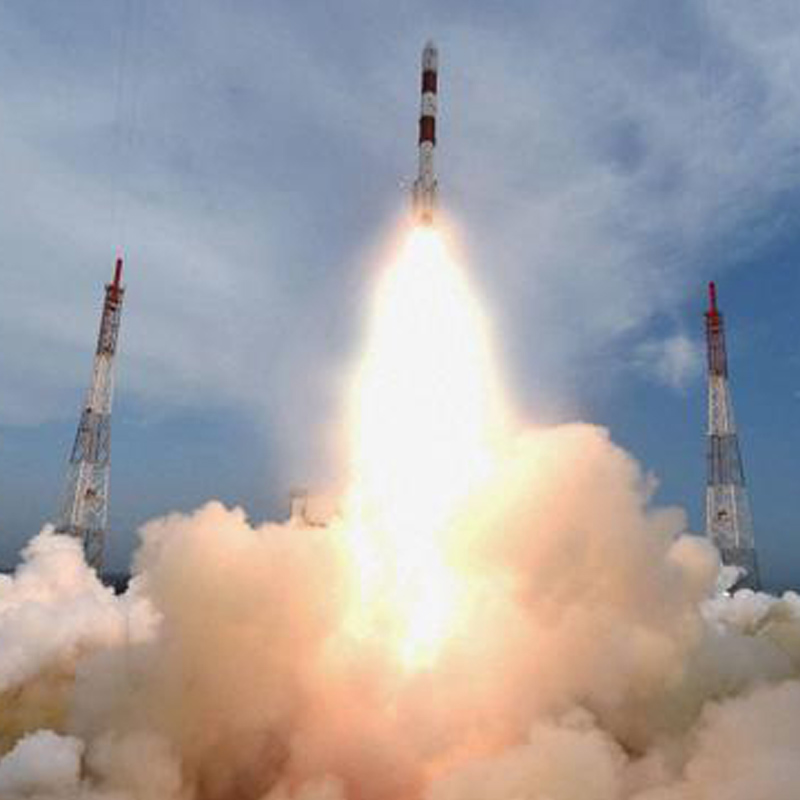
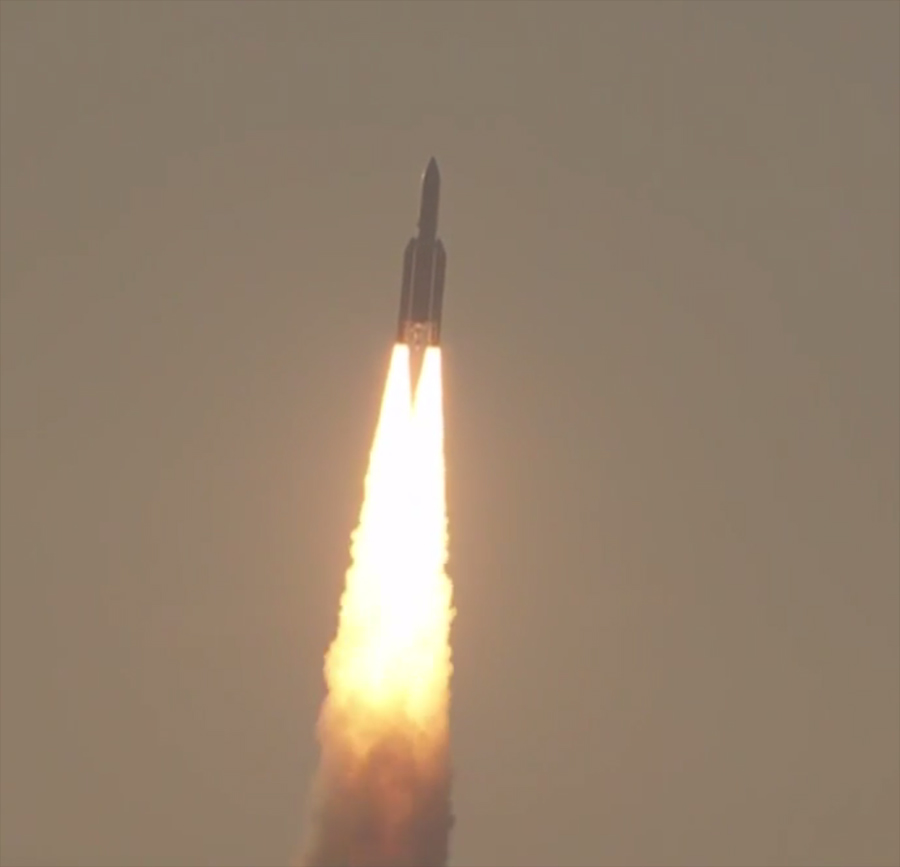
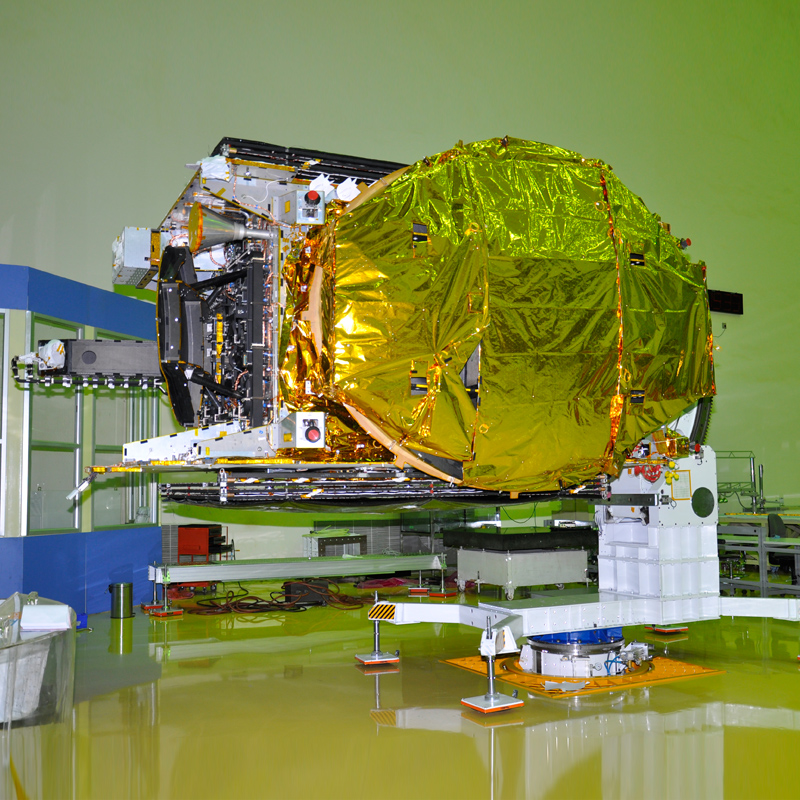
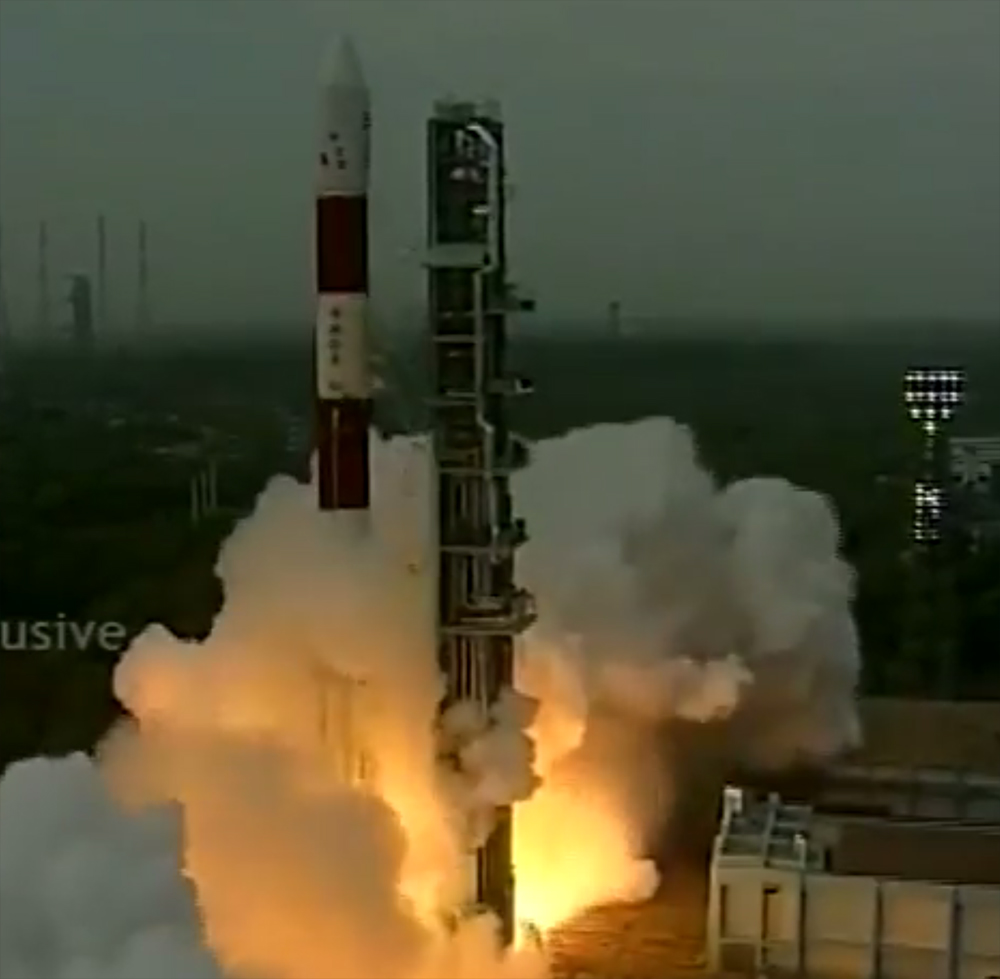
    SRIHARIKOTA: India just flexed its space muscles. On 2 November, the Indian Space Research Organisation (Isro) hurled its heaviest communications satellite ever into orbit from home soil—a 4,400 kg behemoth called CMS-03 that will keep the navy’s ships, submarines and aircraft chattering across the Indian Ocean. The launch from Sriharikota at 5:26 pm marked the end of an embarrassing era: no longer must India send its bulkiest satellites abroad for a lift.

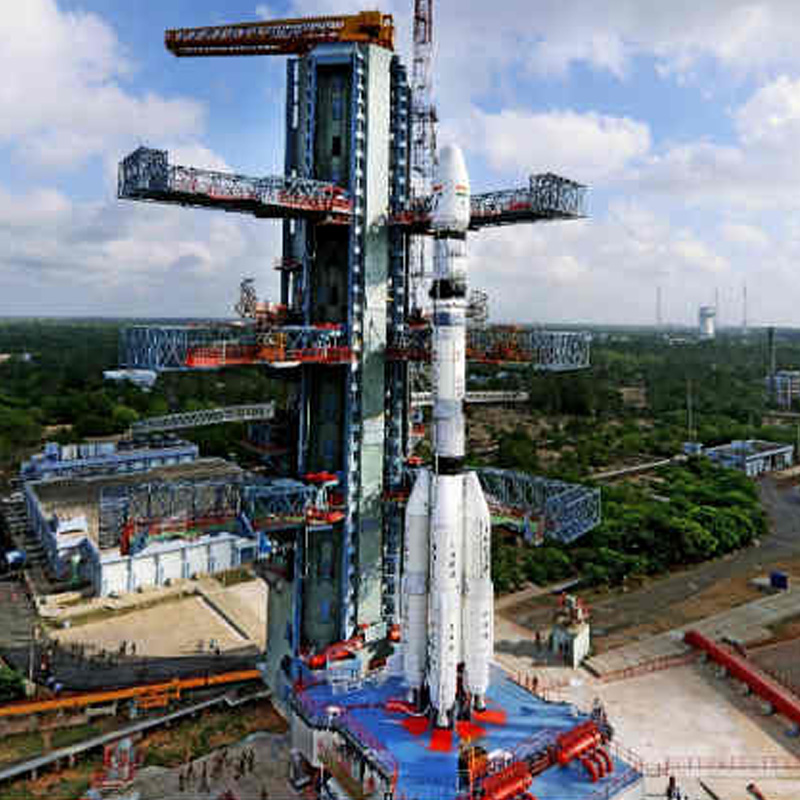
    The rocket doing the heavy lifting was LVM3, ISRO’s most powerful launcher and now nicknamed “Bahubali” for its Herculean payload capacity. This souped-up version sports a beefier cryogenic upper stage—the C32, carrying 32,000kg of fuel and belching 22 tonnes of thrust, a 10 per cent upgrade on the previous model. It can now haul 4,000kg to geosynchronous orbit and 8,000kg to low Earth orbit without breaking a sweat.

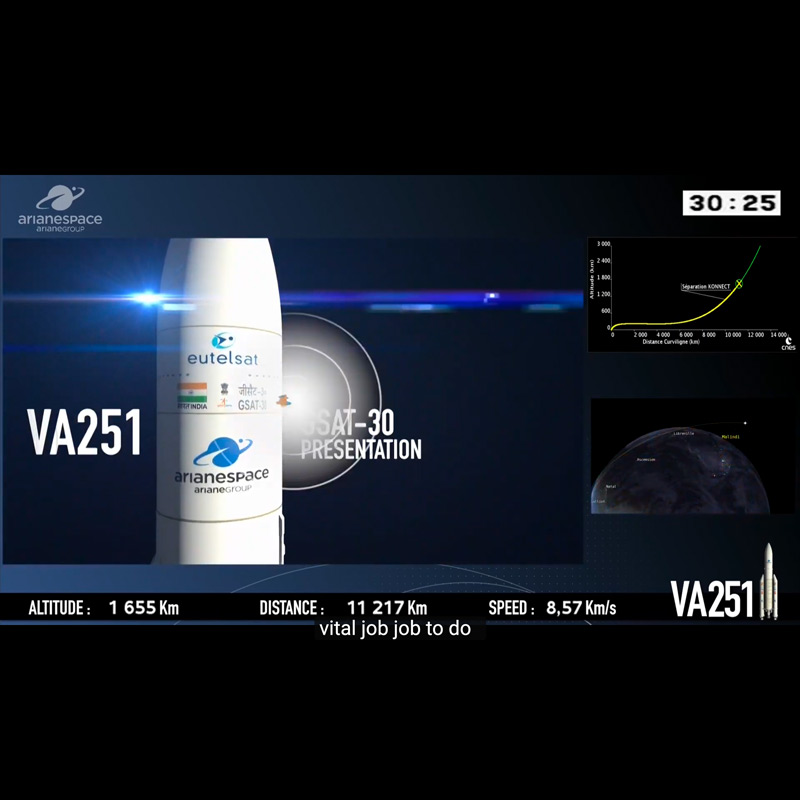
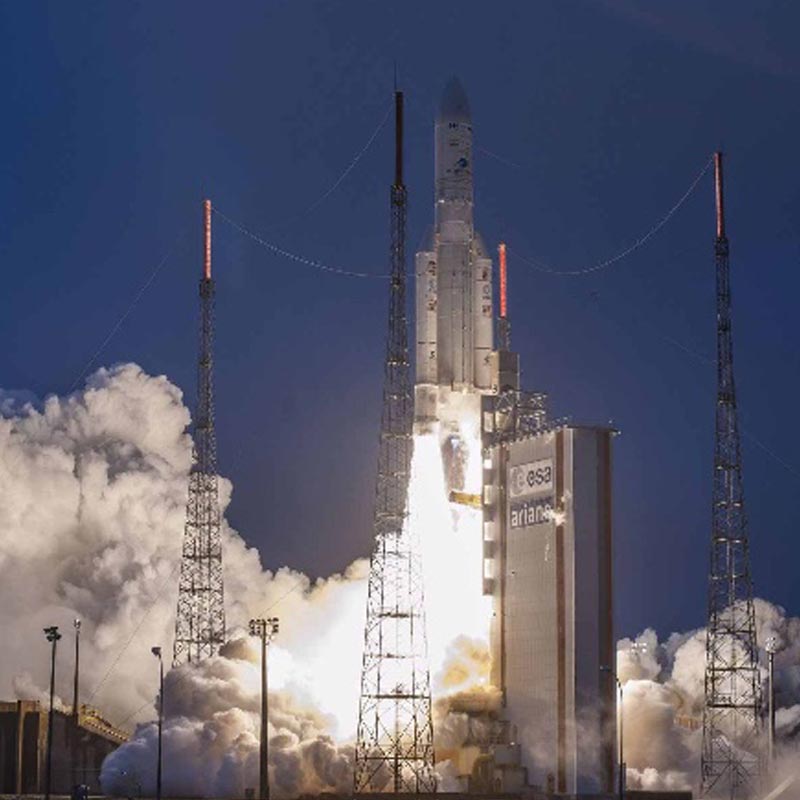
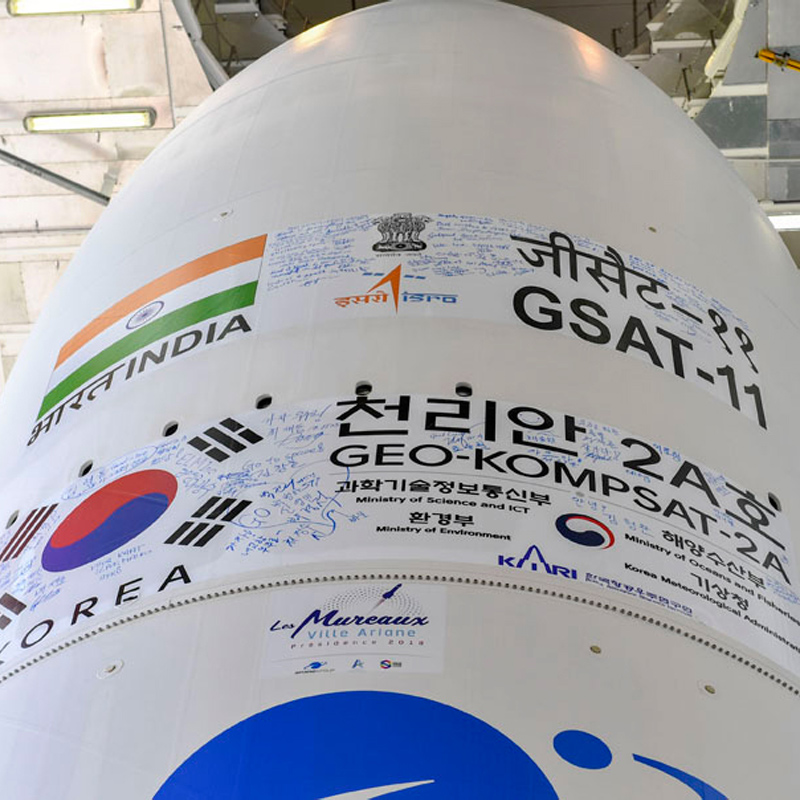
    Until now, India’s chunkier satellites hitched rides with foreigners. France’s Arianespace launched the 5,854kg GSAT-11 and 4,181kg GSAT-24. Elon Musk’s SpaceX ferried the 4,700kg GSAT-20. No more. Isro chairman V Narayanan crowed about the mission being “a shining example of Atmanirbhar Bharat”—self-reliant India, in case the point wasn’t clear enough.

    The CMS-03, also known as GSAT-7R, isn’t just heavy; it’s clever. Bristling with indigenous components, the multiband satellite will provide encrypted voice, data and video links for 15 years, giving the Indian Navy real-time situational awareness across a vast oceanic region. The navy called it a testament to national self-sufficiency in maritime defence.

    This was LVM3’s eighth consecutive successful launch, following triumphs like Chandrayaan-2, Chandrayaan-3 (which made India the first nation to land near the lunar south pole), and OneWeb satellite deployments. The upgraded rocket also feeds directly into Isro’s Gaganyaan programme, which aims to send astronauts into space. Three uncrewed missions are planned first, including one carrying Vyommitra, a robotic astronaut, later this year.

    Narayanan said the space organisation is eyeing seven more launches by March 2026, with another LVM3 mission slated for December. India’s space sector, he declared, is “soaring high.

    With launches this meaty, it’s hard to argue.

  • India’s southern spaceport progressing; to take aim at polar satellites

    India’s southern spaceport progressing; to take aim at polar satellites

    MUMBAI: India is racing to complete its second spaceport on the Tamil Nadu coast, promising to revolutionise the country’s small satellite launch capabilities. The Kulasekarapattinam facility, targetted for commissioning in 2026-27, will unlock dramatic payload improvements that existing infrastructure simply cannot match.

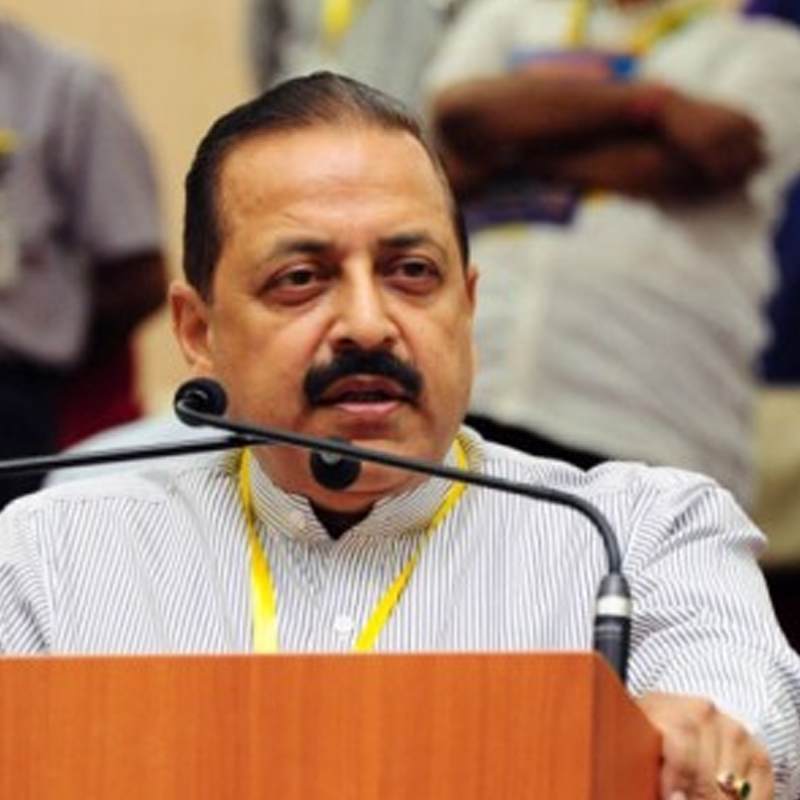
    Minister of state in the prime minister’s office Jitendra Singh told parliament that the Rs 985.96 crore project has consumed Rs 389.58 crore so far, with land acquisition nearly complete and technical facilities under construction. What makes the coastal location special is geography: launching southward over open ocean eliminates the orbital gymnastics required at the existing Satish Dhawan Space Centre.

    The numbers tell the story. India’s Small Satellite Launch Vehicle can carry just 300kg to sun-synchronous polar orbits from Kulasekarapattinam—but “inadequate” payloads from the established Sriharikota facility. The problem lies in trajectory: rockets launching from Sriharikota must perform complex manoeuvres to avoid dropping spent stages on populated areas, gutting their carrying capacity.

    Sun-synchronous polar orbits are the sweet spot for earth observation satellites, keeping spacecraft in constant sunlight as they circle the planet. But reaching these orbits from India’s existing spaceport requires fuel-guzzling course corrections that leave little room for actual cargo.

    Kulasekarapattinam changes the equation entirely. The southern facility’s coastal position allows rockets to fly straight into polar trajectories without dodging landmasses or cities. Once operational, the spaceport will handle launches for both ISRO’s Small Satellite Launch Vehicle and equivalent rockets from private companies.

    The project represents India’s push to capture more of the booming small satellite market, where payload efficiency often determines commercial viability. With fabrication of equipment underway at various work centres and construction proceeding on technical facilities, the race is on to bring India’s orbital ambitions down to earth—or rather, up to space—by 2027.

  • 5G will blast into orbit as Europe’s CTO readies game-changing satellite launch

    5G will blast into orbit as Europe’s CTO readies game-changing satellite launch

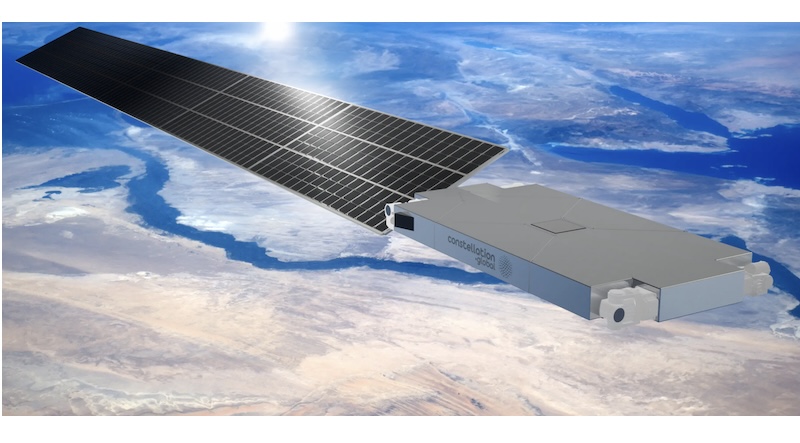
    PARIS: European satellite player Constellation Technologies & Operations (CTO) is set to fire the starting gun on a bold new telecoms era, with the launch of its first regenerative 5G mmWave payload on 20 June from Cape Canaveral, Florida.

    The payload—hitching a ride aboard D-Orbit’s Ion platform—aims to prove that ultra-fast, low-latency 5G can be beamed directly from space, using mmWave spectrum already owned by telcos. If successful, it could catapult satellite telecoms into the heart of mainstream connectivity—no cables required.

    “This inaugural flight brings our vision to life: a space-based network that’s neutral, carrier-operable, and truly global,” said CTO chief executive Charles Delfieux. “Space is the next frontier for telecom operators.”

    Far from a mere science experiment, CTO’s Vleo (very low Earth orbit) constellation project is designed to extend high-performance internet access to rural backwaters, disaster zones, and connectivity dead spots. Its shared infrastructure model sidesteps the need for heavy telco capex, acting as a cost-effective complement to ground-based fibre and cellular systems.

    CTO’s pitch is as strategic as it is technological: a European-built, sustainable, and operator-neutral framework that could offer the continent telecom sovereignty in an increasingly contested digital domain.

    As launch day approaches, the industry is watching closely. If CTO sticks the landing, it won’t just be a payload going up—it could be terrestrial telcos’ bandwidth ambitions reaching escape velocity.

  • V. Narayan to succeed  S. Somnath;  to take over as Isro chairman

    V. Narayan to succeed S. Somnath; to take over as Isro chairman

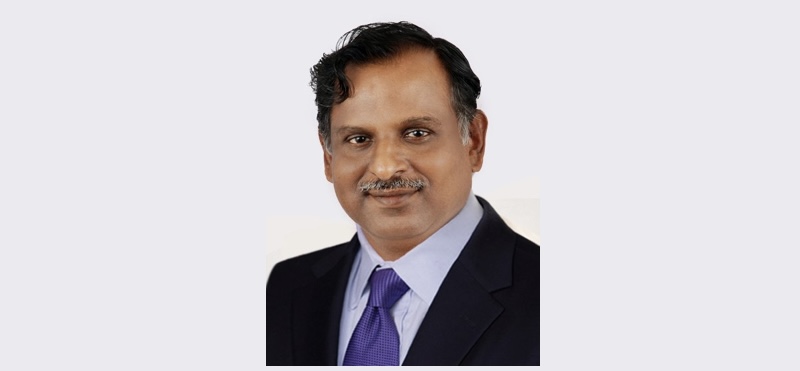
    MUMBAI: There’s a new head at the Indian Space Research Organisation (Isro) and at the department of space (DoS). On 7 January, the  appointments committee of the cabinet sent out a notification announcing the selection of the head of the liquid propulsion systems centre (LPSC)  V Narayan in the organisation as the man for the job. He will also hold the post of chairman of the space commission. He takes over from current Isro boss S. Somnath  on 14 January when the latter’s term ends.

    Narayan was one of the key architects of India’s development of the cryogenic engine, which on the back of which India’s space program – including launch vehicles and space exploration – could move ahead at the pace it has.

    Speaking to NDTV Narayan said: “We have a clear roadmap for India and I hope to take Isro  to greater heights as we have great talent.”

    As  LPSC  director he has been providing techno-managerial leadership which is engaged in the development of liquid, semi cryogenic and cryogenic propulsion stages for launch vehicles. chemical and electric propulsion systems for satellites, control systems for launch vehicles and transducer development for propulsion system health monitoring.

    Narayanan, who is a rocket and spacecraft propulsion expert joined Isro in 1984 and functioned in various capacities before becoming director of the centre. During the initial phase, for four and a half years, he worked in the solid propulsion area of sounding rockets and augmented satellite launch vehicle (ASLV) and polar satellite launch vehicle (PSLV) in Vikram Sarabhai Space Centre (VSSC). He contributed in the process planning, process control and realisation of ablative nozzle systems, composite motor cases and composite Igniter cases.

    In 1989, Narayan completed his M.Tech in cryogenic engineering with first rank at IIT-Kharagpur and joined the cryogenic propulsion area in the LPSC. Isro’s geosynchronous launch vehicles namely GSLV Mk-II  and GSLV Mk-III capable of placing two-tonne and on four-tonne class communication satellites in geo transfer orbit have cryogenic propulsion stages as terminal stages.

    As one of the few cryogenic members, working  in this area in the initial stages, he carried out fundamental research, theoretical and experimental studies and contributed in the successful development and testing of cryogenic sub systems namely the gas generator, sub-scale cryogenic engine of one tonne thrust and thrust chamber of 12 tonne thrust. 

    Considering the long-lead time required for the development of cryogenic stage of GSLV MkII vehicle, for meeting the initial flights, few of the cryogenic stage hardware were procured from Russia. Towards this, as an expert in cryogenic propulsion,  he contributed in the development of mission management systems, contract management and the successful flights of GSLV MkII vehicle with procured cryogenic stages.

    For sustained operation of GSLV MkII, initially Isro planned for technology acquisition of cryo stage for manufacturing in India. But due to geopolitical reasons, the technology acquisition could not succeed and Isro decided to develop cryogenic upper stage (CUS) indigenously  Narayanan has played crucial role in the successful development of CUS  and contributed in making it operational for the GSLV Mk II vehicle. 

    For the GSLV MkIII experimental mission with CARE module, he conceived and realised the passive cryogenic stage and contributed for the successful experimental flight. As the project, director of the C25 cryogenic project, he provided techno-managerial leadership and conceived, designed and developed the 25 cryogenic propulsion system of GSLV Mk-III launch vehicle powered by an engine developing a thrust of 200kN. 
    He contributed in establishing the necessary infrastructure and facilities for design, analysis, realisation, testing and launching. Due to innovative approach, the C25 cryo stage was developed under his guidance in the shortest time frame with all successful tests and inducted in the GSLV MkIII vehicle. Subsequently he also made the stage operational. 

    His contribution, made India one among six countries in the world to have the complex and high performance cryogenic propulsion systems and made the country  self-reliant in this area. 
    Narayan parallely completed PhD in aerospace engineering from IIT-Kharagpur in 2001. The work carried out as part of M.Tech thesis titled Cavitating Venturies for Flow Control in Cryogenic Rocket Engines and PhD thesis titled Thrust and Mixture Ratio Regulation Systems for Cryogenic Rocket Engines were directly employed in the development of the Indian cryogenic propulsion systems. 

    Towards the GSLV Mk-III M1/Chandrayaan-2 mission, L110 liquid core stage, C25 cryogenic stage, were delivered for the vehicle under his watchful eye. Propulsion systems for orbiter and Vikram lander which include the throttleable thrusters for soft landing were also developed and delivered for the Chandrayaan-2 Mission, under his guidance. As the chairman of the national expert committee constituted to study the reasons for hard landing of the Chandrayaan-2 lander ship, contributed in pin pointing the reasons and corrective actions required to overcome the observations. Realised and delivered all the propulsion systems for Chandrayaan-3. 
    For the Indian human space flight (Gaganyan) programme, he worked on the human rating of C25 and L110 liquid stages of LVM3 vehicle and the development of propulsion modules for crew module and service module and the cabin pressure control systems. He also focused on the thermal and humidity control systems and the propulsion stage for the test vehicle. 

    For enhancing the GTO payload capability of LVM3 vehicle and meeting the future Indian heavy lift  rockets, Narayan guided the team and designed a Lox-kerosene semi cryogenic propulsion system and provided  techno-managerial leadership for its development.

    He took up the development of improving the C25 cryogenic stage performance with higher propellant (32 tonnes of LoX and LH2) loading with higher thrust (22 tonne) engine. His team is also working on developing the 100 tonne  thrust Lox-CH4 engine and electric propulsion thrusters. He has also made significant contribution in the spacecraft propulsion area. 

    Narayan contributed as the member of two failure analysis committees (FACs) of GSLV MkII D3 and GSLV MkII F02 vehicles and , member secretary of the first Indian cryogenic upper stageeEngine FAC. He  was a member of Isro’s 12th Five Year plan-drafting group and contributed in finalsing the propulsion system development during 12th five year plan. He has also finalised the propulsion road map of Isro for the next 20 years (2017 – 2037). As director of  the LPSC, during the last five  years, he has delivered 164 liquid propulsion systems for 41 launch vehicles and 31 space craft missions. 

    V Narayanan, is currently the chairman of LPSC-IPRC co-ordination committee and chairman of programme management council – space transportation systems.

  • Arianespace appoints David Cavaillolès as CEO replacing Stéphane Israël

    Arianespace appoints David Cavaillolès as CEO replacing Stéphane Israël

    MUMBAI: Arianespace has gone in for 36  year old David Cavaillolès to become CEO of the European space rocket launch firm from January 2025.

    David has been a rising young  star, starting out in insurance at ACPR as a financial supervision expert after acquiring two masters  degrees, one in sciences, economic, and mathematics followed by another in finance which included actuarial finance. 

    He stayed there for a couple of years following which he joined the public sector, first as an inspector of finances for a couple of years for the French government, then as a senior ministerial adviser in the office of  the minister of  education, research and innovation where he was given  charge of space David advised the ministry on its  industrial strategy for launchers and satellites, Newspace, among many other areas.

    He held this position for two and a half years before being lured back to the private sector by Capgemini Financial Services where he stayed for five years and theee months, rising from head of ADM Paris  practice to chief sales officer of the French office of Capgemini.

    His growth has been rapid throughout his career, especially considering that he was headhunted to lead Arianespace at the young age of 36.

    David replaces Stéphane Israël the outgoing  CEO of Arianespace, who has been at the company’s helm since April 2013 and is currently pursuing new opportunities.  As CEO, Stéphane Israël  played a key role in developing the Ariane industrial cluster with the Ariane 6 launcher, and in transforming Arianespace, which became a subsidiary of ArianeGroup in 2017. 

    After consolidating the Ariane 5, Vega and Soyuz launcher families and supporting the development of Ariane 6 and Vega C next-generation launchers, Stéphane Israël gave Arianespace’s offering a new direction, transitioning from dual GEO satellite launches to solutions designed for large constellations in low-Earth orbit and the growing diversity of satellites. 

    Thanks to these initiatives, Arianespace reached a record rate of 15 launches in 2021 while taking orders for 30 Ariane 6 launches and 15 Vega C launches. Since April 2013, Stephane Israël has supervised 108 launches, including, recently, the emblematic James Webb Telescope (JWST) mission for Nasa and the Juice probe launch for the European Space Agency (ESA).

    “Every day I have spent since April 2013 writing this chapter in the history of Arianespace has been a great honor and an extraordinary human adventure,” said Stéphane Israël. “I am pleased to entrust my successor with a company boasting a solid order book to ramp up the launch rate as of 2025. With Ariane 6, Arianespace will be able to capture the opportunities arising in a dynamic and fast-changing market.”

    ArianeGroup CEO Martin Sion said: “Stéphane has supported Arianespace through major milestones, from the height of Ariane 5’s success to the first flight of Ariane 6. He also worked hard to transform Arianespace in line with ArianeGroup.”
     

  • Ananth Technologies completes milestone satellite project for ISRO

    Mumbai: Ananth Technologies Private Ltd (ATL), successfully completes the integration of two 400 kg class satellites for the Indian Space Research Organisation (ISRO). This accomplishment marks the first time ISRO has awarded a satellite integration project to a private industry partner, setting a new benchmark for public-private collaboration in the nation’s space sector.  

    The Assembly, Integration, and Testing (AIT) of the satellites took place at ATL’s state-of-the-art facility in the KIADB Aerospace Park, Bengaluru, which spans 10,000 square metres and has the capability to integrate up to four large satellites simultaneously.  

    At a ceremony on 18 October, ATL celebrated the successful completion and delivery of the satellites, attended by ISRO U.R. Rao Satellite Centre (URSC), director, Shankaran, who praised ATL’s expertise and dedication.  

    ATL chairman, Subba Rao Pavuluri attributed the success to the company’s sustained investments over the years. “This achievement is a testament to ATL’s vision and commitment towards India’s space sector,” he stated. “We have been manufacturing electronic subsystems for ISRO since 2000 and have been an integral part of every Indian space program over the last two decades.” The project involved over 100 engineers and technicians, making it the most sophisticated satellite integration undertaken by a private company in India to date.  

    ATL’s expanding capabilities  

    – International Collaboration: At the Bengaluru Space Expo (BSX), ATL signed an MOU with Space Machines Company from Australia to provide AIT services.  

    – Satellite Components: ATL manufactures solar panels for small satellites, which have been exported internationally.  

    – Launch Vehicle Services: The company performs integration for ISRO’s Polar Satellite Launch Vehicle (PSLV) in Thiruvananthapuram, having completed work on 10 PSLVs.  

    – New Facilities: A facility in Thiruvananthapuram specialises in launch vehicle AIT, integrating equipment bays and electronic components.  

    Pavuluri envisions rapid growth in the Indian space sector, comparing it to the rising demand for drones. “Just as drones are seeing extensive use in various civilian and strategic sectors, small satellites will also be widely adopted,” he stated. ATL’s expertise in electronics manufacturing and satellite AIT services continues to attract both government and private clients.  

    ATL also offers geospatial services for applications in urban planning, natural resource management, gas pipeline planning, and municipal property tax management.  

    The success of this satellite integration project underscores ATL’s role as a leading player in India’s space industry, paving the way for further public-private partnerships to advance the nation’s space capabilities.  

  • MEASAT & Sun TV partner for global multi-language channels distribution

    MEASAT & Sun TV partner for global multi-language channels distribution

    Mumbai: MEASAT Global Berhad (“MEASAT”) – Malaysia’s premier satellite solutions provider, has signed an agreement with Sun TV Network Ltd (“Sun TV”), one of India’s largest media conglomerates, to support the distribution of 37 TV channels via the MEASAT-3d satellite. These channels broadcast in seven languages, will reach over 140 million households in India and extend to audiences in the Asia Pacific, Europe, and Africa.

    “MEASAT is honoured to be selected by Sun TV to distribute their channels across multiple regions reinforcing our position as Asia’s preferred broadcast partner. With the state-of-the-art MEASAT-3d satellite at the 91.5°E hotslot, we are ready to deliver high- quality, reliable transmission services for one of India’s top broadcasters. This collaboration strengthens MEASAT’s industry presence and recognition in India, enabling us to expand our services to meet customer demands,” commented MEASAT chief commercial officer Ganendra Selvaraj.

    Sun TV chief technology officer S Kannan added: “We are pleased to partner with MEASAT for satellite distribution to reach our audiences globally, including the most remote locations. MEASAT’s flexibility, broad portfolio of solutions, and extensive reach make them an ideal partner for ensuring our content delivery. We look forward to exploring further opportunities with MEASAT to enhance our offerings.”

  • Indonesia remains a market to watch as local players focus on growth, localisation and expansion beyond its shores

    Indonesia remains a market to watch as local players focus on growth, localisation and expansion beyond its shores

    Mumbai: The Asia Video Industry Association (AVIA) hosted over 200 delegates at its recent Indonesia in View conference that took place in Jakarta on 31 August.  

    The conference opened with industry leaders from across the TV and streaming space sharing their views on the state of TV and video in Indonesia, where total video industry revenues are expected to rise from US$2.5 billion in 2023 to reach US$3.7 billion by 2028, according to the latest research by Media Partners Asia (MPA).

    Netflix senior manager of business development, (Indonesia, Thailand, Malaysia) Tizar Patria was optimistic about the market as it continued to grow for Netflix, with a focus on content that works for  the market coupled with a quality experience for consumers. Vision+ managing director Clarissa Tanoesoedibjo added that an ecosystem was needed that reinforced all other parts, from pay TV to free to air and streaming, and that finding strategic partners in the market to maximise opportunities  was key. WeTV and iflix Indonesia country head Lesley Simpson, also concurred that growth in OTT  is here and can be achieved through strategic partnerships.

    With Indonesia representing Southeast Asia’s largest video content market, the battle for content  remains fierce. MNC Pictures president director Titan Hermawan saw the need to create original IP  and original stories as a big opportunity for new scriptwriters. For Visinema Group founder Angga Dwimas Sasongko, what was most important was to focus on a pipeline of talent to be able to  scale content production. However, the panellists agreed with Stew founder & CEO Abid Hussain that business models needed to change for the betterment of the producers. Netflix director- public policy Southeast Asia Ruben Hattari said that the industry needed to work on broadening its  skills base. Indonesia was also the only country without a production incentive scheme so more  needed to be done there to support the growth of the industry.

    However, piracy was still a major issue in Indonesia, with AVIA’s Coalition Against Piracy’s most recent  annual consumer surveys showing that 54 per cent of consumers in Indonesia access pirate services, the  fourth highest incidence of piracy in the region. In a major collaborative effort towards the fight against  piracy, CAP and the Video Streaming Association of Indonesia (AVISI) signed a Memorandum of  Understanding (MOU) in Jakarta on 30 August at CAP’s State of Piracy Summit which ran alongside  Indonesia in View. The MOU represented a significant step forward for AVIA and AVISI in combining  their resources to combat online piracy in Indonesia and protect Indonesia’s creative and media  industries.

    Indonesia in View shifted focus to the monetisation of premium video in the afternoon. Publica commercial director APAC Chris Mottershead said that with advertisers not planning as far ahead  these days, programmatic was likely to play a bigger role in monetization. Sharing insights from other  markets, Mottershead also added that FAST was a good way of bringing back consumers who dropped out of the pay ecosystem, as they could churn from OTT, go to FAST and then come back to OTT when  they could afford the subscription. PubMatic director of customer success SEAK Khin Mu Yar Soe also said that the programmatic space will continue to grow and evolve, with a more integrated  approach on both the buy side and sell side, as well as at a technology level.

    The conference closed off with a keynote conversation with MNC Group executive chairman Hary Tanoesoedibjo who outlined the next phase of his ambitious plans to shift focus to becoming primarily a content and entertainment company. He shared his plan to combine RCTI+ and Vision+ into a super  app where a two-tiered service will be offered under one brand combining FTA content which will  continue to be monetised through advertising as well as a premium subscription service. The plan was  also to create a bigger ecosystem and grow the service to target all of Asia by investing in more quality  content.

    When asked about rumours of the sale of MNC Play, Tanoesoedibjo shared that they will come to an arrangement to sell the data infrastructure part of the business while keeping the IPTV business and  continuing to bundle the services for both existing and future subscribers.

    Indonesia in View is proudly sponsored by Gold Sponsors Vidio and Vision+ and Silver Sponsors A+E  Networks Asia, Akamai, INVIDI, MEASAT, NAGRA VISION, Publica and PubMatic  

  • Tata Play bolsters 18 years of partnership with DOS (Department of Space)

    Tata Play bolsters 18 years of partnership with DOS (Department of Space)

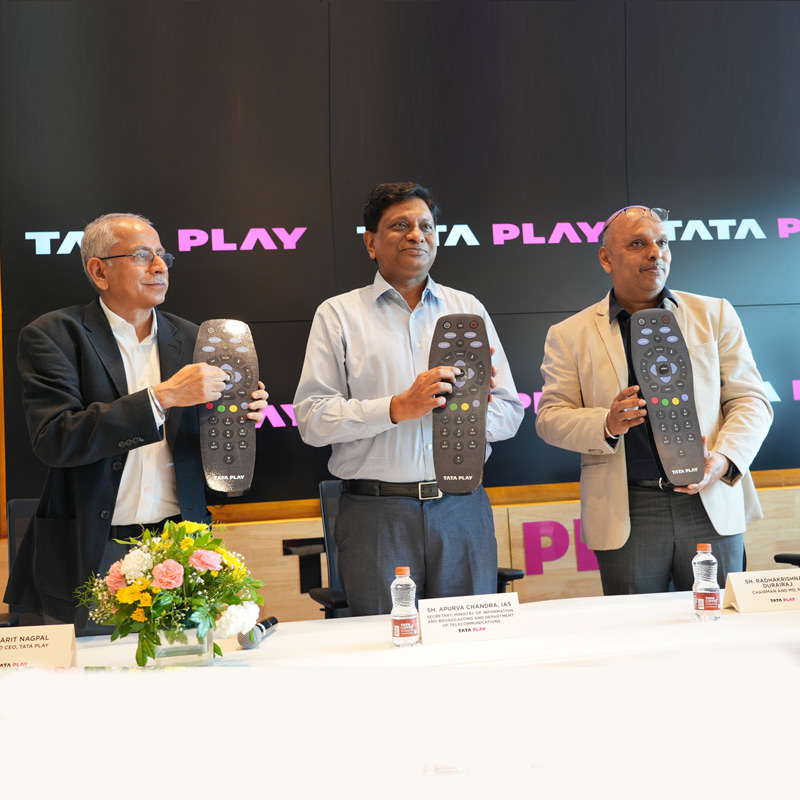
    Mumbai: Tata Play (formerly known as Tata Sky) collaborated with NSIL (NewSpace India Ltd) and launched GSAT-24 satellite in June 2022, aligned to the Government’s Make in India vision. Tata Play will commence the use of this satellite, now in its orbital position, starting today. The increased bandwidth will enable Tata Play to provide its users with an even sharper picture and sound quality, and an ability to carry 50 per cent more channels while becoming the largest satellite bandwidth provider among all DTH platforms.

    The inauguration ceremony was held at Tata Play’s Broadcast Centre in Chhatarpur, New Delhi. On the occasion, Ministry of Information & Broadcasting secretary Apurva Chandra expressed his happiness and said, “Congratulations to DoS and Tata Play for successfully commissioning GSAT-24.  This event unlocks one more step towards Aatmanirbhar Bharat and self-reliance in the field of space and communication.”

    Present at the event, ISRO chairman S. Somanath said, “GSAT-24 a 4-tonne class communication satellite built by ISRO for providing DTH services, is fully operational at its maximum satellite capacity, following exhaustive in-orbit testing. This momentous achievement signifies a revolution in India’s telecommunications space, driven by cutting-edge indigenous technology. It serves as a tribute to our nation’s aerospace prowess and heralds India’s successful entry into the Demand Driven Mission segment.” 

    NSIL chairman & managing director Radhakrishnan Durairaj added, “GSAT-24 has been the first Demand Driven communication satellite mission undertaken by NSIL post space sector reforms. GSAT-24 satellite is ready to usher in a new era of satellite television for India. As a testament to the success of the Make In India initiative, this satellite would support domestic broadcasting services with advanced digital TV transmission capabilities. Congratulations to the teams of NSIL, ISRO and Tata Play who have collaborated on this successful project.”

    Commenting on the momentous occasion, Tata Play’s MD & CEO, Harit Nagpal said, “Viewing experience has been Tata Play’s key priority. This collaboration with NSIL will provide our DTH subscribers with an even better video and audio quality and many more channels and services. It also strengthens our commitment to Linear TV in a country where approximately ~140 Mn homes are yet to buy their first TV. We have always delivered all our services on indigenously produced satellites by DOS and this capacity enhancement is a reaffirmation of our commitment to Make in India.”

    GSAT-24 is a 24-Ku band communication satellite launched by the Government of India only to cater to the requirement of Tata Play’s DTH application needs. NSIL, incorporated in March 2019, is a Central Public Sector Enterprise (CPSE) under the Department of Space (DOS) and is the commercial arm of DOS. The entire satellite capacity on-board GSAT-24 is leased to its committed customer Tata Play.

  • Satellite & media industry veteran Vishaal Mathur launches consultancy firm

    Satellite & media industry veteran Vishaal Mathur launches consultancy firm

    Mumbai: After spending 17 years with leading satellite operators MEASAT (Astro group) in Malaysia and SES in Singapore, Vishaal Mathur has decided to start his own independent consultancy called Vishaal Mathur and Associates.

    Mathur has been roped in by Kacific Broadband Satellites as a consultant for Nepal and Bhutan and in parallel by PT Telkom Satelit Indonesia as a consultant and head of sales for India. Mathur will be responsible for marketing Kacific Broadband Satellite’s high throughput KA-band satellite over Nepal and Bhutan. Moreover, he will oversee PT Telkom Satelit Indonesia’s new C-band satellite over the Indian subcontinent to leading broadcasters and commercial teleport operators.

    He has also been appointed as an honorary consultant by a to-be-launched Hindi news channel owned by a Gujarat-based businessman.

    A telecommunications industry veteran with over 25 years of experience, Mathur has been associated with ESPN, Star Sports, Ten Sports, Zee Telefilms, MEASAT (Astro Malaysia) and SES World Skies during his career.