Category: Satellites

  • India’s GSAT-17 communication satellite launched successfully

    India’s GSAT-17 communication satellite launched successfully

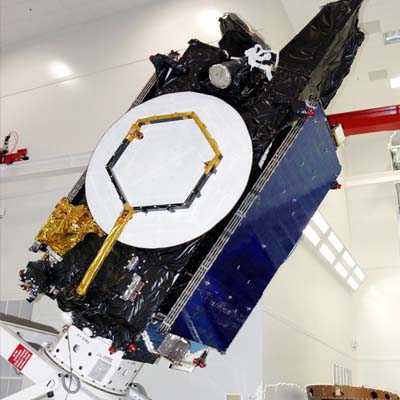
    MUMBAI: GSAT-17 became India’s third communication satellite to successfully reach orbit in the past two months. GSAT-17 was launched in the early morning hours using the European Ariane 5 Launch Vehicle from Kourou, French Guiana. The 3477 kg GSAT-17 carries communication payloads in C-band, Extended C-band and S-band for providing various services to the country.

    The satellite also carries equipment for meteorological data relay and satellite based search and rescue services. After its lift-off at 0245 hrs (2:45 am) IST and a flight lasting about 39 minutes, GSAT-17 separated from the Ariane 5 upper stage in an elliptical Geosynchronous Transfer Orbit (GTO) with a perigee (nearest point to Earth) of 249 km and an apogee (farthest point to Earth) of 35,920 km, inclined at an angle of 3 degrees to the equator.

    ISRO’s Master Control Facility (MCF) at Hassan in Karnataka took over the command and control of GSAT-17 immediately after its separation from the launch vehicle. Preliminary health checks of the satellite revealed its normal functioning.

    In the coming days, orbit raising manoeuvres will be performed to place GSAT-17 satellite in the Geostationary Orbit (36,000 km above the equator) by using the satellite’s propulsion system in steps.

    During the final stages of its orbit raising operations, the two solar arrays and both the antenna reflectors of GSAT-17 will be deployed. Following this, the satellite will be put in its final orbital configuration. GSAT-17 will be positioned at its designated orbital slot in the geostationary orbit and will be co-located with some of the Indian operational geostationary satellites. Later, it is planned to turn on the communication payloads of the satellite. After the successful completion of all the in-orbit tests, GSAT-17 will be ready for operational use.

  • Arianespace to launch ISRO-built DTH & telecom satellites

    MUMBAI: Preparations are afoot to launch two satellites aboard Arianespace’s workhorse Ariane 5 rocket for delivery to GTO (geosynchronous transfer orbit). Hellas Sat 3 / Inmarsat S EAN and GSAT-17 have been scheduled to lift off from the spaceport in Kourou, French Guiana, on 28 June (Wednesday), during a 77-minute window opening at 20:59 GMT (4:59 p.m. EDT).

    Encased in the 17-meter (55.8-foot) tall RUAG-manufactured fairing are the GSAT-17 and Hellas Sat 3 / Inmarsat S EAN satellites. GSAT-17, a 3,477-kg (7,665-pound) telecommunications satellite built by and for India, will launch in the lower position of the SYLDA payload adapter, Space Flight Insider reported.

    One of the aims of the Ariane 5 mission is the launch of two satellites on a single vehicle. On the top of the around 54.8-meter (180-foot) rocket is a pair of satellites destined to provide telecommunications and direct-to-home (DTH) television services to their respective markets.

    Sharing a single ride to orbit offers cost saving opportunities to the customers and is something at which Arianespace has become very adept. The France-based MNC has indeed been a leader in launching two large satellites to GTO for around 20 years.

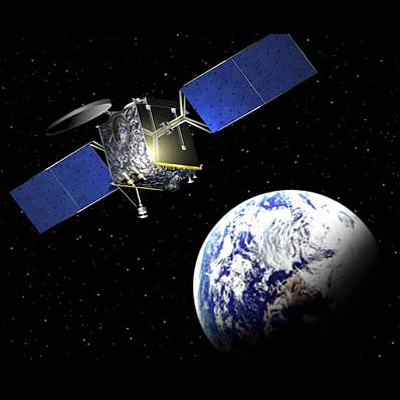
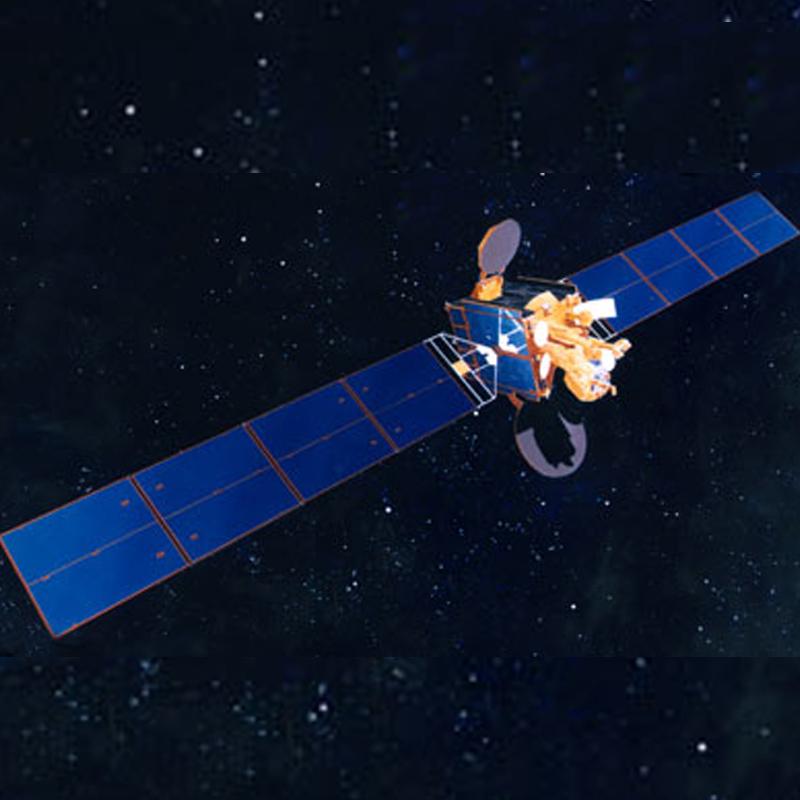
    GSAT-17, which has been built by the Indian Space Research Organization (ISRO), is constructed on the indigenous I-3K satellite bus. The chassis is outfitted with twin solar panels, capable of producing up to a total of 6,500 watts of DC power, tapering to 5,200 watts at the end of its 15-year design life. The satellite will provide telecommunications services, as well as support data relay and government functions, from its position at 93.5 degrees East via multiple C-band transponders.

    The first, Hellas Sat 3, was built for and will be operated by Hellas Sat. It will provide telecommunications and DTH television services to customers in Europe, the Middle East, and Sub-Saharan African countries.

  • ISRO gears up for GSAT-19, GSLV Mk III launch today

    MUMBAI: Another rocket will be turbo-charged into space today with its 3,136 kg payload (the GSAT-19 satellite) from India’s space launch site in Sriharikota in Andhra Pradesh. The only difference, when the GSLV Mk III takes off at 17:28 pm, it will place the Indian Space Research Organisation amongst a select few agencies which can launch satellites of up to 4,000 kg into geostationary orbit.

    The GSLV Mk III is a three-stage heavy lift launch vehicle developed by ISRO. The vehicle has two solid strap-ons, a core liquid booster and a cryogenic upper stage. At 640 tonnes, it is India’s heaviest but shortest rocket at 43 metres

    GSLV Mk III is designed to carry four ton class of satellites into geosynchronous transfer orbit (GTO) or about 10 tons to low earth orbit (LEO), which is about twice the capability of GSLV Mk II.

    The two strap-on motors of GSLV Mk III are located on either side of its core liquid booster. Designated as ‘S200’, each carries 205 tons of composite solid propellant and their ignition results in vehicle lift-off. S200s function for 140 seconds. During strap-ons functioning phase, the two clustered Vikas liquid engines of L110 liquid core booster will ignite 114 sec after lift -off to further augment the thrust of the vehicle. These two engines continue to function after the separation of the strap-ons at about 140 seconds after lift -off.

    Its payload, the GSAT 19, is configured around the ISRO’s standard I-3K bus. GSAT-19 carries Ka/Ku-band high throughput communication transponders. Besides, it carries a geostationary radiation spectrometer (GRASP) payload to monitor and study the nature of charged particles and the influence of space radiation on satellites and their electronic components. GSAT-19 also features certain advanced spacecraft technologies including miniaturised heat pipe, fibre optic gyro, micro electro-mechanical systems (MEMS) accelerometer, Ku-band TTC transponder, as well an indigenous Lithium-ion Battery.

  • SES 15 launches successfully on 18 May

    MUMBAI: SES announced that the SES-15 satellite was successfully launched onboard a Soyuz rocket from the Guiana Space Center in Kourou, French Guiana at 08:54 local time. This is SES’s first satellite to launch on a Soyuz rocket for a geostationary transfer orbit mission.

    SES-15 carries a hybrid payload, comprising Ku-band wide beams and Ku-band High Throughput Satellite (HTS) capability, with connectivity to gateways in Ka-band. SES’s first hybrid satellite will be located at the orbital position of 129 degrees West and is equipped with 16 Ku-band transponders (36 MHz equivalent) as well as HTS capabilities to serve North America, Mexico, Central America and the Caribbean.

    SES-15’s high throughput payload will deliver optimised and flexible coverage for major global inflight connectivity and entertainment (IFC/IFE) service providers, such as Global Eagle Entertainment, Gogo and Panasonic Avionics. In addition, SES-15 has a dedicated wide beam that is designed to enable IFC/IFE providers to deliver live TV content on all flight routes across the US, including Hawaii and Alaska, as well as Canada, the Caribbean and Mexico. This unique combination of beams allows IFC/IFE providers to optimise HTS capacity use for internet traffic and wide beam coverage for broadcast content.

    The satellite will also enable VSAT networks and other traffic intensive data applications in the government and maritime sectors.

    SES-15 will also carry a Wide Area Augmentation System (WAAS) hosted payload, which will enable the US Federal Aviation Administration (FAA) to augment the Global Positioning Systems (GPS) with the goal of improving accuracy, integrity and availability of the system for the aviation industry.

    The satellite is equipped with an electric propulsion system for orbit-raising and in-orbit maneuvers.

    “The successful launch of SES-15 is the first of our three planned hybrid satellites, which have both wide beams and high throughput capability. SES-15, along with the soon-to-be launched SES-14 hybrid satellite, and our existing in-orbit satellites, offer the most resilient aeronautical connectivity platform in North America,” said Martin Halliwell, Chief Technology Officer at SES. “SES-15 will allow us to strengthen our ability to provide next generation services in data-intensive markets such as maritime and corporate broadband.”

    “SES is a long-standing partner, and we are delighted to be part of its important journey in serving the ever-growing aeronautical and data markets by successfully launching SES-15 on a Soyuz rocket,” said Stephane Israël, Chief Executive Officer at Arianespace.

  • CASBAA Forum ’17 set to tackle critical issues

    MUMBAI: At a time of unprecedented technological and business change for the Asia Pacific satellite sector, the CASBAA Satellite Industry Forum 2017 (22 May at the Four Seasons, Singapore) is set to tackle the most critical issues experienced by the industry after more than two decades of continuous growth.

    During the packed agenda for the Forum 2017, the Keynotes, Panels, Short Presentations, Interviews and Networking Breaks will focus on the promise of tomorrow as well as the challenges of today.

    Re-usable Launchers are impacting business plans at every level, Massive LEO Constellations are now set for take-off, Space Junk Galore is making headlines, and emerging technologies such as IOT and Flat Panel Antennas are promising to change the game yet again. All this is taking place at a time while revenue growth remains marginal, and when operators in space markets around the world urgently need to capitalize on premium plans.

    How can Asian satellite operators retain their Video Spectrum and serve smaller customers with economic efficiency?

    Other topics to be debated include:

    · Keynote: “Re-entering Asia” with Andrew Jordan, CEO, AsiaSat

    After more 15 years anchored in Europe and Australia, AsiaSat CEO Andrew Jordan has returned to the region with fresh perspectives and a clear-sighted view of “The “Asian Opportunity”.

    · Managing Change in Times of Tech Turmoil. The CEO Panel

    · “What can they be Thinking? Let’s hear it from the Customers”

    Competition is all fine and good, but when it leaves the customer feeling bruised, what should the industry be doing?

    · The C-suite fortune hunters

    In the air and on the ground, the global satellite industry is entering the future at warp speed. But do the Next Gen Operators have all the answers?

    · With India in View: Forever complex; forever dynamic

    Even as India makes great stridsdes in the launch sector (104 smallsats orbited in a single cluster this March), the dynamic domestic communications market remains subject to complex rules and interventions.

    · In-flight connectivity is evolving as a key revenue stream — just as the future of the Mobility Market remains unpredictable.

    “More than 100 companies have registered for the CASBAA Forum 2017 with half the audience coming from Asia and much of the balance from the US and Europe,” said Christopher Slaughter, CEO, CASBAA. “With so much change in the air the issues are more critical than ever. The ‘Need to Know’ is paramount.”

  • ISRO launches into space GSAT-9 & India’s S. Asian space diplomacy

    MUMBAI: Prime Minister Modi’s Rs 450 crore (Rs. 4,500 million) Asian space diplomacy took flight today with the launch of South Asia Satellite GSAT-9 by Indian Space and Research Organization (ISRO) on Friday. Pakistan is not participating in this initiative.

    The satellite, when it finally gets commissioned, would provide services specific to individual countries as per their own needs and priorities as also common services. Each country would be allocated one transponder each. The South Asian nations that would benefit from this Indian initiative include Afghanistan, Bangladesh, Bhutan, Maldives and Nepal.     

    The South Asia Satellite has 12-KU band transponders, which India’s neighbors can utilize to increase communications. However, the on-ground infrastructure for the usage of satellite capacity will have to be built by each respective country, though, according to an official government statement, India is willing to help them do that too.   

    According to a report in the Economic Times newspaper, each of the participating South Asian nation could benefit up to USD 1.5 billion over the 12-year lifespan of GSAT-9.

    The satellite will facilitate DTH television, VSAT links, tele-education, telemedicine and disaster management support. It will provide critical communication links in times of disasters such as earthquakes, cyclones, floods, and tsunamis.

    Congratulating ISRO for the development and launch of the satellite, PM Modi, while conferring with the heads of participating nations via video conference, said, “As governments, our most important task is to secure growth, development and peace for our people and communities. And, I am convinced that when we join hands and mutually share the fruits of knowledge, technology and growth, we can speed up our development and prosperity.” 

    The vehicle is designed to inject 2- 2.5 ton class of satellites into space. The overall length of GSLV-F09 is 49.1 m. GSLV-F09 was launched on May 5, 2017 from the Second Launch Pad (SLP) at Satish Dhawan Space Centre SHAR (SDSC SHAR), Sriharikota, the space port of India.

    GSLV-F09 vehicle configuration, including the CUS, is similar to the ones successfully flown during the previous three missions — GSLV-D5, D6 and F05 — in January 2014, August 2015 and September 2016, respectively. GSLV-D5 and D6 successfully placed two communication satellites, GSAT-14 and GSAT-6, while GSLV-F05 placed India’s weather satellite INSAT-3DR in the intended GTOs.
    Also Read:

    ISRO’s ‘South Asia Satellite’ to carry 12 ku-band transponders

    ISRO world record in 104-satellite launches on a single flight


  • DTH satellite GSAT 9 (South Asia Sat) blasts off today

    MUMBAI: The countdown clock is ticking away. Come 5:30 pm IST, the evening of 5 May, and the Indian Space Research Organisation (ISRO) will have added another feather to its cap as  its indigenously developed satellite GSAT-9 lifts off from the second launch pad at the Satish Dhawan Space Center in Sriharikota  for its journey into geosynchronous orbit  as a payload on the Geosynchronous Satellite Launch Vehicle Mk II (GSLV-F09).

    The cost of the launch is estimated at around Rs 450 crore (USD 70 million)

    Labeled South Asia Sat, the 2,230 kg weighing satellite boasts 12 Ku-band transponders that will result in a swelling of capacity for India’s DTH television operators  and facilitate TV signal distribution  for its neighbors Nepal, Bhutan, Maldives, Sri Lanka, Bangladesh and Nepal (members of the South Asian Association for Regional Cooperation – SAARC).  

    The satellite also carries India’s fourth GPS aided GEO Augmented Navigation (GAGAN) payload that delivers correction signals for aircraft navigation systems to increase navigation accuracy to three meters, assisting in air traffic management and landing in tough weather and challenging terrain.

    GSAT 9 will be located at 48 degrees east and has a scheduled mission life of around 12  years.

    Also Read :

    ISRO’s ‘South Asia Satellite’ to carry 12 ku-band transponders

    MIB: No DPO request for infra sharing, DTH ops’ transponder demand up

    Could India blocking ABS’ FTA TV signals lead to breach of ITU norms?


  • ISRO’s ‘South Asia Satellite’ to carry 12 ku-band transponders

    MUMBAI: India has planned to launch the ‘South Asia Satellite’ on 5 May which will benefit all the neighbouring countries, except Pakistan, which is not a part of the project. Indian Space Research Organisation (ISRO) chairman A S Kiran Kumar told PTI that the launch would take place in the first week of May.

    ISRO scripted history in February 2017 by launching 104 satellites, including India’s weather observation Cartosat-2 Series, in a single mission onboard its dependable Polar rocket. So far, ISRO has launched 226 satellites, including 179 belonging to foreign countries.

    ISRO sources said that the launch of this communication satellite (GSAT-9) has been scheduled on board the space agency’s rocket GSLV-09 from Sriharikota spaceport. Kumar said, the satellite, with a lift-off mass of 2,195 kg, would carry 12 ku-band transponders. Sources said the satellite has been designed for a mission life of more than 12 years.

    The satellite is meant for providing communication and disaster support, connectivity among states (countries of South Asia region). It will provide a significant capability to each of these participating states in terms of DTH, certain VSAT capacity plus linking among the states for both disaster information transfer and also in terms of library type of things.

    “So, there is a significant amount of inter-linking possible among the states (countries),” Kumar added. According to ISRO officials, there is a potential for each participating country to use a dedicated transponder with a capacity of 36 to 54 Mhz for its own internal use. Each country would be responsible for content generation and its use, the officials said.

    Also Read:

    MIB: No DPO request for infra sharing, DTH ops’ transponder demand up

    ISRO ready for nexGen vehicle, GSLV can launch 2.2 tonne satellites to GTO

    ISRO world record in 104-satellite launches on a single flight    


  • AsiaSat: 3S rev blunts numbers for fiscal 2016

    BENGALURU: Asia Satellite Telecommunications Holdings Limited (AsiaSat) revenue of HK$ 1,272.39 million for the year ended 31 December 2016 (FY-16), down 2.9 per cent compared to HK$ 1,310.99 million for 2015 primarily due to reduced short-term revenue from AsiaSat 3S says the company. If excluding the short-term non-recurring AsiaSat 3S revenue, revenue grew by about three per cent it adds in an earnings release.

    The company’s operating profit at HK$ 511.33 declined 16 per cent in FY-16 as compared to HK$ 608.69 million reported for the previous year. Profit before tax declined 14.1 per cent for FY-16 to HK$ 456.98 million from HK$ 532 million in FY-15. However, FY-16 profit attributable to owners was maintained at HK$ 430 million (2015: HK$ 440 million), as a result of lower income tax charges following the reversal of a provision made in previous years. The AsiaSat board has proposed dividend of HK$0.20 per share for the year.

    The satellite communications company says that combined new and renewed contracts during the year were valued at HK$ 1,870 million (2015: HK $1,310 million). As at 31 December 2016, the value of contracts on hand increased by 16 per cent to HK$ 4,067 million (2015: HK$ 3,517 million).

    On the operational front, the company says that utilisation of AsiaSat 4, AsiaSat 5, AsiaSat 6 and AsiaSat 7 as of 31 December 2016 stood at 67 per cent (99 transponders utilised), with AsiaSat 8’s entire Ku-band payload fully leased at 4 degrees West and AsiaSat 3S operating in inclined orbit to provide service in Asia.

    AsiaSat 9, a replacement for AsiaSat 4 and planned for launch in late 2017, will offer additional capacity serving new markets for Direct-to-Home (DTH), regional video distribution, private networks and broadband services

    The company claims that it continued to lead the industry in advanced technology through advocating Ultra HD (UHD) broadcasting in Asia with its free-to-air UHD channel ‘4K-SAT’ on AsiaSat 4, and evaluating opportunities to develop its High Throughput Satellite (HTS) Ka-band capabilities.

    Company speak

    AsiaSat’s Chairman, JU Wei Min, said, “In the coming year, the Board of Directors is cautiously optimistic on the economic prospects for the region, which, despite relatively flat indicators for some markets continues to invest in new telecommunications and media infrastructure, as well as renewing and updating existing facilities. New DTH platforms focused on smaller emerging markets remain attractive, especially given the need for relevant local-language services.”

    “In order to address the ever-increasing, long-term demand for new data transmission capacity AsiaSat will continue to evaluate opportunities to develop its HTS Ka-band capabilities, carefully monitoring and benefiting from the technical and commercial progress of deployments of IoT, UHD and other consumer driven services,” JU added.

  • Eurovision, AsiaSat partner for content delivery in APAC

    NEW DELHI: Eurovision, the operational arm of the European Broadcasting Union (EBU), and satellite operator Asia Satellite Telecommunications Co. Ltd. (AsiaSat), have expanded their partnership for use of multiple C-band transponders on AsiaSat 5 and a teleport service from AsiaSat’s Tai Po Earth Station in Hong Kong.

    The C-band transponders will be used for occasional live sports and news transmissions in the Asia-Pacific region. They will also support permanent TV channel distribution in Asia for EBU Members and customers, according to a joint statement by the two in Hong Kong.

    Eurovision and AsiaSat have partnered together since 1999 to deliver top quality sports events to broadcasters holding the rights in the Asia-Pacific region, including major football leagues and tournaments.

    The collaboration has recently expanded to 4K transmissions of major events successfully delivered to the international broadcasting community.

    Over the years, AsiaSat’s space and ground facilities have been a key part of the Eurovision Global Network. Connecting AsiaSat’s Tai Po Earth Station in Hong Kong to the Eurovision FiNE (fibre network) allows Eurovision to provide enhanced value-added services, including equipment hosting, turnaround and uplink services to EBU Members and customers.

    AsiaSat Chief Commercial Officer Barrie Woolston said: “We are very pleased to have this opportunity to continue working with our long-term partner Eurovision, expanding on our shared commitment to bring more value to our customers and their audiences through our ever strengthening partnership. AsiaSat is determined to stay at the forefront of technology to deliver the best global live sports content possible.”

    Eurovision COO Graham Warren said: “We are delighted to expand our collaboration with AsiaSat to deliver more global live sports events using advanced technology such as the 4K. Together we can enhance and offer Asian audiences a superior viewing experience and additional complementary services in the future.”