Category: Satellites

  • Govt assures ease in licensing norms to TV channels, satellite operators

    Govt assures ease in licensing norms to TV channels, satellite operators

    NEW DELHI: The Ministry of Communications (MoC) yesterday, while allaying concerns of the broadcast and satcom industries, assured that the government would further ease norms for doing business in India and that processes were underway for implementation soon to do away with multiple permissions for communications frequencies.

    While communications minister Manoj Sinha said that it was “time to take a fresh approach” to satcom policies, in conjunction with the department of space, the senior most official, secretary Aruna Sundararajan, stressed that soon the government would unveil a single window for frequency-related permissions.

    Speaking at an event organised by Broadband India Forum, called Satcom 2017 and themed ‘Accelerating Satellite Broadband for Inclusive Growth’, Sinha said that the role of satellites in “making available affordable broadband” had been witnessed in various parts of the world. He added it was time that the department of space takes a “fresh approach” to making use of technologies like satellites and cable-delivered broadband — which complement India’s multi-million rupees’ fibre optics network project or Bharat Net— to realse the dream of a digital India championed by PM Modi.

    Pointing out that India was on the threshold of becoming the “largest broadband economy in the world”, Sinha said, “Satellite communications has a special role to play.”

    Speaking earlier, Suderarajan echoed minister Sinha’s vision in making India truly digital and said that MoC was working with Ministry of Information and Broadcasting (MIB) and other related government organisations to create software, akin to a single-window, for various frequency-related approvals and permissions.

    “There are anomalies in frequency allocations (for TV channels and satellite ops),” MoC secretary said, adding that the ministry is in dialogue with other government agencies to remove such irritants so that the “extra burden of cost (on part of the industry players) could be done away with”.

    Both minister Sinha and Sunderarajan promised to take up with the the department of space, various concerns raised by TV channels and satellite operators, mostly foreign, relating to lengthy clearance processes, which were in sharp contrast to the PM Modi-led government’s claim of continuously easing norms for doing business.  

    “I understand that broadcasting has a problem as many agencies are involved. I can tell those present here that we are working with MIB to create a single software for approvals and permissions,” joint wireless advisor RB Prasad reiterated at another conference session, clarifying that an issue about ownership and management of the said portal is being presently discussed to close the matter.

    While stressing that proliferation of affordable broadband will empower Indians in general, which was the government’s target, the top MoC official informed that by the end of the year 100,000 gram panchayats or local village administrations will be broadband-enabled under the Bharat Net project. For the remaining of the targeted 650,000 villages, Sunderarajan said, “Satellite component will be important.”

    Meanwhile, TRAI chairman RS Sharma, speaking to reporters on the sidelines of the Satcom 2107 conference, said that while the open sky policy mandated that the service provider or anyone that wants to provide broadband will be able to contact satellite operators, there were still some “deficiencies” in the system. “That, we will need to work out,” he was quoted by PTI as saying. He, however, ruled out a separate consultation paper on the same. The new telecom policy, scheduled to be unveiled in the first quarter of 2018, will exemplify all those issues, Sharma noted.

    Also Read:

    MIB, TRAI allay industry fears on sat capacity leasing & content regulations

    TRAI sees merit in using satcom for broadband delivery

  • ISRO to double annual satellite launch

    ISRO to double annual satellite launch

    NEW DELHI: The Indian Space Research Organisation (ISRO) plans to increase its satellite capacity by upping launches from next year to keep pace with demands from users and is also releasing request for proposals (RFP) for 30 satellites, top Indian government officials said. Five of these will be communication satellites catering to the TV and radio industry.

    According to ISRO chairman AS Kiran Kumar, who was speaking at a conference on the space industry eco-system here on Monday, the organisation would be doubling its launch frequency from 10 to approximately 20 in a year as the “space industry in India is significantly short of capacity” and behind “intended goals”.

    One of the aims was to increase transponder capacity to transmit more TV channels. Currently, 15 communication satellites are in orbit.

    He emphasised that with the increasing volumes, which are on offer by ISRO and other space agencies, it is an ideal opportunity for the industry to be a part of the global supply chain.

    “The world of space is rapidly changing with technological advancements and disruptive innovation. The key to success is to significantly reduce the cost of access to space in what will prove to be an immense opportunity for the Indian and global industries,” Kumar said.

    Pointing out that ISRO presently has 42 operational satellites and has set new benchmarks in lunar and Mars explorations, he said that in future the challenge will be to decrease the cost of access to space for optimal advantage of common people. Kumar added that India has demonstrated to the entire world its capabilities in satellite launch with comparative cost advantage compared to other foreign space agencies.

    While Kumar dwelt on efforts to augment satellite capacity, his colleague and ISRO Satellite Centre director Dr Annadurai announced, “RFP for 30 satellites will be released today (Monday)”, laying stress on the role of space technology in achieving sustainable development goals, disaster management and improving important governance objectives.

    Apart from other services, satellites are used by TV channels and telecoms service providers to beam their services to and fro from India. Though C-band satellite capacity is not so regulated, the KU-band capacity procurement on non-Indian satellites is restrictive. Indian direct to home operators at times have found it difficult to expand channel capacity in the absence of adequate KU-band transponders on Indian birds and long procedural delays encountered in acquiring capacity on foreign satellites – a scenario that has eased in recent times.

    ISRO has come a long way from setting up its first independent communication satellite of foreign origin in 1981 to becoming indigenous today.

    Japan Aerospace Exploration Agency (JAXA) president and Glavkosmos (Russia) deputy director-general also gave special addresses during the inaugural session reiterating their commitment to work with India in the space sector.

    The event, organised by FICCI, is being attended by key players and representatives from ISRO, the Indian space industry, Commerce Ministry’s DIPP, Ministry of External Affairs, Department of Space and international agencies from Japan, Russia, Singapore, USA, Germany, France and Thailand.

  • Intelsat signs distribution contract with Indian teleport operator

    Intelsat signs distribution contract with Indian teleport operator

    MUMBAI: Intelsat S.A., an operator of the globalised network and leader in integrated satellite communications, and LAMHAS, a teleport operator in India, have announced a multi-year agreement for satellite services supporting media distribution in India via the Intelsat 20 satellite.

    LAMHAS is using a C-band Multiple Channels per Carrier broadcast platform on Intelsat 20, located at 68.5° East, to deliver broadcast services to new and emerging TV channels in the devotional, spiritual and patriotic genres as well as regional news programming. Under the previously announced agreement, LAMHAS increased its services commitment on Intelsat 20, while also renewing its previous agreement for an extended term.

    “Our natural growth plans include leveraging Intelsat’s satellite services because its technology is well-respected among Indian broadcasters. We look forward to continuing our partnership with Intelsat and using its satellite services to expand our broadcast customer base,” said LAMHAS CEO Ajay Jain.

    Intelsat 20 provides high power distribution of video, voice and broadband services in Asia, Africa, Europe, the Middle East and Russia. The Intelsat 20 C-band video neighborhood provides premium programming that is carried by the top Indian cable multi-system and direct-to-home operators, reaching more than 100 million pay-tv subscribers across India.

    “Understanding our customers’ needs and challenges puts us in the best position to deliver satellite technology that will truly transform their businesses and drive growth,” said Terry Bleakley, Intelsat managing director – Asia-Pacific sales. “LAMHAS’ renewal and expansion of satellite services on Intelsat 20 will strengthen its media services capabilities, elevating its position as a premier teleport operator in India and attracting new broadcast customers,” he added.

    ALSO READ :

    Broadcast media sector FDI norms see minor tweaks in govt’s fresh announcement

    MIB asks teleport operators to give exact location in 7 days

    MDMK’s Vaiko to launch Madhimugam TV

    Goa to get a new news channel – WorldLink News

  • Private sector enters satellite building with ‘IRNSS replacement’ launch today

    Private sector enters satellite building with ‘IRNSS replacement’ launch today

    MUMBAI: India’s success in space exploration has been growing tremendously.

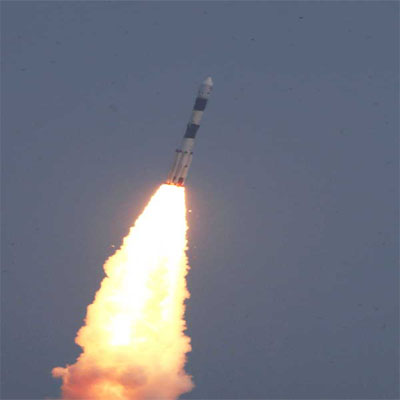
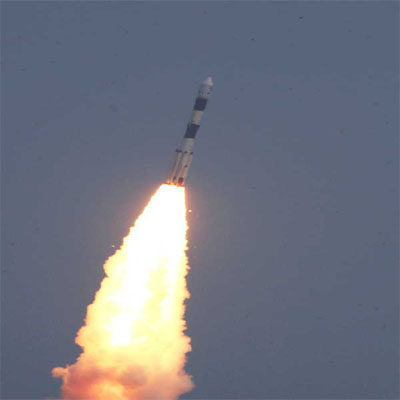
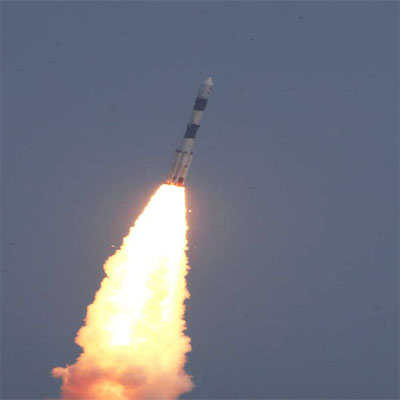
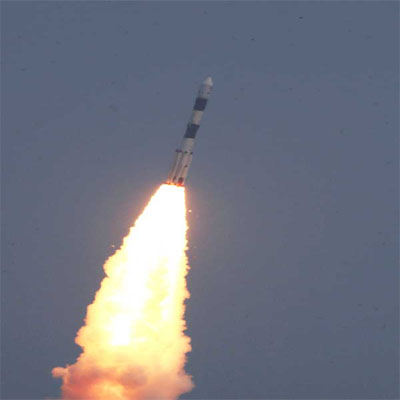
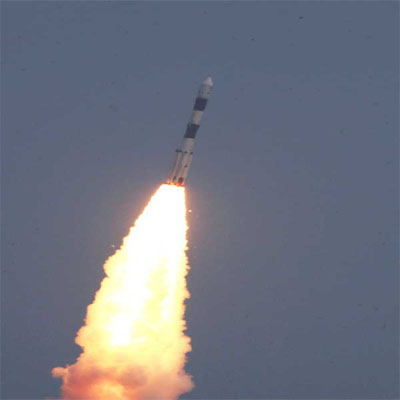
    One of the seven satellites in the constellation, as three rubidium atomic clocks on board had stopped functioning, the IRNSS- 1H satellite, weighing 1,425kg, will be launched from the second launch pad of the Satish Dhawan Space Centre at Sriharikota (Andhra Pradesh), on the ISRO’s launch vehicle PSLV-XL.

    The launch of India’s eighth navigational satellite IRNSS- 1H scheduled at 19:00 hrs today will mark the first time the private sector got actively involved in assembling and testing of a satellite. In the past, the private sector has supplied components for satellites, it has now been involved in the actual assembly.

    The Indian Regional Navigation Satellite System (IRNSS) is an independent regional navigation satellite system developed by India on par with US-based GPS. The system that offers services like terrestrial and marine navigation, disaster management, vehicle tracking and fleet management, navigation aide for hikers and travellers, visual and voice navigation for drivers, was named ‘NavIC’ (Navigation with Indian Constellation) by the prime minister Narendra Modi.

    The launch vehicle PSLV-C39 will use the ‘XL’ version of PSLV equipped with six strap-ons, each carrying 12 tons of propellant.

    ISRO chairman S Kiran Kumar said that a private company was for the first time involved in the integration of a satellite. Progressively, more such companies would be involved, he added. Subsystems of the payload and launch vehicle were being developed in collaboration with the industry, Kumar said.

    Around 25 per cent of the IRNSS-1H development work was successfully completed by a consortium led by Bengaluru-based Alpha Design Tecnologies, under the guidance of ISRO scientists.

    The need to launch this satellite came up after three atomic clocks on board ISRO’s first navigational satellite IRNSS-1A, launched in 2013, had stopped functioning. Imported from European aerospace manufacturer Astrium, the clocks are used to provide accurate locational data used in several earth-based applications, such as navigation and monitoring.

    The IRNSS-1H will be launched into a sub geosynchronous transfer orbit after which two solar panels of the satellite will be automatically deployed, and the master control facility at Hassan will perform orbit raising manoeuvres of the satellite.

    NavIC is useful for merchant ships in navigation and also during search and rescue operations. NavIC helps commuters to traverse distances and also enable transport operators to track their vehicles. The system is also helpful for railways in tracking trains and also giving an alert in the case of unmanned level crossing.

    NavIC is also used for other applications like location-based services, survey and alignment, time synchronised services. It provides two types of services — standard positioning service and restricted service.

  • AsiaSat 5 & Eurovision to deliver Taipei event in 4K & HD from 19 Aug

    MUMBAI: Eurovision Media Services, in collaboration with its long-term satellite partner, Asia Satellite Telecommunications Company Limited (AsiaSat), will use AsiaSat 5 to deliver the Taipei 2017 Universiade across the Asia Pacific.

    The 29th Summer Universiade is an international sporting and cultural event staged biennially, with Taipei as this year’s host city between 19 and 30 August. The Universiade will include 21 competitive sports as well as one demonstration sport throughout 12 days of competitions, attended
    by talented youth athletes from around the world.

    Since 1999 Eurovision Media Services and AsiaSat have enjoyed a successful partnership that delivers top quality sports content to broadcasters and TV networks in 4K and HD. This new delivery on AsiaSat 5, an OU service platform, sees the strong relationship continuing into the future with other major events to come. AsiaSat 5 currently provides access to more than 800 million households via terrestrial networks and pay TV platforms in the Asia Pacific.

    “Eurovision is our long-standing partner in creating value for customers and their audience, especially where it comes to AsiaSat’s strength in delivering high quality live sports coverage,” said AsiaSat chief commercial officer Barrie Woolston.

    “We have collaborated with AsiaSat to deliver top quality, reliable services for major sporting events in the Asia Pacific,” said Eurovision chief operating officer Graham Warren.

  • 15 operational sats for communication, 26 under development

    NEW DELHI: Fifteen of the 42 currently operational satellites are being utilised to meet the requirements of the communication industry, the minister of state in the department of space Jitendra Singh has said.

    Singh told the Parliament that the operational satellites in orbit comprise 18 earth observation (including meteorological), 15 communication, seven navigational and two Space Science satellites. Another 26 satellites are currently under various stages of realisation.

    The minister said that a plan is in place to suitably augment the space infrastructure to ensure continuity of services and to meet further requirements in these areas.

    Satellite-based data and services are being used by various ministries/departments in planning, monitoring and evaluation of developmental activities in various sectors, which include agriculture, forestry and environment, water resources, urban and rural planning, asset mapping, mineral prospecting, ocean resources, meteorology, satellite communication, location based services, tele-education, tele-medicine and disaster management support.

    In order to step up the building of satellites, the Indian Space Research Organisation is involving a consortium of industries for assembly, integration and testing (AIT) of satellites, and the sub-systems and infrastructure are being provided by ISRO. The AIT of a navigation satellite is in progress and the satellite is getting ready for launch in second half of this year.

    In order to accelerate the use of satellites and its services, an outreach facility has been established in Hyderabad to cater to the requirements of capacity building in space-based applications. This facility caters to several activities like training, information kiosks, content generation, outsourcing and mass communication. The facility comprises a large number of thin client systems providing access to satellite data and various software tools for building applications for various developmental activities.

    ALSO READ :

    Communication facilities increased with 7 satellites in last 3 years

    TV channels’ failure to start in a yr: 18% permits cancelled

    Telangana govt. wishes to own satellite to air TV channels

    Transponder leasing yields Rs 7.5 bn for communication satellites

  • AsiaSat 9 set for 28 September launch

    MUMBAI: AsiaSat 9, AsiaSat’s most powerful satellite, is set for launch on 28 September Moscow time 09:50pm (29 September Baikonur time 00:50am, Hong Kong time 2:50am) on a Proton M/Breeze M rocket from Baikonur Cosmodrome, Kazakhstan, after being in storage at Space Systems Loral’s facility with its Pre-ship Review passed in April.

    AsiaSat 9, Asia’s next generation satellite, will replace AsiaSat 4 at 122 degrees East longitude. Designed  with  innovative  and  cutting  edge  features,  this  new  satellite  will  deliver  significantly improved performance and higher efficiency for customers’ services.

    New services on AsiaSat 9 include the world’s first dedicated Ku-band Myanmar beam and the new Ku-band Indonesia and Mongolia beams, in addition to two enhanced Ku-band beams serving Australasia and East Asia, and a C-band footprint that offers wider high-power coverage over Asia, Australasia and the Pacific region. AsiaSat 9’s five Ku-band beams are equipped with cross-strap beam switching capability to provide flexible coverage.

    “We are excited to announce the launch date of the AsiaSat 9 mission following the long-awaited return of Proton’s service and its recent successful launch in June.  With our newest satellite AsiaSat 9, we are primed to serve existing customers and new users as we reach a new milestone, presenting more  cost-efficient  opportunities,  enhanced  quality  and  faster  services  for  applications  through mobility,  broadband  data  networks,  and  DTH  services.  As  we  have  broadened  our  scope  and innovated to  provide  advanced satellite solutions,  we are confident  in the opportunities satellite services create for future broadcasting and communications throughout the Asia-Pacific region,” said AsiaSat president and CEO Andrew Jordan.

    Manufactured by Space Systems Loral, AsiaSat 9 is an SSL 1300E satellite equipped with 28 C-band and 32 Ku-band transponders, and a Ka-band payload. Unique features onboard the AsiaSat 9 spacecraft include the most powerful C-band TWTA at 110 watts, combined with special filter design to achieve higher bandwidth for higher throughput, an increase of 23 per cent across wider coverage; fitted hall effect thrusters and star tracker to achieve higher stability and reliability in satellite operation, and better performance at the edge of beam coverage.

    Also Read:

    Communication facilities increased with 7 satellites in last 3 years

    GSAT 17 to be inducted into INSAT/GSAT system after tests

    Transponder leasing yields Rs 7.5 bn for communication satellites 

    AsiaSat: 3S rev blunts numbers for fiscal 2016

    AsiaSat appoints Woolston & Cubbon

  • Communication facilities increased with 7 satellites in last 3 years

    NEW DELHI: Satellite Communication capability was augmented with seven more satellites in the last three years with GSAT-6, GSAT-9, GSAT-15, GSAT-16, GSAT-17, GSAT-18, and GSAT-19.

    Another major achievement since June 2014 has been the realisation of South Asia Satellite to enable South Asian countries to establish SATCOM based services such as Television/DTH, VSAT, e-governance, banking, tele-medicine & tele-education etc., with coverage over South Asia.

    The Parliament was told by the minister of state in the department of space Dr Jitendra Singh that the Indian Space Research Organisation (ISRO) had accomplished 41 missions, which includes 19 launch vehicle missions, 19 satellite missions and three technology demonstrator missions.

    A notable achievement has been the successful launch of the first developmental flight of GSLV-MkIII, which validated new version of Indigenous Cryogenic Engine. With this capability, it will be possible to launch upto 4-tonne class of communication satellites into Geosynchronous Transfer Orbits (GTO).

    ISRO has successfully enabled a host of applications using synergy of earth observation, communication and navigation satellites in governance and development.

    India has created a niche in the field of space science & technology with launch services, earth observation, communication & navigation and application of space technology for national development.

    Today, India stands one among the top six space faring nations in the world, the Minister said.

    The areas which are benefitted/ likely to be benefitted with the utilization of space technology and its applications include broadcasting and telecommunications.

    Also Read :

    India’s GSAT-17 communication satellite launched successfully

    32 free DTH educational channels on Dish TV & FreeDish start functioning

    GSAT 17 to be inducted into INSAT/GSAT system after tests

    Transponder leasing yields Rs 7.5 bn for communication satellites


  • Transponder leasing yields Rs 7.5 bn for communication satellites

    NEW DELHI: Communication satellites earned revenue of Rs 7.4668 billion through leasing of INSAT/ GSAT transponders in 2016-17.

    Minister in the department of space Jitendra Singh told the Parliament that 15 of the 42 Indian satellites in space are used for communication.

    Out of the others, four for meteorological observations, 14 for earth observations, seven for navigation, and two for space science purposes.

    The annual income from sale of remote sensing satellite data is Rs 251.7 million.

    The data and value added services derived from earth observation, meteorological, communication & navigation satellites are used to support various applications viz. resource monitoring, weather forecasting, disaster management, location based services, including societal applications.

    The expenses to realise and launching of these satellites are less than those of other countries, the Minister said.

    Also Read :

    MIB: No DPO request for infra sharing, DTH ops’ transponder demand up

    Transponder charges: Plan afoot to retain DTH services on Indian sats

    ISRO’s ‘South Asia Satellite’ to carry 12 ku-band transponders


  • GSAT 17 to be inducted into INSAT/GSAT system after tests

    GSAT 17 to be inducted into INSAT/GSAT system after tests

    NEW DELHI: The GSAT-17 launched last month is undergoing in-orbit tests after which it will be inducted into the INSAT/GSAT system for providing various communication services to the country in C, Extended-C and S-band.

    The communication satellite, with a lift-off mass of 3477 Kg – carrying communication, Data Relay Transponder (DRT), Search & Rescue Payload – was successfully launched on 29 June using Ariane-5 launch vehicle from Kourou launch base of Arianespace.

    Space department minister Jitendra Singh told the Parliament that the GSAT-17 carries a Data Relay Transponder for receiving meteorological, hydrological and oceanographic data from Automatic Weather Stations, Automatic Rain Gauges and Agro Met Stations and relaying back for down linking in extended C-Band.

    It also carries a Search & Rescue Payload, which picks up and relays the alert signals originating from the distress beacons of maritime, aviation and land based users to help in rescue services.

    Also Read :

    India’s GSAT-17 communication satellite launched successfully

    Arianespace to launch ISRO-built DTH & telecom satellites

    DTH-aiding GSAT-19 launch plan under way