Category: Satellites

  • WarnerMedia chooses AsiaSat as strategic partner for HD channels distribution in Asia Pacific

    WarnerMedia chooses AsiaSat as strategic partner for HD channels distribution in Asia Pacific

    MUMBAI: Asia Satellite Telecommunications Company Limited (AsiaSat), Asia’s leading satellite operator has been selected by WarnerMedia as a strategic partner for distributing regional HD services of CNN International, Cartoon Network, Boomerang and Warner TV, as well as HBO HD in South Asia, via AsiaSat 7 in the Asia-Pacific.

    AsiaSat has been distributing a total of five WarnerMedia SD channels on AsiaSat 7 (previously on AsiaSat 3S) since 1999. Since transmission, these channels have gained access to hundreds of rebroadcast networks and hotel networks across the region.

    To allow a smooth migration to HD service for its rebroadcast affiliates including pay TV platforms and hotel  networks  across  Asia  Pacific,  and  for  audiences  to  enjoy  a  more  compelling  viewing experience, WarnerMedia will migrate its HD services and consolidate them into its existing SD platform on AsiaSat 7.

    “The migration allows us to upgrade and streamline our services at the same time. Working together with AsiaSat, the new arrangement also allows us to offer our regional broadcast partners the chance for their viewers to enjoy our channels in HD,” said James Crossland, Senior Vice President of International Operations for Turner, a WarnerMedia company.

    From September, AsiaSat 7 will carry a total of eight HD and three SD channels of content from news, entertainment, to children, movies and drama. With migration of service to HD completed in the next few months, viewers across the region will be able to enjoy high-quality TV benefiting from the high penetration of AsiaSat 7 at 105.5°E, the world’s most watched orbital slot.

    “The media brands under WarnerMedia are some of the world’s most famous and most popular broadcast networks. We are very proud of our long-time partnership with WarnerMedia, which is one of the most valuable assets we have built over time. We look forward to continuing to support WarnerMedia in their service migration to HD on our high performance AsiaSat 7, and through our leading-edge broadcast solutions to serve audiences with ever better TV viewing experience,” said Ina Lui, Senior Vice President, Commercial, Business Development & Strategy of AsiaSat.

  • Amazon to launch satellites for broadband internet

    Amazon to launch satellites for broadband internet

    MUMBAI: An attempt by the e-commerce giant, Amazon to provide internet access is being made through its new initiative ‘Project Kuiper’ to build a network of over 3000 satellites, according to multiple filings made with the International Telecommunication Union last month.

    Amazon said in a statement that the long-term project will cater to people globally who lack basic access to broadband internet, the report mentioned.

    The company added that Project Kuiper will launch a constellation of low earth orbit satellites that will provide low-latency, high-speed broadband connectivity.  

    Amazon CEO Jeff Bezos is racing to pull his private space company Blue Origin out of start-up mode and move into production. Blue Origin is seeking to disrupt the legacy launch services market with reusable rocket technology.

  • India’s communication satellite GSAT-31 launched successfully from French Guiana

    India’s communication satellite GSAT-31 launched successfully from French Guiana

    MUMBAI: India’s latest communication satellite, GSAT-31 was successfully launched from the Spaceport in French Guiana during the early hours today.

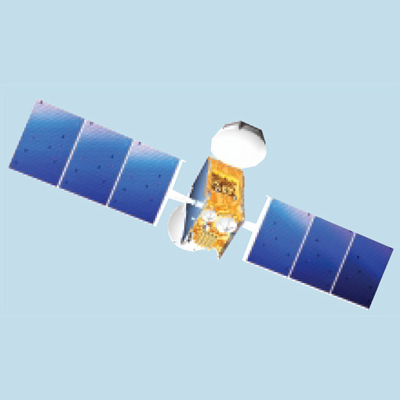
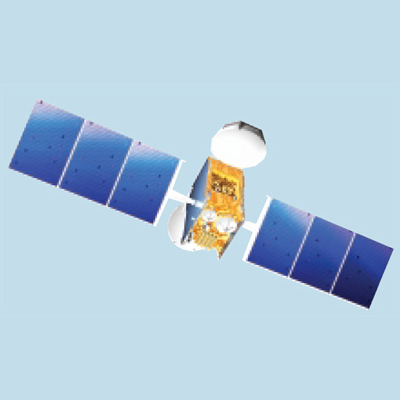
    With a lift-off mass of 2536 kg, GSAT-31 will augment the Ku-band transponder capacity in Geostationary Orbit. The satellite will provide continuity to operational services on some of the in-orbit satellites. GSAT-31 derives its heritage from ISRO’s earlier INSAT/GSAT satellite series.

    ISRO Chairman Dr K Sivan said, “GSAT-31 has a unique configuration of providing flexible frequency segments and flexible coverage. The satellite will provide communication services to Indian mainland and islands.”

    Dr. Sivan also remarked that “GSAT-31 will provide DTH Television Services, connectivity to VSATs for ATM, Stock-exchange, Digital Satellite News Gathering (DSNG) and e-governance applications. The satellite will also be used for bulk data transfer for a host of emerging telecommunication applications.”

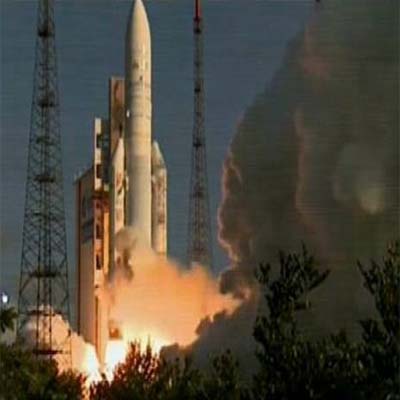
    The launch vehicle Ariane 5 VA-247 lifted off from Kourou Launch Base, French Guiana at 2:31 am (IST) carrying India’s GSAT-31 and Saudi Geostationary Satellite 1/Hellas Sat 4 satellites, as scheduled.

    After a 42-min flight, GSAT-31 separated from the Ariane 5 upper stage in an elliptical Geosynchronous Transfer Orbit with a perigee (nearest point to Earth) of 250 km and an apogee (farthest point to Earth) of 35,850 km, inclined at an angle of 3.0 degree to the equator.

    After separation from Ariane-5 upper stage, the two solar arrays of GSAT-31 were automatically deployed in quick succession and ISRO's Master Control Facility at Hassan in Karnataka took over the command and control of GSAT-31 and found its health parameters normal.

    In the days ahead, scientists will undertake phase-wise orbit-raising manoeuvres to place the satellite in Geostationary Orbit (36,000 km above the equator) using its on-board propulsion system.

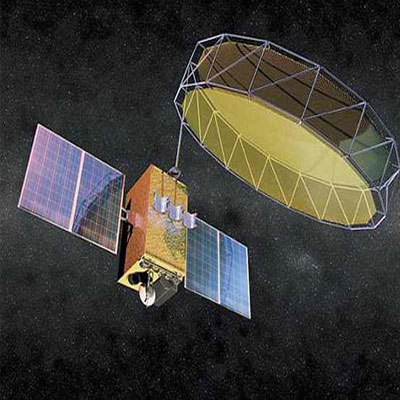
    During the final stages of its orbit raising operations, the antenna reflector of GSAT-31 will be deployed. Following this, the satellite will be put in its final orbital configuration. The satellite will be operational after the successful completion of all in-orbit tests.

  • Gsat-11, India’s heaviest comms satellite, launched

    Gsat-11, India’s heaviest comms satellite, launched

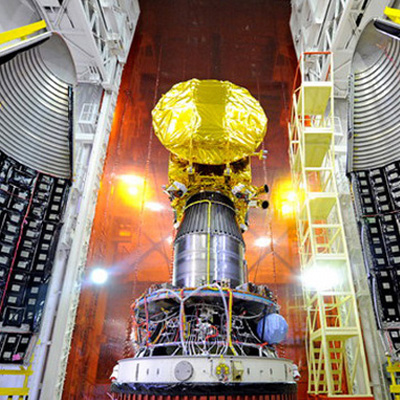
    NEW DELHI: Indian Space Research Organisation (ISRO)’s heaviest and most-advanced high throughput communication satellite GSAT- 11 was successfully launched from the Spaceport in French Guiana during the early hours of today.

    The launch vehicle Ariane 5 VA-246 lifted off from Kourou Launch Base, French Guiana at 2.07 am (IST) carrying India’s GSAT-11 and South Korea’s GEO-KOMPSAT-2A satellites, as scheduled. Ariane 5 is one of three launch vehicles operated by Arianespace along with Soyuz and Vega.

    After a 30-min flight, GSAT-11 separated from the Ariane 5 upper stage in an elliptical geosynchronous transfer orbit. The achieved orbit was very close to the intended one.

    The 5,854-kg GSAT-11 will provide high data rate connectivity to users of Indian mainland and islands through 32 user beams in Ku-band and 8 hub beams in Ka-band.

    “GSAT-11 will boost the broadband connectivity to rural and inaccessible gram panchayats in the country coming under the Bharat Net project, which is part of Digital India programme,” ISRO chairman Dr K Sivan said.

    The Bharat Net project aims to enhance the public welfare schemes like e-banking, e-health, e-governance and entertainment services among others.

    Sivan said GSAT-11 will act as a forerunner to all future high throughput communication satellites. “Today’s successful mission has boosted the confidence of the entire team,” he added.

    This 10th mission in 2018 reflects the availability and flexibility of Arianespace, which has performed a launch every two weeks since 6 November, the European company said on its website, adding since the launch of India’s APPLE experimental satellite on Ariane Flight L03 in 1981, Arianespace has won nearly all of India’s geostationary orbit launch contracts opened to non-Indian launch vehicles, and has signed 24 launch contracts with the Indian space agency.

    GSAT-11 is the 22nd satellite from ISRO to be launched by Arianespace, and the largest and heaviest satellite ever built by India’s space agency. Arianespace has two other ISRO satellites in its order book to launch: GSAT-30 and GSAT-31. The latter, GSAT-31, will be lifted by Arianespace early next year.

    GSAT-11 was initially planned for launch on 25 May 2018 but was rescheduled with the ISRO citing the need for additional technical checks.

  • GSat29, India’s communication satellite, launched

    GSat29, India’s communication satellite, launched

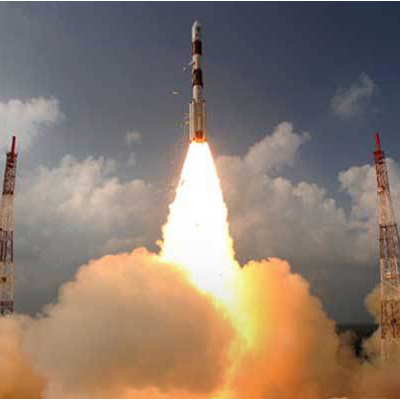
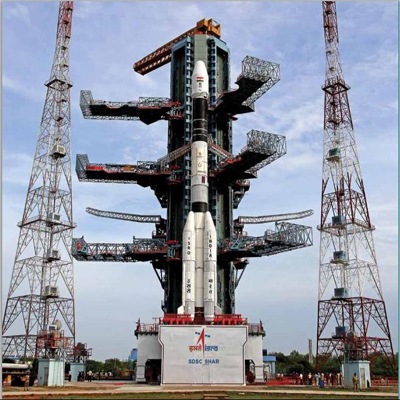
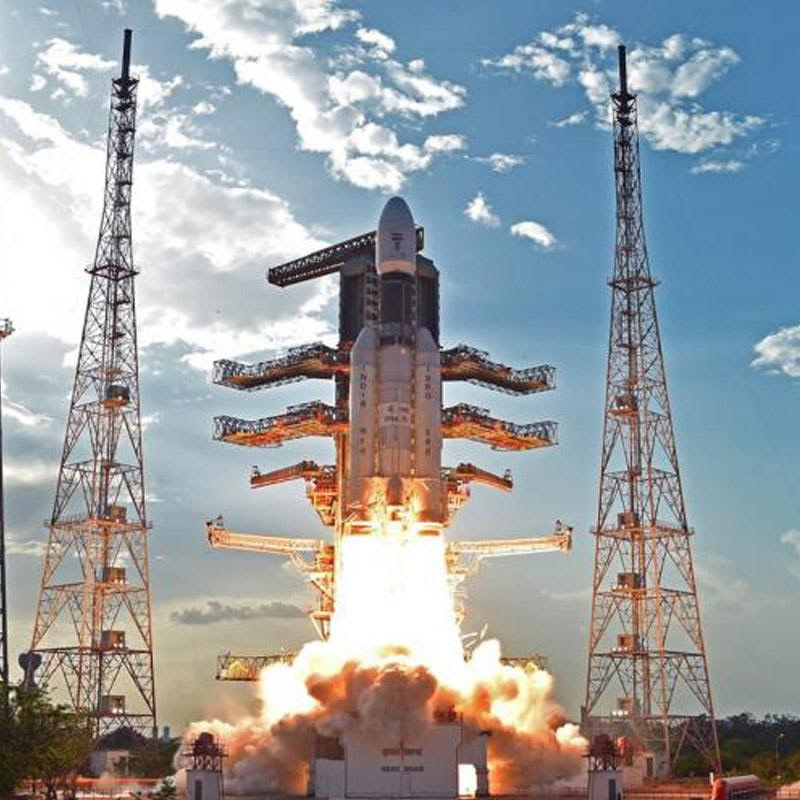
    MUMBAI: Precisely at 5.08 p.m. Wednesday the GSLV-Mk III rocket on its second developmental flight began its ascent with a strong deep growl that reverberated like a thunder roll breaking free from the second launch pad at the Satish Dhawan Space Centre (SDSC) in Sriharikota carrying communications satellite GSat29.

    The Indian space agency had flown a similar rocket on June 5, 2017, with GSAT-19 satellite. Prior to that ISRO had flown another rocket with 3.7-tonne dummy payload in 2014 to test its in-flight structural stability and aerodynamics, according to wire agency reports.

    According to Indian Space Research Organisation (ISRO), GSat29 with a life span of 10 years is a multi-beam satellite that carries Ka/Ku-band high throughput communication transponders intended to meet the communication requirements of users including those in remote areas.

    In addition, several new technologies such as Q/V-band payload, data transmission through optical communication link will be demonstrated. This will help in realising future advanced satellites, ISRO said.

    ISRO chairman K. Sivan said the launch was one of the “very important missions and a milestone” for India’s space programme.

    “This is GSLV-MkIII-D2 second developmental flight. It is going to launch very important and high throughput satellite GSAT-29. The satellite will be useful in Jammu and Kashmir and North East region for providing connectivity under the Centre’s Digital India programme”, Sivan was quoted by agencies as saying.

    According to the ISRO, the GSat29 satellite is intended to serve as a test bed for several new technologies. It is specifically designed to cater to communication requirements of users from remote areas of the country.

  • ISRO to launch 3 satellites for high-speed bandwidth connectivity

    ISRO to launch 3 satellites for high-speed bandwidth connectivity

    MUMBAI: To provide high-speed bandwidth connectivity to rural areas, the Indian Space Research Organisation (ISRO) will launch three more satellites as a part of the government’s digital India programme, according to a report by the Press Trust of India.

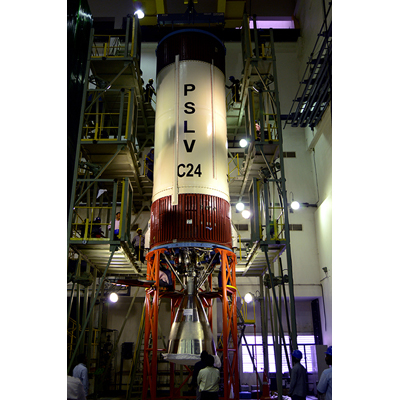
    After the successful launch of two UK satellites by Indian rocket Polar Satellite Launch Vehicle (PSLV) on Sunday, ISRO Chairman K Sivan said, “The ISRO will launch three more satellites, which together will provide international level bandwidth speed.”

    According to Sivan, the satellites are AGSAT 20 (to be launched next year), GSAT 11, and GSAT 29. GSAT 19 has already been launched.

    Sivan informed that the space agency had planned a series of launches over the next six months. There will be a rocket launch mission every second week.

    Sivan also said earth observation satellites will also be launched in addition to the communication satellites. The much-awaited moon mission will happen next January.

    “The launch window for Chandrayaan-2 mission is planned between 3 January and 16 February 2019. We are aiming for 3 January. We do not expect any delay in the Chandrayaan-2 mission,” Sivan said.

    Sivan said that ISRO will be the certifying agency for the rocket carrying Indian astronauts.

    According to Antrix Corporation, chairman-cum-managing director S Rakesh, the revenue from the launch of two UK satellites is over Rs 220 crore. Sivan said that the ISRO would like to get the expertise of other countries in this regard.

    India on Sunday night successfully put into orbit British earth observation satellites NovaSAR and S1-4 in copybook style.

    The two satellites belonged to Surrey Satellite Technologies Ltd (SSTL), UK.

    Queried about the next commercial launch, Sivan said, “The next PSLV rocket will carry 30 small satellites from third parties apart from carrying an Indian satellite.”

  • Satellite services provider Digisat Media upgrades to Forsway Odin F-50 hybrid router

    Satellite services provider Digisat Media upgrades to Forsway Odin F-50 hybrid router

    MUMBAI: Forsway, a global specialist of innovative solutions for combining satellite with existing terrestrial technologies to provide broadband to underserved regions, announced that it has delivered its innovative Odin F-50 hybrid satellite router to Digisat Media, furthering its partnership with the Spanish satellite services provider. The Forsway customer premises equipment and technology are supporting a Digisat Media managed network providing comprehensive services across Spain that delivers a bouquet of entertainment and content to hospitals nationwide.

    Digisat Media designs and operates a wide range of customised services involving satellite and internet services. The service provider furnishes complete solutions for education, TV in the cloud / via satellite, TV mobile units or mobile bank offices – in both public and private sectors. Digisat Media operations are also carried out in emerging markets where it is a leading player in reducing the digital divide.

    Digisat Media CEO Candido Calero said, “We are committed to our partnership to deliver entertainment and content for children in hospitals managing a network driven by Spain’s leading media group. The innovative services and solutions provided by technology partner Forsway are helping enable Digisat Media to deliver quality services and position for evolving market demands of today and tomorrow.”

    Forsway MD Tobias Forsell said,” We are pleased to deliver the Odin F-50 next generation satellite router to Digisat Media, further strengthening our long-term partnership in supporting Digisat’s operations. The unique Odin F-50 technology is highly complementary to Digisat Media’s operation, providing a robust, easy to manage and cost-efficient hardware with unique hybrid connectivity to provide broadband access across its extensive network.”

  • Telesat Successfully Launches Telstar 19 VANTAGE Bringing New High Throughput Ku and Ka-band Capacity across the Americas and Atlantic

    Telesat Successfully Launches Telstar 19 VANTAGE Bringing New High Throughput Ku and Ka-band Capacity across the Americas and Atlantic

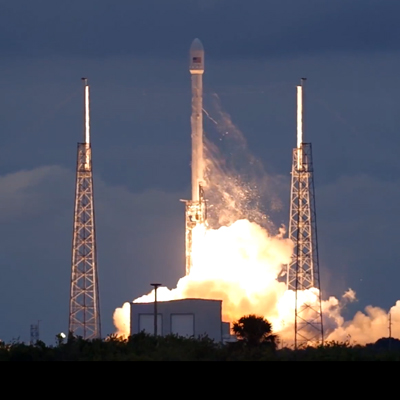
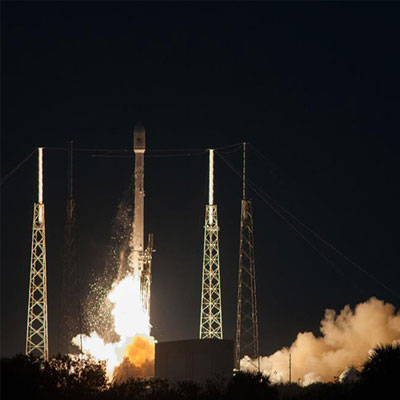
    MUMBAI: Telesat announced today the successful launch of its new Telstar 19 VANTAGE high throughput satellite (HTS) aboard a SpaceX Falcon 9 rocket. Liftoff occurred on Sunday, July 22nd, from Cape Canaveral Air Force Station. Built by SSL, a Maxar Technologies Company, Telstar 19 VANTAGE
    is the latest in a new generation of Telesat satellites with capacity optimized to serve the types of bandwidth intensive applications increasingly in demand by users worldwide.

    Operating from Telesat’s prime orbital location of 63 degrees West, the same as Telesat’s highly utilized Telstar 14R satellite, Telstar 19 VANTAGE will bring a new level of performance and value for satellite broadband requirements on land, at sea and in
    the air. It will have distinct zones of coverage across the Americas and Atlantic, combining broad regional beams and high throughput spot beams in Ku-band with additional HTS spot beams in Ka-band. Through these innovative capacity and coverage options, Telstar 19 VANTAGE will deliver important advantages to Telesat customers who serve growing consumer, enterprise and mobility markets.

    As previously announced, Hughes Network Systems LLC (Hughes) has signed a 15- year agreement for Telstar 19 VANTAGE Ka-band capacity that Hughes will utilize to expand its broadband satellite services for consumers and businesses in five South American countries. Hughes will refer to this capacity as “Hughes 63 West.”

    Telesat also has long-term contracts for the entire Ka-band capacity of Telstar 19
    VANTAGE over Northern Canada, including providing Bell Canada subsidiary Northwestel with the HTS spot beam capacity required to enhance broadband connectivity for all 25 communities in Nunavut, Canada’s northernmost territory.

    “The pre-launch agreements Telesat has secured with Hughes and Bell Canada, combined with strong interest from other leading satellite service providers across the Americas and Atlantic, confirm that Telstar 19 VANTAGE delivers superior performance and value for today’s bandwidth intensive applications,” said Dan Goldberg, Telesat’s President and CEO. “The design and capabilities of Telstar 19 VANTAGE enable our customers to provide more advanced satellite broadband to their end users. We would like to thank SpaceX for the successful launch of Telstar 19 VANTAGE and for their dedication and professionalism throughout this mission. In a few weeks, Telesat will again be working with SpaceX for the launch of our next satellite, Telstar 18 VANTAGE over Asia.”

  • ISRO gives nod to 27 satellites for future DTH, science demands

    ISRO gives nod to 27 satellites for future DTH, science demands

    MUMBAI: Indian Space Research Organisation (ISRO) has allowed three industries (two private and one government-run firm) to build 27 satellites in the next three years. This is to protect future demands for satellite capacity for DTH broadcasting and scientific missions as well.

    “The contract is for each of the three to make nine 1.6 tonne to 2-3 tonne satellites, which means they’ll make a total of nine every year and 27 by the end of three years,” according to a source from ISRO, as quoted by TOI.

    Alpha Design consortium that includes six SMEs- Newtech, Aidin, Aniara, DCX, Vinyas and Exseed Space- defence PSU Bharat Electronics Limited (BEL) and Tata Advanced systems make three satellites each per annum for the next three years as per the ISRO contract for satellites.

    The contract has the option of extending the same for another two years, which will add 18 more satellites to the count.

    Alpha Design CMD HS Shankar was quoted stating, “We signed similar agreements as the Tatas and BEL and I hope that creates the ecosystem to allow more industries in the future.”

  • Launch of SES-12 to assist Digital India vision

    Launch of SES-12 to assist Digital India vision

    MUMBAI: The successful launch of SES-12, which provides coverage over Asia will assist the acceleration of the country’s push towards a digital India and financial inclusion initiatives, according to a leading satellite industry expert as per a report by the Press Trust of India from London.

    SES Video EVP global sales Deepak Mathur said, “The successful launch of SES-12 recently would help support India’s growing direct-to-home (DTH) TV market, as more and more consumers in rural India embrace the medium.”

    The government’s vision to digitally empower India and transform connectivity in the country will see a push through the launch of the satellite, Mathur informed.

    The senior executive at SES, one of the world’s leading satellite operators, also pointed out that the satellite’s concentrated beams could also provide highly cost-effective capacity to enable in-flight connectivity services in line with the recent directive to allow mobile and internet services in Indian airspace by Telecom Regulatory Authority of India.

    SES-12, which is uniquely designed with state-of-the-art wide beams and high throughput beams, was successfully launched onboard a flight-proven SpaceX Falcon 9 rocket from Cape Canaveral in Florida, US, on 4 June 2018. Together with SES-8, it is expected to reach 18 million homes.

    This satellite will provide coverage from the Middle East to Australia. The combination of two satellites will offer powerful Ku-band wide beams for broadcast and media applications, and high throughput spot beams for providing internet connectivity, reliable cellular services and content targeted at specific language groups.

    The ever-increasing demand of audience will be addressed by the pay-TV operators as the satellite will provide reliability and scalability to elevate the viewing experience by adding more content and delivering good picture quality for high definition (HD) and ultra HD content.

    Mathur explained, “With its dual capabilities of both wide beams and high throughput spot beams, SES-12 will serve to enhance connectivity for people and businesses in remote and unconnected parts across Asia, where providing rural connectivity and eliminating the digital divide is a key priority for many governments. SES-12 also brings augmented capacity to enable satellite broadcasting and DTH services across Asia-Pacific.”

    Specifically over India, SES has five satellites – NSS-12, SES-8, NSS-6, SES-7 and SES-9 – currently operational. SES-12 will be replacing NSS-6 as the largest satellite to offer services and capacity over India.

    The company’s primary customer in the Indian market is Antrix, the commercial arm of the Indian Space Research Organisation (ISRO), with whom it has worked to help augment the enormous demand for satellite connectivity over India.

    Mathur also mentioned that ISRO has a pivotal role to play in the development of new space technologies and in making space more accessible, and affordable. SES is also exploring potential areas of collaboration with Indian partners to see how they both can work together to advance the development of space technologies.