Category: Satellites

  • AsiaSat taps into HERMES Live’s streaming service

    AsiaSat taps into HERMES Live’s streaming service

    NEW DELHI: Satellite solutions provider Asia Satellite Telecommunications Company (AsiaSat) has signed up Hong Kong-based live-streaming platform HERMES Live as its technology partner. Under the deal, HERMES Live will provide seamless live streaming service to AsiaSat customers across the world.

    The announcement comes at a time when digital transformation is fast reshaping the way audiences consume content. The partnership will enable AsiaSat to fulfil the ever-increasing demand of customers to distribute content flexibly and affordably while attaining the maximum reach. HERMES Live provides professional, broadcast-grade video-streaming for live events, including live sports, conferences, performances and education to a wide audience across all devices. It also allows simulcasting to social media channels.

    The platform has seamlessly broadcasted several major events to a global audience, including one of the region’s most anticipated charity concerts of popular Hong Kong singer Eason Chan, which was organised earlier this year in July. The event was streamed to as many as 100 media platforms across the globe.

    It also helped livestream the annual general meetings for listed companies, with Tricor offering Hong Kong’s first and only full-function platform that enables electronic general meetings with live streaming. Apart from this, it has also provided seamless coverage of virtual conferences, interviews and commercial events including Hong Kong FinTech Week 2020, Entrepreneur Day 2020, and Sotheby’s Hong Kong Sales Live Auction.

    “It is important for us to keep pace with digital transformation by growing our services into new areas that complement our core competencies in providing the best-in-class satellite capacity and transmission solutions. We are delighted to have HERMES Live as our technology partner to offer streaming service as part of our end-to-end media solutions,” said Ina Lui, senior vice president, commercial, business development and strategy of AsiaSat.

    “We’re excited that AsiaSat has selected HERMES Live as its technology partner to complement AsiaSat’s media solution portfolio with this innovative and technology proven platform to deliver streaming service based on customers’ specific requirements,” said Wilson Yuen, chief executive officer of HERMES Live Technology Ltd.

    AsiaSat's powerful stream of satellites – which includes AsiaSat 5, AsiaSat 6, AsiaSat 7, AsiaSat 8 and AsiaSat9 – provides access to over two-thirds of the world's population.  The new streaming service will add to AsiaSat’s end-to-end media and broadcast solutions which includes transponder capacity from some of Asia’s hotbird satellites, signal uplink, turnaround and downlink, multi-channel per carrier (MCPC) distribution platforms, fibre connectivity, playout and broadcast facilities, equipment hosting, ground equipment such as bandpass filters available for full time and occasional use.

  • #Throwback2020: Success in space and satellites

    #Throwback2020: Success in space and satellites

    NEW DELHI: The pandemic may have slowed down life on earth, but it could not deter the world from looking beyond. As most activities came to a sudden halt, the space agencies across the globe persevered through the crisis. Some had to push back their crucial space missions, others struggled to keep them on track, while a few managed to script history.

    Indian Space Research Organization (ISRO) began the year with the launch of a high-powered communication satellite GSAT-30 on-board a European rocket from French Guiana. It replaced the aging INSAT 4A to continue providing high quality television, telecommunication, broadcasting services to the Indian subcontinent with extended coverage over Asia and Australia.

    The lockdown ensured no further launch took place for the next ten months, until November, when India’s premier space agency returned to the launch pad to inject EOS-01–an earth observation satellite—into space along with nine other customer satellites. This was soon followed by the launch of the country's forty second communications satellite CMS-01 in December which replaced the aging GSAT-12.

    While ISRO managed to keep its regular satellite launches on track, the pandemic cast a shadow on its bigger space missions. This included a fresh bid to achieve a successful soft landing on the moon which Chandrayaan-2 had failed to achieve last year, and first of the two unmanned missions of Gaganyaan, India’s first human-spaceflight programme which was expected to take off this December. 

    Nonetheless, the groundwork for the 2022 Gaganyaan mission continued. The agency completed the selection of the astronauts and began their training. The process of human rating for GSLV MkIII selected for the historic mission also remained in progress. 

    Globally, as many as 101 orbital launches took place in this turbulent year. The US was top of the leader board with 40 successes out of 44. China came next with 33 successful launches out of 37 attempted. Russia had a perfect score with 16 satellites reaching their orbital locations. Ditto with Japan which had four immaculate launches, and Europe had four clear takeoffs and one failure with Iran and India acing it with two successes each.

    A large share of the launches were accounted for by low earth orbiting birds which were meant for earth observation, technology demonstration and to provide internet in select areas.

    Amongst the big communications birds which were sent into space included: Tiantong 1-02 (mobile communications, China), Galaxy 30 (Intelsat, communications, North America), BSat4b (Broadcasting Satellite System Corp, communications, Japan), Ekspress 80 and Ekspress 103 (Russian Satellite Communications Co, communications, Russia), Apstar 6D (APT Holdings; communications, China), JCSat 17 (Sky Perfect JSat Corp; communications, Japan), GSat30 (ISRO, communications, India, Kourou), and Eutlesat Konnect (Eutelsat, communications, Africa & Europe). Palapa N1 – a satellite owned by Palapa Satelit Nusantara Sejahtera, a joint venture between Indosat Ooredoo and Pasifik Satelit Nusantara, or PSN – met with a fiery end after its launch vehicle the Long March 3B had engine failure.

    The year will be noted for the achievement by the Mission Extension Vehicle MEV-1 which became the first telerobotically-operated spacecraft to service another satellite on-orbit when in February 2020 it completed the first phase of a five-year mission to extend the life of the Intelsat 901 (I-901) satellite. It was brought back from the graveyard orbit to a geosynschronous one by April 2020, opening up a future where human intervention is not needed for on-orbit satellite servicing, like it was for dealing with the Hubble telescope in the early 2000s.   

    2020 also marked the first time a private company successfully undertook a crewed mission into the low earth orbit. Elon Musk's SpaceX achieved the feat after it was able to put two astronauts into space aboard its spacecraft Crew Dragon, heradling a new chapter in commercial space operations. It was a busy year for the American aerospace manufacturer which injected as many as 26 satellites into space. The company is racing to get its Starlink constellation in operation to provide high speed internet connection from the skies.

    The year also witnessed the return of UK based broadband satellite communications company, OneWeb which put a total of 36 communication satellites into space on board a Russian Soyuz rocket. The satellite operator which recently emerged from bankruptcy is eyeing to build a massive constellation of over 650 satellites to beam internet service to people. Early this year, India’s Bharti Global had picked up a 45 per cent stake in the company.

    In the global space arena, Mars continued to allure the space agencies and three countries managed to keep their date—a brief time window which comes around every two years.

    The first was the United Arab Emirates (UAE) which scripted history with the successful launch of its spacecraft named Hope— the first-ever interplanetary mission by any Arab country. It was followed by the launch of Tianwen-1 by China in July and Perseverance rover by the United States a week later. All three spacecraft are expected to enter the Martian orbit early next year.

    However, the pandemic marred Europe and Russia's joint Mars mission and the launch of its first Mars rover, Rosalind Franklin probe, was postponed to 2022.

    Among other ground-breaking missions of 2020 was China’s Chang'e-5 lunar capsule which returned to Earth carrying fresh samples of moon rocks. China has now become just the third country to explore the moon's surface, after the US and the former Soviet Union, and the first to successfully return from the moon since Soviet Union’s Luna 24 spacecraft in 1976.

  • ISRO successfully launches communication satellite CMS-01

    ISRO successfully launches communication satellite CMS-01

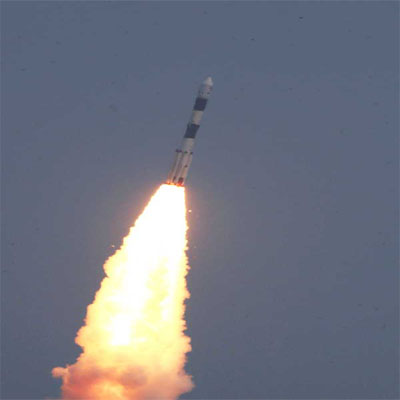
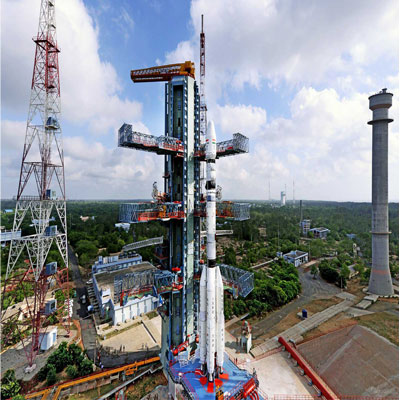
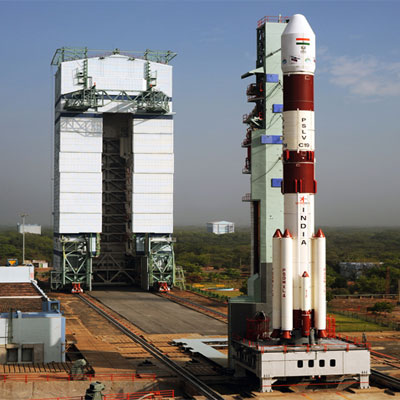
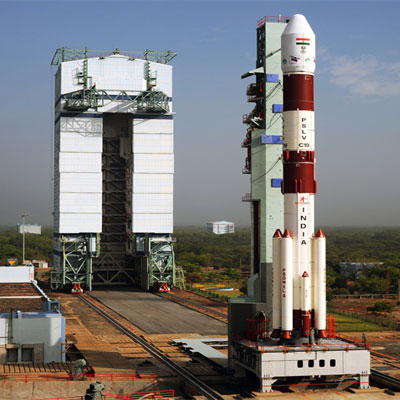
    NEW DELHI: The countdown before liftoff is always a heart-stopping moment during a satellite launch. And it was no different today at the Indian Space Research Organization's (ISRO's) second launch pad at Satish Dhawan Space Centre, Sriharikota. The space agency's scientists looked on nervously at their old workhorse, Polar Satellite Launch Vehicle, which had its forty second communications satellite CMS-01 as its payload.  However, at 3:41 pm, the  spacecraft took off as planned — in an almost picture perfect, blemish-free blastoff. And even more good news was to follow: 20 minutes after launch, the satellite separated successfully from the fourth stage of the rocket and was injected into   geosynchronous transfer orbit.

    "The satellite is functioning well and it will be placed in a specified slot in the next four days. Teams worked very well and safely under Covid2019  pandemic situation," said ISRO chairman Dr K Sivan.

    CMS-01 carries 12 Extended C band transponders which will strengthen the country's telecommunication services. The extended C band uses 3.4 to 3.7 GHz for downlink and 6.425 to 6.725 GHz for uplinks of the signals and is relatively less susceptible to rain fade and weather interference.

    With a mission life of seven years, the bird will provide coverage to the Indian mainland, Andaman &  Nicobar and Lakshadweep Islands. It will replace the ageing GSAT-12 which was launched in 2011.

    The space agency had chosen the ‘XL’ variant of the 44m high PSLV with six strapons for its fifty second  flight. In the normal configuration, PSLV is a four stage/engine expendable rocket powered by solid and liquid fuels alternatively with six booster motors strapped on to the first stage to give higher thrust during the initial flight moments.

    The premier space agency is now preparing for the launch of new small rocket Small Satellite Launch Vehicle (SSLV) which will carry EOS-02 (Earth Observation Satellite). It will be followed by the launch of Geosynchronous Satellite Launch Vehicle-F10 (GSLV) which will carry EOS-3 in space.

    The other Indian satellites that are ready for launch are GISAT and Microsat-2A. The launch of GISAT-1  was earlier slated for 5 March, but was postponed due to technical reasons 24 hours before D-Day. 

  • ISRO gears up for PSLV’s fifty second flight

    ISRO gears up for PSLV’s fifty second flight

    NEW DELHI: The Indian Space Research Organization (ISRO) is all set to launch its forty second communication satellite from Sriharikota, on Thursday afternoon, subject to weather conditions.

    The launch is scheduled at 3:41 pm when the space agency’s old workhorse, the Polar Satellite Launch Vehicle (PSLV) will lift off from the second launch pad of the Satish Dhawan Space Centre, Sriharikota.

    The satellite on board is CMS-01, which carries 12 extended C band transponders to strengthen various telecommunication services. The Extended C band uses 3.4 to 3.7 GHz for their downlink and 6.425 to 6.725 GHz for uplinks of the signals and is somewhat less susceptible to rain fade and weather interference.

    It will provide coverage to the Indian mainland, Andaman and Nicobar, and Lakshadweep Islands and is expected to replace the aging GSAT-12 which was launched in 2011. The satellite weighs 1,410 kg and will be injected in the geostationary orbit. It will have a mission life of seven years.

    The space agency has chosen the ‘XL’ variant of the 44m high PSLV with six strap ons for its fifty second flight. In the normal configuration, PSLV is a four stage/engine expendable rocket powered by solid and liquid fuels alternatively with six booster motors strapped on to the first stage to give higher thrust during the initial flight moments.

    After the mission, ISRO will begin preparing for the launch of new small rocket Small Satellite Launch Vehicle (SSLV) which will carry EOS-02 (Earth Observation Satellite). It will be followed by the launch of Geosynchronous Satellite Launch Vehicle-F10 (GSLV) carrying EOS-3, ISRO chairman K Sivan had earlier told the media.

    The other Indian satellites that are ready for launch are GISAT and Microsat-2A. The deployment of the GISAT-1 satellite was earlier slated for 5 March, but was postponed due to technical reasons a day before the liftoff.

  • AT&T DirecTV’s satellite woes

    AT&T DirecTV’s satellite woes

    MUMBAI: What happens when a DTH satellite turns rogue?

    Well, it has to be sent to the graveyard or junk orbit, which is 300 km above the geostationary orbit (35,786 km above the earth). That’s exactly what the AT&T-owned direct to home service provider DirecTV is dealing with. One of its satellites Spaceway-1 – located at 138.4 degrees west and built by Boeing –  has developed a malfunction in its batteries, which has put it in danger of exploding.

    The Boeing 702HP model spacecraft was functional from 2005 and had been providing high-definition TV services to US subscribers of DirecTV. It was later demoted to the status of a backup satellite. (Normally communications satellite have a life span of 14-16 years.)

    AT&T has now written to the Federal Communications Commission (FCC) seeking permission to allow it along with Boeing and Intelsat to deorbit and decommission the satellite between now and 25 February when the satellite would go into earth’s shadow or eclipse.

    It has told the FCC  that “Spaceway-1 suffered a major anomaly in December that resulted in significant thermal damage to its batteries.”

    The harm to the batteries is  grievous enough  to not support the pressure that would come on them were they to be switched on during the eclipse phase (the period when it enters the earth’s shadow and does not receive sunlight to charge its solar panels; currently the satellite is in the sunlight phase). However, AT&T confesses it cannot avoid switching on the batteries when it enters the eclipse phase as the satellite will not have enough power to be totally deorbited and decommissioned then. And if they are turned on there is a possibility of an explosion, which could possibly damage other satellites in the vicinity.

    AT&T has also informed the FCC that just raising the satellite to the graveyard orbit will take 21 days leaving it with just 7 days to vent out 73 kg of its propellant fuel which is nigh impossible. (For a satellite to be decommissioned it needs to discharge its fuel and normally, it takes two to three months for the task when the spacecraft reaches the end of its life.) Within the time period available to Spaceway-1 only a nominal portion of the fuel will have been removed. Hence, it has sought the FCC’s permission to waive off the complete propellant fuel venting requirement. “Authorising DirectTV’s emergency de-orbit operations will facilitate disposal of Spaceway-1 as safely as possible,” AT&T has pleaded.

    Obviously, AT&T and DirecTV are racing against a deadline. And the clock is ticking away. Hopefully, the Spaceway-1 will find its way to its final resting place in time.

  • Arianespace launches GSAT-30 successfully

    Arianespace launches GSAT-30 successfully

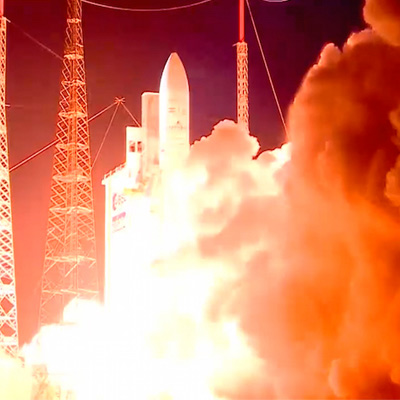
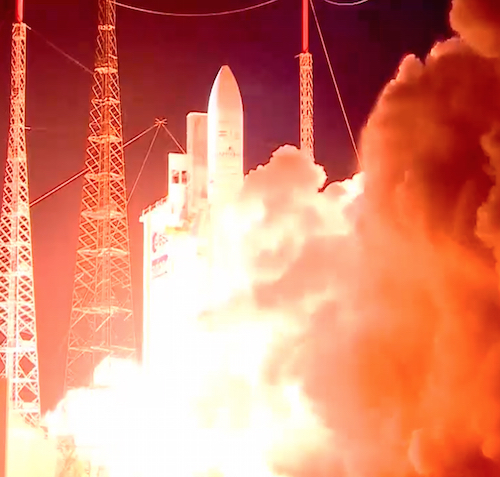
    MUMBAI: In the early hours of 17 January 2.35 am IST, Arianespace the commercial arm of the European Space Agency, successfully and flawlessly lifted off its two payloads Eutelsat Konnect and ISRO's GSAT-30, into space from the spaceport of Kourou, French Guiana using its Ariane 5 rocket.

    The 51.04 meter tall vehicle used for Arianespace’s VA251 flight had a mass of 780  tonnes and utilised 2.9 million tonnes of thrust from its solid fuel boosters and core engine as it powered its way through the earth’s atmosphere. It broke the sound barrier and was travelling at Mach 1 one minute into the launch.

    Almost two tonnes of fuel propellant were burnt per second, taking the rocket on its upward trajectory 70 km above earth in two minutes. Following this, the boosters fell away, with the Vulcan engine now kicking in taking the rocket higher still. Six minutes later this too detached, and the upper stage HM7B engine lit up, keeping the payloads going for another 17 minutes.

    28 minutes or so into the flight, and Eutelsat Konnect which is an electric satellite, was separated and placed in orbit 1000 km above the earth’s surface above Africa.

    10 minutes later it was the turn of the Indian satellite to be successfully separated to the loud cheers of all present in the control station at the spaceport near south America.

    The satellite will now be in the hands of ISRO scientists who will finally take it to its geostationary orbital location over the next month or so.

    GSAT 30 is set to replace Insat4A and provide DTH and telecommunications services through the 12 C band and 12 Ku band transponders it has on board.

    UR Rao Satellite Centre (URSC) director P Kunhikrishnan director who was present in Kouru during the launch was evidently happy at the flawless deployment of the satellite into space by Arianespace. Said he: “Isro has opened 2020 successfully with the launch of GSAT-30 by Arianespace; we did the same with GSAT 31 and Arianespace in 2019 as well. GSAT-30 joins the 18 satellite stream of ISRO. What is great, that the entire ISRO team put together the satellite in less than a year.”
    He specifically complimented the efforts of GSAT-30 project director V Ramanathan and his team.
     

  • ISRO to replace INSAT-4A with GSAT-30

    ISRO to replace INSAT-4A with GSAT-30

    Mumbai: The location: Kourou, French Guiana. The date: 17 January 2020. The time: 02:35 am IST. Indian Space Research Organisation (ISRO) scientists will be at their consoles, their brows creased in concentration as the countdown for the liftoff off its new generation communication satellite GSAT 30 off Arianespace’s Ariane 5 rocket begins. Weighing 3,375 kg, GSAT-30 is set to replace one of the early birds in the ISRO fleet, the ageing Insat 4A.

    Insat-4A was launched in 2005 with a lifespan of at least 12 years and has been operational way beyond that. Even though it is functioning fine, ISRO has decided to put in a replacement with advanced features and network strength. Amongst the two major  occupants and users of transponder capacity on Insat 4A are Tata Sky and Star India group.

    Along with GSAT 30, Arianespace will also be putting into orbit global operator Eutelsat’s Konnect satellite on the same launch vehicle. GSAT-30 is the lower passenger in the Ariane-5 spacecraft, with Konnect its copassenger being released first.  This will be Arianespace’s 107th Ariane 5 mission.

    To be positioned at a longitude of 83° East, GSAT-30 will provide high-quality television, telecommunications and broadcasting services over Indian mainland and islands. GSAT-30 is configured on ISRO’s enhanced I-3K platform to provide communications services from geostationary orbit in C- and Ku-band for a lifetime greater than 15 years. Last year, Arianespace had delivered the GSAT-31 into orbit.

    GSAT-30 will provide extended coverage in C-band to Gulf countries, a large part of Asia and Australia. The move will help Indian broadcasters beam their content to Gulf countries, large parts of Asia and Australia, as well as the Indian mainland.

    The GSAT-30 was speculated to launch in June last year, but was postponed to 2020 as India’s pioneer space agency got busy in launching military satellites in space in order to boost strategic assets in space as well as its moon mission.

    In its GSAT-30 launch kit, ISRO said: “GSAT will be extensively used for supporting VSAT networks, Television uplinking and teleport Services, Digital Satellite News Gathering (DSNG), DTH-television services cellular backhaul connectivity and many such applications”.

    Eutelesat Konnect on the other hand will offer total capacity of 75 Gbps and by next autumn will allow Eutelsat to provide Internet access services for companies and individuals alike at up to 100 Mbps. The satellite will help to fight against the digital divide by bringing broadband Internet across 40 countries in Africa and 15 countries across Europe.

    Produced by Thales Alenia Space, it is the first to use the company’s Spacebus NEO platform developed under the Neosat Partnership Project conducted by the European and French space agencies (ESA and CNES). Eutelsat Konnect will weight approximately 3,620 kg. at liftoff and is to operate from an orbital slot at 13 degrees East.

    The proceedings will of course be telecsast live online as well on DD. To watch a live, high-speed online transmission of the launch (including commentary in French and English from the launch site), go to arianespace.com or to youtube.com/arianespace on 16 January 2020, beginning 20 minutes before liftoff.

  • ISRO sees rise in third party satellite launches

    ISRO sees rise in third party satellite launches

    MUMBAI: The Indian Space Research Organisation (ISRO) is slowly but surely making its mark as far as its satellite launch services are concerned. Consider: in 2018-19 it pocketed Rs 324.19 crore courtesy its launch capabilities as against Rs 232.56 crore in the year before. That’s a decent 35 per cent plus growth in income from launches.

    This information was given out in a reply to a question raised in the Rajya Sabha to union minister for atomic energy and space Jitendra Singh late last week.

    Singh further disclosed that ISRO earned Rs 1,245.17 crore during the last five years by launching satellites from 26 countries. Additionally, it has signed contracts with 10 countries –  the US, the UK, Germany, Canada, Singapore, Netherlands, Japan, Malaysia, Algeria, and France  over the same period under commercial arrangements.

    India has till date put into orbit 319 foreign satellites.

  • Globecast introduces virtual networking for high bandwidth IP-over-satellite connectivity for the enterprise market

    Globecast introduces virtual networking for high bandwidth IP-over-satellite connectivity for the enterprise market

    MUMBAI: Globecast, the global solutions provider for media, has announced Globecast Virtual Networking (GCVN), a new service offering that brings two-way, high bandwidth, IP-over-satellite connectivity to the enterprise market. It provides fast, reliable IP connectivity anywhere and anytime where terrestrial networks fail or are inconsistent.

    With GCVN, media event producers and content creators in the B2B space can easily deliver streaming, file transfers, Wi-Fi, 4K, 8K and 360-degree live content using native IP-based satellite transmission from remote locations via a premium quality, guaranteed high-bandwidth solution. It’s ideal for corporate productions, events with high attendance where cell service bandwidth is scarce, and many situations where Internet connectivity is uncertain. 

    In addition, GCVN is deployable for disaster recovery/disaster avoidance. It’s useful for when a potential customer needs to quickly deploy additional IP connectivity or augment a network with additional bandwidth to avoid any issues, without having to spend the time and money to change their full-time configuration. There is a growing need for temporary, premium quality, two-way IP networks for special projects. The global service is initially available in the US, via connectivity with Globecast’s Culver City Media Center.

    “We’ve developed Globecast Virtual Networking in direct response to the market demand for fast, reliable IP connectivity at any location. GCVN is perfect for corporate productions, music festivals and movie sets and events with high attendance where cell service bandwidth is scarce, or where Internet connectivity is uncertain,” explained Tim Jackson, Senior Vice President, Sales and Marketing the Americas at Globecast. “GCVN is a logical enhancement to our traditional distribution, contribution and media management services that utilize the satellite, fiber, cloud and infrastructure capabilities Globecast has provided for decades. The service comes with the same customer service and quality focus that we provide with all our offerings.”

    GCVN was born out of Globecast’s relationship with Santa Barbara-based CBTV, which provides news/event remote connectivity via satellite, specializing in Internet protocol networked transmissions. The two companies began working together in 2018 when CBTV started supplying RF/modem modulation, IP switching, and routing equipment to connect customers using the platform to Globecast’s Culver City Media Center.

    Jackson said, “From there, we took that offering and extended it, creating GCVN, a fully integrated service offering. It’s another example of how we are uniquely positioned to offer secure and reliable data delivery in what is a rapidly evolving market.”

  • Innovation is key in this age of constant change and disruption

    Innovation is key in this age of constant change and disruption

    MUMBAI: The Asia Video Industry Association (AVIA) welcomedover 180 delegates to the first Satellite Industry Forum (SIF) in Singapore since its rebrand from Casbaa in August 2018. On Monday, CEO Louis Boswell reiterated the importance of AVIA’s continued focus and support of the satellite industry in this period of great change and disruption, particularly in the areas of policy and regulation.

    SIFbrought togethermany of the mostinfluential leaders of the industry this year to discuss critical issues including regulatory discussions at WRC19, the raging spectrum wars among satellite operators, pricing, demand & supply, and the latest in “Newspace” activities.

    The need for innovation in order to stay relevant was a main point for keynote speaker, Steve Collar, CEO of SES. In his opening address, Steve said that“customers demand high quality video everywhere, anytime and on any screen. Satellite operators can play key roles in the digital era especially in integrating satellite with the Cloud andsupporting applications that will create more experience and value for the customers.”

    Pricing is still a challenge for the industry with overcapacity and increasing pressure on costs and this therefore increases the pressing need for innovation.  MitsutoshiAkao, Group President of Global Business Group of SKY Perfect JSAT noted that the “Asia region is a very tough market, so in order to survive, we need more cost-effective satellitesand that is one of the reasons we have launched a newhigh-throughput satellite.”

    The other prominent discussion of the day centred around spectrum wars. “Spectrum should be allocated to services that make highest and best use of it”, said Steve Collar. Chen Xun, EVP of APT Satellite added that a “C-band frequency war is inevitable. The industry has to fight harder to protect it especially in Asia where C-band is most viable.”  

    In the closing C-Suite panel,Lon Levin, President & CEO of GEOsharepredicted that “5G and the Internet of Things will happen faster than we are planning for.  This will be a great opportunity for satellite operators, many of which are already seeing an increase in data transmission business.  To take full advantage of the future flood of 5G needs, the satellite industry must develop ground segments that facilitate the transmission of 5G such that the choice between terrestrial and satellite becomes irrelevant.”

    Jim Simpson, CEO of Saturn Satellite Networks, advised that “in this era of dynamic change, the satellite industry needs to evaluate what it does best – delivering large amounts of capacity into areas without substantial terrestrial infrastructure, leveraging commercial electronics and taking advantage of economics and advancements, and focusing on market needs.”

    The Satellite Industry Forum was supported byAsiaSat, China Satellite Communications, Eutelsat, GEOshare, Hughes Network Systems, ILS, Integrasys, Marsh, Maxar, Newtec, NorthTelecom, Saturn Satellite Networks, SES, SpaceBridge, SKY Perfect JSAT Corporation and SpaceX.