Category: Satellites

  • Isro sets the launch of Insat 4C for mid-July

    Isro sets the launch of Insat 4C for mid-July

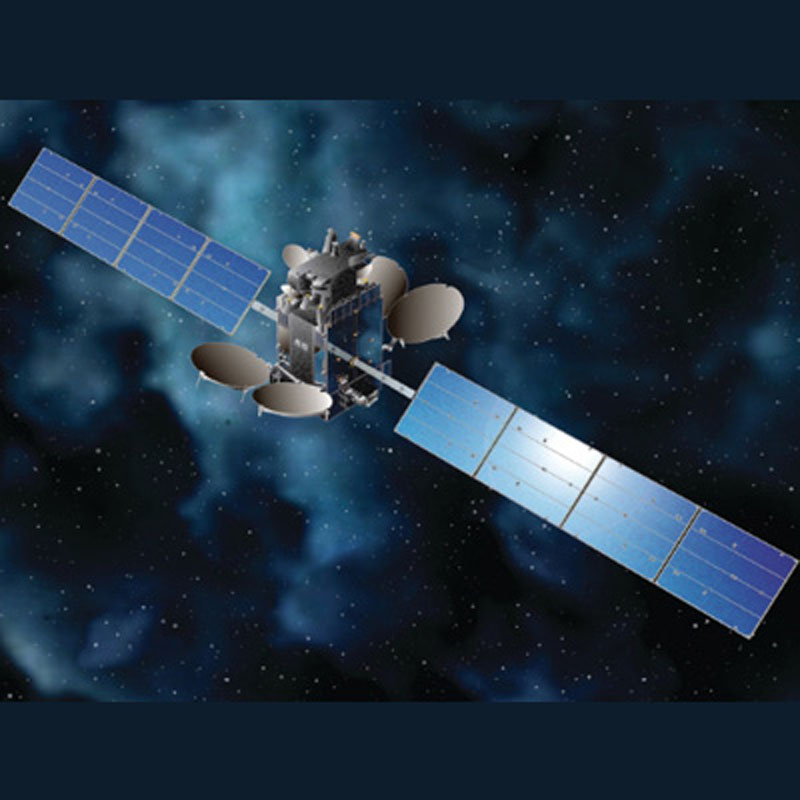
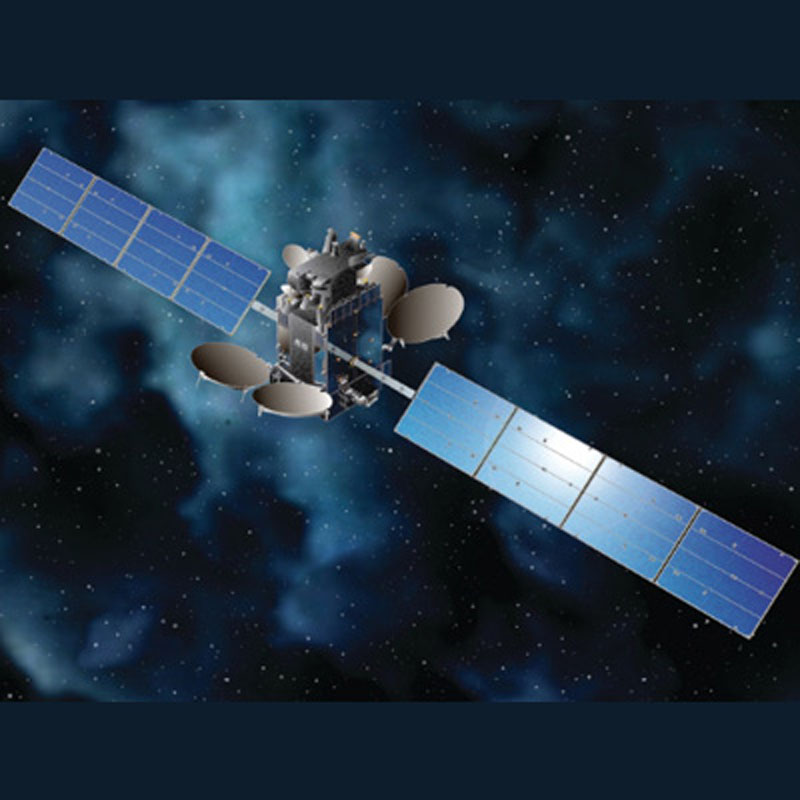
    MUMBAI: Indian Space Research Organisation (Isro) is targeting to launch Insat -4C in the second week of July, the latest in the Insat 4 series. The launch of this satellite is being seen as a big boost for the DTH operators.

    Kalanithi Maran’s Sun Group has booked space on Insat 4C for its direct-to-home (DTH) venture.

    Insat 4C will be put into orbit by the Geo-synchronous Satellite Launch Vehicle-5 (GSLV), which will blast off the from the launch pad at the Satish Dhawan Space Centre at Sriharikota. Insat 4C satellite will be used for broadcasting 150 TV channels through the direct-to-home platform. 

    “Preparations are on for the launch from the second launchpad,” Satish Dhawan Space Centre director Shar M Annamalai said.

    Isro officials say launch from a homegrown rocket meant cutting launch costs by one-third – if the same was to be launched from the spaceport of Kourou in French Guiana by an ariane vehicle, India has to pay 30 to 35 per cent more.

    According to media reports, it’s for the first time that India`s space agency is putting into space a two-tonne class satellite. Equipped with 12 high-powered KU band transponders, the 2,180 kg spacecraft is designed for a mission life of 10 years.

    On 22 December, last year, Isro had successfully placed Insat 4A in the Geostationary orbit with the Launch provider Ariane. 

    Launcher Ariane 5G also carried Meteosat weather Satellite for Eumetsat along with Insat 4A. This also marked Ariane the only commercial launcher in service capable of simultaneously launching two payloads.

    At present, besides DD Direct Plus managed by the pubcaster Prasar Bharati, the Subhash Chandra owned Dish TV and the soon to launch Tata-Sky service from the Tata-Star consortium, has leased all 12 Ku-band transponders on the Insat 4A satellite enabling to provide about 150 channels.

  • Astro teams up with Thomson for STB with DVR

    Astro teams up with Thomson for STB with DVR

    MUMBAI: Thomson, the provider in digital video technologies, has entered into an agreement with Astro, the satellite TV operator in Malaysia to provide a new set-top box with digital video recorder. 

    At present, Thomson is providing Astro with an entry-level digital satellite TV set-top box in support of the operator’s ongoing customer acquisition programme. The new Thomson set-top box will enable Astro to launch Malaysia’s first DVR service, according to an official release.

    The deal to provide the new set-top box with digital video recorder coupled with an extension to the existing contract for entry-level set-top boxes is the fruit of Thomson’s commitment to broaden both its media and entertainment product offering and client base globally including in the Asia Pacific region.

    Thomson technology to help drive Astro’s growth strategy

    With over 1.8 million residential TV subscribers across Malaysia, Astro is the largest multi-channel TV business in Asia, outside Japan. The company is continuing to increase subscriber numbers by extending the content and services it provides customers.

    The new Thomson set-top box will enable Astro to launch the DVR service. In addition to the recording functionality, advanced features such as pausing or rewinding live TV, will give Astro subscribers greater control, choice and flexibility over what they watch and when, than ever before. Customer acquisition is a priority for Astro and Thomson’s set-top box expertise and technology will provide it with fully-featured products to help the operator achieve its new subscriber targets and tap new revenue streams, informs the release.

    “We are very excited to be launching the new DVR technology in Malaysia, re-enforcing our position of product innovator in the television domain. The continued expansion of our subscriber base in Malaysia is testament to the quality and variety of programmes and services we offer and the new generation platform is a perfect example of our desire to lead the field. We are very pleased to renew our long term partnership with Thomson drawing on its innovations, expertise and proven international track record.” said Astro Group COO David Butorac.”We are delighted to have achieved yet another milestone as Astro’s lead supplier for set-top boxes,” said Thomson CEO Satellite, Terrestrial and Cable Business unit Koen Van Driel. 

    “In selecting our DVR solution, Astro has demonstrated its confidence in Thomson’s ability to bring advanced content-delivery platforms to market. When taken with our agreements with major operators in the region such as Starhub in Singapore, AUSTAR in Australia and Tata Sky in India , this contract places Thomson at the forefront of the Asia-Pacific set-top box market,” he concluded.
     

  • Satellite interference affects broadcasters & consumers

    Satellite interference affects broadcasters & consumers

    SINGAPORE: We’ve recently seen it happening to Sony Entertainment Television (SET) India during the telecast of a popular film awards ceremony. Star India, too, has faced some minor problems due to this in the past. We’re talking about a growing menace called satellite interference, which affects both satellite operators and the end user.

    Whether deliberate or not, satellite interference means a huge revenue loss for broadcasters, which is eventually recovered from the consumers. 

    With an excess of 300 satellite channels in India and more than 200 in China, satellite interference is becoming an increasing problem as the technical uplinking requirements within these market places are not fully efficiently deployed.

    Satellite interference today are caused by: equipment (40 per cent), unknown (22 per cent), human error (15 per cent), crosspol (13 per cent), antenna (8 per cent), deliberate (1 per cent) and terrestrial (negligible). Apart from this, military interference is also one of the causes.

    “The different types of military interferences are: airborne and ship born radar, which generally affects downlinks; spread spectrum hidden use, which results in higher noise floor and is difficult to identify and transponder hopping. While the military are generally cooperative (except in war zones) as far as airborne and ship born radar is concerned, but in case of transponder hopping, they deny responsibility and hence it is difficult to ensure resolution,” said Satellite Users Interference Reduction Group (SUIRG) chair of the board R James Budden.

    ESPN Star Sports director of engineering Andy Rylance pondered over the economic losses caused by satellite interference. “The economic losses caused by satellite interference are very high and run into millions of dollars. At the end of the day, not just the broadcaster but even the consumer pays for it. The types of interference can be intentional (piracy or political), unintentional (faulty kit, misalignment), terrestrial and limited to channel, transponder or multi transponder,” he said. 

    So what are the costs? In terms of commercials, there is a loss of commercial breaks, which means huge revenue loss of the broadcaster. And if the interference is during prime time, the monies can run even deeper. Ratings is the other factor that are affected if the interference is extended. Apart from this, if the interference is extended, the broadcaster stands a chance of losing credibility in the eyes of the consumer, who will eventually switch to other channel, which have an uninterrupted broadcast. 

    “The broadcaster will also have to pay for extra protection and maybe have a diverse feed, which actually doubles the cost or they can use fibre. But, that needs huge care in engineering to ensure availability. Some of the indirect costs of satellite interference are that the unusable space costs satellite operators real money and locating rogue uplinks is not cheap. What’s more, the losses to satellite operators must ultimately be borne by users,” Rylance said. 

    While most interference is out of our hands, the fact is that it is draining cash from everyone’s pocket. “What ever we can do to reduce the risk, we must do. Operational and engineering best practices will help,” he concluded.

  • Isro, Arianespace, CNes complete 25 years of cooperation

    Isro, Arianespace, CNes complete 25 years of cooperation

    MUMBAI: European satellite launch firm Arianespace has announced that exactly 25 years ago (19 June 1981), Europe’s Ariane launcher orbited the Indian experimental satellite Apple, built by the Indian Space Research Organisation (Isro).

    Since then, Arianespace, Isro and the French space agency CNes have developed a space partnership, forging commercial, government and industrial alliances. 

    Within the scope of this cooperation, Isro and Arianespace have signed 13 launch contracts to date. Since the first launch in June 1981, eleven other satellites have been successfully launched by Ariane rockets from the Guiana Space Center in Kourou, French Guiana. Arianespace also has a 13th satellite in its order book, Insat 4B, scheduled for launch in the first quarter of 2007.

    In March 2004, Arianespace signed a collaboration agreement with Antrix, the company that markets Indian launch vehicles. Since then Arianespace has offered India’s PSLV and GSLV launchers, most notably as backup for small satellites which Arianespace’s own family of launchers cannot handle.

    Arianespace recently signed a launch service contract for European operator Eutelsat’s W2M satellite. W2M will be built by a new consortium of Antrix and Astrium Satellites, which proposes a satellite platform built by Isro equipped with a payload supplied by Astrium Satellites.

    The collaboration between the Indian and French space agencies kicked off in 1972 with the signature of a bipartite agreement, followed in 1993 by a more general framework agreement. Isro and CNes have teamed up on major projects over the years, most notably in Earth Observation, with the Megha-Tropiques mission, and in telemedicine.

    Today, new collaborations are being studied in oceanography, data collection and radio communications, and will enable the two agencies and their teams to further strengthen their relationship.

  • Panamsat launches US satellite for HDTV, IPTV

    Panamsat launches US satellite for HDTV, IPTV

    MUMBAI: Satellite provider PanAmSat has launched its Galaxy 16 satellite in the US.

    Launched into orbit by Sea Launch, Galaxy 16 is the 24th satellite in Panamsat’s fleet and its 11th over the US. The satellite, to be located at 99 degrees west longitude, will replace Galaxy 4R.

    Panamsat CEO Joe Wright says, “We promised customers that we would have the most extensive and reliable neighborhood of satellites in the US to deliver standard and HDTV television channels and Galaxy 16 expands on that reality.

    “We have also promised shareholders to build satellites in a capital efficient manner and to launch them with our customers’ design requirements. And that’s exactly what we’ve done: Galaxy 16 takes over for Galaxy 4R and the satellite is nearly sold out.

    “Galaxy 16 is a broadcasters’ dream satellite. With its remarkable power and expansive footprint reaching from Maine to Alaska and Hawaii, it can deliver today and tomorrow’s technological advancements. In addition to providing thevery clearest broadcast signal, this versatile spacecraft has the digital muscle to deliver IPTV, HDTV or VOD. Galaxy 16 is one blockbuster of a satellite for existing and emerging technologies.”

    With its 24 C-band and 24 Ku-band payloads, the satellite will be home to channels like ABC, Fox , Warner Bros., Buena Vista and Televisa as well as major customers such as National Public Radio (NPR) and Hughes Network Systems (HNS).

  • US satellite radio station XM gears up for the football World Cup

    US satellite radio station XM gears up for the football World Cup

    MUMBAI: Soccer fans in the US can hear live radio broadcasts of the 2006 Fifa World Cup tournament in English and Spanish on XM Satellite Radio.

    The event kicks off on Friday, 9 June in Germany.

    XM will kick off its World Cup play-by-play coverage live with broadcasts of the opening match, Germany versus Costa Rica. XM is the exclusive English radio broadcaster (satellite or terrestrial) of the World Cup in the US, as well as the only radio service to offer fans live play-by-play coverage in both English and Spanish.

    XM will feature 31 days of 24-hour coverage of the World Cup, including English broadcasts of 56 live matches and Spanish broadcasts of 50 live games, as well as news updates, analysis and commentary.

    XM will broadcast World Cup matches in English on its dedicated Fifa World Cup Soccer channel (XM Channel 148) from 9 June to 9 July. XM’s broadcast team includes former US World Cup team players Jeff Agoos, Thomas Dooley and Christopher Sullivan

    XM is now broadcasting pre-match coverage, including call-in shows, interviews and specials, 24 hours a day on XM channels 147 and 148.

  • Worldspace associates with BBC & TWI for Soccer World Cup programming

    Worldspace associates with BBC & TWI for Soccer World Cup programming

    MUMBAI: Worldspace Satellite Radio has announced that subscribers in India can get the inside track on the world’s most popular sporting event as its channel Play! kicks off its coverage of the FIFA World Cup 2006.

    Play! is partnering with BBC and Trans World International to bring subscribers an exclusive mix of programming that captures the action, news, views and profiles from the World Cup.

    India’s top footballer, Baichung Bhutia, joins the Worldspace team as they decode the strategies, talk you through the day’s highlights from Germany, and rope you into the game with exciting contests and interactive programming initiatives, states an official release. Star profiles, background trivia on the stadiums, coaches and teams, daily previews, comments from fans, and expert analysis will be part of the programme offering.

    Playtime, the morning programming session on Play!, will air an hour and a half of football programming, sharing the previous day’s results, commentary bytes and vox-pops from fans in Germany as well as listeners from around the world. Playtime will also host a special call-in segment with Bhutia between 11:30 am and noon every Monday, Wednesday and Saturday during the World Cup, where subscribers will get to discuss the previous day’s goals, blunders and strategies, the release adds.

    Playground, the afternoon session, kicks off at noon with daily TWI updates and a weekly chat with Bhutia every Friday afternoon. Matthew Kenyon, Worldspace’s lead reporter at the FIFA World Cup, reports live from Germany, wrapping up the show with his predictions for the day’s games.

    Play! Quiz takes on a World Cup theme the entire month. Subscribers get a chance to win exclusive merchandise by answering football trivia on players, teams, coaches, venues and more.

  • Worldspace in deal with Samacom for satellite uplink for Dubai

    Worldspace in deal with Samacom for satellite uplink for Dubai

    MUMBAI: Worldspace Satellite Radio has signed an agreement with Sama Communications Company Limited (Samacom) to commission a new satellite uplink facility in Dubai. Worldspace expects the new facility to enhance its satellite radio content delivery and enable live programming from Dubai.

    Dubai was selected to house the facility based on its central geographic location within the Worldspace service area and the fact it is emerging as a business and technology hub in this region. The station will be positioned to uplink channels to both of Worldspace’s satellites, AsiaStarT and AfriStarT, simultaneously from a single point resulting in streamlined operations and a substantial savings in backhaul and uplink infrastructure, states an official release.

    “Samacom is an ideal partner and Dubai is an ideal location for Worldspace’s satellite uplink facility,” says Worldspace COO Alexander P. Brown. “The visibility from this geography provides nearly global coverage and brings Worldspace’s uplink closer to important content providers and the region’s production facilities. This positions us to deliver live programming and enhance the Worldspace experience for our subscribers in the region.”

    Samacom is a vertically integrated satellite services provider, established in 2001 and acquired by Emirates Integrated Telecommunication Company (du) in January 2006. Samacom owns and operates its own communications infrastructure and will also establish, operate, and maintain the Worldspace uplink facility. The uplink station will be part of Samacom’s existing infrastructure in Dubai, adds the release.

    “The launch of Worldspace service in Dubai is exciting for our region,” says Samacom EVP Yatinder Mahajan. “Samacom is pleased that our innovative technology and services will play an integral part in extending the Worldspace experience to subscribers in Dubai and around the globe.”

  • Worldspace unveils new satellite radio receiver Diva II

    Worldspace unveils new satellite radio receiver Diva II

    BANGALORE: Worldspace Satellite Radio has launched a new satellite radio receiver – the Diva II. The company promises enhanced sound quality and features to ensure a truly enriched satellite radio experience to the listeners with the launch.

    The Diva II is available in Elegant Black or Chic Silver and has a suggested retail price at Rs. 4,790 with a special introductory offer price of Rs. 2,499 only. Subscription packages are available in three options – Rs. 1000 for six months, Rs. 1800 for 12 months, and Rs. 3250 for 24 months, said an official release.

    The new satellite radio receiver is a stand-alone system that is also compatible with most music systems, presenting listeners an opportunity to tune in to over 40 radio channels playing the widest range of music, entertainment and news in uncluttered and distinctive programming formats, the release adds.

  • PanAmSat named best ‘Satellite Carrier’ at 2006 Telecom Asia Awards

    PanAmSat named best ‘Satellite Carrier’ at 2006 Telecom Asia Awards

    MUMBAI: PanAmSat has received a top honour from Telecom Asia magazine. The publication awarded PanAmSat with the “Best Satellite Carrier” award at the 2006 Telecom Asia Awards, held in Thailand on 24 April.

    PanAmSat was selected for the award due to its market leadership, innovations in technology and services as well as its strong financial performance in one of the world’s most challenging telecommunications markets.

    “PanAmSat has been dedicated to serving the Asia-Pacific region with world-class satellite services for more than 10 years. Our customers and partners in the region continually look to us for industry-leading solutions for the transmission of broadcast programming, worldwide breaking news and critical business data. We are pleased that Telecom Asia has recognized our achievements in the region with this award,” said PanAmSat vice president for Asia Pacific David Ball.

    This is the second time that PanAmSat has been recognised as the region’s best satellite carrier.

    The award winners were chosen for their combined financial, market and technology strengths based on financial analysis and assessments by an 18-member judging panel. The judges are backed by a research team at IDC, a leading provider of global research and advice, using a combination of its extensive communications research in Asia-Pacific and financial analysis of the carriers.

    PanAmSat began operations in the Asia-Pacific region with the launch of the PAS-2 satellite in 1994. Today, operating a hybrid network of fiber and five high-powered satellites in orbit over Asia, PanAmSat is able to offer a wide range of services for businesses and events in the Asia-Pacific region.

    Customers in the region include: NHK, China Central Television (CCTV), Doordarshan, Korea Broadcasting System, Arirang TV, ABS/CBN, TVB, NicNet and Telstra.