Category: Satellites

  • Indiavision targets 5 November launch for entertainment channel ‘Yes’

    Indiavision targets 5 November launch for entertainment channel ‘Yes’

    MUMBAI: Kerala’s Indiavision Satellite Communications Ltd, which runs the news channel Indiavision, is gearing up to launch an entertainment channel in the Malayalam television market. The company is targeting 5 November for the launch of its proposed youth-oriented entertainment channel ‘Yes’.

    “The new channel will be an out-and-out entertainment channel with programmes mainly targeted at the Malayalam-speaking youth. We are investing about Rs 200 million in the venture,” Indiavision resident director Jamaal Farooq tells indiantelevision.com.

    According to Farooq, the funding would be done through equity mobilisation. He adds that the company is looking to source the funding from individuals based in Kerala. “Our flagship (news) channel Indiavision is mainly driven by investments from Non Resident Indians (NRIs). But, in the case of Yes, we are tapping only Kerala-based individuals.”

    Farooq also informs that the Indian Medical Association (IMA) has offered to invest Rs 20 million in Indiavision.

    Yes, a free-to-air channel, will be using a transponder space of 4.5 mbps on the Insat 4A satellite.

    Indiavision is also planning to launch an English news channel targeting South Indian expats based in the Middle East. “We are planning to launch an English news channel in the Middle East after the launch of Yes,” says Farooq.

  • Failure analysis committee on GSLV-F02 constituted

    Failure analysis committee on GSLV-F02 constituted

    BANGALORE: Following the unsuccessful launch of Geosynchronous Satellite Launch Vehicle (GSLV-F02) with INSAT-4C on board from Satish Dhawan Space Centre SHAR (SDSC-SHAR), Sriharikota on 10 July, a Failure Analysis Committee has been constituted by Isro.

    Former director of SDSC-SHAR and presently senior advisor at the Centre chairs the Committee, K Narayana will head the team. According to an Isro release, the 15 member Committee includes experts from academic and research institutions besides those from various Centres of ISRO.

    The Committee will review the performance of all subsystems of GSLV-F02 from lift-off to the termination of flight, identify specific reasons for anomalies observed and recommend corrective measures for future course of action.

    The Committee is expected to submit its report in a month’s time.

  • If transponder space unavailable on Insat-4B, Sun might opt for Measat3

    If transponder space unavailable on Insat-4B, Sun might opt for Measat3

    MUMBAI: A day after the unfortunate failure of the GSLV-F02 launch rocket carrying the Insat-4C communication satellite, it is not just India’s space establishment that has been forced to relook its plans.

    For Kalanithi Maran’s southern broadcast network Sun Group, the mishap could well mean that the launch of its direct-to-home (DTH) service sees a change of satellite operator. Sun TV had booked seven high-power Ku-band transponders, six for DTH and one for DSNG (digital satellite news gathering), of the total 12 carried by the Indian Space Research Organisation’s Insat-4C.

    The big question now is this: If Isro is not able to provide Ku-band transponder space for his DTH venture Sun Direct, will Maran opt for an alternative satellite like Malaysia’s soon-to-be-launched Measat-3?

    Maran already has a running relationship with Measat’s parent company Astro, having stitched a deal last year for a $25 million joint venture to originate, aggregate and distribute television programming and channels for a global audience. Measat Broadcast Network Systems is a subsidiary of Astro company which has a 20-year exclusive licence for DTH transmission in Malaysia.

    Measat has scheduled a September launch for the Measat-3 satellite. The satellite will be shot into space atop a Proton rocket from the Baikonur Cosmodrome in Kazakhstan. Measat-3 will have 24 Ku-band transponders and has been designed to provide capability for data services and DTH applications in Malaysia, Indonesia, India and China.

    Maran, however, says he has got intimation from Isro that he will be provided with Ku-band transponders at the earliest. “Isro has assured us of providing alternate transponders to meet our DTH requirements. We have not made any request to Isro for taking space on Measat-3. We were, in any case, looking at a time frame between October-November,” the Sun Group promoter tells Indiantelevision.com.

    Has Maran been told which satellite will provide him the Ku-band transponders? “We will know from Isro in three to four days,” he says.

    For DTH providers who want to operate from foreign satellites, Isro will have to provide the approval and lease it out for them. Dish TV, for instance, is on NSS-6 with Isro’s backing as required by regulatory norms.

    For Isro’s commercial arm Antrix Corporation, hiring of foreign transponder space for a short time could be a possibility. There is a precedence of this having happened in the past.

    According to a report in Hindu Businessline, when Insat-2D failed, Isro bought transponder space on an Arabsat satellite. Isro has also provided temporary leases on Thaicom, GE-Americom, and even now on NSS, Businessline reported.

    At the moment though, Isro has not received any fresh proposal from Maran’s DTH company, Sun Direct TV, to lease out a satellite for them. Says Isro contract management and legal services director SB Iyer, “Sun has not asked us for a foreign satellite yet. The failure of Insat-4C is a brief setback which has put us behind 4-6 months. But we are recasting our programme by which we can accelerate the Ku-band capacity growth. We may be putting up larger satellites to boost the capacity.”

    So will Sun get space on Insat-4B, which is meant for Doordarshan’s DTH service like DD Direct Plus? “We haven’t taken any decision yet. DD, which is on NSS-6, has a low requirement,” says Iyer. Sun has asked up to eight transponders for its DTH service.

    Even if Sun gets Insat-4B, the launch of the satellite is expected to take place early next year. The commercial operations can, thus, commence only by the first quarter of next fiscal. “We have the flexibility to accommodate Sun. It is too early to comment on the steps we are going to take,” says Iyer.

  • GSLV to launch Insat-4C on 10 July

    GSLV to launch Insat-4C on 10 July

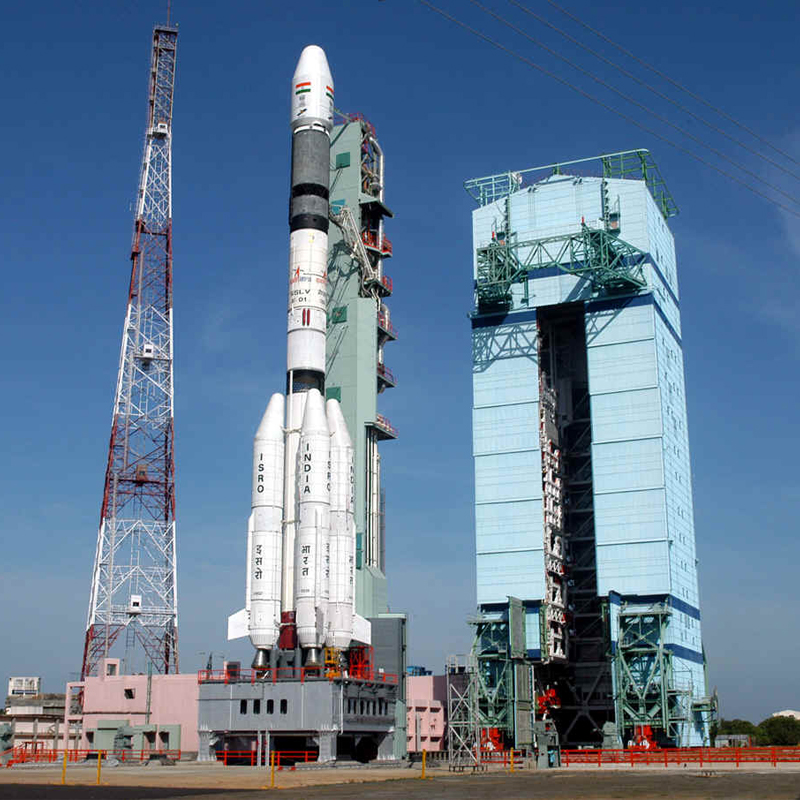
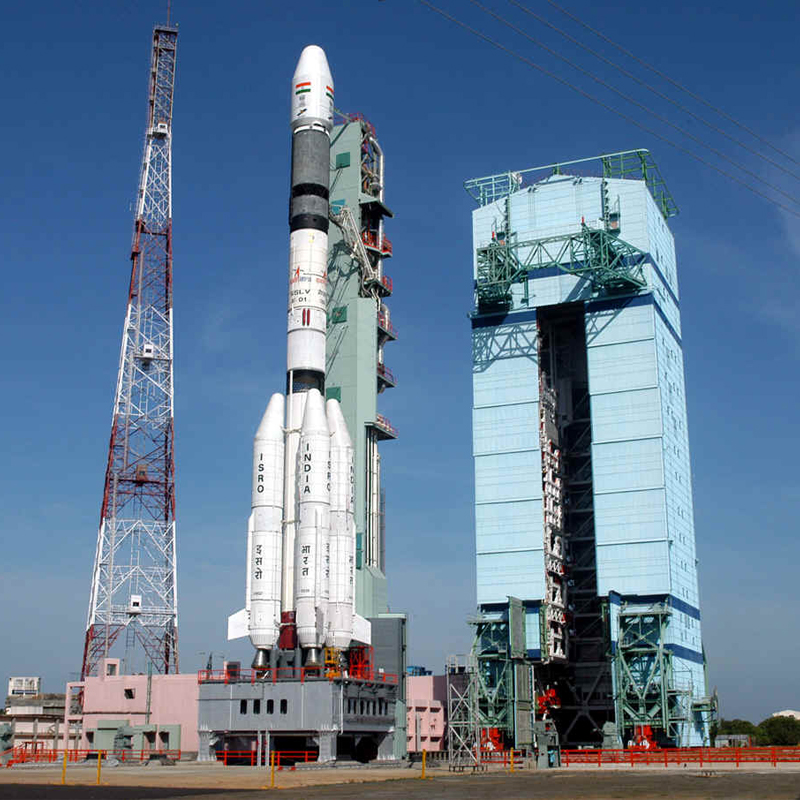
    MUMBAI: The countdown is on for the launch of GSLV-F02, which will be carrying the state-of-the-art communication satellite Insat-4C into space. The launch is expected to take place around 4:30 pm on Monday, 10 July, the Indian Space Research Organisation announced today.

    Preparations for the launch are proceeding satisfactorily at Satish Dhawan Space Centre (SDSC) SHAR, Sriharikota from the second launch pad. The launch vehicle systems have been integrated and checked out, Isro said in a statement issued today.

    Insat-4C was transported from Isro Satellite Centre, Bangalore to SDSC SHAR in the first week of June 2006 and since then, it has undergone detailed checks. After propellant filling, the spacecraft has been integrated with GSLV.

    The Mission Readiness Review is planned on 6 July, 2006 followed by the meeting of Launch Authorisation Board which will clear the launch. In the next few days, a complete checkout of the fully integrated launch vehicle along with satellite will be carried out. The final countdown and fuel filling for the liquid propellant stages are expected to commence on the morning of 9 July.

    Insat-4C is the second satellite in the Insat-4 series. The first, Insat-4A, was launched in December last year, from the spaceport of Kourou in French Guiana by an Ariane5 vehicle, which also carried the Meteosat weather Satellite for Eumetsat.

    Isro spokespersons have been pointing out that using indigeneous launch vehicles will result in a saving of about 30-40 per cent or Rs 1.5 billion in expenses per launch. With four satellites to be launched by GSLV Mark II and Mark III, the savings thus will be substantial. Isro will, however, be using the services of Arianespace to launch the Insat 4B satellite from Kouru next year.

    “With the commissioning of the Rs 3.5 billion ($75million) second launch pad at Sriharikota, India is the only country to have such a state-of-the-art facility to launch different types of vehicles Ranging from PSLV (polar satellite launch vehicle), GSLV Mark-1, GSLV Mark-II to the upcoming GSLV Mark-III in the four-tonne class,” a top Isro official is reported to have said sometime back.

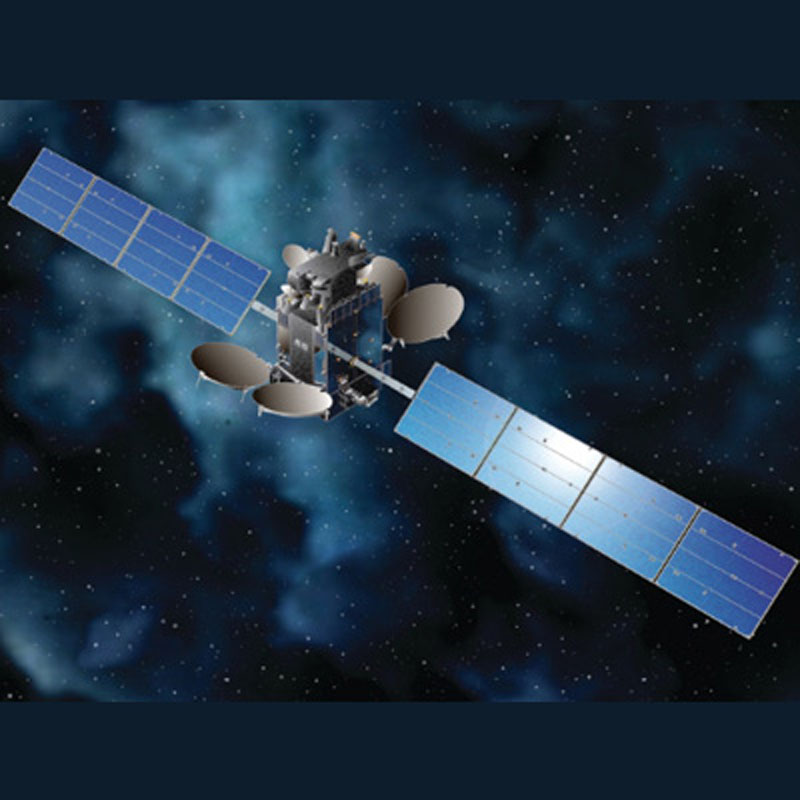
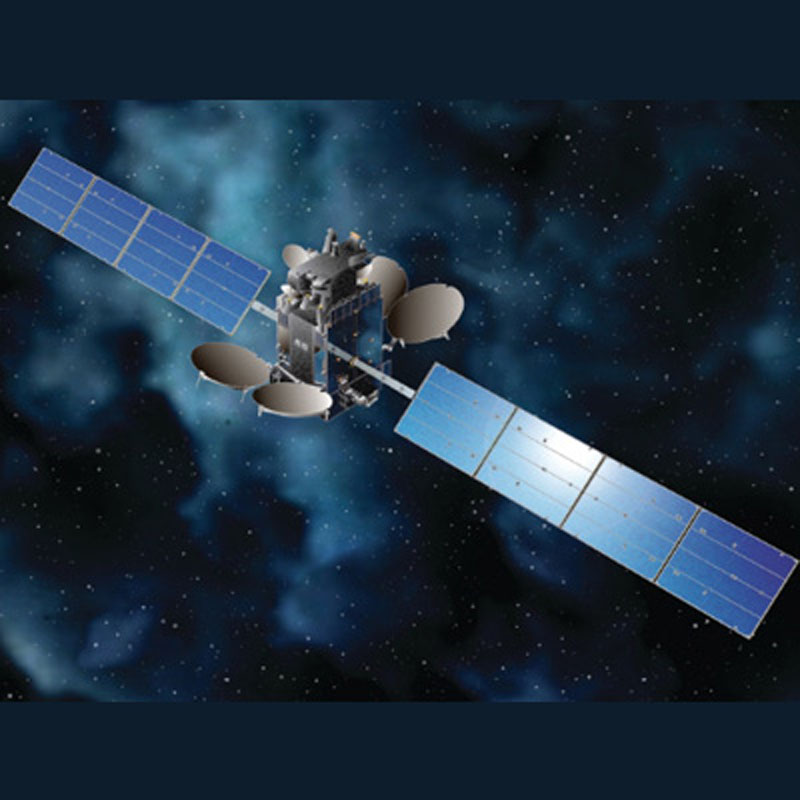
    It’s for the first time that India’s space agency is putting into orbit a two-tonne class satellite. Equipped with 12 high-powered Ku band transponders (Like the earlier Insat-4A), the 2,180 kg spacecraft is designed for a mission life of 10 years.

    Insat-4C is designed to provide direct-to-home (DTH) television services, facilitate video picture transmission (VPT) and digital satellite news gathering (DSNG) as well as to serve the National Informatics Centre (NIC) for its VSAT connectivity. The 2,168 kg Insat-4C has a mission life of ten years.

    Insat-4C will be used for broadcasting 150 TV channels through the DTH platform. Kalanithi Maran’s Sun Group has booked space on Insat 4C for its DTH venture Sun Direct. All the Ku-band transponders on the Insat 4A satellite, meanwhile, have been leased to the Tata-Star consortium, which will soon be launching the Tata Sky DTH service.

    Other than Tata Sky and Sun Direct, there is also Anil Ambani’s DTH venture Reliance Bluemagic, which will be rolling out in due course.

    At present, DD Direct Plus managed by the pubcaster Prasar Bharati and the Subhash Chandra owned Dish TV are the two operators offering DTH services in the country.

    Salient features of Insat-4C:

    Orbit: Geostationary (74 degree East Longitude)
    Co-located with Insat-3C, KALPANA-1 and EDUSAT
    Lift-off Mass: 2,168 kg
    Mission: 10 years
    Communication Payloads: 12 Ku-band 36 MHz bandwidth Transponders employing 140 W Travelling Wave Tube Amplifiers (TWTAs) to provide an Effective Isotropic Radiated Power (EIRP) of 51.5 dBW at Edge of Coverage (EOC) with footprint covering Indian mainland; Ku-band Beacon as an aid to users to lock on to the satellite signal
  • Intelsat completes acquisition of PanAmSat

    Intelsat completes acquisition of PanAmSat

    MUMBAI: Leading satellite service provider Intelsat today announced the completion of its $ 6.4 billion acquisition of rival PanAmSat.

    The addition of PanAmSat’s video market expertise, advanced satellite fleet and blue-chip media customer base makes the new Intelsat the largest provider of fixed satellite services (FSS) worldwide to each of the media, network services/telecom and government customer sectors.

    Intelsat acquired all of the outstanding common shares of PanAmSat for approximately $3.2 billion. As a result of the merger, PanAmSat is now a wholly-owned subsidiary of Intelsat, and the common stock of PanAmSat has been delisted from the New York Stock Exchange. The total value of the transaction, including PanAmSat debt that was refinanced or remained outstanding, is approximately $6.4 billion.

    Using optimized capacity on a combined fleet of 51 satellites and a large, complementary terrestrial infrastructure including eight owned teleports, fiber connectivity and over 50 points of presence in almost 40 cities, the new Intelsat:

    — Carries one out of every four television channels transmitted over fixed satellites;

    — Supports 27 DTH platforms worldwide;

    — Operates 16 satellites that are part of video neighborhoods around the world;

    — Is the number one provider of transponders for video programming worldwide;

    — Carries more high definition (HD) programming than any other FSS carrier;

    — Is the largest provider of commercial satellite services to the government sector;

    — Is the leading provider of services to enterprise, Internet and mobile network operators; and

    — Provides communications services to 99 percent of the world’s populated regions.

  • Arianespace to launch a satellite for Vietnam

    Arianespace to launch a satellite for Vietnam

    MUMBAI: French satellite launch service provider Arianespace will launch in 2008 the Vinasat-1 satellite for Vietnam Posts and Telecommunications Corporation (VNPT). Vinasat-1 will be built by Lockheed Martin Commercial Space Systems (LMCSS).

    The first Vietnamese telecommunications satellite, Vinasat-1 will be launched on an Ariane 5 vehicle during the first half of 2008 from the Guiana Space Center, Europe’s Spaceport in Kourou, French Guiana.

    Vinasat-1 is the 275th contract won by Arianespace since the company’s founding in March 1980 and the 53rd launch for a satellite operator in the Asia-Pacific region. Vinasat-1 is the 39th satellite platform built by Lockheed Martin to be launched by Arianespace.

    Weighing about 2,600 kg at launch, Vinasat-1 will be positioned at 132 degrees East Longitude, and will offer a design life exceeding 15 years. Fitted with 20 C- and Ku-band transponders, the satellite will provide radio, television and telephone transmission services for all of Vietnam and the Asia Pacific region from its geostationary orbit.

    Arianespace CEO Jean-Yves Le Gall says, “We are delighted to be working with the people at LMCSS once again. This contract is the latest mark of recognition of the excellent service and solutions offered by Arianespace. We are also very honoured to be selected to orbit Vietnam’s first communications satellite, and we are very proud to be participating in the country’s economic development.”

    Lockheed Martin Commercial Space Systems president Ted Gavrilis said, “Lockheed Martin Commercial Space Systems is proud to join Arianespace’s highly professional launch team to ensure the successful launch of Vinasat-1.

    “We are confident that the expertise and heritage we bring to the Vinasat-1 programme, along with Arianespace’s outstanding launch service, will result in superior program execution for an on-time delivery of Vietnam’s first telecommunications spacecraft.”

  • Eutelsat’s Hot Bird 8 satellite set for August launch from Baikonur

    Eutelsat’s Hot Bird 8 satellite set for August launch from Baikonur

    MUMBAI: The Hot Bird 8 broadcasting satellite built by EADS Astrium for Eutelsat Communications has arrived at the Baikonur Cosmodrome for launch on a Proton M Breeze M vehicle provided by ILS. The launch is scheduled in the early hours of 5 August.

    Weighing in on the launchpad at 4.9 tonnes and equipped with 64 Ku-band transponders, Hot Bird 8 will be the largest satellite yet orbited by Eutelsat, states an official release.

    Designed for television and radio broadcasting it will be positioned at 13 degrees East, Eutelsat’s prime video neighbourhood, which delivers 950 television channels and 600 radio stations to 110 million cable and satellite homes in Europe, North Africa and the Middle East.

    The satellite’s mission is to replace the 20 transponders on the Hot Bird 3 satellite, which will continue service at a new location. In conjunction with Hot Bird 7A, which was launched in February 2006, it will also contribute to raising in-orbit redundancy at Eutelsat’s Hot Bird neighbourhood, the release adds.

    Eutelsat Communications is a leading satellite operator with capacity commercialised on 23 satellites providing coverage over the entire European continent, as well as the Middle East, Africa, India and significant parts of Asia and the Americas. The Group is one of the world’s three leading satellite operators in terms of revenues. Its satellites are used for broadcasting nearly 1,800 TV and 900 radio stations to more than 120 million cable and satellite homes.

  • Open Skies theme dominates Casbaa’s satellite forum

    Open Skies theme dominates Casbaa’s satellite forum

    MUMBAI: The 2006 Casbaa Satellite Industry Forum which was held a few days ago featured calls for governments to lower regulatory barriers to the provision of cross-border satellite services or face the prospect of international satellite providers re-directing new capacity away from Asia.

    Patience has reached a ‘critical point’ over regulatory stalemates in key markets such as China and India, is what more than 200 delegates heard at the Casbaa Forum in Singapore.

    The warnings came at a time when advances in digital technologies are providing multiple new opportunities for the delivery of satellite services. “If global operators feel forced to re-target their payloads because of a lack of potential market access, it will be the end-users in the domestic markets who feel the burden through higher charges,” the delegates were told.

    Korea’s SK Telecom has 550,000 subscribers to its TU Media service. Similar projects are now planned for a number of Asian markets. New DTH services are being launched in India and Indonesia while IPTV broadband via satellite and HDTV opportunities have added to unprecedented demand for new satellite capacity.

    And, for this potential to be realised there is a need for more competition, more open market access, Open Skies and a change of mindset by governments, delegates heard.

    Asiasat deputy CEO William Wade says,“There are tremendous opportunities in Asia today and for the coming years” .

    SES Global VP Market Development, South Asia Deepak Mathur noted that even though the regulatory environment is generally stable, the interpretation of the rules tends more and more to favour restricted access. “This is a really serious challenge” he says.

    While telecom markets such as cellular services have unleashed widespread competition, all too often Asia Pacific satellite markets remain constrained by the concept of protecting national incumbents or flagship monopolies.

    Intelsat executive VP and general council Phil Spector says, “This should be a thing of the past,” said. He added that the international satellite community is already operating in the newly competitive world. “The days of ‘build and they will come’ have long gone,” he said.

    One point that was made at the forum was that a harmonised approach to reform can deliver positive outcomes. Such outcomes include greater economies of scale for operators, local user capacity at cheaper prices and help rural users gain access.

    Delivering the keynote address at the Casbaa Forum, China Association of Communication Enterprises vice chairman Hao Wei Min said that satellite is an important instrument for China to provide rural connectivity as part of the government’s five-year plan. “This year some 20,000 villages will be connected via satellite and by 2007, we will have 100 per cent connectivity,” he said.

    Casbaa chairman Marcel Fenez, said, “The satellite industry, and Casbaa members in particular, are benefiting hugely from the explosion of demand for video content over all kinds of networks.”

  • Insat4c: ISRO gears up for 10-15 July launch

    Insat4c: ISRO gears up for 10-15 July launch

    MUMBAI: 10 to 15 July 2006. That’s the launch window that the Indian Space Research Organisation has set aside for the launch of DTH services satellite Insat 4C. According to ISRO chairman Madhavan Nair the indigeneously designed launch vehicle has been moved to the launch pad in Sriharikota.

    The GSLV Mark II is a 49-metre tall rocket weighing around 40 tonnes at lift-off. Its payload is the Insat 4C satellite, with 12 ku band transponders and a mission life span of 10 years.

    Most of the satellite’s capacity has been booked for DTH services by the Sun Network, National Informatics Centre and VSAT (very small aperture terminals) operators.

    The succesful launch of the GSLV will pitchfork India’s ISRO into an elite group of countries and groups with indigeneous satellite design and launch capabilities: United States, Russia, Japan, China and the European Space Agency (ESA).

    Nair was speaking to journalists at a satellite navigation conference which was held at its offices in Bangalore yesterday. He said that the launch window date will be kept, good weather permitting.

    Isro spokespersons have been pointing out that using indigeneous launch vehicles will result in a saving of about 30-40 per cent or Rs 1.5 billion in expenses per launch. With four satellites to be launched by GSLV Mark II and Mark III, the savings thus will be substantial. It will, however, be using the services of Arianespace to launch the Insat 4B satellite from Kouru in French Guiana next year.

    “With the commissioning of the Rs 3.5 billion ($75mn) second launch pad at Sriharikota, India is the only country to have such a state-of-the-art facility to launch different types of vehicles Ranging from PSLV (polar satellite launch vehicle), GSLV Mark-1, GSLV Mark-II to the upcoming GSLV Mark-III in the four-tonne class,” a top ISRO official is reported to have said sometime back.

  • Intelsat completes acquisition of PanAmSat

    Intelsat completes acquisition of PanAmSat

    MUMBAI: Leading satellite service provider Intelsat today announced the completion of its $ 6.4 billion acquisition of rival PanAmSat. 

    The addition of PanAmSat’s video market expertise, advanced satellite fleet and blue-chip media customer base makes the new Intelsat the largest provider of fixed satellite services (FSS) worldwide to each of the media, network services/telecom and government customer sectors.

    Intelsat acquired all of the outstanding common shares of PanAmSat for approximately $3.2 billion. As a result of the merger, PanAmSat is now a wholly-owned subsidiary of Intelsat, and the common stock of PanAmSat has been delisted from the New York Stock Exchange. The total value of the transaction, including PanAmSat debt that was refinanced or remained outstanding, is approximately $6.4 billion.

    Using optimized capacity on a combined fleet of 51 satellites and a large, complementary terrestrial infrastructure including eight owned teleports, fiber connectivity and over 50 points of presence in almost 40 cities, the new Intelsat:

    — Carries one out of every four television channels transmitted over fixed satellites;

    — Supports 27 DTH platforms worldwide;

    — Operates 16 satellites that are part of video neighborhoods around the world;

    — Is the number one provider of transponders for video programming worldwide;

    — Carries more high definition (HD) programming than any other FSS carrier;

    — Is the largest provider of commercial satellite services to the government sector;

    — Is the leading provider of services to enterprise, Internet and mobile network operators; and

    — Provides communications services to 99 percent of the world’s populated regions.