Category: Satellites

  • 2014’s first space mission to be India’s GSAT-14

    2014’s first space mission to be India’s GSAT-14

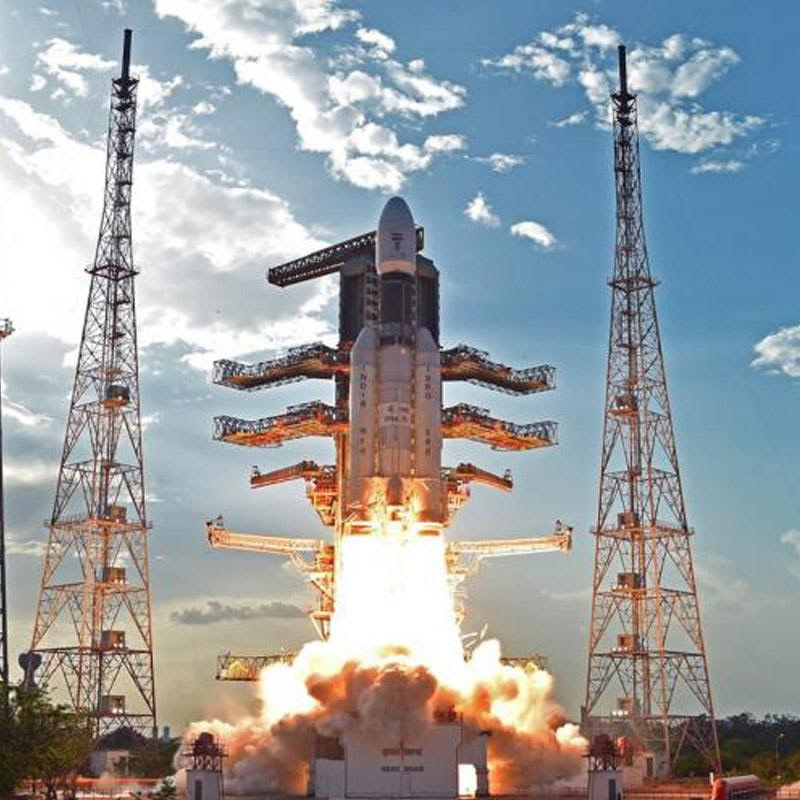
    MUMBAI: The first time it was about to launch in August 2013, a technical snag forced an abortion. But now, India’s Indian Space Research Organisation’s (ISRO’s)  twenty third communication satellite GSAT-14 by the is all set to be launched into space on 5 January 2014 on the Geosynchronous Satellite Launch Vehicle (GSLV)-D5.  The launcher will propel the bird into a Geosynchronous Transfer Orbit (GTS) after which it will use its own propulsion system to reach its geostationary orbital home at 74 degrees east longitude.


    The mission is important for ISRO which has been seeking to get a piece of the satellite launch action globally. But it has found things difficult since four out of the seven launches of GSLV have been failures and three previous attempts to use indigenous cryogenic engine have also ended up in a mess.


    The previous attempt to blast off GLSV into space in August 2013 was aborted following a fuel leak which developed in its engine hours before launch. ISRO worked on it and gave it a better metal covering, following which it has decided to give it another shot.


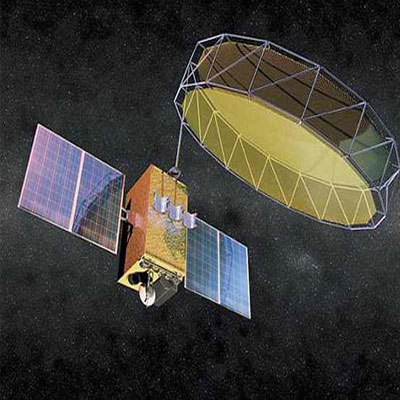
    A three stage rocket – the first stage runs on solid fuel, the second on liquid fuel and third on a cryogenic engine – the GSLV- D5 will be carrying the 1982 kgs (lift off mass) GSAT-14, which will be replacing GSAT-3 that was decommissioned in 2010. The new satellite’s structure is based on ISRO’s two ton weighing (I-2K satellite bus). The satellite has six Ku band (51.5 dBW EOC-EIRP) transponders, six C band (36 dBW EOC-EIRP) transponders and two Ka band beacons and will be co-located with INSAT-3C, INSAT-4CR and KALPANA-1.


    Most of the C- and Ku-band capacity on GSAT-14 will be utilized for long distance education and telemedicine, while the Ka band transponders will help in studying rain and atmospheric effects. This ninth operational geostationary satellite is expected to have a mission life of 12 years and will be able to provide enhanced broadcasting as compared to GSAT-3 for the whole of India.


    According to the ISRO website, the mission has three main objectives- to augment the in-orbit capacity of extended C and Ku-band transponders and to provide a platform for new experiments such as fiber optic gyro, active pixel sun sensor, Ka band beacon propagation studies and thermal control coating experiments.


    The 29 hour countdown to the launch began at 11:18 am on 3 January with the launch time set as 4:18 pm on 4 January from its launch pad at Satish Dhawan Space Centre (SDSC SHAR) at Sriharikota in Andhra Pradesh. GSLV-D5 is expected to have a 17 minute, eight second flight duration. If successful, this will be 2014’s first space launch as SpaceX’s launch of Thaicom-6 has been postponed from 3 January to between 6 and 9 January. The Elon Musk backed company decided to go in for a later liftoff as problems had emerged with Falcon 9 rocket’s fairing.


    If ISRO’s GSLV-D5 successfully plants GSAT- 14 into orbit, it is likely to have a beneficial spinoff which it badly needs. It could lead to orders to build more rockets that can carry payloads of up to four tonnes. Till now ISRO has been using the Polar Satellite Launch Vehicle (PSLV) that carries loads of around a tonne.


    The mission will be telecast live on Doordarshan and on the web from 3: 52 pm on Sunday.
  • ISRO launches its new Facebook and Twitter accounts

    ISRO launches its new Facebook and Twitter accounts

    BENGALURU: Social media is the strongest and best tool for communication. And even ISRO has understood its value. While it had earlier in October 2013 launched an experimental social media campaign on Facebook for ISRO’s Mars Orbiter Mission, it has now extended it further by creating another Facebook page and also has opened a Twitter account.

    While the earlier Facebook page on the Mars Orbiter Mission called ISROMOM will continue, the new social media pages (On Facebook and Twitter) can be reached from ISRO web portal or directly through www.facebook.com/isroofficial and www.twitter.com/isroofficial.

    The social media campaign aims at creating general awareness regarding the objectives, mission milestones and the accomplishments of ISRO.

    The page (www.facebook.com/isromom) was widely acclaimed as it garnered approximately three lakh followers in its two months of existence.

    The social media pages on Facebook and Twitter have been initiated for ISRO with the following objectives:

    a.Create awareness on the objectives, mission milestones and accomplishments of ISRO’s key programmes and initiatives.

    b.Provide mission updates in near real time.

    c.Maximise ISRO’s outreach through these social media platforms.

    ISRO has also re-affirmed, through a press note, that it does not take any responsibility for any content hosted on the fake and illegitimate social media pages bearing the names of ISRO, Mangalyaan, Bhuvan, etc.

  • SES, SpeedCast and AsiaSat come together to help Typhoon Haiyan survivors

    SES, SpeedCast and AsiaSat come together to help Typhoon Haiyan survivors

    MUMBAI: SES S.A. (NYSE Euronext Paris and Luxembourg Stock Exchange: SESG), SpeedCast, a leading satellite telecommunications service provider in Asia-Pacific, and AsiaSat, a commercial operator of communication spacecraft, have donated satellite and service capacity to enable NetHope, a consortium of 41 non-governmental organisations around the globe, to re-establish communication links to survivors of Typhoon Haiyan that killed at least 6,069 people in that country alone earlier in November 2013.

    Typhoon Haiyan in the Philippines was an exceptionally powerful tropical cyclone that devastated portions of Southeast Asia, particularly the Philippines. It is said to be the deadliest Philippine typhoon on record.

    By utilising the satellite capacity donated by SES and the uplink services and ground infrastructure provided by SpeedCast and AsiaSat, NetHope will be able to provide Typhoon Haiyan survivors access to information directly. The services and infrastructure will also support a number of other relief agencies and NGOs working in-country. 

    “Damage to critical telecommunications infrastructure has made disaster relief and rapid assessment of the situation difficult. Given that it may be weeks or months before terrestrial infrastructure is up and running, satellite connectivity is vital in providing immediate communication needs. SES is pleased to donate satellite capacity to support the people of the Philippines during their recovery from this terrible disaster,” said senior vice president, Commercial Americas at SES Elias Zaccack.

    SES is the world’s leading satellite operator with a fleet of 55 geostationary satellites. The company provides satellite communications services to broadcasters, content and internet service providers, mobile and fixed network operators and business and governmental organisations worldwide.

    “SpeedCast, SES and AsiaSat are providing vital aid directly to the areas that need it most with the help of NetHope. Since the Typhoon hit and we activated our response services, NetHope is now able to assist the relief efforts with communication services that can reach the most remote parts of the country,” said CEO of SpeedCast Pierre-Jean Beylier.

    “AsiaSat is pleased to take part in this initiative by offering uplink services from our Tai Po Earth Station. This effort in cooperation with our partners, will establish communication links needed to assist Typhoon Haiyan relief efforts in the Philippines,” remarked AsiaSat president and chief executive officer William Wade.

    The GVF’s Humanitarian Assistance & Disaster Response Programs helped to facilitate this combined industry response to Typhoon Haiyan in the Philippines. For more information, please refer to the press release attached. If you would like to speak to an SES spokesperson, please let me know.

  • SES-8 launched successfully; DTH players to benefit

    SES-8 launched successfully; DTH players to benefit

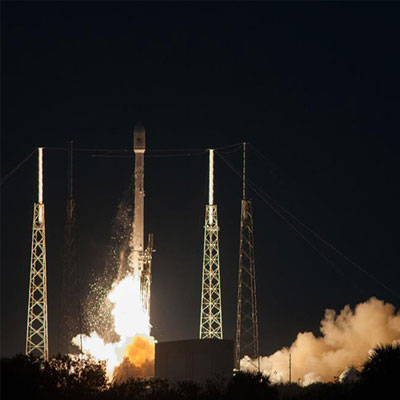
    MUMBAI: When it lifted off with almost perfection from the Cape Canaveral station in Florida in the US, communications satellite SES-8 was a personal victory for the creator of the Tesla vehicle Elon Musk. It was Musk’s company SpaceX’s first successful commercial launch using a Falcon 9 launch vehicle and it helped him break into the duopolistic satellite launch market which is dominated by European firm Arianespace and Russia’s International Launch Services  (which mainly uses Proton rockets). SpaceX has priced its launches in the $55-60 million range.

    While it was a personal landmark for Musk, it was also a victory for the Luxembourg-based SES Satellite management that gleefully watched the $100 million plus 3.1 tonne satellite being hurtled 50,000 miles above the earth into geostationary orbit. Built on a GEO-Star bus by Orbital Sciences, SES-8 is to be co-located with the NSS-6 satellite at 95 degrees east.

    The satellite has 33 Ku-band transponders and is targeting both south Asian and south East Asian clients. “The new satellites will enable improved coverage in fast-growing economies in south Asia and Indo-China,” says a press release from the company.

    In south Asia, it is aimed at providing much needed transmission capacity to India’s DTH and VSat service providers and government. Sources indicated that considering its location at 95 degrees east, one of the potential customers could be India’s first DTH services provider, the Essel group’s Dish TV that is currently beaming off NSS-6 and is also owned by SES. But all the deals will be done through Indian Space Research Organisation’s (ISRO) Antrix arm.

    SES also plans to launch SES-9 in 2015 at 108.2 degree East with extensive Ku-band capacity to give company to the existing SES-7 satellite in order to provide better DTH broadcasting services in South Asia along with north East Asia and Indonesia.

    Although, it was set for launch in early 2013, technical issues pushed the SES-8 to the end of the year.

  • GSAT-7 Satellite placed in Geosynchronous Orbit

    GSAT-7 Satellite placed in Geosynchronous Orbit

    NEW DELHI: India’s advanced multi-band communication satellite GSAT-7, launched from Kourou, French Guyana in the early hours of 30 August and now has been successfully placed in the Geosynchronous Orbit with an altitude of about 36,000 km above Earth’s surface yesterday (3 September) morning, after successfully completing the last of the three orbit-raising maneuvers commanded from ISRO`s Master Control Facility (MCF) at Hassan.

    Later in the day, the communication antennae of GSAT-7, including the UHF Helix antenna, were deployed successfully. Following this, GSAT-7 was put in its final orbital configuration, stabilised on its three-axis by the momentum wheels.

    The GSAT-7 Satellite would reach its assigned orbital slot of 74 degree East longitude in the Geostationary Orbit within the next 10 days.

    On 14 September, the communication transponders in UHF, S, C and Ku bands are planned to be switched on.

    Based on current availability of hardware and components, the GSLV Vehicle assembly and checkout is expected to be completed at the Vehicle Assembly Building by the first week of December 2013 and the launch could take place by December 2013.

  • Rs 800 crore earmarked for two communication satellites in current year

    Rs 800 crore earmarked for two communication satellites in current year

    NEW DELHI: A budget of Rs 800 crore has been set aside for the launch of the GSAT 15 and GSAT 16 communication satellites during 2013-14.

    However, the total budget for GSAT-15 is Rs 859.5 crore and the figure for GSAT-16 is Rs 865.5 crore.

    GSAT-15 is a geostationary communication satellite which will carry 24 Ku-band transponders and one GAGAN (GPS Aided Geo Augmented Navigation) payload. GSAT-15 satellite will support the existing Direct-To-Home (DTH) and Very Small Aperture Terminal (VSAT) services in the country and the GAGAN payload will be a part of GAGAN space segment to provide better air traffic management over Indian Air Space.

    GSAT-16 is a geostationary communication satellite which will carry 24 C-band, 12 Ku-band and 12 Upper Extended C-band transponders. GSAT-16 satellite will support satellite based telecommunication, television, VSAT and other services in the country.

    GSAT-15 and GSAT-16 satellites are targeted for launch during the 2014-16 timeframe. The two satellites were approved in July this year, Minister of State in Prime Minister’s Office V Narayansamy told Parliament.

    The revenue earned by ANTRIX Corporation, the commercial arm of the department, through leasing of INSAT/GSAT transponders during the year 2012-13 is approximately Rs 482.67 crore.

    This revenue accrues from service providers of Direct-To-Home (DTH) services, TV Uplink services, Digital Satellite News Gathering (DSNG) services and Very Small Aperture Terminal (VSAT) services. This revenue does not include the capacities provided to various societal applications such a tele-education, tele-medicine, Village Resource Center, Disaster Management and part of public broadcasting services, which are not of the nature of revenue-earning services.

    At present, there are nine operational INSAT/GSAT communication satellites: INSAT-3A, INSAT-3C, INSAT-3E, INSAT-4A, INSAT-4B, INSAT-4CR, GSAT-8, GSAT-10 and GSAT-12. The total number of transponders available at present from these satellites is 195 operating in C, Extended C, Ku, and S-bands.

    Transponders on communication satellites are leased to users after the launch and operationalisation of the satellite. The Department of Space leases the transponders on INSAT/GSAT satellites through ANTRIX.

  • GSAT signs new capacity on SES satellites NSS-11 and SES-9

    GSAT signs new capacity on SES satellites NSS-11 and SES-9

    MUMBAI: SES has announced that the Philippine direct-to-home (DTH) satellite TV provider Global Satellite (GSAT) has contracted its fourth transponder on NSS-11, cementing SES’ orbital position of 108.2 degrees east as one of Asia’s leading video neighbourhoods.

    The multi-year deal will see the transfer of current capacity usage by GSAT from NSS-11 to SES-9, currently scheduled for launch in 2015. When launched, SES-9 will be the largest SES satellite dedicated to the Asia-Pacific region. The new spacecraft will be providing expansion capacity for DTH, enterprise, mobility and government services across the region.

    GSAT, the satellite division of First United Broadcasting Corp (FUBC), launched its DTH service in 2008 on the NSS-11 Ku-band satellite, providing subscribers with access to an improved mix of international programmes including English, Mandarin, Korean, Tagalog, Japanese and Spanish channels. With this additional capacity, GSAT will be offering 12 high definition (HD) channels and 47 standard definition (SD) channels to more than 200,000 subscribers across the Philippine archipelago.

    FUBC president and CEO Philip J. Chien said, “Our ability to offer highly reliable DTH satellite TV to our growing base of subscribers in the Philippines is largely due to the comprehensive footprints of NSS-11, and, from 2015, SES-9. We are confident that SES’ expertise will enable us to grow in our market and increase both the quality and quantity of channels in our pay-TV offerings.”

    SES Asia-Pacific and the Middle East sr. VP commercial Deepak Mathur said, “We are delighted to confirm that GSAT, our long-term customer on NSS-11, will become a key anchor customer on SES-9. At SES, we are investing in new satellites to make sure that our customers enjoy business continuity, as well as delivering vital capacity to support their growth in some of the most dynamic media markets in the world.”

  • GSAT-15 and GSAT-16 get the go ahead from the Cabinet

    GSAT-15 and GSAT-16 get the go ahead from the Cabinet

    MUMBAI:Two Indian birds are on the way to Indian skies in the next two to three years (if launch schedules are kept). The Union Cabinet earlier today gave its approval to the proposals from the Indian Space Research Organisation (Isro) to enhance its satellite capacity through the GSAT-15 and GSAT-16 communication satellite projects. The government‘s nod now allows it to go ahead with its process to get a good launch partner as well as the required insurance cover for the two satellites.

    In the past decade, Isro has relied on commercial launch consortium Arianespace as its launch partner for a majority of its big bird communication launches from Kourou, French Guiana.

    GSat-15 and GSat-16 are part of Isro‘s efforts towards building in-orbit spare capacity to meet contingency requirements and to protect the services of existing users.

    GSat-15 (similar to GSat-10 which is yet to provide services to its clients despite a launch some nine months ago) is slated to be put together and launched in 18 months at an approved cost of Rs 859.5 crore. As compared to this, GSat-10 cost the agency around Rs 750 crore at the time of its launch in September 2012.

    GSat-15 will provide required redundant capacity, will augment Ku-band capacity, and shall provide in-orbit redundant requirement of safety of life operations benefitting civil aviation services in the country. It will be located at 93.5 degrees east with a payload of 24 Ku-band transponders with an EIRP of 52 dBW.

    On the other hand, GSAT-16 has an approved satellite production and launch budget of Rs 865.50 crore with a launch timeline of 24 months. It is targeted to meet contingency requirements, protect services of existing users and will augment and support existing telecommunication, television, VSAT and other satellite based services in the country

    The satellite will have 48 transponders providing C-band, extended C-band, and Ku-band frequencies (24 normal C, 12 extended C and 12 Ku-band). Its Ku-band beacon transmistter is expected to be the highest for an Indian satellite. G-Sat 16 is to be co-located with GSat-8 at 55 degrees East.

    Isro currently has nine operational INSAT/GSAT satellites in orbit with nearly 195 transponders providing different frequency bands to its customers.

    Its Insat 3D meteorological satellite has already been lined up for a 25 July launch using an Ariane 5 launch vehicle from Kourou, French Guiana.

  • Eutelsat 21B satellite lofted in space, commercial launch by mid-Dec

    Eutelsat 21B satellite lofted in space, commercial launch by mid-Dec

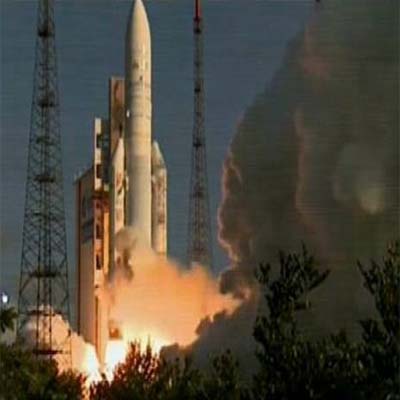
    MUMBAI: Eutelsat 21B satellite, which will have a fleet of 40 transponders, was lofted into space on Sunday by an Ariane 5 rocket from Kourou, French Guiana.


    Manoeuvres to circularise the new satellite’s orbit and place it into its operational configuration are now underway, managed by Eutelsat from its Rambouillet teleport, using a global network of earth stations. This will be followed by in-orbit testing before Eutelsat 21B enters full commercial service in mid-December.

    Commenting after launch and first manoeuvres, Eutelsat CEO Michel de Rosen said, “Eutelsat 21B is the first of seven satellites we will launch by mid-2015 to increase our commercial flexibility and our overall resources by almost 30 per cent. We are delighted to see this new satellite on its way to an orbital location that is a point of reference for customers providing professional video, data and government applications in Europe, North Africa, the Middle East and Central Asia.”


    The 40-transponder Eutelsat 21B Ku-band satellite will occupy the 21.5° East position, which has become a location of choice for broadcasters, news agencies, telcos, enterprises and government administrations. Its deployment is expected to enable Eutelsat to expand capacity at this sought-after location by more than 50 per cent.

    The satellite will replace Eutelsat 21A which will continue commercial service at another orbital location. Eutelsat’s 70.5° East orbital position that sits at the crossroads between Europe, Africa, Asia and Australia.


    Eutelsat’s launch programme progresses with the lift-off, scheduled for early December, of the Eutelsat 70B satellite, designed to more than double resources at Eutelsat’s 70.5° East orbital position that sits at the crossroads between Europe, Africa, Asia and Australia.

  • SES appoints Boeing to build SES-9 satellite for Asian market

    SES appoints Boeing to build SES-9 satellite for Asian market

    MUMBAI: SES has said that it has selected Boeing to build a new communication satellite, SES-9, to serve the fast growing markets in Asia.


    The new satellite ordered through SES’ affiliate company SES Satellite Leasing will expand SES’ capabilities to provide direct-to-home broadcasting and other communications services in Northeast Asia, South Asia and Indonesia, as well as maritime communications for vessels in the Indian Ocean.


    The financial details of the deal were not disclosed.

    The spacecraft will be positioned at the orbital slot of 108.2 degrees East and provide incremental as well as replacement capacity to this well established SES slot over Asia, where it will be co-located with the existing SES-7 and NSS-11 satellites.


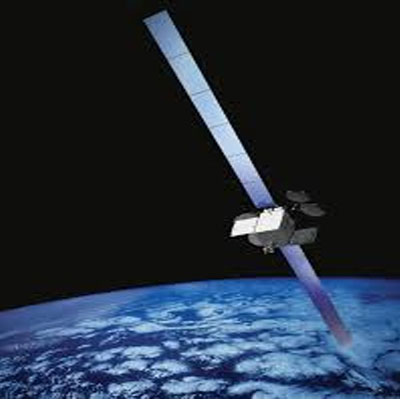
    SES-9 will be built in Boeing’s El Segundo Satellite Development Center based on the Boeing 702HP platform. The satellite is designed to operate for 15 years in geosynchronous orbit with a 12.7-kilowatt payload and 57 high-power Ku-band transponders (equivalent to 81 x 36 MHz transponders). The spacecraft will carry a xenon ion propulsion system (XIPS) for all on-orbit maneuvering and a chemical bi-propellant system for initial orbit raising.


    Boeing has a 25-year relationship with SES. SES-9 is the 11th spacecraft that SES has ordered from Boeing and the contract includes an option for an additional satellite.

    SES president and CEO Romain Bausch said, “We look forward to work again with Boeing on an important addition to our global fleet: SES-9 will greatly expand our transmission capacity over Asia, while adding increased flexibility and redundancy to a strategic orbital slot. SES is convinced that Boeing’s 702HP will prove to be mission-critical in order to provide state-of-the-art, high-power satellite capacity to the thriving markets of Asia.”


    “We are pleased to be selected by SES to build a highly flexible 702HP satellite, which has a uniquely configured XIPS propulsion system and chemical bi-propellant system, reducing the spacecraft’s launch weight while allowing for maximum payload capacity. Boeing has continuously evolved the 702 design since it was introduced over 15 years ago, allowing us to provide SES a satellite that will be consistent with their business requirements,” said Boeing Satellite Systems International CEO and Boeing Space & Intelligence Systems VP and GM Craig Cooning.