Category: Satellites

  • Mars Orbiter Spacecraft crosses half way mark of its journey

    Mars Orbiter Spacecraft crosses half way mark of its journey

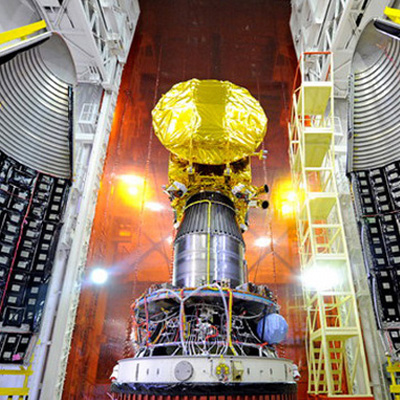
    MUMBAI: India’s Mars Orbiter Spacecraft crossed the half-way mark of its journey to the ‘Red Planet’ along the designated helio-centric trajectory at 9:50 am on 9 April.


    Mars Orbiter Spacecraft was launched onboard PSLV-C25 on 5 November 2013. On 1 December 2013, Trans Mars Injection manoeuvre was conducted successfully and the Spacecraft was set in its course towards Planet Mars through a helio-centric trajectory. Soon after the Spacecraft crossed the sphere of influence of Earth, a Trajectory Correction Manoeuvre (TCM) was performed successfully on 11 December 2013.


    ISRO has been continuously monitoring the Spacecraft using its Deep Space Network complemented by that of NASA-JPL. As the Spacecraft is on its designated trajectory, the TCM planned for April 2014 is not considered essential. If required, the next TCM is planned to be carried out in June 2014.


    Mars Orbiter Spacecraft and its five scientific instruments are in good health. Periodic tests are being done on the different levels of autonomy built into the Spacecraft for managing contingencies.


    As of 9 April, the radio distance between the Spacecraft and the Earth is 39 million km. A signal from the Earth to the Spacecraft and back to Earth takes 4 minutes and 15 seconds. Soon, the High Gain Antenna of the Spacecraft will be put in service for handling communications with the ground stations.


    The Mars Orbit Insertion (MOI) manoeuvre would be performed on 24 September 2014.

  • PSLV-C24 launches IRNSS-1B

    PSLV-C24 launches IRNSS-1B

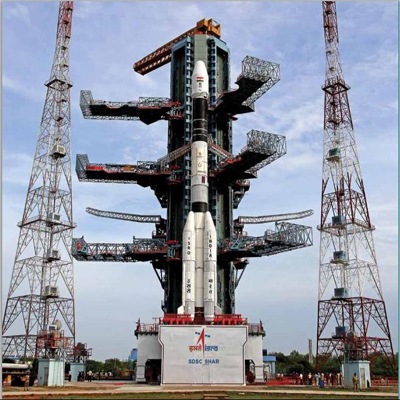
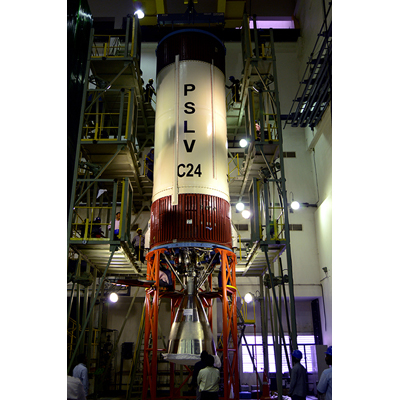
    BENGALURU: ISRO’s Polar Satellite Launch Vehicle, PSLV-C24 has successfully launched IRNSS-1B, the second satellite in the Indian Regional Navigation Satellite System (IRNSS) on 4 April at 1714 hours IST from Satish Dhawan Space Centre SHAR, Sriharikota.


    This is the twenty fifth consecutively successful mission of PSLV. The ‘XL’ configuration of PSLV was used for this mission. Previously, the same configuration of the vehicle was used five times to launch Chandrayaan-1, GSAT-12, RISAT-1, IRNSS-1A and Mars Orbiter Spacecraft.

            .                     .
    After the lift-off with the ignition of the first stage, the important flight events, namely, stage and strap-on ignitions, heat-shield separation, stage and strap-on separations and satellite injection took place exactly as planned. After a flight of about 19 minutes, IRNSS-1B Satellite, weighing 1432 kg, was injected to an elliptical orbit of 283 km X 20,630 km, which is very close to the intended orbit.

    After injection, the solar panels of IRNSS-1B were deployed automatically. ISRO’s Master Control Facility (at Hassan, Karnataka) assumed the control of the satellite. In the coming days, five orbit maneuvers will be conducted from Master Control Facility to position the satellite in its Geosynchronous Circular Orbit at 55 degree east longitude.

    IRNSS-1B is the second of the seven satellites constituting the space segment of the Indian Regional Navigation Satellite System. IRNSS-1A, the first satellite of the constellation, was successfully launched by PSLV on July 02, 2013.     IRNSS-1A is functioning satisfactorily from its designated geosynchronous orbital position.

    Being an independent regional navigation satellite system, it is designed to provide position information in the Indian region and 1500 km around the Indian mainland. IRNSS would provide two types of services, namely, Standard Positioning Services (SPS) – provided to all users – and Restricted Services (RS), provided only to authorised users.
     

    A number of ground stations responsible for the generation and transmission of navigation parameters, satellite control, satellite ranging and monitoring, etc., have been established in as many as 15 locations across the country.

    Two more satellites of this constellation, namely, IRNSS-1C and IRNSS-1D, are planned to be launched in the second half of 2014.  The entire IRNSS constellation of seven satellites is planned to be completed by 2015-16.

  • AsiaSat 7 replaces the ageing AsiaSat 3S today

    AsiaSat 7 replaces the ageing AsiaSat 3S today

    MUMBAI: In early October 2010, Asian satellite service provider, AsiaSat, and International Launch Services (ILS) had announced a contract for the launch of the AsiaSat 7 satellite on an ILS Proton.

    AsiaSat 7 was configured as a replacement satellite for AsiaSat 3S, one of AsiaSat‘s flagship satellites, operating at the orbital location of 105.5°E. AsiaSat 7 will carry 28 C-band and 17 Ku-band transponders, and a Ka-band payload. Its region-wide high power C-band beam covers Asia, the Middle East, Australasia and Central Asia, with Ku-band beams serving East Asia, South Asia and a steerable Ku beam.

    According to plan, the AsiaSat 7 satellite was successfully launched in Hong Kong on November 26, 2011, on an ILS Proton Breeze M launch vehicle from the Baikonur Cosmodrome in Kazakhstan. Nine hours and 13 minutes after lift-off, AsiaSat 7 successfully separated from the launch vehicle. Over the next few days, the satellite will arrive at the geostationary orbit, some 36,000 km above the Equator.sia

    “With AsiaSat 7 successfully launched well ahead of the planned date for AsiaSat 3S‘s replacement, we can assure continuity of service to customers, while at the same time, adding to our on-orbit capacity to service new business,” said AsiaSat president, CEO William Wade, in a press statement earlier. “With this launch opportunity on the ILS Proton, we are continuing our replacement strategy to provide continuity of services to our current and potential new customers across Asia, Middle East, CIS and Australasia. We know that we can count on the professionalism of ILS and Khrunichev for a successful launch for AsiaSat 7.”

    While AsiaSat 3S was launched on March 21, 1999, as a replacement for the ageing AsiaSat 1 in May of that year, AsiaSat 7 marked the launch of the fourth AsiaSat satellite on ILS Proton, the 20th Space Systems/Loral Satellite launched on ILS Proton, and the 69th ILS Proton launch overall.

    AsiaSat 7 is similar to AsiaSat 3S, and has been designed with a 15-year design life and will offer enhanced power and coverage at orbital location 105.5°E.

    As for AsiaSat 3S, it currently beams some of the popular channels in India which include: Zee TV, Star Plus, Star Utsav, Sahara One, Sahara Filmy, Sahara Firangi, Sahara Samay, 9X Media, 9X Jalwa, Big RTL Thrill, Big Magic, Big CBS Spark, B4U Movies, B4U Music and ETC Bollywood, among others.

    AsiaSat’s business continues to be affected by The Finance Act passed in India in May 2012. The Act taxes revenue generated from the provision of satellite transponder capacity to Indian customers and any non-Indian customers considered to have earned income from any business or source in India.

    The Indian government approved in its budget an increase of the royalty withholding tax rate from 10 per cent to 25 per cent, effective from 1 April 2013. Nevertheless, as stated in previous reports, the amount of AsiaSat’s revenue considered to be Indian sourced, and thus taxable in India, is still under discussion as of the date of this report. The increase in the tax rate will have a negative impact on its future business, and to remain competitive in the market, AsiaSat may make pricing adjustments which could negatively impact its margins in the coming financial year.

    In other major announcements by AsiaSat, the company indicated in its operational highlights for the financial year 2014-15 that two of its other satellites, AsiaSat 6 and AsiaSat 8, are on schedule and will launch in mid-2014 to provide new C and Ku-band capacity for business growth. Also, the commencement of the preliminary design phase for AsiaSat 9, the replacement for AsiaSat 4 in 2017, will provide new coverage and services at 122?E.

    AsiaSat chairman Sherwood P. Dodge said in a company statement: “Acquiring new business in 2014 will remain a top priority. Our expanding satellite fleet and reputation for providing quality and reliable satellite capacity, together with our commitment to our customers puts us in an excellent position to develop new business opportunities. The market remains highly competitive, but I believe our able management team and our high-quality services will enable us to move the business forward in 2014.”
  • Asia Satellite Telecommunications holdings limited announcement of annual results

    Asia Satellite Telecommunications holdings limited announcement of annual results

    MUMBAI: Asia Satellite Telecommunications Holdings Limited (‘AsiaSat’ – SEHK: 1135), Asia’s leading satellite operator, today announces its 2013 annual results for the year ended 31 December 2013.

    A YEAR OF CHALLENGE AND OPPORTUNITY


    Financial Summary:

    *  Turnover from continuing operations    HK$1,498,631,000*    -16%

    *   Profit attributable to shareholders from continuing operations HK$747,520,000 -4%

    *  Earnings per share from continuing operations    HK$1.91 -4%

    *   Proposed final dividend per share

    *   Proposed special dividend per share    HK$0.80 HK$1.50    No change +50%


    * 2012 turnover included HK$311 million as a one-off revenue resulting from the enactment of the Finance Act in India in May 2012. Excluding the one-off revenue, the 2013 turnover achieved was relatively flat when compared with the previous year


    Operational Highlights:

    *  AsiaSat 6 and AsiaSat 8 on schedule for launch in mid 2014 to provide new C and Ku-band capacity for business growth

    *  AsiaSat 7 to fully replace AsiaSat 3S in Q2 2014 to offer enhanced power and coverage at 105.5?E

    *  Commencement of the preliminary design phase for AsiaSat 9, the AsiaSat 4’s replacement in 2017 to provide new coverage and services at 122?E

    *  New customer acquisitions and service expansion of existing customers reinforced AsiaSat’s leadership position in broadcasting service

    AsiaSat’s Chairman, Sherwood P. Dodge, said, “The launch of AsiaSat 6 and AsiaSat 8 will provide new revenue streams, as customers take advantage of the increased capacity which these powerful new satellites will bring.”


    “Acquiring new business in 2014 will remain a top priority. Our expanding satellite fleet and reputation for providing quality and reliable satellite capacity together with our commitment to our customers puts us in an excellent position to develop new business opportunities. The market remains highly competitive, but I believe our able management team and our high – quality services will enable us to move the business forward in 2014.”
     

    Click here for full result

  • MEASAT-3/3a HD platform tips 50

    MEASAT-3/3a HD platform tips 50

    MUMBAI: Good news for HD lovers. MEASAT Satellite Systems Sdn. Bhd. (MEASAT) has announced that the MEASAT-3/3a platform has become the first Asian C-Band satellite platform to exceed 50 high definition (HD) channels, confirming the maturing of the HD content business in Asia.


    MEASAT started offering HD distribution services on the MEASAT-3 satellite in July 2007. Working with a select group of channels, technology partners and uplink providers, MEASAT developed a flexible solution for the launch and distribution of HD channels across the Asia-Pacific region. The services were expanded in

    2009 with the launch of the collocated MEASAT-3a satellite. This strategy, underpinned by significant financial and technological investments and an innovative business model, helped develop the HD segment in Asia to what it is today.


    “In 2007, MEASAT had already developed the long-term vision to introduce tailor-made HD solutions to the Asian market,” said Encompass managing director Deepakjit Singh. “Encompass is now using the MEASAT MCPC platform at 91.5°E to distribute 20 premium HD channels across Asia.”


    “MEASAT had the vision and foresight to propose a partnership business model with leading teleports and MCPC platforms in which the Asian HD segment would be promoted jointly. This innovative approach has led to  Globecast  Asia  distributing  12  top  HD  channels  across  Asia.”  added  Globecast Asia senior VP sales Yew Weng Soo.


    “The coverage provided by RRsat’s MCPC platform on MEASAT-3/3a at 91.5°E extends across 102 countries across Asia, from Japan to Africa,” added RRsat chief commercial officer Lior Rival. “This coverage is an essential factor in RRsat’s decision to choose MEASAT as our Asian HD distribution partner for 10 high quality HD channels. This premium platform is an important part of our value-added media services portfolio that enables our customers to reach more places, in more ways on more devices.”


    “In collaboration with our partners we developed an innovative business model to help ‘jump start’ the Asian HD segment” said MEASAT CEO Paul Brown-Kenyon. “Through this collaboration, we announced the first Asian regional C-Band distribution of an HD channel in 2007. We are delighted to be able to celebrate the maturing of the HD segment with the announcement of the 50 HD channels on our platform this week. We continue to work with our partners and our customers to ensure that our services are tailored for channel operators, and the MEASAT-3/3a satellites are the key HD location for Asian HD content.”


    Today MEASAT works with the industry’s leading uplink providers, including Encompass Digital Media (Encompass), Globecast and RRsat America – Global Communications Network Inc (RRsat) with an HD video distribution solution tailor-made for the Asian market. In addition to the channels distributed by the uplink partners, the satellite also supports HD channels uplinked by the channel operator.

  • SES reaches 291 million TV homes worldwide, 151 million in Europe

    SES reaches 291 million TV homes worldwide, 151 million in Europe

    MUMBAI: SES has increased its reach in 2013 worldwide to 291 million and in Europe to 151 million TV homes. This represents an increase of 5 per cent both worldwide and in Europe, compared to the previous year, strongly driven by the development in Africa, Middle East and, especially, India (+ 18 percent) and in Asia-Pacific (+ 7 percent). The household reach in Latin America grew by 5 percent, in North America by 3 percent. These are the results of SES’ annual market research, including the detailed Satellite Monitor studies in Europe.

    The direct reach from the SES fleet to satellite homes grew from 99 million in 2012 to 106 million satellite TV homes in 2013. The indirect reach through the feed of cable networks from SES satellites grew slightly, from 152 to 153 million homes; the number of IPTV homes fed from SES satellites increased by 27 percent to 31 million. The strongest relative growth of the direct reach came from the Asia-Pacific region (+ 21 percent) and Africa, Middle East and India (+ 18 percent). These figures confirm satellite’s continuous increase in reach and its leading role as a broadcasting infrastructure in general and as digital and High Definition (HD) broadcasting infrastructure in particular.

    The SES Satellite Monitor results also emphasize again the important role of SES in Europe.  SES satellites service almost all cable and IPTV homes in Europe (95 percent) and a large majority of the European satellite HD homes (81 percent). The largest single DTH market for SES in Europe remains Germany, with 18 million ASTRA homes receiving their TV signal directly from the SES fleet.  SES transmits more than 6,200 TV channels, 1,800 of them in HD.

    “The results of this year’s SES Satellite Monitor and market research confirm again the strong role that SES is playing as a high performing video and TV broadcasting infrastructure”, said Ferdinand Kayser, Chief Commercial Officer (CCO) of SES. “Our strong growth is a direct result of our significant investments in new satellites especially in the highly important and dynamic emerging markets. We could also further take advantage of our strong infrastructure and service offerings in mature markets and realise further gains, on a high level, in Europe and North America.  As a leader in video broadcasting, DTH, digital transmission and HD, SES plays a critical role in the provision of communications infrastructure globally and is well positioned to further drive digitalisation and the deployment of high performing video neighbourhoods in mature as well as demanding emerging markets.”


  • Outdoor HD Joins MEASAT’s Neighborhood

    Outdoor HD Joins MEASAT’s Neighborhood

    MUMBAI: MEASAT Satellite Systems Sdn. Bhd. (“MEASAT”) announced today a three (3) year agreement with Globecast and Outdoor Channel for distribution on the MEASAT-3 satellite. Under the terms of the agreement, MEASAT will distribute Outdoor HD via MEASAT-3’s global C-band beam, covering 102 countries from Asia, Australia, Middle East, Europe and Africa.


    Outdoor Channel (Asia), The World Leader In Outdoor Entertainment, is a channel that features traditional and contemporary outdoor sports such as fishing, off-road, water sports, safari and a range of outdoor activities that thrill, inspire and entertain.


    “MEASAT’s partnership with Globecast continues to expand with the distribution of the Outdoor Channel,” shared Raj Malik, Senior Vice President – Sales & Marketing, MEASAT. “The Outdoor Channel, with its premium adventurous lifestyle programming, strengthens the variety of content offered from MEASAT’s
    91.5°E video neighbourhood.”


    “We appreciate the ongoing support we receive from our distribution and channel partners” he added.


  • EchoStar Acquires European Mobile Satellite Services Provider

    EchoStar Acquires European Mobile Satellite Services Provider

    COLORADO: (NASDAQ: SATS) announced today that it has acquired 100% ownership of Solaris Mobile Ltd., a next-generation mobile satellite services (MSS) operator based in Dublin, Ireland and one of the European Union licensees of mobile satellite service with a complementary ground component (S band).


    Solaris Mobile Ltd. is deploying a satellite and terrestrial network for wholesale access to enhanced mobile communications across Europe in the 30 MHz S band licensed to Solaris Mobile. In connection with the acquisition, EchoStar has entered into an agreement with Solaris Mobile to provide it with MSS capacity on a new next-generation MSS satellite.


    “Through this acquisition and our mobile satellite infrastructure expertise, we look forward to accelerating advanced mobile services throughout the European Union,” said Anders Johnson, president, EchoStar Satellite Services. “We are excited to build upon the groundwork laid by Solaris Mobile by most immediately bringing with us access to a next generation MSS satellite which will support a wide range of innovative services across the European Union.”

  • SpaceX successfully launches Thaicom 6 satellite to GTO

    SpaceX successfully launches Thaicom 6 satellite to GTO

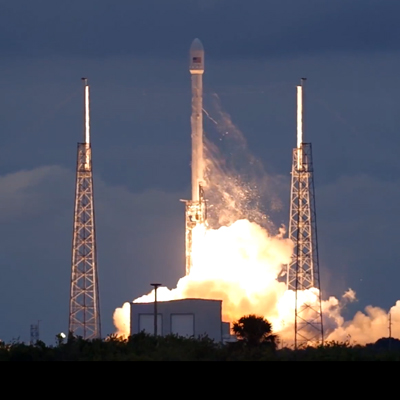
    FLORIDA: Today, Space Exploration Technologies (SpaceX) successfully launched the THAICOM 6 satellite for leading Asian satellite operator THAICOM.  Falcon 9 delivered THAICOM 6 to its targeted 295 x 90,000 km geosynchronous transfer orbit at 22.5 degrees inclination.  The Falcon 9 launch vehicle performed as expected, meeting 100% of mission objectives.


    Falcon 9 lifted off from Space Launch Complex 40 (SLC-40) at 5:06 PM Eastern Time.  Approximately 184 seconds into flight, Falcon 9’s second stage’s single Merlin vacuum engine ignited to begin a five minute, 35 second burn that delivered the THAICOM 6 satellite into its parking orbit. Eighteen minutes after injection into the parking orbit, the second stage engine relit for just over one minute to carry the THAICOM 6 satellite to its final geostationary transfer orbit.  The restart of the Falcon 9 second stage is a requirement for all geostationary transfer missions.


    “Today’s successful launch of the THAICOM 6 satellite marks the eighth successful flight in a row for Falcon 9,” said Gwynne Shotwell, President of SpaceX. “SpaceX greatly appreciates THAICOM’s support throughout this campaign and we look forward to a busy launch schedule in 2014.”   


    The THAICOM 6 mission marks Falcon 9’s second flight to a geosynchronous transfer orbit and begins a regular cadence of launches planned for SpaceX in 2014. SpaceX has nearly 50 launches on manifest, of which over 60% are for commercial customers. 


    This launch also marks the third of three qualification flights needed to certify the Falcon 9 to fly missions under the Evolved Expendable Launch Vehicle (EELV) program. Once Falcon 9 is certified, SpaceX will be eligible to compete to launch national security satellites for the U.S. Air Force.


  • ISRO’s GSLV D5  successfully launches GSAT-14

    ISRO’s GSLV D5 successfully launches GSAT-14

    MUMBAI: The first time it was about to launch in august 2013 a technical snag forced an abortion. But now Indian Space Research Organisation’s (ISRO) twenty third communication satellite GSAT-14 has been successfully launched on 5 January 2014 from launch vehicle Geosynchronous Satellite Launch Vehicle GSLV-D5 that is using an indigenous cryogenic engine for the first time. The launcher propelled the satellite into a Geosynchronous Transfer Orbit (GTO) after which it used its own propulsion system to settle itself at 74 degrees east longitude orbit.

    The mission was an important one for ISRO since India has been developing cryogenic engines or two decades but till now had been dependent on Russian ones. This launch puts India at a prominent position in space science at par with countries like the US and Russia. Previous attempts at launches using a cryogenic engine have ended up in a mess. The launch that was telecast live on DD National saw the rocket being propelled up into space with each stage crossing at its intended time. 

    ”Team ISRO has done it. The cryogenic engine has performed as predicted and injected GSAT- 14 in the intended orbit. This is an important day for science and technology and space technology in the country. 20 years of our effort in realising an indigenous crygoenic engine has now fructified. We have put in excruciating efforts of three and a half years after test flight of cryogenic stage in 2010,” said an ecatatic ISRO chairman K Radhakrishnan as the whole team rejoiced  when the the cryogenic stage was initiated and completed and years of ISRO’s hard work paid off. The launch cost approximately Rs 370 crore.

    The previous attempt to blast off GSLV into space was aborted following a fuel leak in its engine that developed hours before launch. ISRO worked on it and gave it a better metal covering following which it decided to give it another shot. A three stage rocket- the first stage runs on solid fuel, second on liquid fuel and third on the cryogenic engine – the GSLV-D5 carried the 1982 kgs GSAT-14 to replace GSAT-3 that wa decomissioned in 2010.

    The new satellite’s structure is based on ISRO’s two ton weighing (I-2k satellite bus). The satellite has six Ku band transponders (51.5 dBW EOC-EIRP), six C band transponders (36 dBW EOC-EIRP) and 2 Ka band transponders and will be co-located with INSAT-3C, INSAT-4CR and KALPANA-1.

    A 29 hour countdown began at 11: 16 am on 4 January and the launch was at 4: 18 pm on 5 January from the Satish Dhawan Space Centre at Sriharikota in Andhra Pradesh. The 17 minutes and 8 second flight launch is the first of 2014 after the postponement of Space X’s launch of Thaicom-6 from 3 January to between 6 to 9 January. The Elon Musk backed company decided to go in for a later liftoff as problems had emerged with Falcon-9 rocket’s fairing.

    This mission is likely to have a beneficial spinoff. It could lead to orders to build more rockets that can carry payloads of up to 5 tonne to Lower Earth Orbit. Till now ISRO has been using Polar Satellite Launch Vehicle (PSLV) that carries loads of around a tonne.