Category: Satellites

  • SES to launch SES-12 for Asia

    SES to launch SES-12 for Asia

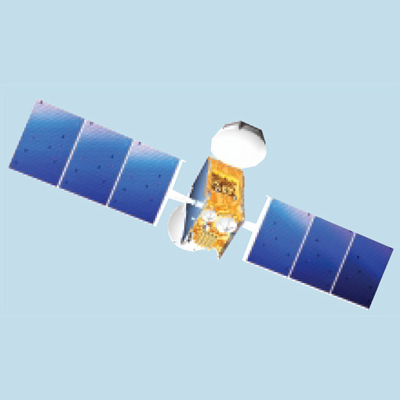
    MUMBAI: Satellite operator SES is looking at building a new hybrid communications satellite, SES-12. And for the same, the operator has selected Airbus Defence and Space. The new satellite, which is set for a launch in 2017, aims to serve the fast growing direct to home (DTH), data, mobility and government markets in Asia.


    The new satellite will expand SES’s capabilities to provide DTH broadcasting, VSAT, Mobility and High Throughput Satellite (HTS) data connectivity services in the Asia-Pacific region, including rapidly growing markets such as India and Indonesia.


    The spacecraft will be positioned at the well-established SES orbital slot of 95 degrees east, providing incremental as well as replacement capacity with excellent view angles across the Asia-Pacific region.


    SES-12 will replace SES’s existing NSS-6 satellite and will be co-located with SES-8.  The satellite operator currently serves close to 20 million DTH households in India and Indo-china from this orbital slot.


    The new satellite will be built by Airbus Defence and Space based on the highly reliable Eurostar E3000 platform. The satellite is designed to operate for 15 years, with a payload consisting of 68 high-power physical Ku-band transponders and eight physical Ka-band transponders. The spacecraft will be equipped with an electric plasma propulsion system for orbit raising and on-orbit maneuvers. The payload of the hybrid SES-12 satellite consists of two distinct but complementary missions: first, traditional wide beam coverage, and second, a high-powered Ku-band multi spot beam payload (HTS).


    The traditional wide-beam mission consists of 54 (36 MHz equivalent) transponders that will provide state-of-the-art replacement and growth capacity for SES’s existing DTH, government and VSAT customers allowing for a seamless transition from NSS-6 to SES-12. In addition, the design provides incremental growth capacity to support new DTH platforms and other services targeting the Asia-Pacific region. The second mission consists of 70 Ku-band spot beams and 11 Ka-band spot beams delivering over 14 GHz for VSAT, Enterprise, Mobility and Government applications. This mission also includes a Digital Transparent Processor (DTP) which provides anti-jamming capabilities as well as increased payload flexibility in order to provide customised bandwidth solutions to SES customers.


    “I salute SES’s ambitions when it comes to innovation and responsiveness in a rapidly changing market, and we are pleased to be able to provide them with our very best technology for both the payload and the platform,” said Airbus Defence and Space head of space systems Francois Auque. He added, “We have been using electric propulsion for station-keeping for 10 years now and have equipped 10 Eurostar E3000 satellites with this technology, which we are now also offering for initial orbit raising. The resulting weight saving will enable us to combine two high-capacity missions equivalent to two conventional satellites in one satellite, SES-12.”


    SES-12 is the eleventh spacecraft that SES has ordered from Airbus Defence and Space, eight of these satellites are in operational service, one is ready to be launched and a tenth, ordered this year, is currently under construction. The satellite operator has decided that it will keep its annual spending to around Euro 450 million. It has also drawn up a five year plan, as part of which SES from 2014 to 2018 will spend a total of Euro 2.3 billion. It currently has four satellites under construction, including SES-12. Plans are also afoot to start more five satellite builds during this five year period. 


    SES chief technology officer Martin Halliwell said, “We look forward to working again with Airbus Defence and Space on this important addition to our global fleet. SES-12 will greatly expand our capacity over Asia and is fully in line with our capital expenditure plan. Through its unique hybrid DTH/HTS design, SES-12 will continue to support our growing DTH platforms and provide a new, lower cost HTS product, further enhancing our customer’s options for growth.” 

  • SES sees robust first half

    SES sees robust first half

    MUMBAI: SES S.A., a leading worldwide satellite operator (NYSE Euronext Paris and Luxembourg Stock Exchange: SESG), reports financial results for the six months ended 30 June 2014.

        
    • H1 Revenue of EUR 938.9 million (2013: EUR 910.5 million)

    – An increase of 6.3% over the prior year period at constant exchange rates (“constant FX”)1


    • H1 EBITDA of EUR 693.8 million (2013: EUR 662.0 million)

    – An increase of 7.4% at constant FX over the prior year

    – EBITDA margin of 73.9% (2013: 72.7% as reported)


    • Operating profit rose to EUR 437.5 million, an increase of 9.4% at constant FX


    • H1 Profit of the group increased 8.5% to EUR 290.9 million (2013: EUR 268.0 million)


    • Contract backlog of EUR 7.2 billion at end of June 2014


    • Closing Net Debt / EBITDA ratio of 2.85 (30 June 2013: 3.07) Karim Michel Sabbagh, President and CEO, commented:


    “SES’s continuing successful development  and execution of the 2014 plan has delivered robust first half results that validate our strategy to address target regions and market verticals. Video remains core to our business. Europe and the International segments posted strong growth, while the North American  segment  continued  to be affected  by the U.S. Government  budget  sequester.  The 2014 financial guidance is reiterated.


    Three satellites were brought into service in the period, further developing our capabilities in Europe, MENA and Asia-Pacific.  Four more satellites are under construction,  including the newly announced SES-12, a hybrid satellite for the Asia-Pacific region, which will benefit from the dual innovations of an HTS  payload  and  all-electric  propulsion.  These  programmes,  all components  of our  medium  term CapEx  plan,  will  enhance  our  differentiated  positioning  in  the  developing  markets  that  we  are targeting.


    On 10 July 2014, O3b Networks, the satellite company building ‘Fibre in the Sky’, in which SES has a significant  interest,  successfully  launched  its  second  group  of  four  satellites.    O3b’s  full  suite  of commercial services will be offered once in-orbit testing is completed.   We look forward to O3b’s successful commercialisation  of its product range with customers across the underserved markets of the world.”


    Click here to read the financial highlights

  • India to add maximum satellite TV revenues and subscribers by 2020: Report

    India to add maximum satellite TV revenues and subscribers by 2020: Report

    MUMBAI: A report released by Digital TV Research has thrown some light on how satellite TV revenues will change between now and 2020. The report, that covers 138 countries, estimates that Asia Pacific and Latin America will show strong growth, while western Europe will witness a fall in revenue. This will be due to increased competition from other platforms.

    Satellite TV revenues for all these countries are estimated to hit $ 99.9 billion in 2020, up from $87.8 billion in 2013 and $69.3 billion in 2010. It also predicts that satellite TV revenues will overtake cable TV revenues in 2014. Therefore, satellite TV will comprise 46 per cent of total pay TV revenues in 2014, rising to 47.8 per cent by 2020.

    Even though the US will remain as the leader in revenue generation, India is expected to add the most satellite TV revenues between 2013 and 2020 ($3.2 billion, tripling its total). This is followed by Latin American country Brazil with $1.6 billion and the US with $1.5 billion. In more than 44 countries, revenues will more than double.

    The top five revenue generators in the year 2020 will be the US with $40,570 (up from $39,034 in 2013), Brazil with $7,634 (up from $6,084 in 2013), UK with $5968 (down from $6,124 in 2013), India will add $4,704 and Mexico with $4,204 (up from $3,762 in 2013).

    Report author Simon Murray said: “Satellite TV revenues will decline for 19 countries between 2013 and 2020. Much of this is due to greater competition forcing satellite TV platforms to offer cheaper packages which will lead to lower ARPUs. Furthermore, low-cost satellite TV packages are making a significant impact in several countries.”

    The total number of pay satellite TV homes will be 271 million by 2020, up from 192 million by end of 2013 and 143 million by 2010 end. It also states that out of the expected 78.5 million subscribers that will be added between the years 2013 to 2020, maximum will come from India-27.7 million. This will be followed by Brazil trailing at 5.8 million and Indonesia with 5.4 million.

    Pay TV subscriber total will more than double in 47 countries but will fall in 13 countries. India will lead in the total number of pay satellite TV homes in 2020 with 69.2 million for which it toppled the US in 2012.  India will be followed by Russia and Brazil. Together, India, US, Brazil and Russia will account for just over half the global total by then.

    439 million homes will directly receive TV signals via satellite dishes, up by 100 million by end of 2013. More than a quarter of global TV households will have satellite dishes by 2020, up from 18.3 per cent in 2010 and 22.3 per cent in 2013.

  • ISRO earns over Rs 4 crore for supplying data received on Indian satellites and for leasing transponders

    ISRO earns over Rs 4 crore for supplying data received on Indian satellites and for leasing transponders

    NEW DELHI: Antrix, the commercial arm of the Indian Space Research Organisation, has earned Rs 4,408.07 crore since 1992 through various satellite launch missions by providing services on commercial basis.


    These services include marketing and direct reception of data from Indian Remote Sensing Satellites to national and international clientele and leasing of satellite transponders on-board INSAT/ GSAT satellites.


    In addition, ISRO has launched 40 satellites of 19 foreign countries on commercial basis under contract between respective foreign customers and Antrix and generated income of € 50.47 million and US $ 17.17 million. 

    Minister of State for Department of Space Jitendra Singh told Parliament today that the future course of action plan includes expanding the data and direct reception services of Indian Remote Sensing Satellites to international clientele, enhancing leasing of satellite transponders to Indian customers, increasing launch services for foreign satellites on-board Indian launch vehicles, and enhancing marketing of satellites and sub-systems. 

  • GSAT-15 and GSAT-16 satellites to be launched by mid 2015

    GSAT-15 and GSAT-16 satellites to be launched by mid 2015

    NEW DELHI: Two GSAT missions are expected to be launched by the Indian Space Research Organisation (ISRO) by mid 2015. GSAT-15 will be launched in FY 2014-15 while GSAT-16 will be launched by mid 2015, the c was informed by Minister of State for Department of Space Jitendra Singh.


    The launches are expected to augment the communication facilities including the Ku-band and Upper Extended C-band.


    The government has approved a budgetary support of Rs 859.5 crore including a foreign exchange component of Rs 622.5 crore for realisation of GSAT-15 spacecraft project including launch services and insurance. It has also approved a budgetary support of Rs 865.5 crore including a foreign exchange component of Rs 628 crores for realisation of GSAT-16 spacecraft project including launch services and insurance.


    GSAT-15, which had been approved by the government on 17 July last year, will carry 24 Ku-band transponders and provide replacement for the Ku-band capacity of INSAT-3A and INSAT-4B spacecrafts to augment and support the existing DTH and VSAT services in the country. It will also carry a GAGAN (GPS Aided Geo Augmented Navigation) payload to meet the in-orbit redundancy requirement for safety of life (SOL) operations benefiting the civil aviation services in the country.


    GSAT-16, also approved on 17 July last year, will carry 48 transponders in C-band, Ku-band and Upper Extended C-bands and provide replacement for the INSAT-3E spacecraft and augment the C and Upper Extended C-band capacity. The spacecraft will be utilised in augmenting and supporting the existing telecommunication, television, VSAT and other satellite based services in the country.

  • Over Rs 1860 crore spent on 15 communication satellites in last 3 years

    Over Rs 1860 crore spent on 15 communication satellites in last 3 years

    NEW DELHI: After the announcement of Budget 2014 allocations, the space department has laid down the future programme for 2020.


    The plan envisages development of advanced launch vehicle systems, thematic earth observational satellites with improved resolution, high-power, high-throughput communication satellites, microwave multi-spectral remote sensing satellites, weather and climate studies, constellation of satellites for regional navigation, development of critical technologies for human spaceflight and satellites for space science and planetary exploration purposes.


    Fourteen of the 58 space missions slated in the 12th Five Year Plan, 2012-17 are linked to communication.  In addition, five launch vehicle missions will also be linked to these satellites.


    GSAT-10, GSAT-15, GSAT-16, GSAT-17 and GSAT-18 are specifically communication satellites to augment the INSAT system with C and Ku band transponders. GSAT-9 will be a communication satellite to augment the INSAT system with C band transponders. GSAT-14 and GSAT-11S will be experimental communication satellites, while GSAT-6 and GSAT-6A will be multi-media mobile communication satellites for strategic applications.


    GSAT-7 is a communication satellite for special users, and both GSAT-11 and GSAT-Ka are advanced Ka band satellite for VSAT communications.  GSAT-19E is a new generation experimental communication satellite.


    Close to Rs 1867 crore has been spent on the five satellites meant for communication launched in the last three years, out of the total Rs 1987 crore allocated for this purpose. It can be noted this amount was spent by 31 March this year.


    According to sources in the Department of Space, these satellites are GSAT-14 (launched on 5 January this year), GSAT-7 (launched on 30 August last year to reach a wide area over the oceans including the Indian mass), GSAT-10 (launched on 29 September 2012 for communication and navigation), GSAT-12 (launched on 15 July 2011) and GSAT-8 (launched on 21 May 2011 for communication and navigation).

  • CASBAA asks FM, I&B to roll back increased royalty on foreign satellite operators

    CASBAA asks FM, I&B to roll back increased royalty on foreign satellite operators

    NEW DELHI: The Cable and Satellite Broadcasters Association of Asia (CASBAA) has urged Finance Minister Arun Jaitley to withdraw the royalties imposed on foreign satellite operators (FSO) by the Finance Act 2012 and 2013 and let the matter be settled by the Supreme Court which is presently hearing a matter in this regard.


    The Delhi High Court had in January 2011 held in the case of Asia Satellite Telecommunications company Limited (AsiaSat) that the charges received by the Hong Kong based FSO from its customers for provision of transponder capacity cannot be characterised as ‘royalties’ under the Income Tax Act as it stood prior to the amendment in 20l2. It was held by the court that the equipment was used by the FSOs to provide a service to their customers and so the question of royalty taxation did not arise.


    The memorandum by CASBAA CEO Christopher Slaughter says that this view of the High Court was in conformity with the international jurisprudence and model commentaries issued by international tax bodies and renowned jurists / authors and was also followed in case of other FSOs by the High Court and Income Tax Appellate Tribunals.


    However, the memorandum sent to Jaitley with a copy to Information and Broadcasting (I&B) Minister Prakash Javadekar points out that the matter has become sub judice as Income Tax authorities have filed an appeal against this judgment in the Supreme Court.


    I&B Ministry sources told indiantelevision.com that CASBAA has also protested the rise in royalty under the Finance Act 2013 from 10 per cent to 25 per cent as it is not reasonable in view of the competitive margins earned by the industry players. The Association wants the Minister to roll back this increase so that the tax rates are made ‘friendlier’ and both the operators and consumers can benefit from a rational tax regime.


    It is stated that a majority of the Double Taxation Avoidance Agreements (DTAA) that India has entered into provide for a tax rate (on gross basis) on royalties and fees or technical services of 10 per cent.


    Thus, taking a holistic view from the point of alignment with the DTAAs and internationally accepted tax rates, the rate of 25 per cent is highly unjust and implies that FSOs are earning high revenues from India which is not the case.


    Furthermore, any such step to increase tax rates is not right as the matter is sub judice in the Supreme Court. It not only makes the services ‘cost ineffective’ but hits the ultimate Indian end consumers.


    Slaughter points out that India’s participation in the global network of satellite communication is growing and any such move by the Indian Government to tax FSOs may also drive policy-makers of other nations to adopt similar measures for taxing payments flowing into India from foreign jurisdictions. 

  • Launch Satellite for benefit of SAARC countries: Modi

    Launch Satellite for benefit of SAARC countries: Modi

    NEW DELHI: Prime Minister Narendra Modi  has asked the Indian Space Research Organisatinon to develop a satellite that India can gift to the South Asian Association for Regional Cooperation (SAARC) region.


    He asked ISRO to expand navigation system to all of south Asia.


     Speaking at Sriharikota spaceport, around 100 km from Chennai, after witnessing the launch of PSLV C23, Modi said, “India’s space programme is driven by a vision of service to humanity. Not by a desire of power.”


    He added that the country must share the fruits of its technological advancements with those who do not enjoy the same – the developing world and India’s neighbours in particular.


     India is already sharing disaster management data with over 30 countries and provides benefits of telemedicines to Afghanistan and African countries. “But we must do more,” said the Prime Minister.


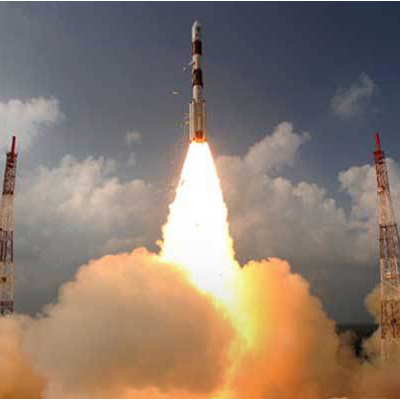
     Earlier, Modi saw the launch of the Polar Satellite Launch Vehicle PSLV-C23 which successfully lifted off from the first launch pad of Sriharikota space station at the Satish Dhawan Space Centre.


     The launch vehicle PSLV-C23, with a height of 44.4 metres and a vehicle lift-off mass of 230 tonne, is carrying SPOT-7, a 714 kg, French earth observing satellite as the main payload, which will be injected into a 655 km Sun Synchronous Orbit (SSO). Other satellites include 14 kg AISAT of Germany, NLS7.1 (CAN-X4) & NLS7.2 (CAN-X5) of Canada each weighing 15 kg and the 7 kg VELOX-1 of Singapore.


    PSLV has had 26 consecutive successful flights till date. The PSLV-C23 will be the tenth flight of PSLV in “core-alone” configuration, which means a configuration without the use of solid strap-on motors.


    After an estimated time of 20 minutes, ISRO’s workhorse PSLV separated all five satellites — one by one into their intended orbit.


    During his first visit to the facility, the Prime Minister took a tour of the facilities, including the launch pad. He was also briefed by ISRO scientists and its Chairman K Radhakrishnan.


    NLS 7.1 and NLS 7.2 are from the University of Toronto, Institute of Aerospace Studies/ Space Flight Laboratory. Canada.


    Both payloads would fly in precise formation using differential GPS with centimeter-level accurate position control system.


    VELOX-1 from Nanyang Technological University, Singapore is a technology demonstrator for design of image sensor, MEMS-based attitude determination and control system and inter-satellite RF link.


    These five satellites are being launched under commercial arrangements that ANTRIX, ISRO’s commercial arm, has entered into with the respective foreign agencies.


    Isro earlier delayed the launch by three minutes due to the threat of space debris getting into the way of the satellites. The PSLV C23 lifted off from the spaceport at 9.52 am on Monday instead of 9.49 am as decided when the launch plan was announced.


    One of the debris objects could have come as near as 40 metres from the spacecraft and by delaying the launch ISRO wanted to avoid the objects by thousands of kilometres as debris move at a velocity of several kilometres per second, said Isro officials.


    A report quoting experts stated that the debris from the 2011 collision of a US satellite and a Russian satellite were found at altitudes above 600 km.


    Until now, the largest number of foreign satellites launched by PSLV was from Germany. In the first launch of satellites of other countries, PSLV-C2 has launched the German satellite with a mass of 45 Kilogram, along with a KITSAT-3 with 110 Kg mass were the payloads. Including this, till April, 2014, eight satellites of Germany reached their destination in space through the launch vehicle of Isro. Canada has sent five satellites till April, 2014 through PSLV while Japan has sent three satellites using the service.

  • MEASAT-3b launch rescheduled to September

    MEASAT-3b launch rescheduled to September

    MUMBAI: MEASAT Global Berhad (MEASAT) has announced that the launch of the MEASAT-3b satellite has been rescheduled to September 2014. The satellite will remain in storage at the European Spaceport, Kourou, French Guiana till then.


    MEASAT-3b had previously been scheduled for launch on 6 June 2014 GFT (7 June Kuala Lumpur time). The launch date was rescheduled after the manufacturer of the MEASAT-3b co-passenger requested time for repairs to their satellite.


    “We are clearly disappointed with the delay and are currently in co-ordination with Arianespace (the launch service provider) on the rescheduling of the launch,” MEASAT chief executive officer Paul Brown-Kenyon had then said.  


    It can be noted that the initial date for launch of the satellite was 28 May, which was then rescheduled to 6 June. The reason cited then was to allow the MEASAT-3b co-passenger additional time to prepare for the launch. 


    When the launch was first postponed, MEASAT senior vice president – space system development Dr Ali Ebadi had said, “The main focus of the launch campaign is to ensure that both the satellite and launch vehicle are ready for launch. Given the complexity of the satellite and launch vehicle, it is not uncommon for the technical teams to request time for additional checks.”


    With the satellite launch being pushed to September, Direct to Home (DTH) operator Sun Direct’s plans to move to MEASAT 3b and thus add nine transponders to its existing four and to also take its HD channel offering from the current 11 to 30 and SD from 210 channels to 350 will take a backseat.  


    “We will be shifting to MEASAT 3b and hence, will get nine transponders by first week of June. Our HD offering is currently low, but with the extra capacity we aim to take it to 30, while we expect the number of SD channels to go up to 350,”Sun Direct MD Mahesh Kumar had earlier told indiantelevision.com.


    MEASAT-3b is designed to provide an additional 48 high powered Ku-band transponders at the 91.5°E orbital slot to expand DTH and VSAT services across Malaysia, India, Indonesia and Australia. Co-located with MEASAT-3 and MEASAT-3a, the satellite will more than double MEASAT’s Ku-band capacity at 91.5°E creating one of the region’s most powerful and robust orbital locations.

  • MEASAT-3b launch delayed

    MEASAT-3b launch delayed

    MUMBAI: The much awaited MEASAT-3b launch has been delayed. While the satellite was set for launch on 6 June (7 June Kuala Lumpur time), it has now been postponed after the manufacturer of the MEASAT-3b co-passenger requested time for repairs to their satellite.


    “We are clearly disappointed with the delay and are currently in co-ordination with Arianespace (the launch service provider) on the rescheduling of the launch,” said MEASAT Satellite Systems CEO Paul Brown-Kenyon through a press statement. “We will provide an update when we receive further information on the revised launch date,” he continued.


    MEASAT-3b is designed to provide an additional 48 high powered Ku-band transponders to the 91.5°E orbital slot to expand Direct-To-Home and VSAT services across Malaysia, India, Indonesia and Australia. Co-located with MEASAT-3 and MEASAT-3a, the satellite will more than double MEASAT’s Ku-band capacity at 91.5°E creating one of the region’s most powerful and robust orbital locations.


    The delay in the launch of the satellite will further delay DTH operator Sun Direct’s plans of adding more high definition and standard definition channels. With the launch of MEASAT-3b, Sun Direct is set to add nine more transponders to its existing four transponders.