Category: Satellites

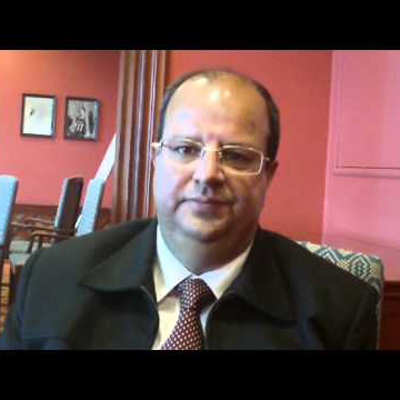
  • Rajiv Khattar joins ABS as president- south Asia

    Rajiv Khattar joins ABS as president- south Asia

    NEW DELHI: Rajiv Khattar, until recently Dish TV president projects, has joined as president- south Asia in Asia Broadcast Satellite (ABS) in a newly created role that makes him responsible for business development and sales for the region.


    The announcement was made in Washington by ABS CEO Tom Choi, who said, “We are delighted to have Rajiv onboard as the new head for this region. Rajiv brings along a wealth of experience of the cable and satellite industry with extensive knowledge of the direct-to-home (DTH) and broadcast sector in the India market. His expertise and leadership skills will greatly contribute to our development of new business for the market.”


    Confirming the news and the fact that he had already taken over, Khattar told indiantelevision.com that he would be based out of Delhi. He said it was too early to comment on the future plans of ABS in south Asia.


    Khattar has over 20 years of experience in the cable and satellite industry. Before joining ABS, he spent 10 years at Dish TV as president projects. In this role, he gained a wide range of experiences covering business, operations, regulatory procedures and strategy development. Prior to this, he held various leading positions with other cable and telecommunication companies.


    He holds a Diploma in Production Engineering (Delhi Board of Technical Education), a Diploma in Business Management (Rajendera Prasad Institute of Communication and Management, Mumbai) and a Diploma in Materials Management (Faridabad Productivity Council).


    ABS is one of the fastest growing global satellite operators in the world, offering a complete range of tailored solutions including broadcasting, data and telecommunication services to broadcasters, service providers, enterprises and government organisations.


    ABS operates a fleet of six satellites; ABS-1A, ABS-2, ABS-3, ABS-4/Mobisat-1, ABS-6 and ABS-7. The satellite fleet covers 80 per cent of the world’s population across Africa, Asia Pacific, Europe, the Middle East, CIS and Russia.


    ABS has also procured two Boeing 702SP satellites (ABS-3A & ABS-2A) planned for early and late 2015 with the options to add more satellites over the next 2-3 years to its growing satellite fleet.


    Headquartered in Bermuda, ABS has offices in the United States, Dubai, South Africa, Germany, Philippines, Indonesia and Hong Kong. 

  • SES entrusts Arianespace with SES-12 launch

    SES entrusts Arianespace with SES-12 launch

    MUMBAI: SES has selected Arianespace to launch the powerful new hybrid communications satellite, SES-12, on board an Ariane 5 booster from the European Space Center in Kourou, French Guiana, during Q4 2017. This will be the 40th launch of an SES spacecraft on board an European Ariane launch vehicle.


    The new satellite will expand SES’s capabilities to provide direct-to-home (DTH) broadcasting, VSAT, Mobility and High Throughput Satellite (HTS) data connectivity services in the fast growing Asia-Pacific region, including rapidly growing markets such as India and Indonesia.


    The spacecraft will be positioned at the well-established SES orbital slot of 95 degrees East, providing incremental as well as replacement capacity with excellent view angles across the Asia-Pacific region. SES-12 will replace SES’s existing NSS-6 satellite and will be co-located with SES-8. Today, SES serves close to 20 million DTH households in India and Indo-China from this orbital slot.


    SES-12 is being built by Airbus Defence and Space based on the highly reliable Eurostar E3000 platform. The satellite is designed to operate for 15 years, with a payload comprising 68 high-power physical Ku-band transponders and eight physical Ka-band transponders. The spacecraft will be equipped with an electric plasma propulsion system for orbit raising and on-orbit manoeuvres.


    The payload of the hybrid SES-12 satellite consists of two distinct but complementary missions: first, traditional wide beam coverage, and second, a high-powered Ku-band multi spot beam payload (HTS).


    The traditional wide-beam mission consists of 54 (36 MHz equivalent) transponders that will provide state-of-the-art replacement and growth capacity for SES’s existing DTH, government and VSAT customers, allowing for a seamless transition from NSS-6 to SES-12. In addition, the design provides incremental growth capacity to support new DTH platforms and other services targeting the Asia-Pacific region.


    The second mission consists of 70 Ku-band spot beams and 11 Ka-band spot beams delivering over 14 GHz for VSAT, Enterprise, Mobility and Government applications. This mission also includes a Digital Transparent Processor (DTP), which provides anti-jamming capabilities as well as increased payload flexibility in order to provide customized bandwidth solutions to SES customers.

  • Globecast and MEASAT to distribute HGTV across Asia

    Globecast and MEASAT to distribute HGTV across Asia

    MUMBAI: MEASAT Satellite Systems has decided to tie up with Globecast to distribute Scripps Networks’ channel HGTV which will cater to the home and lifestyle category in Asia.


    The channel will launch on 4 December with content on property, hybrid construction, design and extreme spaces. HGTV will be beamed off MEASAT 3.


    Globecast Asia senior VP of sales and marketing Soo Yew Weng said, “Globecast is honoured to work again with MEASAT and Scripps Networks’ in bringing HGTV to audiences in Asia. Globecast looks forward to HGTV becoming as popular here as it is in the US, where it has been ranked as the number one lifestyle brand, reaching over 99 million households.”


    Globecast provides playout, content preparation and select post-production services for all four of Scripps Networks’ regional channels-HGTV, Asian Food Channel, Food Network and Travel Channel across the APAC.


    Says MEASAT senior VP sales and marketing Raj Malik, “MEASAT is delighted to continue working with Globecast to bring more high quality programming to Asia. We see great potential in HGTV and look forward to be part of its launch to the market. With the addition of HGTV, MEASAT’s 91.5 degree E video neighbourhood has grown to 57 HD channels distributed and remains Asia’s strongest C-band HD platform.”

  • PSLV-C26 successfully launches IRNSS-1C

    PSLV-C26 successfully launches IRNSS-1C


    MUMBAI: ISRO’s Polar Satellite Launch Vehicle, PSLV-C26, successfully launched IRNSS-1C, the third satellite in the Indian Regional Navigation Satellite System (IRNSS) at 0132 hours IST from Satish Dhawan Space Centre, Sriharikota. This is the twenty seventh consecutively successful mission of PSLV. The ‘XL’ configuration of PSLV was used for this mission. Previously, the same configuration of the vehicle was successfully used six times.

    After the lift-off of PSLV-C26 with the ignition of the first stage, the important flight events;  stage and strap-on ignitions, heat-shield separation, stage and strap-on separations and satellite injection, took place as planned. After a flight of about 20 minutes 18 seconds, IRNSS-1C Satellite, weighing 1425 kg, was injected to an elliptical orbit of 282.56 km X 20,670 km, which is very close to the intended orbit.

    After injection, the solar panels of IRNSS-1C were deployed automatically. ISRO’s Master Control Facility at Hassan, Karnataka assumed the control of the satellite. In the coming days, four orbit maneuvers will be conducted from Master Control Facility to position the satellite in the Geostationary Orbit at 83 deg East longitude.

    IRNSS-1C is the third of the seven satellites constituting the space segment of the Indian Regional Navigation Satellite System. IRNSS-1A and IRNSS-1B, the first two satellites of the constellation, were successfully launched by PSLV on 2 July 2013 and 4 April 2014 respectively. Both IRNSS-1A and 1B are functioning satisfactorily from their designated geosynchronous orbital positions.

    IRNSS is an independent regional navigation satellite system designed to provide position information in the Indian region and 1500 km around the Indian mainland. It will provide Standard Positioning Services (SPS) – provided to all users – and Restricted Services (RS), provided to authorised users.

    A number of ground stations responsible for the generation and transmission of navigation parameters, satellite control, satellite ranging and monitoring, etc., have been established in as many as 15 locations across the country.

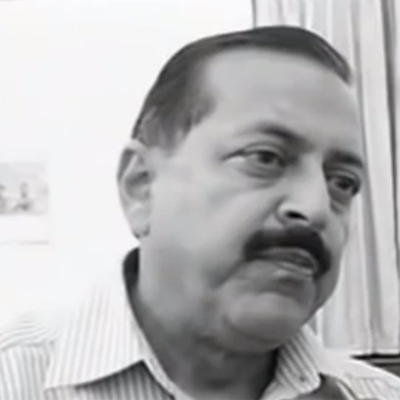
    In the coming months, the next satellite of this constellation, namely, IRNSS-1D, is scheduled to be launched by PSLV. The entire IRNSS constellation of seven satellites is planned to be completed by 2015.  Minister of State (Space), Dr Jitendra Singh, witnessed the launch from the centre.

  • GSAT-16 to launch in December 2015

    GSAT-16 to launch in December 2015

    MUMBAI: The Indian Space Research Organisation (ISRO) has decided to launch two satellites by next year. GSAT-16 was scheduled to launch by mid 2015, but a new announcement from the ISRO states that it will be launched by December 2014 itself.


    The 3100 kg aircraft will be lifted into space six months earlier on a European Ariane 5 launcher. The decision for advancement was taken due to the expiration of INSAT 3E that expired earlier this year and was to be replaced by GSAT-16. A tentative launch date is 6 December.


    GSAT-16 will have 24 transponders in the C-band, 12 in the extended C-band and 12 in the Ku band to support public and private television and radio services, internet and telephone operations.


    The government had approved Rs 865 crore to build this satellite including fee for foreign launch and insurance that constitute Rs 628 crore.


    The satellite will be positioned at 55 degree east.

  • Satellite requirements for next decade being analysed: Jitendra Singh

    Satellite requirements for next decade being analysed: Jitendra Singh

    NEW DELHI: An expert committee has been constituted by the Government to carry out detailed analysis considering the launch requirements of the Indian Space Research Organisation (ISRO) for the next decade, keeping in view that a number of countries have requested India to launch their satellites.


    The committee will also study the azimuth corridor for flight path, impact points of spent stages, safety zones and mission requirements. The report of the committee is expected to be finalised by October this year. 


    ISRO has two satellite launch pads at Satish Dhawan Space Centre, Sriharikota, which is the main spaceport of the country. These launch pads have been built with state-of-the-art technology and also are designed and built to withstand cyclones. 


    Meanwhile in reply to another question in Parliament today, Department of Space Minister Jitendra Singh said the GSAT-12 satellite launched on 15 July 2011 is providing linkage for the telemedicine network to the extent of supporting 384 telemedicine centers in the country. 


    It is thus carrying out a part of the work that had been assigned for a communication satellite GSAT-5P carrying 24 C-band and 12 Extended C-band transponders which was launched on 25 December 2010 on-board GSLV-F06 but could not accomplish the mission due to launch failure.


    The transponder capacity on GSAT-5P was planned to augment the INSAT/GSAT capacity for supporting ongoing satellite communication services including telemedicine. 


  • Union Minister Jitendra Singh presents ISRO report card

    Union Minister Jitendra Singh presents ISRO report card

    MUMBAI: The Indian Space Research Organisation’s (ISRO) commercial arm Antrix Corp has been involved in 10 satellite launches of eight foreign countries from the two operational satellite launch pads at Satish Dhawan Space Centre, Sriharikota over the last three years. In the process, it has earned revenues of 540,000 euros in 2001-2012 and 21.09 million in 2012-2013. This was disclosed by Union Minister of State for Science & Technology and ministry of earth sciences, department of atomic energy and department of space Jitendra Singh in a written reply in the Lok Sabha today.


    Singh revealed that the government is considering setting up a new satellite launching pad, referred as Third Launch Pad, at Sriharikota. The Third Launch Pad is intended to support increased launch frequency, provide active redundancy to existing launch pads and to support launching requirements of advanced launch vehicles. The possible site  for the Third Launch Pad has been identified in Sriharikota taking into account the safety distances and maximal utilization of existing launch pad facilities. The existing launch pads  are used exclusively for launch vehicles developed by ISRO.


    Singh added  that ISRO’s  satellites have done yeoman’s service in improving telecom, long-distance education, telemedicine in rural and flung areas of the company. He pointed out that  ISRO satellites have helped in achieving 100 per cent coverage of the Indian mainland and rural and far flung areas for direct to home  (DTH) satellite television.  


    Additionally, they have helped in three other areas:

       * Telecommunication: About 1.75 Lakh satellite communication terminals are supporting various applications like village telephony, data connectivity, broadband connectivity, Automatic Teller Machines (ATM) of banks, etc., covering the rural and far flung areas of the country.


      * Tele-Education: 56,000 classrooms connected through satellite networking, of which 51,000 are Receive Only Terminals (ROTs) and around 5000 are Satellite Interactive Terminals (SITs) catering to all the sectors of education from primary to higher and professional education.


    * Telemedicine: The Telemedicine network connects the patients at a remote hospital to a speciality hospital for tele-consultation. 60 specialty hospitals connected to 308 remote and rural hospitals and 16 Mobile Vans.
     

    The Developmental Education and Communication Unit (DECU) of ISRO conducted  a study to ascertain the utility of tele-education and tele-medicine networks over the years, a Press Information Bureau (PIB) release states. The findings of the study indicate the following.
     

    * Tele-education networks are very effective to reach out remote and rural areas of the country and also to enhance the understanding level of the students. The target audience for tele-education include students from school, technical education, higher education, teachers training including physically challenged students. On an average 2-3 hours of programmes are transmitted for 4-5 days in a week.


    * Tele-medicine networks are very useful in treating the patients located in remote and rural areas. Through tele-medicine patients get the best doctors for consultation. Tele-medicine provides the advantage of saving time and money to the patients and also provides relief to family members from the hassles of accompanying the patient to speciality hospitals in the urban areas. Mobile tele-medicine vans are found to be ideal to cover larger geographical area with treatment in the fields of Ophthalmology, Diabetic screening, Cancer, General Medicine and hearing impairments in the infants.


  • AsiaSat 8 to launch on 5 August for APAC region

    AsiaSat 8 to launch on 5 August for APAC region

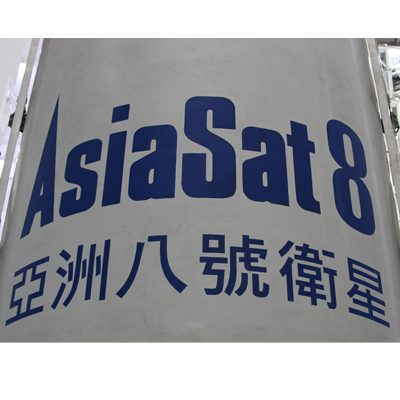
    MUMBAI: A new satellite is all set to be launched on 5 August that will cater to the Asia Pacific countries of India, China, Middle East and south east Asia. Asia Satellite Telecommunications Company (ASTC) will launch AsiaSat 8 from Cape Canaveral in the US.


    The satellite will be propelled into the sky at Hong Kong time 1:35 pm or 1:25 am Cape Canaveral time, by SpaceX’s Falcon 9 launch vehicle from its station in Florida. AsiaSat 8 is a space systems/loral 1300 series satellite with a life span of 15 years.


    Its 24 Ku-band transponders and a Ka-band payload will help to meet the growing market demand for quality satellite services in the APAC region. Co-located with it will be AsiaSat 7 at orbital location 105.5 degrees east. AsiaSat 7 covers the areas of Asia, Middle East, Central Asia and Australasia. The satellite’s inter-beam switching capability will provide flexibility for market requirements and for services including DTH television, private networks and broadband services.


    With a payload power of about 8,500 watts, this will be the most powerful offering from ASTC with a transponder bandwidth of 54 MHz. It has four beams with each addressing the regions of India, China, Middle East and Southeast Asia.


    Soon after, another satellite will be launched from the Hong Kong based provider- AsiaSat 6 that will also be launched by the Falcon.


    SpaceX’s Falcon 9 v1.1 will launch AsiaSat 8 into a geostationary transfer orbit. According to SpaceNews, AsiaSat has paid $52.2 million each for the Falcon 9 launch of AsiaSat8 and AsiaSat 6.

  • PGN and MEASAT lock deal for international distribution

    PGN and MEASAT lock deal for international distribution

    MUMBAI: MEASAT Satellite Systems has announced its agreement with Pilipinas Global Network (PGN) for capacity on MEASAT-3.


    Under the terms of the agreement, PGN will use MEASAT-3’s global beam to distribute Aksyon TV International and Kapatid TV5 channels to over 120 countries across Asia Pacific, Australia, the Middle East and Eastern Africa.


    Kapatid TV5 is a 24-hour general entertainment Tagalog language channel and prides itself in its ability to capture the pulse of the Filipino people. AksyonTV International is a 24-hour Tagalog language channel dedicated to bringing the latest in News and Philippine Sports.


    “PGN will leverage on MEASAT-3’s excellent coverage to expand international distribution of Kapatid TV5 and AksyonTV International,” said PGN president and CEO Claro Carmelo “Ito” Ramirez. “MEASAT-3’s established orbital location is already accessible to many pay TV operators and we look forward to bringing our homegrown content across to more Filipinos all over Asia-Pacific, Middle East and Africa,” he added.


    “MEASAT is pleased to welcome PGN to Asia’s premier video neighbourhood,” said MEASAT SVP – sales and marketing Raj Malik. “We wish PGN much success in bringing high quality Filipino programming to audiences across Asia and Africa,” he concluded.

  • SES unveils new satellite operations center

    SES unveils new satellite operations center

    MUMBAI: Global satellite operator SES will now be controlling nearly half of its growing fleet from a new satellite operations center (SOC) at its commercial sales and satellite engineering office in Princeton, New Jersey.


    A team of satellite controllers provide 24/7 monitoring and management of the 23 SES satellites, as they deliver services ranging from high quality broadcast television channels to high-speed broadband to millions of people on land, in the air and at sea throughout North America and around the world.


    The remainder of the current SES global fleet of more than 50 spacecraft is managed by controllers stationed at SES’s global headquarters in Luxembourg. Both satellite operation centers are fully integrated, enabling each facility and control team to provide real-time services delivery and backup support across the SES fleet.


    “With a constant eye on operational excellence, resiliency and customer success and security, SES has positioned its three primary satellite operations centers in widely diverse regions of the world,” noted Martin Halliwell, Chief Technology Officer for SES. “Our new Princeton-based SOC features the latest control technologies and capabilities that will allow SES to meet ever-evolving customer demands and an ever-changing satellite fleet for decades to come,” Halliwell said. “Whether it’s electric propulsion satellites or an expanding fleet of more than 100 satellites, SES has the expertise and the advanced satellite control stations to deliver on the future.”


    “Princeton has long been an important hub for SES satellite engineering expertise and our customer account teams. These critical groups can now collaborate more closely with controllers located just down the hall, to further ensure optimal operations and customer success and satisfaction,” said Rick Starkovs, Senior Vice President of Space Systems and Operations for SES. “Customer success and team collaboration were major drivers behind the migration of this mission-critical satellite operations center to Princeton.”