Category: Satellites

  • AsiaSat, Rohde & Schwarz develop FTA UHD TV service for Asia

    AsiaSat, Rohde & Schwarz develop FTA UHD TV service for Asia

    MUMBAI: Asia Satellite Telecommunications Co. Ltd. (AsiaSat) and Rohde & Schwarz have partnered to advance next-generation Ultra-HD (UHD) TV technologies by implementing the first free to air (FTA) UHD channel on AsiaSat 4.


    AsiaSat plans for an UHD TV broadcasting service over satellite have taken a major step forward with the imminent launch of its first channel following an extensive technical evaluation carried out at the AsiaSat UHD laboratory. Through AsiaSat 4’s high-power coverage, broadcasters and pay-TV platforms with an AsiaSat 4 C-band antenna in the Asia-Pacific region will be able to receive the UHD channel directly.


    Operating at 122°E, AsiaSat 4 provides leading edge satellite solutions to clients for TV distribution, direct to home (DTH) as well as broadband services across the Asia-Pacific region. Its high power C-band footprint spans from New Zealand to Pakistan and part of the Middle East.


    Rohde & Schwarz is providing a comprehensive broadcast solution that includes the R&S CLIPSTER mastering station for editing, handling and playing out UHD data in real time. In addition, the R&S AVHE100 headend will be used for live encoding using an HEVC encoder with 10 bit color depth. Rohde & Schwarz technology not only gives AsiaSat the best UHD TV picture quality, it also provides a future-proof solution.


    “We are very excited to work with Rohde & Schwarz in this new and evolving technology that will drive future consumer viewing experience of video content. Rohde & Schwarz has shown exemplary commitment to quality and support in helping us through the evaluation phase. We look forward to launching our first UHD channel and promoting this new technology together,” said AsiaSat VP marketing and global accounts Sabrina Cubbon.


    “Rohde & Schwarz is the leading supplier for Digital TV transmission networks in Asia and the world. We are happy to support AsiaSat in establishing their first UHD channel and look forward to a very successful implementation,” added Rohde & Schwarz VP for sales and marketing, Asia Middle Heino Gregorek.
  • Eutelsat partners Facebook on satellite initiative for Africa

    Eutelsat partners Facebook on satellite initiative for Africa

    MUMBAI: Eutelsat Communications and Facebook are partnering on a new initiative that will leverage satellite technologies to get more Africans online. 


    Under a multi-year agreement with Spacecom, the two companies will utilise the entire broadband payload on the future AMOS-6 satellite and will build a dedicated system comprising satellite capacity, gateways and terminals. In providing reach to large parts of Sub-Saharan Africa, Eutelsat and Facebook will each be equipped to pursue their ambition to accelerate data connectivity for the many users deprived of the economic and social benefits of the Internet.


    Spot beams for community and Direct-to-User access


    Scheduled for start of service in the second half of 2016, the Ka-band payload on the AMOS-6 geostationary satellite is configured with high gain spot beams covering large parts of West, East and Southern Africa. The capacity is optimised for community and Direct-to-User Internet access using affordable, off-the-shelf customer equipment. According to the terms of the agreement, the capacity will be shared between Eutelsat and Facebook.


    State of the art satellite technology to meet pent-up demand


    Using state of the art satellite technology, Eutelsat and Facebook will each deploy Internet services designed to relieve pent-up demand for connectivity from the many users in Africa beyond range of fixed and mobile terrestrial networks. Satellite networks are well suited to economically connecting people in low to medium density population areas and the high throughput satellite architecture of AMOS-6 is expected to contribute to additional gains in cost efficiency.


    Eutelsat steps up Internet activity in Africa


    The capacity will enable Eutelsat to step up its broadband activity in Sub-Saharan Africa that was initiated using Ku-band satellites to serve professional users. Eutelsat is establishing a new company based in London that will steer its African broadband vision and business. The company will be led by Laurent Grimaldi, founder and former CEO of Tiscali International Network, and will focus on serving premium consumer and professional segments.


    Facebook continues Internet.org initiative


    Two years ago, Facebook announced Internet.org, an effort to accelerate the rate of connectivity by addressing the physical, economic and social barriers that are keeping people from getting online. For Facebook, this satellite system represents one of many technology investments to enable cost-effective broadband access to unconnected populations. Facebook plans to work with local partners across Africa to utilise satellite and terrestrial capacity to deliver services to rural areas.


    Internet.org vice president Chris Daniels said, “Facebook’s mission is to connect the world and we believe that satellites will play an important role in addressing the significant barriers that exist in connecting the people of Africa. We are looking forward to partnering with Eutelsat on this project and investigating new ways to use satellites to connect people in the most remote areas of the world more efficiently.”


    Eutelsat chairman and CEO Michel de Rosen added, “We are excited by this opportunity to accelerate the deployment of our broadband strategy and to partner with Facebook on a new initiative to provide Internet access services in Africa. Eutelsat’s strong track record in operating High Throughput Satellite systems will ensure that we can deliver accessible and robust Internet solutions that get more users online and part of the Information Society.”

  • ISRO’s Antrix directed to pay $670+ million as damages to Devas

    ISRO’s Antrix directed to pay $670+ million as damages to Devas

    NEW DELHI: Indian Space Research Organisation’s (ISRO) commercial arm Antrix has been ordered to pay compensation and damages totalling $672 million to Devas Multimedia.


    The directive was given by the International Chamber of Commerce’s International Court of Arbitration, which was wholly in favour of Devas.


    The Bangalore-based Devas argued that ISRO/Antrix were liable for “unlawfully terminating [an] agreement in February 2011.”


    The Court’s decision was unanimous and stated that ISRO/Antrix “had no legal justification for terminating the agreement.”


    The 11-year old Devas deals with innovation and services in satellite communications.


    The agreement provided for Devas securing 70 MHz of S-band capacity from ISRO by means of leasing 90 per cent of the capacity aboard GSat-6 and GSat-6A satellites. Devas was to pay $300 million to ISRO over the following 12 years.


    The $672 million award to Devas will grow at a rate of 18 per cent per annum until paid, the International Court said. 


    In a statement, Devas said, “Devas Multimedia and its shareholders, including highly regarded international investors, are pleased that the ICC Tribunal unanimously ruled in its favour and found that Antrix is liable for unlawfully terminating the Devas-Antrix agreement in February 2011. The ICC Tribunal also awarded damages and pre-award interest totalling $672 million to Devas with post-award interest accruing at 18 per cent per annum on that sum until the award is fully paid.” 


    “Devas is hopeful that Antrix will now live up to its legal obligations and pay the award so that this dispute that arose during the prior government can be brought to a swift close,” the company added.

  • MEASAT  names Santosh Desai as sales director – Africa

    MEASAT names Santosh Desai as sales director – Africa

    NEW DELHI: MEASAT Satellite Systems has appointed Santosh Desai as sales director – Africa.

    Desai will be responsible for opening new markets in Africa, developing sales channels, and managing customer accounts for the company.

    Prior to joining Measat, Desai was head of products for satellite communications, media & managed services for a global telecommunications company based in India. 

    He holds a Bachelor Degree in Electronics & Telecommunications Engineering from Pune University and also completed an Executive Programme in International Business Management from Indian Institute of Management.

    Desai has more than 14 years of experience covering international projects, network operations, products, and sales in satellite and media.

  • ISRO successfully launches Astrosat along with six foreign satellites

    ISRO successfully launches Astrosat along with six foreign satellites

    MUMBAI: The Indian Space Research Organisation (ISRO) has been having a swell 2015. Just a few days after its Mars Orbiter completed a successful one year around the Red planet, ISRO has now launched its first dedicated multi wavelength space observatory along with six foreign customer satellites.


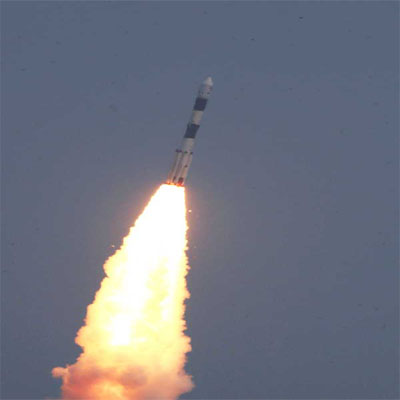
    In its 31st flight (PSLV-C30) conducted today (28 September, 2015), India’s Polar Satellite Launch Vehicle (PSLV) successfully launched Astrosat – multi wavelength space observatory and six foreign customer satellites into a 644.6 X 651.5 km orbit inclined at an angle of 6 deg to the equator. The achieved orbit is very close to the intended one. This was the thirtieth consecutive success for PSLV.


    PSLV was launched in its heaviest ‘XL’ version with six strap-on motors of the first stage. The launch took place from the First Launch Pad at the Satish Dhawan Space Centre SHAR (SDSC SHAR), Sriharikota, the spaceport of India.


    The 320 tonne, 45 m tall PSLV-C30 carrying seven satellites including the 1513 kg Astrosat, lifted off at 10:00 Hrs IST. About 22 minutes after lift-off, Astrosat was successfully placed in orbit and separated from the fourth stage of PSLV-C30. The separation of all the six co-passenger satellites was completed in the subsequent three minutes. The seven satellites carried by PSLV-C30 together weighed about 1631 kg at lift-off. 


    After a 50 hour smooth count down, the 320 ton PSLV-C28 was launched with the ignition of its first stage. The important flight events included the ignition and separation of the strap-ons, separation of the first stage, ignition of the second stage, separation of the payload fairing after the vehicle had cleared the dense atmosphere, second stage separation, third stage ignition and third stage separation, fourth stage ignition and fourth stage cut-off.  


    Through 30 successful flights during 1994-2015 period, PSLV has launched a total of 84 satellites including the seven satellites successfully launched today. The vehicle has repeatedly proved its reliability and versatility by successfully launching satellites into a variety of orbits including polar Sun Synchronous, Geosynchronous Transfer and Low Earth orbits of small inclination thereby emerging as the workhorse launch vehicle of India. 


    So far, 51 satellites have been launched by PSLV for customers from abroad. Today’s launch of six co-passenger satellites by PSLV-C30 was facilitated by Antrix Corporation Limited, the commercial arm of ISRO, a government of India Company under the Department of Space (DOS). 


    Soon after its separation from PSLV-C30, the two solar arrays of Astrosat were automatically deployed and the Spacecraft Control Centre at the Mission Operations Complex of ISRO Telemetry, Tracking and Command Network (ISTRAC) at Bangalore took control of Astrosat.


    Astrosat is India’s first dedicated multi wavelength space observatory. This scientific satellite mission endeavours for a more detailed understanding of our universe. Astrosat is designed to observe the universe in the Visible, Ultraviolet, low and high energy X-ray regions of the electromagnetic spectrum simultaneously with the help of its five payloads. 


    Astrosat was realised by ISRO with the participation of all major astronomy institutions including Inter University Centre for Astronomy and Astrophysics (IUCAA) of Pune, Tata Institute of Fundamental Research (TIFR) at Mumbai, Indian Institute of Astrophysics (IIAP) and Raman Research Institute (RRI) of Bangalore as well as some of the Universities in India and two institutions from Canada and the UK.


    In the coming days, Astrosat will be brought to the final operational configuration and all its five scientific payloads will be thoroughly tested before the commencement of regular operations.

  • NASA & Harmonic partner to launch UHD consumer channel

    NASA & Harmonic partner to launch UHD consumer channel

    MUMBAI: The National Aeronautics and Space Administration (NASA) has partnered with video delivery infrastructure company Harmonic to launch NASA TV UHD, the first consumer UHD (ultra-high-definition) channel in North America.


    The channel is expected to launch on 1 November, 2015.


    Utilising an end-to-end UHD video delivery system from Harmonic, NASA can deliver live and linear 2160p60 video content, enabling consumers to enjoy crystal-clear footage on a wide range of television and IP-connected devices. A test signal of NASA TV UHD is currently available on the AMC 18C satellite.


    NASA TV UHD video is being sourced from high-resolution images and video generated on the International Space Station (ISS), Hubble Space Telescope, and other current NASA missions. Programming will also include remastered footage from historical missions, shots from NASA’s development and training processes, and ultimately live launches. Leveraging the 8M pixel resolution of the UHD format, the channel will create the closest possible experience to looking out of the viewing Cupola of the ISS, for example.


    Like the current NASA TV channels and on the same transponder, NASA TV UHD will be transmitted via the AMC-18C satellite, in the Clear, with a North American footprint. Harmonic is currently in discussions with pay-TV operators to carry the channel on their satellite DTH, cable and optical networks, for consumer access. The channel will also be streamed on the Internet, which will require at least 13 Mbps access connectivity to receive the signal and achieve the UHD experience.


    Transmitted from NASA’s Atlanta uplink facility, remotely produced by Harmonic and jointly operated, the complete infrastructure includes examples of Harmonic’s Ellipse 3000 contribution encoder, ProView 7100 integrated receiver-decoder (IRD), MediaGrid shared storage system, Polaris playout management suite, Spectrum X advanced media server system, Electra X3 advanced media processor, ProMedia Origin packager and streaming video server and NSG Exo distributed CCAP system.


    A key element in the UHD workflow is Harmonic’s Electra X3 advanced media processor, the industry’s first converged media processor for UHD content with live, full-frame, full-GOP UHD encoding. Powered by the Harmonic PURE Compression Engine, an advanced encoding technology that supports resolutions up to 2160p60 (HEVC Main 10) for broadcast and OTT multiscreen delivery, the Electra X3 enables NASA to deliver superior video quality at minimum bandwidth.


    “As NASA reaches new heights and reveals the unknown, the NASA TV UHD channel can bring that journey to life in every home. And as organisations at the forefront of innovation, together we are leading the adoption of this exciting technology. As the leader in UHD development, Harmonic provides a complete solution for Ultra HD video production and delivery, enabling content and service providers to offer better video quality at a low total cost of ownership,” said Harmonic CMO Peter Alexander. 


    NASA and Harmonic have also begun discussions about adding high dynamic range (HDR) and expanded color-space technologies to the channel as standards emerge. Some testing is expected before the end of the year.

  • Eutelsat & SES to develop technology for better broadcast-broadband ecosystem

    Eutelsat & SES to develop technology for better broadcast-broadband ecosystem

    MUMBAI: Satellite companies Eutelsat Communications and SES S.A, engaged in the global video distribution market, have launched a new, industry-wide initiative to develop and promote next-generation video technologies, standards and formats, focusing initially on the reception of satellite services on any screen and on converged broadcast-broadband technologies.


    Called the Future Video Initiative, this new project will assemble representative companies in the converged video value chain to ensure that users everywhere will be able to benefit from a consistent, high quality, state-of-the-art video experience anywhere, anytime and on any device.


    The Initiative was unveiled at the International Broadcasting Convention (IBC), one of the largest broadcast technology conventions, held annually in Amsterdam.


    Experience and feedback on services currently delivering content anywhere, anytime, on any device highlight the challenges of ensuring in parallel high user satisfaction and the largest technical reach. Users want consistent media quality across multiple devices; content distributors have to cope with an ever-increasing growth of media traffic on their networks and therefore want to optimise their investments through maximum audience reach at the most competitive distribution cost.


    The Future Video Initiative will seek to support existing initiatives, alliances, associations, roadmaps and technical standardisation bodies. Its initial scope of work will focus on promoting integrated hybrid broadcast-broadband solutions that increase the reach of HD and Ultra HD with the highest quality, while optimising network costs and meeting the promise of interactive services. It will also facilitate the reception of satellite services on any screen, at home and in public places.


    “Through this initiative, we want to send a clear signal to the industry and public that we need to drive digitalisation and the evolution of our broadcast-broadband ecosystems. The Future Video Initiative is open to all stakeholders and is a catalyst for digital development. The start of this initiative is underpinned by the commitment of two leading satellite operators to bring the best of their infrastructures to support the innovations, roadmaps, standardisations and frameworks necessary to respond to the future needs of consumers and deliver on time on the inclusive promise of a top-quality media experience for the broadest range of users,” said Eutelsat Communications CEO Michel de Rosen and SES CEO Karim Michel Sabbagh.

  • ISRO to receive Gandhi Peace Prize for 2014

    ISRO to receive Gandhi Peace Prize for 2014

    NEW DELHI: The Indian Space Research Organisation (ISRO) will receive the Gandhi Peace Prize for the year 2014.


    The prize will be presented by President Pranab Mukherjee at a function at Rashtrapati Bhavan. 


    The Gandhi Peace Prize was instituted by the Government in 1995 on the occasion of the 125th birth anniversary of Mahatma Gandhi.


    This annual award is given to individuals and institutions for their contributions towards social, economic and political transformation through non-violence and other Gandhian methods. 


    ISRO works with the vision to “harness space technology for national development, while pursuing space science research and planetary exploration.”


    Formed in 1969, ISRO superseded the erstwhile Indian National Committee for Space Research (INCOSPAR), which was established in 1962 by the efforts of independent India’s first Prime Minister Jawaharlal Nehru and his close aide and reputed scientist Dr. Vikram Sarabhai. The establishment of ISRO thus institutionalised space activities in India. 


    ISRO built India’s first satellite, Aryabhata, which was launched by the Soviet Union on 19 April in 1975. In 1980, Rohini became the first satellite to be placed in orbit by an Indian-made launch vehicle, SLV-3. ISRO subsequently developed two other rockets: the Polar Satellite Launch Vehicle (PSLV) for launching satellites into polar orbits and the Geosynchronous Satellite Launch Vehicle (GSLV) for placing satellites into geostationary orbits. These rockets have launched numerous communications satellites and earth observation satellites. Satellite navigation systems like Gagan and IRNSS have been deployed. In January 2014, ISRO successfully used an indigenous cryogenic engine in a GSLV-D5 launch of the GSAT-14.


    On 22 October, 2008, ISRO sent its first mission to the Moon, Chandrayaan-1. On 5 November, 2013, ISRO launched its Mars Orbiter Mission (MOM), which successfully entered Mars orbit on 24 September, 2014, making India the first nation to succeed on its first attempt, and ISRO the fourth space agency in the world and first Asian space agency to reach Mars orbit. 


    The space agency’s future plans include development of GSLV Mk III (for launch of heavier satellites), development of a reusable launch vehicle, human spaceflight, further lunar exploration, interplanetary probes, a solar spacecraft mission, etc.


    ISRO has conducted a variety of operations for both Indian and foreign clients. It has several field installations as assets, and co-operates with the international community as a part of several bilateral and multilateral agreements. As many as 41 foreign satellites have been launched by ISRO’s launch vehicles.

  • ST Teleport expands capacity and partnership with AsiaSat

    ST Teleport expands capacity and partnership with AsiaSat

    MUMBAI: Full-service satellite and fibre communications solutions provider ST Teleport, based in Singapore, has expanded its capacity commitment and strategic partnership with Asia Satellite Telecommunications (AsiaSat) to enhance service offerings to the VSAT and media sectors.


    ST Teleport recently expanded its C-band capacity in Asia with a new dedicated antenna for AsiaSat 4 at the orbital location of 122°E to provide leading-edge satellite-based service solutions for maritime, oil and gas, enterprise, and media businesses. In response to strong user demand for high-quality connectivity solutions for data and video services in Asia, both companies have further strengthened their collaboration to offer enhanced land/sea/air based VSAT services. 


    ST Teleport’s advanced earth station complex facilities in Singapore is now capable of connecting to AsiaSat’s comprehensive fleet of satellites, including the new Ku-band capacity on AsiaSat 8’s South East Asia and Middle East beams, to offer more choices to customers. The extension of the partnership will accelerate growth opportunities for ST Teleport and increase its offerings to customers looking for fast and flexible satellite communications solutions at competitive prices. 


    “Our partnership with AsiaSat will further strengthen both of our positions in the satellite communication services sector. Access to more AsiaSat capacity will enable ST Teleport to efficiently expand our services geographically and to serve more diverse industries and businesses. ST Teleport’s continuous upgrading of its network and capacity demonstrates its commitment to provide advanced and cost effective satellite solutions to our data, maritime and media clients locally and internationally,” said ST Teleport managing director Joseph Chan.


    “We are pleased with this expanded partnership with ST Teleport. We aim to bring a new level of high performance, cost-effective satellite solutions and comprehensive coverage to ST Teleport and their clients through this stronger partnership. This collaboration also underscores our commitment to working closer with our partners and clients to deliver the quality, value and choice of capacity that meet their service needs,” added AsiaSat vice president sales and business development Philip Balaam.

  • Fashion One launches new Ultra HD channel worldwide with MEASAT

    Fashion One launches new Ultra HD channel worldwide with MEASAT

    MUMBAI: Malaysian communication satellite operator, MEASAT and New York-based Fashion One Television LLC have launched Fashion One 4K, the first English language Ultra HD channel in the world on the MEASAT-3a satellite.


    Distributed free-to-air through the MEASAT-3a satellite at the 91.5 degrees East video hot slot, the channel will reach over 130 million viewers across Asia Pacific, Middle East, Australia and East Africa.


    Speaking on the launch Fashion One, Television LLC COO Gleb Livshits said, “We are tremendously excited to launch Fashion One 4K, the world’s first global Ultra HD channel dedicated to fashion and entertainment. We have invested heavily in producing Ultra HD content over the last two years, and I’m delighted that we are finally able to share the channel with our viewers.” 


    MEASAT CEO Paul Brown-Kenyon added, “Fashion One is a global lifestyle and entertainment TV network, supporting a large and rapidly expanding customer base.”


    “Our flexible solutions and collaborative approach led Fashion One to select MEASAT for the launch of Fashion One 4K. We look forward to working with more channels and content providers to help jump start this exciting new video segment,” Brown-Kenyon added.


    Fashion One 4K was launched concurrently on SES Satellite, reaching over 67 million households across North America at 103 degrees West (SES-3) and over 23 million households across South America at 47.5 degrees West (NSS-806). 


    Fashion One has been upgrading its production format from HD to ultra HD since 2014 and now owns an extensive library of ultra HD content with 100 per cent content rights.


    In Europe, the channel is broadcast under the brand Fashion 4K, reaching over 116 million households at 19.2 degrees East.