Category: Satellites

  • ISRO successfully flight tested India’s Reusable Launch Vehicle-Technology Demonstrator (RLV-TD)

    ISRO successfully flight tested India’s Reusable Launch Vehicle-Technology Demonstrator (RLV-TD)

    MUMBAI: On May 23, 2016 ISRO successfully flight tested India’s first winged body aerospace vehicle operating in hypersonic flight regime.   

    In this experimental mission, the HS9 solid rocket booster carrying RLV-TD lifted off from the First Launch Pad at Satish Dhawan Space Centre, Sriharikota at 07:00hr IST.  After a successful flight of 91.1second, HS9 burn out occurred, following which both HS9 and RLV-TD mounted on its top coasted to a height of about 56 km. At that height, RLV-TD separated from HS9 booster and further ascended to a height of about 65km.  

    From that peak altitude of 65 km, RLV-TD began its descent followed by atmospheric re-entry at around Mach 5 (five times the speed of sound). The vehicle’s Navigation, Guidance and Control system accurately steered the vehicle during this phase for safe descent. After successfully surviving a high temperatures of re-entry with the help of its Thermal Protection System (TPS), RLV-TD successfully glided down to the defined landing spot over Bay of Bengal, at a distance of about 450km from Sriharikota, thereby fulfilling its mission objectives. The vehicle was successfully tracked during its flight from ground stations at Sriharikota and a shipborne terminal. Total flight duration from launch to landing of this mission of the delta winged RLV-TD, lasted for about 770seconds.

    In this flight, critical technologies such as autonomous navigation, guidance & control, reusable thermal protection system and re-entry mission management have been successfully validated.
     

  • ISRO successfully flight tested India’s Reusable Launch Vehicle-Technology Demonstrator (RLV-TD)

    ISRO successfully flight tested India’s Reusable Launch Vehicle-Technology Demonstrator (RLV-TD)

    MUMBAI: On May 23, 2016 ISRO successfully flight tested India’s first winged body aerospace vehicle operating in hypersonic flight regime.   

    In this experimental mission, the HS9 solid rocket booster carrying RLV-TD lifted off from the First Launch Pad at Satish Dhawan Space Centre, Sriharikota at 07:00hr IST.  After a successful flight of 91.1second, HS9 burn out occurred, following which both HS9 and RLV-TD mounted on its top coasted to a height of about 56 km. At that height, RLV-TD separated from HS9 booster and further ascended to a height of about 65km.  

    From that peak altitude of 65 km, RLV-TD began its descent followed by atmospheric re-entry at around Mach 5 (five times the speed of sound). The vehicle’s Navigation, Guidance and Control system accurately steered the vehicle during this phase for safe descent. After successfully surviving a high temperatures of re-entry with the help of its Thermal Protection System (TPS), RLV-TD successfully glided down to the defined landing spot over Bay of Bengal, at a distance of about 450km from Sriharikota, thereby fulfilling its mission objectives. The vehicle was successfully tracked during its flight from ground stations at Sriharikota and a shipborne terminal. Total flight duration from launch to landing of this mission of the delta winged RLV-TD, lasted for about 770seconds.

    In this flight, critical technologies such as autonomous navigation, guidance & control, reusable thermal protection system and re-entry mission management have been successfully validated.
     

  • 13 indigenous communication satellites over Indian skies

    13 indigenous communication satellites over Indian skies

    New Delhi: Thirteen of the 34 Indian satellites operational in the country are communication satellites.  

    These sare: INSAT-3A, INSAT-3C, INSAT-4A, INSAT-4B, INSAT-4CR, GSAT-6, GSAT-7, GSAT-8, GSAT-10, GSAT-12, GSAT-14, GSAT-15 and GSAT-16.  The others include 12 Earth Observation Satellites; seven Navigational Satellites;and two Space science Satellites. 
    About 30 service providers are utilising Ku-band (a part of K band) transponders onboard indigenous communication satellites for various communication applications, which include direct-to-home television, digital satellite news gathering, telecommunication, VSAT services for banking, tele-education, business communication. The government is not seeking any foreign assistance/collaboration for satellite operations, Space Department minister Jitendra Singh has told Parliament. 

    The Indian Space Research Organization has an action plan in place for developing indigenous satellites, with the participation of Indian industries, for earth observation, communication, navigation and space science and planetary exploration. 

    Meanwhile, ISRO has signed MoU/ cooperative agreements for exploration and use of outer space with 37 countries viz. Argentina, Australia, Brazil, Brunei Darussalam, Bulgaria, Canada, Chile, China, Egypt, France, Germany, Hungary, Indonesia, Israel, Italy, Japan, Kazakhstan, Kuwait, Mauritius, Mexico, Mongolia, Myanmar, Norway, Peru, Republic of Korea, Russian Federation, Saudi Arabia, Spain, Sweden, Syria, Thailand, The Netherlands, Ukraine, United Kingdom, United Arab Emirates, United States of America and Venezuela. 

    The fields to explore newer research activities addressed in these MoUs include Joint development of advanced scientific instruments to observe earth and universe; joint realization of satellite missions; jointly carrying out calibration and validation experiments; conducting airborne campaign with advanced instruments; deep space navigation and communication support for space science missions; development of advanced technologies for building and launching of spacecrafts for earth observation and space science exploration. 

    Application possibilities in the field of remote sensing addressed in these MoUs include – natural resource management; vegetation biomass estimation; meteorological & oceanographic applications; atmospheric parameter retrieval & modelling; climate monitoring and weather forecasting; disaster management support.

  • 13 indigenous communication satellites over Indian skies

    13 indigenous communication satellites over Indian skies

    New Delhi: Thirteen of the 34 Indian satellites operational in the country are communication satellites.  

    These sare: INSAT-3A, INSAT-3C, INSAT-4A, INSAT-4B, INSAT-4CR, GSAT-6, GSAT-7, GSAT-8, GSAT-10, GSAT-12, GSAT-14, GSAT-15 and GSAT-16.  The others include 12 Earth Observation Satellites; seven Navigational Satellites;and two Space science Satellites. 
    About 30 service providers are utilising Ku-band (a part of K band) transponders onboard indigenous communication satellites for various communication applications, which include direct-to-home television, digital satellite news gathering, telecommunication, VSAT services for banking, tele-education, business communication. The government is not seeking any foreign assistance/collaboration for satellite operations, Space Department minister Jitendra Singh has told Parliament. 

    The Indian Space Research Organization has an action plan in place for developing indigenous satellites, with the participation of Indian industries, for earth observation, communication, navigation and space science and planetary exploration. 

    Meanwhile, ISRO has signed MoU/ cooperative agreements for exploration and use of outer space with 37 countries viz. Argentina, Australia, Brazil, Brunei Darussalam, Bulgaria, Canada, Chile, China, Egypt, France, Germany, Hungary, Indonesia, Israel, Italy, Japan, Kazakhstan, Kuwait, Mauritius, Mexico, Mongolia, Myanmar, Norway, Peru, Republic of Korea, Russian Federation, Saudi Arabia, Spain, Sweden, Syria, Thailand, The Netherlands, Ukraine, United Kingdom, United Arab Emirates, United States of America and Venezuela. 

    The fields to explore newer research activities addressed in these MoUs include Joint development of advanced scientific instruments to observe earth and universe; joint realization of satellite missions; jointly carrying out calibration and validation experiments; conducting airborne campaign with advanced instruments; deep space navigation and communication support for space science missions; development of advanced technologies for building and launching of spacecrafts for earth observation and space science exploration. 

    Application possibilities in the field of remote sensing addressed in these MoUs include – natural resource management; vegetation biomass estimation; meteorological & oceanographic applications; atmospheric parameter retrieval & modelling; climate monitoring and weather forecasting; disaster management support.

  • Communication satellite with Ku bands slated for launch

    Communication satellite with Ku bands slated for launch

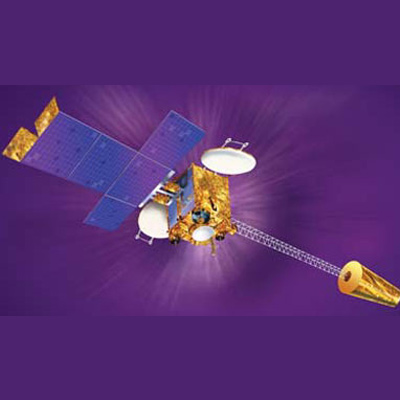
    NEW DELHI: The GSAT-11 spacecraft, a first generation high throughput communication satellite, is to be launched towards the end of 2016 or the first quarter of 2017, Space minister Jitendra Singh told parliament today.

    GSAT-11 has a lift-off mass of about 5600 kg, operating in Ka/Ku bands. It is a multi-beam satellite with 32 user beams and 8 hub beams over India. The spacecraft capability includes providing broadband connectivity to rural areas with higher bandwidth as compared to traditional communication satellites. 

    It is planned to launch GSAT-11 spacecraft using procured launch services. At present, the indigenous capability to launch this weight class of satellite is not available. The in-orbit testing of GSAT-11 satellite is planned to be conducted from the Master Control Facility (MCF) in Hassan, Karnataka and other suitable locations of ISRO Centres. 

  • Communication satellite with Ku bands slated for launch

    Communication satellite with Ku bands slated for launch

    NEW DELHI: The GSAT-11 spacecraft, a first generation high throughput communication satellite, is to be launched towards the end of 2016 or the first quarter of 2017, Space minister Jitendra Singh told parliament today.

    GSAT-11 has a lift-off mass of about 5600 kg, operating in Ka/Ku bands. It is a multi-beam satellite with 32 user beams and 8 hub beams over India. The spacecraft capability includes providing broadband connectivity to rural areas with higher bandwidth as compared to traditional communication satellites. 

    It is planned to launch GSAT-11 spacecraft using procured launch services. At present, the indigenous capability to launch this weight class of satellite is not available. The in-orbit testing of GSAT-11 satellite is planned to be conducted from the Master Control Facility (MCF) in Hassan, Karnataka and other suitable locations of ISRO Centres. 

  • CASBAA annual convention to move to Macau for first time this year

    CASBAA annual convention to move to Macau for first time this year

    NEW DELHI: The Cable and Satellite Broadcasters Association of Asia is holding its next convention in Macao later this year for senior executives from across the region and around the world to come together to tackle issues facing the industry.

    CASBAA, Asia’s largest non-profit media association serving the multi-channel audio-visual content creation and distribution industry, will hold the 22nd annual Convention at Studio City in Macao from 7 to 10 November.

    CASBAA CEO Christopher Slaughter said: “It will be the first time CASBAA has ever held an event in Macau, and we are thrilled to be able to bring the region’s pay-TV industry together to experience all that this exciting enclave has to offer.”

    CASBAA Board of Directors Chairman Sompan Charumilinda of True Visions agreed, adding, “The Board has overwhelmingly endorsed the move to Macau as part of the Association’s ongoing efforts to keep our annual Convention fresh and invigorating.  We are confident delegates, speakers, and sponsors will find that the new venue and location will both contribute to another excellent CASBAA Convention. Furthermore, Studio City provides us with a bigger footprint for the Convention than we’ve ever experienced, which will offer many advantages for networking functions and private meeting rooms that our delegates are sure to enjoy.”

    “The CASBAA Convention has always been a great opportunity for senior executives from across the region and around the world to come together, strategically timed to be the most important industry event in the fourth quarter of the year,” said Co-Board Member Responsible for Convention Todd Miller, who is CEO of Celestial Tiger Entertainment. “This year, by choosing Macau’s Studio City, we’re adding a certain ‘show-biz’ quality to the event.”

    Property President of Studio City JD Clayton said, “We’re very delighted to welcome CASBAA to Macau for the very first time. As a Hollywood-inspired and cinematically-themed integrated resort, Studio City is definitely the perfect venue for the CASBAA Convention. We look forward to collaborating with CASBAA to create a successful event this year and to showcase the unrivaled excitement of Studio City, Asia’s Entertainment Capital, to the participating delegates, in addition to our TV studio facility for production-oriented attendees.”

    The move is just one of many innovations for the annual industry gathering.  “This year, we are making a concerted effort to ensure that all the links in the value chain are present at the Convention,” said Co-Board Member Responsible for Convention Amit Malhotra, VP & GM Studio Entertainment at The Walt Disney Company. “In particular, we’re working together to bring a critical mass of operators from across the region to Macau.”

    The CASBAA Convention will feature two full days of conference plenary sessions, keynote speakers, panel discussions, workshops, networking opportunities, and social activities. Topics will include best business practices, emerging market trends, technological developments, new programming strategies and offerings, and the broadcast regulatory landscape in the region.   In addition, the Convention will also feature CASBAA’s annual Policy Roundtable and Executive Roundtable. Both Roundtable events are invitation-only, closed-door forums, dedicated to in-depth discussions among select groups of industry stakeholders.

    “With a host of new market entrants, new business models, and ongoing disruption and technological innovation, the industry is embracing change at a deep level,” said Slaughter.  “The Convention will present a wide array of eminent speakers and panelists to explore various aspects of change at this critical juncture in our industry’s history.”

  • CASBAA annual convention to move to Macau for first time this year

    CASBAA annual convention to move to Macau for first time this year

    NEW DELHI: The Cable and Satellite Broadcasters Association of Asia is holding its next convention in Macao later this year for senior executives from across the region and around the world to come together to tackle issues facing the industry.

    CASBAA, Asia’s largest non-profit media association serving the multi-channel audio-visual content creation and distribution industry, will hold the 22nd annual Convention at Studio City in Macao from 7 to 10 November.

    CASBAA CEO Christopher Slaughter said: “It will be the first time CASBAA has ever held an event in Macau, and we are thrilled to be able to bring the region’s pay-TV industry together to experience all that this exciting enclave has to offer.”

    CASBAA Board of Directors Chairman Sompan Charumilinda of True Visions agreed, adding, “The Board has overwhelmingly endorsed the move to Macau as part of the Association’s ongoing efforts to keep our annual Convention fresh and invigorating.  We are confident delegates, speakers, and sponsors will find that the new venue and location will both contribute to another excellent CASBAA Convention. Furthermore, Studio City provides us with a bigger footprint for the Convention than we’ve ever experienced, which will offer many advantages for networking functions and private meeting rooms that our delegates are sure to enjoy.”

    “The CASBAA Convention has always been a great opportunity for senior executives from across the region and around the world to come together, strategically timed to be the most important industry event in the fourth quarter of the year,” said Co-Board Member Responsible for Convention Todd Miller, who is CEO of Celestial Tiger Entertainment. “This year, by choosing Macau’s Studio City, we’re adding a certain ‘show-biz’ quality to the event.”

    Property President of Studio City JD Clayton said, “We’re very delighted to welcome CASBAA to Macau for the very first time. As a Hollywood-inspired and cinematically-themed integrated resort, Studio City is definitely the perfect venue for the CASBAA Convention. We look forward to collaborating with CASBAA to create a successful event this year and to showcase the unrivaled excitement of Studio City, Asia’s Entertainment Capital, to the participating delegates, in addition to our TV studio facility for production-oriented attendees.”

    The move is just one of many innovations for the annual industry gathering.  “This year, we are making a concerted effort to ensure that all the links in the value chain are present at the Convention,” said Co-Board Member Responsible for Convention Amit Malhotra, VP & GM Studio Entertainment at The Walt Disney Company. “In particular, we’re working together to bring a critical mass of operators from across the region to Macau.”

    The CASBAA Convention will feature two full days of conference plenary sessions, keynote speakers, panel discussions, workshops, networking opportunities, and social activities. Topics will include best business practices, emerging market trends, technological developments, new programming strategies and offerings, and the broadcast regulatory landscape in the region.   In addition, the Convention will also feature CASBAA’s annual Policy Roundtable and Executive Roundtable. Both Roundtable events are invitation-only, closed-door forums, dedicated to in-depth discussions among select groups of industry stakeholders.

    “With a host of new market entrants, new business models, and ongoing disruption and technological innovation, the industry is embracing change at a deep level,” said Slaughter.  “The Convention will present a wide array of eminent speakers and panelists to explore various aspects of change at this critical juncture in our industry’s history.”

  • O3b Networks bags ‘Satellite Operator of the Year’ award at Sattellite 2016

    O3b Networks bags ‘Satellite Operator of the Year’ award at Sattellite 2016

    MUMBAI: Satellite services provider O3b Networks has been recognized as “Satellite Operator of the Year” for 2015 at the Via Satellite Excellence Awards during Satellite 2016.

    “@O3bSatellites was recognized as “Satellite Operator of the Year” during #SatShow”, a short message said.

    The Via Satellite Excellence Awards recognize innovative companies, technologies, campaigns, and people who shape the success of the global satellite industry.

    O3b Networks has dramatically broadened the satellite market, providing modern high-performance connectivity to areas that had previously thought such service was only possible with terrestrial fibre. To date, the company has 12 satellites in orbit that provide services to more than 40 customers in 31 countries. Recently, O3b ordered eight more satellites to support growing demand.

    The ultra-low latency, high throughput network facilitated by O3b’s Medium Earth Orbit (MEO) satellite constellation provides connectivity to Mobile Network Operators (MNOs) to expand 3G and 4G/LTE services, enables Internet Service Providers (ISPs) to provide broadband internet to subscribers in remote locations, brings high-speed mobile and data connections to ships at sea, and allows Oil and Gas companies to reduce costs and improve efficiencies on deep water installations.

    “Today, access to the internet is fundamentally important, and we are proud to support our customers in providing the core connectivity that is driving social and economic development around the globe,” said O3b Networks CEO Steve Collar.

    “As a company, O3b has been fiercely dedicated to providing the best solutions for reliable connectivity in areas of the world that are beyond the reach of fiber. We are honored to be named Operator of the Year, and thank Via Satellite for this distinction.”

  • O3b Networks bags ‘Satellite Operator of the Year’ award at Sattellite 2016

    O3b Networks bags ‘Satellite Operator of the Year’ award at Sattellite 2016

    MUMBAI: Satellite services provider O3b Networks has been recognized as “Satellite Operator of the Year” for 2015 at the Via Satellite Excellence Awards during Satellite 2016.

    “@O3bSatellites was recognized as “Satellite Operator of the Year” during #SatShow”, a short message said.

    The Via Satellite Excellence Awards recognize innovative companies, technologies, campaigns, and people who shape the success of the global satellite industry.

    O3b Networks has dramatically broadened the satellite market, providing modern high-performance connectivity to areas that had previously thought such service was only possible with terrestrial fibre. To date, the company has 12 satellites in orbit that provide services to more than 40 customers in 31 countries. Recently, O3b ordered eight more satellites to support growing demand.

    The ultra-low latency, high throughput network facilitated by O3b’s Medium Earth Orbit (MEO) satellite constellation provides connectivity to Mobile Network Operators (MNOs) to expand 3G and 4G/LTE services, enables Internet Service Providers (ISPs) to provide broadband internet to subscribers in remote locations, brings high-speed mobile and data connections to ships at sea, and allows Oil and Gas companies to reduce costs and improve efficiencies on deep water installations.

    “Today, access to the internet is fundamentally important, and we are proud to support our customers in providing the core connectivity that is driving social and economic development around the globe,” said O3b Networks CEO Steve Collar.

    “As a company, O3b has been fiercely dedicated to providing the best solutions for reliable connectivity in areas of the world that are beyond the reach of fiber. We are honored to be named Operator of the Year, and thank Via Satellite for this distinction.”