Category: Satellites

  • PSLV-C34 successfully launches 20 satellites in a single flight

    PSLV-C34 successfully launches 20 satellites in a single flight

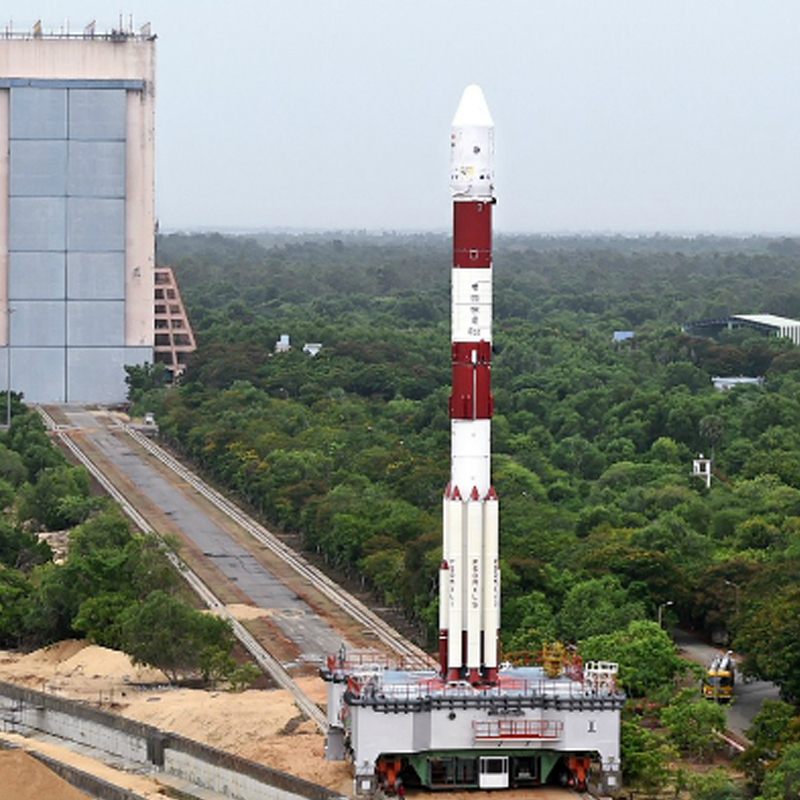
    MUMBAI: In its thirty sixth flights (PSLV-C34), ISRO’s Polar Satellite launch Vehicle successfully launched the 727.5 kg Cartosat-2 Series Satellite along with 19 co-passenger satellites today morning (June 22, 2016) from Satish Dhawan Space Centre SHAR, Sriharikota. This is the thirty fifth consecutively successful mission of PSLV and the fourteenth in its ‘XL’ configuration.  The total weight of all the 20 satellites carried on-board PSLV-C34 was 1288 kg.

    After PSLV-C34 lift-off at 0926 hrs (9:26 am) IST from the Second Launch Pad with the ignition of the first stage, the subsequent important flight events, namely, strap-on ignitions and separations, first stage separation, second stage ignition, heat-shield separation, second stage separation, third stage ignition and separation, fourth stage ignition and cut-off, took place as planned. After a flight of 16 minutes 30 seconds, the satellites achieved a polar Sun Synchronous Orbit of 508 km inclined at an angle of 97.5 degree to the equator (very close to the intended orbit) and in the succeeding 10 minutes, all the 20 satellites successfully separated from the PSLV fourth stage in a predetermined sequence.

    After separation, the two solar arrays of Cartosat-2 series satellite were deployed automatically and ISRO’s Telemetry, Tracking and Command Network (ISTRAC) at Bangalore took over the control of the satellite. In the coming days, the satellite will be brought to its final operational configuration following which it will begin to provide remote sensing services using its panchromatic (black and white) and multispectral (colour) cameras.

    The imagery sent by the Cartosat-2 series satellite will be useful for cartographic applications, urban and rural applications, coastal land use and regulation, utility management like road network monitoring, water distribution, creation of land use maps, precision study, change detection to bring out geographical and manmade features and various other Land Information System (LIS) and Geographical Information System (GIS) applications.

    Of the 19 co-passenger satellites carried by PSLV-C34, two – SATHYABAMASAT weighing 1.5 kg and SWAYAM weighing 1 kg – are University/Academic institute satellites and were built with the involvement of students from Sathyabama University, Chennai and College Of Engineering, Pune, respectively.

    The remaining 17 co-passenger satellites were international customer satellites from Canada (2), Germany (1), Indonesia (1) and the United States (13). 

    With today’s successful launch, the total number of satellites launched by India’s workhorse launch vehicle PSLV has reached 113, of which 39 are Indian and the remaining 74 from abroad.

  • PSLV-C34 successfully launches 20 satellites in a single flight

    PSLV-C34 successfully launches 20 satellites in a single flight

    MUMBAI: In its thirty sixth flights (PSLV-C34), ISRO’s Polar Satellite launch Vehicle successfully launched the 727.5 kg Cartosat-2 Series Satellite along with 19 co-passenger satellites today morning (June 22, 2016) from Satish Dhawan Space Centre SHAR, Sriharikota. This is the thirty fifth consecutively successful mission of PSLV and the fourteenth in its ‘XL’ configuration.  The total weight of all the 20 satellites carried on-board PSLV-C34 was 1288 kg.

    After PSLV-C34 lift-off at 0926 hrs (9:26 am) IST from the Second Launch Pad with the ignition of the first stage, the subsequent important flight events, namely, strap-on ignitions and separations, first stage separation, second stage ignition, heat-shield separation, second stage separation, third stage ignition and separation, fourth stage ignition and cut-off, took place as planned. After a flight of 16 minutes 30 seconds, the satellites achieved a polar Sun Synchronous Orbit of 508 km inclined at an angle of 97.5 degree to the equator (very close to the intended orbit) and in the succeeding 10 minutes, all the 20 satellites successfully separated from the PSLV fourth stage in a predetermined sequence.

    After separation, the two solar arrays of Cartosat-2 series satellite were deployed automatically and ISRO’s Telemetry, Tracking and Command Network (ISTRAC) at Bangalore took over the control of the satellite. In the coming days, the satellite will be brought to its final operational configuration following which it will begin to provide remote sensing services using its panchromatic (black and white) and multispectral (colour) cameras.

    The imagery sent by the Cartosat-2 series satellite will be useful for cartographic applications, urban and rural applications, coastal land use and regulation, utility management like road network monitoring, water distribution, creation of land use maps, precision study, change detection to bring out geographical and manmade features and various other Land Information System (LIS) and Geographical Information System (GIS) applications.

    Of the 19 co-passenger satellites carried by PSLV-C34, two – SATHYABAMASAT weighing 1.5 kg and SWAYAM weighing 1 kg – are University/Academic institute satellites and were built with the involvement of students from Sathyabama University, Chennai and College Of Engineering, Pune, respectively.

    The remaining 17 co-passenger satellites were international customer satellites from Canada (2), Germany (1), Indonesia (1) and the United States (13). 

    With today’s successful launch, the total number of satellites launched by India’s workhorse launch vehicle PSLV has reached 113, of which 39 are Indian and the remaining 74 from abroad.

  • India, Canada MOU to explore outer space

    India, Canada MOU to explore outer space

    NEW DELHI: The Department of Space / Indian Space Research Organization (DOS/ISRO) and the Canadian Space Agency (CSA) have entered into a Memorandum of Understanding on cooperation in the field of outer space.

    The Union Cabinet chaired by Prime Minister Narendra Modi was apprised yesterday that the MoU was signed in Ottawa, Canada on 15 April 2015. 

    The MoU would lead to establishment of a joint team, drawing members from ISRO and CSA, which will further work out the plan of action including examination and defining cooperative projects and the time-frame. This will also provide opportunities for diverse research in the field of peaceful uses of space technologies. 

    The successful space cooperation is being pursued through two Implementing Arrangements in the field of Satellite Tracking Network Operations, and in the field of the ultra Violet Imaging Telescope (UVIT) Detector Subsystem, in support of the ASTROSAT astronomy mission in December 2003 and June 2004 respectively.

    It is aimed at future cooperation in and use of outer space for peaceful purposes to reinforce scientific and technological development and the ties between two countries at government, industrial and academic levels. 

  • India, Canada MOU to explore outer space

    India, Canada MOU to explore outer space

    NEW DELHI: The Department of Space / Indian Space Research Organization (DOS/ISRO) and the Canadian Space Agency (CSA) have entered into a Memorandum of Understanding on cooperation in the field of outer space.

    The Union Cabinet chaired by Prime Minister Narendra Modi was apprised yesterday that the MoU was signed in Ottawa, Canada on 15 April 2015. 

    The MoU would lead to establishment of a joint team, drawing members from ISRO and CSA, which will further work out the plan of action including examination and defining cooperative projects and the time-frame. This will also provide opportunities for diverse research in the field of peaceful uses of space technologies. 

    The successful space cooperation is being pursued through two Implementing Arrangements in the field of Satellite Tracking Network Operations, and in the field of the ultra Violet Imaging Telescope (UVIT) Detector Subsystem, in support of the ASTROSAT astronomy mission in December 2003 and June 2004 respectively.

    It is aimed at future cooperation in and use of outer space for peaceful purposes to reinforce scientific and technological development and the ties between two countries at government, industrial and academic levels. 

  • ISRO unites sixty space agencies to work on climate change

    ISRO unites sixty space agencies to work on climate change

    NEW DELHI: Space agencies of more than 60 countries have agreed to engage their satellites to coordinate their methods and their data to monitor human-induced greenhouse gas emissions following an initiative by the Indian Space Research Organisation (ISRO) and the French Space Agency (CNES). 

    The COP21 Climate Conference held in Paris last December acted as a wake-up call in this context. Without satellites, the reality of global warming would not have been recognised and the subsequent historic agreement at the United Nations headquarters in New York on 22 April 2016 would not have been signed. Out of the 50 essential climate variables being monitored today, 26 – including rising sea levels, sea ice extent and greenhouse gas concentrations in all layers of the atmosphere – can be measured only from space. 

    The key to effectively implementing the Paris Agreement lies in the ability to verify that nations are fulfilling their commitments to curb greenhouse gas emissions. Only satellites can do that.

    Invited to New Delhi by ISRO and CNES on 3 April 2016, the world’s space agencies decided to establish ‘an independent, international system’ to centralise data from their Earth-observing satellites through the ‘New Delhi Declaration’ that officially came into effect on 16 May 2016. 

    The goal now will be to inter-calibrate these satellite data so that they can be combined and compared over time. In other words, it is to make the transition to closely coordinated and easily accessible ‘big space data’. 

    “It is overwhelming to see the unilateral support of all space agencies to use space inputs for monitoring climate change,” said ISRO chairman A S Kiran Kumar. “Earth observation satellites provide a vital means of obtaining measurements of the climate system from a global perspective. ISRO is committed for the continuity of earth observation data, through the thematic series of satellites, with improvements en-route, to meet contemporary as well as future needs. ISRO is also engaging with CNES, JAXA and NASA for realising joint missions for global climate observation with advanced instruments.” 

    “This is a historic event that reaches far beyond the space sector and is a perfect example of the kind of success that can only be achieved through international cooperation” said CNES president Jean-Yves Le Gall. “With this consensus among space agencies from more than 60 nations, including the world’s leading space powers, the international space community and scientists now have the tools they need to put their talent, intelligence and optimism to work for the good of humankind and our planet.” 

  • ISRO unites sixty space agencies to work on climate change

    ISRO unites sixty space agencies to work on climate change

    NEW DELHI: Space agencies of more than 60 countries have agreed to engage their satellites to coordinate their methods and their data to monitor human-induced greenhouse gas emissions following an initiative by the Indian Space Research Organisation (ISRO) and the French Space Agency (CNES). 

    The COP21 Climate Conference held in Paris last December acted as a wake-up call in this context. Without satellites, the reality of global warming would not have been recognised and the subsequent historic agreement at the United Nations headquarters in New York on 22 April 2016 would not have been signed. Out of the 50 essential climate variables being monitored today, 26 – including rising sea levels, sea ice extent and greenhouse gas concentrations in all layers of the atmosphere – can be measured only from space. 

    The key to effectively implementing the Paris Agreement lies in the ability to verify that nations are fulfilling their commitments to curb greenhouse gas emissions. Only satellites can do that.

    Invited to New Delhi by ISRO and CNES on 3 April 2016, the world’s space agencies decided to establish ‘an independent, international system’ to centralise data from their Earth-observing satellites through the ‘New Delhi Declaration’ that officially came into effect on 16 May 2016. 

    The goal now will be to inter-calibrate these satellite data so that they can be combined and compared over time. In other words, it is to make the transition to closely coordinated and easily accessible ‘big space data’. 

    “It is overwhelming to see the unilateral support of all space agencies to use space inputs for monitoring climate change,” said ISRO chairman A S Kiran Kumar. “Earth observation satellites provide a vital means of obtaining measurements of the climate system from a global perspective. ISRO is committed for the continuity of earth observation data, through the thematic series of satellites, with improvements en-route, to meet contemporary as well as future needs. ISRO is also engaging with CNES, JAXA and NASA for realising joint missions for global climate observation with advanced instruments.” 

    “This is a historic event that reaches far beyond the space sector and is a perfect example of the kind of success that can only be achieved through international cooperation” said CNES president Jean-Yves Le Gall. “With this consensus among space agencies from more than 60 nations, including the world’s leading space powers, the international space community and scientists now have the tools they need to put their talent, intelligence and optimism to work for the good of humankind and our planet.” 

  • Sixteen vans touring states to create awareness about digital and satellite technology

    Sixteen vans touring states to create awareness about digital and satellite technology

    NEW DELHI: A total of sixteen vans are traveling to 34 districts of nine states to introduce one million citizens (10 lakh) to services only possible via interplay of Satellite Technology along with other existing Broadband technologies, such as optical fibre, mobile, cable, etc. The vans were flagged off by Communications and Information Technology minister Ravi Shankar Prasad last week as part of the Digital India Outreach Campaign.

    The Broadband India Forum (BIF) has acknowledged Government efforts to deliver connectivity and Broadband to remote and difficult-to-access parts of India.

    The 2nd International India Satcom -2016 summit organized by the Forum on 7 June is aimed at showcasing the scope of catalysing achievement of socio-economic objectives with the use of innovations in Satellite Communications technology.

    Inviting the delegates to the meet, Forum President TV Ramachandran said: “Digital India, Make in India and Broadband for All will require integration of many parallel technologies that have high potential but are less understood, such as Satellite Communication (Satcom), to achieve a dream that’s close to Prime Minister Narendra Modi’s heart. Integration will expedite penetration of affordable Broadband in India, particularly in remote, rural regions. BIF has always propagated enhancement and integration of new technologies that can expedite penetration of affordable Broadband in India to complement other Broadband technologies, such as optical fibre, mobile, cable, etc. Our objective through this summit is to bring all Broadband technology players on board to support the Digital India initiative.”

    The meet is focusing on the theme ‘Broadband for All using NextGen Satellite Technologies’. Dr.Jitendra Singh, minister of State for the Ministry of Development of North East Region, Prime Minister Office, Personnel, Public Grievances & Pensions, Department of Atomic Energy and Department of Space is the Chief Guest.

    The event is supported by The Department of Electronics and Information Technology (DeitY), C and IT Ministry.

    BIF said sector reforms are expected to bring in FDI worth $2-5 billion over the next decade. Liberalisation and reforms of satellite communication policy harbours potential for successful deployment of Broadband under Digital India for all 2,50,000 Gram panchayats in just 12 to 18 months.

    The summit will witness deliberations on the viability of Satellite Communications for Digital India and possible Next Gen Satcom Innovation & Applications by senior members from the Government, including DoT, TRAI, DoS, Niti Aayog, Dept. of Industrial Policy & Promotion (DIPP), DeitY and Indian Council for Research on International Economic Relations (ICRIER) departments and representatives from Leading Satellite Operators, VSAT Service Providers, Telecom Service Providers, Internet Service Providers, Technology Providers, VSAT Manufacturers, Cable Service Providers, User Organisations (Banks, Oil & Gas, Defence, Security Forces etc), DTH Service Providers, and other allied Industries.

  • Sixteen vans touring states to create awareness about digital and satellite technology

    Sixteen vans touring states to create awareness about digital and satellite technology

    NEW DELHI: A total of sixteen vans are traveling to 34 districts of nine states to introduce one million citizens (10 lakh) to services only possible via interplay of Satellite Technology along with other existing Broadband technologies, such as optical fibre, mobile, cable, etc. The vans were flagged off by Communications and Information Technology minister Ravi Shankar Prasad last week as part of the Digital India Outreach Campaign.

    The Broadband India Forum (BIF) has acknowledged Government efforts to deliver connectivity and Broadband to remote and difficult-to-access parts of India.

    The 2nd International India Satcom -2016 summit organized by the Forum on 7 June is aimed at showcasing the scope of catalysing achievement of socio-economic objectives with the use of innovations in Satellite Communications technology.

    Inviting the delegates to the meet, Forum President TV Ramachandran said: “Digital India, Make in India and Broadband for All will require integration of many parallel technologies that have high potential but are less understood, such as Satellite Communication (Satcom), to achieve a dream that’s close to Prime Minister Narendra Modi’s heart. Integration will expedite penetration of affordable Broadband in India, particularly in remote, rural regions. BIF has always propagated enhancement and integration of new technologies that can expedite penetration of affordable Broadband in India to complement other Broadband technologies, such as optical fibre, mobile, cable, etc. Our objective through this summit is to bring all Broadband technology players on board to support the Digital India initiative.”

    The meet is focusing on the theme ‘Broadband for All using NextGen Satellite Technologies’. Dr.Jitendra Singh, minister of State for the Ministry of Development of North East Region, Prime Minister Office, Personnel, Public Grievances & Pensions, Department of Atomic Energy and Department of Space is the Chief Guest.

    The event is supported by The Department of Electronics and Information Technology (DeitY), C and IT Ministry.

    BIF said sector reforms are expected to bring in FDI worth $2-5 billion over the next decade. Liberalisation and reforms of satellite communication policy harbours potential for successful deployment of Broadband under Digital India for all 2,50,000 Gram panchayats in just 12 to 18 months.

    The summit will witness deliberations on the viability of Satellite Communications for Digital India and possible Next Gen Satcom Innovation & Applications by senior members from the Government, including DoT, TRAI, DoS, Niti Aayog, Dept. of Industrial Policy & Promotion (DIPP), DeitY and Indian Council for Research on International Economic Relations (ICRIER) departments and representatives from Leading Satellite Operators, VSAT Service Providers, Telecom Service Providers, Internet Service Providers, Technology Providers, VSAT Manufacturers, Cable Service Providers, User Organisations (Banks, Oil & Gas, Defence, Security Forces etc), DTH Service Providers, and other allied Industries.

  • Casbaa Satellite Industry Forum 2016: Seizing new growth opportunities amidst technological and economic changes

    Casbaa Satellite Industry Forum 2016: Seizing new growth opportunities amidst technological and economic changes

    MUMBAI:  The emergence of new technologies in the satellite industry, including the arrival of HTS GSO and NGSO systems, is prompting the industry to embrace a substantial shift – from offering one-size-fits-all capacity to creating value propositions better tailored to customers’ fast-growing, diverse demand and the price pressures in dynamic economic circumstances.

    This was a key focus at CASBAA Satellite Industry Forum 2016, attended by close to 200 industry leaders yesterday at Pan Pacific Singapore. Nine high-level panels discussed a wide range of topics – from the latest strategies in the challenging market landscape, the rise in NGSO systems, to developments in the launch market and perspectives on airline communications, broadband and enterprise solutions.

    Demand for superior value proposition

    In the Asia Pacific Satellite Leadership Roundtable, key industry leaders agreed that despite cyclical downturns in industries like oil and gas, there is still immense market potential in Asia. “These are cyclical forces that don’t fundamentally lead to long-term decline in demand,” said Mr. Jean-François Fenech, CEO of Eutelsat Asia. “Usage in data is continuing to pick up.”

    Panellists highlighted long-term fundamentals for sustained growth in video and broadband data connectivity, which lead to continued investments in growth across the region. These are manifested in initiatives to enhance satellite efficiency and launch new ones to expand capacity.

    Amidst intense competition in the industry, the second panel “Is the NGSO Revolution Coming?” discusses the arrival of the NGSO systems as a new alternative for delivering the optimal experience in the most cost-effective manner. Mr Mark Rigolle, CEO of LeoSat Enterprises, said: “Satellites are now better than terrestrial solutions. Our focus is to be the fastest, most secure network, do it better than fibre and do it better than what satellites have so far been able to do.”

    However, beyond debates on seemingly competing technologies – between NGSO and GSO, Ku and Ka bands, terrestrial and satellite – the discussion called for the industry to take a more customer-focused approach. “You want to offer end-to-end services; you don’t want to merely sell bandwidth and MHz. Ultimately, what your customers care about are the end benefits,” said Mr. Stéphane Chenard, Senior Associate Consultant, Euroconsult.

    Featuring updates from leaders in the launch market, the third panel underlined the need to focus on the economic calculus of satellite launches and not just the technology. Mr Jacques Breton, Senior Vice President, Sales & Business Development, Arianespace, said half of the company’s backlog comprises NGSO, but also added: “We are agnostic on any orbit; for us, it’s about providing the appropriate vehicles and solutions at the appropriate cost.”

    The discussion on cost is especially pertinent with the advent of new innovations that claim to offer greater efficiency and lower costs, unlocking industry-disrupting possibilities that make space more accessible.

    “We have been successful in changing the cost paradigm,” said Mr. Jonathan Hofeller, Vice President of Commercial Sales, SpaceX. “We will continue to see smaller satellites and newer constellations come online that couldn’t afford to previously. For small satellites, we have tapped on third party ride-share missions.”

    In addition, the panel cited reusability and automation as measures that are being adopted for enhancing efficiency.

    Aeronautical applications in ongoing evolution

    The fourth panel featured an exciting discussion on whether satellite applications in aeronautics and in-flight connectivity are merely a flash in the pan, especially given the challenges in monetising this service proposition. Panellists agreed that there is no singular model, as airlines integrate connectivity in different ways – from ‘freemium’ offering to pay-as-you-go amongst low-cost carriers.

    The panel also highlighted the fact that besides passenger and consumer connectivity, the aeronautics sector generates demand for satellite applications in aircraft operations. Even as antenna and satellite technology evolves, airlines are demanding options that are readily available to support their capabilities.

    Towards World Radiocommunication Conference (WRC) ’19

    In a rallying call, Mr. Gonzalo de Dios, Associate General Counsel, Intelsat emphasised that in the aftermath of WRC ’15, the industry needs to advocate for a vision of the critical role that satellite will play in an ever-connected world through close coordination between service providers, end users, and customers at domestic and regional levels. “This is about connectivity on a global level and the imperative to serve underrepresented areas.”

    Continued optimism amidst price pressures

    While demand for satellite capacity is rapidly increasing, pricing remains low. Panellists in the “The Customer is Always Right – Sometimes” discussion tackled growing customer expectations by advocating for more aggressive business models to attract and retain customers. They also identified video as an emerging opportunity for huge growth potential.  

    Mr. Vaibhav Magow, Regional Director, Asia-Pacific, Hughes Network Systems, LLC, said: “The industry is opening up many market segments that were not available to us in the past. With new technological developments, we are now starting to gain back a space in the traditional telecommunications world and fight back through innovation. That’s a really strong reason to be optimistic.”

    Meanwhile, panellists on the “CEO Panel – The Sharp End” responded to falling transponder prices by stressing the need for businesses to increase flexibility and quality of their services to remain competitive in the market. Mr Steve Collar, CEO of O3b Networks, said falling prices offer opportunities for the industry to innovate and deliver solutions that are more relevant to customers, and urged the satellite business to transform from a scarce, niche industry into a more accessible one.

    Indonesia as a growth market

    At the session “Focus on Indonesia”, panellists said weak economic fundamentals and the gap between rising operational costs and consumers’ ability to pay are key challenges for the satellite industry in Indonesia. Nevertheless, the fragmented archipelago heavily relies on satellite services, and demand for bandwidth in Indonesia has quadrupled in the last five years, said Mr. Henry Mulya, Sales Director, Asia Pacific, SES.

    The way forward for the satellite industry

    To close, CEOs of leading satellite businesses discussed the way forward for the satellite industry and the challenges it currently faces. Acknowledging the harsh stock market perceptions of the industry, the key business leaders emphasized that the business realities point towards long-term growth that can be accomplished through continuous innovation.

    Summing up the day’s discussions, Mr. Paul Brown-Kenyon, Chairman, CASBAA Satellite Industry Committee and CEO of MEASAT said: “We are at an important transformational place, and the world is changing dramatically. The amount of money we pay for data today is the same as five years ago, but the data we consume is ten times more. I think our business would change, and the role we play in the communications sector would change.”
  • Casbaa Satellite Industry Forum 2016: Seizing new growth opportunities amidst technological and economic changes

    Casbaa Satellite Industry Forum 2016: Seizing new growth opportunities amidst technological and economic changes

    MUMBAI:  The emergence of new technologies in the satellite industry, including the arrival of HTS GSO and NGSO systems, is prompting the industry to embrace a substantial shift – from offering one-size-fits-all capacity to creating value propositions better tailored to customers’ fast-growing, diverse demand and the price pressures in dynamic economic circumstances.

    This was a key focus at CASBAA Satellite Industry Forum 2016, attended by close to 200 industry leaders yesterday at Pan Pacific Singapore. Nine high-level panels discussed a wide range of topics – from the latest strategies in the challenging market landscape, the rise in NGSO systems, to developments in the launch market and perspectives on airline communications, broadband and enterprise solutions.

    Demand for superior value proposition

    In the Asia Pacific Satellite Leadership Roundtable, key industry leaders agreed that despite cyclical downturns in industries like oil and gas, there is still immense market potential in Asia. “These are cyclical forces that don’t fundamentally lead to long-term decline in demand,” said Mr. Jean-François Fenech, CEO of Eutelsat Asia. “Usage in data is continuing to pick up.”

    Panellists highlighted long-term fundamentals for sustained growth in video and broadband data connectivity, which lead to continued investments in growth across the region. These are manifested in initiatives to enhance satellite efficiency and launch new ones to expand capacity.

    Amidst intense competition in the industry, the second panel “Is the NGSO Revolution Coming?” discusses the arrival of the NGSO systems as a new alternative for delivering the optimal experience in the most cost-effective manner. Mr Mark Rigolle, CEO of LeoSat Enterprises, said: “Satellites are now better than terrestrial solutions. Our focus is to be the fastest, most secure network, do it better than fibre and do it better than what satellites have so far been able to do.”

    However, beyond debates on seemingly competing technologies – between NGSO and GSO, Ku and Ka bands, terrestrial and satellite – the discussion called for the industry to take a more customer-focused approach. “You want to offer end-to-end services; you don’t want to merely sell bandwidth and MHz. Ultimately, what your customers care about are the end benefits,” said Mr. Stéphane Chenard, Senior Associate Consultant, Euroconsult.

    Featuring updates from leaders in the launch market, the third panel underlined the need to focus on the economic calculus of satellite launches and not just the technology. Mr Jacques Breton, Senior Vice President, Sales & Business Development, Arianespace, said half of the company’s backlog comprises NGSO, but also added: “We are agnostic on any orbit; for us, it’s about providing the appropriate vehicles and solutions at the appropriate cost.”

    The discussion on cost is especially pertinent with the advent of new innovations that claim to offer greater efficiency and lower costs, unlocking industry-disrupting possibilities that make space more accessible.

    “We have been successful in changing the cost paradigm,” said Mr. Jonathan Hofeller, Vice President of Commercial Sales, SpaceX. “We will continue to see smaller satellites and newer constellations come online that couldn’t afford to previously. For small satellites, we have tapped on third party ride-share missions.”

    In addition, the panel cited reusability and automation as measures that are being adopted for enhancing efficiency.

    Aeronautical applications in ongoing evolution

    The fourth panel featured an exciting discussion on whether satellite applications in aeronautics and in-flight connectivity are merely a flash in the pan, especially given the challenges in monetising this service proposition. Panellists agreed that there is no singular model, as airlines integrate connectivity in different ways – from ‘freemium’ offering to pay-as-you-go amongst low-cost carriers.

    The panel also highlighted the fact that besides passenger and consumer connectivity, the aeronautics sector generates demand for satellite applications in aircraft operations. Even as antenna and satellite technology evolves, airlines are demanding options that are readily available to support their capabilities.

    Towards World Radiocommunication Conference (WRC) ’19

    In a rallying call, Mr. Gonzalo de Dios, Associate General Counsel, Intelsat emphasised that in the aftermath of WRC ’15, the industry needs to advocate for a vision of the critical role that satellite will play in an ever-connected world through close coordination between service providers, end users, and customers at domestic and regional levels. “This is about connectivity on a global level and the imperative to serve underrepresented areas.”

    Continued optimism amidst price pressures

    While demand for satellite capacity is rapidly increasing, pricing remains low. Panellists in the “The Customer is Always Right – Sometimes” discussion tackled growing customer expectations by advocating for more aggressive business models to attract and retain customers. They also identified video as an emerging opportunity for huge growth potential.  

    Mr. Vaibhav Magow, Regional Director, Asia-Pacific, Hughes Network Systems, LLC, said: “The industry is opening up many market segments that were not available to us in the past. With new technological developments, we are now starting to gain back a space in the traditional telecommunications world and fight back through innovation. That’s a really strong reason to be optimistic.”

    Meanwhile, panellists on the “CEO Panel – The Sharp End” responded to falling transponder prices by stressing the need for businesses to increase flexibility and quality of their services to remain competitive in the market. Mr Steve Collar, CEO of O3b Networks, said falling prices offer opportunities for the industry to innovate and deliver solutions that are more relevant to customers, and urged the satellite business to transform from a scarce, niche industry into a more accessible one.

    Indonesia as a growth market

    At the session “Focus on Indonesia”, panellists said weak economic fundamentals and the gap between rising operational costs and consumers’ ability to pay are key challenges for the satellite industry in Indonesia. Nevertheless, the fragmented archipelago heavily relies on satellite services, and demand for bandwidth in Indonesia has quadrupled in the last five years, said Mr. Henry Mulya, Sales Director, Asia Pacific, SES.

    The way forward for the satellite industry

    To close, CEOs of leading satellite businesses discussed the way forward for the satellite industry and the challenges it currently faces. Acknowledging the harsh stock market perceptions of the industry, the key business leaders emphasized that the business realities point towards long-term growth that can be accomplished through continuous innovation.

    Summing up the day’s discussions, Mr. Paul Brown-Kenyon, Chairman, CASBAA Satellite Industry Committee and CEO of MEASAT said: “We are at an important transformational place, and the world is changing dramatically. The amount of money we pay for data today is the same as five years ago, but the data we consume is ten times more. I think our business would change, and the role we play in the communications sector would change.”