Category: Satellites

  • Isro to outsource satellite manufacturing to private companies

    Isro to outsource satellite manufacturing to private companies

    MUMBAI: Now that it has been building and launching satellites for decades now, the Indian Space Research Organisation (Isro) has decided to outsource its technology to private companies to help them develop satellites. Isro wants to concentrate on research and deep space missions.

    The space organisation had earlier floated a tender to jointly manufacture a satellite and it has already received 40 responses. This move is being talked about as a first step by Isro to outsource its technology to serve domestic and international needs for satellite capacity.

    Based on its demand for space communications, India and Isro need to launch a satellite a month for the next five years or so. Some will be needed to replace ageing satellites, some will be new birds. There has been a great deal of demand from India’s DTH operators for capacity as they race to have enough transponders to deliver the spate of TV channel launches.

    Isro has stated that it will be handholding, jointly building, testing and certifying at least two nagivation satellites in the short term. Amongst the companies it is targeting include Planet Labx, Terra Labs, Spire Global, all of whom are its clients for whom it has launced satellites using its Polar Satellite Launch Vehicle.

    For Isro, a few firms based in Silicon Valley such as Planet Labs, Terra Labs and Spire Global are customers of Isro, using Isro launchers to hurl their satellites into space. Now, Isro is looking to expand the relationship with them and other firms like SpaceX to make satellites locally in India.

  • Isro to outsource satellite manufacturing to private companies

    Isro to outsource satellite manufacturing to private companies

    MUMBAI: Now that it has been building and launching satellites for decades now, the Indian Space Research Organisation (Isro) has decided to outsource its technology to private companies to help them develop satellites. Isro wants to concentrate on research and deep space missions.

    The space organisation had earlier floated a tender to jointly manufacture a satellite and it has already received 40 responses. This move is being talked about as a first step by Isro to outsource its technology to serve domestic and international needs for satellite capacity.

    Based on its demand for space communications, India and Isro need to launch a satellite a month for the next five years or so. Some will be needed to replace ageing satellites, some will be new birds. There has been a great deal of demand from India’s DTH operators for capacity as they race to have enough transponders to deliver the spate of TV channel launches.

    Isro has stated that it will be handholding, jointly building, testing and certifying at least two nagivation satellites in the short term. Amongst the companies it is targeting include Planet Labx, Terra Labs, Spire Global, all of whom are its clients for whom it has launced satellites using its Polar Satellite Launch Vehicle.

    For Isro, a few firms based in Silicon Valley such as Planet Labs, Terra Labs and Spire Global are customers of Isro, using Isro launchers to hurl their satellites into space. Now, Isro is looking to expand the relationship with them and other firms like SpaceX to make satellites locally in India.

  • ISRO test fires scramjet engine successfully

    ISRO test fires scramjet engine successfully

    MUMBAI: The Indian satellite launch program got a shot in the arm this morning at 6 am with the Indian Space Research Organisation (ISRO) successfully test firing its Supersonic Combustion Ramjet (scramjet) or air breathing engine from the spaceport of Sriharikota.

    Usually rocket engines carry both fuel and an oxidiser tank on board for combustion, scramjets use oxygen from the atmosphere The newly developed engines make the spacecraft’s weight ligher, smaller and faster – thereby reducing launch costs.

    Two scramjets were used on a RH-560 big sounding rocket that took off from the Satish Dhawan Space Centre. 11 km into space and 55 seconds into flight, the two scramjets were tested for six seconds. And the tests proved successful.

    Scientists from the Vikram Sarabhai Space Centre (VSSC) and Liquid Propulsion Systems Centre (LPSC) who were at Sriharikota had earlier told The Times of India that the Air-Breathing Propulsion System (ABPS) technology scramjets would be used to power the advanced reusable launch vehicle, which can return to earth after depositing the payload into its designation orbit.

    The scramjet test was planned for July 21 this year but was postponed as ISRO was assisting in the search operations to locate the missing IAF aircraft AN-32.

    After a smooth countdown of 12 hours, the solid rocket booster carrying the scramjet engines, lifted off at 0600 hrs (6:00 am) IST. The important flight events, namely, burn out of booster rocket stage, ignition of second stage solid rocket, functioning of Scramjet engines for 5 seconds followed by burn out of the second stage took place exactly as planned.

    After a flight of about 300 seconds, the vehicle touched down in the Bay of Bengal, approximately 320 km from Sriharikota. The vehicle was successfully tracked during its flight from the ground stations at Sriharikota.

    With this flight, critical technologies such as ignition of air breathing engines at supersonic speed, holding the flame at supersonic speed, air intake mechanism and fuel injection systems have been successfully demonstrated.

    The scramjet engine designed by ISRO uses Hydrogen as fuel and the Oxygen from the atmospheric air as the oxidiser. Today’s test was the maiden short duration experimental test of ISRO’s scramjet engine with a hypersonic flight at Mach 6. ISRO’s Advanced Technology Vehicle (ATV), which is an advanced sounding rocket, was the solid rocket booster used for today’s test of scramjet engines at supersonic conditions. ATV carrying scramjet engines weighed 3277 kg at lift-off.

    ATV is a two stage spin stabilised launcher with identical solid motors (based on Rohini RH560 sounding rocket) as the first as well as the second stage (booster and sustainer). The twin scramjet engines were mounted on the back of the second stage. Once the second stage reached the desired conditions for engine “Start-up”, necessary actions were initiated to ignite the Scramjet engines and they functioned for about 5 seconds. Today’s ATV flight operations were based on a pre-programmed sequence.

    Some of the technological challenges handled by ISRO during the development of Scramjet engine include the design and development of Hypersonic engine air intake, the supersonic combustor, development of materials withstanding very high temperatures, computational tools to simulate hypersonic flow, ensuring performance and operability of the engine across a wide range of flight speeds, proper thermal management and ground testing of the engines.

    India is the fourth country to demonstrate the flight testing of scramjet engine. The successful technology demonstration of air-breathing scramjet engines in flight by ISRO today is a modest yet important milestone in its endeavour to design and develop advanced air breathing engines including engines for ISRO’s future space transportation system.

  • ISRO test fires scramjet engine successfully

    ISRO test fires scramjet engine successfully

    MUMBAI: The Indian satellite launch program got a shot in the arm this morning at 6 am with the Indian Space Research Organisation (ISRO) successfully test firing its Supersonic Combustion Ramjet (scramjet) or air breathing engine from the spaceport of Sriharikota.

    Usually rocket engines carry both fuel and an oxidiser tank on board for combustion, scramjets use oxygen from the atmosphere The newly developed engines make the spacecraft’s weight ligher, smaller and faster – thereby reducing launch costs.

    Two scramjets were used on a RH-560 big sounding rocket that took off from the Satish Dhawan Space Centre. 11 km into space and 55 seconds into flight, the two scramjets were tested for six seconds. And the tests proved successful.

    Scientists from the Vikram Sarabhai Space Centre (VSSC) and Liquid Propulsion Systems Centre (LPSC) who were at Sriharikota had earlier told The Times of India that the Air-Breathing Propulsion System (ABPS) technology scramjets would be used to power the advanced reusable launch vehicle, which can return to earth after depositing the payload into its designation orbit.

    The scramjet test was planned for July 21 this year but was postponed as ISRO was assisting in the search operations to locate the missing IAF aircraft AN-32.

    After a smooth countdown of 12 hours, the solid rocket booster carrying the scramjet engines, lifted off at 0600 hrs (6:00 am) IST. The important flight events, namely, burn out of booster rocket stage, ignition of second stage solid rocket, functioning of Scramjet engines for 5 seconds followed by burn out of the second stage took place exactly as planned.

    After a flight of about 300 seconds, the vehicle touched down in the Bay of Bengal, approximately 320 km from Sriharikota. The vehicle was successfully tracked during its flight from the ground stations at Sriharikota.

    With this flight, critical technologies such as ignition of air breathing engines at supersonic speed, holding the flame at supersonic speed, air intake mechanism and fuel injection systems have been successfully demonstrated.

    The scramjet engine designed by ISRO uses Hydrogen as fuel and the Oxygen from the atmospheric air as the oxidiser. Today’s test was the maiden short duration experimental test of ISRO’s scramjet engine with a hypersonic flight at Mach 6. ISRO’s Advanced Technology Vehicle (ATV), which is an advanced sounding rocket, was the solid rocket booster used for today’s test of scramjet engines at supersonic conditions. ATV carrying scramjet engines weighed 3277 kg at lift-off.

    ATV is a two stage spin stabilised launcher with identical solid motors (based on Rohini RH560 sounding rocket) as the first as well as the second stage (booster and sustainer). The twin scramjet engines were mounted on the back of the second stage. Once the second stage reached the desired conditions for engine “Start-up”, necessary actions were initiated to ignite the Scramjet engines and they functioned for about 5 seconds. Today’s ATV flight operations were based on a pre-programmed sequence.

    Some of the technological challenges handled by ISRO during the development of Scramjet engine include the design and development of Hypersonic engine air intake, the supersonic combustor, development of materials withstanding very high temperatures, computational tools to simulate hypersonic flow, ensuring performance and operability of the engine across a wide range of flight speeds, proper thermal management and ground testing of the engines.

    India is the fourth country to demonstrate the flight testing of scramjet engine. The successful technology demonstration of air-breathing scramjet engines in flight by ISRO today is a modest yet important milestone in its endeavour to design and develop advanced air breathing engines including engines for ISRO’s future space transportation system.

  • Two Intelsat satellites with C and Ku-Band transponders set for launch tomorrow

    Two Intelsat satellites with C and Ku-Band transponders set for launch tomorrow

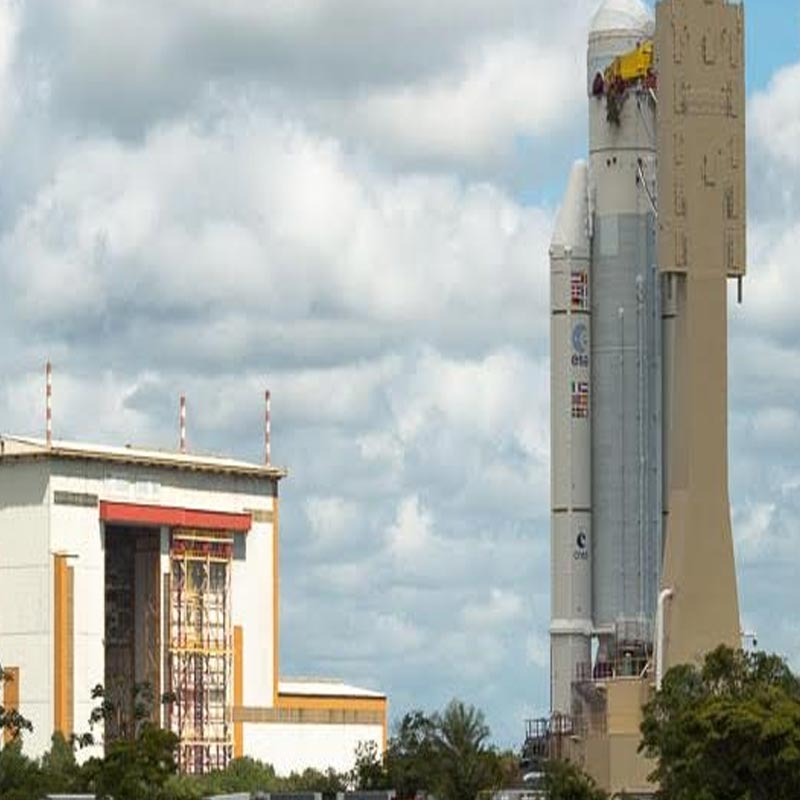
    NEW DELHI: Two Intelsat communications satellites – Intelsat 33e and Intelsat 36 – are being launched into orbit on 24 August, with Arianespace in the final stage of preparations.

    This sixth mission of the year will be launched from the Ariane Launch Complex No. 3 (ELA 3) in Kourou, French Guiana, atop an Ariane 5 booster. The launch window starts at 5:55 p.m. EDT (21:55 GMT) and extends for 45 minutes.

    The work on the launch started in mid-July with the arrival of the satellites in French Guiana. Intelsat 33e and Intelsat 36 were shipped to the Guiana Space Centre in late July. Both spacecraft were put through a series of tests including electrical checks verifying command and telemetry systems, as well as electrical propulsion tests, validating the Xenon propulsion system. The engineers also performed bi-propellant tests to make sure that each thruster responds correctly to activation commands, and to prove there were no leaks.

    With a lifetime of fifteen years, the Intelsat 33e has been built by Boeing and is based on its 702 MP platform. The satellite weighs 6.6 metric tons and measures 7.9 by 3.8 by 3.2 meters. It features two deployable solar wings, each with four panels of ultra-triple-junction gallium arsenide solar cells, capable of generating up to 13 kilowatts of power.

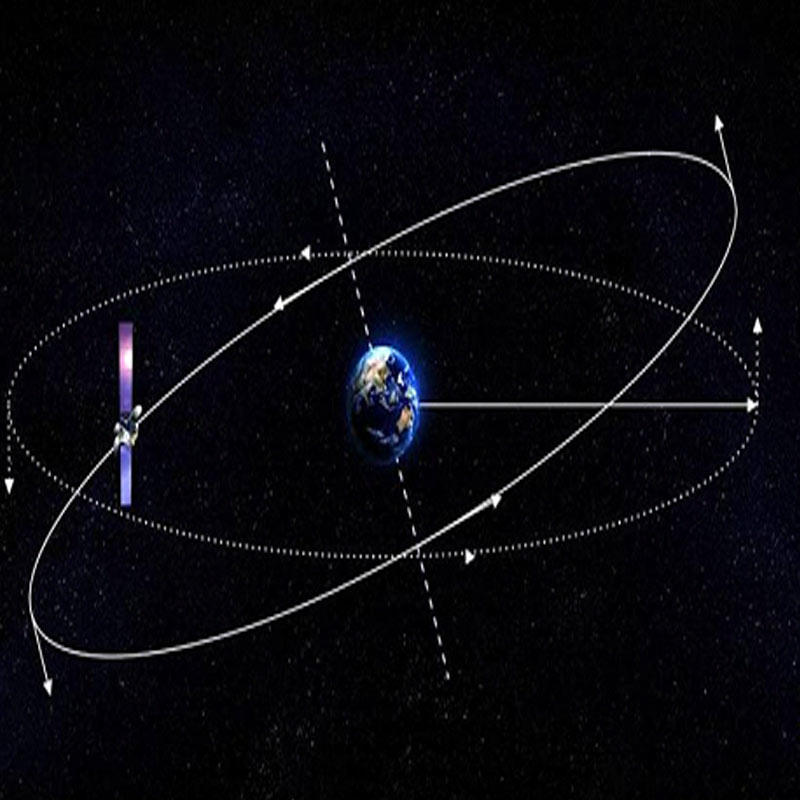
    Equipped with 20 C-band and 249 Ku-band transponders, Intelsat 33e will be inserted into a geosynchronous orbit inclined 60 degrees East, replacing Intelsat 904. The satellite is designed to deliver carrier-grade telecom, enterprise networks, aeronautical connectivity, and certain media services.

    This is the second spacecraft in the company’s EpicNG series – a high-performance, next-generation satellite platform that delivers global high-throughput technology.

    Its Ku-band spot beams are to provide broadband services for Europe, Africa, West Asia, and Asia, while a Ku-band wide beam provides broadcast coverage of Europe, West Asia, and Asia. The satellite’s C-band spot beams will cover high traffic telecommunications centres in Europe, Central Africa, West Asia, Asia, and Australia. When it comes to the C-band wide beam, it is expected to deliver coverage over sub-Saharan Africa for data and media services.

    Intelsat 36 with a life of over fifteen years was manufactured by Space Systems/Loral (SSL) and is based on the SSL-1300 bus. Weighing about 3.25 metric tons, its dimensions are 17 by 10 by 11 feet (5.2 by 3.1 by 3.4 meters). The spacecraft has two deployable solar arrays that will generate up to 15.8 kilowatts of power. Intelsat 36 is fitted with 34 Ku-band transponders and 10 C-band transponders. Its Ku-band payload will support Intelsat’s MultiChoice direct-to-home service in South Africa, while the C-band payload is expected to provide in-orbit resilience for the video content distribution neighborhood at 68.5 degrees East where the satellite will be co-located in a geosynchronous orbit, together with Intelsat 20.

    The Intelsat 33e satellite was on 6 August mated with the payload adapter in the S5 payload facility and four days later it was encapsulated in the payload fairing. Intelsat 36 was installed on the payload adapter four days later and its encapsulation took place afterwards with the stack was placed atop the Ariane 5 launcher.

    The launch rehearsal and final preparations of the booster for the upcoming liftoff were held last week, while the rollout of the rocket to the launch pad was scheduled to be performed one day before the planned blastoff. The final countdown for the liftoff will be commenced 11 hours and 30 minutes ahead of the launch.

    Designated VA232 in Arianespace’s numbering system, it will see the Ariane 5 rocket fly for about 42 minutes when Intelsat 33e will be released into orbit first nearly 29 minutes after launch, while Intelsat 36 will separate 13 minutes later.

    According to Intelsat Investor Relations Vice President Dianne J. VanBeber, “We take the next step in establishing our Intelsat EpicNG high-throughput platform with Intelsat 33e, the second in our series of seven planned satellites. We also launch Intelsat 36, which is a fully committed custom payload for an important DTH customer in South Africa,”

    The Ariane 5 in ECA configuration is the heavy-lift rocket for missions to geostationary transfer orbit (GTO) and usually carries two telecommunications satellite payloads. The flight is powered during the initial flight phase by a cryogenic core stage and two solid rocket boosters, followed by the use of a cryogenic upper stage for orbital injection of the payload.

    The 54.8-meter tall ECA is an improved version of the Ariane 5 launcher, designed to deliver payloads, mainly communications satellites, weighing up to 10 tonnes.

    Although it has the same general architecture, some significant changes were made to the basic structure of the generic version to increase thrust and enable it to carry heavier payloads. ECA is also used by institutional customers for non-GTO missions; for example, launching ESA’s Herschel and Planck scientific missions in 2008.

    This will be the 232nd liftoff of an Ariane vehicle from the Kourou Spaceport. It will be the fourth Ariane 5 launch of 2016 (the 87th Ariane 5 launch overall) and the sixth of 12 flights planned this year by Arianespace, utilizing its family of the heavy-lift Ariane 5, the medium-lift Soyuz, and the lightweight Vega.

    Arianespace’s next launch is scheduled for 16 September when it is expected to send into orbit PeruSat 1 for the Peruvian Armed Forces and four SkySat Earth-observing microsatellites for Skybox Imaging. The mission will be performed by the Vega launcher, lifting off from Kourou.
  • Two Intelsat satellites with C and Ku-Band transponders set for launch tomorrow

    Two Intelsat satellites with C and Ku-Band transponders set for launch tomorrow

    NEW DELHI: Two Intelsat communications satellites – Intelsat 33e and Intelsat 36 – are being launched into orbit on 24 August, with Arianespace in the final stage of preparations.

    This sixth mission of the year will be launched from the Ariane Launch Complex No. 3 (ELA 3) in Kourou, French Guiana, atop an Ariane 5 booster. The launch window starts at 5:55 p.m. EDT (21:55 GMT) and extends for 45 minutes.

    The work on the launch started in mid-July with the arrival of the satellites in French Guiana. Intelsat 33e and Intelsat 36 were shipped to the Guiana Space Centre in late July. Both spacecraft were put through a series of tests including electrical checks verifying command and telemetry systems, as well as electrical propulsion tests, validating the Xenon propulsion system. The engineers also performed bi-propellant tests to make sure that each thruster responds correctly to activation commands, and to prove there were no leaks.

    With a lifetime of fifteen years, the Intelsat 33e has been built by Boeing and is based on its 702 MP platform. The satellite weighs 6.6 metric tons and measures 7.9 by 3.8 by 3.2 meters. It features two deployable solar wings, each with four panels of ultra-triple-junction gallium arsenide solar cells, capable of generating up to 13 kilowatts of power.

    Equipped with 20 C-band and 249 Ku-band transponders, Intelsat 33e will be inserted into a geosynchronous orbit inclined 60 degrees East, replacing Intelsat 904. The satellite is designed to deliver carrier-grade telecom, enterprise networks, aeronautical connectivity, and certain media services.

    This is the second spacecraft in the company’s EpicNG series – a high-performance, next-generation satellite platform that delivers global high-throughput technology.

    Its Ku-band spot beams are to provide broadband services for Europe, Africa, West Asia, and Asia, while a Ku-band wide beam provides broadcast coverage of Europe, West Asia, and Asia. The satellite’s C-band spot beams will cover high traffic telecommunications centres in Europe, Central Africa, West Asia, Asia, and Australia. When it comes to the C-band wide beam, it is expected to deliver coverage over sub-Saharan Africa for data and media services.

    Intelsat 36 with a life of over fifteen years was manufactured by Space Systems/Loral (SSL) and is based on the SSL-1300 bus. Weighing about 3.25 metric tons, its dimensions are 17 by 10 by 11 feet (5.2 by 3.1 by 3.4 meters). The spacecraft has two deployable solar arrays that will generate up to 15.8 kilowatts of power. Intelsat 36 is fitted with 34 Ku-band transponders and 10 C-band transponders. Its Ku-band payload will support Intelsat’s MultiChoice direct-to-home service in South Africa, while the C-band payload is expected to provide in-orbit resilience for the video content distribution neighborhood at 68.5 degrees East where the satellite will be co-located in a geosynchronous orbit, together with Intelsat 20.

    The Intelsat 33e satellite was on 6 August mated with the payload adapter in the S5 payload facility and four days later it was encapsulated in the payload fairing. Intelsat 36 was installed on the payload adapter four days later and its encapsulation took place afterwards with the stack was placed atop the Ariane 5 launcher.

    The launch rehearsal and final preparations of the booster for the upcoming liftoff were held last week, while the rollout of the rocket to the launch pad was scheduled to be performed one day before the planned blastoff. The final countdown for the liftoff will be commenced 11 hours and 30 minutes ahead of the launch.

    Designated VA232 in Arianespace’s numbering system, it will see the Ariane 5 rocket fly for about 42 minutes when Intelsat 33e will be released into orbit first nearly 29 minutes after launch, while Intelsat 36 will separate 13 minutes later.

    According to Intelsat Investor Relations Vice President Dianne J. VanBeber, “We take the next step in establishing our Intelsat EpicNG high-throughput platform with Intelsat 33e, the second in our series of seven planned satellites. We also launch Intelsat 36, which is a fully committed custom payload for an important DTH customer in South Africa,”

    The Ariane 5 in ECA configuration is the heavy-lift rocket for missions to geostationary transfer orbit (GTO) and usually carries two telecommunications satellite payloads. The flight is powered during the initial flight phase by a cryogenic core stage and two solid rocket boosters, followed by the use of a cryogenic upper stage for orbital injection of the payload.

    The 54.8-meter tall ECA is an improved version of the Ariane 5 launcher, designed to deliver payloads, mainly communications satellites, weighing up to 10 tonnes.

    Although it has the same general architecture, some significant changes were made to the basic structure of the generic version to increase thrust and enable it to carry heavier payloads. ECA is also used by institutional customers for non-GTO missions; for example, launching ESA’s Herschel and Planck scientific missions in 2008.

    This will be the 232nd liftoff of an Ariane vehicle from the Kourou Spaceport. It will be the fourth Ariane 5 launch of 2016 (the 87th Ariane 5 launch overall) and the sixth of 12 flights planned this year by Arianespace, utilizing its family of the heavy-lift Ariane 5, the medium-lift Soyuz, and the lightweight Vega.

    Arianespace’s next launch is scheduled for 16 September when it is expected to send into orbit PeruSat 1 for the Peruvian Armed Forces and four SkySat Earth-observing microsatellites for Skybox Imaging. The mission will be performed by the Vega launcher, lifting off from Kourou.
  • Over eighty tele-education networks established using Edusat between 2004 and 2010

    Over eighty tele-education networks established using Edusat between 2004 and 2010

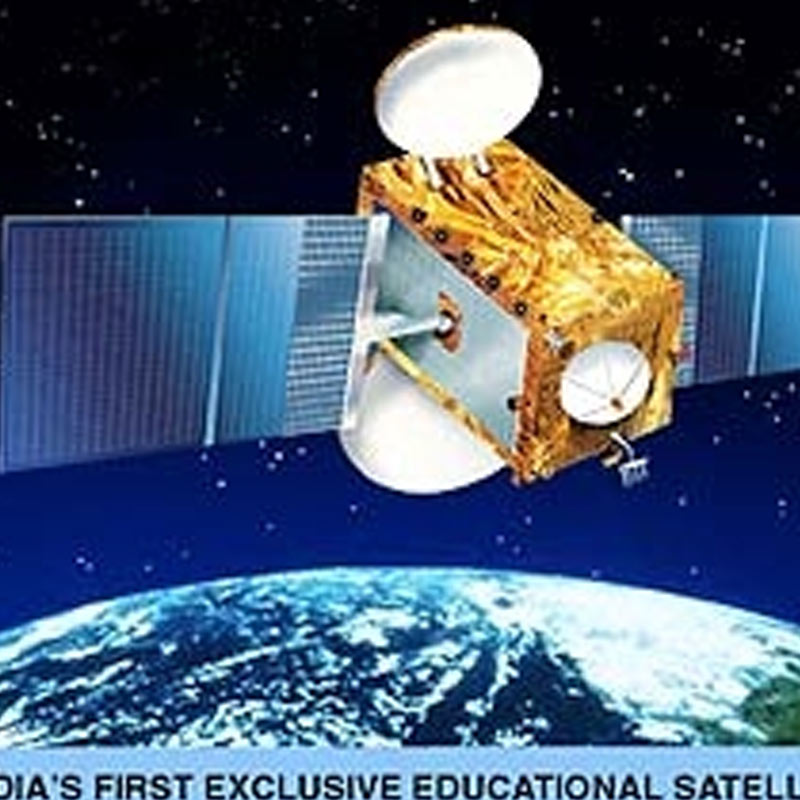
    NEW DELHI: A total of 83 tele-education networks connecting about 5000 interactive and about 55000 receive only terminals were established with the help of the Edusat satellite between September 2004 and October 2010.

    Parliament was told today by Space Minister Jitendra Singh said the satellite had been planned for demonstrating the capabilities of satellite communication technology for education sector.

    It was launched in September 2004 and supported the educational services till October 2010.
    During this period, many educational transmission experiments were demonstrated using satellite communication networks.

    After October 2010, the tele-education networks are migrated to other communication satellites like INSAT-3C, INSAT-4CR and GSAT-12.

  • Over eighty tele-education networks established using Edusat between 2004 and 2010

    Over eighty tele-education networks established using Edusat between 2004 and 2010

    NEW DELHI: A total of 83 tele-education networks connecting about 5000 interactive and about 55000 receive only terminals were established with the help of the Edusat satellite between September 2004 and October 2010.

    Parliament was told today by Space Minister Jitendra Singh said the satellite had been planned for demonstrating the capabilities of satellite communication technology for education sector.

    It was launched in September 2004 and supported the educational services till October 2010.
    During this period, many educational transmission experiments were demonstrated using satellite communication networks.

    After October 2010, the tele-education networks are migrated to other communication satellites like INSAT-3C, INSAT-4CR and GSAT-12.

  • AsiaSat and Digital Magic join hands to create original UHD content for ‘4K-SAT’

    AsiaSat and Digital Magic join hands to create original UHD content for ‘4K-SAT’

    MUMBAI: Asia’s premier satellite operator Asia Satellite Telecommunications Co. Ltd. (AsiaSat) is collaborating with Digital Magic, an industry-leading provider of advanced imaging solutions to co-produce UltraHD (UHD) content for AsiaSat’s UHD channel ‘4K-SAT’, on AsiaSat 4 at 122°E.

    The co-production includes a knowledge-based UHD mini-series on satellite communications to provide an easy-to-understand introduction to topics such as how a satellite works, how it serves people and how it is used in broadcasting high quality content.

    “Compelling content is the key to drive UHD viewership. Creating original content is the first step of our collaboration with Digital Magic. Digital Magic is an industry renowned content producer in UHD and VR. We look forward to developing more together for our audience in Asia,” said Sabrina Cubbon, Vice President, Marketing and Global Accounts of AsiaSat.

    “We are delighted to partner with AsiaSat, Asia’s UHD satellite broadcasting pioneer to create original, insightful content to educate and inform our viewers in the region. Initial content viewing among youth has suggested that this is a meaningful attempt to broaden public interest and knowledge in space and communications,” said Percy Fung, Production Director of Digital Magic.

    AsiaSat’s ‘4K-SAT’ channel is currently broadcasting a variety of full UHD content. Major TV

    operators in the Asia-Pacific have access to it via AsiaSat 4.

    ‘4K-SAT’ is available free-to-air on AsiaSat 4 with the following reception parameters: Orbital Location: 122°E
    Transponder: A4-C13H Downlink Frequency: 4120 MHz Downlink Polarisation: Horizontal Transmission Standard: DVB-S2
    Compression Standard: HEVC Modulation: 8PSK
    Symbol Rate: 29.72 Msym/sec

    FEC: 5/6

  • AsiaSat and Digital Magic join hands to create original UHD content for ‘4K-SAT’

    AsiaSat and Digital Magic join hands to create original UHD content for ‘4K-SAT’

    MUMBAI: Asia’s premier satellite operator Asia Satellite Telecommunications Co. Ltd. (AsiaSat) is collaborating with Digital Magic, an industry-leading provider of advanced imaging solutions to co-produce UltraHD (UHD) content for AsiaSat’s UHD channel ‘4K-SAT’, on AsiaSat 4 at 122°E.

    The co-production includes a knowledge-based UHD mini-series on satellite communications to provide an easy-to-understand introduction to topics such as how a satellite works, how it serves people and how it is used in broadcasting high quality content.

    “Compelling content is the key to drive UHD viewership. Creating original content is the first step of our collaboration with Digital Magic. Digital Magic is an industry renowned content producer in UHD and VR. We look forward to developing more together for our audience in Asia,” said Sabrina Cubbon, Vice President, Marketing and Global Accounts of AsiaSat.

    “We are delighted to partner with AsiaSat, Asia’s UHD satellite broadcasting pioneer to create original, insightful content to educate and inform our viewers in the region. Initial content viewing among youth has suggested that this is a meaningful attempt to broaden public interest and knowledge in space and communications,” said Percy Fung, Production Director of Digital Magic.

    AsiaSat’s ‘4K-SAT’ channel is currently broadcasting a variety of full UHD content. Major TV

    operators in the Asia-Pacific have access to it via AsiaSat 4.

    ‘4K-SAT’ is available free-to-air on AsiaSat 4 with the following reception parameters: Orbital Location: 122°E
    Transponder: A4-C13H Downlink Frequency: 4120 MHz Downlink Polarisation: Horizontal Transmission Standard: DVB-S2
    Compression Standard: HEVC Modulation: 8PSK
    Symbol Rate: 29.72 Msym/sec

    FEC: 5/6