Category: Satellites

  • ISRO ready for nexGen vehicle, GSLV can launch 2.2 tonne satellites to GTO

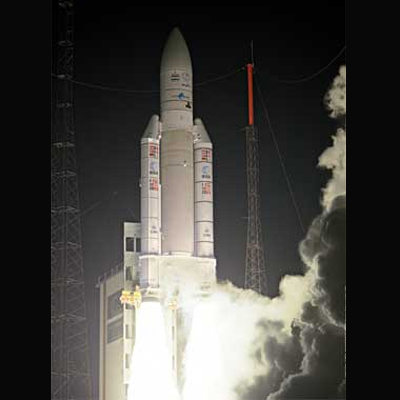
    NEW DELHI: India, which already has the capacity to launch 1700 kg to Sun Synchronous Polar Orbit (600 km) with its Polar Satellite Launch Vehicle (PSLV), is all set to launch the next generation launch vehicle Geosynchronous Satellite Launch Vehicle (GSLV MkIII) with indigenous high thrust cryogenic stage to launch 4 tonne class of communication satellites to GTO.

    The Indian Space Research Organization is all set to make the first developmental flight in the second quarter of 2017, the space minister Jitendra Singh told the Parliament. The development of Semicryogenic engine has also been undertaken to further enhance the GTO payload capability of GSLV MkIII to 6 tonnes.

    The PSLV has proven its versatility in launching multi-satellite/multi-orbit missions as well as lunar (Chandrayaan-1) and interplanetary missions (Mars Orbiter Mission).

    Until now, PSLV has completed 38 consecutive successful missions, during which it has launched 46 Indian satellites (weighing ~ 43.2 tonnes) and 180 foreign satellites (weighing ~ 6.3 tonnes). It has already established itself as a preferred launch vehicle, in its class, in the global market for launch services, especially for smaller satellites.

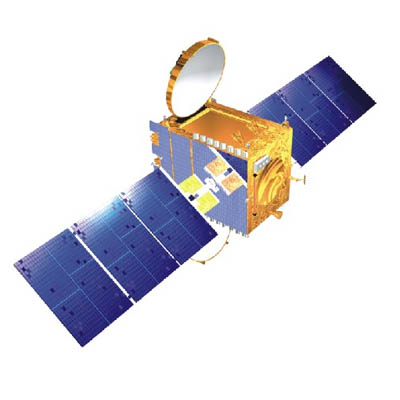
    The GSLV, with indigenous cryogenic upper stage, has the capability to launch satellites up to 2.2 tonnes to Geosynchronous Transfer Orbit (GTO). GSLV has demonstrated its reliability through three consecutive successful missions in the past three years.

    The maximum GTO capability of other space launch agencies to launch satellites are: European Space Agency (ESA): 10.5 tonnes, US: 13.8 tonnes, Russia: 6.5 tonnes, China: 14 tonnes, and Japan: 8 tonnes.

    ISRO has proved the level of efficiency in the area of space science through – (i) planning, development & execution of Lunar mission ‘Chandrayaan-1’ and High resolution imaging & Systematic topographic mapping of the Moon; (ii) successful insertion of Mars Orbiter Mission (MOM) around the planet Mars in very first attempt, achieving all planned objectives and continuing the operations of MOM beyond its designed mission life of 6 months; (iii) placing India’s first observatory in space ‘Astrosat’, which enables simultaneous multi-wavelength observations (Ultraviolet to X-Ray) to study Stars and Galaxies; (iv) indigenous development & validation of several new technologies viz. autonomy, deep space communication, scientific instruments in space science missions.

    Future missions in space science include second mission to Moon ‘Chandrayaan-2’, consisting of an indigenous Orbiter, Lander & Rover and mission for solar studies ‘Aditya-L1’ to study the solar corona in different wavebands.

    The capability to set up a space station needs capability of lifting heavy payloads into space. While there is no specific plan for space station, ISRO is working towards this capability through launch vehicles using cryogenic and semi-cryogenic engines.

  • AsiaSat sees positive outlook in India’s 7.3% growth forecast

    MUMBAI: Asia Satellite Telecommunications Holdings Limited yesterday announced its 2016 annual results for the year ended 31 December 2016.

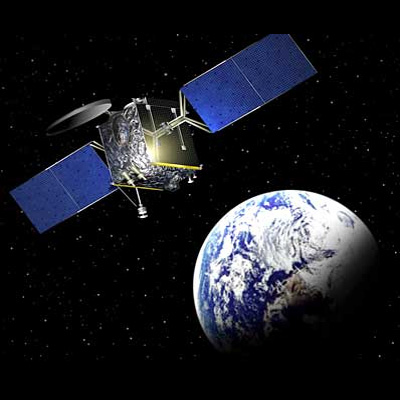
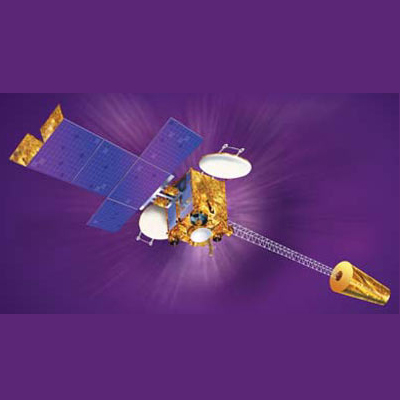
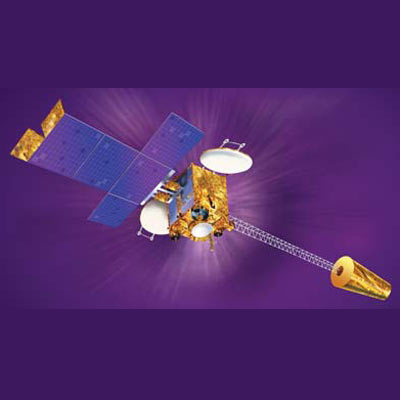
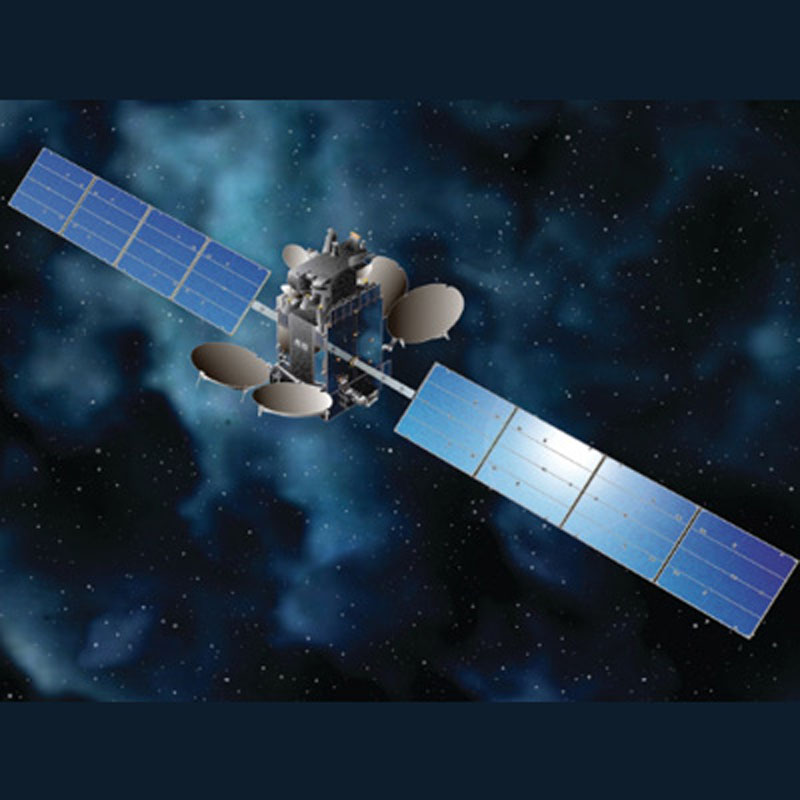
    AsiaSat 9, a replacement for AsiaSat 4 and planned for launch in late 2017, will offer additional capacity serving new markets for Direct-to-Home (DTH), regional video distribution, private networks and broadband services.

    AsiaSat 9 is expected to launch in late 2017. “We believe this satellite, which carries 28 C-band and 32 Ku-band transponders, along with a Ka-band payload is ideally positioned to exploit the growth in both HD and Ultra HD (UHD) video content and advanced broadband networks. AsiaSat 9 will be a replacement for AsiaSat 4 at 122 degrees East with additional capacity delivering enhanced power and greater coverage for Direct-to-Home (DTH), regional video distribution, private networks and broadband services within our footprint running from New Zealand to the Middle East,” AsiaSat stated in its annual results statement.

    “With regional economic prospects as estimated by the [International Monetary Fund], World Bank and [Economist Intelligence Unit] that range from 6.8% [gross domestic product] growth for China in 2017, 7.3% for India and forecasts that hover around 6% for the majority of South and Southeast Asia (with Myanmar outstanding at 8.5%), as an innovative service provider AsiaSat has a positive commercial outlook despite the short-term negatives such as the current capacity over-supply.”

    Financial Highlights:

    2016 revenue of HK$1,272 million, down 3% compared to 2015 primarily due to reduced short-term revenue from AsiaSat 3S. If excluding the short-term non-recurring AsiaSat 3S revenue, revenue grew by about 3% 2016 profit attributable to owners maintained at HK$430 million (2015: HK$440 million), as a result of lower income tax charges following the reversal of a provision made in previous years Combined new and renewed contracts during the year valued at HK$1,870 million (2015: HK$1,310 million). As at 31 December 2016, the value of contracts on hand increased by 16% to HK$4,067 million (2015: HK$3,517 million). Proposed final dividend of HK$0.20 per share

    Operational Highlights:
    Utilisation of AsiaSat 4, AsiaSat 5, AsiaSat 6 and AsiaSat 7 as of 31 December 2016 stood at 67% (99 transponders utilised), with AsiaSat 8’s entire Ku-band payload fully leased at 4 degrees West and AsiaSat 3S operating in inclined orbit to provide service in Asia.

    The acquisition of new customer Shanghai Interactive Television (SiTV) on AsiaSat 6 marked AsiaSat’s re-entry into the China video market through establishing a high value platform to support the development of High Definition (HD) broadcasting in China.

    Continued to lead the industry in advanced technology through advocating Ultra HD (UHD) broadcasting in Asia with its free-to-air UHD channel ‘4K-SAT’ on AsiaSat 4, and evaluating opportunities to develop its High Throughput Satellite (HTS) Ka-band capabilities.

    AsiaSat’s Chairman, JU Wei Min, said, “In the coming year, the Board of Directors is cautiously optimistic on the economic prospects for the region, which, despite relatively flat indicators for some markets continues to invest in new telecommunications and media infrastructure, as well as renewing and updating existing facilities. New DTH platforms focused on smaller emerging markets remain attractive, especially given the need for relevant local-language services.”

    “In order to address the ever-increasing, long-term demand for new data transmission capacity AsiaSat will continue to evaluate opportunities to develop its HTS Ka-band capabilities, carefully monitoring and benefiting from the technical and commercial progress of deployments of IoT, UHD and other consumer driven services,” JU added.

    JU Wei Min stated: “In 2016, AsiaSat laid the groundwork for the prospect of improved revenues in 2017 as we move into a period of more efficient use of satellite bandwidth and increasing demand for media and data services across Asia. Although disappointing, this year’s outcome should be viewed against a backdrop of globally unstable market conditions and the impact of disruptive new technologies.”

    “The market instability resulted from a global oversupply of satellite capacity of all kinds and generally uncertain economic conditions. We recognise the need to continue to manage closely the pricing pressures on data services as well as compression improvements for video distribution which to some extent neutralise the benefits of the increased demand generated by mobility applications and video format upgrades.”

  • ISRO world record in 104-satellite launches on a single flight

    MUMBAI: The Indian Space Research Organisation (ISRO) has set a world record by launching 104 satellites on a single rocket, including India’s earth observation satellite Cartosat-2 series.

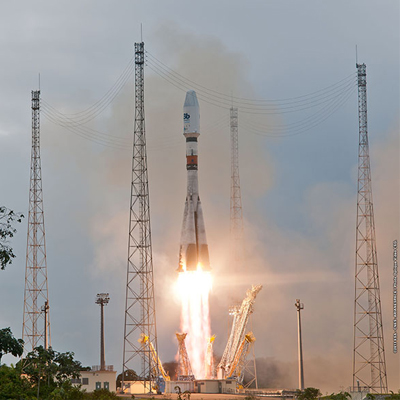
    The Indian rocket Polar Satellite Launch Vehicle (PSLV-C37) was lifted off successfully from the Satish Dhawan Space Centre SHAR, Sriharikota. This is the highest number of satellites ever launched in a single mission. This is the thirty eighth consecutively successful mission of PSLV. The total weight of all the 104 satellites carried on-board PSLV-C37 was 1378 kg.

    Earlier, the Russian Space Agency had launched 37 satellites in one go. ISRO had earlier launched 23 satellites in a single mission in June 2015.

    ISRO Chairman A.S. Kiran Kumar announced, “All 104 satellites successfully placed in orbit. My hearty congratulations to the entire ISRO team for the wonderful job they have done.”

    Prime Minister Narendra Modi has congratulated ISRO on successful launch of PSLV-C37 and CARTOSAT satellite together with 103 nano satellites.

    Modi said, “Congratulations to ISRO for the successful launch. This remarkable feat by ISRO is yet another proud moment for our space scientific community and the nation. India salutes our scientists.” India’s President Pranab Mukherjee also congratulated ISRO on carrying a record 104 satellites.

    In a message to ISRO chairman and department of space secretary A.S. Kiran Kumar, the President has said, “I extend my sincere congratulations and best wishes to you and your team at the Indian Space Research Organisation (ISRO) on the successful launch into space of PSLV – C37, carrying a record 104 satellites.”

    Of the 103 co-passenger satellites carried by PSLV-C37, two – ISRO Nano Satellite-1 (INS-1) weighing 8.4 kg and INS-2 weighing 9.7 kg – are technology demonstration satellites from India.

    The remaining 101 co-passenger satellites carried were international customer satellites from USA (96), The Netherlands (1), Switzerland (1), Israel (1), Kazakhstan (1) and UAE (1).

    With today’s successful launch, the total number of customer satellites from abroad launched by India’s workhorse launch vehicle PSLV has reached 180.

  • Hitachi Kokusai delivers SNG transmission uplink vehicle to JRTV

    MUMBAI: Broadcasting systems and surveillance system manufacturing company Hitachi Kokusai Electric Turkey Systems has announced the delivery and commissioning of a new satellite news gathering (SNG) transmission uplink vehicle to Jordanian state broadcaster, Jordan Radio and Television (JRTV).

    The broadcaster is known as a regional pioneer in satellite news gathering operations and this new SNG transmission vehicle will add further state-of-the-art production resources to its extensive field-based news team. Throughout this project, Hitachi Kokusai worked closely with its local partner, Amman-based HEAT for Engineering and Technology.

    Designed and built at Hitachi Kokusai design and manufacturing centre in Istanbul, the vehicle is a bespoke solution, designed to meet the exact SNG transmission needs of JRTV. Based on the Mercedes Sprinter van, the OB vehicle integrates a PDA 150 Ku Band Drive News antenna and 1:1 400W Ku Band TWTA and MPEG-2/4 HD compression system and a built-in automatic levelling system.

    Also, the vehicle includes a high-power air conditioning system, an uninterruptible power supply (UPS) system and a power generator, ensuring reliable standalone operation even in the most extreme Jordanian climate conditions.

    HEAT for Engineering and Technology founder and CEO Omar Hikmat said, “In order to support JRTV’s field-based production teams, we had a specific set of requirements from this vehicle. Hitachi’s ability to take a standard Mercedes vehicle and create a totally bespoke solution to our customer’s needs is impressive. It passed all JRTV’s acceptance tests with ease and already it is fully operational.”

    The sale of this vehicle to JRTV is seen as being strategically important to Hitachi Kokusai since JRTV is regarded as one of the leading regional broadcasters in terms of their application of new technologies.

  • AsiaSat appoints Woolston & Cubbon

    AsiaSat appoints Woolston & Cubbon

    MUMBAI: Asia Satellite Telecommunications Company Limited (AsiaSat) has strengthened commercial and strategy teams with appointments of Barrie Woolston as the chief commercial officer and Sabrina Cubbon in the role of vice-president, business development & strategy.

    On 1 February 2017, Woolston will integrate and lead all sales, marketing and commercial activities of the company. Woolston will lead a strong team that will search to understand and meet customers’ needs, and continue to develop new businesses worldwide.

    “I am confident that with an experienced and integrated sales team, Barrie (Woolston) will take AsiaSat’s commercial and customer activities to the next level,” said AsiaSat president and CEO Andrew Jordan said.

    “I’m delighted to take up this new commercial role and work closely with our customers and partners to provide enhanced service portfolio that meets customers’ changing needs. I join at an exciting time with the upcoming launch of our new satellite AsiaSat 9 and other new services later this year,” said Woolston.

    Woolston has 30 years of experience in the Technology,Media,Telecom sectors, with a wealth of solid experience in managing sales teams and driving new business, most recently as Chief Commercial Officer with Encompass Digital Media based in Atlanta, GA, 13 years as Commercial Director of Arqiva’s satellite and media business, and various global sales, marketing, product management and operations positions with leading brands globally.

    In the new role, Cubbon will be responsible for developing strategic initiatives to drive company’s business growth.

  • AsiaSat appoints Woolston & Cubbon

    AsiaSat appoints Woolston & Cubbon

    MUMBAI: Asia Satellite Telecommunications Company Limited (AsiaSat) has strengthened commercial and strategy teams with appointments of Barrie Woolston as the chief commercial officer and Sabrina Cubbon in the role of vice-president, business development & strategy.

    On 1 February 2017, Woolston will integrate and lead all sales, marketing and commercial activities of the company. Woolston will lead a strong team that will search to understand and meet customers’ needs, and continue to develop new businesses worldwide.

    “I am confident that with an experienced and integrated sales team, Barrie (Woolston) will take AsiaSat’s commercial and customer activities to the next level,” said AsiaSat president and CEO Andrew Jordan said.

    “I’m delighted to take up this new commercial role and work closely with our customers and partners to provide enhanced service portfolio that meets customers’ changing needs. I join at an exciting time with the upcoming launch of our new satellite AsiaSat 9 and other new services later this year,” said Woolston.

    Woolston has 30 years of experience in the Technology,Media,Telecom sectors, with a wealth of solid experience in managing sales teams and driving new business, most recently as Chief Commercial Officer with Encompass Digital Media based in Atlanta, GA, 13 years as Commercial Director of Arqiva’s satellite and media business, and various global sales, marketing, product management and operations positions with leading brands globally.

    In the new role, Cubbon will be responsible for developing strategic initiatives to drive company’s business growth.

  • Boeing delivers ABS-2A to optimise video services, DTH

    Boeing delivers ABS-2A to optimise video services, DTH

    MUMBAI: Boeing has delivered ABS-2A, an all-electric propulsion 702 satellite, to ABS which entered into commercial service on 21 January. This is the second of the pair of all-electric satellite Boeing has delivered to ABS.

    ABS, one of the globe’s fastest growing global satellite operators, offers a complete range of tailored solutions including broadcasting, data and telecommunication services to broadcasters, service providers, enterprises and government organisations.

    It operates a fleet of satellites; ABS-2, ABS-2A, ABS-3A, ABS-4/Mobisat-1, ABS-6 and ABS-7. The satellite fleet covers 93 per cent of the population across the Americas, Africa, Asia-Pacific, Europe, the Middle East, CIS and Russia.

    ABS-2A was launched in June 2016 aboard SpaceX Falcon 9 and will provide enhanced satellite communications services, including direct-to-home television services.

    Equipped with 48 Ku-band transponders, the satellite will serve ABS’ customers in Africa, the Middle East and North Africa (MENA), Russia, South Asia and South East Asia regions at 74.725 degrees east.

    “We have completed our three satellite build investment in launching as many satellites in as many consecutive years (ABS-2 in 2014, ABS-3A in 2015 and ABS-2A in 2016). ABS-2A is the latest high-capacity satellite providing expansion capacity and continuity of satellite services at our prime gateway over the Indian Ocean region. It is located with ABS-2 at our premium neighborhood at 75°E, optimized for video services for growing CATV and DTH businesses,” said ABS CEO Tom Choi.

    “Boeing is the first satellite manufacturer to build and deliver all-electric propulsion satellites, and this latest delivery reaffirms our leadership with all-electric propulsion,” said Boeing Satellite Systems International president Mark Spiwak. “The scalable 702 satellite, coupled with the efficiency of all-electric propulsion, allows two satellites to launch inside one rocket. This ability to stack and join the satellites using our patented design enables our customers to minimize the costs associated with launching a single satellite.”

    Headquartered in Bermuda, ABS, with offices in the U.S, the UAE, South Africa and Asia, is majority-owned by funds managed by PE Permira.

    Also Read:

    ABS partners PT Sarana Media to launch Indonesian DTH FreeViews platform

  • Boeing delivers ABS-2A to optimise video services, DTH

    Boeing delivers ABS-2A to optimise video services, DTH

    MUMBAI: Boeing has delivered ABS-2A, an all-electric propulsion 702 satellite, to ABS which entered into commercial service on 21 January. This is the second of the pair of all-electric satellite Boeing has delivered to ABS.

    ABS, one of the globe’s fastest growing global satellite operators, offers a complete range of tailored solutions including broadcasting, data and telecommunication services to broadcasters, service providers, enterprises and government organisations.

    It operates a fleet of satellites; ABS-2, ABS-2A, ABS-3A, ABS-4/Mobisat-1, ABS-6 and ABS-7. The satellite fleet covers 93 per cent of the population across the Americas, Africa, Asia-Pacific, Europe, the Middle East, CIS and Russia.

    ABS-2A was launched in June 2016 aboard SpaceX Falcon 9 and will provide enhanced satellite communications services, including direct-to-home television services.

    Equipped with 48 Ku-band transponders, the satellite will serve ABS’ customers in Africa, the Middle East and North Africa (MENA), Russia, South Asia and South East Asia regions at 74.725 degrees east.

    “We have completed our three satellite build investment in launching as many satellites in as many consecutive years (ABS-2 in 2014, ABS-3A in 2015 and ABS-2A in 2016). ABS-2A is the latest high-capacity satellite providing expansion capacity and continuity of satellite services at our prime gateway over the Indian Ocean region. It is located with ABS-2 at our premium neighborhood at 75°E, optimized for video services for growing CATV and DTH businesses,” said ABS CEO Tom Choi.

    “Boeing is the first satellite manufacturer to build and deliver all-electric propulsion satellites, and this latest delivery reaffirms our leadership with all-electric propulsion,” said Boeing Satellite Systems International president Mark Spiwak. “The scalable 702 satellite, coupled with the efficiency of all-electric propulsion, allows two satellites to launch inside one rocket. This ability to stack and join the satellites using our patented design enables our customers to minimize the costs associated with launching a single satellite.”

    Headquartered in Bermuda, ABS, with offices in the U.S, the UAE, South Africa and Asia, is majority-owned by funds managed by PE Permira.

    Also Read:

    ABS partners PT Sarana Media to launch Indonesian DTH FreeViews platform

  • Satellite Communication among various studies by ISRO and Japanese JAXA

    Satellite Communication among various studies by ISRO and Japanese JAXA

    NEW DELHI: Indian Space Research Organisation (ISRO) and the Japanese Aerospace Exploration Agency (JAXA) are to jointly collaborate in the exploration and use of outer space exclusively for peaceful purposes in accordance with the laws and regulations applicable in each country and their international obligations.

    A memorandum of understanding was signed between the two agencies in Tokyo and the Cabinet chaired by the Prime Minister Narendra Modi was apprised of this.

    This MoU provides scope for pursuing cooperation in various areas of space science technology and applications including: eearth observation, satellite communication and navigation; exploration and space sciences; Research and development (space systems and space technology); and Space industry promotion.

    ISRO and JAXA will bear the costs of their respective activities under this Memorandum, unless they decide otherwise in writing. Ability to fulfil their respective roles and activities under this Memorandum and its relevant separate Implementation Arrangement is subject to their respective funding procedures, the availability of appropriated funds and their respective national laws.

    Framework MoU would lead to joint activity in the field of application of space technologies for the benefit of humanity. Thus all sections and regions of the country will get benefited.

    India and Japan have been pursuing space cooperation for more than five decades and carried out studies in the field of atmospheric study, observation of universe and scientific investigation in remote sensing. With the formation of JAXA in 2003, an “arrangement concerning the considerations of potential future cooperation in the field of outer space” was signed in October 2005 between ISRO/ Department of Space (DOS) and JAXA.

    Subsequently both agencies have signed cooperative documents addressing lunar exploration, satellite navigation, X-ray astronomy and Asia Pacific Regional Space Agency Forum (APRSAF).

    During the ISRO-JAXA bilateral meeting held at New Delhi on April 05, 2016, both sides stressed the need for updating the contents of ‘2005 Arrangement’ with enhanced scope of cooperation. Accordingly, both sides have arrived at the draft of new ‘Memorandum of Understanding (MoU) between ISRO and JAXA concerning cooperation in the field of outer space’ and got it signed on November 11, 2016 at Tokyo during the visit of Prime Minister of India to Japan.

  • Satellite Communication among various studies by ISRO and Japanese JAXA

    Satellite Communication among various studies by ISRO and Japanese JAXA

    NEW DELHI: Indian Space Research Organisation (ISRO) and the Japanese Aerospace Exploration Agency (JAXA) are to jointly collaborate in the exploration and use of outer space exclusively for peaceful purposes in accordance with the laws and regulations applicable in each country and their international obligations.

    A memorandum of understanding was signed between the two agencies in Tokyo and the Cabinet chaired by the Prime Minister Narendra Modi was apprised of this.

    This MoU provides scope for pursuing cooperation in various areas of space science technology and applications including: eearth observation, satellite communication and navigation; exploration and space sciences; Research and development (space systems and space technology); and Space industry promotion.

    ISRO and JAXA will bear the costs of their respective activities under this Memorandum, unless they decide otherwise in writing. Ability to fulfil their respective roles and activities under this Memorandum and its relevant separate Implementation Arrangement is subject to their respective funding procedures, the availability of appropriated funds and their respective national laws.

    Framework MoU would lead to joint activity in the field of application of space technologies for the benefit of humanity. Thus all sections and regions of the country will get benefited.

    India and Japan have been pursuing space cooperation for more than five decades and carried out studies in the field of atmospheric study, observation of universe and scientific investigation in remote sensing. With the formation of JAXA in 2003, an “arrangement concerning the considerations of potential future cooperation in the field of outer space” was signed in October 2005 between ISRO/ Department of Space (DOS) and JAXA.

    Subsequently both agencies have signed cooperative documents addressing lunar exploration, satellite navigation, X-ray astronomy and Asia Pacific Regional Space Agency Forum (APRSAF).

    During the ISRO-JAXA bilateral meeting held at New Delhi on April 05, 2016, both sides stressed the need for updating the contents of ‘2005 Arrangement’ with enhanced scope of cooperation. Accordingly, both sides have arrived at the draft of new ‘Memorandum of Understanding (MoU) between ISRO and JAXA concerning cooperation in the field of outer space’ and got it signed on November 11, 2016 at Tokyo during the visit of Prime Minister of India to Japan.