Category: Satellites

  • India launches its heftiest satellite yet

    India launches its heftiest satellite yet

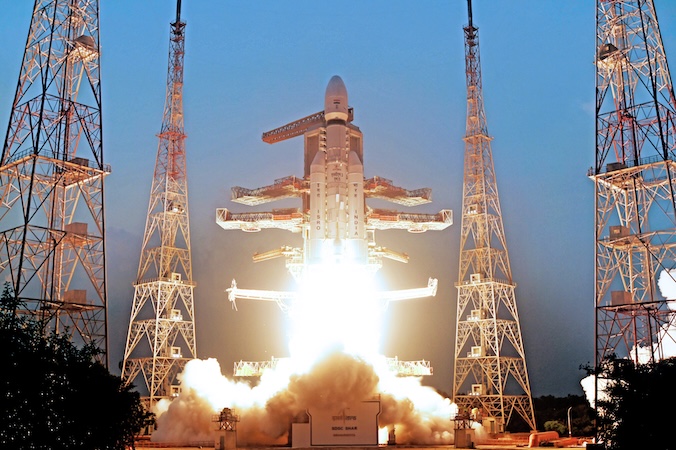
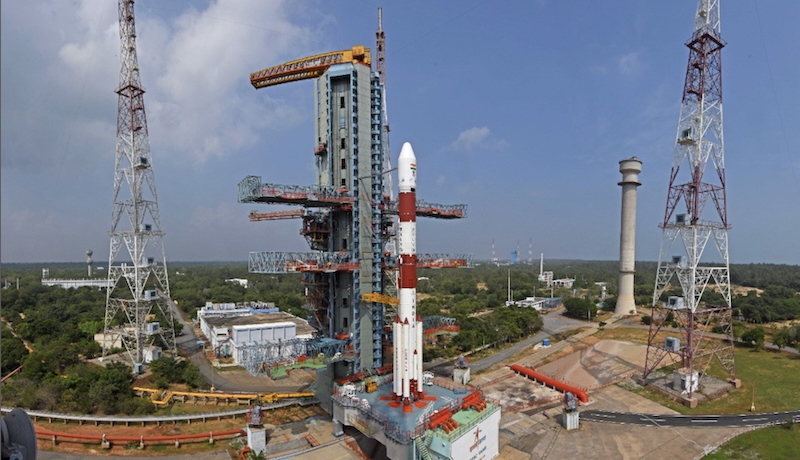
    SRIHARIKOTA: India just flexed its space muscles. On 2 November, the Indian Space Research Organisation (Isro) hurled its heaviest communications satellite ever into orbit from home soil—a 4,400 kg behemoth called CMS-03 that will keep the navy’s ships, submarines and aircraft chattering across the Indian Ocean. The launch from Sriharikota at 5:26 pm marked the end of an embarrassing era: no longer must India send its bulkiest satellites abroad for a lift.

    The rocket doing the heavy lifting was LVM3, ISRO’s most powerful launcher and now nicknamed “Bahubali” for its Herculean payload capacity. This souped-up version sports a beefier cryogenic upper stage—the C32, carrying 32,000kg of fuel and belching 22 tonnes of thrust, a 10 per cent upgrade on the previous model. It can now haul 4,000kg to geosynchronous orbit and 8,000kg to low Earth orbit without breaking a sweat.

    Until now, India’s chunkier satellites hitched rides with foreigners. France’s Arianespace launched the 5,854kg GSAT-11 and 4,181kg GSAT-24. Elon Musk’s SpaceX ferried the 4,700kg GSAT-20. No more. Isro chairman V Narayanan crowed about the mission being “a shining example of Atmanirbhar Bharat”—self-reliant India, in case the point wasn’t clear enough.

    The CMS-03, also known as GSAT-7R, isn’t just heavy; it’s clever. Bristling with indigenous components, the multiband satellite will provide encrypted voice, data and video links for 15 years, giving the Indian Navy real-time situational awareness across a vast oceanic region. The navy called it a testament to national self-sufficiency in maritime defence.

    This was LVM3’s eighth consecutive successful launch, following triumphs like Chandrayaan-2, Chandrayaan-3 (which made India the first nation to land near the lunar south pole), and OneWeb satellite deployments. The upgraded rocket also feeds directly into Isro’s Gaganyaan programme, which aims to send astronauts into space. Three uncrewed missions are planned first, including one carrying Vyommitra, a robotic astronaut, later this year.

    Narayanan said the space organisation is eyeing seven more launches by March 2026, with another LVM3 mission slated for December. India’s space sector, he declared, is “soaring high.

    With launches this meaty, it’s hard to argue.

  • Orbitaid fuels India’s space race with new 2m dollars R&D hub in Bengaluru

    Orbitaid fuels India’s space race with new 2m dollars R&D hub in Bengaluru

    MUMBAI: Talk about rocket fuel for ambition! India’s space dreams just got a top-up. Orbitaid Aerospace, the country’s first startup dedicated to On-Orbit Servicing and Refuelling (OOSR), has unveiled a sparkling new research and development facility in Bengaluru, setting the stage for India’s next big leap in space sustainability.

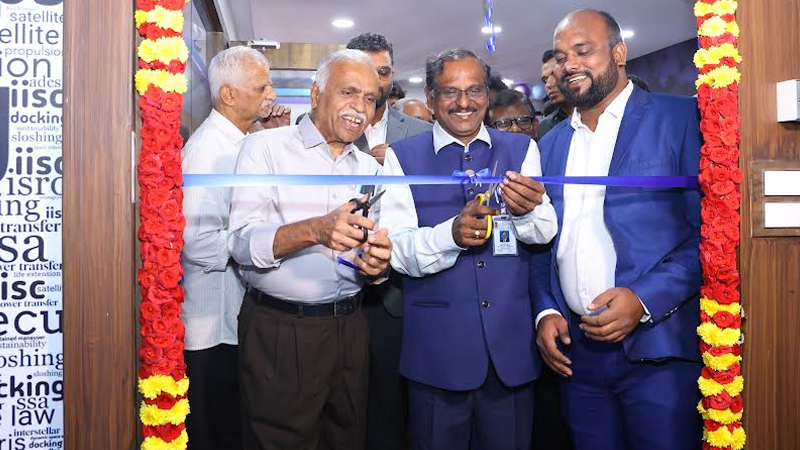
    The 2 million dollars, 6,500 square feet centre was inaugurated by none other than ISRO chairman Dr V. Narayanan, who called the initiative a timely boost for India’s growing private space ecosystem. The hub houses India’s largest commercial infrastructure for Rendezvous proximity operations and docking (RPOD), think of it as a cosmic pit stop where satellites can refuel and extend their lifespan instead of burning out.

    Complete with a high-end control room, a class 10,000 cleanroom, and fuel-transfer facilities, the setup signals Orbitaid’s intent to play on the global stage. Dr Narayanan praised the effort, noting that docking and refuelling interfaces will be vital to India’s future missions and confirmed that ISRO is now welcoming private players to collaborate on such technologies.

    For Orbitaid, the new facility isn’t just a milestone, it’s a mission. Founder and ceo Sakthikumar Ramachandran said the company’s indigenously built SIDRP interface has reached technology readiness level 7, putting them in pole position to deliver life-extension services to satellites in India and beyond.

    And Bengaluru is only the beginning. The company plans to expand into Tamil Nadu with a manufacturing hub for propellant handling and satellite servicing, building what it calls a “circular economy” for space tech. Early backer Unicorn India Ventures, whose managing partner Bhaskar Majumdar lauded Orbitaid’s discipline and focus, is doubling down on support.

    The launch event drew dignitaries including the consuls general of Germany, Italy, and Switzerland, along with Startuptn and Unicorn India Ventures representatives. ISRO officials, defence leaders, academics, and space industry executives also turned up, underscoring how the startup has captured attention well beyond the launchpad.

  • India’s southern spaceport progressing; to take aim at polar satellites

    India’s southern spaceport progressing; to take aim at polar satellites

    MUMBAI: India is racing to complete its second spaceport on the Tamil Nadu coast, promising to revolutionise the country’s small satellite launch capabilities. The Kulasekarapattinam facility, targetted for commissioning in 2026-27, will unlock dramatic payload improvements that existing infrastructure simply cannot match.

    Minister of state in the prime minister’s office Jitendra Singh told parliament that the Rs 985.96 crore project has consumed Rs 389.58 crore so far, with land acquisition nearly complete and technical facilities under construction. What makes the coastal location special is geography: launching southward over open ocean eliminates the orbital gymnastics required at the existing Satish Dhawan Space Centre.

    The numbers tell the story. India’s Small Satellite Launch Vehicle can carry just 300kg to sun-synchronous polar orbits from Kulasekarapattinam—but “inadequate” payloads from the established Sriharikota facility. The problem lies in trajectory: rockets launching from Sriharikota must perform complex manoeuvres to avoid dropping spent stages on populated areas, gutting their carrying capacity.

    Sun-synchronous polar orbits are the sweet spot for earth observation satellites, keeping spacecraft in constant sunlight as they circle the planet. But reaching these orbits from India’s existing spaceport requires fuel-guzzling course corrections that leave little room for actual cargo.

    Kulasekarapattinam changes the equation entirely. The southern facility’s coastal position allows rockets to fly straight into polar trajectories without dodging landmasses or cities. Once operational, the spaceport will handle launches for both ISRO’s Small Satellite Launch Vehicle and equivalent rockets from private companies.

    The project represents India’s push to capture more of the booming small satellite market, where payload efficiency often determines commercial viability. With fabrication of equipment underway at various work centres and construction proceeding on technical facilities, the race is on to bring India’s orbital ambitions down to earth—or rather, up to space—by 2027.

  • IBAI report pegs India’s insurance boom at Rs 25 lakh crore by 2030

    IBAI report pegs India’s insurance boom at Rs 25 lakh crore by 2030

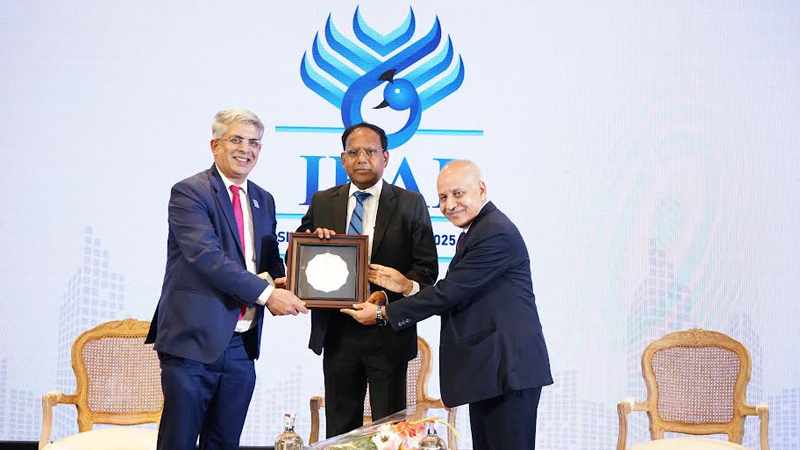
    MUMBAI: The Insurance Brokers Association of India (IBAI) kicked off its silver jubilee year with a bold vision and bolder numbers. At its 24th Foundation Day celebration in Mumbai, the association unveiled its flagship report – ‘Leading the Path to Insurance for All: Broker of the Future’ – developed in collaboration with knowledge partner McKinsey & Company. The report, launched by Shri C.P. Radhakrishnan, Governor of Maharashtra, paints a bullish picture: India’s insurance sector could more than double from Rs 11 lakh crore in 2024 to Rs 25 lakh crore by 2030.

    Marking the occasion, Mr. M Nagaraju, IAS, secretary, Department of Financial Services, urged brokers to move beyond metros and into Bharat – Tier 2, Tier 3 towns, SMEs, and agri sectors. “IBAI must partner with public institutions and state governments to ensure truly democratic access to insurance,” he said.

    The McKinsey report doesn’t pull punches. India’s 91 per cent protection gap is among the highest globally. Just 1 in 2 Indians has life insurance; 2 in 5 have health cover. Strip away government schemes, and that number drops to 1 in 4. Rural India contributes 45 per cent of GDP, yet only 2 per cent of insurance branches exist in these areas.

    Retail and SME segments are projected to be the twin engines of growth. The retail market alone could swell to Rs 21 lakh crore, driven by mass-market demand. On the institutional side, non-life premiums could nearly triple to Rs 2.8 lakh crore, largely fuelled by health and property insurance.

    Speaking at the event, M Nagaraju, IAS, Secretary, DFS, MoF said, “I congratulate IBAI on embarking on its silver jubilee year and commend its efforts through initiatives like the Brokers Voice survey, I Broker Magazine, and the Claims Handbook. As India moves towards the goal of ‘Insurance for All by 2047’, the role of insurance brokers becomes increasingly vital. IBAI has emerged not just as a trade body but as a responsible stakeholder and thought leader in the insurance value chain. I urge brokers across the country to actively contribute to this national mission—especially in Tier 2 and Tier 3 cities, among small businesses, and in the agriculture sector. IBAI must work closely with the government and public institutions to build awareness, simplify products, and enhance capacity, ensuring truly democratic access to insurance. I also encourage brokers to actively participate in state-level insurance programs.”

    Insurance Brokers Association of India president Narendra Bharindwal said, “India’s insurance sector is entering a new era of opportunity, with the potential to more than double by 2030. The growth, however, needs to be secured by fast focus on bridging the massive 91% protection gap that exists in the country. At this moment, brokers have a strategic inflection point. Moving away from merely intermediaries, brokers are becoming trusted advisors that will translate awareness into action and build trust in underserved markets. Regulations permitting, with access to growth capital and investments in digital capabilities, brokers would be able to scale, drive inclusion, and form the bedrock of India’s journey toward ‘Insurance for All’ by 2047. This empowerment must begin now.”

    McKinsey & Company senior partner Peeyush Dalmia said, “The Indian insurance industry is at an inflection point. Despite significant growth in premiums, the sector continues to face challenges such as a protection gap and low coverage. Transforming Indian insurance requires innovation and collaboration from all stakeholders, including insurers, brokers, industry bodies, and regulators. Brokers are situated at the intersection of demand and supply, could potentially lead the journey towards the aspiration of ‘Insurance for All by 2047’.”

    The report, based on surveys of 2,500 retail customers and 100 institutional clients, uncovered a startling insight: while awareness is rising, intent to buy remains low. Among affluent individuals and HNIs, 60 per cent believe their life insurance should be 10× their salary, but only 30 per cent actually have that cover. Trust is key as 70 per cent of HNIs rely on advisors, while mass-market consumers trust friends and family.

    On claims, the story is grimmer. Half of HNIs and over 55 per cent of SMEs report dissatisfaction with claims handling, citing delays, paperwork, and poor support.

    India has 735 licensed insurance brokers, but the top 36 control 85 per cent of revenues. Capital access is limited. Regulatory support and digital investment, the report suggests, could transform brokers into true financial allies — especially in mass and SME markets.

    The study outlines four strategic interventions to become the Broker of the Future:

    ●    Drive demand through segment-specific, omnichannel engagement

    ●    Unlock access in underinsured markets

    ●    Partner on product innovation

    ●    Create transparent, hassle-free claims and after-sales experiences

    (If you are an Anime fan and love Anime like Demon Slayer, Spy X Family, Hunter X Hunter, Tokyo Revengers, Dan Da Dan and Slime, Buy your favourite Anime merchandise on AnimeOriginals.com.)
     

  • SES seals Intelsat takeover, creating satellite giant with 120-bird fleet

    SES seals Intelsat takeover, creating satellite giant with 120-bird fleet

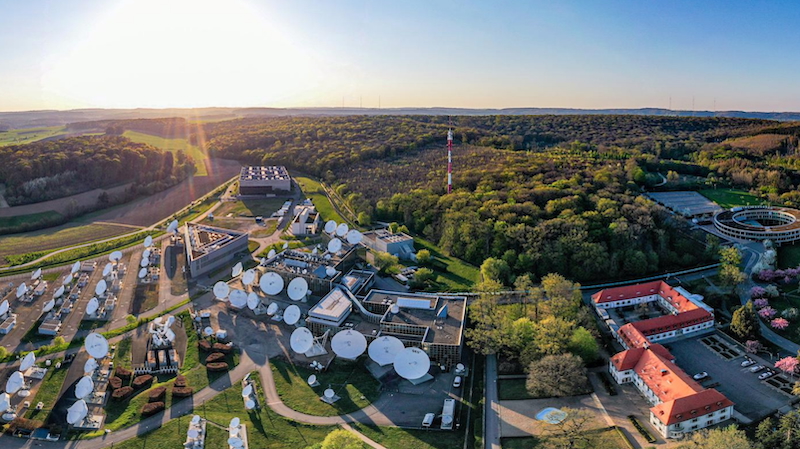
    LUXEMBOURG:  Satellite heavyweight SES has wrapped up its acquisition of Intelsat, creating a turbocharged space communications firm with a 120-strong satellite arsenal spanning geostationary (Geo), medium Earth orbit (Meo), and strategic access to low Earth orbit (Leo) assets. The announcement was made on 17 July 2025. 

    The deal instantly boosts SES’s clout in high-growth verticals, with around 60 per cent of revenues now flowing from aviation, maritime, government, and media clients. The expanded fleet includes roughly 90 Geo and nearly 30 Meo satellites, with the new entity operating across a rich spectrum of bands including C, Ku, Ka, military Ka, X, and UHF—enabling tailored, premium-grade connectivity solutions globally.

    “Today, we’re not just merging two companies — we’re creating a stronger company, built for the future. I want to extend a warm welcome to all new employees, customers, and partners,” said SES CEO Adel Al-Saleh. “In this new chapter, we are bringing together a powerful mix of talented people, network infrastructure, spectrum, innovation, and global relationships that will allow us to deliver next-generation connectivity and space-enabled services in smarter and quicker ways.”

    The financials are just as skyward. The merged outfit expects pro forma revenue of €3.7 billion growing at a low- to mid-single digit CAGR between 2024 and 2028. Adjusted EBITDA is pegged at €1.8 billion with mid-single digit growth including synergies, while adjusted free cash flow is set to top €1 billion by 2027–2028 (pre-IRIS2).

    A hefty €8 billion contract backlog provides strong revenue visibility, while cost synergies—valued at a net present value of €2.4 billion—are expected to deliver an annual run rate of €370 million, with 70 per cent realised within three years. Savings will come from merged fleets, streamlined ops, and smarter procurement.
    SES, which remains headquartered in Luxembourg and listed on both the Paris and Luxembourg bourses ), will maintain a key base in McLean, Virginia. The firm has set its sights firmly on emerging frontiers including IoT, direct-to-device comms, space situational awareness, quantum key distribution, and inter-satellite data relays. Annual capex (excluding IRIS2) is expected to average €600–650 million through 2028.

    SES has also signalled intent to raise its base dividend once it achieves sub-3x net leverage, expected within 12–18 months.

    Legal and financial advisors on the transaction read like a who’s who: SES leaned on Guggenheim Securities, Morgan Stanley, Deutsche Bank, and legal bigwigs from Gibson Dunn to Hogan Lovells. Intelsat was advised by PJT Partners, with legal counsel from Skadden, Wiley Rein, and Elvinger Hoss Prussen.

    The move solidifies SES’s place among the top tier of global satellite operators—now armed with more firepower, deeper pockets, and sharper intent to lead the new space race.

  • Elon Musk’s Starlink clears final regulatory hurdle in India

    Elon Musk’s Starlink clears final regulatory hurdle in India

    MUMBAI: Elon Musk’s satellite internet venture Starlink has finally received the green light from India’s space regulator, In-Space, clearing the last major regulatory roadblock to launch commercial operations in the country.

    On 8 July, the Indian National Space Promotion and Authorisation Centre (In-Space) Igranted Starlink permission to operate its Gen1 non-Indian GSO and NGSO satellite constellation for broadband services over Indian territory. The authorisation is valid until July 7, 2030.

    The nod includes specific frequency band allocations. For gateway beams, Starlink can use uplink bands of 27.5–29.1 GHz and 29.5–30 GHz, and downlink bands of 17.8–18.6 GHz and 18.8–19.3 GHz. For user terminals, the uplink band is 14.0–14.5 GHz (LHCP), while the downlink is 10.7–12.7 GHz (RHCP).

    The approval follows Starlink’s receipt of a Global Mobile Personal Communication by Satellite (GMPCS) licence from the department of telecommunications (DoT), positioning it as the third player—after Eutelsat-OneWeb and Reliance Jio—to secure full clearance to provide satellite broadband in India.

    Next on the to-do list: acquiring administrative spectrum from the government, setting up ground stations, and passing security compliance trials. Starlink plans to establish three gateway stations across the country as part of its rollout.

    Sources say the DoT will soon allocate trial spectrum to facilitate security demonstrations. Final spectrum pricing and allocation guidelines are also expected shortly, following recent recommendations from TRAI.

    Starlink has already inked deals with Indian VSAT providers, signalling a B2B and B2G push ahead of a consumer rollout. Insiders hint that Starlink could soon begin offering direct-to-consumer connections via its website, though pricing is still under wraps. A promotional plan pegged at Rs 840 per month is reportedly on the table, but not officially confirmed.

    The road to India hasn’t been easy. Starlink has waited since 2022 for regulatory approvals, facing national security concerns and policy disputes with Jio over spectrum allocation. Eventually, the government backed Musk’s view that satellite spectrum should be assigned, not auctioned.

    Meanwhile, Amazon’s rival satcom venture, Project Kuiper, remains stuck in regulatory limbo. Despite completing operational and security checks, its application is still under review. Kuiper is proposing a more ambitious infrastructure plan, including 10 gateways and PoPs in Mumbai and Chennai—well ahead of Starlink’s three.

    India, the world’s second-largest internet market, is shaping up as a critical battleground for satellite broadband. With Musk’s firm now officially in the race, the stage is set for a high-stakes space-age showdown.

  • 5G will blast into orbit as Europe’s CTO readies game-changing satellite launch

    5G will blast into orbit as Europe’s CTO readies game-changing satellite launch

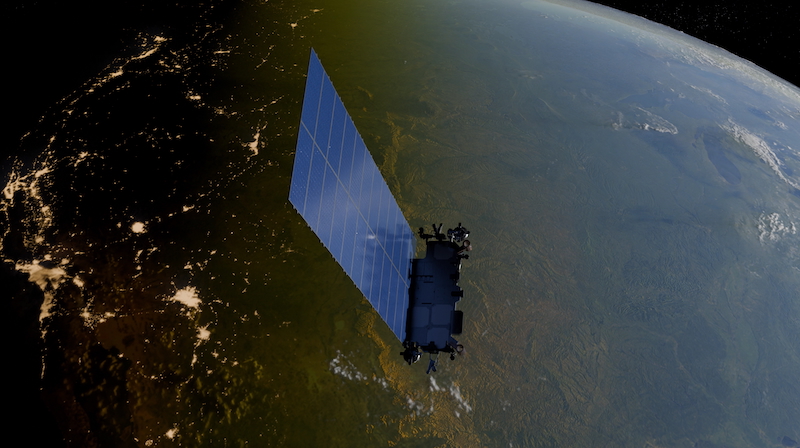
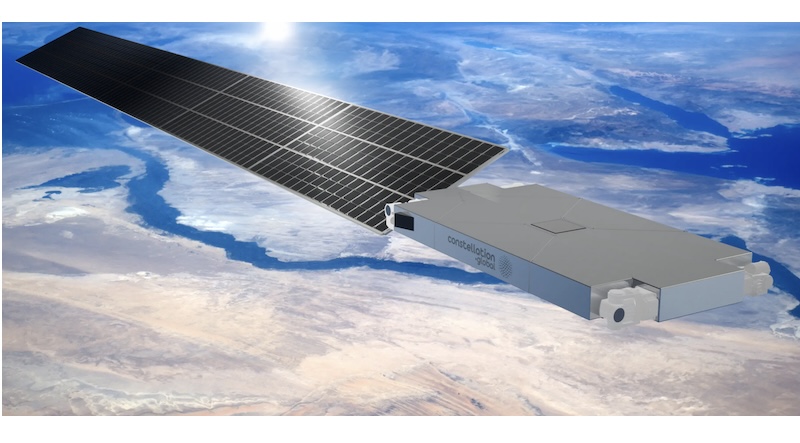
    PARIS: European satellite player Constellation Technologies & Operations (CTO) is set to fire the starting gun on a bold new telecoms era, with the launch of its first regenerative 5G mmWave payload on 20 June from Cape Canaveral, Florida.

    The payload—hitching a ride aboard D-Orbit’s Ion platform—aims to prove that ultra-fast, low-latency 5G can be beamed directly from space, using mmWave spectrum already owned by telcos. If successful, it could catapult satellite telecoms into the heart of mainstream connectivity—no cables required.

    “This inaugural flight brings our vision to life: a space-based network that’s neutral, carrier-operable, and truly global,” said CTO chief executive Charles Delfieux. “Space is the next frontier for telecom operators.”

    Far from a mere science experiment, CTO’s Vleo (very low Earth orbit) constellation project is designed to extend high-performance internet access to rural backwaters, disaster zones, and connectivity dead spots. Its shared infrastructure model sidesteps the need for heavy telco capex, acting as a cost-effective complement to ground-based fibre and cellular systems.

    CTO’s pitch is as strategic as it is technological: a European-built, sustainable, and operator-neutral framework that could offer the continent telecom sovereignty in an increasingly contested digital domain.

    As launch day approaches, the industry is watching closely. If CTO sticks the landing, it won’t just be a payload going up—it could be terrestrial telcos’ bandwidth ambitions reaching escape velocity.

  • Intelsat shoots for the stars – and lands squarely in India’s broadcast orbit

    Intelsat shoots for the stars – and lands squarely in India’s broadcast orbit

    MUMBAI:  Global satellite heavyweight Intelsat has scored a milestone regulatory victory in India — one that opens up the floodgates for cross-border broadcast services, new business, and deeper foreign participation in the subcontinent’s satellite economy.

    In a landmark decision, the Indian National Space Promotion and Authorisation Centre (In-Space) has granted Intelsat permission to directly provide satellite bandwidth to Indian media and broadcast companies. The approval covers four of Intelsat’s geostationary satellites — IS-17, IS-20, IS-36 and IS-39 — all offering high-powered C-band coverage over India.

    This isn’t just regulatory housekeeping — it’s India’s formal nod to a new satellite playbook, and Intelsat is among the first foreign players to officially get a seat at the table.

    The green light gives Indian broadcasters access to Intelsat’s fleet for everything from live news uplinks and sports distribution to linear TV delivery and multi-region content sharing. It paves the way for enhanced scalability, quality, and coverage — especially important as India’s video consumption skyrockets across satellite, cable, and OTT.

    The newly authorised satellites support high-capacity, high-reliability services, giving Indian broadcasters a powerful backup or replacement for ageing domestic satellite capacity. Intelsat’s C-band services are known for their robustness — particularly valuable in monsoon-prone regions where signal integrity can be patchy.
    The approval has already translated into new revenue: three of India’s largest media networks — rumoured to include a mix of news, regional, and GEC (general entertainment channel) players — have signed contracts with Intelsat following the IIn-space go-ahead. The deals cover a mix of primary satellite carriage, content redistribution, and international footprint expansion.

    While the names remain under wraps (JioStar is rumoured to have taken up six C-band transponders), industry watchers say this move could trigger a domino effect, with other players lining up for capacity.

    This move also signals India’s growing openness to foreign satellite operators. Previously, non-Indian entities faced a labyrinth of regulatory hurdles — needing to lease capacity through Indian agencies or enter into convoluted sub-licensing arrangements. With In-Space actively streamlining permissions under India’s commercial space policy, the gates are now open for direct engagement, competitive pricing, and tech transfer.

    “This approval represents a significant step forward in Intelsat’s contribution to India’s space commerce sector, a source of great national pride,” said Intelsat regional vice-president for Asia Pacific Gaurav Kharod. “Our extensive satellite network with four satellites covering the region will provide Indian broadcasters with reliable, high-quality connectivity solutions that meet their evolving needs. This authorisation enables us to better serve our customers and contribute to India’s growing media landscape.”

    India is now one of the fastest-growing video markets in the world, with over 900 TV channels, tens of thousands of cable and DTH operators, and an exploding OTT sector. Satellite remains a crucial backbone for content distribution, particularly in rural and remote geographies where fibre is limited and terrestrial networks are patchy.

    For Intelsat — a company with a six-decade legacy and one of the largest integrated satellite-terrestrial networks globally — this opens up a vast new revenue corridor in south Asia. It also gives them pole position as Indian broadcasters look to upgrade infrastructure, meet rising bandwidth demands, and adopt cloud-connected satellite workflows.

    The firm has long provided secure communications to governments, enterprises, and NGOs. But with this regulatory leap, India’s broadcast sector becomes its newest playground.

    As India unlocks its space economy and media sector evolves beyond borders, Intelsat’s entry may just be the first of many new uplinks between Indian content and global audiences.

  • In-Space extends authorisation deadline for foreign satellites

    In-Space extends authorisation deadline for foreign satellites

    MUMBAI:  India’s space regulator, The Indian National Space Promotion & Authorisation Centre (In-Space),  has granted a six-month extension for foreign satellites to continue providing communication and broadcasting services in India without formal authorisation.

    In-Space announced on Monday that foreign satellite operators now have until 30 September to obtain regulatory approval, extending the previous 31 March deadline.

    The decision follows concerns that popular television channels including Star, Zee and Sony could face service disruptions from 1 April if the authorisation process remained unchanged.

    “The cut-off date for continuation of the provisioning of existing non-Indian satellites capacity and the associated lease contracts has been extended to 30 September 2025,” In-Space stated in its announcement.

    Existing lease agreements set to expire during this period may be extended until the new deadline using current processes. However, the regulator emphasised that any new foreign satellites or additional capacity from existing satellites will require immediate In-Space authorisation.

    From 1 October, only foreign satellites with proper authorisation will be permitted to provide capacity in India across all frequency bands.

    The extension primarily benefits existing satellite arrangements, including those operating through lease agreements with New Space India Ltd (NSIL)/Antrix or through direct C-Band capacity leases from non-Indian operators.

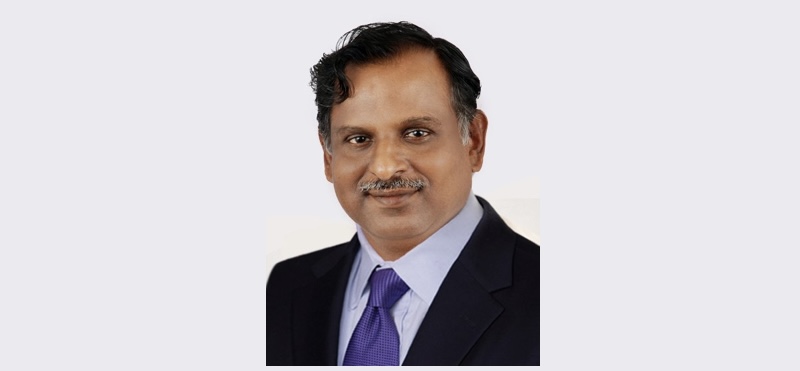
  • V. Narayan to succeed  S. Somnath;  to take over as Isro chairman

    V. Narayan to succeed S. Somnath; to take over as Isro chairman

    MUMBAI: There’s a new head at the Indian Space Research Organisation (Isro) and at the department of space (DoS). On 7 January, the  appointments committee of the cabinet sent out a notification announcing the selection of the head of the liquid propulsion systems centre (LPSC)  V Narayan in the organisation as the man for the job. He will also hold the post of chairman of the space commission. He takes over from current Isro boss S. Somnath  on 14 January when the latter’s term ends.

    Narayan was one of the key architects of India’s development of the cryogenic engine, which on the back of which India’s space program – including launch vehicles and space exploration – could move ahead at the pace it has.

    Speaking to NDTV Narayan said: “We have a clear roadmap for India and I hope to take Isro  to greater heights as we have great talent.”

    As  LPSC  director he has been providing techno-managerial leadership which is engaged in the development of liquid, semi cryogenic and cryogenic propulsion stages for launch vehicles. chemical and electric propulsion systems for satellites, control systems for launch vehicles and transducer development for propulsion system health monitoring.

    Narayanan, who is a rocket and spacecraft propulsion expert joined Isro in 1984 and functioned in various capacities before becoming director of the centre. During the initial phase, for four and a half years, he worked in the solid propulsion area of sounding rockets and augmented satellite launch vehicle (ASLV) and polar satellite launch vehicle (PSLV) in Vikram Sarabhai Space Centre (VSSC). He contributed in the process planning, process control and realisation of ablative nozzle systems, composite motor cases and composite Igniter cases.

    In 1989, Narayan completed his M.Tech in cryogenic engineering with first rank at IIT-Kharagpur and joined the cryogenic propulsion area in the LPSC. Isro’s geosynchronous launch vehicles namely GSLV Mk-II  and GSLV Mk-III capable of placing two-tonne and on four-tonne class communication satellites in geo transfer orbit have cryogenic propulsion stages as terminal stages.

    As one of the few cryogenic members, working  in this area in the initial stages, he carried out fundamental research, theoretical and experimental studies and contributed in the successful development and testing of cryogenic sub systems namely the gas generator, sub-scale cryogenic engine of one tonne thrust and thrust chamber of 12 tonne thrust. 

    Considering the long-lead time required for the development of cryogenic stage of GSLV MkII vehicle, for meeting the initial flights, few of the cryogenic stage hardware were procured from Russia. Towards this, as an expert in cryogenic propulsion,  he contributed in the development of mission management systems, contract management and the successful flights of GSLV MkII vehicle with procured cryogenic stages.

    For sustained operation of GSLV MkII, initially Isro planned for technology acquisition of cryo stage for manufacturing in India. But due to geopolitical reasons, the technology acquisition could not succeed and Isro decided to develop cryogenic upper stage (CUS) indigenously  Narayanan has played crucial role in the successful development of CUS  and contributed in making it operational for the GSLV Mk II vehicle. 

    For the GSLV MkIII experimental mission with CARE module, he conceived and realised the passive cryogenic stage and contributed for the successful experimental flight. As the project, director of the C25 cryogenic project, he provided techno-managerial leadership and conceived, designed and developed the 25 cryogenic propulsion system of GSLV Mk-III launch vehicle powered by an engine developing a thrust of 200kN. 
    He contributed in establishing the necessary infrastructure and facilities for design, analysis, realisation, testing and launching. Due to innovative approach, the C25 cryo stage was developed under his guidance in the shortest time frame with all successful tests and inducted in the GSLV MkIII vehicle. Subsequently he also made the stage operational. 

    His contribution, made India one among six countries in the world to have the complex and high performance cryogenic propulsion systems and made the country  self-reliant in this area. 
    Narayan parallely completed PhD in aerospace engineering from IIT-Kharagpur in 2001. The work carried out as part of M.Tech thesis titled Cavitating Venturies for Flow Control in Cryogenic Rocket Engines and PhD thesis titled Thrust and Mixture Ratio Regulation Systems for Cryogenic Rocket Engines were directly employed in the development of the Indian cryogenic propulsion systems. 

    Towards the GSLV Mk-III M1/Chandrayaan-2 mission, L110 liquid core stage, C25 cryogenic stage, were delivered for the vehicle under his watchful eye. Propulsion systems for orbiter and Vikram lander which include the throttleable thrusters for soft landing were also developed and delivered for the Chandrayaan-2 Mission, under his guidance. As the chairman of the national expert committee constituted to study the reasons for hard landing of the Chandrayaan-2 lander ship, contributed in pin pointing the reasons and corrective actions required to overcome the observations. Realised and delivered all the propulsion systems for Chandrayaan-3. 
    For the Indian human space flight (Gaganyan) programme, he worked on the human rating of C25 and L110 liquid stages of LVM3 vehicle and the development of propulsion modules for crew module and service module and the cabin pressure control systems. He also focused on the thermal and humidity control systems and the propulsion stage for the test vehicle. 

    For enhancing the GTO payload capability of LVM3 vehicle and meeting the future Indian heavy lift  rockets, Narayan guided the team and designed a Lox-kerosene semi cryogenic propulsion system and provided  techno-managerial leadership for its development.

    He took up the development of improving the C25 cryogenic stage performance with higher propellant (32 tonnes of LoX and LH2) loading with higher thrust (22 tonne) engine. His team is also working on developing the 100 tonne  thrust Lox-CH4 engine and electric propulsion thrusters. He has also made significant contribution in the spacecraft propulsion area. 

    Narayan contributed as the member of two failure analysis committees (FACs) of GSLV MkII D3 and GSLV MkII F02 vehicles and , member secretary of the first Indian cryogenic upper stageeEngine FAC. He  was a member of Isro’s 12th Five Year plan-drafting group and contributed in finalsing the propulsion system development during 12th five year plan. He has also finalised the propulsion road map of Isro for the next 20 years (2017 – 2037). As director of  the LPSC, during the last five  years, he has delivered 164 liquid propulsion systems for 41 launch vehicles and 31 space craft missions. 

    V Narayanan, is currently the chairman of LPSC-IPRC co-ordination committee and chairman of programme management council – space transportation systems.