Category: Reviews

  • MotuPatlu: King Of Kings (3D)…….Kid stuff

    MotuPatlu: King Of Kings (3D)…….Kid stuff

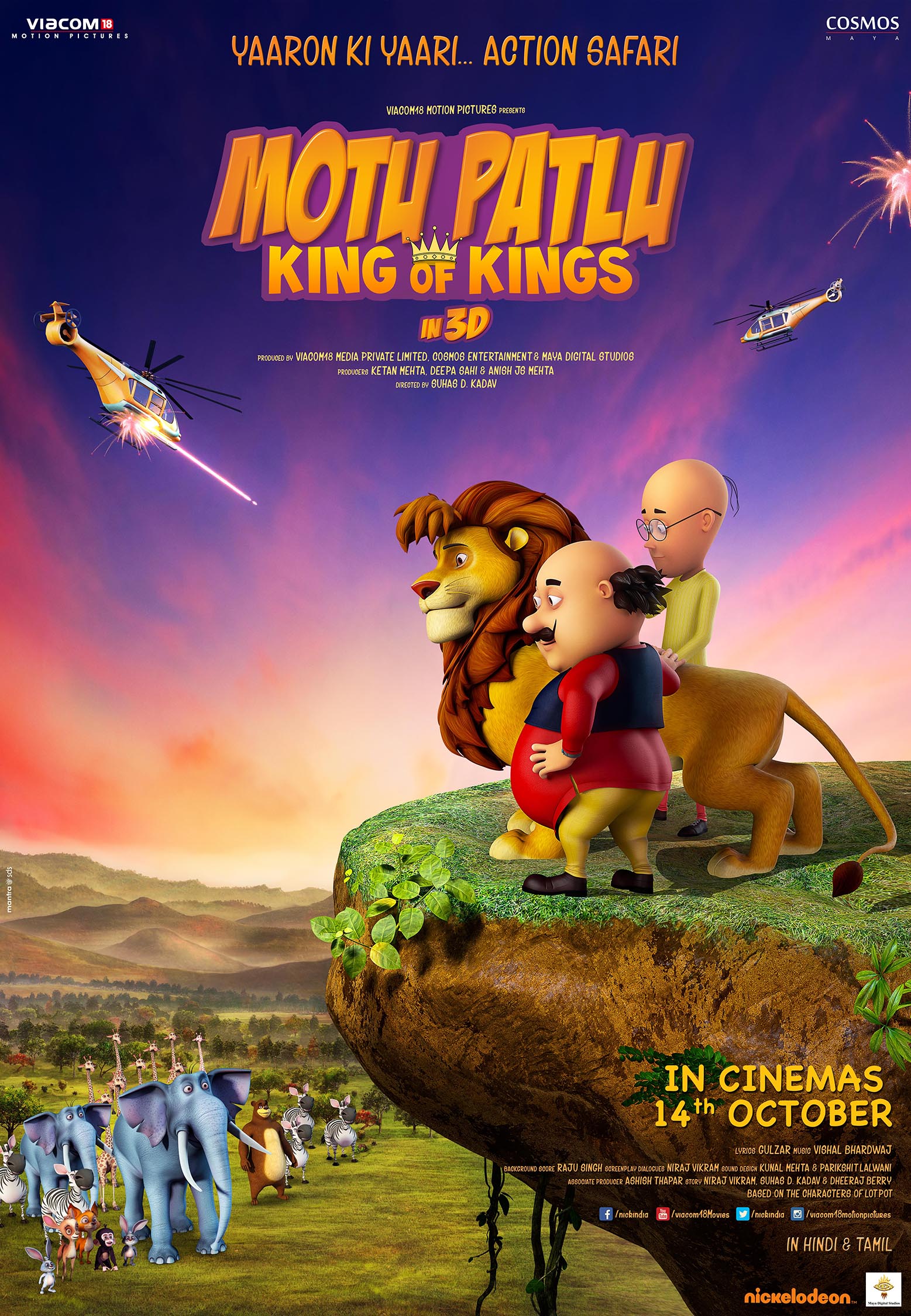
    MotuPatlu: King Of Kings (3D) is India’s own homebred animation film featuring characters of the popular Hindi comic strip of the same name that features in Lot Pot magazine.

    Motu and Patlu are brothers, one fat and one thin, who have this tendency of getting involved in odd situations. There has been a fire in the circus and, the lion, Guddu Ghalib, runs for his life. Guddu and Motu Patlu come face to face when the escaped lion lands up in their town, Furfuri Nagariya. Not knowing what to do, they realize that this is a vegetarian lion munching on carrots and radish, they cage him to take him to a jungle and set it free among other animals. They have now become friends with Guddu.

    Meanwhile, in the jungle, the marauders led by Narsimha, have descended to loot the goldmine. But, before they dig the mines, they have to contend with, Singha, the ferocious lion king of the jungle who enjoys  following of all animals. After a long fight between Narsimha’s man and Singha,  the latter is killed. The villains are now free to loot the gold.
    Motu and Patlu don’t want the jungle to be ransacked which would displace all the animals. They try to convince Guddu to take Singha’s place and lead the animals in a fight with the villains. But, Guddu is reluctant because he knows that he is a tamed lion good enough only for a circus and not to fight villains who are well equipped with modern arms.
    However, one war song by Motu Patlu and the rest of the animals and Guddu is ready to fight. A long fight ensues where the animals  together with Motu Patlu and Guddu rout the evil-doers.

    The fact that this is an all Indian project may be a matter to rejoice,  but Motu Patlu comes across as the only small kids’ stuff  unlike Hollywood cartoon films which have proved to be popular with all age-groups over a period. Being limited in substance, the film stretches itself too thin with runtime of 110 minutes. The 3D effect makes no difference except being an added attraction.

    Motu Patlu: King of Kings may find a better market on video circuit.

    Producers: Ketan Mehta, Deepasahi, Anish JS Mehta.

    Direction: Suhas D Kadav.

    Cast-voices: (Voices) Vinay Pathak (Guddu), SouravChakraborty (Motu, Patlu, Dr. Jhatka, Chingam, Ghaseta).

    Anna…Once upon a time…

    Anna Hazare hogged the national headlines and TV time on a daily basis just a few years ago. He was a man with a mission and had taken it upon himself to fight corruption and make public servants answerable to people. Having started his movement in his native village of Ralegan Siddhi in Ahmednagar (Maharashtra), he made it to a national level crusader. He followed Gandhian ways of protest to make authorities act.

    The biopic starts with school going Kishan Baburao Hazare, played by Shashank Udapurkar, (later to be called Anna the term used for an older brother in Maharashtra) the way M K Gandhi earned the honour of being addressed as Bapu.

    Anna has not done his homework and, to escape punishment, lies to teacher that he did his homework but left it at home. The teacher sends him home to fetch his homework, Anna wants his mother to accompany him to school and explain the fact to the teacher. His mother advises Anna to confess and never lie again. This lays the foundation of values in young Krishna Hazare who went on to be regarded as Anna to a whole nation.

    The Indian Army was on a recruiting spree. With the fervour of patriotism high, Anna too volunteered. Though disqualified due to his physical attributes, the army, in the need of every extra hand, took him. This was 1960. After surviving 1965 Indo Pak war on the border where his other colleagues were killed, followed by another close shave in Nagaland, Anna was convinced that he was spared death for a purpose.

    On his way back after his term with the army, Anna picks up a book by Swami Vivekanand which becomes his inspiration; his mind has been made up. He decides to spend rest of his life serving people. Literature on Gandhi and Vinoba Bhave add to his resolve.

    Anna starts his journey to save the way of life of the people in his village. He funds the rebuilding of the local temple from his army savings. He later takes on the building of a lake in the village to save his people from vagaries of rains. He later takes on other issues like setting up a school, regular supply of electricity for the farmers, setting up a grain bank and banishing alcohol from his village. Wherever simple approach does not work, he resorts to the Gandhian way of ‘Fast until Death’.

    With successes in his district, Anna’s attention was not focused on corruption on state level in Maharashtra. His first movement against corruption in the state 1991 took place in Mumbai which followed many more causes including the most noticeable Right to Information Act that Anna took up.

    Having created a mass following, Anna’s next movement was the Lokpal Bill in Delhi; the passage of this Bill is where the film ends. The film avoids mention or the rise of a new political setup, Aam Aadmi Party, under the umbrella of Anna which changed the politics of Delhi. That is something Anna himself may not be happy with and is not known to have taken up any cause to fight for since.

    The script follows a linear narration which feels like reading a book. It barely touches the parts where Anna became a national figure. This makes the film a totally local affair. The film has a Marathi native feeling all through and, save for the language, it could well be a Marathi film.

    There is little deviation or imagination at use when it comes to treatment.
    Shashank Udpurkar does a good job of imitating Anna’s mannerisms but does not fit into the frame and persona of Anna who still graces the visual media on and off.  Anna as a film is an outcome of its maker’s personal conviction.

    Producers: Manindra Jain, Shobhit Kumar, Shekhar Kumar, Uddipt Jain, Aniruddha Gaikar.

    Director: Shashank Udapurkar.

    Cast: Shashank Udapurkar, Tanishaa Mukerji, Govind Namdeo, Rajit Kapur, Sharat Saxena,
    Kishor Kadam.

    Saat Uchakke…RIP comedy!

    Saat Uchakke follows a simple formula: bring together a bunch of oft-seen character artistes, all bad apples, and let them loose on the screen till as long as they can last. The story idea is that they all nurse bad intentions in that want to make money without toil. Dimwitted otherwise, their only tool of trade is choicest of desi cuss words.

    The place is the innards of Old Delhi where Manoj Bajpayee polishes metal antique-look statues to make a living and also cater to the needs and desires of his lady love, Aditi Sharma. Manoj aspires to start his own business for which he keeps borrowing money against his aspirations. Since his aspirations never materialize, he is on the lookout for ways to make a quick fortune.

    The basti where Manoj works and lives is an open house in that everybody knows what the other is up to. In midst of the locality is an old haveli occupied by dewan, Anupam Kher.  How he got possession of the palatial haveli is suspect. But, the word is out that haveli is a storehouse of a treasure worth millions and Manoj is very interested. But, such plans as Manoj’s have a way to spread. Soon, there are seven people on board to share the loot.

    Having defaulted on his last loan, Manoj decides to do something about the wealth in the haveli. He confides into Aditi and his loyal sidekick. The locality also has a police station where the cop, K K Menon, rules the roost. Menon is also a suitor for Aditi. If there is one reason why he would like to see Manoj behind bars, it is to give him a free run with Aditi. This time Menon has put Manoj behind the bars for a fight in the area.

    Ina hurry to execute his plan, Manoj escapes. Since he can’t be seen in the same area, he changes his look to that of a Sikh.

    The gang of seven is now ready to strike and embark on the haveli. What follows in the name of comedy is cacophony and buffoonery.
    The film looks promising as it moves through its first half but as the characters are added to the proceedings, it goes haywire. Not much to say about technical aspects. As for actors, Manoj Bajpayee is convincing. Aditi Sharma impresses. Kay Kay Menon is good. Anupam Kher and Annu Kapoor are both loud and overact. Vijay Raaz thrives on filthy language as if that was a way to get better of the other actors; he irritates.

    Producers: Wave Cinemas, Crouching Tiger, Shital Bhatia.

    Director: Sanjeev Sharma.

    Cast: Manoj Bajpayee, Anupam Kher, Kay Kay Menon, Annu Kapoor, Vijay Raaz, Aditi Sharma. 
  • MotuPatlu: King Of Kings (3D)…….Kid stuff

    MotuPatlu: King Of Kings (3D)…….Kid stuff

    MotuPatlu: King Of Kings (3D) is India’s own homebred animation film featuring characters of the popular Hindi comic strip of the same name that features in Lot Pot magazine.

    Motu and Patlu are brothers, one fat and one thin, who have this tendency of getting involved in odd situations. There has been a fire in the circus and, the lion, Guddu Ghalib, runs for his life. Guddu and Motu Patlu come face to face when the escaped lion lands up in their town, Furfuri Nagariya. Not knowing what to do, they realize that this is a vegetarian lion munching on carrots and radish, they cage him to take him to a jungle and set it free among other animals. They have now become friends with Guddu.

    Meanwhile, in the jungle, the marauders led by Narsimha, have descended to loot the goldmine. But, before they dig the mines, they have to contend with, Singha, the ferocious lion king of the jungle who enjoys  following of all animals. After a long fight between Narsimha’s man and Singha,  the latter is killed. The villains are now free to loot the gold.
    Motu and Patlu don’t want the jungle to be ransacked which would displace all the animals. They try to convince Guddu to take Singha’s place and lead the animals in a fight with the villains. But, Guddu is reluctant because he knows that he is a tamed lion good enough only for a circus and not to fight villains who are well equipped with modern arms.
    However, one war song by Motu Patlu and the rest of the animals and Guddu is ready to fight. A long fight ensues where the animals  together with Motu Patlu and Guddu rout the evil-doers.

    The fact that this is an all Indian project may be a matter to rejoice,  but Motu Patlu comes across as the only small kids’ stuff  unlike Hollywood cartoon films which have proved to be popular with all age-groups over a period. Being limited in substance, the film stretches itself too thin with runtime of 110 minutes. The 3D effect makes no difference except being an added attraction.

    Motu Patlu: King of Kings may find a better market on video circuit.

    Producers: Ketan Mehta, Deepasahi, Anish JS Mehta.

    Direction: Suhas D Kadav.

    Cast-voices: (Voices) Vinay Pathak (Guddu), SouravChakraborty (Motu, Patlu, Dr. Jhatka, Chingam, Ghaseta).

    Anna…Once upon a time…

    Anna Hazare hogged the national headlines and TV time on a daily basis just a few years ago. He was a man with a mission and had taken it upon himself to fight corruption and make public servants answerable to people. Having started his movement in his native village of Ralegan Siddhi in Ahmednagar (Maharashtra), he made it to a national level crusader. He followed Gandhian ways of protest to make authorities act.

    The biopic starts with school going Kishan Baburao Hazare, played by Shashank Udapurkar, (later to be called Anna the term used for an older brother in Maharashtra) the way M K Gandhi earned the honour of being addressed as Bapu.

    Anna has not done his homework and, to escape punishment, lies to teacher that he did his homework but left it at home. The teacher sends him home to fetch his homework, Anna wants his mother to accompany him to school and explain the fact to the teacher. His mother advises Anna to confess and never lie again. This lays the foundation of values in young Krishna Hazare who went on to be regarded as Anna to a whole nation.

    The Indian Army was on a recruiting spree. With the fervour of patriotism high, Anna too volunteered. Though disqualified due to his physical attributes, the army, in the need of every extra hand, took him. This was 1960. After surviving 1965 Indo Pak war on the border where his other colleagues were killed, followed by another close shave in Nagaland, Anna was convinced that he was spared death for a purpose.

    On his way back after his term with the army, Anna picks up a book by Swami Vivekanand which becomes his inspiration; his mind has been made up. He decides to spend rest of his life serving people. Literature on Gandhi and Vinoba Bhave add to his resolve.

    Anna starts his journey to save the way of life of the people in his village. He funds the rebuilding of the local temple from his army savings. He later takes on the building of a lake in the village to save his people from vagaries of rains. He later takes on other issues like setting up a school, regular supply of electricity for the farmers, setting up a grain bank and banishing alcohol from his village. Wherever simple approach does not work, he resorts to the Gandhian way of ‘Fast until Death’.

    With successes in his district, Anna’s attention was not focused on corruption on state level in Maharashtra. His first movement against corruption in the state 1991 took place in Mumbai which followed many more causes including the most noticeable Right to Information Act that Anna took up.

    Having created a mass following, Anna’s next movement was the Lokpal Bill in Delhi; the passage of this Bill is where the film ends. The film avoids mention or the rise of a new political setup, Aam Aadmi Party, under the umbrella of Anna which changed the politics of Delhi. That is something Anna himself may not be happy with and is not known to have taken up any cause to fight for since.

    The script follows a linear narration which feels like reading a book. It barely touches the parts where Anna became a national figure. This makes the film a totally local affair. The film has a Marathi native feeling all through and, save for the language, it could well be a Marathi film.

    There is little deviation or imagination at use when it comes to treatment.
    Shashank Udpurkar does a good job of imitating Anna’s mannerisms but does not fit into the frame and persona of Anna who still graces the visual media on and off.  Anna as a film is an outcome of its maker’s personal conviction.

    Producers: Manindra Jain, Shobhit Kumar, Shekhar Kumar, Uddipt Jain, Aniruddha Gaikar.

    Director: Shashank Udapurkar.

    Cast: Shashank Udapurkar, Tanishaa Mukerji, Govind Namdeo, Rajit Kapur, Sharat Saxena,
    Kishor Kadam.

    Saat Uchakke…RIP comedy!

    Saat Uchakke follows a simple formula: bring together a bunch of oft-seen character artistes, all bad apples, and let them loose on the screen till as long as they can last. The story idea is that they all nurse bad intentions in that want to make money without toil. Dimwitted otherwise, their only tool of trade is choicest of desi cuss words.

    The place is the innards of Old Delhi where Manoj Bajpayee polishes metal antique-look statues to make a living and also cater to the needs and desires of his lady love, Aditi Sharma. Manoj aspires to start his own business for which he keeps borrowing money against his aspirations. Since his aspirations never materialize, he is on the lookout for ways to make a quick fortune.

    The basti where Manoj works and lives is an open house in that everybody knows what the other is up to. In midst of the locality is an old haveli occupied by dewan, Anupam Kher.  How he got possession of the palatial haveli is suspect. But, the word is out that haveli is a storehouse of a treasure worth millions and Manoj is very interested. But, such plans as Manoj’s have a way to spread. Soon, there are seven people on board to share the loot.

    Having defaulted on his last loan, Manoj decides to do something about the wealth in the haveli. He confides into Aditi and his loyal sidekick. The locality also has a police station where the cop, K K Menon, rules the roost. Menon is also a suitor for Aditi. If there is one reason why he would like to see Manoj behind bars, it is to give him a free run with Aditi. This time Menon has put Manoj behind the bars for a fight in the area.

    Ina hurry to execute his plan, Manoj escapes. Since he can’t be seen in the same area, he changes his look to that of a Sikh.

    The gang of seven is now ready to strike and embark on the haveli. What follows in the name of comedy is cacophony and buffoonery.
    The film looks promising as it moves through its first half but as the characters are added to the proceedings, it goes haywire. Not much to say about technical aspects. As for actors, Manoj Bajpayee is convincing. Aditi Sharma impresses. Kay Kay Menon is good. Anupam Kher and Annu Kapoor are both loud and overact. Vijay Raaz thrives on filthy language as if that was a way to get better of the other actors; he irritates.

    Producers: Wave Cinemas, Crouching Tiger, Shital Bhatia.

    Director: Sanjeev Sharma.

    Cast: Manoj Bajpayee, Anupam Kher, Kay Kay Menon, Annu Kapoor, Vijay Raaz, Aditi Sharma. 
  • Mirzya…Dud with a thud!

    Mirzya…Dud with a thud!

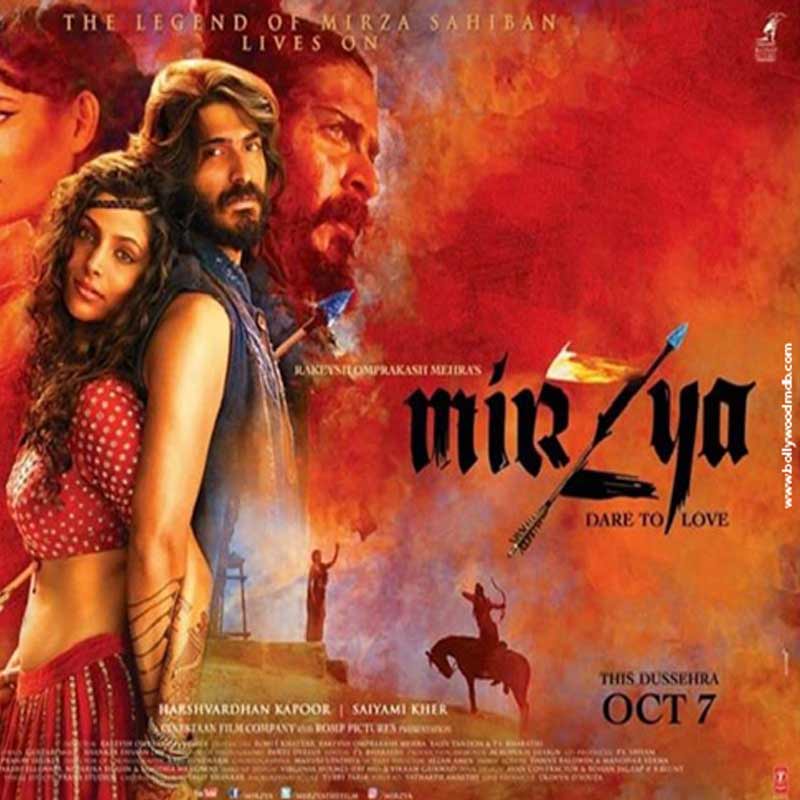
    MUMBAI: Mirzya is a fantasy, romantic, thriller as the tagline describes it. The inspiration is claimed to be the folk story of Mirza Sahiban which is one of the four Punjabi love stories popular to date in local folk.  As with others, the love story of Mirza Sahiban made it to folklore mainly on the strength of its tragic ingredients.

    To start with its descriptions, Mirzya is neither a fantasy nor a thriller and, when it comes to love, it backfires on just about every count — be it depth or chemistry. As an inspiration from Mirza Sahiban, it does injustice to the folklore. The film runs on two tracks, that of the folklore and the other being the maker, Rakeysh Omprakash Mehra’s contemporary version. To what avail a viewer is at loss to know.

    In a small town in Rajashthan, Harshvardhan Kapoor’s character goes to the same school as Saiyami Kher’s, the daughter of a policeman played by  Art Malik. The two are inseparable and share a bond. Once the teacher asks Kapoor to submit his homework which he does but the teacher can make out that it is copied from Saiyami’s notes. When he wants to compare the two, just to save Kapoor from teacher’s lashes, she lies and says she has not done her homework. The lashes are for her now as is the school’s tradition.  At every lash that Saiyami bears, her winces make Kapoor lose his mind. He steals Malik’s pistol and shoots the teacher.

    Consigned to a children’s home, he does not plan to stay there for long. He has to go back to Saiyami. He breaks out but, as it happens in films, Saiyami has left the town with her father not to come face to face with Kapoor any time soon.

    Time has elapsed and Saiyami is returning from wherever she was all these years. She is engaged to the local prince, Anuj Chaudhry. Her father is now the commissioner of police and fit enough for a family bonding with royalty headed by K K Raina. Rajasthan may be old-fashioned when it comes to traditions but Saiyami makes the palace her home where she is being trained in to the royal ways. Her first lessons are in horse riding and, guess who the stable head is? Kapoor, of course.

    Soon, as if on cue, Saiyami starts rattling to Kapoor the story of her childhood and the boy she knew who cared very much for her. The love is rekindled. Saiyami, who just a few scenes back was coochie-cooing with her fiancé, Anuj, is now in love with Kapoor.

    The romance of Kapoor and Saiyami blossoms with no holds barred as they romp around town, its forts and the countryside. There are no prying eyes, no gossip. So what if Saiyami is the royalty’s bahu to be? That is till the time the duo plans to elope. Eloping is always reserved for the wedding day and, in keeping with the tradition, Saiyami has escaped while her groom, Anuj, waits for the rituals to start.

    Mirzya starts off with a deceptive title; the name has nothing to do with any character in the film. It is just an attempt to give the film a pretentious air. The love story of star-crossed lovers offers no novelty even if branded after Mirza Sahiban. Scripting is poor. The direction borders on mediocre. Dialogue lacks the required feel (Raina even mouths his dialogue in Punjabi!). Lyrics writing is uninspiring which reflects on soulless songs. The one positive in the film is its cinematography.

    As for performances, a newcomers’ love story hinges majorly on the chemistry between the lead pair which is totally lacking in this film. Kapoor and Saiyami both lack screen presence and, as far as acting talent goes, they have a long way to go. Anuj is the one who does a sincere job. Rest fill the bill. MIrzya is one of the poorest films to hit the screen in recent times.
    Producers: Rohit Khattar, Rakeysh Omprakash Mehra, P.S. Bharathi, Rajiv Tandon.

    Director: Rakeysh Omprakash Mehra.

    Cast: Harshvardhan Kapoor, Saiyami Kher, Anuj Choudhry, Anjali Patil, Om Puri, Art Malik, K. K. Raina.

    Tutak Tutak Tutiya…Nothing to sing and dance about!

    Tutak Tutak Tutiya (also made in Tamil as Devi and Telugu as Abhinetri) is a comedy film with a touch of horror to its story. As such, the film features actors whose faces are well recognized by the southern India audience. It has a blend of south and Hindi film actors with the Hindi actors being ones who have done a number of films in southern languages.

    The character of Prabhu Deva (used to be Dheva for a while) has settled in Mumbai to make a living and made progress from a dispatch boy to a decent post. He is recalled to his native place in Kerala because his grandmother is on her deathbed.

    Once in his village, the grandmother now wants to see him married to a nice girl. After seeing a dozen or so girls, the grandmother approves of Tamannaah. Deva is a habitual proposal maker. He approaches every single but English-speaking girl in sight and always carries his CV printout.

    Coming back as a married man, Deva keeps pretending he is still single for this is not the kind of girl he had in mind for marriage. After all, she is a village girl and can’t speak English!
    Deva shifts into a rented house with his new bride. Tamannaah surprises him on many counts as against his expectations, she can speak fluent Hindi and also cook the dishes he desires. But, the biggest surprise she springs on him is when he takes her along for a film awards function where he suddenly sees her on stage in trendy short dress dancing like a star and later also joins Sonu Sood, the award function’s best actor award winner, over drinks. She even speaks English now!

    Deva can’t figure out what got into his wife because next morning she does not remember a thing from the night before. To add to Deva’s troubles, Sonu is besotted by Tamannaah and wants her to do a film with him. Deva is trapped because he does not want anybody to know he is married to Tamannaah.

    Tamannaah not only keeps alternating between a simple village girl to a modern-day city girl who also agrees to do a film with Sonu. When she is his village-bred wife, she is comely, homely and caring while, otherwise, she is aggressive, bent on acting and there is no way can Deva stop her.

    That is when the touch of supernatural comes in. The house they have shifted into was earlier occupied by a girl called Ruby, an aspiring actor who was signed for a film against Sonu but dropped at the last moment leading her to suicide. Her ghost gets into Tamannaah to fulfill her desire to act.

    Tutak Tutak Tutiya had a good idea going for it but somewhere on the writing table, it has not been expanded on sincerely. The comedy lacks in this comic film. The direction is average. Music does not meet the requirements of a film counting on dances; the songs lacking in popular appeal.

    Dialogue is good at places but too subtle. Editing-wise, the second half needs some trimming. Deva looks fresher but disappoints his fans as he has few dancing moments in the film. Sood dancing in his stead is no consolation and shows it is not his forte. Tamannaah does very well. Murli Sharma shines.

    Tutak Tutak Tutiya has no drawing power and will make the list of also rans.

    Producers: SonuSood.

    Director: Vijay.

    Cast: Prabhu Deva, SonuSood, Tamannaah, Murali Sharma, Amy Jackson, Esha Gupta and Farah Khan in guest appearance.

  • Mirzya…Dud with a thud!

    Mirzya…Dud with a thud!

    MUMBAI: Mirzya is a fantasy, romantic, thriller as the tagline describes it. The inspiration is claimed to be the folk story of Mirza Sahiban which is one of the four Punjabi love stories popular to date in local folk.  As with others, the love story of Mirza Sahiban made it to folklore mainly on the strength of its tragic ingredients.

    To start with its descriptions, Mirzya is neither a fantasy nor a thriller and, when it comes to love, it backfires on just about every count — be it depth or chemistry. As an inspiration from Mirza Sahiban, it does injustice to the folklore. The film runs on two tracks, that of the folklore and the other being the maker, Rakeysh Omprakash Mehra’s contemporary version. To what avail a viewer is at loss to know.

    In a small town in Rajashthan, Harshvardhan Kapoor’s character goes to the same school as Saiyami Kher’s, the daughter of a policeman played by  Art Malik. The two are inseparable and share a bond. Once the teacher asks Kapoor to submit his homework which he does but the teacher can make out that it is copied from Saiyami’s notes. When he wants to compare the two, just to save Kapoor from teacher’s lashes, she lies and says she has not done her homework. The lashes are for her now as is the school’s tradition.  At every lash that Saiyami bears, her winces make Kapoor lose his mind. He steals Malik’s pistol and shoots the teacher.

    Consigned to a children’s home, he does not plan to stay there for long. He has to go back to Saiyami. He breaks out but, as it happens in films, Saiyami has left the town with her father not to come face to face with Kapoor any time soon.

    Time has elapsed and Saiyami is returning from wherever she was all these years. She is engaged to the local prince, Anuj Chaudhry. Her father is now the commissioner of police and fit enough for a family bonding with royalty headed by K K Raina. Rajasthan may be old-fashioned when it comes to traditions but Saiyami makes the palace her home where she is being trained in to the royal ways. Her first lessons are in horse riding and, guess who the stable head is? Kapoor, of course.

    Soon, as if on cue, Saiyami starts rattling to Kapoor the story of her childhood and the boy she knew who cared very much for her. The love is rekindled. Saiyami, who just a few scenes back was coochie-cooing with her fiancé, Anuj, is now in love with Kapoor.

    The romance of Kapoor and Saiyami blossoms with no holds barred as they romp around town, its forts and the countryside. There are no prying eyes, no gossip. So what if Saiyami is the royalty’s bahu to be? That is till the time the duo plans to elope. Eloping is always reserved for the wedding day and, in keeping with the tradition, Saiyami has escaped while her groom, Anuj, waits for the rituals to start.

    Mirzya starts off with a deceptive title; the name has nothing to do with any character in the film. It is just an attempt to give the film a pretentious air. The love story of star-crossed lovers offers no novelty even if branded after Mirza Sahiban. Scripting is poor. The direction borders on mediocre. Dialogue lacks the required feel (Raina even mouths his dialogue in Punjabi!). Lyrics writing is uninspiring which reflects on soulless songs. The one positive in the film is its cinematography.

    As for performances, a newcomers’ love story hinges majorly on the chemistry between the lead pair which is totally lacking in this film. Kapoor and Saiyami both lack screen presence and, as far as acting talent goes, they have a long way to go. Anuj is the one who does a sincere job. Rest fill the bill. MIrzya is one of the poorest films to hit the screen in recent times.
    Producers: Rohit Khattar, Rakeysh Omprakash Mehra, P.S. Bharathi, Rajiv Tandon.

    Director: Rakeysh Omprakash Mehra.

    Cast: Harshvardhan Kapoor, Saiyami Kher, Anuj Choudhry, Anjali Patil, Om Puri, Art Malik, K. K. Raina.

    Tutak Tutak Tutiya…Nothing to sing and dance about!

    Tutak Tutak Tutiya (also made in Tamil as Devi and Telugu as Abhinetri) is a comedy film with a touch of horror to its story. As such, the film features actors whose faces are well recognized by the southern India audience. It has a blend of south and Hindi film actors with the Hindi actors being ones who have done a number of films in southern languages.

    The character of Prabhu Deva (used to be Dheva for a while) has settled in Mumbai to make a living and made progress from a dispatch boy to a decent post. He is recalled to his native place in Kerala because his grandmother is on her deathbed.

    Once in his village, the grandmother now wants to see him married to a nice girl. After seeing a dozen or so girls, the grandmother approves of Tamannaah. Deva is a habitual proposal maker. He approaches every single but English-speaking girl in sight and always carries his CV printout.

    Coming back as a married man, Deva keeps pretending he is still single for this is not the kind of girl he had in mind for marriage. After all, she is a village girl and can’t speak English!
    Deva shifts into a rented house with his new bride. Tamannaah surprises him on many counts as against his expectations, she can speak fluent Hindi and also cook the dishes he desires. But, the biggest surprise she springs on him is when he takes her along for a film awards function where he suddenly sees her on stage in trendy short dress dancing like a star and later also joins Sonu Sood, the award function’s best actor award winner, over drinks. She even speaks English now!

    Deva can’t figure out what got into his wife because next morning she does not remember a thing from the night before. To add to Deva’s troubles, Sonu is besotted by Tamannaah and wants her to do a film with him. Deva is trapped because he does not want anybody to know he is married to Tamannaah.

    Tamannaah not only keeps alternating between a simple village girl to a modern-day city girl who also agrees to do a film with Sonu. When she is his village-bred wife, she is comely, homely and caring while, otherwise, she is aggressive, bent on acting and there is no way can Deva stop her.

    That is when the touch of supernatural comes in. The house they have shifted into was earlier occupied by a girl called Ruby, an aspiring actor who was signed for a film against Sonu but dropped at the last moment leading her to suicide. Her ghost gets into Tamannaah to fulfill her desire to act.

    Tutak Tutak Tutiya had a good idea going for it but somewhere on the writing table, it has not been expanded on sincerely. The comedy lacks in this comic film. The direction is average. Music does not meet the requirements of a film counting on dances; the songs lacking in popular appeal.

    Dialogue is good at places but too subtle. Editing-wise, the second half needs some trimming. Deva looks fresher but disappoints his fans as he has few dancing moments in the film. Sood dancing in his stead is no consolation and shows it is not his forte. Tamannaah does very well. Murli Sharma shines.

    Tutak Tutak Tutiya has no drawing power and will make the list of also rans.

    Producers: SonuSood.

    Director: Vijay.

    Cast: Prabhu Deva, SonuSood, Tamannaah, Murali Sharma, Amy Jackson, Esha Gupta and Farah Khan in guest appearance.

  • Banjo…Out of sync

    Banjo…Out of sync

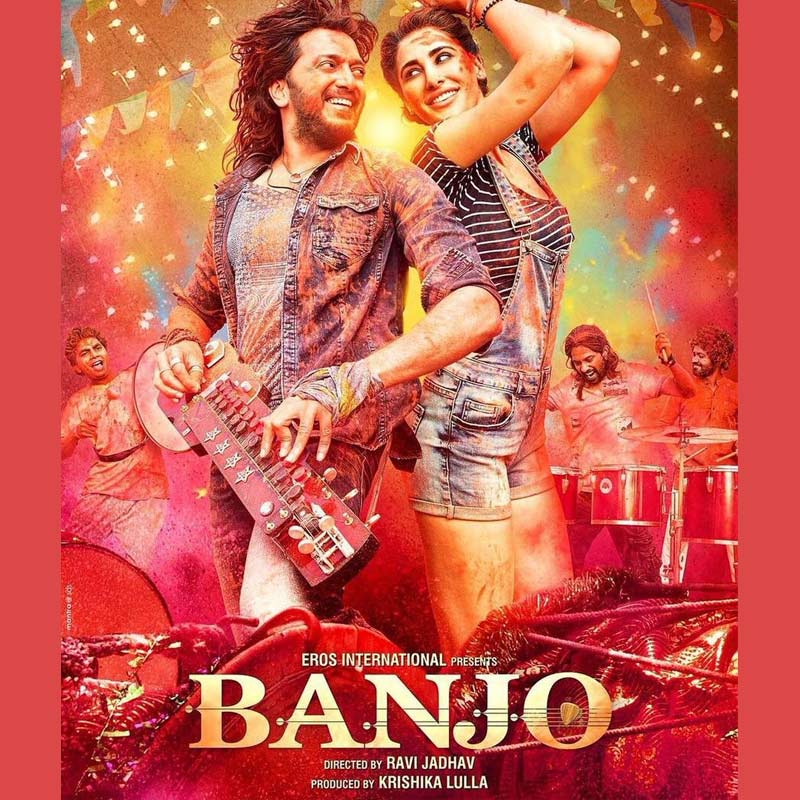
    MUMBAI: Banjo is a musical love story of a young man with a mastery over the stringed instrument. The banjo is said to have its origin in Africa. The instrument is seen to be more popular during festivals in India.

    Riteish Deshmukh is shown in the movie to be excelling in playing banjo and leads a group of friends who play music as a hobby as well as to make some extra money besides their regular jobs. He has three partners, each specializing in playing an instrument. Riteish works for a local corporator collecting haftas (extortion) for him.

    The demand for the musical group is seasonal, but there are a number of such banjo groups. The competition is stiff. However, the rivalry between two such groups is severe, which often leads to fist fights. On one such Ganesh festival, Riteish and his band come up with a number which becomes instantly popular with the local folk.

    Sitting far away in New York, Nargis Fakhri hears the number which catches her attention. Nargis is preparing to participate in a music show and has been scouting for talent. She thinks she found the group she has been looking for. She arrives in India and lands up right near his house.

    Banjo playing is not considered a glorious art and, though appointed as a guide to show her around the settlement and help her search, he does not disclose his identity to Nargis. While he helps her, he also falls in love with her.

    Nargis goes on auditioning group after group, only to be disappointed. She is finally ready to give up and decides to go back. Riteish is heartbroken. He wants to drown his sadness in music, and asks his friends to play though they have just returned from a gig and are tired. Nargis catches the sound from afar and realizes who he was. So close yet so far. Nargis is still sent back in disappointment, for, the group members have parted ways. Riteish has been framed in the murder of the corporator and sent to jail. The happy ending is certain but not so soon.

    Banjo moves on predictable lines of an underdog whose dreams are in the process of being realized as well as the usual underdog falling in love with the first girl showing concern. While the story or scripting don’t inspire much, the main drawback is the lack of good music that is mandatory for a musical. While the songs are good for gully dances due to the heavy beats played to Maharashtrian taste, the Bappa song being the mainstay, the only sober number worth humming is Rahemokaram.

    The cinematography is good. Riteish performs well and Nargis tries. The supporting actors make sincere efforts.

    Banjo could have been made for Marathi audience where the industry is thriving presently. Going for pan-India market has not helped as the opening is poor and so are the prospects.

    Producers: Krishika Lulla

    Director: Ravi Jadhav

    Cast: Riteish Deshmukh, Nargis Fakri, Mohan Kapoor.

    Dil Sala Sanki…God save your soul!

    Another film about UP bahubalis and their love story! Dil Sala Sanki is a love triangle based in the city of Jhansi.  

    Jimmy Shergill is playing the local don in Jhansi. He has inherited the reign from his foster father who wished for Jimmy to share it with his adopted son. But, Jimmy would have nothing of that sort. He kills both, the other heir as well as his father. He wishes to rule alone.

    While the rest of the city is scared of Jimmy and his goons, he has a fan in Yogesh Kumar, the son of a local barber, Avtar Gill, who wants to follow in the footsteps of Jimmy. Yogesh goes around beating up people and expects to be feared for his acts.

    Yogesh takes up small assignments like settling disputes. On one such case, he is asked to get vacated a house occupied by goons as the landlord’s new tenant, Shakti Kapoor, a school teacher, has rented it out. True to the tradition of goon stories, Yogesh falls in love with Shakti’s daughter, played by Madalsa Sharma. He starts with the usual routine followed by all filmy lovelorn goons: stalk.

    It is raining and Manalsa is shown as going berserk dancing on a lonely road. Jimmy happens to pass by, sees her, and falls in love too although he has a loving wife at home, played by Harshita Bhatt. Being a bahubali who is not answerable to anybody, he simply kills Harshita.

    Jimmy soon realizes that his protégée, Yogesh, also loves Madlasa. The fight to finish begins.

    Dil Sala Sanki is a routine, humdrum love story lacking imagination or the grammar of filmmaking. The casting is curious as the hero, Yogesh Kumar, has zero acting skills or screen presence. Jimmy has a limited role. Madalsa is okay. Rest of the aspects merit no mention.

    Dil Sala Sanki has no prospects despite its limited exploitation at few screens in single show a day.

    Producer: SK Pictures P Ltd.

    Director: Sushi Kailash.

    Cast: Yogesh Kumar, Madalsa Sharma, Jimmy Shergill, Shakti Kapoor, Avtar Gill.

  • Banjo…Out of sync

    Banjo…Out of sync

    MUMBAI: Banjo is a musical love story of a young man with a mastery over the stringed instrument. The banjo is said to have its origin in Africa. The instrument is seen to be more popular during festivals in India.

    Riteish Deshmukh is shown in the movie to be excelling in playing banjo and leads a group of friends who play music as a hobby as well as to make some extra money besides their regular jobs. He has three partners, each specializing in playing an instrument. Riteish works for a local corporator collecting haftas (extortion) for him.

    The demand for the musical group is seasonal, but there are a number of such banjo groups. The competition is stiff. However, the rivalry between two such groups is severe, which often leads to fist fights. On one such Ganesh festival, Riteish and his band come up with a number which becomes instantly popular with the local folk.

    Sitting far away in New York, Nargis Fakhri hears the number which catches her attention. Nargis is preparing to participate in a music show and has been scouting for talent. She thinks she found the group she has been looking for. She arrives in India and lands up right near his house.

    Banjo playing is not considered a glorious art and, though appointed as a guide to show her around the settlement and help her search, he does not disclose his identity to Nargis. While he helps her, he also falls in love with her.

    Nargis goes on auditioning group after group, only to be disappointed. She is finally ready to give up and decides to go back. Riteish is heartbroken. He wants to drown his sadness in music, and asks his friends to play though they have just returned from a gig and are tired. Nargis catches the sound from afar and realizes who he was. So close yet so far. Nargis is still sent back in disappointment, for, the group members have parted ways. Riteish has been framed in the murder of the corporator and sent to jail. The happy ending is certain but not so soon.

    Banjo moves on predictable lines of an underdog whose dreams are in the process of being realized as well as the usual underdog falling in love with the first girl showing concern. While the story or scripting don’t inspire much, the main drawback is the lack of good music that is mandatory for a musical. While the songs are good for gully dances due to the heavy beats played to Maharashtrian taste, the Bappa song being the mainstay, the only sober number worth humming is Rahemokaram.

    The cinematography is good. Riteish performs well and Nargis tries. The supporting actors make sincere efforts.

    Banjo could have been made for Marathi audience where the industry is thriving presently. Going for pan-India market has not helped as the opening is poor and so are the prospects.

    Producers: Krishika Lulla

    Director: Ravi Jadhav

    Cast: Riteish Deshmukh, Nargis Fakri, Mohan Kapoor.

    Dil Sala Sanki…God save your soul!

    Another film about UP bahubalis and their love story! Dil Sala Sanki is a love triangle based in the city of Jhansi.  

    Jimmy Shergill is playing the local don in Jhansi. He has inherited the reign from his foster father who wished for Jimmy to share it with his adopted son. But, Jimmy would have nothing of that sort. He kills both, the other heir as well as his father. He wishes to rule alone.

    While the rest of the city is scared of Jimmy and his goons, he has a fan in Yogesh Kumar, the son of a local barber, Avtar Gill, who wants to follow in the footsteps of Jimmy. Yogesh goes around beating up people and expects to be feared for his acts.

    Yogesh takes up small assignments like settling disputes. On one such case, he is asked to get vacated a house occupied by goons as the landlord’s new tenant, Shakti Kapoor, a school teacher, has rented it out. True to the tradition of goon stories, Yogesh falls in love with Shakti’s daughter, played by Madalsa Sharma. He starts with the usual routine followed by all filmy lovelorn goons: stalk.

    It is raining and Manalsa is shown as going berserk dancing on a lonely road. Jimmy happens to pass by, sees her, and falls in love too although he has a loving wife at home, played by Harshita Bhatt. Being a bahubali who is not answerable to anybody, he simply kills Harshita.

    Jimmy soon realizes that his protégée, Yogesh, also loves Madlasa. The fight to finish begins.

    Dil Sala Sanki is a routine, humdrum love story lacking imagination or the grammar of filmmaking. The casting is curious as the hero, Yogesh Kumar, has zero acting skills or screen presence. Jimmy has a limited role. Madalsa is okay. Rest of the aspects merit no mention.

    Dil Sala Sanki has no prospects despite its limited exploitation at few screens in single show a day.

    Producer: SK Pictures P Ltd.

    Director: Sushi Kailash.

    Cast: Yogesh Kumar, Madalsa Sharma, Jimmy Shergill, Shakti Kapoor, Avtar Gill.

  • Parched…Dry run at box office

    Parched…Dry run at box office

    MUMBAI: Leena Yadav’s Parched debuted at the Toronto International Film Festival in 2015. Ever since, it has been on the festival circuit extensively till its theatrical release this week.

    Parched is about the state of women in the hinterland. The injustice meted out to women is a part of all societies; while the urban tales do not usually come out, rural stories abound but taken as a way of life till, a film or a story is made on it.

    Parched is about three women in arid Rajasthan, each having her own woes, mainly men-inflicted.These women find solace on the shoulders of each other. The women eventually gather courage to chart their own lives instead of submission.

    Tannishtha Chatterjee is playing a widow with a son of marriageable age. However, the lad is unwilling. Radhika Apte, Tannishtha’s confidante, is not better off either as she is labelled a ‘baanjh’ by her alcoholic husband and subjected to a regular dose of beating. Sharing her pain with Tannishtha is the only solace in her life.

    Surveen Chawla is playing a prostitute. Seemingly liberated, she too has her own problems as she is losing out on business to her younger rivals while also bearing the brunt of the anger of her pimp and others. Surveen has this idea that why all the foul words in Hindi are addressed to women and why can’t they be reversed and used for men?

    Nobody is aware of the desires of women; they seek care, love and, also, sex. Tannishtha has but some solace in a secret admirer who keeps calling her on phone. And, there is this sage like figure, Adil Hussain, who helps Radhika experience a fulfilling life while also assisting her get rid of the social stigma of ‘baanjh’.

    Parched has worthy contribution from all actors. Leena Yadav has rightly chosen a subject that needs a bold approach and executed it well. Her handling of the subject is deft. The cinematography by the American, Russel Carpenter, captures the surroundings well while also justifying the essence of the film. Editing, also entrusted to a foreign technician, Kevin Tent, keeps the process taut.

    This women-centric film is for performers. Tannishtha, Radhika and Surveen do full justice to their roles, while Surveen excels.

    Parched, having already made it to about a dozen film festivals, is one for the laurels while commercially it would appeal to a few at the high-end multiplexes.

    Producers: Ajay Devgn, AssemBajaaj.

    Director: LeenaYadav.

    Cast: RadhikaApte, Tannishtha Chatterjee, Surveen Chawla, Laher Khan, Adil Hussain, Riddhi Sen.

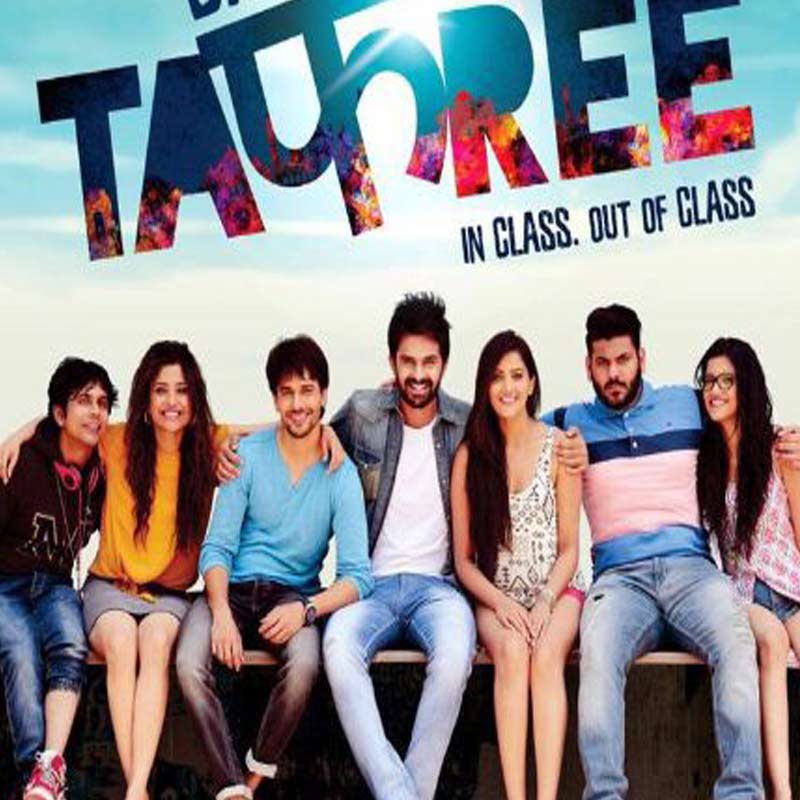
    Days Of Tafree: In Class; Out Of Class….Lacks class!

    Days Of Tafree: In Class-Out Of Class is a youth oriented film with a college background. It is a remake of the Gujarati film, Chhello Divas: A New Beginning (2015).

    Though many Hindi films have been adapted from Gujarati stage plays, the recent ones being OMG: Oh! My God (2012: Kanji Virudh Kanji), Waqt: Race Against Time (2005: Aavjo Vahla Fari Malishu), Super Nani  (2014: Baa ae Mari Boundary) and Aankhen (2002: Andhalo Pato), instances of Gujarati film remake in Hindi are rare if not non-existent.

    The film is about a group of college friends whose behavior in class and on the campus is unlike that of other college boys you would see in real life or in films. They hoot behind the teacher’s back, they talk filthy language as if it was the new in-thing. They are loud and always chasing girls and lady instructors. And, the bunch also has one Big Moose kind of brainless hulk which also makes the boys feel invincible.

    The pranks of these boys are supposed to arouse laughter. What really happens through the film is that only those on screen keep laughing failing to take the audience along. The film also makes jokes on physical deformities which is rather rude.

    The film is a flashback into the college life of one of the boys. There is no drama or conclusion as there is no story in the film. The music is loud in keeping with the tone of the film but non-appealing. Direction is amateurish and the editing is poor. The performances are over the top.

    Days OfTafree: In Class Out Of Class is poor in all respects.

    Producers: Anand Pandit and Rashmi Sharma

    Director: Krishnadev Yagnik

    Cast: Nimisha MehtaAnsh BagriSanchay GoswamiSarabjeet Bindra, Anuradha Mukharjee

  • Parched…Dry run at box office

    Parched…Dry run at box office

    MUMBAI: Leena Yadav’s Parched debuted at the Toronto International Film Festival in 2015. Ever since, it has been on the festival circuit extensively till its theatrical release this week.

    Parched is about the state of women in the hinterland. The injustice meted out to women is a part of all societies; while the urban tales do not usually come out, rural stories abound but taken as a way of life till, a film or a story is made on it.

    Parched is about three women in arid Rajasthan, each having her own woes, mainly men-inflicted.These women find solace on the shoulders of each other. The women eventually gather courage to chart their own lives instead of submission.

    Tannishtha Chatterjee is playing a widow with a son of marriageable age. However, the lad is unwilling. Radhika Apte, Tannishtha’s confidante, is not better off either as she is labelled a ‘baanjh’ by her alcoholic husband and subjected to a regular dose of beating. Sharing her pain with Tannishtha is the only solace in her life.

    Surveen Chawla is playing a prostitute. Seemingly liberated, she too has her own problems as she is losing out on business to her younger rivals while also bearing the brunt of the anger of her pimp and others. Surveen has this idea that why all the foul words in Hindi are addressed to women and why can’t they be reversed and used for men?

    Nobody is aware of the desires of women; they seek care, love and, also, sex. Tannishtha has but some solace in a secret admirer who keeps calling her on phone. And, there is this sage like figure, Adil Hussain, who helps Radhika experience a fulfilling life while also assisting her get rid of the social stigma of ‘baanjh’.

    Parched has worthy contribution from all actors. Leena Yadav has rightly chosen a subject that needs a bold approach and executed it well. Her handling of the subject is deft. The cinematography by the American, Russel Carpenter, captures the surroundings well while also justifying the essence of the film. Editing, also entrusted to a foreign technician, Kevin Tent, keeps the process taut.

    This women-centric film is for performers. Tannishtha, Radhika and Surveen do full justice to their roles, while Surveen excels.

    Parched, having already made it to about a dozen film festivals, is one for the laurels while commercially it would appeal to a few at the high-end multiplexes.

    Producers: Ajay Devgn, AssemBajaaj.

    Director: LeenaYadav.

    Cast: RadhikaApte, Tannishtha Chatterjee, Surveen Chawla, Laher Khan, Adil Hussain, Riddhi Sen.

    Days Of Tafree: In Class; Out Of Class….Lacks class!

    Days Of Tafree: In Class-Out Of Class is a youth oriented film with a college background. It is a remake of the Gujarati film, Chhello Divas: A New Beginning (2015).

    Though many Hindi films have been adapted from Gujarati stage plays, the recent ones being OMG: Oh! My God (2012: Kanji Virudh Kanji), Waqt: Race Against Time (2005: Aavjo Vahla Fari Malishu), Super Nani  (2014: Baa ae Mari Boundary) and Aankhen (2002: Andhalo Pato), instances of Gujarati film remake in Hindi are rare if not non-existent.

    The film is about a group of college friends whose behavior in class and on the campus is unlike that of other college boys you would see in real life or in films. They hoot behind the teacher’s back, they talk filthy language as if it was the new in-thing. They are loud and always chasing girls and lady instructors. And, the bunch also has one Big Moose kind of brainless hulk which also makes the boys feel invincible.

    The pranks of these boys are supposed to arouse laughter. What really happens through the film is that only those on screen keep laughing failing to take the audience along. The film also makes jokes on physical deformities which is rather rude.

    The film is a flashback into the college life of one of the boys. There is no drama or conclusion as there is no story in the film. The music is loud in keeping with the tone of the film but non-appealing. Direction is amateurish and the editing is poor. The performances are over the top.

    Days OfTafree: In Class Out Of Class is poor in all respects.

    Producers: Anand Pandit and Rashmi Sharma

    Director: Krishnadev Yagnik

    Cast: Nimisha MehtaAnsh BagriSanchay GoswamiSarabjeet Bindra, Anuradha Mukharjee

  • Pink: Old wine with a new treatment

    Pink: Old wine with a new treatment

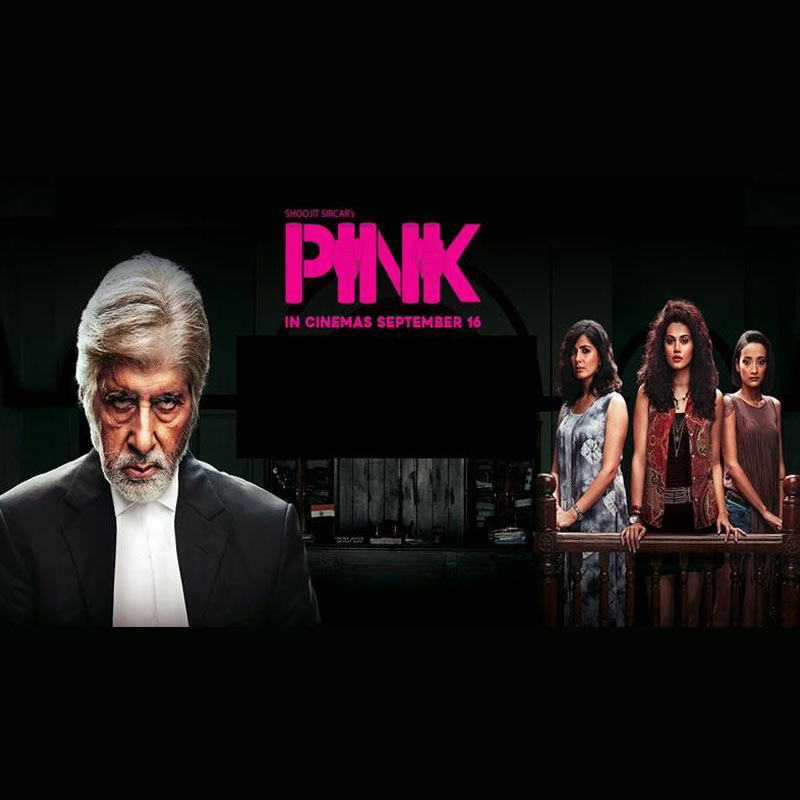
    MUMBAI: Three independent young girls, night out, boys, molestation and Delhi as the location. The leader of the molesting boys is from a political family with whom the cops don’t wish to mess. Put these factors together and you have a story to tell and the result is Pink.

    There may be comparisons with No One Killed Jessica and many such stories from real life cases based TV programmes on Crime Patrol and Savdhaan India.

    So, what is new about Pink? Nothing much really except that it stars Amitabh Bachchan and that it has been vigorously promoted.

    TaapseePannu from Delhi, KIrtiKulhari from Lucknow and Andrea Tariang from Meghalaya share a rented apartment in a typical Delhi raw house colony. They are independence loving working women who, like all other such girls, like a night out on occasions. On one such night out, the girls are enjoying among themselves at a joint at Surajkund (near Delhi in Haryana) when they are invited to join a group of boys because one of them happens to be known to Taapsee since her school days.

    The group moneybag is AngadBedi, hailing from a family of a politician and used to getting away with his evil ways. The boys do what Delhi boys are known to do. They invite the girls to rooms where the boys make their move and expect the girls to be chalu and, hence, reciprocate. While Andrea breaks loose and runs away from the room, Angad tries to be more aggressive with Taapsee who breaks a bottle on his head. Angad who is almost blinded in one eye and ends up with stitches on his forehead is livid with one of his sidekicks adding fuel to fire.

    The boys have decided to make the girls’ life miserable. The girls start receiving threat calls and their landlord is asked to evict them from the premises.

    Amitabh Bachchan is a keen observer of these girls’ movements. A retired lawyer, he occupies a house right opposite theirs. He watches Taapsee on her morning jog in a park he also visits and, otherwise, places himself behind a curtain and watching on girls go about their lives!He notices the sudden change in the girls’ behavior. They look scared. That is when he witnesses a car full of boys come into the colony and kidnap Taapsee.

    Bachchan is a renowned lawyer even if retired and he does what he can: call up the police commissioner informing of the kidnap to no avail. Nobody seems interested in the plight of these girls except Bachchan. Next, a Surajkund lady police comes and arrests Taapsee on charges of attempted murder of Angad. That sums up the first half of the film.

    Time for retired lawyer Bachchan to step in. He is back to donning his lawyer’s garb and neck piece. The second half is about the court case as Bachchan fights for justice for Taapsee while PiyushMishra, who is a public prosecutor, seems to fight for the boys instead. He is more interested in proving that the girls are professional escorts and of loose character while the case is about establishing the case of attempted murder!

    It is a court case like no other as Piyushgoes berserk shouting, stripping the girls of all their dignity, resorts to name-calling and making them look like culprits by design. Bachchan asks equally shaming questions to the girls; his purpose is to prove just that whatever the girls may be doing in their personal life and may have had other boyfriends but, when a girl says NO to a man, it means NO and a man has no right to force himself on her. While Piyush indulges in histrionics, Bachchan is matter of fact.

    As for molestation and putting up a fight go, Pink would be compared to No One Killed Jessica (2011) while, as a court drama for a woman’s honour, it would be with Damini (1993), both of which had more powerful content.

    The script is simple, tell the story with references to things that appear in news like how girls dress, plight of North Eastern girls in Delhi, reluctant police, et al besides the girls’ safety. It turns out to be a court drama sans drama. Director lets viewer assume a lot of things; like who is the bedridden woman in Bachchan’s life. Why should a public prosecutor behave like a mad man in court? Why Bachhcan who does not react to the prosecutor’s provocation be shouting at his own client. If that is supposed to add excitement to the proceedings, it does not. The judgment delivered also goes beyond the scope of the case! The direction is passable;the incidentthat leads to the case, is finally shown in the end title! Cinematography is fair. Editing is weak. Background score is apt. As for the dialogue, only Bachchan gets some good lines.

    As for the performances, TaapseePannu shines with her restrained act. KirtiKulhari uses the dramatic moments given to her ably. Andrea Tarinag has little to do except represent aggrieved North East. Amitabh Bachchan plays the moody lawyer with ease. Piyush Mishra is over the top.AngadBedi suits the role.Dhritiman Chatterjee as the judge lands some credibility to the proceedings.

    Pink is a court room drama with which the female audience may identify more and help the film score at select multiplexes, especially during the weekend.However, the range at the box office remains limited as it happens with such films.

    Producers: Rashmi Sharma, ShoojitSircar.

    Director:Aniruddha Roy Chowdhury.

    Cast: Amitabh Bachchan, TaapseePannu, KirtiKulhari, Andrea Tariang, AngadBedi, Piyush Mishra, Dhritiman Chatterjee.

    Raaz: Reboot

    Raaz: Reboot is the fourth instalment in the Raaz series from Vishesh Films, the earlier ones being Raaz(2002), Raaz:The Mystery Continues (2009) and Raaz 3D (2012). Raaz: Reboot is directed by Vikram Bhatt, who also directed the first and third instalments (the second one was directed by MohitSuri). Raaz: Reboot, like its predecessors, is also a horror thriller.

    KritiKharbanda and Gaurav Arora are married and decide to move to Romania. Gaurav needs better prospects which he seeks in Romania of all places. However, the shift is despite Gaurav’s reluctance who has agreed only on the wishes of Kriti, who thinks his job here was not up to the mark and he deserved better.

    Things seem to take a turn for worse once they move to Romania. Kriti feels that the things are not the same between her and Gaurav and no explanation is forthcoming from him. Saddened and disillusioned Kriti has more troubles in store for her; she starts getting that eerie feeling about the house they occupy. Also, Gaurav is no help when she tries to tell him about her discomfiture.

    Kriti then comes across Emraan, her ex and a fashion photographer who is also in Romania. Having found an ear to unload her problems, Kriti tells her fears to Emraan who is quite forthcoming unlike Gaurav. He also has some secrets to share with her. What follows is the usual mumbo-jumbo for exorcism while what some of the public may have expected from Raaz franchise, sex, is missing. Of course, Emraan’s forte, kisses, are not compromised.

    It has been a long time since Raaz (almost 15 years) and the franchise has only deteriorated in content and treatment. What is more, a lot has been happening in this genre on various television channels and there is no novelty left. Sadly, the film offers nothing better than such television shows.

    The script being predictable and routine, director Vikram Bhatt too goes about dealing with it as just another chore. The music, which usually is the scoring point in Bhatt-T Series ventures is not up the mark here. Dialogue is routine, considering that the film aims to find its target audience in masses, the use of English dialogue is a deterrent. The length, at 127 minutes sans substance, needed to be curtailed. The cinematography is good with Romania backdrop coming as a bonus.

    Emraan Hashmi sails through in the role he has played often before but the negative trait in his character may not be appreciated. KritiKharbanda passes muster. Gaurav Arora is okay.

    Raaz: Reboot has little to expect from multiplexes but will find its audience at single screens, especially away from metros.

    Producers: Bhushan Kumar, Krishan Kumar, Vishesh Films.

    Director: Vikram Bhatt.

    Cast: Emraan Hashmi, KritiKharbanda, Gaurav Arora.

  • Pink: Old wine with a new treatment

    Pink: Old wine with a new treatment

    MUMBAI: Three independent young girls, night out, boys, molestation and Delhi as the location. The leader of the molesting boys is from a political family with whom the cops don’t wish to mess. Put these factors together and you have a story to tell and the result is Pink.

    There may be comparisons with No One Killed Jessica and many such stories from real life cases based TV programmes on Crime Patrol and Savdhaan India.

    So, what is new about Pink? Nothing much really except that it stars Amitabh Bachchan and that it has been vigorously promoted.

    TaapseePannu from Delhi, KIrtiKulhari from Lucknow and Andrea Tariang from Meghalaya share a rented apartment in a typical Delhi raw house colony. They are independence loving working women who, like all other such girls, like a night out on occasions. On one such night out, the girls are enjoying among themselves at a joint at Surajkund (near Delhi in Haryana) when they are invited to join a group of boys because one of them happens to be known to Taapsee since her school days.

    The group moneybag is AngadBedi, hailing from a family of a politician and used to getting away with his evil ways. The boys do what Delhi boys are known to do. They invite the girls to rooms where the boys make their move and expect the girls to be chalu and, hence, reciprocate. While Andrea breaks loose and runs away from the room, Angad tries to be more aggressive with Taapsee who breaks a bottle on his head. Angad who is almost blinded in one eye and ends up with stitches on his forehead is livid with one of his sidekicks adding fuel to fire.

    The boys have decided to make the girls’ life miserable. The girls start receiving threat calls and their landlord is asked to evict them from the premises.

    Amitabh Bachchan is a keen observer of these girls’ movements. A retired lawyer, he occupies a house right opposite theirs. He watches Taapsee on her morning jog in a park he also visits and, otherwise, places himself behind a curtain and watching on girls go about their lives!He notices the sudden change in the girls’ behavior. They look scared. That is when he witnesses a car full of boys come into the colony and kidnap Taapsee.

    Bachchan is a renowned lawyer even if retired and he does what he can: call up the police commissioner informing of the kidnap to no avail. Nobody seems interested in the plight of these girls except Bachchan. Next, a Surajkund lady police comes and arrests Taapsee on charges of attempted murder of Angad. That sums up the first half of the film.

    Time for retired lawyer Bachchan to step in. He is back to donning his lawyer’s garb and neck piece. The second half is about the court case as Bachchan fights for justice for Taapsee while PiyushMishra, who is a public prosecutor, seems to fight for the boys instead. He is more interested in proving that the girls are professional escorts and of loose character while the case is about establishing the case of attempted murder!

    It is a court case like no other as Piyushgoes berserk shouting, stripping the girls of all their dignity, resorts to name-calling and making them look like culprits by design. Bachchan asks equally shaming questions to the girls; his purpose is to prove just that whatever the girls may be doing in their personal life and may have had other boyfriends but, when a girl says NO to a man, it means NO and a man has no right to force himself on her. While Piyush indulges in histrionics, Bachchan is matter of fact.

    As for molestation and putting up a fight go, Pink would be compared to No One Killed Jessica (2011) while, as a court drama for a woman’s honour, it would be with Damini (1993), both of which had more powerful content.

    The script is simple, tell the story with references to things that appear in news like how girls dress, plight of North Eastern girls in Delhi, reluctant police, et al besides the girls’ safety. It turns out to be a court drama sans drama. Director lets viewer assume a lot of things; like who is the bedridden woman in Bachchan’s life. Why should a public prosecutor behave like a mad man in court? Why Bachhcan who does not react to the prosecutor’s provocation be shouting at his own client. If that is supposed to add excitement to the proceedings, it does not. The judgment delivered also goes beyond the scope of the case! The direction is passable;the incidentthat leads to the case, is finally shown in the end title! Cinematography is fair. Editing is weak. Background score is apt. As for the dialogue, only Bachchan gets some good lines.

    As for the performances, TaapseePannu shines with her restrained act. KirtiKulhari uses the dramatic moments given to her ably. Andrea Tarinag has little to do except represent aggrieved North East. Amitabh Bachchan plays the moody lawyer with ease. Piyush Mishra is over the top.AngadBedi suits the role.Dhritiman Chatterjee as the judge lands some credibility to the proceedings.

    Pink is a court room drama with which the female audience may identify more and help the film score at select multiplexes, especially during the weekend.However, the range at the box office remains limited as it happens with such films.

    Producers: Rashmi Sharma, ShoojitSircar.

    Director:Aniruddha Roy Chowdhury.

    Cast: Amitabh Bachchan, TaapseePannu, KirtiKulhari, Andrea Tariang, AngadBedi, Piyush Mishra, Dhritiman Chatterjee.

    Raaz: Reboot

    Raaz: Reboot is the fourth instalment in the Raaz series from Vishesh Films, the earlier ones being Raaz(2002), Raaz:The Mystery Continues (2009) and Raaz 3D (2012). Raaz: Reboot is directed by Vikram Bhatt, who also directed the first and third instalments (the second one was directed by MohitSuri). Raaz: Reboot, like its predecessors, is also a horror thriller.

    KritiKharbanda and Gaurav Arora are married and decide to move to Romania. Gaurav needs better prospects which he seeks in Romania of all places. However, the shift is despite Gaurav’s reluctance who has agreed only on the wishes of Kriti, who thinks his job here was not up to the mark and he deserved better.

    Things seem to take a turn for worse once they move to Romania. Kriti feels that the things are not the same between her and Gaurav and no explanation is forthcoming from him. Saddened and disillusioned Kriti has more troubles in store for her; she starts getting that eerie feeling about the house they occupy. Also, Gaurav is no help when she tries to tell him about her discomfiture.

    Kriti then comes across Emraan, her ex and a fashion photographer who is also in Romania. Having found an ear to unload her problems, Kriti tells her fears to Emraan who is quite forthcoming unlike Gaurav. He also has some secrets to share with her. What follows is the usual mumbo-jumbo for exorcism while what some of the public may have expected from Raaz franchise, sex, is missing. Of course, Emraan’s forte, kisses, are not compromised.

    It has been a long time since Raaz (almost 15 years) and the franchise has only deteriorated in content and treatment. What is more, a lot has been happening in this genre on various television channels and there is no novelty left. Sadly, the film offers nothing better than such television shows.

    The script being predictable and routine, director Vikram Bhatt too goes about dealing with it as just another chore. The music, which usually is the scoring point in Bhatt-T Series ventures is not up the mark here. Dialogue is routine, considering that the film aims to find its target audience in masses, the use of English dialogue is a deterrent. The length, at 127 minutes sans substance, needed to be curtailed. The cinematography is good with Romania backdrop coming as a bonus.

    Emraan Hashmi sails through in the role he has played often before but the negative trait in his character may not be appreciated. KritiKharbanda passes muster. Gaurav Arora is okay.

    Raaz: Reboot has little to expect from multiplexes but will find its audience at single screens, especially away from metros.

    Producers: Bhushan Kumar, Krishan Kumar, Vishesh Films.

    Director: Vikram Bhatt.

    Cast: Emraan Hashmi, KritiKharbanda, Gaurav Arora.