Category: Reviews

  • Badrinath Ki Dulhania: Part fun, part dull

    Director Shashank Khaitan seems to be creating a franchise of his own as he comes back with ‘Badrinath Ki Dulhania’ after his earlier film, Humpty Sharma Ki Dulhania. This film too starts off in Hindi belt but later traverses to Singapore to break the monotony.

    In the process, Badrinath Ki Dulhania also heavily promotes the woman’s cause, her independence and right to choose.

    Varun Dhawan’s character is a barely educated lad from Jhansi working as a recovery man for his well-off but steadfast and old-fashioned father played by Rituraj Singh. Singh’s character considers himself lucky. Since he has sired two sons, daughters, according to him, are a liability. He does not care if his sons love some girl, they have to marry according to his wishes and the dowry that the girl brings is his prime consideration.

    Accordingly, his elder son, Yash Sinha’s character had to sacrifice his love and marry Shweta Basu Prasad’s character who brought along a car showroom besides cash as dowry. She is well-educated but a working woman is no-no for Rituraj.

    Varun joins the baraat of his friend headed for Kota. There, he spots Alia Bhatt, also a guest, and instantly falls for her. It is a one-sided love as Alia is a headstrong and independent girl who wants to work to bring her middle-class family out of a tight financial situation. Also, Alia has an elder sister, played by Aakanksha Singh, who, according to tradition, has to marry first.

    Nice guy that he is, Varun decides to help Alia and her family find a suitor for Aakanksha on the condition that Alia will marry him in the same mandap. Varun does manage to find a match for Aakanksha and the wedding day is decided.

    Things don’t go as planned, however, and Varun has to chase Alia all over again.

    Enjoyable so far, the film loses pace as the location shifts to Singapore where Alia has taken up a career in an airline. Varun is left to do a Devdas act, slipping into a bout of self-pity. This part slows down the film considerably for a while before it comes back into some fun and songs. The climax is interesting while it also delivering a message.

    The script is penned keeping in mind that the theme is youth-oriented and romance, with light moments aplenty, especially in the first part. The second half needed to be spruced up. Direction is competent and the songs are well placed.

    The film has a popular musical score with Humsafar…..,Rokenaruke…. Tenutakiyabina…. being hummable while the title song has a sectional appeal. The remixed Tammatamma… is already popular number from the film Thanedaar (1989). Cinematography is good.

    Varun plays his carefree character with élan. Alia makes a good pair with him, and acts well. Sahil Vaid makes a mark. Rituraj is impressive. Yash, Shweta and Aakanksha land good support.

    Otherwise a plus film, Badri Ki Dulhania will have to contend with pre-Holi weekend which affects collections, especially in the Hindi belt, board exams and election results aftereffects for next few days.

    Producers: Hiroo Johar, Karan Johar.

    Director: Shashank Khaitan.

    Cast: Varun Dhawan, Alia Bhatt, Gauahar Khan, Mohit Marwah, Aakanksha Singh.

  • Commando 2: The Black Money Trail…On a cold trail!

    MUMBAI: Vidyut Jammwal is India’s answer to Hollywood actor Sylvester Stallone and his Rambo series which started in 1982 withFirst Blood. Jammwal made his debut in Hindi films with Force (2011). Since then, he has done half a dozen action Hindi films, a genre he is comfortable with.

    When a film is made around the protagonist’s specialty rather than a theme, one tends to stitch a story around him. And if your hero happens to be one without mass following, it is tough to get a decent opening. Jammwal has yet to arrive or make an image for himself.

    Commando 2 is a sequel, in the Hindi filmmaking parlance. The first one was no commercial trailblazer so the idea was to use the title and give an identity to Jammwal.  An accomplished action actor demonstrates his abilities in his first film and so making a mark in the sequel becomes difficult.

    There are some high profile tycoons, represented by Satish Kaushik, who have stashed their monies in foreign banks. The monies are routed through one Vicky Chaddha. A new regime runs the government now and it wants to live up to its promise of bringing all this money back and into the accounts of poor farmers – déjà vu?

    A team is formed which includes Jammwal, Freddy Daruwala, Adah Sharma and Sumit Gulati, the last being a computer wizard. They are supposed to trace Vicky and bring him back to India so that all the data is made available to the government.

    There are some twists and turns as Suhail Nayyar, the son of a minister, Shefali Shah, is also involved in stashing money abroad. The other twist is about the real identity of Vicky Chaddha. As expected, the film starts with establishing the specialties of Jammwal as he tackles a building full of armed men protecting the person who knows the real Vicky and he can be found.
    All this keeps the film reasonably interesting till the interval. The second half tries to cram in too much along with a lot of computer mumbo jumbo which fails to take the audience along. And once the real Vicky is in sight, it is more like a game of chor-police and outsmarting each other.

    The script is convoluted and the viewer is supposed to accept many things sans logic. Direction by Deven Bhojani, who has earlier directed TV serials, is fairly good. Cinematography captures the scenic outdoors of Bangkok as well as the action sequences ably giving the film a certain finesse.  The song and dance routine is wisely avoided in this film. Action is good though stretched a couple of times. Editing is average as a further 10 to 12 minutes could easily have been chopped off.

    Vidyut Jammwal excels in action sequences as expected. Adah is passable, her street brand dialogue delivery is tough to catch. Esha Gupta lives up to her role very well. Satish Kaushik, Shefali Shah, Adil Hussain, Suhail Nayyar, Sumit Gulati and Anjum Rajabali are okay in support.
    Commando 2: The Black Money Trail is the kind of film meant for B List multiplexes and single screens.

    Producer: Vipul Amritlal Shah.

    Director: Deven Bhojani

    Cast: Vidyut Jamwal, Adah Sharma, Freddy Daruwala, Suhail Nayyar, Thakur Anoop Singh, Shefali Shah, Adil Hussain

    Jeena Isi Ka Naam Hai………..a lesson in suffering a movie!

    Jeena Isi Ka Naam Hai comes across as a kind of biography but one does not know whose! Probably it is somebody known to the makers. But as it turns out, the film is an adaptation of the book My Little Heaven, written by the film’s producer, Purnima Mead. The story tries to blend the primitive (as in 1960s and 70s) with the contemporary. It is about wealthy vs literate, but does not commit to the era it belongs to. There are no cellphones nor computers.

    Manjari Fadnis belongs to a Christian family somewhere In Rajasthan. Her father and mother think a daughter is a burden and treat her badly, more like a servant deprived of even basics even as the two sons get the best of everything.

    Though Manjari is a bright student and tops her class, she is shifted to a government school to save money. Now in college, Manjari is sent to interview the college trustee, Ashutosh Rana, by her principal, Raju Kher. Rana, a local royalty, is a cruel man and his life is all about wine and women. Provoked by Manjari’s questions and confidence, he is later attracted to her. He in effect buys her from her father to make her his wife.

    Despite being in love with a fellow student Himansh Kohli, Manjari has no alternative but to marry Rana. Her ordeal starts soon thereafter. She is barred from stepping out of the palace apart from other restrictions. Manjari has but one sympathizer in Supriya Pathak, the palace help.

    Rana asks the doctor to abort the child if it happens to be a girl when Manjari is pregnant, much to her horror. Pathak gives her support and encourages her to flee.
    Having gone through the depressing part of the film, everything turns positive for Manjari. She arrives in Mumbai and finds everything on a platter. A place to stay where even her daughter is looked after, a job in an Urdu newspaper, and a new wooer in Arbaaz Khan, an NRI who visits Mumbai every year to make his contributions to the orphanage where Manajri has found shelter as a help.

    Having found a job with an Urdu paper run by Prem Chopra, Manjari is suddenly invited to the US to join a major daily newspaper. It seems Chopra forwarded some of her writings to a contact in the US and they were impressed with her writings! She joins the publication and takes up an assignment nobody else wanted. She writes a book and becomes a celebrity! She accepts Arbaaz’s love and all is well that ends well.

    Nothing to mention about technical aspects or performances needed.

    That is for the film and its story, not so for the viewer. For Jeena Isi Ka Naam Hai is a 171 minutes of sheer torture.

    Producers: Purnima Mead, Stanton Mead.

    Director: Keshhav Panneriy.

    Cast: Arbaaz Khan, Manjari Fadnis, Ashutosh Rana, Himansh Kohli, Supriya Pathak, Prem Chopra, Rati Agnihotri.

  • Rangoon… What a debacle!

    MUMBAI: Every filmmaker wants his own ‘all time classic’ and it is best not to confuse such a filmmaker with a realistic, practical maker with business sense. This lot is usually pretentious and indulgent kind. He wants his own Gone With The Wind, a Doctor Zhivago, Mary Poppins, Sholay, Hum Aapke Hain Koun..! or even Dangal. When too many films from the past influence your script and you try to take a bit from each one, the result is Rangoon.

    Rangoon is supposed to be a period musical love triangle. But, even before reaching the love triangle part, the film meanders too much with stuff that has no relevance — like the capturing of a Japanese soldier by Shahid Kapoor, which is treated like fun and games.

    This period drama is based during World War II. The Burma campaign as it was called, was a serious business as the Japanese army had taken over Rangoon and had Assam in mind next. Here the Japanese army personnel in groups of three or so are shown hanging around as if on a picnic! The British side of the army consists mainly of Indians and a few Sikhs to make it easy for the viewer to identify them.

    What the British generals and army personnel do in the film could have been made into a full-blown comedy on the lines of Mel Brooks’ movie, History Of The World II.

    Shahid Kapoor, playing an army man fighting on the Burma front, has been captured by the Japanese. He is granted release thanks to intervention by the Indian National Army of Subhash Chandra Bose. But, he is also sermonised by the INA to enroll and serve the interest of the country rather than the British. He agrees and when he goes back to the British general, he is a mole for INA.

    During this serious war where the untrained British army is always on the defensive and losing ground, the general in charge, Richard McCabe, thinks his army men need some entertainment. So what if Japanese planes are bombing his troops? In the film, the Japanese are either economical or considerate for they only drop a single bomb instead of the carpet bombing as is the norm during a war.

    Kangana Ranaut’s character is invited to entertain the army men on the Burma front. Her character is reportedly modelled on Fearless Nadia, the Australian born queen of Hindi action movies in the 1940s. Kangana, the paramour of her producer, Saif Ali Khan, plays a similar role to Fearless Nadia’s man in real life. Saif and Kangana are madly in love with each other so much so he is ready to divorce his wife. Was this part needed at all?

    Kangana proceeds to Imphal to entertain the army. A free and fearless kind that she is, she is not ready to be protected by anybody but Shahid has been appointed as her bodyguard. A situation is created so that Saif, who was to accompany her, can’t do that anymore because his father has suffered a heart attack. (But when Saif reaches his father, Gerson Da Cunha, the father is reading a Gujarati newspaper which has a banner headline about Germany’s partition……..and this is only 1943!)

    Kangana arrives at the army base which consists of a few junior artistes dressed in olive fatigues. It does not matter that the Indian and British army both wore mostly khaki in those days. The general, McCabe, is depicted as a sadistic buffoon and comes across as more entertaining than the invited guests. He likes to quote Ghalib, recites Indian classical ragas and makes all kinds of faces.

    At this point, the writer and director seem to have forgotten that Kangana is renowned for her onscreen stunts and action and not dancing. Once on the border, all she does is sing and dance at the drop of a hat!

    If Kangana can turn a dancer from being a stunt queen, she can also shed her deep-rooted love for Saif and start making out with Shahid on day two without much ado. That done, she also falls in love with Shahid in due course while also being in love with Saif. It is all very complicated.

    Time to bring in a shade of patriotism, now. There is a Maharaja, Amrit Pal, who owns a sword which, he claims, if donated to INA, can raise enough money to throw the British out of India and pave the way for the INA to march to Delhi to realise their motto of ‘DilliChalo’. Somehow, the sword has landed at the Burma front and Shahid is supposed to deliver it to the INA on the other side of the bridge. Now, how many films have had their climax over or across a bridge? And what happened to the love triangle?

    Rangoon is such a tacky film, neither the writer nor the director seem to know what it is about as they jump to a new track every so often after shelving an old one inconclusively. No research seems to have been done on the subject. The script is full of inconsistencies and irrelevant subplots. No character is properly defined. The result is 247 minutes of patience trying tedium.

    The script is episodic without sticking to a theme. Editing is nonexistent. Direction is poor with experimental stage approach. Music is bad and, yet, as many as a dozen tracks are forced in. The lyrics are incomprehensible.

    Why do makers of period films go on to make good-looking actors look ugly? Saif, with his sticky wig and wrinkled face looks aged. He has lost the palm of his right hand and wears an ugly detachable appendage which, again, is of no consequences except indulgence. Shahid is scarred, muddy or has his face blackened most of the time. Kangana looks painted and dons a silly wig. All three fail to impress in this film. The film has a few well penned dialogues. Art direction is not convincing. Stunts are oft seen.

    Period films are a bad idea and some recent examples: Pankaj Kapur’s Mausam (2011), Kunal Kohli’s Teri Meri Kahaani (2012) and Anurag Kashyap’s Bombay Velvet (2015).

    Rangoon is a very poorly conceived and executed film. A classic happens but, when you plan one, you come up with a Rangoon, a debacle!

    Producers: Sajid Nadiadwala, Vishal Bhardwaj, Viacom 18.

    Director: Vishal Bhardwaj.

    Cast: Saif Ali Khan, Shahid Kapoor, Kangana Ranaut, Richard McCabe, Alex Avery, Gerson da Cunha.

  • Irada….Docu-thriller?

    MUMBAI: The title Irada comes across as B-grade 1970s and it has little relevance to the theme of the film, which is honourable. The film is about an ecological problem, almost a disaster. The issue dealt with here, though, is not as infamous or as well known as the Bhopal gas tragedy.

    Punjab has recently been facing an ecological calamity thanks to overuse of chemicals and pesticides in its farming processes. And this is supposed to have penetrated deep enough into the earth to pollute the land, the food grown here as well the underground water resources.

    Naseeruddin Shah’s character is a retired but much decorated army man who is training his daughter, Rumana Molla, to qualify as an army cadet. The famous Punjab canals where he trains his daughter to set swim time records, happens to be full of cancer-causing chemicals and she develops the disease.

    The reason is the reverse bore-welling process owned by a tycoon, played by Sharad Kelkar, whose company packs all the destructive chemical back into deep earth. The process affects not only all the land in the area but also its farming and waters deep down as well as those flowing through its canals.

    Sharad and the devilish chief minister of the state, played by Divya Dutta, are in cahoots and there is little the local NGOs or the police can do about this equation. The situation is so bad that every family is said to have a cancer patient and a point is reached when the state runs a Cancer Express, on which the afflicted travel for treatment.

    Suddenly, the cancer causing poisonous factories of Sharad are blown up one fine day. Sharad is wild and so is his bankrolled CM, Divya.

    In comes the character of Arshad Warsi, an investigator from the National Investigation Agency, (NIA). Things go a bit haywire here as though Arshad is a central government agent, but the local CM, Divya, treats him like a stooge as if he was the state employee. In between, people are kidnapped, killed and so on all as a matter of fact.

    Naseeruddin, and the cop, Arshad, the single-malt-sharing righteous ones join hands to fight the menace.

    Here, as in so many such public interest films, the subject is not known to the masses. This has been a local issue unlike the Bhopal incident. That notwithstanding, the process is not shown as to how our heroes, Naseeruddin and Arshad, reach certain conclusions.

    Besides this being a local issue, the makers somehow feel that the plight or the essence of the film would be better explained in the filmusing Punjabi language, which is alienates much of the audience. The thriller is treated like many others where the solutions and conclusions that the lead characters arrive at are given and the audience taken for granted. The viewer is not a part of the investigation process.

    The film is tautly executed and easy on the eye. The businessman-politician as partners in crime makes it routine subject. The dialogue writing is meaningful and deep. There is no scope for songs. The editing is effective. The direction and treatment are taut.

    With good performances all around, the two who excel are Divya Dutta and, in a brief role, Rumana Molla. Naseeruddin Shah and Arshad Warsi contribute with their seasoned act. SharadKelkar is effective in a negative role. Sagarika Ghatge is okay.

    The film has nothing really to draw entertainment seeking viewers.
    Producers: Falguni Patel, Prince Soni.
    Director: Aparnaa Singh.
    Cast: Naseeruddin Shah, Arshad Warsi, Rumana Molla, Divya Dutta, Sharad Kelkar, Sagarika Ghatge.

    Running Shaadi….So routine!

    Earlier titled Running Shaadi.com, Running Shaadi is supposed to be another rom com like so many before it. The rich versus poor, the city girl vs gawaar and so on has been the staple for love story writers. An attempt has been made to give it a contemporary look. And, it is not incidental that such films are based in the Hindi belt. This one adheres to the norm. It is based in sada Amritsar, the heart and soul of Punjab.

    Basing the film in Punjab was fine but, the makers seem to have got carried away. They even made almost the whole film in Punjabi! And, with no subtitles!

    Amit Sadh’s character works in a fabric shop, Singh & Singh, in Amritsar, owned by a Sikh family managed by father and son where, along with a couple of others, Amit is a help. An illiterate from Bihar, he is a hands-on help for the shop as well as the owners’ personal errands like from the shop to domestic affairs. He is the trusted one.

    Singh’s daughter, played by Taapsee Pannu, is an outgoing girl, defying norms. Along with the rest of the Singh family, she also counts on Amit whenever she is in trouble besides using him as a proxy. Just short of her 18th birthday, she has had a misadventure with a college friend leading to the need for a gynecologist.

    The only person she can trust to help her with the episode is Amit. While she gets over her unwanted pregnancy, Amit is the one who tends to her. Already nursing an infatuation for Amit, she is now in love with him what with all his caring ways.

    That is when Amit falls short of his boss, Singh’s, expectations. Insulted by his boss, he walks out on his job. Illiterate he may be but he is never short of ideas. Having seen an eloping couple being thrashed by relatives, he comes up with an idea inspired by, who else but Bill Gates. He suggests he and his cheerful Sikh friend, Arsh Bajwa aka Cyberjeet, launch a portal to help and facilitate runaway couples.

    The portal has a lawyer and a magistrate in its loop and soon becomes a big success. And, this is all in the first half of the film. The portal has had 49 successful eloping clients, all married off against various odds, thanks to the portal, running shaadi.

    But, the 50th eloping shaadi on the running shaadi portal is going to be the portal’s own host, Amit, something he never contemplated!

    The second half is all about Taapsee talking Amit into marrying her and, sadly, this half contains just about every scene and sequence seen in umpteen earlier films. For the viewer, it feels never-ending. This part takes the film down all the way.

    Writing wise, the film is just another recycled love story. It is not cute as it was aimed to be. And, what is it with the Punjabi background film telling its story in Punjabi? Direction is routine. Editing is weak. Songs are sober but incidental; they don’t aid the story or process of the film. Cinematography is fair.

    Amit Sadh, despite lack of expression, carries his limited range just about enough to suffice for the film. Taapsee Pannu is okay but her Punjabi is such a drawl, you feel like learning lip-reading. Arsh Bajwa as a comedian sidekick of the hero is not comic. Brijendra Kala is, as usual, good. Neena Singh, in a brief role, is energetic and impressive.

    Running Shaadi lacks novelty and is a routine fare with scarce entertainment value.

    Producers: Ronnie Lahiri, ShoojitSircar.

    Director: Amit Roy.

    Cast: Amit Sadh, Taapsee Pannu, Arsh Bajwa, Brijendra Kala, Neena Singh.

  • The Attack On Ghazi…..Worth watching but….

    MUMBAI: A lot of things seem to be going right for India and its people in various fields and, suddenly, people have learnt to take pride in achievements of her people in sports, space science, IT, coupled with a newly acquired sense of patriotism over past couple of years. This has been making many filmmakers cater to this new fervour with different genre films.

    For instance, films on sports or the biographical films on sportspersons, which never worked earlier, have found favour with the audience to varying degrees, including one, Dangal, even proving to be a blockbuster. That is because these films are based on success stories. As for patriotism, few attempted them but the ones following the 1965, 1971 wars and one after the Kargil did work. The problem with this theme is that the spirit of patriotism is usually comes in phase.

    The “Attack On Ghazi” is a film about the single submarine that the Pakistan Navy boasted of during the 1965 and 1971 wars India fought with that country. The submarine, Ghazi, acquired by the Pakistan Navy from the US in 1963, was destroyed during the India-Pakistan war of 1971, following which East Pakistan seceded from Pakistan to become Bangladesh. There is more than one version as to how this super powerful sub sank.

    As the Indian Navy claimed it destroyed the sub, the counter version from Pakistan claims it was a case of accident and self-destruction.

    The film, The Attack On Ghazi, takes the angle that the sub was destroyed by the Indian Navy.

    Ghazi was sent to fight the East Pakistan insurgency, as Pakistan described it then, to enable other ships to carry on with the supply of essentials to the Pakistan army in the East. The only way to deliver these supplies was through sea route around India and Sri Lanka. However, the only impediment for Ghazi was INS Vikrant, India’s multipurpose giant of an aircraft carrier ship, which was blocking the sea route to East Pakistan. Ghazi was meant to destroy Vikrant. However, before it could come anywhere near Vikrant, Ghazi was destroyed.

    Kay Kay Menon plays the role of an assertive commander of an Indian Navy submarine which has been ordered to recce the eastern coast of India during the 1971 war. It was not supposed to attack if an enemy ship was sited, just report to the Navy HQ. Menon does not like the idea. His second-in-command is Atul Kulkarni’s character, is in awe of his commander. Also on a special assignment on this sub is Rana Daggubati, who believes in going by the book and never crossing the line of command. Since Menon is a defiant officer, Daggubati is on the job to keep a check on him.

    As Menon is the protagonist and Daggubati the antagonist, the early bit of this first ever Indian Navy war drama is about cold war and conflict of ideas between these two. Menon wants to torpedo the first enemy ship he spots because he has seen many jawans, including his young army man son, die because of the politicians’ apathy and indifference. Daggubati wants to wait for orders.

    That is when the crew spots the mighty sub, Ghazi. Menon wants to torpedo it immediately while Daggubati is against the idea pending orders from high command. Their torpedo operates on two keys, one each with Menon and Daggubati.

    The second half is all about maneuvers between Ghazi and the INS sub outsmarting and out-guessing each other’s positions as torpedo after torpedo is fired. The Ghazi, after all, is supposed to have their best commander in charge, and should not be easy to overcome. The Indian sub has fallen victim to the Ghazi-laid mines, yet the war between the two continues.

    The Attack On Ghazi is noble effort to arouse the patriotism. What is wrong is that it attempts all that with a garbled screenplay; while this stuff may not have been seen on an Indian screen, there are quite a few films made in Hollywood about a ship in dire straits.

    Since the Indian audience is unfamiliar with the real warfare, let alone underwater submarine duals, some distractions would have helped but there are none: the whole film is about two enemy ship commanders trying to outwit each other. Things get repetitive in the second half.
    The underwater filming is not easy, and most of this film is set below the waves but the cinematography is praiseworthy. The direction, though imaginative, falls prey to the elongated script. In the name of music, the film has two mandatory patriotic numbers in the national anthem and Saarejahan se achha….

    The performances are sincere and convincing from all concerned. Shining through the lot are Kay Kay Menon, Rana Duggubati, Atul Kulkarni and Rahul Singh. Nassar and Om Puri have brief roles.

    Tapsi Pannu has been brought in to the cast for some glam but has really nothing to do; she does not even merit an introduction or a background story.

    The Attack On Ghazi is an interesting film worth a look but such films need some encouragement in the form of reasonable admission rates. Otherwise, tough to attract audience as is the case so far with this film which has had poor opening.

    Producers: Matinee Entertainment, PVP Cinema.

    Director: Sankalp Reddy.

    Cast: Kay Kay Menon, Rana Daggubati, Atul Kulkarni, Om Puri, Milind Gunaji, Tapsi Pannu, Nassar, Rahul Singh.

  • Jolly LLB 2….Lacklustre

    Jolly LLB 2 is, what the Hindi film industry has got used to describe as a sequel and this one is supposed to be a sequel to Jolly LLB (2013). The film actually is another comic satire on the judiciary like the earlier one and the same director if that qualifies it to be called a sequel.

    Otherwise, the film is just using the title considering the earlier Jolly LLB was a fair success.

    Jolly LLB 2 takes similar start as the earlier one in that, though Akshay Kumar’s character is a qualified lawyer, he works with a senior solicitor in Lucknow where he is mainly an attendant to his boss, never trusted to take up a case or stand in court.

    Akshay has a demanding wife, played by Huma Qureshi, in that Akshay has to do all the house work, make whiskey for her, cook for her etc. While Akshay has but one ambition, that is to have his own chamber and take on cases independently, Huma’s ambition is to wear Gucci dress. Akshay can’t afford it so, on one occasion, she gets a Gucci dress on rent. That is the kind of comedy the film offers.

    Sayani Gupta’s husband, Manav Kaul, has been killed by the policeman, Inaamulhaq, passing it off as an encounter just to get accolades and his next promotion. Pregnant Sayani wants Akshay’s boss to take up her case but he is not even willing to meet her. Akshay lies to her and accepts two lakh from her as fees for his boss and uses it to get his own chamber. Sayani commits suicide and guilt-ridden Akshay decides to take on the might of the local police.

    The rest of the film tries to replicate the earlier version as the big time lawyer defending the cop here is the character played by Annu Kapoor while the judge is Saurabh Shukla, straight out of Jolly LLB. A novice, Akshay tries to get a conviction for Inaamullah but Annu comes up with all sorts of antics most of which are farcical, let alone be convincing.

    For distraction, some song and dance routine is put in at places but that hardly helps. The fact is, there is little scope for a heroine in the story. Instead, the couple also have a child nobody knows to what purpose except to stretch the film. This aspect actually bogs down the film.

    The court proceedings are lackluster and get neither serious nor funny. Characters pop out from nowhere as if to give the film another twist; the ploy fails.

    The film suffers right from conception stage as the script is poor lacking the expected thrill and twist and turns from a courtroom drama. The comparison with the earlier film is inevitable as, even the comic quotient, is missing in most parts. Direction is patchy. Music has no decent song to offer and only drags the film. Editing is slack. Production values are below par.

    As for performances, Akshay Kumar tries his best but lacks his usual élan. Annu Kapoor goes overboard being loud. Saurabh Shukla is okay. Huma Qureshi was not needed in this scheme of things and, while she is there, she adds nothing. Imaanulhaq does well and so does Sayani Gupta.
    Jolly LLB 2 is an average fare lacking the required entertainment value.

    Producer: Fox Star Studios.

    Director: Subhash Kapoor.

    Cast: Akshay Kumar, Annu Kapoor, Huma Qureshi, Saurabh Shukla.

  • Kung Fu Yoga! (Hindi English assorted) …Old wine in tetra pack

    Kung Fu Yoga! (Hindi English assorted) …Old wine in tetra pack

    MUMBAI: Jackie Chan films are known for Kung Fu coupled with comedy. The Kung Fu in his films is not about felling an opponent, it is rather going on and on as a lesson in self-defense. The kind where two Kung Fu adversaries keep going at each other while the protagonist, Chan, goes through some of his stunts and, eventually, gets the better of his rival through some device or trick and not Kung Fu.

    Kung Fu Yoga has but one challenge for the viewer and that is to find Yoga in this film. There are a couple of references to this age old practice, but that is it. The film is mainly about Chan’s Kung Fu prowess seen umpteen times before.

    What is new is that the theme of the film is based around India, some lost civilisation in the country and the treasure left behind.

    Chan is the number one archeologist in China. Along with his Indian students of archeology, he comes across an old map of a 1,000 year old civilization in India where a treasure is waiting to be discovered. Their exploration takes them deep in to snow-clad mountains where, along with frozen peaks, they also have running water; must be freeze proof. Deep down under the snow, they stumble across gold sovereigns and other such treasures. And, there is a key to unlock the real cache.

    But, no sooner have they laid their hands on the key, there comes the other claimant, SonuSood. There is some hand-to-hand combat with an attempt to make it sort of funny. While the one-to-one blended in Kung Fu is routine, the comedy falls flat.

    In between, the film takes a detour to Dubai for another action sequence. Because, the way to the treasure is through one-upmanship between the Chan group and Sood and his goons.  While Sood claims the treasure to be his, Chan sermonises of the same belonging to the government!

    When both parties have arrived at the treasure site, they have one more Kung Fu bout; Yoga is nowhere to be found except in the film’s title. Eventually, not the government but a saffron clad group of men and women take over the proceedings as Chan, Sood and the rest get into a dance routine to end the film on a happy note!

    Kung Fu Yoga is just another Hong Kong style film trying to mix the martial art with comedy. The title being irrelevant, so is its Indian theme. Many such films on treasure hunts have been made and this film seems to have borrowed a bit from all of them. There is nothing original about this one.

    Can’t say much about the direction since most of it has been executed through effects. While Chan is routine and Sood is passable, the girls, Disha Patani and Amyra Dastur add glamour. The rest are incidental.

    Producer: Barbie Tung

    Director: Stanley Tong

    Cast: Jackie Chan, Sonu Sood, Damian Mavis, Disha Patani, Amyra Dastur, Eric Tsang, Zhang Guoli. Lay Zhang, Mu Qimiya.

    Alif…urposeless

    Alif / Aleph is the first character in the Arabic alphabet and also the name of the child character in this film. The title finds justification in that it is a film about education.The emphasis here is on the education of Muslim students in mainstream schools instead of madrassas, which concentrate on religious studies.

    All that is fine but why have the makers messed with the theme of need for education for Muslim children by bringing in a skewed Hindu angle as if that that was a roadblock for admitting them to a school where Hindus studied!

    There is a Muslim family in Varanasi where the character of Danish Hussain continues his family vocation as a hakeem. He dreams of making his only son, Saud Mansuri, a doctor. But, there are social taboos as Hussain stays in a Muslim mohalla where only madrassa education is encouraged and enforced while the English medium schools, which are located a few kilometers away, are abhorred and considered to be a Hindu domain. Hence, Hussain will have to be content with his son graduating when he memorizes all 30 chapters of Koran and becomes a Hafiz.

    This is the time when Hussain’s sister, played by Neelima Azeem, much tortured and harassed by her husband in Pakistan, manages to return home to India. After some melodrama on her return, she takes charge of the proceedings and insists on admitting Saud to a mainstream English school. The boy is totally at sea as he does not even know the English alphabets but has been admitted to the third standard.

    It is not the fellow students but a teacher who hates having Saud in his school and keeps framing him for various misdeeds just so that the lenient principal expels him.

    Alif is a misconstrued, illogical story with no relevance even though it looks like a propaganda film made with the UP elections in mind; Jaya Bachchan is the narrator. There is no sense in depicting mohalla system as if they were concentration camps and had no access to other parts of Varanasi. And, what is the ‘convent’ school finally where Saud is admitted? It is called Al Haneef School!

    The script tries to run too many parallel tracks: a dying father, an estranged sister, a suppressed Muslim community,and romance; friendship between two young boys, education and discrimination. None of these are linked or justified.

    All technical aspects of the film are below par. However it has good performances by Saud Mansoori. Neelima Azeem and Raza Hussain are stagy. For whatever purpose Alif was produced, it is not delivering.

    Producers: Pawan Tiwari, Zaigham Imam.

    Director: Zaigham Imam.

    Cast: Neelima Azeem, Danish Hussain, Saud Mansuri, Bhavna Pani, Ishaan Kaurav, Aditya Om, Gopal Gurjar and Simala Prasad.

  • Kung Fu Yoga! (Hindi English assorted) …Old wine in tetra pack

    Kung Fu Yoga! (Hindi English assorted) …Old wine in tetra pack

    MUMBAI: Jackie Chan films are known for Kung Fu coupled with comedy. The Kung Fu in his films is not about felling an opponent, it is rather going on and on as a lesson in self-defense. The kind where two Kung Fu adversaries keep going at each other while the protagonist, Chan, goes through some of his stunts and, eventually, gets the better of his rival through some device or trick and not Kung Fu.

    Kung Fu Yoga has but one challenge for the viewer and that is to find Yoga in this film. There are a couple of references to this age old practice, but that is it. The film is mainly about Chan’s Kung Fu prowess seen umpteen times before.

    What is new is that the theme of the film is based around India, some lost civilisation in the country and the treasure left behind.

    Chan is the number one archeologist in China. Along with his Indian students of archeology, he comes across an old map of a 1,000 year old civilization in India where a treasure is waiting to be discovered. Their exploration takes them deep in to snow-clad mountains where, along with frozen peaks, they also have running water; must be freeze proof. Deep down under the snow, they stumble across gold sovereigns and other such treasures. And, there is a key to unlock the real cache.

    But, no sooner have they laid their hands on the key, there comes the other claimant, SonuSood. There is some hand-to-hand combat with an attempt to make it sort of funny. While the one-to-one blended in Kung Fu is routine, the comedy falls flat.

    In between, the film takes a detour to Dubai for another action sequence. Because, the way to the treasure is through one-upmanship between the Chan group and Sood and his goons.  While Sood claims the treasure to be his, Chan sermonises of the same belonging to the government!

    When both parties have arrived at the treasure site, they have one more Kung Fu bout; Yoga is nowhere to be found except in the film’s title. Eventually, not the government but a saffron clad group of men and women take over the proceedings as Chan, Sood and the rest get into a dance routine to end the film on a happy note!

    Kung Fu Yoga is just another Hong Kong style film trying to mix the martial art with comedy. The title being irrelevant, so is its Indian theme. Many such films on treasure hunts have been made and this film seems to have borrowed a bit from all of them. There is nothing original about this one.

    Can’t say much about the direction since most of it has been executed through effects. While Chan is routine and Sood is passable, the girls, Disha Patani and Amyra Dastur add glamour. The rest are incidental.

    Producer: Barbie Tung

    Director: Stanley Tong

    Cast: Jackie Chan, Sonu Sood, Damian Mavis, Disha Patani, Amyra Dastur, Eric Tsang, Zhang Guoli. Lay Zhang, Mu Qimiya.

    Alif…urposeless

    Alif / Aleph is the first character in the Arabic alphabet and also the name of the child character in this film. The title finds justification in that it is a film about education.The emphasis here is on the education of Muslim students in mainstream schools instead of madrassas, which concentrate on religious studies.

    All that is fine but why have the makers messed with the theme of need for education for Muslim children by bringing in a skewed Hindu angle as if that that was a roadblock for admitting them to a school where Hindus studied!

    There is a Muslim family in Varanasi where the character of Danish Hussain continues his family vocation as a hakeem. He dreams of making his only son, Saud Mansuri, a doctor. But, there are social taboos as Hussain stays in a Muslim mohalla where only madrassa education is encouraged and enforced while the English medium schools, which are located a few kilometers away, are abhorred and considered to be a Hindu domain. Hence, Hussain will have to be content with his son graduating when he memorizes all 30 chapters of Koran and becomes a Hafiz.

    This is the time when Hussain’s sister, played by Neelima Azeem, much tortured and harassed by her husband in Pakistan, manages to return home to India. After some melodrama on her return, she takes charge of the proceedings and insists on admitting Saud to a mainstream English school. The boy is totally at sea as he does not even know the English alphabets but has been admitted to the third standard.

    It is not the fellow students but a teacher who hates having Saud in his school and keeps framing him for various misdeeds just so that the lenient principal expels him.

    Alif is a misconstrued, illogical story with no relevance even though it looks like a propaganda film made with the UP elections in mind; Jaya Bachchan is the narrator. There is no sense in depicting mohalla system as if they were concentration camps and had no access to other parts of Varanasi. And, what is the ‘convent’ school finally where Saud is admitted? It is called Al Haneef School!

    The script tries to run too many parallel tracks: a dying father, an estranged sister, a suppressed Muslim community,and romance; friendship between two young boys, education and discrimination. None of these are linked or justified.

    All technical aspects of the film are below par. However it has good performances by Saud Mansoori. Neelima Azeem and Raza Hussain are stagy. For whatever purpose Alif was produced, it is not delivering.

    Producers: Pawan Tiwari, Zaigham Imam.

    Director: Zaigham Imam.

    Cast: Neelima Azeem, Danish Hussain, Saud Mansuri, Bhavna Pani, Ishaan Kaurav, Aditya Om, Gopal Gurjar and Simala Prasad.

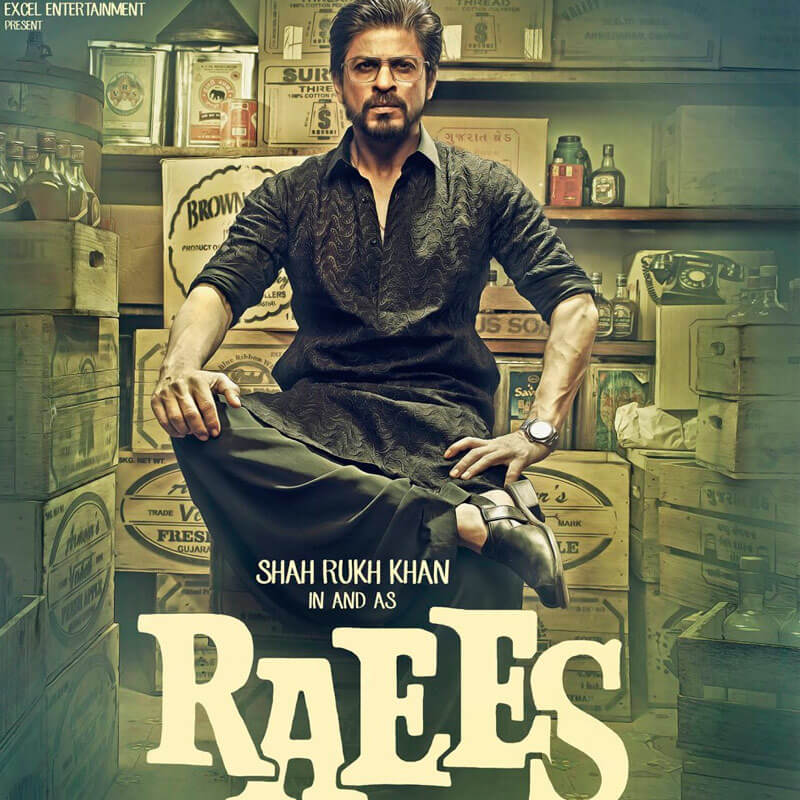
  • Raees…..Don: The twisted tale

    Raees…..Don: The twisted tale

    MUMBAI: Playing a fictional don is not good enough, every hero wants a Deewar of his own, the film that cemented Amitabh Bachchan’s arrival as a star after Zanjeer. Deewar was the legendary film based on the life of Haji Mastan, Mumbai’s first don. But, Deewar was only inspired by Haji’s life with clever writing by the Salim-Javed duo which, without depicting violence in anyway, charted the life of a don more as a family drama as well as a conflict between law and outlaw.

    There have been more attempts recently at adapting real life criminals’ stories for films. None of these films tried to pass judgment on the criminal in its theme or paint him other than what he was. To see where things go wrong with Raees, it is necessary to know what the real don was and how the film presents him.

    Raees, though it does not credit the film as one based on the notorious Ahmedabad based criminal Latif, tries to present him as a benevolent do-gooder, a Robin Hood kind of don. Latif was a petty bootlegger in the city of Ahmedabad who, with the backing of various other criminals started out as a courier boy for a major bootlegger, eventually turning into one independently. Since alcohol in the totally dry state of Gujarat was the privilege of rich and influential,Latif seemed to be dealing with the right kind of people when it came to furthering his career.

    Latif specialized in inciting communal riots and soon became a tool in the hands of politicians. The city faced regular bouts of communal tensions during two occasions: the annual Rath Yatra and Makar Sankranti, the kite festival. Latif was known to play the lead role in inciting these riots. The local goon Latif graduated to become a don when he came into contact with Dawood and was instrumental in transporting the RDX used in the Mumbai bomb blasts. He later took refuge in Karachi with the aid of Dawood.

    Shah Rukh Khan plays the character based on the life of Latif. Suffering from weak eyesight, he can’t read the blackboard in school when asked. The family is very poor and can’t afford to buy him specs. Latif goes and steals the frame from a statue of Mahatma Gandhi. Poverty and his mother’s helplessness lead him to a local bootlegger, Atul Kulkarni, delivering bottles in his school sachet. As he grows up, he plans to start his own business. Talking about “Baniye ka deemag” and “Miyabhaiki daring”, it is strange that he plans to buy supply from Kulkarni himself to compete with him!

    Shah Rukh is now rich as well as influential. Everybody loves him be it Hindu or Muslim for he is a messiah who always stands for the poor and needy. He donates sewing machines to local women and gets justice for unpaid workers. He even plans a huge colony to settle poor people of his locality. So what if they are well settled in the heart of the city!

    There are riots in the city and Shah Rukh has nothing to do with it. He, in fact, is worried about people and children and provides food and milk for families and kids affected by the riots and the curfew-bound city.By now, Hindu and Muslim, both the communities adore him. Shah Rukh attacks an opposition leader’s rally and is asked by the CM to agree to go to jail to save face. He soon realises that the CM has betrayed him. He decides to fight the local municipal elections and wins to avail him bail from jail. (The real Latif fought the elections from six wards and won five.)

    But, now the CM is irritated with Shah Rukh and makes his life miserable. All his resources dry up and he is forced to seek financial help from a Mumbai don who asks him to run an errand for him: deliver a certain amount of smuggled gold which turns out to be RDX used for Mumbai bomb blasts of 1993. 

    There is nothing about Shah Rukh aka Latif running away to Dubai and later finding refuge in Pakistan.

    The film comes across all throughout as making a martyr out of a bad man. And, even otherwise, if one watches the film as a total work of fiction, it is a poorly conceived and executed film. A score of movies have been made on similar don stories and they only get worse with each attempt.

    There are two other tracks, both predictable; one is that of romance. Romance in this film is given. Shah Rukh and Mahira Khan seem to be in love with each other from the first time they meet. Soon they marry and Mahira joins in his illegal business as a helping hand. The other is that of the cop, Nawazuddin Siddiqui, who has sworn not to spare Shah Rukh, wherever he is transferred for doing that.The rest of the characters are mere caricatures. The first half of the film comes across as any making of a don story, the second half turns into a typical South Indian film where the bad man is good man.

    Raees has just about everything going wrong for it, from the choice of subject and the way it is moulded to make Shah Rukh a larger than life character, to the choice of female lead. While Shah Rukh plays his two faced personality sans conviction, Mahira Khan neither charms with her presence nor impresses with her performance. Nawazuddin promises to salvage the proceeds initially but the script holds him back as things proceed. However, he is the best part of the film. 

    The direction is patchy and attempts to portray the 1980s lacks conviction. Sets are shabby. Music is of no help. There is little scope for the editor. The film makes a hero out of criminal Latif in the process of making the film’s hero, Shah Rukh, larger than life.

    Raees has the advantage of a decent opening and a Republic Day holiday as a bonus but adverse reports will soon catch up with its box office status.

    Producers: Ritesh Sidhwani, Gauri Khan, Farhan Akhtar.

    Director: Rahul Dholakia.

    Cast: Shah Rukh Khan, Nawazuddin Siddiqui, Atul Kulkarni, Mahira Khan, Mohammed Zeeshan Ayyub.

    Kaabil….For select audience..

    Sanjay Gupta’s inspiration usually comes from South-East Asian films at times blended with a film from the West. Kaabil finds resemblance with Blind Fury (1989) and Broken (2014), from the US and Korea, respectively.

    That said, the film turns into a typical vendetta film, a trend started by South Indian films.When an injustice is done to a loving couple or a hero’s sister or mother falls prey to the villains, the hero seeks revenge. What is different here is that the lead actors, Hrithik Roshan and his lady love, Yami Gautam, are both blind.That adds a sympathy factor to the revenge saga. The handicap of momentary blindness has been used in various Kung Fu films over the years so the viewer would be quite familiar with the idea.

    Hrithik is a blind man living on his own. He has a talent for using different voices and is a popular dubbing artist for animation films. Through a common friend who is a matchmaker, he is introduced to Yami, who is also blind. She works for an NGO and also plays piano at a dance academy. While both are independent and reluctant to marry, they plan to meet again. What both also have in common is a sense of perception, a strong sixth sense.

    So far the going is good as there are some nice as well as emotional moments as both discover each other. The initial friendship turns into love and the couple decide to marry. The proceeds become heavy thereafter as a troublemaker, Rohit Roy, has bad intentions for Yami.

    Once while Hrithik is away at work, Rohit along with his sidekick, Md Sahidur Rehman, rapes Yami knowing both are blind and there is little they could do. Going to the police is of no help since Rohit’s politician brother, Ronit Roy, is a local councilor and can pull strings. Encouraged, Rohit decides to make it a routine to take advantage of Yami’s helplessness leading her to end her life.

    Frustrated by the police inaction, Hrithik decides to take matters in his own hands to settle score. This is what the film is about; a blind man plotting and taking revenge while making sure there is no way the cops can nail him. For he challenged the police that he will get even on his own.

    He plots each villain’s death differently using his talent of modulating his voice.
    Kaabil starts off well but the idea of bringing in a local politician, and a municipal councilor at that, makes the villain angle weak. That such a politician should be able to call the shots with a major metro police force does not quite convince. 

    Seeking revenge one by one is also oft seen in many films. That a blind man does all this is the USP of the film which may not be enough. The film’s music is a plus with the title song, Mai tere kaabil hun…… being the pick of the lot while Kuchh din se….. and Kissise pyar ho jaaye…. (Remix of old hit, Dil kya kare…. from film Julie) also being hummable. The cinematography is good. Editing could have been crisper. Action is commendable.

    The best part of the film is the performances by the lead pair, Hrithik and Yami. Hrithik is totally convincing as a blind man carrying a blank sort of look in his eyes through the length of the film. Yami complements him though her role is shorter. Ronit, Rohit and Sahidur are routine. Girish Kulkarni and NarendraJha as the cops are effective.
    Kaabil has had a weak opening. Thursday holiday and the weekend are expected to fare better but the target for the film is too high.

    Producer: RakeshRoshan.

    Director: Sanjay Gupta.

    Cast: HrithikRoshan, YamiGautam, Ronit Roy, Rohiit Roy.

  • Raees…..Don: The twisted tale

    Raees…..Don: The twisted tale

    MUMBAI: Playing a fictional don is not good enough, every hero wants a Deewar of his own, the film that cemented Amitabh Bachchan’s arrival as a star after Zanjeer. Deewar was the legendary film based on the life of Haji Mastan, Mumbai’s first don. But, Deewar was only inspired by Haji’s life with clever writing by the Salim-Javed duo which, without depicting violence in anyway, charted the life of a don more as a family drama as well as a conflict between law and outlaw.

    There have been more attempts recently at adapting real life criminals’ stories for films. None of these films tried to pass judgment on the criminal in its theme or paint him other than what he was. To see where things go wrong with Raees, it is necessary to know what the real don was and how the film presents him.

    Raees, though it does not credit the film as one based on the notorious Ahmedabad based criminal Latif, tries to present him as a benevolent do-gooder, a Robin Hood kind of don. Latif was a petty bootlegger in the city of Ahmedabad who, with the backing of various other criminals started out as a courier boy for a major bootlegger, eventually turning into one independently. Since alcohol in the totally dry state of Gujarat was the privilege of rich and influential,Latif seemed to be dealing with the right kind of people when it came to furthering his career.

    Latif specialized in inciting communal riots and soon became a tool in the hands of politicians. The city faced regular bouts of communal tensions during two occasions: the annual Rath Yatra and Makar Sankranti, the kite festival. Latif was known to play the lead role in inciting these riots. The local goon Latif graduated to become a don when he came into contact with Dawood and was instrumental in transporting the RDX used in the Mumbai bomb blasts. He later took refuge in Karachi with the aid of Dawood.

    Shah Rukh Khan plays the character based on the life of Latif. Suffering from weak eyesight, he can’t read the blackboard in school when asked. The family is very poor and can’t afford to buy him specs. Latif goes and steals the frame from a statue of Mahatma Gandhi. Poverty and his mother’s helplessness lead him to a local bootlegger, Atul Kulkarni, delivering bottles in his school sachet. As he grows up, he plans to start his own business. Talking about “Baniye ka deemag” and “Miyabhaiki daring”, it is strange that he plans to buy supply from Kulkarni himself to compete with him!

    Shah Rukh is now rich as well as influential. Everybody loves him be it Hindu or Muslim for he is a messiah who always stands for the poor and needy. He donates sewing machines to local women and gets justice for unpaid workers. He even plans a huge colony to settle poor people of his locality. So what if they are well settled in the heart of the city!

    There are riots in the city and Shah Rukh has nothing to do with it. He, in fact, is worried about people and children and provides food and milk for families and kids affected by the riots and the curfew-bound city.By now, Hindu and Muslim, both the communities adore him. Shah Rukh attacks an opposition leader’s rally and is asked by the CM to agree to go to jail to save face. He soon realises that the CM has betrayed him. He decides to fight the local municipal elections and wins to avail him bail from jail. (The real Latif fought the elections from six wards and won five.)

    But, now the CM is irritated with Shah Rukh and makes his life miserable. All his resources dry up and he is forced to seek financial help from a Mumbai don who asks him to run an errand for him: deliver a certain amount of smuggled gold which turns out to be RDX used for Mumbai bomb blasts of 1993. 

    There is nothing about Shah Rukh aka Latif running away to Dubai and later finding refuge in Pakistan.

    The film comes across all throughout as making a martyr out of a bad man. And, even otherwise, if one watches the film as a total work of fiction, it is a poorly conceived and executed film. A score of movies have been made on similar don stories and they only get worse with each attempt.

    There are two other tracks, both predictable; one is that of romance. Romance in this film is given. Shah Rukh and Mahira Khan seem to be in love with each other from the first time they meet. Soon they marry and Mahira joins in his illegal business as a helping hand. The other is that of the cop, Nawazuddin Siddiqui, who has sworn not to spare Shah Rukh, wherever he is transferred for doing that.The rest of the characters are mere caricatures. The first half of the film comes across as any making of a don story, the second half turns into a typical South Indian film where the bad man is good man.

    Raees has just about everything going wrong for it, from the choice of subject and the way it is moulded to make Shah Rukh a larger than life character, to the choice of female lead. While Shah Rukh plays his two faced personality sans conviction, Mahira Khan neither charms with her presence nor impresses with her performance. Nawazuddin promises to salvage the proceeds initially but the script holds him back as things proceed. However, he is the best part of the film. 

    The direction is patchy and attempts to portray the 1980s lacks conviction. Sets are shabby. Music is of no help. There is little scope for the editor. The film makes a hero out of criminal Latif in the process of making the film’s hero, Shah Rukh, larger than life.

    Raees has the advantage of a decent opening and a Republic Day holiday as a bonus but adverse reports will soon catch up with its box office status.

    Producers: Ritesh Sidhwani, Gauri Khan, Farhan Akhtar.

    Director: Rahul Dholakia.

    Cast: Shah Rukh Khan, Nawazuddin Siddiqui, Atul Kulkarni, Mahira Khan, Mohammed Zeeshan Ayyub.

    Kaabil….For select audience..

    Sanjay Gupta’s inspiration usually comes from South-East Asian films at times blended with a film from the West. Kaabil finds resemblance with Blind Fury (1989) and Broken (2014), from the US and Korea, respectively.

    That said, the film turns into a typical vendetta film, a trend started by South Indian films.When an injustice is done to a loving couple or a hero’s sister or mother falls prey to the villains, the hero seeks revenge. What is different here is that the lead actors, Hrithik Roshan and his lady love, Yami Gautam, are both blind.That adds a sympathy factor to the revenge saga. The handicap of momentary blindness has been used in various Kung Fu films over the years so the viewer would be quite familiar with the idea.

    Hrithik is a blind man living on his own. He has a talent for using different voices and is a popular dubbing artist for animation films. Through a common friend who is a matchmaker, he is introduced to Yami, who is also blind. She works for an NGO and also plays piano at a dance academy. While both are independent and reluctant to marry, they plan to meet again. What both also have in common is a sense of perception, a strong sixth sense.

    So far the going is good as there are some nice as well as emotional moments as both discover each other. The initial friendship turns into love and the couple decide to marry. The proceeds become heavy thereafter as a troublemaker, Rohit Roy, has bad intentions for Yami.

    Once while Hrithik is away at work, Rohit along with his sidekick, Md Sahidur Rehman, rapes Yami knowing both are blind and there is little they could do. Going to the police is of no help since Rohit’s politician brother, Ronit Roy, is a local councilor and can pull strings. Encouraged, Rohit decides to make it a routine to take advantage of Yami’s helplessness leading her to end her life.

    Frustrated by the police inaction, Hrithik decides to take matters in his own hands to settle score. This is what the film is about; a blind man plotting and taking revenge while making sure there is no way the cops can nail him. For he challenged the police that he will get even on his own.

    He plots each villain’s death differently using his talent of modulating his voice.
    Kaabil starts off well but the idea of bringing in a local politician, and a municipal councilor at that, makes the villain angle weak. That such a politician should be able to call the shots with a major metro police force does not quite convince. 

    Seeking revenge one by one is also oft seen in many films. That a blind man does all this is the USP of the film which may not be enough. The film’s music is a plus with the title song, Mai tere kaabil hun…… being the pick of the lot while Kuchh din se….. and Kissise pyar ho jaaye…. (Remix of old hit, Dil kya kare…. from film Julie) also being hummable. The cinematography is good. Editing could have been crisper. Action is commendable.

    The best part of the film is the performances by the lead pair, Hrithik and Yami. Hrithik is totally convincing as a blind man carrying a blank sort of look in his eyes through the length of the film. Yami complements him though her role is shorter. Ronit, Rohit and Sahidur are routine. Girish Kulkarni and NarendraJha as the cops are effective.
    Kaabil has had a weak opening. Thursday holiday and the weekend are expected to fare better but the target for the film is too high.

    Producer: RakeshRoshan.

    Director: Sanjay Gupta.

    Cast: HrithikRoshan, YamiGautam, Ronit Roy, Rohiit Roy.