Category: Reviews

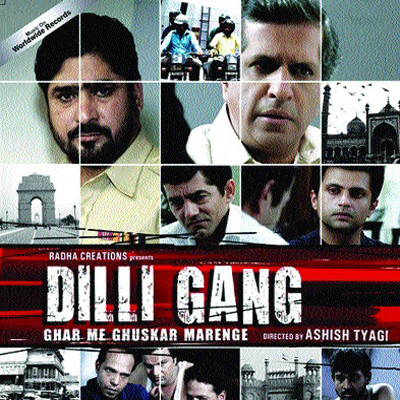
  • Sibal scribes lyrics for a Dilli Gang

    Sibal scribes lyrics for a Dilli Gang

    Minister Kapil Sibal’s penchant for writing poems is well-known. He has now penned the lyrics for a Bollywood film based on the life of senior citizens. And will also appear on screen reciting his lines.


    After publishing a book of SMS poems, reciting his composition Aankh khuli aazad thi main as a tribute to women at the Star Parivaar Awards, taking on the murky side of IPL through writing, Sibal, through his poem, expresses his view on the issue of senior citizens’ safety in upcoming film Dilli Gang, which is based on true instances of crime against senior citizens, who sometimes get robbed or murdered when their children leave them.


    With a special poem composed for the film, which he recites in the beginning and towards the end of the movie, Sibal urges people to be compassionate towards their ageing parents. Karenge jo maa baap ki seva, Bhagwan unke saath rahega…, is what Sibal will be seen and heard saying in Dilli Gang.


    Talking about his compositions and poems, Sibal says social issues are his favourite subjects. “I have written poems on multiple social issues, especially on daughters. When the director and producer told me that the movie is about old people, I agreed to write a poem immediately. These topics touch my heart. The cultural transformation in our society, where children don’t respect parents and refuse to look after them, is a major issue to be addressed besides women’s safety,” he says.


    Sibal plans to continue his Bollywood innings. “Cinema is a medium which reflects the reality in society and is trying to raise hope. For people who think for the betterment of the society and want to express their views, Bollywood is the right channel. I am going to do more of this work,” he ends.

  • Eros International acquires worldwide distribution rights of Grand Masti

    Eros International acquires worldwide distribution rights of Grand Masti

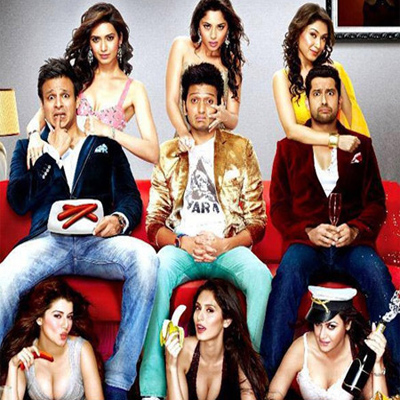
    Eros International, a leading global company in the Indian film entertainment industry, has acquired the worldwide distribution rights of the highly anticipated comedy Grand Masti. The film releases on 13 September.


    The film is a sequel to the 2004 smash hit Masti and features Vivek Oberoi, Aftab Shivdasani and Riteish Deshmukh reprising their roles from the original and is directed by Indra Kumar.


    Speaking on the occasion, Eros International MD Sunil Lulla said, “We are happy to continue our long association with Ashok Thakeria and Indra Kumar. Grand Masti is one of the most eagerly awaited sequels this year and with the huge success Masti enjoyed, we are confident its sequel too will be a winner at the box office. The film promises double the dose of laughter and masti as is evident from the promos and we are anticipating a very encouraging response to the film.”


    Producer Ashok Thakeria added, “Grand Masti is a sequel to India’s first adult comedy, carrying forward the tone set in the first part. We are positive the film will deliver what it promises and are very happy to have Eros releasing the film worldwide. Our relationship with Eros goes back a long way with them distributing all our films overseas – from Raja to Masti. This is the first time they are releasing our film worldwide and we couldn’t have asked for a better platform for its showcasing.”


    Grand Masti is the story of three married guys Vivek Oberoi as Meet, Aftab Shivdasani as Prem and Riteish Deshmukh as Amar go out on fun experience in their college reunion, finally to be trapped in danger. The film also features Bruna Abdalah, Karishma Tanna,Sonalee Kulkarni, Kainaat Arora, Maryam Zakaria and Manjari Fadnis in key roles.

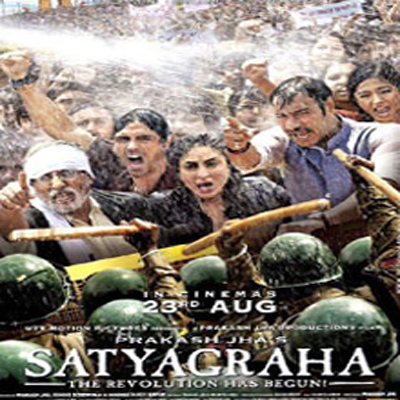
  • Satyagraha: A glorified hunger strike

    Satyagraha: A glorified hunger strike

    There is cinema called Prakash Jha genre. It is basically anti-establishment in its essence. The usual elements involve badly skewed good-vs-bad struggles, the usual locations, plenty of crowds and a small constituency that is supposed to represent the national scene of India today.


    Amitabh Bachchan is the honest, retired masterji of a small township. His principles are as tall as his personal being. He is not always right but that is the way he is. He has cast his son, Indraneil Sengupta, in his very own mould. The son, an engineer, is the head of development of a whole precinct of Ambikapur, which is represented by the politician Manoj Bajpai in the state assembly. A new bridge is being built with his design, and Bajpai’s brother is the contractor. As expected, a slab from the bridge collapses and kills many workers. The builder has used inferior materials but the blame is put on the designer, Indraneil, who is killed soon after. A compensation award of Rs 25 lakh for the killed workers’ families is announced by Bajpai in front of the media. Days pass but the award is not forthcoming due to corruption. When approached,the district collector is rude. Angry with his behaviour, Bachchan slaps him in front of his subordinates.


    Bachchan is arrested for slapping a public servant. Enter Ajay Devgn, Indraneil’s bum chum who supported Devgn after his parents died in an accident. Devgn tries his best, appointing a topmost lawyer and even approaching the collector. Nothing works and he decides to start a campaign for the release of the honest ex-teacher through posters and MMS clips. Soon the local toughie, Arjun Rampal, an expelled student of Bachchan, joins the campaign with Devgn. Rampal’s speciality is crowd mobilisation. Devgn decides to rope in Kareena Kapoor, a TV journalist from ABP News. Kareena is supposed to travel with the PM on his Japan jaunt but Devgn convinces her that something major is happening in Ambikapur by sending her manipulated pictures of huge crowds. When she arrives, she sees no crowds but not to disappoint her, Rampal soon produces a huge mob.


    Bajpai decides to play a good guy, comes personally to his constituency and orders the release of Bachchan and also presents him the cheque for Rs 25 lakh. But looking at the crowd’s backing, Bachchan refuses to accept the money till corruption is totally done away with in Bajpai’s constituency. He gives a deadline of a month for the purpose. However, Bajpai is a tough nut to crack. He holds the ultimate power in the state government which stands because of support of his party. He is in the position to call the shots. This becomes the clash of egos between Bajpai and Bachchan and his supporters Devgn, Rampal and Amrita Rao. Kareena stays back to cover the movement as well as to support it and ends up falling in love with Devgn while she is there.


    Bachchan is taunted by the widow of one of the workers who died when the bridge slab collapsed. She tells him it is fine for him to refuse Rs 25 lakh but because of him even her compensation of one lakh is not forthcoming. She and her children have to remain hungry. Bachchan is moved and decides he too won’t eat until the widow’s children get their due and the local administration clears all the dues of the people. He is now on a satyagraha. Don’t know why hundreds of people come and stare at the hungry Bachchan on satyagraha because for the viewer of this movie whatever is happening becomes unbearable! Some relief during this time comes in the form of one of Gandhiji’s favourite Bhajans, Raghupati Ragav Raja Ram with reworked words. Since politicians like Bajpai don’t always relent, the only way to end the film seems to be to let the armed forces out on the mob. There is chaos and deaths and for some reason Bachchan goes for a stroll. Devgn goes to find him when Bajpai’s goons shoot at both, killing Bachchan and hurting Devgn.


    Devgn and Rampal go after Bajpai only to hand him over to the police; not a very satisfactory way to deal with a villain for the viewers.


    Satyagraha is a dry, insipid film with a script of convenience. Director Prakash Jha may be adept at collecting and handling crowds but the same can’t be said of scripting. A few scenes and sequences are also taken from the film Gandhi. Dialogue is routine. Photography is fair. Editing is slack. Musically, the film has a couple of good songs: the title song and Raskebhare tore naina. Performances by all artistes are okay; the script offers no scope for histrionics to any character.


    Satyagraha has nothing except its star line-up to attract people. But that has never been reason enough for the cine-going public.

  • Madras Cafe: Served ice cold

    Madras Cafe: Served ice cold

    MUMBAI: As a producer, John Abraham tried a different theme with Vicky Donor and it worked. This time his banner again attempts a film off the beaten track with Madras Cafe. It is about a RAW agent on the trail of LTF (LTTE) to eliminate its leader but who instead stumbles upon a plot to assassinate an ex-prime minister of India (read Rajiv Gandhi). Only, films about RAW and espionage are not a novelty anymore and what’s more, in the absence of a valid cause or tradition about stories of Indian spy networks’ success, they don’t interest people; D-Day, a worthy effort of a RAW mission, is a recent example.

    John Abraham is drawn for a mission in Jaffna, Sri Lanka, by RAW. His mission is to either create an alternative for or to eliminate Anna (read Prabhakaran) the LTF chief. This because the PM of India wants peaceful settlement and democratic set up restored through elections in the province of Jaffna. Abraham is on the job but somehow his position is always compromised and the LTF is a step ahead of him. In his pursuit of Anna, Abraham is captured but saved by the army. Eventually, in a major ambush on the LTF camp, Anna is presumed dead. However, he is not and starts his attacks on Lankans and the Indian Peacekeeping Force with more venom and brutality. This leads to the resignation of the Prime Minister (this seems to be the humour angle in the film: an Indian minister resigning, a PM at that!)

    But, the film is not about LTF at all as you realise later. It is about a plot to kill the, by now, ex-PM. The people behind the plot meet at Madras Cafe in Singapore and London and even talk over open phone lines. Everything that is secret is known by all except Abraham, the RAW agent! He is clueless most of the time and a journalist from UK, Nargis Fakhri, and her personal sources know everything there is to know about the plot.

    Producers: John Abraham, Viacom 18 Motion Pictures, Ronnie Lahiri.
    Direction: Shoojit Sarkar.
    Cast: John Abraham, Nargis Fakhri, Raashi Khanna, Siddharth Basu, Piyush Pandey.

    Who wants the ex PM killed and why? Looks like an international corporate cartel wants the ex-PM killed because he believes in peace in Jaffna while this cartel wants LTF to win and control the area after which they can have a free run on the province and thereby control the whole region which in turn would pose a great threat to India’s security! That sounds like a lot of cock and bull.

    The cartel makes things easy as their messages fly high across countries which the Indians decode. The plot to kill the popular ex-PM is revealed. The super agent Abraham makes it a one man mission to save him since the ex-PM would not change his itinerary despite a threat to his life. Sadly, Abraham is late by about 30 feet to save the ex-PM but a safe distance enough to survive the bomb himself. Because the bomb is designed to only kill people in the range of twenty to twenty five feet. Of course!

    He spends the next three years hitting the bottle and making occasional visits to a local church till he is ready to tell the whole story of how the PM could have been saved to the pastor.

    Madras Cafe is an unconvincing, soulless film in which there is nothing for the viewer to identify with. The film lacks in drama, thrill and romance, and songs have been purposely avoided. The film rests solely on Abraham’s shoulder and he falls short by yards. His expressions refuse to change whether he has just found his wife killed or learnt a major secret. Nargis Fakhri has a brief role and she is okay. Direction is uninspiring. Rest of the aspects are passable.

    Madras Cafe has opened to a weak response and chances of a pick up look poor.

  • Once Upon A Time In Mumbai Dobaara: Akshay Kumar all the way

    Once Upon A Time In Mumbai Dobaara: Akshay Kumar all the way

    MUMBAI: Once Upon A Time In Mumbai Dobaa is touted as a sequel to the producers’ earlier film, Once Upon A Time In Mumbaai. The claim is a deception and a ploy to cash in on the popularity of the earlier film. Supposedly based on a chapter from the don Dawood Ibrahim’s life, it is just another love triangle.

    Akshay Kumar has killed senior dons and attained the mantle of the ultimate don of Mumbai. The remaining local area gangsters are also rendered ineffective by him thereby creating enemies waiting to kill him. His main opponent is Mahesh Manjrekar. Akshay has shifted his base to Middle East but still rules the underworld of Mumbai from there. Akshay had long back picked a young boy, Imran Khan, and nurtured him into a perfect daredevil.

    Having neutralised all his enemies, he plans to visit Mumbai again; the agenda being to eliminate Manjrekar once and for all. The task to eliminate him is passed onto Imran and another henchman, Chetan Hansraj, who botch it up as Manjrekar outsmarts them.

    But there is a distraction in his life and plans. A khiladi with women otherwise, for the first time in his life, he falls in love. The woman is Sonakshi Sinha, but he is unaware that his own protégé, Imran, also loves the same woman. The film, which was fun so far, starts going downhill as the love triangle plays up and the villain in Akshay starts getting more and more cruel, illogical, stretched and dull.

    As the film continues with its love story of two men and one woman, there are songs and dream sequences and poor Sonakshi ends up being in the imagination songs of both the heroes. There seem to be no better, more interesting ways known to the writer to fill up the reels, notwithstanding the tedium it causes to the viewers. This is until Akshay suddenly dreams up a plot to lure Manjrekar out of his den: to spread the rumour that Akshay and Imran have fallen out as both crave the same woman! As invincible as the tales of Dawood Ibrahim have made him, Akshay, supposedly playing his character, takes on Manjrekar in the middle of a busy Mumbai road with traffic in full flow from both directions.

    Producers: Ekta Kapoor, Shobha Kapoor.
    Direction: Milan Luthria.
    Cast: Akshay Kumar, Imran Khan, Sonakshi Sinha, Sonali Bendre, Mahesh Manjrekar, Pitobash Tripathy, Mushtaq Khan, Chetan Hansraj, Tiku Talsania.

    Having killed his main adversary now is the time for the love triangle to reach some sort of conclusion. Pitobash Tripathy, Imran’s childhood buddy, finds a place in Akshay’s car. He has been brought here to ‘unwittingly’ convey that Imran also loves Sonakshi. Akshay being don and Imran being his underling knows only one way to end the love triangle: by killing Imran. There is some one-sided action as Imran refuses to raise his hand on his mentor and goes on to take a police bullet meant for Akshay on himself.

    The film is okay while Akshay holds the fort on his own for much of first half of the film. It is also okay with Imran’s entry scene. But enter Sonakshi and the film loses its track. Milan Luthria is not in his element and has also taken the viewer for granted at many places. Characters play Shoaib, Aslam and Jasmine speak of ‘Paap’ and cite ‘Ram’ and ‘Ravan’, which is odd. Nor does the film create the aura of the era it deals with. Rajat Arora has done well with his dialogue writing, especially the ones penned for Akshay. Musically, the film has an entertaining number in Tayyab Ali pyar ka dushman…. A hit number borrowed from Manmohan Desai’s Amar Akbar Anthony and scored by Laxmikant Pyarelal. The other good songs are: Tu hi khwahish… And Yeh tune kya kiya… Editing needed to be crisper. Photography is good.

    The film is an Akshay Kumar vehicle and he makes the most of it; dressed like a mid 20th century American gangster with jelled hairstyle, dark glasses and suit without tie, he carries a certain gait in his walk. This is one of his better performances. Imran is good in certain parts. Sonakshi is okay. Pitobash is good as usual. Sonali Bendre makes a brief role while Vidya Balan makes a passing appearance.

    Once Upon A Time In Mumbai Dobaara is a mish-mash between a crime and a romance film, which does not quite work for a viewer.

  • Chennai Express: This train can be boarded just once

    Chennai Express: This train can be boarded just once

    MUMBAI: Shah Rukh Khan, most preferred in romantic films, of which he may have done only a few, is finding it hard to find a slot lately. He has tried his hand at multiple genres recently: Ra.One, a super hero film; Don 2, an action-for-action’s-sake film; Jab Tak Hai Jaan, where he plays a larger than life bomb expert. Somehow, he does not seem to have found the right fit. Chennai Express is the outcome of this confusing situation as the film can’t define its genre even after it has run through 143 minutes. Is it a comedy, a road movie, an action movie or a romance? And is it a Hindi or a Tamil movie?

    Shah Rukh Khan’s halwai grandfather has passed away and his last wish is that his grandson should immerse his ashes in the sea at Rameshwaram. However, Khan and his friends had plans to holiday in Goa. This assignment comes as a hurdle in their plans. However, Khan’s friends convince him that even if he immersed the ashes at Goa, they would finally end up reaching the sea at Rameshwaram! This is the first warning of what is to come. Since the grandmother plans to see off Khan at the station, he plans to take a south bound train, get off at the first station nearby and join his friends for a road trip to Goa.

    Khan spots Deepika Padukone running to catch the train which has started moving and helps her in. He also helps four mean and scary looking guys board the running train. It turns out that Deepika, who is running away from her father who is in a village near Chennai, catches a train going towards her father. The four goons Khan helped board the train are her father’s henchmen, chasing her to take her back to her village. Her father, who is the local don, plans to marry her off to a strongman from another village, Nikitin Dheer against her wishes. That would help him extend his power further.

    Producers: Gauri Khan, Karim Morani, Ronnie Screwvala, Siddharth Roy Kapoor.

    Director: Rohit Shetty.
    Cast: Shah Rukh Khan, Deepika Padukone, Nikitin Dheer, Sathyaraj, Manorama, Kamini Kaushal, Lekh Tandon.

    Deepika blames Khan for her problem. He decides to help her but his attempts are thwarted by the foursome. They are a dangerous lot which they demonstrate first by throwing away Khan’s costly cell phone from the train and later by throwing out the TC. Deepika and Khan communicate through Hindi film songs as if they are singing a duet; the goons couldn’t care less since the things are very much under their control.

    Finally, they arrive at her village. But since it is not a scheduled stop, the goons pull the chain and out there, to welcome the boss’ daughter, is a crowd of hundreds. Khan could have continued with his journey but, for whatever reason, he also decides to tag along! Since Deepika does not want to marry Dheer, she introduces Khan as the guy she loves and plans to marry. The son-in-law to be is cheered by the villagers. But Dheer is not the kind to give in so easily. He challenges Khan to a fight the next morning. This is one giant problem for Khan for that is how Dheer compares to Khan in physique. The only way to survive is to escape.

    Khan and Deepika plan to escape before the duel starts, but Khan spoils the plan by getting drunk. Still, he steals a bike and manages to get away, only to crash near a police station. The Sikh cop, Mukesh Trivedi, hides him in a safe place which, when he wakes up, turns out to be a smugglers’ dhow heading towards Sri Lanka. Soon the dhow is raided and Khan taken back to the village he had run from.

    It is her wedding day when, once again, Khan and Deepika escape, this time to fall in love for real. Khan wants to take her honourably and comes back to her village, to the don, the mob and Dheer. In a sudden burst of enthusiasm he beats up all the goons, armed as well as unarmed and, finally, also takes on Dheer!

    Chennai Express is a poor story idea badly developed. The script has no substance and a lot of footage is filled with nothing happening or, in second half, by crowding the footage with three songs almost back-to-back. Except at two or three places, the comedy is pathetic and the jokes are all decades-old PJs. The music score is generally no help and the only well tuned song is Titli… In fact, some songs sound like they have been dubbed from Tamil songs.

    The Rohit Shetty touch is missing here; there is not much entertainment to be found, even of the mindless variety. Photography is good. Dialogue is uninspiring. A lot of Tamil is used in dialogue without sub titles which is very curious: there is not much to understand in this film but this shows a disregard for the audience. Editing is slack.

    Deepika shines and is the only worthy performer in the film. Khan, sad to say, resorts to buffoonery when not overacting; his fans expect better. Dheer is aptly sinister.

    Chennai Express may not generate good word of mouth but, thanks to the Eid weekend release at 3500 screens with multiplexes running 12 to 16 shows, it is sure to amass bumper weekend collections and help avoid a big setback.

  • Rabba Main Kya Karoon: Just another wedding gone wrong

    Rabba Main Kya Karoon: Just another wedding gone wrong

    MUMBAI: Ever since films like Hum Aapke Hain Kaun and Monsoon Wedding succeeded at the box office, the Indian wedding has been a genre in Hindi films. You don’t need a story. You can collect a motley crowd and use all the colour and light you want when you make a wedding film.

    However, there has to be some excuse for a story. Here goes: Akash Chopra proposes to his childhood sweetheart, Tahira Kochhar. The wedding, following an engagement ceremony, is fixed. The guests and relatives start gathering and a festive atmosphere prevails all round. But Chopra is most thrilled when his elder brother and idol, Arshad Warsi, arrives. Warsi is Chopra’s mentor. Soon Warsi learns that Chopra has been a one-woman man and not only has he not indulged in chasing other women, he is still a virgin.

    Warsi has a theory that such a marriage can’t last and not cheating on one’s wife leads to a failed marriage. He decides to do something about the problem in three steps. He is determined not to send his brother to the altar a virgin man. He also plants on the wedding scene a girl who was interested in Chopra earlier to seduce him. Warsi keeps creating situations where Chopra would bump into her. This charade goes on while on the side the other characters’ traits are etched out in an effort to create funny situations.

    Producer: Moti Sagar.
    Director: Amrit Sagar Chopra.
    Cast: Akash Chopra, Arshad Warsi, Paresh Rawal, Raj Babbar, Shakti Kapoor, RiyaSen, Tahira Kocchar,
    Himani Shivpuri, Anuradha Patel,
    Tinu Anand, Navni Parihar

    .

    Raj Babbar is the eldest of the family and comes across as a ‘khadus tau’ until he confesses to almost going wayward. Tinnu Anand was a muscular hulk once upon a time but has reduced to looking like a walking stick because he is always scared of his wife, Himani Shivpuri. He will learn about something wrong he did years back. Paresh Rawal plays mind games with his wife, Sushmita Mukherjee, and keeps her hooked to drugs while he keeps flirting with young girls. Shakti Kapoor likes to chase girls too as his wife, Supriya Karnik, keeps nagging him about smoking. Then there is the pair of Rakesh Bedi and his wife, Navni Parihar, who married out of love but are seen bickering and fighting all the time. These are fillers to entertain you while Warsi tries his devices to rid Chopra of his virgin status.

    Finally, as expected, Warsi’s ploy backfires. Chopra’s marriage is called off as Kochhar catches him with the other girl. Warsi is foolhardy and bravely tells his wife how he was cheating on her all the time. There is no logic in Warsi’s confession to his wife except to create a little drama at the end. His wife walks out and so does Kochhar.

    Chopra does well while Kochhar is okay. Warsi is his usual self. Rest fill the bill. Musically, Bari Barsi…. And Muh meetha …have some lively moments. Direction is fair.

    Rabba Mai Kya Karoon may find some takers in the North. Its beginning has not been very encouraging.


    Chor Chor Super Chor: May just manage to steal a few smiles


    Producers: Ved Kataria, Renu Kataria.
    Director: K Rajesh.
    Cast: Deepak Dobriyal, Anshul Kataria, Priya Bathija, Alok Chaturvedi, Bramha Mishra, Paru Uma, Chandrahas Tiwari, Jagat Rawat, Anurag Arora, Nitin Goel, Avtar Sahani, MeghVarn Pant, ShrikantVerma, Tina, Kafil Ahemad.

    Tehelka magazine introduced India to sting operations and like all fads, soon filmmakers caught up with the idea too. They found ways to add sting operations to their scripts without always understanding the essence of a sting. Chor Chor Super Chor is a sort of Oliver Twist revisited, however, with an interesting concept.

    In a side alley of old Delhi, Shuklaji runs a photo studio. But that is just a façade for he actually controls a gang of young pickpockets and petty thieves. The boys have grown up under his care and are very loyal to him. One of the boys, Deepak Dobriyal, does not want to be part of such a way of life anymore and wants out. He tries to land jobs and finally gets one: to stand dressed as a Punjabi ‘samosa’ outside a savoury shop at one of the Delhi metro stations. In his earlier attempt to find a job, he has come across a girl, Priya Bathija, with whom he has fallen in love.

    As luck would have it, Bathija arrives at the same metro station everyday at a fixed time to go to her job. One day, Dobriyal sees her handbag being picked. She is stopped by the station security and asked to show her ticket or else pay a fine, both things she can not do since her ticket as well as money was lost with the bag. Dobriyal uses his clout with the security man and gets her out of this tricky situation. Dobriyal knows one of his own people took it. He retrieves her bag and returns it to her the next day. The ice is broken and Dobriyal now becomes her friend. She wants to know how he got her bag back and he owns up to knowing them. She convinces him to show her the gang in operation and the smitten Dobriyal duly obliges.

    Dobriyal starts dreaming of finding a house as he expects her to propose to him any moment. Instead what he gets is a solid shock. The TV is running a promo of a sting operation of a chain of pickpockets and how they operate in unison on one target. Dobriyal is the one on TV in a tell all session! Bathija was a TV reporter. She had fooled and used him. His pickpocket friends are also angry with him for giving them away. Dobriyal asks for seven days and the gang’s help to turn the tables on Bathija.

    Dobriyal plans a TV reality show of his own and first prank he plays is on the very owner of Bathija’s channel. He and his ‘team’ also involve their earlier victims who were caught on Bathija’s sting. Their show is ready. It is taken to Bathija’s boss. The result is, not only is the show approved it also leads to Bathija losing her job. The film carries a side track of the kidnap of a miser diamond merchant by one of the gang members who wanted to do something big instead of petty crimes his gang did every day. That track helps the film end on an action climax.

    The film ambles along initially but it starts getting interesting as it progresses and when the counter sting is happening. Direction is good. The performances are generally on the better side. With resources being limited, rest of the aspects are okay.

    Chor Chor Super Chor is fairly entertaining but has had a poor opening due to lack of face value and promotion.


    BA Pass: May just not pass at the box-office

    The title of this film suggests nothing about its content. In fact, it is irrelevant. In the quest to make shoestring budget movies, one of the genres independent makers opting for is sex. Last week we had Nasha about juvenile infatuation with a buxom teacher. This week we have BA Pass, a film about a nymphomaniac and her eye for a variety of lovers. It is based on a short story, The Railway Aunty by Mohan Sikka.

    Producer: Ajay Bahl.
    Director: Ajay Bahl.
    Cast: Shilpa Shukla, Shadab Kamal, Rajesh Sharma, Dibyendu Bhattacharya, Geeta Aggarwal.

    Shadab Kamal’s is a cursed family. When his parents die, his grandfather hands him over to his daughter (the boy’s bua), Geeta Aggarwal, to take care of him in Delhi, where she lives, so that he can finish his Bachelor of Arts degree. (It is a different matter that a BA does not mean much these days.) The reason to send a boy away from a house left with two girls and an old man makes no sense; the rest of the film does not either. Geeta, with her husband and a son, lives in the Railway Settlement and Kamal tries to fit in there.

    With only four hours to spend in college, Kamal has a lot of spare time on hand. Some of this he spends with an undertaker, Dibyendu Bhattacharya, and rest Geeta makes him spend running errands or doing household chores. It is during one kitty party that Shilpa Shukla, his aunt’s friend, notices the boy. She asks Geeta to send the boy over to her house to help with some errands. There is no way Geeta can say no since Shilpa’s husband is her husband’s boss.

    Right from his first visit, Shilpa initiates Kamal into sex and various ways to enjoy it. Her hunger for sex is insatiable. She helps him look more presentable and soon also introduces him to her other ‘needy’ friends. The boy has now turned into a regular gigolo and started making a lot of money. The arrangement works fine for all concerned. But, Shilpa’s wayward ways are whispered in ladies circles and have also filtered down to her husband, Rajesh Sharma, who decides to give her a surprise one day and drops in at home at an odd hour. Kamal had only come to give his life’s savings to Shilpa for safekeeping but she could not resist using his visit for one more act when Sharma enters.

    Kamal’s world turns upside down. Sharma makes sure he is thrown out of his bua’s house. His plans to rent a house and bring his sisters back from hostel are in limbo since all his earnings are with Shilpa. He takes shelter with Bhattacharya and also asks him to go get his money from Shilpa, which he fails to do. Kamal vows to get his money back and breaks into her house and ransacks it but the money is nowhere to be found. Shilpa enters, he brandishes his knife, but still there is no money. The scene gets tricky as Sharma is at the door threatening to break it down. Shilpa’s attempt to trick Kamal and frame him only results in his stabbing and killing her.

    Kamal can’t escape from the police for long and that is the tragic end to his life.

    One may call this film a bold one but what is its purpose? The film has neither a message nor any entertainment. Why is the boy so star-crossed that nothing ever goes right for him? Some people may enjoy the film till the sex scenes are enacted sans nudity; might as well because neither Shilpa nor Kamal has a body worth the full monty. Made economically, the film has neither pleasant moments nor pleasant visuals to offer, having been shot in down market parts of the capital. Dialogue is good, especially those penned for Shilpa.

    BA Pass has its chances at single screens in the North. Its content grossly limits its audience.

  • Bajatey Raho: Just a few laughs here and there

    Bajatey Raho: Just a few laughs here and there

    MUMBAI: Bajatey Raho can be termed as a crossbreed genre; it is a revenge comedy. While comedy does not come easily to Hindi writers and often turns out to be forced, revenge in this film is in the guise of what people recently saw in Special 26.

    The film starts off well enough with Tusshar Kapoor visiting a high profile school seeking admission for his brother. The principal rejects him but changes his mind when Kapoor offers him money. It turns out that Kapoor was doing a sting operation on the principal. The principal chases him with a revolver in hand and Kapoor drives away with his getaway partner, Ranvir Shorey. After Kapoor threatens to send the footage to the media, which would spoil the reputation of the school, the principal relents and the matter is settled at a price of rupees three crore.

    In fact, this act was a part of the revenge being sought o the school’s owner, Ravi Kishan, by Dolly Ahluwalia, her son Kapoor, Vinay Pathak and Shorey.

    Kapoor’s father was the manager of a bank run by Kishan. Keeping him as a front, Kishan defrauded middle-class people of crore of rupees with the lure of offering 15 per cent interest within three months. When the three months were up and people wanted their money back, Kishan blamed the manager for the fraud and the bank took no responsibility. The manager and Pathak’s wife, who worked as his aide, were arrested but the manager died of heart attack.

    The depositors then get an order from court to have their money paid back within 15 days or Ahluwalia and Kapoor will be rendered homeless. They need Rs 15 crore of which three has been collected from the school sting; they are in search of the Rs 15 crore from wherever Kishan has hidden it. They will have to wait till the wedding of Kishan’s daughter, but Kishan has promised the same Rs 15 crore in dowry to his son-in-law to be.

    Producers: Sunil A Lulla.
    Director: Shashant Shah.
    Cast: Tusshar Kapoor, Vishakha Singh, Vinay Pathak, Ranvir Shorey, Ravi Kishan, Dolly Ahluwalia.

    Kapoor runs a cable network in his neighbourhood and in this line of business comes across Vishakha Singh and they start dating. To get an entry into Kishan’s farmhouse, Singh poses as a dance instructor and is appointed to choreograph the wedding ‘naach-gaana’ event. Kapoor and Shorey turn into caterers while Pathak becomes ‘bhajan’ singer for the pre-wedding ‘Mata Ki Chowki’. They have to carry out the ultimate heist by outsmarting Kishan, returning the defrauded investor’s money and restoring their family pride.

    The title would suggest this to be a cheap comedy; the fact is there is no comedy at all. In fact, there are more heavy moments in the film. It just meanders till the climax is reached with not much excitement or thrill. There are no distractions either as the bunch goes on executing their grand plan. The script lacks tautness. Direction is okay. Some trimming was needed. Music is passable. Kapoor is his usual self. Singh is good. Kishan is proving to be a good character artiste. Pathak and Shorey support well. Ahluwalia when in the get up of a tycoon does very well.

    Bajatey Raho has not aroused much curiosity so far and the opening has been below par. Improvement seems unlikely.

    Issaq: A desi take on the classic Romeo and Juliet


    Producers: Dhaval Gada, Shailesh R. Singh.
    Director: Manish Tiwary.
    Cast: Prateik Babbar, Amyra Dastur, Evelyn Sharma, Malini Awasthy, Ravi Kishan, Makarand Deshpande, Neena Gupta,Sudhir Pandey.

    Issaq is supposed to be a modern day Romeo and Juliet; just how so is another thing altogether. It is about a few warring families who keep wasting bullets over nothing with even a bunch of gun welding Naxalites thrown in. When did Naxalites reach Banaras? Maybe this is a futuristic film. In any case, Banaras is where the film is based. And since the film is supposed to be based on Shakespeare’s Romeo and Juliet, we know the end is going to be not a happy one.

    Prateik Babbar belongs to a local bahubali’s family and leads the family wars with other mafias involved in sand on behalf of his father. Otherwise he chases a ghori girl, a disciple of saffron clad Makrand Deshpande, a guru who can float in air at will. It is at Sudhir Pandey’s Holi festivities that Prateik spots pretty and petite Amyra Dastur, the niece of another mafioso, Ravi Kishan. To add to the sand mafia’s gunshots is a Naxalite group chanting ‘laal salaam’ and taking away trucks-full of sand.

    Prateik chases his romance, Amyra, as thought he is Spider Man. He jumps from walls to walls and terraces across town; he is barely seen walking and makes it a practice of materialising in his lady love’s presence at will. The girl does not take long to reciprocate and a secret rendezvous routine begins. Eventually, they decide to marry with the help of Amyra’s granny, Neena Gupta. As expected, all hell breaks loose.

    There are too many characters dotting the screen and it is time to eliminate some. Ravi Kishan, out to kill Prateik is the first to go. After that there are back stabbings, plotting and scheming as bodies fall with sand digging rights as the trophy. And, to end the film on a Shakespearean note, in a conveniently contrived misunderstanding, the hero and heroine drop dead too.

    The first memory of a Banaras film being H S Rawail’s classic, Sunghursh, which was about clan enmities, watching Issaq is a challenge to one’s senses. Once again, it is a case of a maker trying to sell local fantasies to the national cine-going public. There is no logic, identification and plausibility to be found in this film. The direction is average. Musically, the title song, Issaq tera…. is good. Dialogue is cliché. Prateik is fair while Amyra is very confident considering this is her debut film; she acts well. Ravi Kishan, Pandey and Deshpande are okay in support.

    Issaq is a poor entertainer.


    Nasha: An overdose of sleaze and fantasy

    Producers: Surender Suneja, Aditya Bhatia.
    Director: Amit Saxena.
    Cast: Poonam Pandey, Shivam Patil, Sheetal Singh, Vishal P Bhonsle, Rohan Khurana, Ranvir Chakma, Raj Kesaria, Chirag Lobo, Nikhil Desai, NehaPawar, Tanuka Laghate, Mikki Makhija, Mohit Chauhan, Gargi Patel, Seema Roy, Sandeep Hemnaoni, Sanjay Vichare, Akshay Bhagat.

    As a boy attains puberty and comes of age, his first love is usually infatuation and most often his school teacher. There have been numerous movies on this theme. There have also been many films on seduction of a teenager by an older woman, in films, TV, news reports as well as pornography. The theme in Nasha is titillation, and so is the aim because there is nothing that the film has to say as such. There were numerous such films dubbed from Malayalam and screened with interpolation during the 1980s.

    The pupils in this Panchgani co-ed school play funny games where four boys are supposed to strip and wait till a bunch of girls arrive and watch them naked before they jump into the swimming pool! In walks a hot pants-clad cleavage-popping new teacher, Poonam Pandey. The boys turn instant voyeurs and their imagination runs wild. And one thought even students were not permitted to wear such clothes in schools. But this film has its task cut out: to provoke 14 year olds.

    The teacher decides to involve the students in a stage play. The play will, of course, be erotic where a girl will arouse a guy. Thereafter the school is cut down to a small bunch of young boys and girls. Pandey teaches acting with practicals showing the girls how to do it. While all the boys fantasise and joke about this teacher in panty sized shorts, one boy, Shivam Patil, is totally smitten. She invades his life full time, while he eats, sleeps, walks he only dreams of Pandey. So much so he even starts ignoring his steady girlfriend. The teacher is very amiable which leads Patil to believe she cares for him too. That is till Pandey’s boyfriend drops in. Patil is shattered but he still believes Pandey is not the type who would sleep with her boyfriend before marrying him.

    Dared by his friends, he slyly sneaks into her house at night only to find her in bed with the man. He predictably bangs into a table for her to come out to see who the intruder is. Her wrap is caught in piece furniture and there she is standing full frontal nude in front of him holding a candle in her hand! This only fires more passion in our young boy’s heart. What follows is much footage of teasing the boy’s emotions and passion, driving him almost crazy; he has to have her!

    Patil’s hopes soar when Pandey’s friend two-times her and their relationship comes to an end. He is not her only companion. While all this goes on, the school, the play, the extracurricular activities that the teacher Pandey is here for are all forgotten. It is a game of patience for Patil as well as the audience till Pandey sleeps with Patil and brings the ordeal to an end. For whatever reason, she decides to pack her bag and leave town but finally obliges Patil before leaving. Having got what he wanted, Patil is back to normal and back with his school girlfriend!

    Pandey suits the role she has been cast in. Patil acts well. Rest of the young boys and girls are also natural. Direction is fair. Music does not help much.

    Earlier, it was said that such films did well with cinemas patronised by the masses and in the interiors. Well, there was no porn at a click of a mouse or cell phone button at that time. Now there is not much left in the name of mass-cinema halls still standing in the interiors. Nasha will not find much favour at the box office.

  • Kai Po Che: Newcomers put up an impressive performance

    Kai Po Che: Newcomers put up an impressive performance

    MUMBAI: Kai Po Che is an adaptation of the Chetan Bhagat novel, Three Mistakes Of My Life, about three friends living the Gujarat dream – to become entrepreneurs. This is Bhagat‘s third book to be made into a film after One Night @ The Call Centre (Hello) and, Five Point Someone (3 Idiots).

    Producers: Ronnie Screwvala, Siddharth Roy Kapoor.

    Director: Abhishek Kapoor.

    Cast: Sushant Singh Rajput, Raj Kumar Yadav, Amit Sadh, Amrita Puri, Digvijay Deshmukh, Manav Kaul.

    Raju Hirani‘s 3 Idiots turned Five Point Someone into a cinematic miracle which went on to become the highest Hindi grosser so far. Kai Po Che has the tough task of bettering it or, at least, living up to it. To start with a small correction with spellings, it is ‘Chhe‘ in Gujarati language and ‘Che‘ means nothing in Gujarati.

    A pol in Ahmedabad is a congested one-track settlement where households live as one family; the main doors are always open and you don‘t have to knock to enter. It is typically an old Ahmedabad phenomenon and Hindu and Muslim localities usually share demarcations by a lane or two.

    Govind (Raj Kumar Yadav), Ishaan (Sushant Singh Rajput) and Omi (Amit Sadh) have grown up together in one such pol and are more like brothers than friends. Still, all three are poles apart. Yadav is practical and ambitious with entrepreneurial instincts, Rajput is a cricket fanatic and Sadh is all brawn and no brains, just happy to belong. The centre point of this pol is a temple where Sadh‘s father is the chief priest while his mama, Manav Kaul, is the trustee and treasurer with heavy leanings towards a political party.

    Yadav gives tuitions to local kids and helps his mother with her home industry of delivering popular Gujarati snacks like khakhras and theplas. However, his entrepreneurial side won‘t let him rest with just so little. Since Rajput is a cricket enthusiast and spends time coaching the neighbourhood kids, and Sadh‘s family controls the temple, he suggests they set up a shop in the temple premises selling sports goods. Nobody is convinced initially with the idea but, Sadh being his only nephew for whom he has grand plans in politics, Kaul finances and encourages them to go ahead. The shop is quite a success and there are picnics and celebrations for the trio.

    The lives of three friends are soon destined to follow different tracks. Yadav carries on with his zeal to expand and is in search for a bigger outlet somewhere in the developing parts of the city, finally settling on a mall, Sadh is gradually drawn into politics by Kaul while Rajput has finally found his calling; he has met a young Muslim boy, Digvijay Deshmukh, in who he sees potential to be a cricket star some day. Rajput takes it upon himself to train the boy with all his time and resources. That is when the 26 January, 2001 earthquake hits Gujarat. Among others it has also destroyed the mall in which the three had invested Rs 500, 000 loaned by Kaul.

    No sooner has the calamity been forgotten, the infamous Sabarmati Express episode happens a year later, leading to communal riots. The three have different priorities: Yadav is worried he has impregnated Rajput‘s sister, Rajput wants to save Deshmukh and his family members while Sadh, who has lost his parents in the train disaster, wants to avenge them and is on the move with rioting mobs.

    The first half of the film is all about three friends, their carefree life and finding a cause while post interval, the perspective changes to wider issues, the riots and how they changed lives.

    The feel good film suddenly turns heavy, stuffing in too much. The story of three friends through various moments in their lives does not touch the viewer at anytime. Being a period-specific story, the director has not been very particular about the city he is dealing with. The pol in the story opens on the main road showing traffic, there are green and yellow CNG rickshaws in 2001, and many malls in the making. None of this is accurate. The interiors are shown to be dull and drab which don‘t make for pleasant viewing. There is extensive use of Gujarati language but it neither has Ahmedabadi twang nor is pronounced properly by non Gujarati artistes. The title Kai Po Che has no relevance to the story and the film has just one passing kite-flying scene while kite flying is a passion in the city climaxing on 14 January every year. Also, the title, which is a cry that goes when an opponent‘s kite is cut, it means little to those outside of Gujarat and Mumbai. The songs are soothing.

    The new faces in the film, Yadav, Sadh as well as Rajput do very well while Amrita Puri in her brief role is suitably apt alternating between a coy girl and a bold one romancing her brother‘s best friend on the sly. Deshmukh is impressive. Kaul lives up to his part.

    Kai Po Che has been much hyped yet falls short of expected opening response. While some improvement may be expected over next two days, it may not be enough. 

    Zila Ghaziabad: Of gangs, guns and gore

    Producer: Vinod Bachchan.

    Director: Anand Kumar.

    Cast: Sanjay Dutt, Arsad Warsi, Vivek Oberoi, Paresh Rawal, Ravi Kissen, Chandrachur Singh, Sunil Grover, Minissha Lamba, Charmy Kaur, Eijaz Khan, Ashutosh Rana.

    Zila Ghaziabad is one of those local stories from Ghaziabad, UP, and considering the region, it is about violence and gang wars blended with politics and police to complete the chowkdy (gathering of four).

    The film is supposed to be inspired from a real life war between two Gujjar community gangs of the town, only turned up many notches in violence. In fact, the film is all about violence with a few item/dance numbers thrown in while all other aspects like relations and emotions are mere props.

    Vivek Oberoi wears desi garb, teaches youngsters under a tree and quotes Mahatma Gandhi. That is not all. He is a multi-talented man: a lawyer by qualification, he romances the town head‘s daughter and can even take to arms if it comes to it. The headman, Paresh Rawal, usually engages muscleman Arshad Warsi but is convinced when Oberoi suggests a legal route to solve a land dispute with Ravi Kissen. The sarpanch being the judge and jury, Oberoi wins the day for Rawal whose brother in law, Sunil Grover, is not pleased with his proximity either with Rawal or with his daughter, Charmy Kaur. Thus a couple of enmity angles have opened up.

    Grover, playing the old-fashioned villain, creates a rift between Warsi and Oberoi. Blood flows getting the media attention and it is time for the super cop, Sanjay Dutt, to enter. He metes out instant justice. There are no arrests and no court cases in his law book. Dutt seems to plan his strategies on a chessboard. He studies it like a tarot card and decides to let Oberoi and Warsi loose on each other and for them to fight it out between themselves. Dead bodies drop like nine pins: Chandrachur Singh, Rawal, some women and a horde of henchmen. Nobody is counting.

    Being UP, the politics and gangster nexus is inevitable. It is election time and gangster Kissen, aided by Warsi, decides to throw in his hat, with Oberoi‘s brother, Eijaz Khan, opposing him. Kissen wins hands down giving him a licence to rule the district and eliminate anybody who crosses his path. But before that, he has to eliminate Warsi who has now become a nuisance for him. So there are going to be some more gun fights and some hand-to-hand combat as well. In fact, the film is all about fights except when it breaks for an item number.

    All the while when the gangs are shooting at each other, Dutt does support one of them from behind the scene. You can‘t have Dutt in the cast and not have him be part of the action. Finally, when all the baddies have gone down, Oberoi survives to resume spreading Gandhi‘s philosophies again. His is one case where Dutt has made an exception and got him his due punishment instead of giving justice on the spot, a bullet in the head.

    Zila Ghaziabad has a number of artistes in its roster and as a new one arrives on screen, an old one makes way. Dutt, Oberoi, Warsi, Rawal, Singh, Kissen are all apt. The one who stands out in the lot is Grover. The girls Kaur, Minissha Lamba, and Divya Dutta appear intermittently with nothing substantial to do. Direction is routine and the locations, except a couple of passing ones, have no identification with Ghaziabad or the district. Cinematography is below par while editing is slack. Except for one item number, Baap ka maal…, music has no appeal. The fights are repetitive and the kind seen in many South remakes recently.

    Zila Ghaziabad is a poor fare, the kind they stopped making by 1980. It has been received very well in Ghaziabad and neighbouring districts but is poor elsewhere.
  • Murder 3: Poor direction, faulty casting

    Murder 3: Poor direction, faulty casting

    MUMBAI: Murder 3 is a usual Bhatt brand of film. Expect romance, passion, adultery, betrayal, crime and, often, good music. For want of titles as well as to avoid labouring to find one, the film is titled Murder 3 though, as one eventually discovers, is a misnomer. The film is a legit version of the Colombian film, La Cara Oculta (English title: The Hidden Face)

    Producer: Mukesh Bhatt.

    Director: Vishesh Bhatt.

    Cast: Randeep Hooda, Aditi Rao Hydari, Sara Loren, Rajesh Shringarpure, Shekhar Shukla, Bugs Bhargava.

    Randeep Hooda is a renowned wildlife photographer in South Africa. One fine day, a top agency in India invites him to shoot fashion photographs! What caused this desperate situation in the Indian fashion photography scene is left to the viewer‘s imagination. Hooda arrives with his girlfriend, Aditi Rao Hydari, in tow. She can‘t think of a life without him and chucks her career in South Africa.

    Hooda loves to be close to nature. He acquires a palatial villa away from the crowds, settles down with Hydari and gets on with his work. He loves Hydari immensely but is not averse to other affairs on the side. Hydari, with her woman‘s instincts, sniffs his proximity to a hair stylist but Hooda tackles her nagging by showing more affection every time. That is when Hydari learns of a hidden vault, a safe room in the villa from the time of its previous owner. It was built by the owner during the freedom struggle to escape mobs in case of trouble. Considering it was made in the 1940s, the vault is a marvel of technology. It has one way glasses, speakers with the whole villa bugged and is safe enough to survive for a long period without the outside world finding out.

    Desperate to check Hooda‘s love for her, Hydari decides to hide in the vault. She shoots her departing message on a camera that she is leaving for good and leaves a note for Hooda. She watches as Hooda walks into the villa with her favourite white roses, notices the note and is devastated to watch her message. Hydari is convinced Hooda loves her truly after watching his plight and now wants to come out of the vault and surprise him. Sadly for her, in the hurry to hide, she has dropped the key outside.

    Hooda has taken to drinking and drowning his sorrows in alcohol. On one such binge at a bar, totally knocked out of senses, he is noticed by a staffer, Sara Loren. She develops sympathy for him which turns into love and soon she replaces Hydari in Hooda‘s bed, oblivious to the fact that they are being watched from behind the glass. However, Loren‘s stay at the villa is not pleasant. There is an eerie feeling all around, sudden power outages and suspicious sounds from plumbing.

    Meanwhile, the police, Shekhar Shukla and Rajesh Shringarpure, are searching for the missing Hydari with their prime suspect being Hooda. Shringarpure has a rather personal interest in the case and for doubting Hooda since Loren has been his love since college, albeit one sided. There are no other characters in the story and hence no scope for red herrings.

    It should have been an easy enough task to adapt a foreign film but the problem starts with casting of Hooda as the lead man. Even though he wears an aura of mystery, in most parts he has to romance three girls which needed a romantic image. Dressing him up with a wig for straight hair does not help take away his hard face. The script makes the second half repeat most scenes of the first half. Vishesh Bhatt‘s direction needs much honing yet: an investigating officer, Shringarpure, is armed like a sharpshooter; a picnic spread looks like a small utility store, and so on. Music looks like a continuation of past scores and lacks appeal. Of the two, Hydari has the better part and does well while Loren is passable.

    Murder 3 is a no go at the box office.