Category: Reviews

  • ‘Dedh Ishqiya’: Not half as fun as Ishqiya

    ‘Dedh Ishqiya’: Not half as fun as Ishqiya

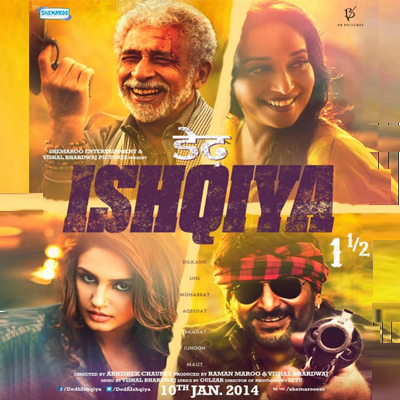
    MUMBAI: Here is another sequel, Dedh Ishqiya, following the 2010 film Ishqiya. The producers and the director remain the same and so do the protagonists, Naseeruddin Shah and Arshad Warsi. They continue to be petty thieves always on the run from a local don, Salman Shahid, and while dodging him; their greed leads them into another complication. The idea is interesting since the story involves a lot of plots, betrayals and backstabbing. The end could have been a shocker but seems to have been compromised in favour of pleasing the Indian moviegoer’s senses as well as to deliver the promise of one more sequel.


    Shah and Arshad have just stolen a costly necklace from a jeweller’s shop. Their ways of carrying out such heists being crude, they are caught in the act and the police are on their back. Shah uses the opportunity to ditch Arshad since the necklace is with him. A livid Arshad is desperately looking for him and while in action in a whorehouse, he learns the whereabouts of his partner-in-crime. He learns that Shah is headed for Mahmudabad to participate in a mushaira organised by the widow Begum of the province. The Begum, Madhuri Dixit, declares that her husband, the Nawab, was a poet and that is why, before he died he made her promise that she will marry again but to a poet. Hence, she has organised the mushaira so that she could anoint the winner as her husband and the Nawab of the province. Shah’s idea is to gatecrash into the contest, win it and become the Nawab and settle for life.


    Shah is at the venue, introduces himself as Nawab of another province and gives looks to Madhuri which make his intentions clear. As the mushaira opens, there are many contestants but Shah impresses. Also impressive is Vijay Raaz, a Nawab from across the river. He will be the villain of the piece for Shah since he has coveted Madhuri forever. Vijay is no poet by any stretch of imagination. What he has done is to kidnap and imprison a reputed poet named Italvi, Manoj Pahwa, who is forced to pen shairis which Vijay goes and mouths at the competition.


    It is day two of the contest and Vijay has excelled in his rendition. Shah chooses to opt for a song instead which will also help him express his feelings for Madhuri; by now, he is in love with her! There is a huge round of applause as he finishes the song, the gathering is unanimous in their appreciation but Shah’s joy vanishes as he spots Arshad eyeing him angrily from the crowd. Being inseparable as they are, both join forces again with a common goal, to clean up the Begum’s treasury. What follows is a three-way war of wits between the duo, Madhuri and her aide and confidante, Huma Qureshi and Vijay Raaz and his goons which is fun in parts.


    What a viewer misses in Dedh Ishqiya is a character like Vidya Balan in the earlier film. While the Shah- Arshad duo is street smart, Madhuri as the Begum with Adab is not a fitting counter. The other drawback is the villain played by Vijay Raaz, he just does not make the league and overacts; as it is mentioned in one of the scenes, he does not have the DNA for the character he plays. The dialogue is chaste Urdu, so much so that the film comes with English sub-titles! What was the need? The film could easily have had simple Urdu dialogue. It is not as if the characters—Shah and Arshad—are real nawabs.


    Abhishek Chaube’s direction is capable. Musically, while some songs may have pleasant tunes; the lyrics are not easy to catch. Cinematography is patchy. The ambience is convincing. Arshad is in his element in a tapori role once again. Shah is good as usual. Madhuri and Huma are okay. Manoj Pahwa, in a brief role, is good.


    Dedh Ishqiya has not had a good opening. The package has failed to create attraction for the compulsive early moviegoer which does not augur well for the coming days.


    Producers: Raman Maru, Vishal Bhardwaj.

    Director: Abhishek Chaube.

    Cast: Madhuri Dixit, Arshad Warsi, Naseeruddin Shah, Huma Qureshi, Vijay Raaz, Manoj Pahwa.


    ‘Yaariyan’: Music Saves the Day


    Yaariyan launches a few new artistes but mainly the film launches Divya Khosla Kumar, wife of T-Series head honcho, Bhushan Kumar, who makes her debut, writes the story, shares the credit for screenplay and, most of all, wields the megaphone. Even as the company has made numerous joint ventures or outsourced projects, with this film it introduces an in-house filmmaker.


    In keeping with the company’s profile, the film is planned as a musical, which caters to contemporary tastes and youth and hence is a film about college students. It provides all the scope to sing, dance, swing and romance. Finally, the ambience is provided by the picturesque locations of Shimla and South Africa. Thereafter, the story is a bit too far-fetched, twisting and turning as and when needed.


    This college is in Sikkim (that is where the story is based notwithstanding the location) where there are all kinds of students except Sikkimmis. The students, as in most such films, come to college as if to a park or a disco; they do everything but study. For most of the first half, the film has no purpose except some supposedly youthful pranks. There is a mandatory bitch, a witch, a plain Jane, a gay character and what have you to complete the clichéd character muster. Not all are relevant. All this makes first half of the film quite testing for the viewer.


    It is time something happened to push the film forward. So the story is finally inserted: This College with multiple facilities was set up by the local royal eons back. The royals have sold off many properties on the campus to an Australian prospect hunter. This deal includes the ladies hostel on the premises which is the biggest loss for the boys in the college! The only way these blocks on the property can be salvaged is by winning a bunch of competitions between the local students and their Australian counterparts. So the college guys and girls go on a trip to Australia which, like many such films from Dirty Dozen to Magnificent Seven, include specialists—a rock climber, a chess player, a racer, a rocker modelled on the Archies. As is the reputation pinned on all Indians by films, they get drunk all night, are not in senses the next day for a contest and lose. Also, given what we know of cricket, Australians are always known to play unfair and in the process, they not only cheat but also kill one of hero’s best friends.


    The team comes back with ashen faces but all is not lost. There is still a return match to be played on Indian soil. Back home, the hero, Himansh Kohli, chasing all kinds of girls, finally finds his true love in the plain Jane, Rakul Preet Singh, as the oiled-hair girl turns into the Thoroughly Modern Millie. The Indian flag flies high as the rivals are made to see practical Indian values.


    While the new actors are okay to passable, direction needs a lot of honing. The hero of the film is its music which has translated into good opening shows for the film which, with its reasonable price tag, should sail through to safety.


    Producers: Bhushan Kumar, Krishan Kumar.

    Director: Divya Khosla Kumar.

    Cast: Himansh Kohli, Dev Sharma, Serah Singh, Rakul Preet Singh, Nicole Faria, Evelyn Sharma, Shreyas Pardi, Gulshan Grover, Deepti Naval, Smita Jaykar, Honey Singh, Arvind Balli.

  • ‘Sholay’ is history!

    ‘Sholay’ is history!

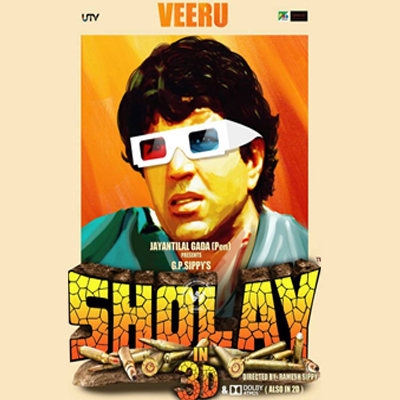
    MUMBAI: There was a time when the trend was to convert old black-and-white classics into colour format and re-release them. The trend did not last for obvious reasons. Converting normal films into 3D started in the US while in India doing so with Sholay will prove to be the ultimate test for Hindi films since it is a trendsetter – box office hit and a cult. If it works, it will open the floodgates of more such attempts and if it does not, it will put paid to all such aspirations. The original was written off during its initial few weeks of its release as a major failure but, finally, its technically better 70mm/stereophonic version turned the trend in its favour to make it what it became, a legend. Will this additional technical enhancement reactivate its box office account?


    To refresh the memories on the story front, Sholay (1975) finds its roots in the all time classic, Akira Kurosawa’s Japanese film, Seven Samurai (1954), which was later adapted in Hollywood as The Magnificent Seven (1960). A farming village in Mexico hires seven gunmen from the US to protect them from a bunch of 40 bandits who raid them every year to take away their farm product. In Sholay, Sanjeev Kumar, an ex-policeman hires two petty goons, Dharmendra and AmitabhBachchan, known for their valour to save his villagers from a similar exploitation by the gang of Gabbar Singh, played by Amjad Khan. Though his first major break and his entry happening almost 75 minutes into the film, his character became a cult figure.


    The film is an old fashioned three-and-a-half-hour-long one since in those days less than three hours made people feel cheated. And the film justifies its duration by giving many side actors of the time memorable roles and lines. Among them were Asrani (Angrezon ke zamane ka jailor), Mak Mohan (Sambha), AK Hangal (the blind Imaam of the village mosque), even Hema Malini’s tonga-pulling mare, Dhanno! The writers, Salim and Javed, who made the story/script writers respectable in the film industry, specialised in penning memorable dialogue and that is the reason that even though the film’s music track was not found to be popular and its albums were not in demand, the music company, Polydor India, minted on the release of the film’s dialogue tracks on LPs and cassettes.


    If slotted, Sholay would fall in the category of dacoit film. Yet it was much different from other dacoit films, blending the past and contemporary movies of that era. The one memorable dacoit film before Sholay was a few years earlier, in 1971 in Mera Gaon Mera Desh followed by Khote Sikkay in 1974; the trend came to an end since no one could better Sholay and also because Sholay stayed in theatres for five long years. While these were all make-believe dacoit films, the real one came around in 1994, Bandit Queen


    How can one review a film made over 38 years ago and had tomes written about it?


    As for this 3D version, it has been very economical with 3D scenes and not gone overboard. The 3D resolution is such that you may easily watch it without 3D glasses but the main 3D scenes would be missed; the few that the film has are not worth missing.


    The opening response in the initial shows has not shown much enthusiasm by moviegoers and, if the trend continues through the weekend, this will be the epitaph for the legend of Sholay.


    Producer: G P Sippy.

    Director: Ramesh Sippy.

    Cast: : Dharmendra, Sanjeev Kumar, Amitabh Bachchan, HemaMalini, Jaya Bhaduri, Amjad Khan, SatyenKappu, AK Hangal, Sachin, Jagdeep, Leela Mishra, Asrani, Keshto Mukherjee, Mak Mohan, VijuKhote, Iftekhar, in spl appearance Helen and Jalal Agha.


    Disaster in making


    Mr Joe B Carvalho collects a bunch of small time actors with a reputation for having done good comedy films once upon a time and thinks it has the formula! How about getting a scriptwriter with a sense of comedy, humour, repartees and how about a director who shares these traits too? The so called comic actors can do precious little without content. The imagination is so scarce, that in this film based in Bangaluru, all the characters happen to be Punjabi!


    The film has no story as such so to narrate it is a task but, to put it in nutshell, like many such attempts it is about mistaken identities and a career loser, Arshad Warsi, who plays a detective. Now, how many times have we seen a fumbling, bumbling, detective before? Remembering Pink Panther at this moment will be sacrilege (though the poster design has certainly stolen from there).


    Warsi, a detective, is handed a case by Shakti Kapoor, who wants to stop his daughter from marrying a cook with whom she has run away. On the other hand, Snehal Dabi, an Idi Amin caricature, has fallen in love with Geeta Basra while she loves some diamond merchant. So being Idi Amin-like, he gives out a supari (contract) on her beau to Carlos aka Javed Jaffery; may the real legendary international assassin Carlos rest in peace!


    The comedy as well as the humour is just about nonexistent in this film. Casting is totally awry. The film credits four people for lyrics but not a single song makes sense (and they’re out of sync too). Arshad, Soha, Javed as well as the others are ineffective.


    Mr Joe B Karvalho is a disaster waiting to happen soon as opens on its first Friday.


    Producer: Bholaram Malviya, Shital Malviya.

    Director: Samir Tewari.

    Cast: : Arshad Warsi, Soha Ali Khan, Jaaved Jaaferi, Vijay Raaz, Shakti Kapoor, Vrajesh Hirjee, Geeta Basra, Karishma Kotak, Ranjeet, Himani Shivpuri, Manoj Joshi, Snehal Dabi, Chitra Shenoy.


  • Aamir vs Aamir

    Aamir vs Aamir

    MUMBAI: Dhoom 3 proves to be a good sequel, for once. Unlike many films that simply use the name and brand, it actually carries on the characters from previous movies. Once again, Abhishek Bachchan and Uday Chopra, two Mumbai cops are chasing after a villain, this time as a team sent to Chicago Police to solve a case of bank robberies. The reason being that the thief leaves a message in Hindi and it is assumed that he has to be an Indian.

    Dhoom 3 starts off by setting a tempo for the fast-paced thriller that it promises to be with Uday and Abhishek demonstrating their fighting instincts and coordination as they take on a local basti don in Mumbai. As the action moves to Chicago, it is Aamir’s turn to show his mastery with his bike. In fact, Aamir’s arsenal of gears and gadgets would give James Bond a complex!

    Aamir’s story dates back 25 years to when his father, Jackie Shroff, ran The Great Indian Circus in Chicago. The circus had not been doing too well and the local bank owner threatened to attach the circus if Shroff didn’t not manage to pay off his dues within five days; Shroff devised a new circus act which he was sure would revive his circus and pleads for a little more time. When refused, Shroff kills himself. Aamir is now grown up and ready to take revenge for his father’s death, which he calls murder. His plan is to ruin the bank, force its closure. He robs the bank’s branches one after the other. His style is that when he robs a bank, he throws a part of his loot on streets outside the bank and watches people pounce on this rain of dollars. The bank is losing reputation as well as standing in the stock market.

    What makes these heists exciting is their aftermath as Aamir charts his escape in a long chase by the police with his multipurpose bike. In fact, he is techno savvy and all his robberies and escapes are executed with the help of many gadgets. It is time to get Abhishek and Uday in on the scene. It is also the time for Aamir to revive The Great Indian Circus and to get the glamour quotient on the scene. Katrina Kaif is trying to get a break into the circus but dressed like a geek, she does not impress Aamir’s assistant who keeps rejecting her. Aamir agrees to give her five minutes to prove her talent and sees a geek turn out to be a glamour doll.

    Producer: Aditya Chopra.
    Director: Vijay Krishna Acharya.
    Cast: : Aamir Khan, Katrina Kaif, Abhishek Bachchan, Uday Chopra, Jackie Shroff.

    Having opened up the other side of the story, that of the circus and its background, it is time to spring a surprise on the viewer; there are two Aamirs. The other one is always in the background because he suffers from autism, due to which faces communication problems and has strange mannerisms. That is the circus’s secret behind their most famous trick where Aamir enters a wooden box on stage but emerges from some other corner of the hall. (This seems lifted straight from The Prestige, which tells a similar story about a magician.)

    As Abhishek and Uday try to solve the jigsaw puzzle, they spy on Aamir and follow the closet Aamir on his once a week Sunday outing. Abhishek makes sure he drives a rift between the brothers. Sadly, these plots make Abhishek look more like a villain than a supporting actor! These manoeuvres also make the proceedings very slow and insipid especially after the racy first half had set the pace. As the Aamir brothers embark on the last leg of their ‘destroy the bank’ operation, there is one more chase before the film ends by springing another surprise.

    Being third in the Dhoom trilogy, some may make comparisons and feel that story/script wise D2 was better; however, this film is much more ambitious, lavishly shot and full of special effects. It has good music that is very well choreographed and the film is a visual delight. With other characters being insignificant, the film is Aamir vs Aamir talent showcase as he gets to juxtapose two totally different characters in the same frame most of the time. He is simply amazing. Katrina Kaif is the other character who gets some importance in this film and she does very well while also excelling in dance numbers. Abhishek gets no scope while Uday is the joker in the pack. Direction is competent and handling of double roles is apt. Technically the film is very good.

    Dhoom 3 is set to shatter collection records and create some of its own new records. Expectations were high from the trade and especially the exhibitors and it will live up to them.

  • It was a gamble, okay!

    It was a gamble, okay!

    MUMBAI: Jackpot is the name of the floating casino in Goa as well as the five crore jackpot at stake one big night. The motto of any gambling house is that ‘The House Always Wins’ which is to say a player may sometimes win some money but, eventually at the end of the day the house is the winner. The film also stresses on the principle in which case it is hard to understand why the casino is bent on gifting a five crore jackpot to any gambler? And when one talks of big time jackpot, what is five crore when even a TV show like Kaun Banega Crorepati offers more than that?

    Naseeruddin Shah is a residual hippie in Goa who sports some odd colour long hair of the kind Indian sadhus do. He owns the casino Jackpot. Sunny Leone works for his casino and has a five-year stint as the manager of a Las Vegas casino to boast of. She may work with Shah but sleeps with Sachiin Joshi, a drifter who leads an idle Goa life; his major talent is tricks with playing cards. He is a cardsharp. Tired of his idle life, Sachiin gets an itch to make some easy money and since easy money is not really easy to make, he plans a con on Jackpot. From the look of it, everybody is planning one, Sunny as well as Shah. The idea is to outwit the rest.

    So far so good but this is all you manage to gather in this film as it goes into its last few minutes and the characters themselves volunteer to tell you what it was all about. One consolation is that the film is only 92 minutes long.

    Producer: Raina Sachiin Joshi.
    Director: Kaizad Gustad.
    Cast: : Naseeruddin Shah, Sachiin Joshi, Sunny Leone, Makrand Deshpande.

    Just about everything in the plot is juvenile. Shah owns a casino worth crores where huge sums exchange hands while the casino is the only assured winner but he can’t raise five crores for a plot of land that is on offer. That he should want to deal with a street-side lad like Sachin at all whatever the bait makes no sense either. The film has been spread over 10 segments with each having its own title and the narration keeps jumping from present to flashback adding to the confusion.

    There is nothing much to performances as Shah only makes loud gestures for acting, Leone is not even in the  film for her acting skills. Sachiin tries not to act which is wise. Direction is poor. Musically, one song, Kabhi jo badal barse…is good.

    The word Jackpot has no antonym but that is what this film would be if there was one

  • ‘Gandi baat’, badly told

    ‘Gandi baat’, badly told

    MUMBAI: Can one say, ‘A love story is a love story’? One cannot; how the story is told makes all the difference. Mughal E Azam, Barsaat, Aradhana, Dilwale Dulhaniya Le Jayenge, Kabhie Kabhie and Hum Aapke Hain Koun..!, among others, were all love stories but each was memorable for its own reasons.


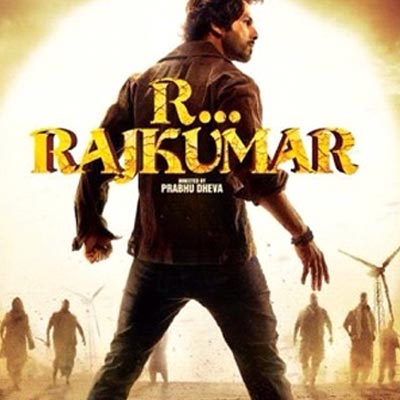
    At the opposite end of the spectrum is the recent crop of South Indian-style formula love stories that have been raiding the box office of late. R… Rajkumar is one of them. It is a mindless action film in the guise of a love story, and not a very good action film at that. The villain loses his credibility too many times in a period of two hours 26 minutes to be of any interest by the time the climax comes about. The villain’s superiority, ego and power are all finished long before the final fight; all that remains is finishing him physically. And the film, already bankrupt of ideas, devotes 20-25 minutes just to that. It seems never-ending.


    Producer: Sunil Lulla, Viki Rajani.
    Director: Prabhu Dheva.
    Cast: : Shahid Kapoor, Sonakshi Sinha, Sonu Sood, Ashish Vidyarthi, Mukul Dev, Asrani, Srihari, Poonam Jhawer; Charrmy Kaur and Ragini Dwivedi (both in special appearance in songs).

    Earlier named Rambo Rajkumar and later forced to withdraw Rambo from its title, it settled for a suggestive R….. Rajkumar which is explained in the film as Romeo Rajkumar; after all, the Romeo, Shahid Kapoor, falls for Sonakshi Sinha at first sight. He has dropped in to an unfamiliar town in midst of two warring groups exchanging bullets. Sonakshi is caught in this crossfire and he stretches his arm to ward off bullets aimed at her, in the process showing off his tattoo to her. (No, the tattoo does not materialise into any Manmohan Desai kind lost and found story.)


    Shahid loves to poke his nose into others’ business. Ashish Vidyarthi’s goons plan to kidnap truck carrying opium belonging to Sonu Sood. Shahid saves it and earns an entry into Sood’s gang. Shahid can tackle 100 goons singlehandedly, the goons being very sporting as they tend to be in all South Indian action choreography. They always attack one after the other, each waiting his turn. Sood is thoroughly impressed and Shahid is promoted to his right hand man, displacing Mukul Dev who is also a sport and, instead of hating Shahid, makes him his best friend. Shahid’s reason for staying around in the town is probably Sonakshi as he has fallen head over heels for her.


    Soon, Shahid has a competitor. Sood sees Sonakshi and is besotted by her. She turns out to be the orphan niece of Sonu’s enemy, Vidyarthi, but so what? They decide to bury the hatchet and become rishtedaars. Challenges are thrown and a fight sequence is in place when Shahid leaves the scene. He could have taken Sonakshi along at that very moment but he avoided doing that for the sake of taking the film into the second half and eventually to its never-ending climax. No sense ending a film at interval stage.


    In the absence of anything worthwhile, the second half is whiled away with songs, some action and some cell phone romance besides unsuccessfully attempting some Himmatwala, Mawali kind of funny sequences with Asrani, Poonam Jhawar, Vidyarthi etc.


    Prabhu Dheva is handicapped as this time he is directing an original and not a remake; he is totally at sea! The film has one item number which is popular with masses in Gandi baat… The background score is eardrum shattering cacophony. The editing department seems to have been passed over. Action is routine South brand where the hero is superhuman. Besides, every action sequence has been stretched as if to make up for the lack of content. Shahid does a tapori role he is not cut out for. Just growing stubble does not make one a tapori. Sonakshi is too large for the frame. She is unimpressive in all that is expected of her. Sood is routine while Vidyarthi, Srihari, Asrani and Poonam Jhawer pass muster. Mukul Dev makes his presence felt.


    R…. Rajkumar has nothing to offer to multiplex audience and, may be, three days’ worth to single screens before it ends its reign.


    Sweet 60

    Producer: Kavee Kumar.
    Director: Sanjay Tripathy.
    Cast: : Farooq Sheikh, Sarika, Raghubir Yadav, Satish Shah,Sharat Saxena, Tinnu Anand, Vineet Kumar, Suhasini Mulay, Zareena Wahab, Himani Shivpuri, Viju Khote, Harsh Chhaya, Mona Wasu.

    When a personal tragedy is juxtaposed with comedy, when underlying emotion in every person’s life is camouflaged with vibrant humour and still a maker comes out with an entertainer, the concept is the hero. Such is the confidence in the script that the cast is made up of half a dozen veteran 60-plus actors; in fact, casting is the mainstay of the film. Club 60 is one of those films which come as a breeze of fresh air. It joins the category of Vicky Donour, OMG Oh My God, Dirty Picture, Kahaani and Special 26 as a rare gem. In short, it is not just another run-of-the-mill movie.


    Farooq Shaikh, a neurosurgeon of repute in Pune and his wife, Sarika, also a doctor, are in depression and mourning having lost their only son in a shootout in a cinema hall in the US where he went to study further. To leave their son’s memories behind, the couple has moved in to the very flat they had bought for their son’s future use in Mumbai after folding up their medical practices in Pune. While Shaikh is totally shattered and even tries to commit suicide once by slashing his wrist, Sarika contains her pain and loss within herself and tries to be a support to Shaikh. While Sarika joins a local hospital to keep her mind from the tragedy, Shaikh refuses to divert his attention and prefers to wallow in his sorrows. Then, a few days into his Mumbai life, there comes in his life a storm called Raghubir Yadav.


    Yadav lives in the same building, a floor above Shaikh. He dresses in t-shirts bearing suggestive messages, branded sunglasses, half-cargoes and Nike shoes. He is a gaudy, loudmouthed, overenthusiastic Gujarati who believes in living his life to the fullest but also forcing it on to others. After as short ride in the lift with Yadav, Shaikh has had enough of him. He decides to keep Yadav at arm’s length and also advises Sarika to do the same. But Yadav is not easily contained. He soon invades the Shaikh household, force-lands on breakfast table and invites the couple to join Club 60. While Yadav irritates Shaikh, Sarika finds him quite amusing and does not totally reject him.


    Yadav wants Shaikh to come look up the club and with little help from Sarika, he manages to do so. Yadav manages to involve Shaikh in his club along with four other friends, Sharat Saxena, Satish Shah, Tinnu Anand and Vineet Kumar, who are as boisterous as Yadav. At the club, their life revolves around a tennis court where they play little, abuse and fight each other more and finally settle down for their favourite finale, breakfast followed by a fight over who pays! Everything they do is like any group of boys in teens would be doing. Shaikh is a witness to all this camaraderie but aloof.


    Within a generally well-thought-out script, there are two scenes, both involving Sarika that stand out for being thought provoking. One is her talk with Shaikh’s psychiatrist, Harsh Chhaya and another with Shaikh, both of which are better seen on screen. The scene with Shaikh changes his attitude, turning him from a loser to a positive man. As Shaikh comes closer to the five people in the 60 plus group, he learns that he was not the only one to have lost someone close to him. All five around him had a sad story to tell which they hid behind their boisterous bravado and loud demeanour. They did not indulge in self pity like Shaikh did.


    Sanjay Tripathi has written and directed this film, his debut. He has excelled on both counts. Despite dealing with two shades, tragedy and comedy, the film’s dialogue is effectively relevant. The songs, composed by Pranit Gedham, besides being well penned, take one back to the melodious 80s. Background score is effective. Performance wise, Sarika tops with Shaikh and Yadav (who could have been a little less loud) also do very well. The other four, Saxena, Shah, Anand and Kumar give a natural account of themselves. Suhasini Mulay, Zareena Wahab, Himani Shivpuri, Viju Khote, Harsh Chhaya and Mona Wasu are fair in support.


    Club 60 is a small budget film with still smaller budget for promotion. Its hopes rest on word-of-mouth, failing which the business will sadly go to pirated discs because, the film is an entertainer with human story and the word is bound to spread eventually.

  • …bites the bullet

    …bites the bullet

    MUMBAI: The tendency of filmmakers from the North and other Hindi speaking regions is to opt for a subject with a local flavour typical to their home turf. Tigmanshu Dhulia does just that. In Bullett Raja he creates an oft-seen UP drama about guns and goons and politician puppeteers. This is the region where either the other person is your enemy or he is a prospective backstabber. Like in all such films, the educated youth is unable to find jobs so they take to guns and join the underworld.  Not long ago, such films fitted in a slot described as B Grade films, and also enjoyed the patronage of masses; the gentry were usually oblivious of such fare. What worked for such films was that their budgets were sensible. Now when big bucks are spent, the cast and promotion had better guarantee an initial to secure the investment and guard a lot of reputations.

    Saif is Raja Mishra, a Brahmin from Lucknow looking for a decent job when he gets into trouble with a bunch of goons. He fights his way through while on the run. He spots a baraat and blends in with the crowd, landing up at Sharat Saxena’s house where he meets and befriends Jimmy Shergill. The occasion is Saxena’s daughter’s wedding, an excuse for the performance of something like a mujra performed by Mahie Gill, through which Shergill and Saif clink glasses of alcohol and strengthening their friendship further. 

    Producer: Rahul Mittra, Nitin Tej Ahuja, Tigmanshu Dhulia.
    Director: Tagmanshu Dhulia.
    Cast: : Saif Ali Khan, SonakshiSinha, Vidyut Jamwal,
    Jimmy Sheirgill, Gulshan Grover, Raj Babbar, Mahie
    Gill (sp App), Chunky Pandey, Ravi Kissen, Vishwajeet Pradhan,
    Sharat Saxena, Vipin Sharma.

    Mahie Gill notices Saif ogling her and is game for a fling. As the pair move towards the woods for some privacy, Saif eavesdrops on a conspiracy to raid the Saxena house by surprise and kill everybody present. The conspirer is Chunky Pandey, who has been brought up by Saxena as one of his own. He has now joined Saxena’s rival, Vishwajeet Pradhan.

    Saif feels he owes allegiance to the Saxena household and to Shergill for the shelter he got there. He rushes to alert them. The Saxena clan is ready for the gunfight; Saif and Shergill form a formidable team as they shoot one raider after the other while also covering each other. The fight gets over and Saxena is impressed by the duo’s heroics and Saif’s in particular since he had nothing to do with the family. Saxena asks them to join his gang where he will be rewarded well as against a job outside. Their desires to stay within law and find a job notwithstanding, both finally give in and take to guns for Saxena. They take refuge in jail while things blow over, where they meet a very influential prisoner, Vipin Sharma, who is always on one of his multiple cell phones.He is a fixer and wheeler-dealer for local politicians, Raj Babbar being a prime one.

    Babbar is the most powerful politician in the region and on Vipin’s suggestion he takes Saif and Shergill under his wing. Now they shoot for him. Babbar asks them to attend a fundraising pre-election conference headed by Gulshan Grover, who is described as Kuber, the Lord of Wealth. The duo rubs Grover the wrong way and he in turn insults and humiliates them. The pair decide to take revenge. They barge into a hotel room where Grover has planned a casting couch session for a film he is financing. The aspirant is Sonakshi Sinha who is offering to kiss Grover on the cheek because that is as far as she will go when the duo arrive. They kidnap Grover and later release him for five crore rupees.

    A bit late in the film but it is time for some romantic light moments between Saif and Sonakshi. Luckily, both take no time to say ‘I Love You’ to each other with Gill as a bystander. In celebration, they fly to Mumbai, sing a song and return to base and back to business. A very angry Grover is waiting for them as he wants revenge for what they did to him. Grover has also sought the services of Ravi Kissen, a sharpshooter who can shoot somebody dead from 100 yards. They catch Shergill alone with Sonakshi in the house. It is time for Shergill to die so that Saif can justify the title Bullett Raja as well as find the motive to wipe out all enemies. The second half is left to Saif to carry on his shoulders.

    But Saif can’t carry on a film that has no story, only people planning and plotting against others. To liven up things, Vidyut Jamwal is introduced in the story. Jamwal has already proved his prowess in martial arts with his earlier outing on the big screen and here, in measured doses, it is fun to watch him in action. He and Saif also plan and plot but only for the sake of creating an opening for the sequel!

    UP-Bihar background with totally local issues and flavour don’t appeal. Even an interesting film like Sehar had not worked. They offer nothing novel in their local bahubalis and gun wielding goons. Bullett Raja lacks romance, emotion, music and drama. It becomes monotonous as somebody or the other is trigger happy at all times. If this was Dhulia’s idea of a full-fledged commercial film, he is about half a century behind. The trick now is to cater to a mixed audience of multiplexes, single screen, overseas and satellite. If first two are drawn, a film is safe and rest is assured. Dhulia’s creative touch is missing here. Music fails to prop up the film. Photography is good. The film can be trimmed a little. Despite so many enmities, the dialogue is uninspiring; real fights are provoked by cutting edge dialogue and keep the audience along. The film was somewhat interesting till Saif and Shergill operate as a pair but loses steam thereafter except when Jamwal makes an entry.

    Saif looks very un-UP like but he does okay. Shergill brightens up the goings on while he is around. Jamwal is good in a brief role. While Babbar, Grover, Saxena, Pradhan and Ravi Kisan stay true to their respective images, Pandey is a misfit. Vipin Sharma is sincere as ever. Sonakshi Sinha is ready to burst at seams and contributes nothing to the film.

    Bullet Raja has had a weak opening, failing to manage a draw even at single screens. It faces poor prospects at the box office.

  • Entry deadline for Effies extended

    Entry deadline for Effies extended

    MUMBAI: The Ad Club that is known for honouring the best in the advertising and allied industries with awards like the Emvies; the Abby Awards and the Effies, announced today that the deadline of case submission for Effies, to be held on 15 January, 2014 at Royal Western Turf Club, Mumbai has been extended to Monday, 2 December.


    A letter sent out by the Effie 2013 committee chairperson Ajay Kakar, mentioned that the decision has been taken because of numerous requests towards the end of last week to extend the Effie 2013 case submission deadline.


    The case studies are to be submitted at the Adclub Secretariat before 5:30 pm.


    Effies are the global benchmark in measuring and recognising marketing communications work. As per cent of the jury in India comprises of well known and senior marketing professionals, and the rest coming from leading communications agencies, work that wins at the Effies also becomes a benchmark in their minds. It stands a good chance to become a part of marketing and conversations all over India, and increasingly outside too.

  • Single screen saab

    Single screen saab

    MUMBAI: Anil Sharma’s Singh Saab The Great may as well have been a Punjabi film: much of the dialogue and songs are in Punjabi. This follows a week after Sanjay Leela Bhansali’s almost-Gujarati Ram-Leela, which had dialogue with Gujarati blend and just about every song and background songs taken from Gujarati folk music. If this is these makers’ idea of being different, they are succeeding only in limiting their audience. As for the rest, Sharma tries to cash in on Sunny Deol’s “dhai kilo haath” which now, with time, weighs three and half kilos, which he uses to take on hundreds of goons let loose on him by the villain, Prakash Raj. It is a simple story: Sunny is an honest government servant and Prakash Raj is a despotic evil man. Take it or leave it.

    Sunny Deol is a Sikh gentleman who descends on village after village and town after town to cleanse them of villains, corruption and other such evils. But one day a journalist, Amrita Rao, barges into his office and starts accusing him of hiding from the law in the guise of a Sardar without having completed his 18 year jail sentence, which he was given along with five of his colleagues. That is the cue; you know a flashback is coming. So Sunny, who usually flares up with fury at the slightest provocation, goes soft on this TV reporter and decides to tell her all.

    Sunny is the usual oft-transferred collector who is posted to a town where Prakash’s writ runs large, unchallenged. Because like all such bad men of recent era, he controls enough MLAs and MPs to topple the local government! However, Sunny turns out to be a tough ‘un-government-servant’ kind of guy. While he is dispatching Prakash off with disdain, the latter dares to threaten to harm his sister, meriting a resounding slap from Sunny. That is reason enough for Prakash not to use his clout and get Sunny transferred of town but to let him be and use his guile to harm him and his family on a regular basis. Guile is something Sunny’s brawn is no match for.

    Producer: Anuj Sharma, Sangeeta Ahir.
    Director: Anil Sharma.
    Cast: Sunny Deol, Amrita Rao, Urvashi Rautela, Prakash Raj, Shahbaz Khan, Johny Lever, Sanjay Mishra, Manoj Pahwa, Yashpal Sharma.

    The problem is that the fear of the villain vanishes in the very first encounter between the two, when Sunny slaps him. Whatever a writer or director does to resurrect his villainous nature after that does not help: he can have hundreds of his goons kill women or harass them to teach Sunny a lesson but he does not seem threatening. A villain has to be built till the end, preferably larger than the hero so that as much as the hero, even the viewer wants him punished! But if a maker has not learnt that in over three decades in filmmaking, it is too late.

    The film is a poorly conceived and executed and any claims (though it may read so in the titles) to story, screenplay and direction are not substantiated. Just filling up frames with crowds does not make an extravaganza. And what is with all the Punjabi dialogue and music? Who are they catering to—even Punjabi films have come of age and rate much better than Singh Saab The Great.(Not to mention they cost much less.) Music, even if Punjabi, is routine. Editing and photography both look uninspired. Action has been seen alike in many South remakes recently.

    Sunny Deol plays himself, the character he has been playing since his debut; mostly looking angry and trading punches. Amrita Rao’s fascination for the widower Sunny is rather too cliché. Urvashi Rautela as a many years younger wife leaves no mark. Prakash Raj matches Sunny in his consistency at villainy since his Hindi debut; the least he could do is vary his expressions.

    Singh Saab The Great, is an old fashioned mass film with appeal for single screen patrons with its best prospects being in the North.

  • Maara maari chumma chati

    Maara maari chumma chati

    MUMBAI: For Ram-Leela that changed overnight to Goliyon Ki Rasleela: Ram Leela, Sanjay Leela Bhansali takes his inspiration from Shakespeare’s Romeo And Juliet and sets it up in the background of Kutch region in Gujarat. This gives the director an opportunity to add all the colour he wishes to the film which has always been his desire.


    To depict the warring families, the film borrows from the story of the real life lady don of Saurashtra, Santokben Jadeja (whose life was portrayed on screen by Shabana Azmi in Vinay Shukla’s 1999 film Godmother), played here by Supriya Pathak Kapoor, which accounts for the head of one family don. On the other hand, we have Homi Wadia from stage leading his clan which basically consists of shepherds. While the Jadejas are Rajputs and are known to wield swords and carry guns, Rabaris don’t carry weapons except for the occasional sickle tied to a pole to cut tree leaves for the herd. The town folks, supposedly from historical town of Anjar, are shown to have only two options all day: shoot bullets or drink booze. In short, this is not how things happen in Gujarat (or even Bihar or UP for that matter) and is all just the filmmaker’s imagination.

    Producer: Sanjay Leela Bhansali, Kishore Lulla.
    Director: Sanjay Leela Bhansali.
    Cast: Ranveer Singh, Deepika Padukone, Supriya Pathak Kapoor, Richa Chadda, Gulshan Devaiah, Abhimanyu Shekhar Singh, Homi Wadia, Raza Murad and an item song by Priyanka Chopra.


    This town is occupied by two warring factions, Saneda (Jadeja) and Rajadi (Rabari), whose enmity goes back 500 years. The men as well as women on both sides carry arms and are always game for a shootout. Traditionally, both sides avoid stepping into the other’s area because when they do, there is always bloodshed. However, there is macho hero, Ranveer Singh, who seems to have been through all the girls on his side of town and decides to venture out into the enemy zone. It is Holi and easy to hide behind the colours. Once there, he and Deepika Padukone spot each other; it is not love at first sight but rather lust at first sight! Thereafter, both are inseparable, at least physically. They love to cling to each other and the name of their kind of love is called smooch and neck.


    The pair is very bold about their romance and it is not long before it becomes obvious to the girl’s brother and mother, Supriya. It is time to arrange a quick fix wedding for Deepika with an NRI of her own community. The plan is to keep him as ghar jamaai. After all, Supriya is a don and even NRIs have to be scared of her. It is these kinds of things that take the film out of the hands of its makers as they go on adding up as the film moves into its second half.


    Howsoever they may lust for each other, they won’t celebrate honeymoon till they tie the knot.  So they decide to elope to some temple town, get married and check into a lodge to consummate their marriage. So far so good but the fodder for the second half has to be created and thus Ranveer is betrayed by his own friends and Deepika’s people catch up with them.


    Post interval, the romance is over and so are the light moments. Instead there is some forced melodrama which is not interesting. The story is now about people betraying their own respective dons. Gulshan Devaiah wants to become the don instead of Supriya but when she is down with a bullet wound she appoints Deepika in her place. Why, in that case, did Devaiah bring Deepika back? By now the film is all about creating situations for crowd scenes to fill the small bylanes of the location and, hence, the screen. The ending is on expected lines but the approaches to that is rather long winding and tedious as there are only crowds on the screen with no one knowing who is on whose side!


    Bhansali has been able to make the film colourful, keep the first half light, full of songs, inspired choreography and comic moments with a generous dose of dialogue that is double meaning at times and just vulgar at others. Bhansali also takes the credit for the music score in the film. However, almost all songs are set to the tunes of Gujarati folk songs but with richer orchestration and have mainly sectional appeal. Songs are too loud to say much about the lyrics. Locations are interesting and the cinematography enhances their effect. The film loses pace in the second half, which needed to be trimmed heavily.


    Deepika is excellent in light as well as emotional scenes while Ranveer has been constant since his first film. The only change here is he has grown muscles instead of expressions. Supriya is at her natural best with Richa Chadda holding her own.


    Goliyon Ki Rasleela: Ram-Leela has healthy opening response with the best being in Western India and weak spots being single screens, especially in the Hindi belt. (The collections improved after Sachin Tendulkar, playing his 200th and last test in Mumbai, got out.) The film will have varied outcomes in different circuits yet generally satisfactory.

  • Satya 2: An insult to the original

    Satya 2: An insult to the original

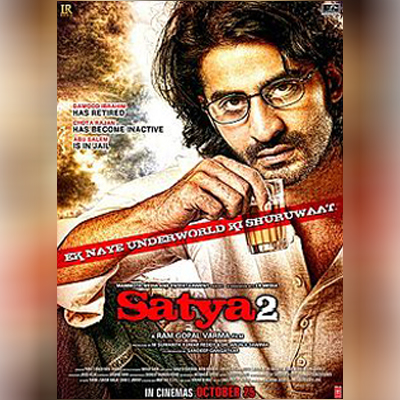
    MUMBAI: Since long people have been expecting anything worthy from a Ram Gopal Varma film; they come and go. How badly Varma has lagged behind in the art of filmmaking is finally proved by Varma himself with Satya 2. In that, the comparison with his original Satya from 1998 becomes inevitable and besides showing the degeneration of its maker, Satya 2 is also an insult to the earlier one. The cheap intent to use the title tells of a desire to lure the people despite this film having nothing to qualify as a sequel.

    Producer: M Sumanth Kumar Reddy.
    Director: Ram Gopal Varma.
    Cast: Puneet Singh Ratn, Anaika Soti, Sharvanand, Mahesh Thakur, Mrunal Jain.


    The story – for whatever it is – is a kind of sci-fi of the crime world. Puneet Singh, the hero of the film, walks into Mumbai with dreams of giving the city’s underworld a new identity. To turn it into an organisation with precision; this organisation is called Company! The qualifications of Puneet are in his get up. He dresses like a middle rung executive and sports specs to complete the effect. His speciality is that he takes the mistakes committed by his peers, the dons of yore, as his lessons to stay ahead of rivals as well as authorities.


    Puneet decides to make his presence felt with three murders of city’s top names; an industrialist, a media tycoon and the police commissioner. The crimes take the cops by surprise but they have no clue who perpetuates them. They have no clue of the arrival of a new don.


    Puneet may be a calculated don but he surely has a romantic side to him. He has a sweetheart in Anaika Soti and, like any young man who decides to settle down after launching his career; Puneet too decides to marry his girlfriend so that they could sing a song in Kashmir. Sadly, even that does not bring a relief from the tedium that has been set by the proceedings.


    Ram Gopal Varma seems to be counting on luck factor now. Just make a film and hope it works! Sadly, with this kind of an all-round mediocrity in his film how can luck smile? He had better diversify from the underworld theme because it has been done to death and the underworld is presently dormant. And, what is not in news generates no interest. He tries props such as photography and background. However, his efforts to experiment with camera are disturbing to ones’ senses and the sudden bursts of background music are jarring. The performance of his actors is mediocre to bad. Puneet makes no impact. Anaika has little to do. The film lacks in interesting characters which could inspire an actor.

    Satya 2 has nothing going for it.