Category: Reviews

  • ‘Kill/Dil’… Will too

    ‘Kill/Dil’… Will too

    MUMBAI: The stories of orphan children turning into juvenile delinquents who then graduate to hard core criminals have become rather commonplace. One of YRF’s own recent films, Gunday, is one such example. Here is another.

    Govinda, a don of some sort whose main business is to accept supari killing contracts, finds two tiny tots in a garbage bin. The boys grow up into Ranveer Singh and Ali Zafar. The boys get into petty crimes as soon as they learn to stand on their two feet. They are invincible. Nobody ever catches them or hits back. Soon they also become bullet proof as they take to guns becoming Govinda’s main shooters. 

    When they are not shooting down people out of the blue, they also have lot of fun. After all, they have never let Govinda down and he, on his part, has been generous with them. And, between the assignments they have nothing to do except spend that money. 

    Their home is Delhi and soon the Delhi culture brings them, especially Singh, face to face with his future romance, Parineeti Chopra. At this pub, the duo of Zafar and Singh are guzzling their alcohol when on the dance floor, someone makes a pass at Parineeti who in turn tells him off. The lad pulls a gun on Parineeti giving Singh a chance to save her and drive the villain off. 


    Producer: Aditya Chopra.

    Director: Shaad Ali.

    Cast: Ranveer Singh, Ali Zafar, Parineeti Chopra, Govinda.

    Romance blossoms between Singh and Parineeti, which Singh knows Govinda won’t approve of. To add to that, for the first time ever, Singh fails to shoot a person he has been assigned to eliminate. While Govinda is livid, Singh’s conscience has caught up with him. He wants to change his ways and lead an honest life to be worthy of Parineeti. For her part, Parineeti has herself given up a career where she could have made enough money to instead take up the challenge of helping ex-convicts settle into a normal life away from crime. He even starts selling insurance policies. Unaware of Singh’s background, this is one more criminal she is helping turn honest. 

    When Govinda is sure Singh is now out of his control, he plays a double game. He asks one of his men to kill Singh while he warns Zafar what is about to happen and also tells Parineeti how she will soon know what Singh’s past is.

    Having found out about Singh, Parineeti now does not want anything to do with him. On his part, Govinda’s purpose has been served as Singh returns to the fold and is ready for his next assignment. But, with Parineeti on his mind, Singh draws his gun but does not manage to fire, giving his victim the chance to shoot at him and receiving a bullet in his back for his efforts. 

    However, not having got a chance to tell his story to Parineeti, Singh has made a disc of his life story and sent it to Parineeti who sobs as she watches it and wants Singh back. 

    Kill/Dil has a weak plot and shoddy script which starts bad and goes on deteriorating as it progresses. By the second half, it is a mess. Direction is lacklustre. Musically, this 127-minute film is crowded with nine songs, probably to make up for lack of content. Photography is not up to the mark. Performance wise, Govinda is good while Zafar is passable. Singh looks funny in his clean-shaven look sans moustache; there is nothing different about his acting from other films. Parineeti’s role is ill-defined.

    Kill/Dil, trying to be a thriller, a romance, and a comedy and fails to deliver on all fronts.

  • Shaukeens …Not for a film shaukeen

    Shaukeens …Not for a film shaukeen

    Shaukeens is inspired from the 1982 film, Basu Chatterjee’s successful film Shaukeen, starring Ashok Kumar, Utpal Dutt and A K Hangal. They are replaced here by Anupam Kher, Annu Kapoor and Piyush Mishra. The original had Mithun Chakraborty and Rati Agnihotri as romantic attractions. Their replacements here are Akshay Kumar and Lisa Haydon. Shaukeen was remade in Telugu as Prema Pichollu with Chiranjeevi and others in 1983.

    Producers: Murad Khetani, Ashwin Varde.
    Director: Abhishek Sharma.
    Cast: Anupam Kher, Annu Kapoor, Piyush Mishra, Lisa Haydon, Rati Agnihotri and in cameos Abhishek Bachchan, Kareena Kapoor, Dimple Kapadia, Suniel Shetty and, in a special appearance, Akshay Kumar.

    The actual theme, though with a different ending and with the approach of a thriller rather than a comedy was The Fan Club, a 1974 novel by Irving Wallace, made into a film the same year. Here an actress is kidnapped by a few men. In Shaukeen and Shaukeens, three old men, referred to in India as thirkee/lecherous men, bored with their daily routine, embark on a holiday with the express purpose of finding some sex.
    Kher, Kapoor and Mishra are deprived of sex for different reasons. Kher’s wife has turned full time religious and sex is taboo for her; Mishra’s wife is dead while Kapoor could not marry the woman he loved and, hence, has no sex life. Best they get is to ogle at young girls at morning exercise groups. This proves to be even more frustrating even as their attempts independent of each other fail.
    Having had enough, Kapoor comes up with an idea. Since they are well known in Delhi where they are based, they decide to land up in Bangkok. But the very mention of Bangkok is opposed by the two men with families, Kher and Mishra, as whatever the reason, Bangkok in the family and friends circle would create talks. They decide on Mauritius where they learn Akshay Kumar is slated to shoot his next film.

    They are lucky to get a house to themselves in Mauritius as the owner, Lisa Haydon, has decided to rent it out while she is away. The trio’s first night out at a club is a failure. But, to their surprise there is Lisa sleeping in the lawn; her programme got cancelled at the last minute.

    Haydon is a bindass, carefree girl and a self-proclaimed designer who makes a pendant out of a frog’s eye and glares for Akshay from her nails! Her carefree attitude is taken by the three men as an open invitation. They put their efforts into scoring with Haydon, collectively as well as individually.

    While these three are chasing Haydon, Akshay Kumar is in Mauritius for a film shoot. Haydon is a big fan of Akshay and she proposes that whoever of the three takes her to meet Akshay will get whatever he asks for from her. Kher manages first followed by Kapoor by which time has had enough of her.

    Mishra’s attempt is the last straw. A drunk Akshay (he is a closet alcoholic) is on stage at an Indian community event, bursts out in anger.

    Sadly, Shaukeens is a poorly adapted version of the original. Nothing about it looks natural: the way they behave or the way they try to court Haydon. The comedy is either absent or banal, making one laugh at the attempts to create comedy instead of the comedy itself. Direction is routine and lacking imagination. Music is poor. Not a very long film, but even at 135 minutes it offers much scope for further editing. Performance wise, while Kher and Mishra are routine, Kapoor is a little better. So much so that Akshay Kumar emerges the best of the male cast. Haydon is a wrong choice.

    Shaukeens fails to entertain. Having opened to poor response, it faces tough time ahead.

    Rang Rasiya ……Of colours and women shapes

    Producer: Deepa Sahi, Anand Mahendroo.
    Director: Ketan Mehta.
    Cast: Randeep Hooda, Nandana Sen, Paresh Rawal.


    Rang Rasiya is based on the life of the renowned Indian artist and painter of the 19th Century, Raja Ravi Varma, who went on to become a legend. Born in Kerala, Varma was a painter trained in the basics of art followed by water painting and then oil painting by three different masters. He was driven out of his native Kerala by the local ruler for adding the prefix Raja to his name. But he was backed by the ruler of Mysore, who was also his patron, and his paintings adorn the Mysore Palace till date.

    The film version is an adaptation of a novel, Raja Ravi Varma, written by Ranjit Desai. It is a novel and not a life account of Varma and, hence, the film too has a commercial film-like approach. And, it turns out to be more about women and romances in Varma’s life and that is what is expected to attract the moviegoer. After, all painting and painters find their followers at art galleries not in cinema halls.
    Lying in cans since 2008 for want of censor clearance, the film was screened at various film festivals. It has only now finally got an Indian release. Married with five children, Varma, played by Randeep Hooda, has a glad eye for pretty women and admired their bodies; he was an eternal lover. His sexual encounters with women would be dream sequences, otherwise, for a common man. A flirt who uses women for his artistic inspiration as well as for what they are. Finally comes a woman, Nandana Sen, who he soon becomes passionate about.
    Not taking Varma seriously, she eventually becomes his model and lover. He has found a new inspiration only to be vehemently opposed by the self-styled custodians of culture and traditions. From being dragged to court to being blamed for the plague epidemic in Mumbai, he faces it all.

    Varma takes his art and admiration for the female further as he gives faces and form to Hindu gods and goddesses and paints their pictures, and sets up his own lithographic printing press to print and distribute these pictures free of cost to lakhs of people including those not allowed into temples. He provides a God/Goddess to every home. His one admirable act was to financially help the father of Indian cinema, Dada Saheb Phalke with his first film project.

    Ketan Mehta is a fine and sensitive director but here his priorities seem mixed up between depicting the life of one of the most renowned artist and his sex life. Rather than romance, the film and characters seem to thrive on lust. Hooda looks too hard faced to depict Varma. Girls are just okay.

    Biopics are not a very popular genre even about our recent heroes while this one is about one from a long past few can identify with, making the film a commercial liability.


  • ‘Super Nani’…From Nani’s era!

    ‘Super Nani’…From Nani’s era!

    MUMBAI: Indra Kumar, lately known for his crass comedies, this time tries an old fashioned family drama, a typical tear jerker about a suppressed woman who is taken for granted and generally insulted by her husband, son, daughter and daughter-in-law. The film is adapted from the Gujarati play, Baa Ae Mari Boundary (Mom Hits A Boundary).

    Rekha is told by her husband, Randhir Kapoor that her place is in the kitchen. He treats her just like a servant. According to him, the only contribution by his wife Rekha in his life was that she produced three children for him. Following his example, even her daughter, son and daughter-in-law treat her the same way. She has no place in their lives except to cook and serve them meals.

    Rekha is an ardent devotee of Lord Krishna and a regular at the local temple where she keeps making deals with God, like if God made sure Kapoor gets the best CEO award she would visit the temple to thank the God. Her son keeps making losses in the stock market. As a solution, she wants him to tie a sacred thread on his wrist and she also takes it upon herself to fast on his behalf, a ritual suggested by the temple priest.


    Producers: Indra Kumar, Ashok Thakeria.

    Director: Indra Kumar.

    Cast: Rekha, Sharman Joshi, Shweta Kumar, Randhir Kapoor, Anupam Kher, Rajesh Kumar

    All this religious stuff and her suggestions are totally unwelcome for all her family members. Her only sympathiser in her house is her servant who competes with Rekha in shedding tears every time she is humiliated. She prays to God to end her misery somehow. The servant’s plea is soon answered as her grandson, Sharman Josh, arrives from the US. Joshi adores Rekha and sees how badly she is treated by his nana and others in the house. He can’t tolerate his nani being treated the way she is. After all, she is educated, a Kathak exponent and though she may look washed out now, she was a pretty woman as Joshi remembers her from his childhood days spent with her.

    Joshi wants to change things for Rekha and decides that she can still be made to look as pretty as she was. Always with a camera around his neck, Joshi does a photo session with her making her dance to some of the old classic numbers from Shri 420, Mughal E Azam etc. While he sends copies to an ad agency managed by Anupam Kher, he also decides to blow up the pictures to display them in the family garden to surprise the family members.

    The display does not surprise the family members the way Joshi had planned. They are all livid and Kapoor asks his son, Rajesh Kumar, to burn the pictures.

    Anupam Kher, on his part, is impressed with Rekha’s pictures and turns up at her house with a contract for her for modelling. Kher also turns out to be Rekha’s childhood buddy. Kapoor as well as rest of her family wants her to reject the contract but, finally, Rekha rebels. She accepts the offer and is an overnight success.

    The family is handicapped without Rekha to run the household. But for Rekha, it is now time to turn her wayward family members around using her resources and the emotional connection with Joshi by her side thinking up ideas for her. Joshi is also romancing Rekha’s neighbour, Shweta Kumar (Daughter of producer- director, Indra Kumar).

    The problem with Super Nani is that while as a stage play it has to cater to a limited audience in a particular language, a film has to carry universal appeal. And, to top that, the story is too old fashioned for today’s generation as well as predictable as Rekha wins her family over one by one. The film also has limited face value. Direction is passable. Musically the film has one good song to offer in Maheroo Maheroo… and using a medley of old songs for Rekha’s photo shoot makes one conscious how deficient today’s music is. Rekha looks pretty as ever but not much fun to watch shedding tears all throughout. Joshi is good as her aide. Rest of the cast is okay with limited scope.

    Super Nani has had a poor opening and may find some patronage only from ladies audience.


    ‘Roar: Tigers Of The Sunderbans’….Visual pleasure


    Producer: Abis Rizvi.

    Director: Kamal Sadanah.

    Cast: Abhinav Shukla, Himarsha Venkatsamy, Achint Kaur, Subrat Dutta, Nora Fatehi, Ali Quli Mirza, Aadil Chahal, Varinder Singh Ghuman, Aaran Chaudhary, Pranay Dixit, Pulkit Jawahar.

    Roar is one of those rare films on wildlife India makers. Some producers in the south did venture into films involving animals but those were emotional dramas with animals acting as best friends of human master. Producer MM Chinappa Devar specialised in such films with Haathi Mere  Saathi, Gaai Aur Gauri etc. There have been other such films too like K C Bokadia’s Teri Meherbaniyan. Roar follows earlier films like Kal and Forest.

    Roar is about seven youngsters descending on Sunderbans, the famous Tiger Reserve in West Bengal which is known to have white tigers.

    These seven include trained commandoes and they are here in Sunderbans with a mission to kill a man-eater white tiger which had killed the brother of one of them. However, being a commando is not enough to face a man eater tiger, which they realise soon. Instead of them killing the tiger, they become its target.

    The film uses a lot of special effects and blends shots of Sunderbans with parts shot with trained tigers brought in from abroad. The film is directed by actor turned director, Kamal Sadanah whose direction as well as enthusiasm about the film is laudable.

  • Happy New Year:  Fast forward please!

    Happy New Year: Fast forward please!

    MUMBAI: When Farah Khan makes a film, she does not carry with her the burden of logic or justification. This is a caper movie and since caper movies can’t be very different from each other, the film has to count on its ensemble cast and how the film is scripted and treated. On this count, the star cast cannot help much.


    Shah Rukh Khan does odd jobs,including street fights, for a living. He has an axe to grind with Jackie Shroff who is a big shot in Dubai. His desire for revenge is overwhelming. Shah Rukh’s father, Anupam Kher, was an honest man who specialised in making the world’s most secure safe vaults. He had made one such rare safe for Jackie Shroff who rents it out for safekeeping of diamonds worth crores. The safe opens with a combination of a password and thumb print.


    Since Kher made the safe, only his thumb impression and password worked on the safe. He wants Jackie to change it but instead Jackie drugs him and steals diamonds worth crores. Kher is framed, jailed and later commits suicide. It has been eight years since and Shah Rukh is waiting for a chance to get even.


    Shah Rukh soon gets a chance to reach not only Dubai but the very hotel where Jackie operates from and where his safe is located. There is a world dance competition in Dubai in the same hotel and it is scheduled during the same period as diamonds worth Rs 300 crore will be kept in the safe while in transit.


    Now, Shah Rukh needs to build a team. He gets two people, Sonu Sood and Boman Irani, in his own backyard. They both worked for Kher. Boman is an expert on safes. He finds world’s best hacker in Vivaan Shah and Abhishek Bachchan is the lookalike of Jackie’s son on whose thumb impression now the safe opens. Having found experts in the fields he needs, Shah Rukh now has one problem. None of these five can dance to save their lives and they have to win two local rounds before they qualify to represent India.


    For this, they find Deepika Padukone, a bar dancer who agrees to teach them dancing. The required glamour quotient is in. Their dancing does not improve but while VIvaan hacks the online voting for the team, the judges, Vishal Dadlani and Anurag Kashyap, are blackmailed into voting for them and they qualify. However, being chosen does not change the public opinion looking at the welcome they get in Dubai with eggs and rotten tomatoes.


    There are minor hitches but finally the day arrives when they commit the heist; it is also the day when the dance final is due.


    As mentioned, how different can one caper film be different from another? Not much. Hence one looks forward to what follows. The disappointment starts as soon as you see the censor certificate stating the running time of the film as 179 minutes 50 seconds (this is after eight minute deletion a few days before release). Then, as Shah Rukh goes about building his team, he takes almost one hour. The characters of Boman, Sonu, Vivaan and Abhishek are introduced with demonstrations of how their talents will help towards carrying out the heist. Deepika enters after one hour into the film. Almost all sequences are stretched: Sonu’s fight in the beginning and Shah Rukh’s rooftop fight for instance, feel never-ending.


    The film counts on comedy and humour to entertain but save for few occasions, comedy and humour both are childish. The romance is one-sided for almost entire length of the film. The film has three songs with appeal, of which ‘Indiawale…..’ has been overplayed but still liked as it comes at the end as a victory song. Photography is good. Heavy editing was needed. There is not much scope for histrionics. Shah Rukh gets the best lines and most footage and his usual self. However, he is surrounded taller and stronger guys around except Vivaan and that does not please the eye. Deepika has to dance and moisten her eyes on regular basis, which is it. Boman Irani is wasted. Vivaan has a pleasant look with a smiling face and acts well too. It is Abhishek who justifies the funny lines he gets, some good and some PJs. Jackie is fine.


    Happy New Year is at an advantage being a solo Diwali release while, on the other hand, it is also at disadvantage because of its length which makes only four shows a day possible. Looking at the response, it will have to make the most of the holiday weekend.


    Producer: Gauri Khan.


    Director: Farah Khan.


    Cast: Shah Rukh Khan, Deepika Padukone, Abhishek Bachchan, Jackie Shroff, Boman Irani, Sonu Sood. Also in special appearances: Dino Morea, Prabhu Deva, Malaika Arora Khan, Anurag Kashyap, Vishal Dadlani, Sajid Khan, Anupam Kher.

  • ‘Sonali Cable’… Stuck in time

    ‘Sonali Cable’… Stuck in time

    Sonali Cable must have been an idea in the mind of its writer-director, Charudutt Acharya, for a long time. Finally, he gets to realize it. Why is it an old thought? Because, cable turf wars are a story of the late 20th century. Providing cable connections was a totally money-and-muscle-wielding business when it started. There was nothing legal about it because there was no control. It just flourished.

    Cable was a way to watch various TV channels and infringing on other cable operators’ turf was the norm. It led to gang wars, murders and all such things that happen in other turf wars; after all, it was all about taking over a territory. But, Sonali Cable talks of a later stage. The stage when cable service was not limited to TV channels but also started providing internet connectivity.

    The story of Sonali Cable is a two-way fight between a multinational powerful company, Shining, owned by Anupam Kher, who wants to control all of Mumbai’s net connectivity which, according to him, will make whole of Mumbai vulnerable to him!! (There have been weirder ideas!) He has bought over all small time operators catering to few thousand connections and Mumbai is all his except for this one small time network provider, Sonali  (Rhea Chakraborty); her 3,000 connections stop him from controlling the entire city. For the convenience of the script, the national service provider, MTNL, is done away with, and so are other poor contenders owned by private companies. It is all about Kher, who walks in like East India Company, and takes over the net connectivity in the business capital of India.

    Then there are the emotional angles. Kher’s mother brought him up supplying khakhras in some Saurashtra village. Today, he swears by a khakhra but has no scruples otherwise. The film waits a long while for Sonali to get her own back. Which, by the way, totally ruins the latter half of the film. The shortcomings and liberties notwithstanding, the film loses the plot post-interval.

    Kher takes over Mumbai: just about every product is his, and just about every politician is owned by him. But this is the computer era as well as spy camera era. So, like all recent films where the villain ends up blabbering in front of a hidden camera, Kher complies too!

    The problem with this film is that the makers, and especially the writer, take the audience for granted. Can anybody monopolise Mumbai? Especially its net connectivity? While some ideas are good, some are farfetched. Also, the film has a Mumbai-Marathi flavour and a generous use of local slang words, which will not be understood by everyone. The film has some good songs. Direction shows promise given a better script (which is also by the director here).

    The story revolves around Rhea, a slum bred independent girl running her cable network with an opportunist politician, Smita Jaykar, whose son, Ali Fazal, is Rhea’s childhood love. Rhea does well except when using Marathi slang. Ali Fazal is getting better with each film. Raghav Juyal is a natural. Anupam Kher does one of his quirky characters with élan. Jaykar does well.

    Sonali Cable is out of tune with time and, otherwise too, goes haywire in the second half. Faces poor prospects.


    Producers: Ramesh Sippy, Rohan Sippy.


    Director: Charudutt Acharya.


    Cast: Rhea Chakraborty, Ali Fazal, Raghav Juyal, Anupam Kher, Smita Jaykar, Swanand Kirkire.

  • Ekkees Topon Ki Salaami…20 guns too many

    Ekkees Topon Ki Salaami…20 guns too many

    Selling honesty as a theme is a tough proposal. It is considered boring and not as readily acceptable as corruption is. Ekkees Topon Ki Salaami juxtaposes one honest man who never wavered despite temptations and desperations, against a totally sold-out system including the local CM. How that honest man, in whom even his sons don’t have faith, finally gets his way is an interesting idea.


    Anupam Kher works for the Mumbai municipal department’s malaria control wing, setting out every day with his fogging machine diligently to do his job. His two sons, Divyendu Sharma and Manu Rishi, are totally wayward. Sharma, the dominant of the two, does hatchet jobs for the local CM and is the star of the local political branch (shakha).


    Divyendu holds a degree of influence over the CM, Rajesh Sharma. When he gets hurt at a pro-CM rally, the CM foots his five-star hospital bill. Divyendu’s hotline in the CM’s house is his girlfriend, Aditi Sharma. She is the trustworthy aide of the CM.


    There is a scandal breaking out against the CM; he is reported to have gifted a Rs 12 crore worth bungalow on sea-facing, government land to his concubine, Neha Dhupia. The news is all over and Neha has no scruples using it to gain mileage for herself. While she is busy telling the media the inside story, the CM is ashamed that he is in news for a meagre Rs 12 crore scam when anything below Rs 1000 crore is considered petty cash!


    Meanwhile, it is D day for Kher. He is due for retirement and goes to the office beaming for a golden handshake, a certificate and a box of sweets. Instead, what he gets is a humiliating discharge sans retirement benefits. His fault, the day before, the last day of his duty, was that he did not surrender his fog machine officially. He is accused of stealing it and selling it to cheat the municipality.


    Kher is humiliated and devastated, and on his deathbed as a result of the shame, but his son’s only care to scavenge on whatever little his dead bones have to offer. They want his pension and they want to inherit the municipality-allotted room. They want him to sign a letter asking for a pardon for stealing the fogging machine so his benefits are restored. Kher would sign that pardon letter on one condition; his sons should send him off with a 21-canon salute.


    Divyendu has sworn to fulfil his father’s last wish not knowing how!


    However, he sees a ray of hope. The CM’s sexual excitement with Neha has given him his third, final fatal heart attack. He is declared dead. Having died in office, he will get a state funeral along with a 21 canon salute.


    By this time, the sons have realised that if anybody deserved a 21 canon salute, it is Kher and not the CM. Since there is no way Kher can get that honour, things will have to be managed to make Kher take the CM’s place.


    This was a good idea, but, it consumes a lengthy second half and goes into too much detailing and emotional overload. By the time it happens the viewer is not emotionally connected, just relieved.


    The film has spoilt its bright idea by taking too long over it. The director has an eye for detail but no control over content and needed a better editor. Dialogue is funny at times and bland at others. Divyendu is impressive. Manu Rishi is a natural. Aditi is very good. Rajesh Sharma is good as always, a seasoned actor that he is. Neha is effective in a brief role. Kher plays the signature role he started off with in Saaranash. Uttara Baokar and Sudhir Pandey are fine.


    Ekkees Topon Ki Salaami would have been watchable had the approach had been on a lighter note towards its goal.


    Producers: Anurradha Prasad and Abhinav Shukla.


    Director: Ravindra Gautam.


    Cast: Divyendu Sharma, Neha Dhupia, Anupam Kher, Manu Rishi, Aditi Sharma, Rajesh Sharma, Uttara Baokar, Sudhit Pandey, Aashif Sheikh.


    Spark Is missing


    They just don’t work, these films about UP-Bihar local feudal gang lords-cum-politicians. After all, UP has one such gang lord in each village. It is the same old story: The more gun-wielding goons you have on your muster, the bigger your don-ness. Focusing on just one such gang makes things extra monotonous so Spark has some ex-loyalists from the same gang rising to form their own. Nothing you have not seen before; nothing that you have approved either.


    It starts like a 1970s film as some shotgun brandishing guys barge in to a haveli and shoot down two women and a man. However, because of an alert victim, a small child is hidden in a closet. He survives and makes this story into an unending saga.


    Rajneesh Duggal, like all other heroes, is a popular member of his college excelling at everything from dramatics to debates. During rehearsal, with the college lacking female talent, the college invites Shubhashree Ganguly. Both get acquainted but Duggal’s time in India has ended.


    Duggal gets into an altercation with the nephew of the biggest bahubali of the region, Ashutosh Rana, who, like in all such films and like all such bahubali types, literally runs the local governments, granting of contracts and so on. Duggal is bashed up by Rana. Ranjeet has brought up the orphan Duggal and loves him like his son. He decides to dispatch Duggal off to Germany to keep him away from trouble.


    As things would have it, Duggal spots Shubsharee in Germany; it is time to resume the romance because there won’t be time for that once the film moves into action mode.


    Back home, the villains have realised that the family they set out to kill 20 years back has one survivor, Duggal. However, they don’t know who he is, what he looks like and where is he. Only Ranjeet can reveal that.


    Govind Namdeo, an ex-henchman of Rana has branched out with his own ambition to be the next leader. He knows he can use Duggal against Rana by revealing to him that he is the one who ordered his family killed 20 years back.


    What follows are a lot of revelations you don’t really care to know, followed by too many back-stabbings. Finally it is time for the showdown where the hero deals with hundreds of gun-toting and sword-swishing goons, leaving him and Rana to fight it out alone.


    A very poor concept which is out of sync with any era, with direction to match. Duggal is okay while Shubshashree has a pleasant demeanour. Ranjeet supports well. Rana, Namdeo, Manoj Joshi are the loud villains performing more through decibels than acting. The musical score offers a few pleasant numbers. Some parts have been shot in Germany but it is no help.


    Spark is a poor film.


    Producer: Naresh Gupta.


    Director: V K Singh.


    Cast: Rajnees Duggal, Shubhashree Ganguly, Ashutosh Rana, Govind Namdeo, Manoj Joshi, Rati Agnihotri, Ranjeet.

  • Bang Bang…. Just half a bang for your money..

    Bang Bang…. Just half a bang for your money..

    MUMBAI: Don’t try to relate the title with what is going in the film. It’s a film about a man on a mission and being a Hindi film there has to be a pretty woman accompanying him so that they can fit in some song and dance routine.


    Hrithik Roshan’s assignment is to steal the Kohinoor diamond from under the nose of the British authorities. The word spreads and Danny Denzongpa and Pawan Arora, who were planning to steal it too, find out about his mission. They think since now it is with Hrithik, it would be easier for them to lay their hands on the diamond.


    But the job is not as easy as Danny thought it would be. After all, Hrithik is an ex-army man and proficient in Kung Fu as well as gunfighting. Besides, he is an ace swimmer and knows every stunt in the book and then some more. As usual, Danny’s goons chase him in dozens on roads as well as in the sea. Hrithik finishes them all.


    Katrina Kaif, Hrithik’s companion, has no alternative but to stay with Hrithik because the villains have seen her with him and may use her as a bait to lure him.


    Hrithik was serving in Kargil when his brother, Jimmy Shergill, was killed by Danny. He leaves the army to join the Indian secret service. He knows Danny’s informers are in the service. The story of Kohinoor is concocted with the help of British secret service, MI6. That way Danny would come to find Hrithik rather than the other way around.


    But, Danny, who makes an appearance in the beginning, vanishes until much later leaving the task of finishing Hrithik to his goons. Pawan Arora is also involved and plants a device to see where Katrina meets Hrithik. That turns out to be exactly what Hrithik wanted. When the cops arrive with Pawan and his goons, Hrithik, though shot, escapes after leaving the diamond on the spot. Katrina is kidnapped and Danny is livid because the Kohinoor he got from her is a fake.


    Hrithik traces Katrina to Danny’s den. He has come equipped with enough material to blow up Danny’s palace.  Danny escapes to felicitate a final chase, first on road and later in water when Danny is escaping in a sea plane. Hrithik fells the sea plane with harpoon shots. The plane is on fire. Hrithik enters to save the handcuffed Karina and leaves Danny to die the same way he killed Shergill.


    There is nothing about the film one has not watched in recent past. In fact, it can be called a bad version of Ek Tha Tiger. There is not much happening in the first half. Second half is aboutchases and gun fights. The script is weak. Direction is passable. Cinematography is good. Couple of songs have appeal. Hrithik and Katrina make an attractive pair. It is nice to see Danny and Pawan after some time. 


    Producer: Fox Star Studios.

    Direction: Siddharth Anand.

    Cast: Hrithink Roshan, Katrina Kaif, Danny Denzongpa, Pawan Arora, Jaaved Jaffrey, Jimmy Shergil, Dipti Naval, Kanwaljit Singh.


    Haider …. RIP Shakespeare!

    Vishal Bhardwaj is a man who sources his films from Shakespeare. For him, it works well because there is no copyright and no price to pay and he can pretend to be intellectual. Sadly, his intellectualism costs crores to unqualified corporate houses, that want to be in the film business. In Haider, Bhardwaj adapts Shakespeare’s Hamlet. To say that he does no justice to the original and road rolls it would be an understatement.


    It is hard to call when the last film that was based on a regional problem worked at the box office. Haider is about a family’s Kashmir problem—and yet it has nothing to do with Kashmir. It is in fact about a family feud, sex, disloyalty and incest. It is a film with little by way of script. Haider takes all sorts of liberties, twists the script to its convenience and, in the process, and makes a joke of its writer, director and actors.


    Terrorism is the rule of the land in Kashmir and the young Haider, Shahid Kapur, is already embroiled in it when his mother, Tabu, discovers a pistol in his school bag, a way to show that Shahid has been initiated into terrorism. That too without a cause or a reason—those follow only much later when his father, whom he adores, is killed for being an accomplice of terrorists.


    That moment comes when Shahid returns from studies in Aligarh. He finds his family devastated: his father has been killed and he realises that his mother has been sleeping with his Chahcha who actually got his father killed.


    But instead of taking out his anger on his mother or uncle, he conveniently becomes a terrorist. In this cock and bull story, if you are angry with your mother, you take it out on your motherland, dig? Because Shahid’s mother, Tabu, sleeps around with his uncle, Kay Kay Menon, he becomes a terrorist only to kill them. No matter that terrorism means killing your own countrymen.


    Sadly, nowhere does the film match Indian sensibilities. The script is such a chalta-hai kind it changes tone with every scene. It takes the viewer to be a total moron. The Indian army has been shown in bad light throughout. The Kashmiris are shown in bad light with no sense of their priorities.


    With this kind of a story, the actors have little to work with. Shahid is totally at loss with whatever he is doing. Most of the time, he is made to act like a lunatic. Shraddha Kapoor appears at the whim and fancy of the director. Tabu’s character is ill-defined. That you don’t know if she is in love or is a nymphomaniac; she even kisses her son on the lips. As for Tabu and Menon’s relationship, it is still not okay with the Indian audience especially since he keeps referring to her as ‘Bhbhijaan’.


    As for the script, Haider is poor; its adaptation of Hamlet is pathetic. There is no direction worth its name. The musical score is poor. Editing does not exist. The background score is monotonous. Dialogue, for a Shakespeare drama, is a let-down.


    Haider is a big let-down commercially.


    Producers: Vishal Bhardwaj, UTV Motion Pictures.

    Director: Vishal Bhardwaj.

    Cast: Tabu, Shahid Kapoor, Shraddha Kapoor, Kay Kay Menon, Irrfan Khan, Narednra Jha, Aamir Bashir. 

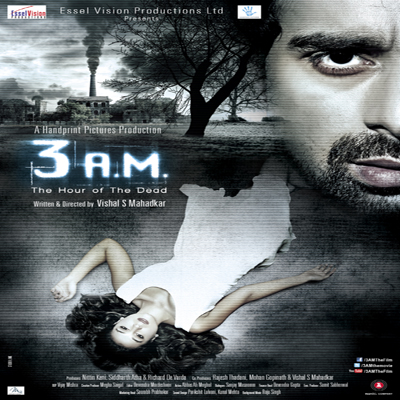
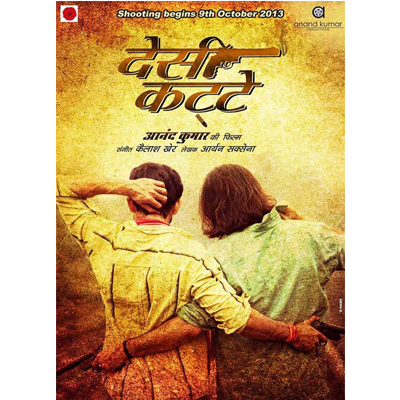
  • Both ‘3 AM’ and ‘Desi Kattey’ fail at box office

    Both ‘3 AM’ and ‘Desi Kattey’ fail at box office

    MUMBAI: There were a number of inconsequential releases last Friday most failing to find any patronage. Of these, 3 AM drew some footfall at multiplexes while Desi Kattey managed to pull some viewers at single screens in the Hindi belt.


    Balwinder Singh Famous Ho Gaya, despite starring two popular singers, Shaan and Mika, was poor. All three remained in limited range of lakhs, much short of the crore mark.


    Daawat-e-Ishq opened weak but picked up over the weekend. However, the weekdays’ collections were not strong and the film ended its first week with a figure of Rs 20.46 crore. The film added another Rs 3.46 crore for its second weekend taking its 10 day total to Rs 23.92 crore.


    Khoobsurat which had a lukewarm opening did not improve over the week to end its first week with Rs 16.45 crore.


    While Finding Fanny collected Rs 3.55 crore in its second week to take its two week total to Rs 27.05 crore, Creature 3-D managed to add just about a crore in its second week to take its two week total to Rs 17.8 crore.


    Mary Kom collected Rs 2.4 crore in its third week to take its three week tally to Rs 55.75 crore. 

  • Desi Kattey …..Make in India!

    Desi Kattey …..Make in India!

    MUMBAI: Desi Kattey is yet another film with local Uttar Pradesh flavour with which rest of the country does not usually identify. Again, the film makes one think that UP is the biggest small-scale industry for manufacturing what is locally referred to as ‘kattey’, or a crudely made single-shot gun. The theme is familiar from several other films seen over the decades. But, in an effort to be different, the makers open many tracks and lose the plot.


    In the city of Kanpur in Uttar Pradesh, two young lads who should be playing with slingshots wield kattas instead. They think nothing of using a katta, for they are full of anger with the society and their hunger. Such boys need more than a katta and bullets; they need political support to strengthen their standing while politicians need such boys to do their dirty work. Both complement each other. Ashutosh Rana is the local bahubali aka heavyweight referred to by his followers as Judge. The boys worship him and dream of reaching his position someday.


    The boys, Jay Bhanushali and Akhil Kapur, have grown up to be expert shooters and eventually graduate to joining Rana’s unit; Rana is due to fight an election soon. As in all such cliques, there are a few who are envious of these new boys’ sudden rise. Rana wins the election but a situation is created whereby they can’t meet him.


    This is most how UP-Bihar katta stories go, but here the makers want to not only continue with the great friendship saga  while trying to extract emotional and melodramatic scenes from non-performers, but also give a purpose to the film by channelling their talent with guns to get them glory of the legit kind.


    Suniel Shetty, a disgraced army major, spots the talent of Jay and Akhil and decides that instead of wasting it on killing people, they could be trained professionals and win shooting contests instead. Even as the two are being trained, they come across Rana again who beckons them to return to the fold. Time for a dramatic moment as it is also the time for an interval. Akhil decides to go back with Rana while Jay, who has also found his lady love in Shetty’s sister, Sasha Agha, does not.


    The first half was tolerable purely due to force of habit having done so often enough. But the pace drops in the second half. Post interval, as Jay works on his shooting practice, Akhil perfects his shooting on Rana’s rivals. In between, having no enemies of his own to kill, Rana turns Akhil to social service asking him to wipe out all the evil-doers, including a land-mafioso, a pimp, a drug peddler and so on! What was this diversion for from the film’s routine?


    The separated friends pine for each other and sob all the time which creates unintended comedy. And, to think that both have found their lady love. Akhil’s being Tia Bajpai who, in another clichéd moment, is killed just when she announces her pregnancy.


    Desi Kattey is a badly scripted film trying to cram in too much and stretching itself to about 2.45 hours with a weak face value and limited talent. Direction below par and, again, clichéd. Musical score by Kailash Kher is the plus in this film with hummable tracks. Other aspects are routine. Of the two boys, Jay does better while Akhil just passes muster. Girls make little impression. Shetty is okay. Rana is fairly good.


    Poor at box office.


    Producer: Anand Kumar.


    Director: Anand Kumar.


    Cast: Suniel Shetty, Jay Bhanushali, Akhil Kapur, Tia Bajpai, Sasha Agha, Ashutosh Rana, Murli Sharma.


     3 A.M. … Not worth staying up for


    Horror genre being economical and can even work with new faces mainly on the strength of content and technology, it has been catching up in Hindi industry. As for content, there are a lot of ‘inspirations’ all around the world cinema. And, so are film titles can be sourced from other industries; this one for instance, comes from a Thailand film, 3 A.M.


    Rannvijay Singh along with his girlfriend, Anindita Nayar and friends, Kavin Dave and Sahil Acharya are on a night out celebrating. Rannvijay proposes to Anindita. That done, Anindita, a journalist, moves on to research on her article on haunted places of Mumbai.


    Rannvijay is fast asleep when he hears a woman’s wail and wakes up. It is 3am. He sees his girlfriend sitting in a dark corner sobbing. Rannvijay tries to reach out to her but can neither move nor speak. Finally, when he can, he tries to contact Anindita whose phone is not reachable. But, Rannvijay gets a call from her father instead informing him that Anindita was found hanging at the Rudra Mills where she had gone earlier in the night for her research.


    Rannvijay, a nonbeliever in ghosts and afterlife, however, had a weird experience earlier. Anindita had come to him to apologise for leaving him and that she would always love him. He, along with his friends, decides to carry on the research on ghosts at the mill hoping that his girlfriend has turned into one too and he would be able to meet her.  In the process, you keep watching some mix and match from other horror/ ghost movies.


    There is nothing much to the story that can thrill you. Direction is passable sans highlights. Visual effects are good at times. Background score is loud. The three friends are on a ghost hunting mission or fun trip is something that one wonders. Rannvijay does fair while Anindita has a brief role. Kavin and Sahil are okay.


    3 A.M. has no hope at the box office whatsoever.


    Producers: Handprint Pictures, Essel Vision.


    Director: Vishal Mahadkar.


    Cast: Rannvijay Singh, Anindita Nayar, Salil Acharya, Kavin Dave. 

  • ‘Finding Fanny’…Some fun some yawn

    ‘Finding Fanny’…Some fun some yawn

    MUMBAI: Once in a while we get these zany films with no head or tail. It is usually a local story. Also, in most cases, it is related to characters of a minority community which are easy to caricature with no protest expected. This is a road movie taking you on a sightseeing tour of the countryside of Goa.

    Finding Fanny is Parsi director Homi Adajania’s take on small Goan village Catholic families. This is a small community where their preferences, hates, love and likes are limited to each other. So are their petty politics vis-a-vis families.

    Deepika Padukone who lives in the village is an orphan loved by two men, Arjun Kapoor and Ranveer Singh who are also close friends. While Arjun plays shy, Ranveer steals a march by asking Deepika to marry him. She does but at his wedding he is so excited, he grabs a big helping of the wedding cake and gulps it down not realizing that he is also gulping down the usual decorated plastic bride and groom dolls placed on the cake. He dies of choking within 15 minutes of his wedding vows. Deepika, an instant widow, spends her life with Ranveer’s mother, Dimple Kapadia.

    This is a village where there is a post office but no mail is ever sent or received. The post master, Naseeruddin Shah, is always in lost memories of his childhood love, Fanny, to whom he could never propose face-to-face. The letter he once wrote to her returns undelivered after 46 years! Best he can do is sob aloud whenever he thinks of her.

    Producer:  Dinesh Vijan.

    Director: Homi Adajania.

    Cast: Deepika Padukone, Arjun Kapoor, Naseeruddin Shah, Pankaj Kapur, Dimple Kapadia, Anand Tiwari, Anjali Patil, Ranveer Singh (cameo).

    The village scene has two new entrants, Pankaj Kapur, an internationally renowned artist, and Arjun Kapoor, a guy who was said to have made it big in Mumbai after Deepika decided to marry Ranveer instead of him.

    They all decide to go find Fanny for Shah in Kapur’s old car which Arjun fixes up. It is Deepika’s idea because she is fond of Shah. Arjun agrees because he still fancies Deepika. Kapur agrees because he has a glad eye for Dimple. The gang of five sets out to find Fanny. The rest of the film is about trying to create funny situations or dialogue which does not happen as often as one hopes. However, the film makes up with fun quotient in the last 20 minutes or so.

    There is no solid plot as the story is one line: finding fanny. The director’s enthusiasm with the theme comes alive only later in the film. The end is on expected lines but fun. The film has veterans like Shah and Kapur who along with Arjun and Dimple do well but the film’s mainstay is Deepika. And Goa locales are always a pleasure to watch.

    Finding Fanny will find its appreciation in select cities at elite location multiplexes.


    ‘Creature 3-D’…never-ending!


    We have been watching run of the mill horror films since the days of Ramsay Brothers era. Many others have followed suit. But now international films get regular exposure in India and one is not competing with the local makers; it is time to match the international horror genre.

    Hollywood films have various justification for an invasion by an extra-terrestrial being; it could be from an outer planet or a scientific experiment gone wrong or just a creation of a revenge-seeking man. Here, in Creature 3D, the makers justify the creature by creating a new myth about it.

    Bipasha Basu has lost her mother early but has a gem of a father and both dote on each other. Her father has a lucrative job due to which he keeps maintaining a bungalow he has inherited in South Mumbai. No, they are not in Mumbai but somewhere in North. Soon, there is a powerful builder after him who wants to buy out his South Mumbai bungalow and use the plot to build a mall. The father’s continued resistance leads to him losing his job. The frustration and feeling that follows and he commits suicide.

    Sad though she may be, Bipasha does exactly what her father sacrificed his life resisting. She sells the bungalow in question to the same villains who were the cause of her father’s death and, with the monies so realised, buys a boutique forest lodge somewhere in Himachal. Her dad keeps coming in her imagination but never asks her why she gave up what he lost his life saving.

    The forest lodge is inaugurated on a Christmas Eve and nothing seems to work out as her supplies don’t reach her in time, the oven in her hotel is useless and her Christmas night band is late. However, the hero, Imran Abbas Naqvi, as heroes do in all films, comes to her rescue. She mistakes him for singer first and later for another guest booked at her lodge who does not show up. He has come on a mission at this lodge which remains unexplained until the end but, instead, falls in love with Bipasha at first glance!

    The Indian audience, probably, does not buy the idea of invaders from outer space. So here we have a local mumbo jumbo for the presence of this creature. This creature is a soul cursed by God Brahma and hence called Brahma-Rakshasa because he did evil deeds while being in an honourable position of a priest or some such thing! He is the second of his kind, the earlier one having been killed by 23 bullets from a single load ancient gun purified by some holy water.  

    Producers: Bhushan Kumar, Kishan Kumar.

    Director: Vikram Bhatt.

    Cast: Bipasha Basu, Imran Abbas Naqvi, Mukul Dev.


    The more recent Brahma-Rakshasa was content living on a peepal tree secured by red threads. The creature was let loose when, one fine day, a labourer decided to cut that peepal tree. Now the creature is angry and starts attacking people. It eats them up almost in entirety, maybe leaving a small part or a limb behind for curious investigators, the head of which is not interested in such cases beyond closing files soon as they are opened.

    There is a village head around and hence there are also villagers. However, the creature would seem to have some grouse against Bipasha for it attacks only her guests, nobody else!

    The problem is, the film takes ages bringing the creature on the screen in its full form and goes on to take eons destroying it. Where this needed to be a 90 to 100 minute film, it stretches to 135 minutes. The creature attacks get monotonous without any twists. There is no surprise element.

    The computer generated creature is a triumph of Indian techies; this coupled with special effects are excellent to say the least. However this is a script of convenience with no concern to make it tight and plausible. The director being the story writer, he has no alternative but to follow his own convictions. His plus is the 3-D format which, thankfully, is not overused in this film and is usually effective. This being a T Series film, one expected the songs to be better but only one song, ‘Mehboob ki..’, has appeal because of its old world charm. The photography is very good. Performance wise, there is little that merits a mention. Bipasha is her usual self now lacking appeal for the audience. Imran fails to make his presence felt and lacks in expressions.

    Creature 3-D loses its appeal as it carries on for too long. The film has limited prospects at the box office.