Category: Reviews

  • ‘Anybody Can Dance 2’: Can they?

    ‘Anybody Can Dance 2’: Can they?

    MUMBAI: Anybody Can Dance 2 (ABCD2) is a sequel to ABCD (2013) and is also about hip hop dancers who aspire to make it big. Wanting to cash in on the fair success and appreciation of the earlier version, the sequel seeks to be more ambitious. It features rising young stats, Varun Dhawan and Shraddha Kapoor, as against the unknown, non-glamorous faces of the original.


    Varun is a pizza delivery boy whose mother was a Padmashri awardee classical dancer. Dancing is in his genes but being today’s youth, his choice is hip hop. He has formed his own group along with other such boys. This group has just one girl among them, Shraddha, who works at a ladies salon nearby. This lot is from a distant Mumbai suburb working their way to break into the middleclass bracket.


    The group is full of enthusiasm but is rudderless. They have nobody to guide them and whatever they learn about dancing is through videos. They decide to make it big and participate in a dance competition. They dance well but are soon exposed for having copied the whole performance step by step from a foreign group. They are disqualified and jeered.


    This may be a small group from almost nowhere but, taking an indirect dig at the contemporary media, their ‘shame’ makes headlines all over with captions “same to shame”! So much so, even dance competition organisers all over the world know about them. The makers could have used this kind of imagination on the script.


    The boys are devastated and most of them opt out. Only Shraddha and a couple of others still have faith in Varun who wants to regroup or form another group and earn fame through the backdoor, which is to participate in the international hip hop competition at Las Vegas, US.


    The boys need guidance and soon they find a guru in Prabhu Deva, a renowned dancer whom every dancer and aspiring dancer worth his salt knows. However, the route to the Vegas hip hop competition is through all India qualifier at Bangalore. Prabhu prepares them for the qualifier. But, when they arrive at Bangalore, they are welcomed with a chant of “Cheaters, Cheaters”! One of the judges decides to disqualify the group.


    One thought a judge at such events was as much an outsider as the participants; they are not the organizers. The judge even wants to know who Prabhu is, so much for being a celebrity dancer who even a dance competition judge does not know!


    Expectedly, the boys qualify to participate at the Vegas event. Like all Indian sports and competition films, they are the underdogs. The usual routine follows, qualifier, quarter finals, semi-finals and, eventually, after much ill-conceived dramatic moments, the finals.


    ABCD 2 has nothing in the name of a script. Even documentaries have better ones. The director has no clue where the film is going and, in the absence of anything cogent to go on, spends over 38 minutes on songs and dance (most of it cacophonous) and rest of the time on the group rehearsing in this marathon 153-minute trial of patience.


    This is a musical and yet it has poor musical score and almost nil romance. All relations are cosmetic. Dialogue writing shows incompetence. Lyrics, when audible, fail to make sense or blend with the situation. Also, considering this is a film about dance, choreography leaves much to be desired except for the last two songs. The positive in the film is its visual appeal, which makes it tolerable to an extent.


    As for performances, considering it is a dance film, though they may be on the same side, pitting Varun against Prabhu was a bad idea. Shraddha Kapoor is just passable in dances. As for acting, nobody bothers. Bringing Lauren Gottlieb as a third angle in a romance that is not, proves a dud. Prabhu’s dancing is not much help either.


    ABCD 2, as expected, has taken a good opening thanks to the expectations of youth but the word of mouth is not good and sustaining at the box office will be a task.


    Producer: Siddharth Roy Kapoor (Disney)

    Director: Remo D’Souza

    Cast: Varun Dhawan, Shraddha Kapoor, Lauren Gottlieb, Prabhu Dheva, Dharmesh Yelande


  • ‘Hamari Adhuri Kahani’: What kahani?

    ‘Hamari Adhuri Kahani’: What kahani?

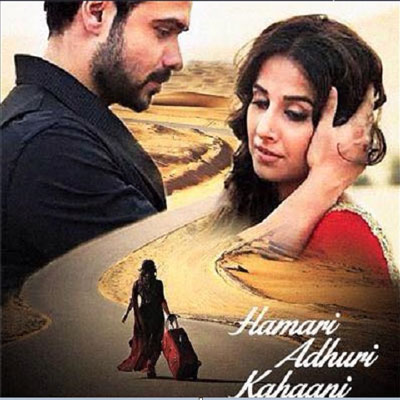
    MUMBAI: At times, Vishesh Films, the banner run by Bhatt Brothers, Mahesh and Mukesh, grab some media by tagging a film as based on Mahesh’s personal life. This time, they present Hamari Adhuri Kahani, reportedly based on the life of their father. The film, to avoid the travails of a period movie, is told in contemporary times. But, as a biography or inspired from someone’s personal life, it is a bizarre tale to tell!


    Vidya Balan specialises in arranging flowers. It is not clear if she is a florist or works for a hotel, which Emraan Hashmi plans to buy out. He is impressed by the way she does her flower arrangements and  sees her humane side. He is not familiar with such behaviour as he is a selfish go-getter. Emraan is a hospitality business tycoon already owning 108 hotels worldwide. Before adding any new property to his repertoire, Emraan conducts a test as to how the hotel is managed and how good the staff is.


    Having checked into the presidential suite of his target hotel, he instructs Vidya to put a ‘Do Not Disturb’ sign on his door since he hadn’t slept for 18 hours, he needed rest. Don’t the guests do such chores on their own instead of treating a florist like housekeeping help? Soon there is a fire on the top floor of the hotel close to the presidential suite occupied by Emraan. The staff, all of six or seven people (for such a huge hotel) run out of the hotel including the security personnel whose priority should have been to vacate the guest rooms first.


    Vidya has followed the herd of deserters but soon realizes Mr Hotel Tycoon is still in his room catching up on his 18 hour sleep. Vidya runs back in the hotel to alert Emraan and save his life. He seems to be the only guest in the hotel. Impressed by her flowers and her demeanour already, Emraan is overwhelmed by her loyalty and sincerity to her job and responsibilities. He has already fallen in love with her and wants her to join his Dubai hotel property and later wants her for himself.


    Vidya is a traditional Indian woman, married to Rajkumar Rao, whose name is tattooed on her forearm. She may say that she would never remove her mangalsutra and it will burn with her on the pyre when she is dead. But, for convenience, she never wears her mangalsutra when on the job. So much for mangalsutra and pyres!


    Though Vidya finds Emraan to be a nice man and never rejects his romantic advances, the Indian nari gets the better of her when Emraan proposes. She reveals that she is married, has a husband who is untraceable for the last five years; and she also has a child. She thinks he has deserted her, tells her child he is abroad while the police tell her he is somewhere in Bastar and has become a terrorist. Things get more puzzling as Rajkumar had left from Kolkata for Jharkhand but was traced in Bastar in Central India pointing a gun at some foreign tourist. The police has his picture aiming a pistol at the foreigners.


    Finally, convinced that her husband has strayed, Vidya agrees to Emraan’s advances. She falls in love with him. That’s the cue: it is time for Rajkumar to stage a comeback. It does not matter that he is a terrorist and there is a police posse posted right outside his house! His house has been empty for years but he is hiding under a bed, only God and the makers know why! The timing is perfect. Vidya has decided to return to becoming Indian nari again, tells off Emraan and returns home to find Rajkumar under the bed.


    Rajkumar, after all, was not a terrorist, but was forced into it, he explains. But, it is too late for him. Vidya has found love for the first time in her life in Emraan. While Rajkumar wants his legally wedded wife back, Emraan loves her so much that he is willing to stake his 108 hotels for her sake (there is a folklore about a shipping tycoon eons back in Western India who owned 99 ships, fell in love and staked his fleet for her sake. Even today, a lot of prime Mumbai property stands in the name of his trust.)


    It is unbelievable that the story of Hamari Adhuri Kahani is written by Mahesh Bhatt. It is banal. The proceedings are directionless. Music lacks appeal. Dialogue is pedestrian. Photography is uninspired. Editing this film would be a challenge. Most of the 131 minute run time of the film is between Emraan and Vidya and their romance, which is grossly unconvincing and lacks any sort of chemistry. Rajkumar starts the proceedings but vanishes till after interval (the fact that Vidya is married should have been kept till later when Emraan proposes to her). The fact that two men, a tycoon and a driver, are pining for her love is a bit farfetched. Since there is no scope for showing talent, none of the three oblige. Amala is the only pleasant presence on screen though only for a few minutes. Then there is a Dilton Doily (Archie comics) who plays Emraan’s sidekick whose very presence makes the audience laugh.


    Hamari Adhuri Kahani is a major let down coming as it does from Mahesh Bhatt’s penmanship and the rest joining to realise his vision or total lack of it. The box office prospects are very poor.


    Producer: Mukesh Bhatt

    Director: Mohir Suri

    Cast: Emraan Hashmi, Vidya Balan, Rajkumar Rao, Amala

  • Dil Dhadakne Do: Alas, not the box office registers

    Dil Dhadakne Do: Alas, not the box office registers

    MUMBAI: Dil Dhadakne Do is a sort of Page 3 of a high end Delhi group of Punjabi families; just about every family having a bunch of not very glorious secrets. It is kind of Nukkad (a very popular, classic TV serial that captivated the Doordarshan audience between 1986-88). This serial brought together characters from a chawl settlement together at the street corner and told their stories. 


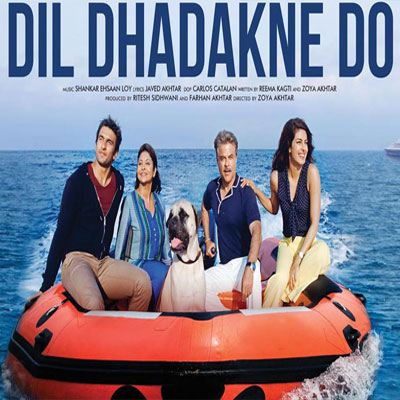
    Dil Dhadakne Do brings together a group of some upper-class Delhi Punjabi families together on a cruise ship; only here, even as this friendly group demonstrates bonhomie and love, each one is hiding a dagger behind the back. Bitching and backstabbing is the way of life here. Because, just about every participant in the jamboree represents a dysfunctional family.


    Anil Kapoor is a self-made man rolling in millions. His favourite pastime is to tell and retell his success story.  His wife, Shefali Shah, like all such rich men’s wives, has little to do except deck up and meet with the wives of other such rich men. These women thrive in bitching about and badmouthing anyone of them who is not around. Anil has pinned all his hopes on his only son, Ranveer Singh, whom he expects to take over as the next boss of his company. He has married his daughter off to Rahul Bose, a Mumbai businessman. 


    The group has internal jealousies and enmities, all hidden behind a mask of smile. All the women know whose husband is having an affair with whom but are never willing to accept stories in their own backyard.


    Imagine what can happen when a horde of such couples come together on a cruise for a fortnight with nowhere to escape. 


    Despite his ego and posturing, Anil is on the verge of bankruptcy. He can’t repay loans to banks, his products have become substandard. He urgently needs to infuse funds to save his enterprise and, more so, his face in the ‘society.’ However, this does not stop Anil from putting on a show. Though he or Shefali are never seen communicating without rancour, if at all, he decides to celebrate his wedding anniversary on a cruise ship, all expenses paid by him for all his friends.


    Anil’s two friends, Parmeet Sethi and Manoj Pahwa, are sworn enemies and the initially discarded Parmeet needs to be added to the list of invitees, feels Shefali. For Parmeet is loaded. His only daughter, Ridhima Sud, has been humiliated when her prospective fiancé failed to attend their engagement ceremony. It was headline news in Delhi Times, it is said (a Times of India subsidiary, Junglee Pictures happens to be the partner in this film venture with Excel Entertainment). Hence, it is tough to find another suitor for her despite Parmeet’s riches. After all, marriage market is not OLX. 


    But, Anil has a plan. He counts on a barter with Parmeet: Ranveer as a dulha for Ridhima against 49% stake by Parmeet in to Anil’s sinking company to salvage it. But, in matters of heart, business deals don’t figure. While Ranveer has already fallen in ‘love at first sight’ with Anushka Sharma, a contracted singer/dancer on the cruise ship, Ridhima has found her mate in Parmeet’s sworn enemy, Pahwa’s son, Vikrant Massey.


    More skeletons come out of the closet as Priyanka declares she could never come to love her husband, Bose. In fact, she still has the hots for Farhan Khan whom her father sent to US to study to keep him away from her. Anil’s business tours were all about his womanising. Farhan is the son of Anil’s manager and not quite a match for Priyanka in Anil’s society. But, to add to the drama, he arrives on the cruise too to grace the occasion and add some life to it.


    The young ones prove to be smarter than their elders as they make a pact. Ridhima spends her nights in Vikrant’s cabin while Ranveer spends his with Anushka but Ridhima and Ranveer agree to pretend to be in love. The deal almost materialises as Ranveer’s engagement will be announced with Ridhima against Parmeet’s buying of 49% stake in Anil’s company. To use the social media phrase, ‘it’s complicated’!


    Come out of the mess they all do, I mean writers and director with an easy solution that all such films adopt: everybody sees sense suddenly and it is QED!


    Dil Dhadakne Do risks filling the screen with numerous characters but you never figure out who is what, especially to Anil and his family or in the story; in a while you stop caring. Except for a concerned few of them, none of the character is defined or explained. The script is loose and the director takes a 1970s art film approach like filming inconsequential scenes endlessly. Also, in an unsuccessful attempt to justify the horde of characters, limelight jumps from one character to another abruptly. 


    What kind of script have you worked on where a lot of the story is in verbal narration and, not funnily, told by Anil’s family dog (voice of Aamir Khan)! The first half looks warped in a balloon; even if the film moves a bit in the second half, it is partly and haphazardly towards the end. Dialogue is mundane.The editing needs a second go. Music as in songs are no help. Background fails to pace up the proceedings. Visually, the film is good. 


    Nobody really has a role to make an impact. However, Ranveer and Priyanka emerge the best triers. Anushka’s romantic pairing with Ranveer is a miscast and against public perception. Anil Kapoor’s character is sketched as an illogical one… with his throwing a lavish cruise party while facing bankruptcy to his shouting spree at his grown up children don’t make sense. Shefali is convincing. Farhan is good and so is Vikrant. Rest fill the bill.


    Dil Dhadakne Do is an expensive project by all standards with a cast not known to justify such a cost besides being limited in content. Its theatrical take home will be limited to a great extent.


    Producers: Ritesh Sidhwani, Farhan Akhtar with Junglee Pictures


    Director: Zoya Akhtar


    Cast: Anil  Kapoor, Priyanka Chopra, Ranveer Singh, Anushka Sharma, Shefali Shah, Farhan Akhtar, Rahul Bose, Ridhima Sud, Parmeet Sethi,Zarina Wahab, Vikrant Massey, Mohan Pahwa, Aamir Khan (as Pluto’s voice)

  • ‘Welcome To Karachi’: No thanks!

    ‘Welcome To Karachi’: No thanks!

    MUMBAI: Jackky Bhagnani is being launched for the fifth time in Welcome To Karachi by his home production, Puja Films, owned by his father, Vashu Bhagnani. There are two reasons why the producer should have been very, very selective about the subject he chose and should have had a better team writing it: the first is that what is at stake here is the career of the family scion, and the other is the investment of personal money. 


    Entering Pakistan by mistake is no more a novel or exciting theme even if the guys doing it, Jackky and Arshad Warsi, are certifiable morons in the film. A recent film, Filmistan had the same theme, even the television serial Taarak Mehta Ka Ooltah Chashmah has had a few episodes where the protagonist, Jethalal, ambles into Pakistani territory. And, of course, our fishermen are also accused of straying on that count. So what’s new? Also, with such a subject you can only make a comedy and for that you need writers, a species missing in our industry.


    The producer holds a fancy for Gujaratis and here again, the lead man, Jackky, is from a Gujarati family, his father being Dalip Tahil. Tahil runs a ferry service in Jamnagar, a port town of Gujarat, and caters to the demand of wedding receptions on his boats. Tahil passes off his son, Jackky and his close pal, Arshad, both duffers, as geniuses who will look after the security of the guests. Arshad is supposed to be an ex-Navy man court-martialled for sinking a submarine. 


    Now, there is a booking and Tahil’s instructions to his son are that, as soon as the baraat arrives, you take off. Jackky follows the instructions to the T. He watches as the baraat arrives near the jetty and the boat takes off. But, what do you know? This Jamnagar seems to be somewhere in the US (Jackky’s dream destination) for the boat is full of scantily dressed white women of varied ages and figures; as long as they are white, who cares! The usual dance and daru event follows till a storm strikes. The boat is sinking, half the white girls are conveniently sacrificed to the storm. 


    Arshad and Jackky have landed on the coast of Karachi, lying unconscious the way thousands of marooned seafarers have done in as many fairy tales as well as in films. Karachi being a violent and lawless city, soon there is a bomb blast on the beach that they have landed at. A petty thief descends on the victims relieving the dead bodies of their belongings and this duo is not spared either. The wallets and, hence, the identities of both are stolen. 


    Jackky and Arshad are now on the ISI’s radar and later handed over to the Taliban where they unwittingly destroy the entire Taliban camp. The CIA wants to hog the credit and on one side, a Pakistani minister wants to do the same by calling the two brave soldiers as his party members while the Indian electronic media catches on to the story identifying them as Indians from Jamnagar. Poor morons know nothing of all that they have done and the stories being built around them. Their only wish is to return to India. You wish too that they return to India and the charade ends. Alas!


    Welcome To Karachi is a grossly ill-conceived idea and further done to death in execution. The director had nothing to go on and not realizing that shows his lack of script sense. The film is designed as a comedy and the only funny thing about it is that the film is a joke. Neither there is humour, nor any witty dialogues. Music is functional. Editing is not visible. Production is patchy.


    As for performances, it is mainly buffoonery on the parts of both main actors. Arshad, otherwise an accomplished actor, is at sea here. Jackky is not an actor so nothing is expected of him and he delivers nothing; his Kathiawadi Gujarati accent sticks to same tone and decibel all along. The heroine, Lauren Gottlieb, plays more of a cameo than the lead. The rest are incidental. 


    Welcome To Karachi is a poor fare on all counts.


    Producer: Vashu Bhagnani


    Director: Ashish R Mohan


    Cast: Arshad Warsi, Jakky Bhagnani

  • ‘Tanu Weds Manu Returns’: Fair entertainer

    ‘Tanu Weds Manu Returns’: Fair entertainer

    MUMBAI: Most sequels are not even sequels; they are just another story taking advantage of the same title used by an earlier successful film. To that extent, Tanu Weds Manu Returns justifies its name, being a proper sequel to Tanu Weds Manu (2011).


    In the first film, Kangana Ranaut and R Madhavan were married after a long drama. Tanu (Ranaut) had two suitors, Madhavan and Jimmy Shergill, both of whom brought a baraat to her house. Shergill was the violent kind and even ready to shoot down Madhavan but later had a change of heart looking at Kangana’s preference.


    Of course, the writer and director have bent many rules, taken a lot of liberties wanting to live up to the original — but they have come up with a fairly entertaining fare.


    The first film ended on a happy note with Tanu marrying Manu. The sequel starts with realities of married life. It is four years since they married and the marriage has gone sour. The couple is in London. Madhavan, who is now a doctor(!), keeps busy while Kangana tries her hand at various activities including to run a cr?che but to no avail. Compared to her tomboyish life in her native Kanpur, she feels clamped and bored.


    The film opens with the couple landing up at a madhouse. And one thought visiting marriage counselors solved marital problems! Since they are at an asylum, a panel of experts sits with them as both exchange accusation. Finally, Madhavan becomes violent and the expert doctor admits him in the asylum.


    Kangana is on her way back to Kanpur, relieved she has got rid of Madhavan and can now be free again to get back to her old bold lifestyle. But, with a pang of guilt, she calls up Madhavan’s cousin, Deepak Dobriyal, to get Madhavan back from the asylum. Madhavan decides to return to India instead of staying back in London and carrying on with his practice. But he is morose. He still loves Kangana and expects that she will change her mind and come back to him.


    But, soon, Madhavan finds someone who can fill his void; Kangana 2, a Tanu lookalike in Kusum, a Haryanvi Kangana in dual role. Kangana 2 is an athlete who not only represents the University but the state too. Initially, he just thinks that she is Tanu and starts chasing her till he is almost beaten and lynched by a mob when Kangana 2 shouts foul. He saves himself in the nick of time showing her the picture of his wife and how both look alike.


    Soon a romance starts budding between the two. While Madhavan cultivates Kangana 2, Kangana 1 is busy catching up with her old flame, Shergill, and also uses a tricky paying guest law student in her house, Mohammed Zeeshan Ayyub. Ayyub starts his friendship with Kangana 1 by addressing her as a sister but soon gets emotional about her. He even sends divorce papers to Madhavan on behalf of Kangana 1 without her knowledge. In due time, the divorce comes through.


    After crossing a lot of hurdles, Madhavan gets the approval of Kangana 2 and her family to agree to their marriage. That is when jealousy sets in and Kangana 1 reacts. After that, she sets out to win over Madhavan again.


    The comedy ends here and melodrama begins. While Kangana 1 tries to belittle everyone, when it comes to running down Kangana 2, she gets it back because the latter is much more qualified and endowed despite being from a village background. Their first encounter cuts Kangana 1 to size. The melodrama ends opting to re-establish the “so called” Indian values as love is rediscovered.


    Despite liberties taken, the script makes sure its entertainment quotient does not drop much. However, the end drama seems a little stretched. The director tries to stick to the basic idea of living up to being a worthy successor to the original; making Indian wedding films gives you a lot of stock content which is common to all films. The film manages to do so by about 75 per cent for after all, originals are always the best while in a sequel the surprise element is lost. Thankfully, the film does not go overboard by including songs and offers a couple of peppy numbers. The film is a few seconds over 120 minutes but can still do with a bit of trimming, especially towards the end. Photography is okay. Background score is effective at points.


    As for performances, it is a Kangana vehicle all along and offers her a rare opportunity to pit her against herself in two varied characters. While Kangana 1 is good as usual, Kangana 2 steals a definite march over her: she adapts to being a native Haryanvi villager totally in command of her situations. Madhavan, despite having limited scope, manages to hold his own. Shergill’s character of a perceived threat remains just that. He is a paper tiger with a soft heart. Dobriyal impresses. Swara Bhaskar, Eijaz Khan and Dipti Mishra are okay. Ayyub is good and so is Rajesh Sharma, as usual. The supporting cast contains of celebrated character artistes like Rajendra Gupta, K K Raina, Navni Parihar and Rajesh Sharma who all justify their roles.


    Tanu Weds Manu Returns is a fair entertainer. However, the opening response being weak, it faces further hurdles of IPL match today and the finals on Sunday, which will affect it. Also, the film caters mainly to the multiplex audience, factors, which may limit its prospects.


    Producers: Krishika Lulla, Anand L Rai


    Director: Anand L Rai


    Cast: R Madhavan, Kangana Ranaut, Jimmy Shergill, Ejaz Khan, Swara Bhaskar, Deepak Dobriyal, Mohammed Zeeshan Ayyub, Rajendra Gupta, Navni Parihar, K K Raina, Dipti Mishra, Rajesh Sharma, Akash Dahiya 

  • ‘Piku’: Joyride

    ‘Piku’: Joyride

    MUMBAI: Juhi Chatruvedi came up with the idea of a sperm donor in Vicky Donor in 2012. One of the things never discussed on an open forum. The film hit the bull’s eye. This time again in Piku, she has come up with a theme, which deals with a problem millions of people suffer from but never discuss in the open: constipation.

    To Juhi’s credit, like she did in Vicky Donor, here too she makes the story an all-encompassing one. The kind of films, say, Hrishikesh Mukherjee would make. Weaving around the story of a hypochondriac, it adds the aspects of romance, family ties et al in a subtle manner while not making the film a one track toilet humour; she soon converts it into a road movie that leads to a traditional family and roots ending.

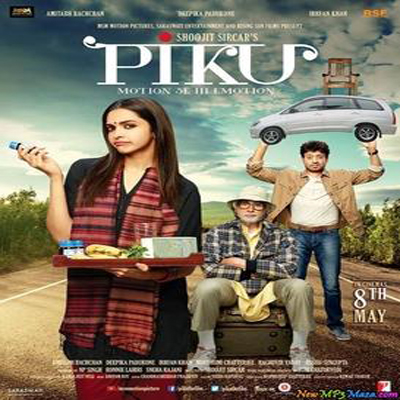
    Amitabh Bachchan, the 70 year old homebound widower, suffers from chronic constipation but, being a hypochondriac, he imagines all other illnesses possible. Albeit, his illnesses are all psychosomatic, like if his temperature moves from 98.4 to 98.8, he feigns illness. 

    Bachchan is the kind who is disappointed if his blood tests reports or BP are normal. Deepika is his only daughter too much in love with her father and tolerates all his idiocies. She complies with all his whims of being a hypochondriac though she knows there is nothing wrong with him. Taking his temperature, taking his blood pressure and preparing his medical doses from hundreds of pills he has gathered.

    Deepika hates Bachchan’s ways but also complies with them. Bachchan’s constipation updates are bizarre, and he even sends her updates about it through her office receptionist, which is read out in an important client meeting.

    Just when you think you have had enough of the toilet humour, thankfully, the film changes track and becomes a road movie.

    Irrfan, a qualified engineer, runs his dead father’s private cab service since he was sacked from his job in the Middle East. His company regularly caters to Deepika, dropping her to office every morning and getting her home again. She is as finicky as her father, Bachchan, and no driver from Irrfan’s company wants to ferry her. They do it reluctantly, though. 

    Bachchan has this lucrative offer to sell his huge house in Kolkata, which he is reluctant to sell while Deepika thinks it is time they got rid of it. Bachchan decides to travel to Kolkata to take a final call on the matter. The palatial villa is occupied by Bachchan’s brother and sister in law, who are insecure fearing the villa will be sold. Bachchan has his own peculiar reasons for not travelling by air or train.

    A vehicle is booked with Irrfan’s company but no driver is willing to drive Deepika for such a long journey. Eventually, Irrfan has to drive them and this drive is a fun ride for the audience. This is where the film takes a detour from toilet humour and road show and introduces a bit of family and traditions. 

    Bachchan was never in favour of selling his ancestral home while Deepika was. There a is a third influence as dumb sounding cab driver who, they learn is the owner of the fleet. It turns out he is not dumb but very clever and logical. His suggestions help Bachchan and Deepika change their way of thinking. Thanks to him, even Deepika is convinced that the ancestral property should not be sold. 

    Bachchan’s one ultimate aim in life is to get rid of his constipation before he dies. But, before that, he also wants to live a normal life. Towards this end, one fine day, he borrows the house help’s bicycle and goes on a 25 km ride through Kolkata and gorges on street food. With that, he also comes out of his psychosomatic cocoon and realises his wish of a clear stomach for once! 

    The side track is about Irrfan and Deepika’s chemistry. Hard as she tries not to get impressed with his native intelligence, eventually, she does develop a soft corner for him.

    This is a very clever and balanced script which is thoroughly enjoyable. Shoojit Sircar, who also directed Vicky Donor, from Juhi’s script, does a neat job once again with Piku. Dialogues are quirky at times to blend with Bachchan’s character and generally witty. Music is functional. Cinematography is pleasing. Editing is crisp. The film is all about performances and all three, Bachchan, Irrfan and Deepika excel. Maoushumi Chatterjee in a brief role is as lively as ever. Raguveer Yadav is good.

    Piku is an entertainer all the way and despite the tepid opening response, it should pick up over the weekend.

    Producers: N P Singh, Ronnie Lahiri, Sneha Rajani
    Director: Shoojit Sircar
    Cast:Amitabh Bachchan, Deepika Padukone, Irrfan Khan, Moushumi Chatterjee, Raghuveer Yadav, Jishu Sengupta

  • ‘Gabbar Is Back’… Big deal!

    ‘Gabbar Is Back’… Big deal!

    MUMBAI: Gabbar Is Back is not old wine in new bottle. It is South Indian hooch bottled with a Hindi label. Contents remain the same. It is about a man on mission and in Indian films a hero is on mission when injustice has been done to his sister, mother or wife. Well, in rare cases brother or father too but that does not make the cause very effective.

    The film is based on 2002 Tamil film, Ramanna, later remade as Tagore in Telugu in 2003, Vishnu Sena in Kannada in 2005. The trouble with picking such old South films for remakes is that a lot of similar films with familiar scenes and sequences have filled the space in-between.

    Akshay Kumar runs what, one may call, his own concept of NGO. It is unlike any other NGO working to serve people. He is either a physics teacher or a physical trainer in a college. He is seen teaching his students mainly hand to hand combat so must be physical fitness and self-defence though the film describes it as physics. Akshay has been wronged. His pregnant wife, Kareena Kapoor, has been killed due to inferior quality building built by a powerful builder, Suman Talwar. The building, along with all surrounding buildings, cave in one go. However, the builder, has all the bureaucrats and politicians in his pocket because of the money power and the bribes he pays.

    Akshay lands up with all the evidence about corruption which led to inferior material and construction as well as reclaimed land unfit for construction where the buildings were built. The bureaucrats refuse to listen to him, the politician chides him and offers him the compensation of 50 lakh while the state had paid Rs 25 lakh. He is generous enough to pay for unborn child also. Talwar tries to kill Akshay with two hits on his neck and chest but film heroes don’t die so easily. Unwittingly, Talwar has set off a time bomb in angry Akshay. Meanwhile, Akshay is not all stone, he has found his lady love in Shruti Haasan and reciprocates her love.

    Akshay ropes in a number of volunteers from his college students; his college has a great reputation of turning out 100 per cent honest people. Akshay’s ‘NGO’ is tasked with finding corrupt government officials, kidnapping them and lynching one of them to set an example for the rest. The most corrupt is the one lynched since Akshay’s ‘NGO’ rates them all. Akshay, an aam aadmi assumes the pseudonym of Gabbar. The Akshay effect works, bureaucrats are scared of accepting bribes though they are not scared of disclosing their ill-gotten wealth for the sake of audience for Akshay to strike on them because people have already been informed about who is corrupt to what extent.

    After two such lynching, Akshay happens to be in a hospital where the doctors are busy devising new ways to loot people forgetting their Hippocratic Oath. He plants a dead body from a neighbouring government hospital with a plea to doctors to save him. The doctors put on a drama of efforts to save the already dead man. A sting is in order so that Akshay could bargain for a compensation for the dead man’s widow and her two daughters. The hospital belongs to the same man, Talwar. The cleansing of the bureaucracy film turns into a revenge story. The second half is devoted almost entirely to Akshay and Talwar wanting to get the better of other.

    As mentioned earlier, the subject of corruption, builder political nexus and such does not generate much interest anymore. It has been done to death in real-life media as well as films, especially in metros and satellite towns. Inferior construction, corruption and powerful builder lobby may have been happening even earlier, but B R Chopra’s Aadmi Aur Insaan, dealt with the subject as early as 1969, albeit with a lot of emotional angles packed in and still remained average.

    If the South versions were hit to inspire remakes, they must have been better scripted and directed.

    Akshay Kumar plays himself rather than Gabbar which he does film after film notwithstanding the fact that the film rests entirely on him since the film has a very economical supporting cast and the lead actress. This is a fact which has always limited Akshay’s box office draw to less than a 100 crore in most cases. Shruti is not a performer. Talwar tries his best but is not strong enough a villain for the cause for your hero is only as big as your villain is. Sunil Grover has a good role to play and he does well. The others, mainly cast as Mumbai police big wigs, are mere caricatures. Kareena Kapoor’s cameo is okay while the over made-up Chitrangda Singh in an item song actually looks bad.

    The direction is very tacky, script does not deem it necessary to explain assumptions by its characters. Photography is passable. Action is South films replay all along. Gabbar Is Back is mainly a single screen fare. Despite four days weekend (Friday being May Day holiday in some of the states) the film has a limited range.


    Producers: Sanjay Leela Bhansali, Sabeena Khan.

    Director: KIrsh.

    Cast: Akshay Kumar, Shruti Haasan, Jaideep Ahlawat, Suman Talwar, and in cameo Kareena Kapoor and Chitrangda Singh.

    ‘Sabki Bajegi Band’….Gupt Gyan better kept gupt!

    Sabki Bajegi Band slots itself in a new slot, it is a reality film. While trying to be a new genre, it also pokes fun at the formula of run of the mill Hindi potboilers. Keeping its potential in mind, the film is a one location, new faces attempt to keep the cost in control. That said, however, keeping the script and content in control fails most filmmakers.

    The film is mostly about a group of friends gathered sharing their personal life and experiences and secrets, mostly sex related. Obviously, the film seems to have been cleared before its new Chairman, Pahlaj Nihalani, took over as the film has profanities galore as well as intimate sex talk.

    There is this guy who aspires to make a film and as a run-up to that he decides to shoot the celeb friends of his gathered at a secluded venue. Everybody is invited to share their experiences, sex lives, sexual preferences and other truths. All these he shoots with a 3 pixel Handycam! He is the male protagonist who sort of sets the terms of the tone for the evening.

    There is a counterpart to this man, a woman who thinks she is an expert at deciphering the sexual traits or preferences of the men gathered. Her take is that if a man carries a floral patterned handkerchief or looks at his soiled shoes from backwards, he is gay. She also claims to have slept for a one lakh rupee assignment for an ad which turned her into a top model and thinks nothing of such compromises. In fact, she advocates them.

    As the 3 pixel camera rolls on, each member is made to reveal his/ her sexual life and none comes out clean. While the filming goes on, pairs are made and broken; romances break up and new romance replaces it.

    Pretending to be a contemporary youth film, the film reveals closet gay, bisexuals, virgins, open multiple partner relations, erectile dysfunctional and to cap it up also an HIV+ seeking love.

    The film has lot of similarity to the 2014 film, Me And Mr Right where friends end up revealing personal lives. As in that film, here too, the script is poor though the idea had the potential to be developed into something interesting. Direction is amateurish. Songs have no place and, thankfully, finds only symbolic footage. Rest of the aspects and performances are not worth mentioning.

    Sabki Bajegi Band is poor on all counts with zero prospects at the box office.

  • ‘Jai Ho! Democracy’: Freedom misused

    ‘Jai Ho! Democracy’: Freedom misused

    MUMBAI: Jai Ho! Democracy raises some hope because of a few names in its cast and credits. The film is written by Ranjit Kapoor, the co-writer of the all-time classic comedy, Jaane Bhi Do Yaaro (1983), and also has some talented actors in Om Puri, Annu Kapoor, Satish Kaushik and Seema Biswas.

    However, as the film unwinds, rather than entertain, it goes on to belie your expectations.

    There is an incident at the border. A hen lands up in no man’s land and an Indian army cook is asked to go retrieve it. Once in no man’s land, the Pakistani soldiers start firing at him. The Indian troops contemplate whether to retaliate. The media gets wind of the situation and turns it into a ‘on the verge of war’ story.

    Concerned with the media outcry, a committee is set up to look into the matter. The representatives come from various parties and states. The idea is to create comedy through the conflict of communicating due to language barriers. The committee goes by the rule book and instead of discussing the situation, gets entwined into technicalities.


    A contradiction to the committee’s communication problem is displayed in no man’s land where an Indian and a Pakistani soldier come face to face. They have no problem communicating as both speak Punjabi. They start in Punjabi for which no subtitles are deemed necessary. Both soon embark on a nostalgia trip about the pains of partition and crave for an undivided country.

    The film is only 96 minutes long and yet feels like 36 minutes too long. The script is a total let down and its attempts to create humour fall flat. Of the star cast, which turns into caricatures, only Annu Kapoor does the Tamilian politician act well. Rest fill the bill.

    Direction goes the same way as the script: nowhere.

    Jai Ho! Democracy is a let-down and waste of talent.

    Producer: Bikramjeet Singh Bhullar

    Director: Ranjit Kapoor

    Cast: Om Puri, Annu Kapor, Satish Kaushik, Seema Biswas, Adil Hussain, Aamir Bashir, Grusha Kapoor, Benjamin Gilani


    ‘Kaagaz Ke Fools’: Yawn Some

    Kaagaz Ke Fools is a film about a husband-wife relationship, which is always sour. Strangely both love each other but it never shows.

    Vinay Pathak aspires to be a writer but being the honest and principled man that he is, he won’t write anything cheap or filthy. He works for a small advertising agency, writing copy for lingerie and other such products. He is not ambitious while his wife, Mugdha Godse, nurses all the ambitions.

    Producers: Faisal Kapadia

    Director: Anil Kumar Chaudhary

    Cast: Vinay Pathak, Mugdha Godse, Saurabh Shukla, Raima Sen

    Vinay is supposed to be a talented writer but since he won’t break his rules about clean writing, no publisher is willing to publish his work. As a result he is still sitting on the very first book he has penned. Mugdha is a full time nag and the amount of nagging she does to egg him on in his writing would have made any man commit suicide. He loves his wife immensely and tries to placate her every time she starts off.

    There is a gathering at Vinay’s friend’s house where one his friends provokes Mugdha asking about Vinay’s book and how his own book has sold about 1.75 lakh copies. To bring luck, Mugdha even asks a Feng Shui specialist to rearrange her house. Vinay is against all these things and again an argument starts. Vinay is not the suicide type so instead he leaves home trying to find alcohol and shelter in his friend’s house.

    There again he comes across the same friend whose book has sold 1.75 lakh copies. An argument ensues and is about to become violent when Vinay is asked to leave.

    Vinay meets a friendly rickshaw guy who takes him to an illegal bar cum whorehouse cum casino. Here, he is asked to try his luck at game of cards egged on by Raima Sen, a prostitute who hooks her customers from this place. Vinay wins some real money. Seeing a prospective client in him, Raima takes him to a friend’s house to seduce him. Vinay is totally sozzled by then and keeps uttering Mugdha’s name while keeping Raima at bay.

    After some forced sequences which are meant to be comic, Vinay’s book is published, the title having been changed from ‘Ek Thehrisi Zindagi’ to ‘Ek Tharkisi Zindagi’ and, predictably, it becomes a bestseller.

    The problem with the film is that the script is totally contrived. Characters are supposed to be Punjabi and actors trying to use Punjabi slang is hardly funny. Direction is poor with unnecessary cutting and shifting of scenes. Music seems inspired from old time Asha Bhosle repertoire. Cinematography is average. Editing is non-existent.

    Vinay Pathak does what he does in all his films, playing an honest simpleton which, for him, does not take much effort. Saurabh Shukla’s playing of a pucca Punjabi is jarring. Mugdha’s nagging is overdone. Raima makes faces, which cannot be passed off as acting.

    Kaagaz Ke Fools is a poor fare with no hope at the box office.

  • ‘Margarita With A Straw’: Limited appeal

    ‘Margarita With A Straw’: Limited appeal

    MUMBAI: Margarita With A Straw is one of the five projects chosen in the Work In Progress Lab section of the Film Bazaar 2013. 

    This can be called a personal film in the sense that it is the story of an individual who is very talented but physically challenged. And unlike My Name Is Khan, it does not have an agenda or a depiction of heroics of a fictional character who suffers from autism. This film is more real and true to life. Its protagonist’s character has a close resemblance to the American stand-up comedian and actress, Geri Jewell, who has cerebral palsy and later discovers that she is  lesbian.

    Kalki Koechlin suffers from cerebral palsy and is wheelchair bound. She can’t stand on her feet nor are her hands under her total control. She just about manages to make her words discernible. But she is intelligent and talented. In her mid-teens, she also has urges like all normal people. At home and at college in Delhi University where she studies, her life is made easier and happier by her friends and the caring family, especially her mother, Revathi, for whom Kalki has to be treated like a child all her life. 

    Her friends in college treat her as they would any normal fellow collegian. She is part of her college band and their star lyric writer. But it is that age when Kalki’s sexual urges start working on her. She starts with watching porn and later indulging in self-gratification and then is bold enough to take another wheelchair bound friend to a secluded college corner for a huge smooch. She has no inhibitions and, with her college friend, even goes shopping for a vibrator. 

    Everybody around Kalki has made her feel normal. She chats with them late at night and falls in love with one of her band members. But she is soon brought down to earth and shown her place when she is told that her college won the first prize at a music competition because the judges tweaked the decision in their favour because a physically challenged Kalki had written the words. Later, when she declares her love to her band member, he does not acknowledge it.

    But, Kalki’s disillusion with the world around her doesn’t last long as her admission to New York University is confirmed. Hers is a mixed marriage family, a Maharashtrian Revathi married to a Sikh and living in Delhi. The father is docile and mother’s word is the last. Kalki gets her way. 

    New York is an all new world to Kalki where she discovers herself. The fact that she is an intelligent student despite her drawbacks remains but what is more important to her, her sexual leanings, are revealed to her. Here she meets a blind girl, Sayani Gupta, an offspring of a Bengali-Pakistani parentage, and a lesbian. Sayani has an inherent instinct and feels the sexual urges of Kalki and soon initiates her into her kind of sex: lesbian love. Kalki finally learns of her orientation and true love. It is a match made out of need and belonging. 

    Soon Kalki returns home on a vacation, with Sayani tagging along. It is time to confide in her mother, who is shattered to know what her daughter is up to. But, Revathi is counting her days and she must come to terms with her daughter’s choice. After all, what she wants is her daughter’s happiness. 

    But, soon, Kalki’s grim life catches up with her as Revathi gives into a sickness and Sayani leaves her. She is back to her old friends. 

    This is a tricky and brave subject and the scripting is taut. Direction by Shonali Bose is excellent. The songs are purely situational. Dialogue is true to the script. Cinematography is complementary. This is a Kalki vehicle all the way and, despite some discrepancies in her movements and manners of a challenged person, she excels and makes a strong claim for some awards. Sayani Gupta provides a perfect foil. Revathi, the seasoned artiste that she is, underplays effectively. Rest of the actors are good too because of a good casting. 

    Margarita With A Straw is a film purely meant for the discerning audience in India and for the festival circuit. 

    Producers: Shonali Bose, Nilesh Maniyar.

    Director: Shonali Bose. 

    Cast: Kalki Koechlin, Shonali Bose, Revathi. 

    ‘Mr X’: Old wine in a new bottle

    Mr X is a fantasy film that everybody from a child to a grown up would identify with. The film was made by Nanabhai Bhatt in 1957 and has been made again quite a few times again ever since. This time, the difference is that, Nanabhai Bhatt’s son, Mukesh Bhatt, attempts to make it.

    The last film one remembers abiout a man going invisible, is Mr India with Anil Kapoor playing the invisible hero. The latest Mr X stands up to none of the earlier versions.

    Emraan Hashmi is an ace officer in an anti-terror outfit and is in love with his colleague, Amyra Dastur, also a top-rated officer. The romance is blooming but on one of the operations, where the duo along with their team is out to rescue a bus load of passengers taken hostage by a terrorist, Emraan risks his life to save the hostages while a bomb is ticking. This has shaken up Amyra who suggests that they had better part since Emraan could have killed himself in the process.

    The lovers’ tiff does not last as Emraan soon proposes marriage using a plastic bottle neck ring. Sure, it would be replaced by a real ring the next day. The occasion calls for a song. That done, the couple fix their marriage date.

    Though both are on leave from their jobs, one day before the marriage, they are assigned an important mission. The Chief Minister is due to give a speech at a hotel hall where a terrorist is hiding on the fourth floor preparing to assasinate him. Amyra is supposed to hear the conversation being taped by her colleagues in the next room and Emraan is supposed to look after the safety of the CM.

    Emraan soon realises that he has been trapped. The CM is going to be shot and Emraan has to do it; Amyra is at a gunpoint. Either he can save her or the CM. The deed is done in view of the audience and the media, shooting the incident live. The perpetrators are his own people and they can’t let Emraan stay alive to tell the story. Emraan is taken to a deserted building, which is blown up along with him.

    Emraan has survived though his body is fully singed and hair gone. Someone whom Emraan had helped returns the favour by taking him to his sister, who is a scientist. Emraan’s body has been affected by atomic reaction and can only be saved by an antidote the lab is working on. It is untested but Emraan is willing to take the risk. The potion cures his burns but makes him turn invisible in the dark though he can be seen in lit areas.

    The stage is set for revenge. Emraan changes his name to Mr X who can’t be seen and starts with killing one of the three men who trapped him.

    Mr X is the poorest of all the Mr X films. The script is insipid. The first half is spent on romance and is boringly slow. The second, half when excitement is supposed to begin, is grossly predictable. There is no thrill at any time. While such a film would be expected to have some fun for children, this has none. Songs have no appeal though background score is good. Heavy editing could have helped. 3D effect does not help much as it is forced.

    With the script not holding much promise, writer-director Vikram Bhatt can do little to salvage the film. There is no scope for performance nor do any of the three main artistes, Emraan, Amyra and Arunoday try to, though Amyra lands some freshness with her presence. The end has been kept open for a sequel but that seems unlikely.

    Mr X lacks in major aspects of an entertainer. The film has had a below par opening and promises no prospects of improving.

    Producer: Mukesh Bhatt.

    Director: Vikram Bhatt.

    Cast: Emraan Hashmi, Amyra Dastur, Arunoday Singh.

    ‘Court’: Worth a watch

    Films winning a National Awards are often mired in controversy. Not everyone is happy with the choice. In the case of this year’s Best Film award winner, Court, there seems to be total consensus of the jury and audience alike. Court has already made its mark in the international festival circuit, being honoured at the 71st Venice International Film Festival and having won many more awards thereafter. Though this is a fictional film, it comes across as a very real life drama.

    A court room drama, this film is very different from all court room dramas and sequences seen so far in Indian films. It is more about how the police functions and how the archaic British era laws are implemented (while the newly enacted laws have no implementation). It is about how the cops interpret the laws and consign a person to custody and frame charges around the set laws with no inclination to build a case around it.

    The film revolves around a person from the scheduled caste and not even the police (in Mumbai) seem to care to go deeply into the case. The police thinks its job is over as soon as the case is handed over to the court. The public prosecutor is in a hurry for the alleged criminal to be put behind bars for 20 years so that the case does not linger, justice notwithstanding.

    Vira Sathidar is a shahir, a Marathi folk singer whose forte is to present songs that evoke deprived masses’ feelings and prod them to rise and do something. He is an on the spot singer who starts singing and the crowds gather around him when he starts.

    One day, the police pick him up for inciting a Mumbai sewer worker to commit suicide through a song he sang outside his chawl. The song allegedly provokes all sewer workers to commit suicide. The fact that many a sewer worker die in Mumbai gutters while cleaning because they are contracted labourers, are poorly paid and provided no safety equipment, does not matter to the police nor to the court. They follow the Penal Code. In this case, a law laid down by the British Raj in 19thcentury. While the law has always been about the logic of the time, logic never finds a place in the deliverance of justice by law.

    Vira is lucky to get a lawyer, a Gujarati, Vivek Gomber, who metes out free service through his NGO for such people. He takes up Vira’s case. He is faced with a by-the-book public prosecutor, Geetanjali Kulkarni, who only quotes laws and wants to be done with the case soon as she can; her idea of ending a case is to deliver the accused to a jail. To Vivek’s credit, he is never frustrated nor exasperated by Geetanjali’s ways.

    The case lingers on and on as it happens in Indian courts. The judge, Pradeep Joshi, also goes by the book and does not think the accused deserves bail, so what if he is a senior citizen. The police regularly fails to produce witnesses.

    After years of contesting, Omber finally manages to get a bail for his client. The surety is Rs 1 lakh, which even the judge knows this poet and singer can’t manage but which his benevolent lawyer arranges. Vira, by now, is a sick man suffering from multiple ailments.

    Within a few days of his bail, the police visit him again and arrest him on another charge.

    Court is a grim film when in court room scenes. But the script and direction have made sure it does not remain all grim. The film is about juxtapositions all the way: between the law and the outside world, between the way of life of Maharashtrian schedule caste and literate Maharashtrians, between Maharashtrian and Gujaratis, and between lawyers and government prosecutors deciphering the same laws.

    Though the script is well written, the film takes too much footage to narrate it. Surely, some leisurely shot portions can be edited for better effect. Though Chaitanya Tamhane, may have been indulgent at times, this is a triumph for him as a first-time feature film director. The Marathi inspirational songs are exactly that: inspiring. What Tamhane has done is to bring in families of the lawyer, Omber, as well as the prosecutor, Geetanjali, and these aspects prove to be respites after court scenes rather than distractions. His account of the afterhours of a Marathi family taking to a typical thali restaurant followed by a Ravindra Natya Mandir Marathi drama on an off day compared to the Gujarati lawye’s visit to an upmarket South Mumbai thali joint makes a statement on their way of life. The film deals mainly in Marathi but has some major scenes in Gujarati, English and Hindi.

    While Omber is excellent despite his faulty Gujarati, Geetanjali is fine as a mannequin-like public prosecutor. Vira excels despite limited footage. Pradeep as the judge sends you a message: avoid courts!

    Watching Court is an experience worth having.

    Producer: Vivek Gomber.

    Director: Chaitanya Tamhane.

    Cast: Vira Sathidar, Vivek Gomber, Geetanjali Kulkarni, Pradeep Joshi.

  • ‘Dharam Sankat Mein’ as also box office prospects

    ‘Dharam Sankat Mein’ as also box office prospects

    A remake of the 2010 British film, The InfidelDharam Sankat Mein is one more in the line of films depicting Baba-led sects and sub sects and juxtaposing one religion against another. Viacom18, one of the makers of the film, promotes it with a tagline: From The Studio Which Brought OMG- Oh My God. This, along with the fact that like OMG, this film also stars Paresh Rawal as the protagonist, makes a comparison inevitable.

    Rawal is a successful caterer in Ahmedabad tending to most big weddings and events. He is an atheist yet he has a problem. His son is in love with Auritra Ghosh, whose father and rest of the family are the followers of Neel baba (Naseeruddin Shah). Auritra is stuck between her love and her father’s choice of a suitor for her. She knows her father would prefer to marry her only into a religious family, especially one following the ways of Neel baba.

    Rawal, who wakes up to call of Azaan from a nearby Masjid, which irritates him, starts his day by playing a pop number by his favourite Sikh singer to change his mood. His son pesters him to come visit Neel Dharma sessions, if for nothing else, only to please his prospective father in law. Now, Rawal is a family man, who loves his wife and kids and every time he decides to comply with his son’s wishes, something comes in the way.

    His character has an inherent hatred for Muslims and the early morning Azaan and his verbal scraps with his Muslim neighbour, Annu Kapoor, only add to his discomfiture for the community. Annu’s car is always parked in the way making it impossible for Rawal to manoeuvre his car out. For every small reason, Annu, a lawyer by profession, sends legal notices to Rawal as well as to other society members.

    After Rawal’s mother demise, his wife keeps reminding him to go check her bank locker. One fine day, Rawal decides to do just that. And therein he finds a document, which turns his world upside down. He finds an adoption certificate and it emerges that he was born to Muslim parents, later left with an orphanage from where a Hindu Brahmin family adopted him.

    Rawal raids the orphanage registration office, breaks into their cupboards and gets hold of his file. He learns the name of his father. He now seeks help from Annu to help him find his biological father, wanting to meet him once and find out what made him desert him. Ahmedabad Muslim community is not small by any means and finding Rawal’s father after 50 years is worse than finding a needle in a haystack! Surprisingly, Annu does it in a day! Rawal’s father is counting his last days at a community sanatorium.

    Rawal visits the sanatorium but the Imaam there, Murli Sharma, won’t allow him. The reason? As it were his father was on last stage and seeing that his son is a Hindu, he would die of shock! Rawal seeks Annu’s help to learn the Islamic ways to once see his father. This goes on every time Rawal tries to meet his father as Murli blocks him till the matter lands in a court where Annu fights on behalf of Rawal.

    On the other hand, Rawal’s attempts at placating his son’s to be in-laws backfires. As he tries to find his identity between a Hindu and a Muslim, he loses his family and his standing in life. While his family leaves him, nobody wants to do business with his reputed catering service.

    That’s where the comparison between comes up between Dharam Sankat Mein and OMG: Oh My God. Though Rawal’s problems are same in Dharam Sankat Mein as in OMG, the latter was a debate about the very existence of God. As a film, it had an excellent material, better cast and a great screenplay where the court scenes stole the show not to forget its star power. Dharam Sankat Mein on its part, has no solid issues, while it highlights a fake Baba, it is mainly concerned about Islam bashing. The court case here is muted with no arguments played up. The final exposure of Shah is too stagey to carry any appeal. What also goes against the film is that Shah’s part in the film has been used a bit too much to promote the film which, though looks interesting the first time you watch it on screen, becomes monotonous the next time and thereafter it is forced on you.

    This is a Rawal vehicle all along, though his character or his part is not as strong as OMG. Just seeing him on screen is a treat. Annu Kapoor gives one of his best for the third time after Mr India and Vicky Donor. Shah in a cameo overacts. The supporting cast is okay. While the direction is just passable, the adaptation from The Infidel is too loose to merit a mention. Dialogue is mundane. Music has not been blended well. Editing is amiss.

    Dharam Sankat Mein has not opened well and with word of mouth not being in favour, it will disappoint.

    Producers: Viacom 18, Sajjad Chunawala, Shariqu Patel.

    Director: Fuwad Khan.

    Cast: Rawal Rawal, Annu Kapoor, Naseeruddin Shah.

    ‘Ek Paheli Leela’: Rides on Sunny Leone

    Ek Paheli Leela is a reincarnation story. By casting Sunny Leone, the makers make their intentions clear that the genre is just an excuse and their idea is to cash in on Leone’s skin show. There are people out there who expect her to shed whatever skimpy clothes she wears someday!

    Meera (Sunny Leone) is a super model having descended from Italy for a shoot in Rajasthan. She has a phobia for air travel having survived a plane crash in which she had lost both her parents. However, her agent, Andy, has made a commitment to shoot in Rajasthan and hence she has to travel.

    In Rajasthan while she is shooting, a local royal, Mohit Ahlawat, falls for her and finally also wins her over. They both get married.

    Meanwhile, Jay Bhanushali, has his own story. He has moved into a new house and since then, he has been having these dreams of his past making him wake up suddenly. To solve the problem of his dreams, which deprive him of restful sleep, Jay meets up with a guru. He is informed by the guru that he has been reborn because his love 300 years back had remained unrequited. He was in love with Leela but had not been able to marry her because of an evil man, Rahul Dev, who was besotted with her and had even created an indestructible statue for her.

    Jay proceeds instantly to Rajasthan to meet Leela and tell her about their past lives. Here, Jay realizes that Leela, of his past life, is now a super model named Meera and is married to Mohit. The rest is about convincing Meera about their love three centuries ago and dealing with those who destroyed their love.

    The story is predictable as all past life love stories are similar. Direction is fair though length is an impediment. Leone is not known for her histrionics and distractions are provided with glamorous costumes and a horde of songs composed by half a dozen music makers; some of this are already popular. Ahlawat is good while Bhanushali is passable. Dev is his usual self.

    Ek Paheli has managed a decent opening and it also caters to single screen audience. The film is likely to sail safe.

    Producers: Bhushan Kumar, Krishan Kumar, Ahmed Khan, Shaira Khan.

    Director: Bobby Khan.

    Cast: Sunny Leone, Jay Bhanushali, Mohit Ahlawat, Rajniesh Duggal, Rahul Dev, Jas Arora, Shivani Tanksale, VJ Andy.

    ‘Barefoot To Goa’: Direction shows indulgence

    Barefoot To Goa is a road film of sorts with the roadies being two young kids. A brother sister duo, Prakhar Morchhale and Saara Nahar, are not at ease with their mother, Purva Parag, a dominating householder. Her husband and the father of these two kids, Kuldeep Dubey has little interest in them and even lesser interest in the matters of the house.

    The kids have a good memory of their paternal grandmother while their mother, Purva wants no hint of her in their house. All the besan ladoos she sends for her son and grand kids are consigned to the garbage bin by her before her husband or kids can see them while the letters are hidden in the closet.

    The kids are fond of their grandmother and keep asking about her, while their unnecessarily villainous mother puts them off the subject. The husband is indifferent not having the courage to argue on why, while her mother can stay with them and his mother can’t.

    The kids, kin on meeting their loving grandmother, accidentally (read contrived) come across their grandmother’s letters to their father, which their mother has hidden in her closet. They don’t know whether they should inform their father of the mother’s guiles or not. Instead, the kids just decide to go meet their grandmother.

    They run away from home after breaking their piggy bank to go met their grandma in Goa. The rest of the film is about their travel and travails till they reach Goa, which reads like any of the children’s adventure stories from the Famous Five and Enid Blyton kind of children’s literature.

    However, the makers, in an attempt to make this simple, unimaginative film into a classic, screw it up totally with an unpleasant, unnecessary unhappy ending. Totally illogical when it comes to storytelling involving kids.

    The only noteworthy performers in the film are Nahar, who excels and Mochhale, who is a natural. Rest pass muster. Direction shows indulgence. Cinematography is pleasant.

    Producer: Praveen Morchhale, Satyajit Chourasiya.

    Director: Praveen Morchhale.

    Cast: Saara Nahar, Prakhar Morchhale, Farrukha Jaffar, Purva Parag, Kuldeep Dubey.