Category: Reviews

  • ‘Hero:’ A poor clone

    ‘Hero:’ A poor clone

    MUMBAI: The myth that stars can make a film work makes producers resort to gimmicks like sequels or a remake of an old hit. While a sequel may work at times, though not as well as the original, remakes are a big risk because not only is it near impossible to recreate a classic but even the audience, the ambience and other aspects change every few years. And, to think that the original Hero is over three decades old.

    Hero brings together two star kids, Sooraj Pancholi (son of Aditya Pancholi) and Athiya Shetty (daughter of Suniel Shetty). It has been produced by Salman Khan, the reigning superstar, along with Subhash Ghai, the maker of the original Hero (1983). 

    The film starts on the same lines as the original: Sooraj is a goon, generally referred to by all as goonda and not hero. He has been assigned the job of kidnaping Athiya, the daughter of IGP Tigmanshu Dhulia. Dhulia is an honest cop who has arrested Aditya Pancholi for the murder of a journalist. Aditya is behind bars and sure to be convicted since Dhulia has all the evidence needed. Aditya, having tried all possible means to influence Dhulia, including bribery, decides that kidnapping Dhulia’s daughter is the only way left to arm-twist him. 

    Sooraj owes much to Aditya, his foster father, who he treats like his own father. He complies with Aditya’s wishes and kidnaps Athiya and moves to a shack in a snowy valley along with his buddies. He poses as a cop assigned by her father to protect her and take her far away because of a threat to her life from Aditya. Athiya and Sooraj are no strangers to each other. Earlier in the film, mighty Sooraj has saved Athiya from her ex-boyfriend by felling him a few punches at a nightclub when he was harassing her. 

    Now that she thinks he is a cop employed by her father especially to protect her, she falls in love with him before you can say ASAP! While some romancing, singing, and revelry happen, it is time for Dhulia and his cops to catch up with the couple. However, Sooraj being the hero, outperforms numerous automatic-gun-wielding cops and Athiya’s brother, Sharad Kelkar, chasing them in a chopper. He jumps a broken bridge across a gorge on his bike. They don’t make it to the other side but fall into the gorge and are presumed dead! 

    Aditya is being taken to court and, for some reason, Sooraj and Athiya are also around when a police constable triggers a bomb. The audience doesn’t know why. This is the point where the film goes haywire beyond salvation. With a lot of cross firing, a lot of junior artistes die while all relevant characters always come out unscathed! The cops survive this bomb blast, as do Dhulia, Kelkar, Aditya, Sooraj and Athiya. While Aditya escapes, Sooraj is arrested and sentenced to two years imprisonment. On the other hand, Athiya is dispatched off to Paris to learn dancing!

    Post-jail and Paris, the romance continues. Just when the story seems to come to a dead-end, the makers parachute in a new villain out of nowhere. His credentials are that he is a gambler of high stakes beyond his capacity, owing crores to a don (who later turns out to be Aditya himself) and can flex his muscles too, the prime requirement for film roles today. 

    There is no story now as the film proceeds on whims and fancies and manages only to get on the viewers’ nerves. While a lot in the film is unpredictable being illogical, the climax is utterly predictable. 

    To compare this film to the original Hero would be sacrilege. This is a poorly scripted and unimaginatively directed film. While the original had a talent bank in its star cast, this one has mostly unknown faces.

    Musical score is no patch on the original version, even though music was a reason in most part for its success. Editing is slack. Dialogue is mundane. Action is good but only as good as every other film nowadays. Sooraj will need time to be accepted; this is not the film promising him that. Athiya could prove a better model. Aditya is okay as usual. Dhulia who keeps calling Sooraj a goonda, in fact, looks more like one. Kelkar suffers from an undefined character. Chetan Hansraj plays what Manek Irani played in old days; his job is only to be bashed up by the hero every time he confronts him.

    Hero is a poor remake and though the opening shows had a fair number of footfalls, there are also instances of the viewers walking out halfway through. The prospects in toto look bad.

    Producers: Salman Khan, Subhash Ghai

    Director: Nikhil Advani

    Cast: Sooraj Pancholi, Athiya Shetty, Aditya Pancholi, Tigmanshu Dhulia, Sharad Kelkar

  • ‘Welcome Back:’ Welcome indeed

    ‘Welcome Back:’ Welcome indeed

    MUMBAI: Sequels enjoy a certain amount of brand equity. Welcome Back may have come eight years after it’s the first version, Welcome (2007), but the TV and video circuit nowadays helps the brand stay alive, especially in this case, since most of the main actors are same as in the original.

    Welcome Back has one more similarity with the original, which is that film retains the same story line as the original to the T, well almost.

    Anil Kapoor and Nana Patekar are ex-dons who have given up the world of crime to live a normal life and are running a plush property in the UAE. As Nana never fails to mention, ‘Bhagwan ka diya hua sabkuchh hai,’ a dialogue he keeps repeating ad nauseam. They face many provocations but make all the effort to control their anger and trigger happy nature. Of course, it takes great restraint on Nana’s side as every time he is provoked, his blood pressure shoots up to an extent that the pressure gauge breaks its barrier!

    One fine day, Nana’s father (Nana again in a brief dual role), married thrice already, arrives out of the blue and hands over his daughter, Shruti Hassan, from his third wife, to Nana so that he can live his last days in peace. Actually, he wants to be free to check the prospects of his fourth marriage! Nana and Anil are emotionally blackmailed into looking after her and are on the look out for a good suitor to marry her off.

    Nana and Anil may have changed tracks but their reputation still follows them and when they approach Paresh Rawal and his wife, Supriya Karnik, the only decent family they know, with the proposal of Shruti for their son, John Abraham, he has no alternative but to say yes, albeit reluctantly out of fear of these ex-dons.

    Paresh never knew he had a son because John is Supriya’s son from her first marriage which, again, Paresh did not know about. However, being childless, he agrees to take his wife’s son as his own. However, he needs to meet ‘his’ son first and the couple embark on a trip to India only to discover that John is a local dada and everybody including the cops keep out of his way. Paresh is worked up at first but delighted at the same time that he finally has an answer to Nana and Anil’s muscle power.

    Not knowing Shruti is the one he is supposed to marry once in Dubai, John and Shruti have already fallen in love with each other in Mumbai. Nana and Anil are glad to find out that John is the son of Paresh. That is till John cuts these two ex-dons to size by thrashing all their goons. Humiliated, Nana and Anil decide to make sure John never gets Shruti. That is their revenge!

    Soon, another angle opens up. There is a super don above all of them in Naseeruddin Shah, who is called Wanted bhai. It so happens that his drug addict son, Shiney Ahuja, has fallen for Shruti too and keeps painting her portraits all the time. Shah is too powerful for Nana and Anil. But, they are happy that they are getting their revenge from John. While they make sure John is kept away from Shruti, John and Paresh along with Shruti, make their own plans to outwit them as well as Shah and Shiney.

    The process leads to a huge quagmire between three sides but is peppered with funny moments and witty dialogue. In fact, there is a sequence where Nana and Anil end up playing antakshari with imaginary ghosts in a cemetery! The climax is off the routine too and visually good. As in the original the hero saves the villains from death leading to the end of all feuds.

    Welcome Back has two plus points working for it: the casting of male characters and the dialogues; female casting, though, leaves much to be desired. But, then, when you have so many men to be paid, the producers need to cut costs somewhere. The male cast is all known for talent and a flair for comedy. John can be counted out since his role needs muscle flexing, which he does as and when needed. Music is a liability despite having five composers on the credit lists but the makers have tried to make it tolerable with choreography, which includes huge crowds and costly sets. Photography is decent. Some scenes have been stretched and could have done with sharper editing.

    As for performances, Anil, Nana, John, Shah, Paresh are in their element. Shiney is okay. Dimple is cast against her image but passes muster. Shruti is fair while Ankita Shrivastav is miscast and a no go. In fact, Surveen Chawala, who does an item song, has better presence.

    Welcome Back is an entertainer, which does not disappoint and with the decent opening response that it has received, it should be an entertainer for its makers too.

    Producers: Firoze Nadiadwala

    Director: Anees Bazmi

    Cast: John Abraham, Shruti Haasan, Anil Kapoor, Naseeruddin Shah, Paresh Rawal, Nana Patekar, Dimple Kapadia,Shiney Ahuja, Ankita Srivastav, Supriya Karnik

    ‘Lakhon Hain Yahan Dilwale:’ Old-fashioned fun

    Lakhon Hain Yahan Dilwale comes from a first time filmmaker, who decided to wield the megaphone after bouncing the idea around on other directors, convincing none. The idea was to make a musical love story but with melody makers at premium in the modern film music industry, the maker, Munnawar Bhagat, takes recourse to melodious hits from days of Shankar Jaikishan, Madan Mohan, Laxmikant Pyarelal and other such wizards and weaves a story around these songs.

    Vije Bhatia has landed in Mumbai to make a profession out of his hobby of singing. Mumbai is still in its 1960 era of Raj Kapoor films or so it seems. Vije is given shelter, love and care by people while he strives for his talent to be noticed. To this end, he turns a busker. He starts singing and strumming his guitar at street corners. Inevitably, a crowd gathers and dances and claps to his renditions wherever he sings. Once he starts a song, which is actually a duet and gets stuck when the female part is to be sung. The crowds jeer him as if they had paid for his performance! But, one of his fans who comes to listen to his songs every day, Krutika Gaekwad, fills the void by singing the female version.

    No filmmakers pass by Bhatia’s spot to discover him but a small time event manager, Arun Bakshi, does notice him. He was supposed to arrange some Anupji at Mrs Narang’s (Anju Mahendroo) party that evening but Anupji takes ill or maybe his flight never landed. He is convinced these two street singers can fill the gap. Reluctant at first, Anju is convinced to give them a chance. She has a makeover artist handy who turns the shabbily dressed singers into pop stars. Vije and Krutika enthral the guests and the host with melodious numbers from films of yore.

    The pair is hit and at the same party they are signed on for a few more parties. The inevitable happens. Both are attracted to each other. However, Krutika has a past that won’t allow her this romance. She has a husband, Aditya Panscholi, a mother-in-law, Kishori Shahane, and a daughter. Her husband is usually in jail and calls himself a local ‘dada’. Now out of jail, he sees new prosperity in his house and instantly takes to beating Krutika. She is banned from not only singing but even stepping out of the house. He is brutal, to say the least.

    While the first half is like a special episode of Chhayageet (once an immensely popular Doordarshan programme), the second half takes a detour to tell a story. The film takes a mushy turn for a while as melodies take a backseat till the climax.

    The film’s story is rather old-fashioned and what makes its only USP as a stream of old melodies. The script is contrived and the direction is amateurish. Cinematography is good. Dialogue is routine. Production values and props are patchy.

    Good performances come from Krutika and Kishori Shahane. Aditya is too loud. Arun and Anju are okay.

    Lakhon Hain Yahan Dilwale is fun to watch thanks to its old songs, that is if people bother going to the cinema to check it out.

    Producer: Munnawar Bhagat

    Director: Munnawar Bhagat

    Cast: Aditya Pancholi, Vije Bhatia, Krutika Gaekwad, Kishori Shahane, Arun Bakshi, Anju Mahendroo

  • ‘Phantom:’ Will haunt empty cinema halls

    ‘Phantom:’ Will haunt empty cinema halls

    MUMBAI: Kabir Khan has made it his mission to deal with subjects related to India and Pakistan and their respective espionage agencies. If Ek Tha Tiger was about one-upmanship between two agencies in the field, Bajrangi Bhaijaan too involved ISI, the Pakistani agency, indirectly.

    His latest Phantom is about a disrobed army officer for his alleged cowardice so much so that even his proud ex-army man father would not talk to him.

    Phantom is about RAW (Research And Analyses Wing), the secret service agency of India, assigning a new recruit the mission to go to Pakistan and eliminate two of India’s biggest enemies, the terrorists, Hafeez Saeed and Zaki-ur- Rehman Lakhvi, the masterminds behind the 26/11 (2008) attacks on Mumbai, which killed 160 people and injured many.

    It may be recalled that D-Day, a very slick and thrilling film about RAW agents sent to Pakistan to either eliminate or bring alive Dawood Ibrahim from Karachi, was released in 2013 but fared poorly because, as much as people would have loved that to happen, such an adventure is just not there in our (Indian authorities’) genes.

    When the RAW discusses these terrorists, there is a suggestion that they send a team to liquidate them. When it is pointed out that the politicians won’t okay the idea, a suggestion is put forth that it could be a covert operation and politicians need not know about it. If the Americans could do it, why can’t we?

    Sadly, the short-sighted filmmakers and writers only know of US operation in Pakistan to assassinate Osama Bin Laden (made in to a film Zero Dark Thirty). The Israelis did it twice earlier, once when they rescued a planeload of Israel nationals held hostage in Idi Amin’s Uganda and later when 11 Israeli athletes were murdered during 1972 summer Olympics by a Palestine group and later Israel’s Mossad systematically singled out each of the perpetrators and killed them. 

    We got to dream of such operations and sell such a dream as a film. And, selling such dreams may be easy; their acceptance may not be.

    Saif Ali Khan is an army officer, who is fighting a sort of losing battle along with his troupe at the border as a hail of bullets is being fired at his bunk. He needs volunteers to venture out and attack the enemy head-on or do some such thing. Seeing that none of his men are in position to do that having been awake and fighting for three nights running, he decides to take it upon himself to venture out of his bunk. Barely has he moved a few hundred meters when his bunker is attacked by enemies killing all his men. 

    Being the only survivor and away from his bunker, he is deemed a deserter and a coward. He is court martialled and discharged. Dishonoured, he becomes a hermit, settling away from humanity, deep in snowy mountains. Out of sight, out of mind, RAW thinks he is the right person to do the job. Reluctant at first, Saif agrees only if to prove to his father that he is not a coward. 

    Saif starts his mission with a visit to UK where Katrina Kaif joins him on his mission. Initially, she is just supposed to identify a particular ISI agent to Saif for which, she claims, she gets paid 10,000 sterling pounds. 

    Director Kabir Khan has this fancy of shooting across foreign locations. So next, Saif heads to Chicago where he fakes a crime and gets arrested; his plan is to kill David Headley, who spied for Pakistan in India.

    Next, he moves on to the war-torn Syria for whatever reasons, sprays bullets all around, braves all the bullets sprayed at him and leaves enough marks for IAS to identify him! He tries to sell a story to ISI that he is a humiliated soldier from the Indian army who wants to join ISI and avenge his humiliation. When nobody buys his story, he walks into Pakistan anyway as Katrina seems to know her way around. Oh, yes, she does not mind the adventure though it is not a part of the 10,000 sterling pounds deal with the RAW.

    Saif goes around killing ’Nakhvi’ and sundry others till he finally catches up with ‘Hafeez Saeed.’ It is all a cakewalk for him so much so that you start doubting the intentions and commitment of the real RAW! But, you don’t because this film and its plots are more banal than a bunch of children playing Chor Police! It is as if, Lakhvi and Hafeez are waiting to be slaughtered by a RAW agent!

    Kabir likes to end his film on a high pitched patriotic note. So, here, Saif, a Muslim ex-army man, sacrifices his life for his country, India. Well? 

    The problem with Phantom is that though started early, it comes after a few similar films about counter espionage between RAW and ISI and, hence, no novelty value. What’s more, the script is amateurish and predictable. The direction is hackneyed and takes the viewer for granted. The film lacks in music, romance and whatever other ingredients one needs to make a film palatable. Even action and thrill expected out of such a film is at premium. 

    Saif and Katrina share no chemistry, in fact, Katrina’s character is not even defined. She seeks revenge from Pakistanis because they tried to destroy Hotel Taj Mahal, Mumbai, where her dad took her once a week for tea when she was a child! Mohammed Zeeshan Ayub is a new recruit at RAW and it is his idea to send Saif to Pakistan to kill the villains; he is brighter than all others at the RAW including its chief. So much for the most reputed secret service agency of India! 

    The film’s tagline reads: A story you wish were true. It can’t be, it is not the Indian way. But, as fiction too, Phantom is poor.

    Producers: Sajid Nadiadwala, Siddharth Roy Kapur

    Director: Kabir Khan

    Cast: Saif Ali Khan, Katrina Kaif, Mohammed Zeeshan Ayub

    ‘Baankey Ki Crazy Baraat:’ This is not cinema!

    Some people seem to have resources but have no inkling of what to do with them. So they decide to make a film but, sadly, they seem to have no idea or knowhow of filmmaking either. The result is usually a film like Baankey Ki Crazy Baraat and such. 

    It seems like a bright idea for the makers to assemble a star cast of the ones who are usually given gap filler roles and regular commercial movies or, generally, feature in such films, which enrich them financially but not the film trade. So, this film brings together Sanjay Mishra, Rakesh Bedi, Rajpal Yadav and Vijay Raaz and lets them loose in front of the camera. Since there is no funny script on hand, they embark on farcical acts and gestures.

    Rajpal (Baaneky) is getting older and no girl is willing to marry him. He is not quite a girl’s idea of a man she would like to spend her life with. He is ordinary looking, is not quite smart and is rejected wherever his marriage proposal is taken. Rajpal is a desperate man now and, on their part, his family members are sad for him. However, not for long as they send a proposal for Rajpal but with a picture of some other lad. The girl’s family approves of it. 

    The idea is to bring a bride home after which Rajpal can replace the man who married the bride, Tia Bajpai in this case. The comedy is supposed to be during the baraat reaching the wedding venue and till they return with the bride. The fall guy who is made to play Baankey aka groom is Satyajeet Dubey. His father owes money to Bedi and Sanjay and he agrees to pose as a groom on the promise of his father’s debts being written off. 

    As the baraat charade goes on and, finally, the time for tying the knot is due, the bride to be and the groom to be, Tia and Satyajeet, have already fallen in love and have also sung a dream song!

    The wedding is done with and the baraat returns home. To her surprise, Tia finds Rajpal gearing up to celebrate the first night with her instead of the man she married, Satyajeet. 

    This is a poorly thought up film slated for a poor fate.

    Producer: Anita Mani

    Director: Aijaz Khan

    Cast: Sanjay Mishra, Rakesh Bedi, Gulshan Grover, Vijay Raaz, Satyajeet Dubey, Tia Bajpai

    ‘Kaun Kitney Paani Mein:’ Made to sink

    Kaun Kitney Paani Mein could well be a story out of Chandamama magazine or Panchtantra! It verges on a children’s story with a moral at the end.

    The film starts in a feudal background when the local Rajas had lost their kingdoms but their subjects still worshipped them, never daring to look up the Raja in the eye and serve him like a slave. This is about a king of a small fiefdom where there are two kinds of people, the royals and the subjects who are treated as untouchables, inhuman. Their only job is to serve the king and plough for him with almost nil returns. If the king’s subject dare fall in love with his daughter, both are killed so what if the girl is the king’s own blood? 

    The times have changed, the raja in ‘thorn’ is Saurabh Shukla. His ancestors never thought about the welfare of their people and spent life in indulgence. They used to get ample rain being on an upper terrain but never thought of building lakes, wells or ways to store water. All their monsoon water would flow down to the town of the people the rajas looked down upon who were smart enough to build reservoirs. 

    Saurabh, the raja, starts his mornings with a whiskey. He has limited options: he can either add water to his drink, wash after using the toilet or gargle. There is never enough water for a bath. Saurabh is stoned broke. He plans to sell his land as well as villages but without water, there is no buyer. 

    Kunal Kapoor, Saurabh’s son, studying away in a city comes visiting. He has been living on borrowed money because Saurabh has no money to send to him. His ambition of going to the UK for further studies is also in jeopardy.

    While Saurabh’s area is defined as Upri, the other one is known as Bairi. Bairi has no raja but the people have their leader in Gulshan Grover who aspires to become an MLA soon. His area is well cared for and has ample water as well as skills. Gulshan has a daughter, Radhika Apte, who is well-versed with needs of the people being a graduate from an agri university. 

    Saurabh thinks of the only way out from his miseries and that is for Kunal to go seduce Gulshan’s daughter and make her pregnant! That way, his people can get some water. As it would happen, however, a romance blossoms between Saurabh’s son, Kunal, and Gulshan’s daughter, Radhika. Gulshan’s political ambitions get a brain in Kunal.

    This is not really a subject for either the national audience or for the purpose of entertainment and could easily have been made into a regional film. Shot between a few locations with no props, it is the kind of film woven around a rural audience and theme that there is no identification for the rest. 

    In such a film, it makes little sense to talk of performances or other aspects. For, finally, it is all a waste.

    Kaun KItney Paani Mein is another film flushed down the lost cause list.

    Producer: Nila Madhab Panda

    Director: NIla Madhab Panda

    Cast: Kunal Kapoor, Radhika Apte, Saurabh Shukla, Gulshan Grover

  • ‘All Is Well’: Not really

    ‘All Is Well’: Not really

    MUMBAI: Some films one just goes to watch without expectations. 

    Same is the case with All Is Well despite being directed by Umesh Shukla, who earlier gave us OMG: Oh My God. This is because, if the script does not add up to much and the credits list actors who are not known to carry a film on their own shoulders, no director can work miracles. 

    The film promises to be at least a visual delight as it takes off in Bangkok but that is just a bait. It soon moves rock stock and barrel into the hinterlands of North India, probably Haryana or is it Punjab? Well, the language and the attires seem to be those of Punjabi / Sikh and so is the ambience. Soon, it stops mattering for, if the makers don’t know, how could we?

    Abhishek Bachchan is a writer and composer of music who has been trying to get a break to cut an album in Bangkok. May be, Bangkok is where new talent in Hindi music are launched!?! Tiku Talsania seems to be the man who holds a monopoly in launching new talent. However, he does not invest; an aspirant has to finance his own album. That is where Abhishek falls short for he has no money. 

    Back home, Abhishek has parents, mother Supriya Pathak and father Rishi Kapoor. This is one messed up family suffering from total lack of communication despite being a family of three. Rishi has inherited a bakery from his father, which has a customer base of around four people. He is badly off, has no ambitions and gives vent to his frustration on his son and wife thus estranging Abhishek, who he asks to leave. Abhishek’s passion is his guitar and his music, which Rishi dislikes. 

    Abhishek has to raise money so that Tiku can launch him and that is when he gets a communication from his father’s lawyer that Abhishek needs to come to India and sign an agreement to sell off the bakery premises since his grandfather left it in the joint name with his father. Abhishek wants nothing of it but his friend convinces him that this probably is the money he was looking for his album. 

    Abhishek also has an admirer in Asin who loves him and wants to marry him. She is in a hurry to convince Abhishek because her father has already found a suitor for her back home. Both are on their way to India and end up taking the same flight. They also end up using the same cab (clichés never went out of fashion). Asin is glued to Abhishek, at times by her own devise, at others, by the writer’s plotting. 

    When Abhishek reaches home, he learns that he has been really fooled into coming by a goon, Mohammed Zeeshan Ayub, to whom Rishi owes a lot of money. The goon wants the bakery premises in lieu of his money. Soon, Abhishek also learns that there is not a single person in his town to whom Rishi does not owe money! The bickering between father and son resumes after a ten year break. Supriya has been conveniently put out of scene consigned as an Alzheimer affected patient, who is left to be a mute spectator to father and son’s verbal duals.

    Here on, the makers seem to decide to take it as it comes with no particular sequence of events as father and son play hide and seek with Mohammed and his bunch of buffoons who pass off as his toughies. In between the mess, they realise that they actually love and care for each other. For whatever corny reason, Rishi had divorced Supriya so Abhishek decides to get them married again. Abhishek has also paid up Mohamed’s dues by selling his songs to another singer against his principles and wishes. 

    That done; it is now Rishi and company’s turn to get Abhishek and Asin together. For convenience sake, Asin’s suitor has decided to marry her cousin. 

    All Is Well is a poorly conceived, half-baked script. Substance is at premium here. The director is totally at sea doing a patch up job giving the film a last century B grade feel and the set designs making it only worse. Even regional films or limited budget small films have more finesse. Editing could have been better. The film has various singers giving voice to Abhishek or his none lip-sync number, which sounds rather odd. The only hummable song is Baaton ko teri…composed by Himmesh Reshamiya (the film has four composers besides having borrowed a number from Anand Milind’s score from Qayamat Se Qayamat Tak).

    Performances are generally bad. Even Rishi does not bother to act. Abhishek and Asin both suffer from poorly etched characters. Supriya manages to look blank forgetting to act; Alzheimer makes a patient forget things, you know. 

    Talking of expectations, All Is Well is a let-down even for one with no expectations.

    Producers: Bhushan Kumar, Kishan Kumar, Shyam Bajaj, Varun Bajaj

    Director: Umesh Shukla

    Cast: Rishi Kapoor, Supriya Pathak,  Abhishek Bachchan, Asin, Mohammed Zeeshan Ayub and Sonakshi Sinha in an item number

  • ‘Brothers’: Messed up

    ‘Brothers’: Messed up

    MUMBAI: Brothers was expected to be next best thing to happen after Bajrangi Bhaijaan, at least for the exhibition trade. Coming as it does from Dharma Productions and director Karan Malhotra, who made his debut with the Agneepath remake in 2012.

    While Agneepath was a remake of director Mukul Anand’s Amitabh Bachchan 1990 starrer of same name, Brothers, Malhotra’s new film, has been adapted from the Hollywood film, Warrior (2011).

    It follows the story of two estranged brothers practising a no-holds-barred body combat sport, which is said to have its roots in ancient Greece and has, since then, travelled through various countries through eras in various forms and finally named as Mixed Martial Arts (MMA). 

    While, Malhotra tried and made his version of Agneepath more contemporary, here he has tried to make Brothers more Indian in that trying to add desi emotions. In the process he ends up making it dated instead. 

    Jackie Shroff is due to leave jail after serving his time and when his possessions are returned to him, the only thing he is looking for is the picture of his wife, Shefali Shah, for whose killing he served the sentence in jail. As he comes out, his son, Sidharth Malhotra, is there to receive him. As Jackie enters his home, he goes hyper, remembering his loving wife, the way she liked her furniture and the way she liked to set her comfort chair where she could read.

    You would think that Jackie loved his wife immensely and cared for the family. As it turns out in the flashbacks, Jackie was a drunkard, a wife beater, who was disloyal to her. What’s more, he also brings home the son from his other woman to Shefali. The boy grows up to be Sidharth. This multifaceted characterisation of Jackie is the first hint at the things that will follow. In an attempt to give the film Indian emotions, things have been messed up. 

    Jackie is an ex MMA trainer and to coincide with his release, MMA has been legalised in the country! Kiran Kumar, an ex-pro at this sport, has returned to India from the US to promote it and organise a world champions contest. The contest often proves fatal for the loser but certain rules have been formed to make it safe, which are not exactly evident in practise. 

    But, there is huge money in this contest of Kiran Kumar and Sidharth want to be a part of it. Jackie takes it upon himself to train Sidharth. It is time for Akshay to make his presence felt. Akshay is the elder and legitimate son who has made his own life and hates Jackie for killing his mother. He is a school teacher, sports tattoos all over, is married to Jacqueline Fernandez and has a six year old daughter.

    Akshay’s daughter suffers from an ailment as both her kidneys are weak since birth and she needs urgent attention. To make some side money, Akshay fights in underground MMA for which the school principal reprimands him and later sacks him. His lender refuses to renew his loan and Akshay decides to do the next best thing he knows, go for MMA for the money needed for his daughter. For him, Kiran has come just in time and the ‘TV media’ has gone gaga over him and his contest.

    The MMA contest is announced with a huge press conference and a few WWF-reject kind of champions from various countries are introduced with high decibel music in the background, which distracts instead of adding to the effect of the scene. Also on the menu are Akshay and Sidharth, the brothers. 

    Sidharth sails through with ease in his initial rounds felling some of the ‘reputed’ fighters in one or two knocks. Akshay has to struggle but, being a hero, manages to win them. It is time for the finals and the opponents are the two brothers putting Jackie in a great dilemma. Somehow, here Akshay proves to be superior to Sidharth because a hero can’t lose. He even manages to break Sidharth’s arm. That is when the director recalls some flashbacks of the brothers’ past, the growing up years and how they cared for and loved each other. And, while pretending to be still fighting, both call for a truce, swearing on their growing up love!

    The film has a poor script full of contradictions with its unnecessary and unsuccessful attempt to make it Indian. Direction is patchy with no clue where it is heading. There is no help coming from music or dialogue or romance. The kind of fights the film depends on have been part of innumerable films in Hindi cinema as a passing sequence since 1970s, and here it is the main theme. Editing is missing. 

    The film stars mostly non-performers and among them, Jackie excels, Akshay remains his usual self and Sidharth packs his acting and performance in one perpetually sinister look. Jacqueline is fairly good in an insignificant role. Rest are caricatures. 

    The theme of Brothers will find little identification with the audience and looks fated to go down unsung. The opening is poor and so are reports.

    Producers: Hiroo Yash Johar, Karan Johar, Endemol India

    Director: Karan Malhotra

    Cast: Akshay Kumar, Sidharth Malhotra, Jackie Shroff, KIran Kumar, Ashutosh Rana and Kareena Kapoor in an item number

    Gour Hari Dastaan’: The forgettable freedom file

    Gour Hari Dastaan is a story that starts in pre-independence days sometime in 1945 and traverses a period of over 60 years. It is a bio-film about a young freedom fighter, who spends most of his life to get his due. He wants his sacrifice and honour to be recognised. 

    There have been bio-films on freedom movement of leaders like MK Gandhi, Sardar Patel, Ambedkar, Savarkar and so on. These films were about their big struggles against British rule. Compared to these great names, Gour Hari’s crusade is the opposite: it is totally personal. It is not that he is doing it for pension. He just wants to be certified by the powers that be, as is done by awarding a Tamra Patra (copper plaque usually given to a freedom fighter) by the government along with lifelong pension and other benefits to freedom fighter and his family. 

    Gour Hari is a young lad (older one, the crusader, played by Vinay Pathak) yet to knock on his teens but the fire of the freedom struggle has been ignited within him. His desire is to see the Indian tricolour fly high. But this is not allowed since the British rule India and the official flag according to them is the Union Jack. India is not yet free but for some reason, Gour is trying to plant a Congress tricolour with a charkha in the centre atop some single storey structure in his town when a British officer tries to stop him but dies accidentally in the attempt. Nothing points back to Gour or his village; the story never refers to it again. The incident was just supposed to tell you how devoted Gour was to his cause of freeing his country.

    After a brief flashback into Gour’s past to establish that he was a freedom fighter, you now see Gour running from pillar to post to get himself identified and get enrolled into the list of freedom fighters. He visits government departments dealing more regularly with them than he signs his own office muster at the Handicraft Board where he is employed. For everybody from his office folk to the neighbourhood, he has become a butt of joke and teased as freedom fighter. But, he also finds a sympathisers in two tabloid journalists, Ranvir Shorey and Tanishtha Chetterjee, who take up his cause against the wishes of their editor, who thinks only stories on gay movement and Section 377 merit coverage. 

    Pathak is not willing to compromise or use any short cuts. But, ironically, when he does get his due, it is through an influential high profile lawyer, Rajit Kapoor, who has influence up to and including the Chief Minister, Vikram Gokhale, and is feared enough to threaten him with legal action. 

    Sadly, it is Pathak’s reach to the powers that brings him justice at the end of 32 years of struggle and not his crusade! The politicians, wary of the media where Pathak is making prime time, make a compromise, and agree to certify him with a Paper Patra instead of a Tamra Part on the contention that they don’t have budget for Tamra. 

    Gour Hari Dastaan is an alien story for the national audience. Like the recent Marathi film,Court, which won the National Award, this film could have served a better purpose in a regional language. 

    The film is about performances and, on that count, Pathak leads the pack. It is his story, after all. Ranvir, Tanishtha and Konkona Sen Sharma (as Pathak’s wife) match him step by step. The film has a horde of cameos by Saurabh Shukla, Gokhale, Rajit, Saurabh Shukla, Vipin Sharma, Asrani etc. 

    As for the script, while Pathak’s crusade is what most of the film is about, there is not enough footage of his fighting for freedom to make up for his 32 years of chasing authorities. What he did and why he merits his copper plaque find little justification in the film since he is one of the mob protesting and jailed for 90 days but never tried in a court of law. 

    The reason why he has to run from pillar to post is because there is no record of him being tried and jailed so he could qualify as a freedom fighter and the benefits, which ensued from it. 

    Direction is on predictable lines and suffers because too much time is taken on telling this insipid story. Musical score is good. Editing is overshadowed by the director’s vision. Dialogue is positive and, often, peppered with wit and cutting edge. 

    Gour Hari Dastaan has no domestic box office value and will make merry only on the festival circuit. 

    Producers: Sachin Khanolkar, Bindiya Khanolkar

    Director: Ananth Narayan Mahadevan

    Cast: Vinay Pathak, Konkona Sen Sharma, Ranvir Shorey

  • ‘Bangistan’: Just a whimper

    ‘Bangistan’: Just a whimper

    MUMBAI: When a comedy is attempted in Hindi films, one is very sceptical, since we don’t have decent writers in general, let alone humour writers. And, in a scenario where there are no writers for comedy, the inspiration needs to come from other sources, a la foreign films. 

    Bangistan has been ‘inspired’ by a British film titled Four Lions, a crisp comedy about four UK-based wannabe jihadists.

    The land of Bangistan is divided into two parts, North and South, representing Muslim and Hindu dominance, respectively. While Riteish Deshmukh belongs to a jihadi family in North, sports a longish beard and does his worshipping as required, he is also educated and works for a call centre using an English pseudonym. However, when one client calls finds out he is actually a Muslim, he abuses and calls him a terrorist. Riteish is disheartened and gives up his job. 

    Pulkit Samrat represents South Bangistan. He is a staunch devotee of a religious head-cum-political leader who heads a party called Maa Ka Dal. Elections are round the corner and this guru-cum-politico needs some riots, which are not happening thanks to a Hindu and a Muslim religious head, Shiv Subramaniyam and Tom Alter, who preach harmony and peace. 

    There is an international peace conference, which is due to be held in Krakow, Poland, where religious heads of all sorts will gather (there are 4200 religions in the world, it seems). The jihadis and South Bangistan guru-politician may have different ideologies but in this case they think alike. Both want to bomb the conference through suicide bombers. One can’t figure out how a bombing in distant Poland will help a local, small-time politician win an election nor as to how it will help a nondescript jihadi family. And neither side wants to claim credit since the jihadis sends their volunteer as a Hindu while the guru- politician sends his man as a Muslim to blame the incident on Muslims. 

    The Muslim candidate in the guise of a Hindu is Riteish while the Hindu posing as a Muslim is Pulkit. Both end up at the same Polish airport at the same time. While Pulkit is a freewheeling guy, Riteish, though feigning to be a Hindu is a hard-core Muslim at heart. When he sees Muslims, including Pulkit, being taken away from the immigration queue for a thorough search, Riteish reacts as to why only Muslims are considered terrorists. This stand of his continues through the film. 

    Both check-in to a same accommodation, which is supposed to be the cheapest in town at 200 Zloty. Their rooms are separated only by a ceiling with a huge hole. Both have already become friends at the airport (which is the undoing of this film among many other things). As the film progresses, the two bond like childhood friends instead of playing a game of one-upmanship a la Spy vs. Spy (famous MAD magazine strip).

    The rest is not worth telling as the film goes from banal to juvenile. The original, Four Lions was a mere 97 minute while this one stretches to 124 minutes for no reason! 

    The scripting is immature and direction complies (the director, Karan Anshuman, is a former film critic). There is no help from songs and only one song shows money spent with a group of dancers. Dialogue is mediocre. So are editing and background score. 

    While Riteish underplays, Pulkit shines. Jacqueline Fernandez gets about two and half scenes and a song.

    Bangistan is a mess of a film with no hope at the box office. 

    Producers: Farhan Akhtar, Ritesh Sidhwani

    Director: Karan Anshuman

    Cast: Riteish Deshmukh, Pulkit Samrat, Jacqueline Fernandez, Zachary Coffin, Shiv Subramaniyam, Tom Alter, Arya Babbar

    ‘Jaanisaar’: Lifeless

    In his career spanning almost four decades as a filmmaker, Muzaffar Ali has attempted a total of seven films and has four released films to his credit. His debut with Gaman was impressive and the film that earned him laurels was Umrao Jaan. Both boasted of immortal music in lyric and songs. Ali tried to take up a social cause with Aagman, a film about exploitation of UP sugarcane farmers of Awadh, which did not quite work. Umrao Jaan was about that region and now, Ali’s latest, Jaanisaar is also about Awadh. 

    The story goes back to what is now called the first war of independence, in 1857. Among those killed by the British in this war were the mother and father of Imran Abbas. The British and Queen Victoria select Abbas to train him, educate him in Britain to make his a pucca sahib so he does not become another rebel leader like his father! 

    Abbas is now grown up and back in India with a British mindset, to the extent that he even thinks his father was a traitor and served his British masters. He has been brainwashed. He has no issues with that since he plans to do the same. Abbas’s maternal grandfather, Dalip Tahil is taking care of the state while he is away. When he realises that Abbas is totally angrez, he decides to instill some local language and culture in him. To this end, he sends him to a kotha run by Beena Kak where Abbas falls in love with one of the dancers, Pernia Qureshi. It seems to be a norm in Ali’s films, if not in Awadh, for royals to fall in love with tawaifs. Pernia falls in love too without any preamble.

    While, Abbas and Pernia are busy romancing, the shots are called by the local British agent, Carl Wharton, who treats his wife like dirt and the only way he enjoys his sex is through sadomachism, his imagination being limited to almost strangling his wife in the process. She in turn, enjoys leering at Indian royals. Carl, the sadist, loves to kill people and collect his victims’ finger as a souvenir. This has nothing to do with the main plot except to suggest how bad the British were to no effect.

    Abbas’ grand father plots to separate Abbas and Pernia. Some futile emotional scenes follow and both are back together again after Abbas finds her in the care of Muzzafar Ali, who is also a rebel and colleague of his father in the war of independence and a mentor of Pernia, who has been training in some sort of lathi wielding. Ali, Abbas and Pernia decide to take the war to Carl’s door through, which they think they will destroy the British Raj.

    The climax ends in a Wild West sequence where Carl is riding on a train when the duo and Ali along with his gang decide to ambush him. 

    As far as story, script, direction are concerned, this film is a total let down. Even a newspaper report would be more interesting than this 124-minute torturous saga. If music was the heart and soul of Gaman (Jaidev) and Umrao Jaan (Khayyam), here Ali takes it upon himself to compose songs, and it is just another drawback. In nutshell, there is nothing working for this film.

    There is nothing to performances as well since they are all bad, except, to an extent, Kak, who makes an effort. Most don’t even fit the roles assigned. 

    Jaanisaar is poor in all respects and will find it hard to attract the audience.

    Producer: Meera Ali

    Director: Muzaffar Ali

    Cast: Imraan Abbas, Pernia Qureshi, Dalip Tahil, Carl Wharton, Beena Kak, Muzaffar Ali

  • ‘Drishyam:’ A dull affair

    ‘Drishyam:’ A dull affair

    MUMBAI: Drishyam belongs to a genre, which is tried very seldom. It is a thriller involving two families and, hence, can be termed a family thriller. The film can be likened to 36 Ghante (1974), inspired by Desperate Hours or Kanoon Kya Karega (1984), which in turn was a lift from Cape Fear (1964) and such.

    The film was first made in Malayalam as Drishyam (2013) following the success and acclaim and awards, it was remade in Telugu as Drushyam in (2014) followed by a Tamil remake as Papanasam (2015).

    The advantage of making Drishyam, despite it being a film for limited audience, is that it has a script that can be made very economically which the makers do while also cutting down on costs with its casting of non-celebrity performers. The fact that the film needs only two or three locations further curtail the making costs.

    Ajay is an uneducated (4th fail) orphan who grows up doing odd jobs to finally start his own video cable network in a small town in Goa. Married with two daughters, one of whom is adopted, he is totally devoted to his family and their wellbeing. He would sacrifice his life for their sake if it came to that. As much as he may love his family, his love for movies comes first and he even stays back in his office to watch movies all night. While watching movies, his reactions are that of a typical front-bench audience. Yes, and that effect continues when he watches a Sunny Leone movie; he immediately wants to go home to his wife, Shriya Saran.

    Ajay’s daughter, Ishita Dutta, has been shortlisted by her school to go on a camp for students from various schools. Here, another boy at the camp shoots her video while she is taking a bath. He starts blackmailing her and would delete the video only if she would let him have sex with her. He tells her to be prepared for him that night. All the pleading of Ishita fails to work as the boy is determined to have his way. When Shriya walks in to the outhouse to find his daughter with the boy and realises what is happening, she too pleads with the boy. His condition is that he would delete the video and spare Ishita if Shriya complies with his wishes instead.

    While attempting to get the cell phone out of his hand Ishita picks up a rod to hit the boy on his hand but ends up fatally hitting him on his head. It is a rainy night but mother and daughter decide to get rid of the body instantly and bury it in a compost ditch dug by Ajay. Ajay has a habit of putting his landline off the hook so that his movie watching is not disturbed. The two have to wait till he returns.

    It is only after this stage that the film starts generating some interest as Ajay gets rid of the boy’s car and dispatches his cell phone to faraway places by dumping it on a transport carrier so that it could not be traced.

    Now, not waiting for the car or cell to be discovered, he starts building alibis for himself and his family and also trains his wife and daughters to face the interrogation, which, he is sure, will be inevitable. After all, he may not be literate but the films he watches all night long have taught him a lot and it comes handy now in a kind of reverse version of Slumdog Millionaire.

    Not long after, the boy’s car is found in a lake and the wheels start moving. The entire state police force is employed to find out details for, after all, a spoilt brat he may be, but he was the son of the director general of the state police, Tabu.

    Ajay takes two days off with his family to create alibis involving totally unrelated people to the case: a restaurant owner, a bus conductor, a cinema projector operator etc and also makes his presence recorded at a bank ATM on the day the incident happened.

    Finally, what points a finger at Ajay is a local cop who hates him and is keen to get back at him. He claims he saw Ajay drive away in the yellow car belonging to the missing boy. The family is summoned in Tabu’s presence. However, Ajay can prove his innocence as all witnesses created by him vouch for his being at their places respectively on the day of the incident. As a senior cop Tabu’s instincts tell her that what was going on was too good to be true but then, it also strikes her that the alibis were cleverly manipulated as an afterthought. But, Tabu’s belief can’t stand in court and she decides to use third degree to elicit a confession.

    This is the last and interesting part, which is the final twist to the story bringing the film to a satisfactory end.

    For a thriller, the film is too long drawn at 163 minutes. The first half is almost static just establishing Ajay’s two priorities: his family and his films. Though the direction good, the fact remains that the film has been made in three other languages earlier. There is nothing in the name of distractions or relief and, really, nobody of interest in the cast except Ajay; rest being unknown or little known faces. Even the so-called villain is a nondescript policeman; no strong villain, no strong hero. The songs are in the background and not of popular appeal. Editing needed to be much crisper. Dialogue is routine. Background score is good. Photography is apt.

    It is a film about performances and on that count, most of the actors do well. Ajay, the vengeful cop Kamlesh Sawant, and the girl playing his younger daughter Mrinal Jadhav, excel. Ajay does not have to either show his muscles or raise a fist. Shriya and Ishita are good. Tabu playing the tough cop is okay. Rajat Kapoor is ornamental.

    Drishyam has a limited appeal for a select audience with patience, which one is bound to have after paying high admission rates at high-end multiplexes, which is where Drishyam can expect to find its audience to some extent.

    Producers: Kumar Mangat Pathak, Viacom 18 Motion Pictures, Abhishek Pathak.

    Director: Nishikant Kamath.

    Cast: Ajay Devgn, Tabu, Shriya Saran, Rajat Kapoor, Ishita Dutta, Kamlesh Sawant, Mrinal Jadhav.

  • ‘Bahubali’: Visual appeal overrides script

    ‘Bahubali’: Visual appeal overrides script

    MUMBAI: Telugu filmmaker, SS Rajamouli is known for his numerous hit films. He is also known for his penchant for special effects. Indeed, two of his films, Magadheera and Eaga, have won National Awards for Best Special Effects. Rajamouli’s latest film, Bahubali, is a very ambitious venture shot simultaneously in Telugu and Tamil and dubbed in Malayalam and Hindi. 

    The film is a fantasy that reminds one of Hollywood classics like Ben Hur, Spartacus, Ten Commandments and such. Closer home, it has its roots in epics like Mahabharat: it is about family politics, intrigues, betrayals and revenge. 

    Bahubali is a two part film. As the first installment releases today, the ‘saga’ will continue and conclude in its second part in April 2016.

    The story is a bit confusing as it unfolds. First you try to figure out who is playing who since the cast is all South based. Then you join the dots on relations and later the plot. However, you are kept occupied with wonderland kind of locations created with some imaginative special effects. But, the expertise does not prevent the film from giving it an artificial look, pleasant as it may look.

    There is a kingdom, which was ruled by Prabhas. After his death, Nasser wants infant son Rana Daggubati be the heir to the throne, but Ramya Krishnan, Nasser’s wife, wants to play it fair and puts Prabhas’ infant too in the succession race (also played by Prabhas). She decrees that of both the infants, the one who excels in all aspects of bravery and warfare, will be the next king. 

    Prabhas has been brought up by the childless Rohini. He was found by her people on the river bank. What worries Rohini is that Prabhas is always curious about what exists beyond the grand waterfalls around his abode. He makes attempts to breach them on a regular basis. One day, he finds a mask that has fallen from the mountains from where the waterfalls emerge. This convinces him that there are people across the waterfalls and upon the hills. This inspires Prabhas to reach there and soon he does everything that a film hero is supposed to do: fall in love, kill hundreds of people single handed, go into flashback, identify his enemies, and decide to wait till part two of this ambitious ‘saga’ to get even! 

    South makers are known to extensively try to work on technical wizardry while not forgetting Indian emotions of which maa- beta emotions are the most prevalent. A la Karan Arjun, where Rakhee keeps averring, ‘Mere Karan Arjun aayenge’, here Prabhas’ screen mother, Anushka  Shetty, is convinced, ‘Mera baahubali aayega’ for over 25 years! She is also made up to look like Rakhee of Karan Arjun. 

    The nostalgia value in Baahubali is that it takes you back to many past films worth watching again! 

    The script takes a backseat in this visual enterprise. The director is so obsessed with technique that he lets numerous glitches pass where a sleeveless wear turns to full sleeves and vice versa and forehead tikkas keep changing colours and so on. 

    Musically, for the Hindi audience, the film has one melodious song. What stands out in the film is music composer MM Kreem’s orchestration and the sound design. Production values are of high order. Dialogue is routine while in such a film verbal battles mean a lot to the viewers. Editing needed to be crisper. Background score in good. 

    Not much to say about the performances as the film is more about visuals, effects and ambition. However, Tamannah is impressive.

    Dubbed films with South actors find little favour with Hindi film audience and the response to Bahubali will taper down as it moves northwards.

    Producers: Shobu Yarlagadda, Prasad, Devineni.
    Direction: SS Rajamouli.

    Cast: Prabhas, Rana Daggubati, Tamannaah, Anushka Shetty, Ramya Krishnan, Nasser.     

    ‘I Love NY’: Forced comedy

    The title is a bit confusing as you don’t quite know if it means “I Love New Year” or “I Love New York” as it is set in the American city on New Year’s Eve. The film was shot in the US in the days when shooting there was the in thing. What’s more, though the movie has been in the cans for about five years, it sports the look of a film that was made fifty years ago. 

    The romance is between Sunny Deol and Kangana Ranaut and the age difference between the two is about 35 years! At the time when it was shot, neither was Kangana the star she is today nor was Sunny the star he was two decades back! So, Kangana’s recent success is the reason the producers, T-Series, finally decided to venture into releasing the film to public. It is a written off investment being presented for encashment in any case!

    The directors, Radhika Rao and Vinay Sapru are known for their success with directing videos for TV and have also choreographed some film songs. However, they have not been lucky or so proficient in directing movies. Their last film, Lucky: No Time For Love, released a decade back, failed despite having Salman Khan in the lead. 

    Sunny Deol and Kangana Ranaut end up together though they are from different cities – Chicago and New York. It is new year’s eve and this is a one night story. Though both have their own priorities when it comes to relationships, they eventually end up falling in love.

    This is a romantic comedy, the kind Sunny is not quite cut out for. Kangana does okay but here the emphasis seems to be more on Sunny. The director duo is not in their element here. With little known supporting cast, the film has no distractions. 

    It has opened to a very poor response with shows being cancelled due to lack of minimum mandatory number of audience needed to screen a film.

    Producers: Bhushan Kumar, Krishan Kumar.
    Directors: Vinay Sapru, Radhika Rao.
    Cast: Sunny Deol, Kangana Ranaut. 

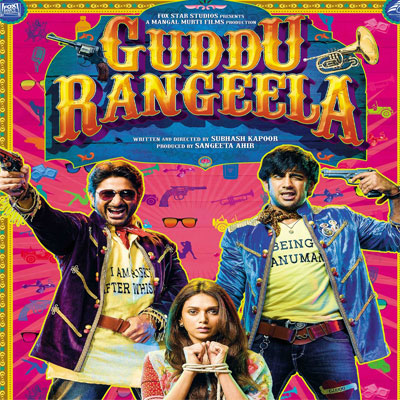
  • ‘Guddu Rangeela’…Faded patches

    ‘Guddu Rangeela’…Faded patches

    MUMBAI: Subhash Kapoor’s last film was Jolly LLB, which was enjoyable and hence quite a success. Being a journalist operating in North India before he got down to making films, with his latest, Guddu Rangeela, he tries to cash in on his experience. He blends the subject of Khap panchayats with comedy. But the theme of Khap soon overshadows comedy as the film progresses. The problem is that while Jolly LLB had identification for many and where Arshad Warsi, the protagonist, was supported by two great performers in Saurabh Shukla and Boman Irani, here Arshad is left to fend for himself. Khap is not a matter the general public either identifies with or cares for.


    Arshad and Amit Sadh are petty conmen. They earn their bread performing modern bhajans like ‘Mata ka email…’ at people’s houses. On the side, they add butter to their bread by acting as informers for robbers, giving them information about the financial standing of big shots at whose homes they perform. However, Arshad’s need for money is greater than his main client pays him and he sells the same information to three gangs of robbers. He gets into trouble with all of them.


    The money Arshad needs is for a court battle he is fighting against Ronit Roy, a Khap leader and a local MLA. It turns out that Arshad had married a girl, Shriswara, from a Khap based community and both were shot at by Ronit. While Arshad survived, his Shriswara was assumed to be dead. Arshad had an axe to grind with Ronit and the Khap. What is strange is that, while Ronit advocates the cause of Khap he has himself married outside his community!


    Guddu Rangeela gets multi-layered here on in. The duo of Arshad and Amit are talked into kidnapping Aditi Rao Hyderi. It turns out that Aditi is the sister in law of Ronit and she also wants to get even with Ronit for killing his wife and Aditi’s sister.


    Halfway through, the film turns into a revenge drama. While Arshad, Amit and Aditi use wit and wisdom, Ronit counts on his might. After all, he is known as the pehelwan by people. And, sadly, things become predictable from this point. Both sides concerned keep challenging each other while playing cat and mouse games. But, villains always have an ace hidden up their sleeve. Shriswara is reincarnated; she did not die of her bullet wound after all and was spared death by Ronit. Arshad has to come out and face Ronit if he wants his wife back!


    The climax takes place in a stone quarry, the kind seen very often before where, in the final bout of hand to hand fight, Arshad takes down the mighty Ronit.


    The film tries to cram in many angles failing to stick to one agenda for its hero. Direction lacks a purpose. Turning Arshad into an angry man from petty conman using his wit to survive does not work. It does not help as Arshad carries the same look he did in his earlier films. Amit is okay as Arshad’s sidekick. Ronit Roy wears the same stern look throughout like a mask. Rajendra Kala is good as usual. Shriswara has little to do. Aditi is the only one who comes up with a decent performance. The film has a popular number in ‘Mata ka email…’ while ‘Sooyian…’ is appealing.


    Guddu Rangeela brings no relief for cinema chains starved of strong content.


    Producer: Sangeeta Ahir.

    Director: Subhash Kapoor.

    Cast: Arshad Warsi, Amit Sadh, Aditi Rao Hyderi, Ronit Roy, Shriswara, Amit Sial, Rajendra Kala.


    ‘Second Hand Husband’…Third rate idea!


    Second Hand Husband has ‘enthusiastic new producers’ written all over it. Since the inception of filmmaking, there have always been people drawn by the glamour of the films and wanting to belong. The film would be called a half-baked idea even in the last century. The film’s only USP is that it stars Dharmendra who still enjoys a fair amount of goodwill and, hence, some following. 


    Dharmendra owns a four star-hotel, is married to Rati Agnihotri but is childless, and is a compulsive flirt besides being a drunkard. Gippy Grewal is the manager at Dharmendra’s hotel and, often, his drinking partner. Gippy is a divorcee and is now planning to marry Tina Ahuja. However, the impediment is a court ruling according to which he is supposed to pay an alimony of rupees 30,000 to his ex-wife, Geeta Basra, out of his monthly salary of 45,000. His prospective in-laws don’t mind him being a divorcee but want him to earn enough to support their daughter and his wife-to-be.


    Gippy pleads with Geeta to be generous and reduce her alimony so that he can marry Tina. Geeta is not game for this idea. Realising that he has to pay alimony only till Geeta marries again, he gets after finding a match for her. The basic idea may sound similar to a 1979 film starring Amol Palekar where a hypochondriac Amol thinks he is about to die and seeks his friend’s help to find another man for his wife, Ranjeeta Kaur, so that she is not lonely after he is gone.


    A lot of footage is spent chasing guys who are rejected by Geeta or vice versa.


    Now comes the time to bring Dharmendra into the story. He is caught flirting with Deepshikha by his wife Rati. Her brother Mukesh Tiwari and sister-in-law, Supriya Karnik, suggest she divorce Dharmendra. Gippy realises that a divorced Dharmendra would be an ideal match for Deepshikha: He is rich, generous and emotional. And Deepshikha is totally sold on the idea of handsome, rich, and generous Dharmendra as her second husband. So what if he is much older to her?  He and Tina get working on Dharmendra, a man who also loves his wife Rati very much, but cannot hold himself back from flirting.


    Gippy, meanwhile, is also trying to fix up Rati with Vijay Raaz, a local cop, so that she learns to forget about Dharmendra (now that is in poor taste and belittles the very idea of matchmaking!). But, divorce is not for everybody so Dharmendra and Rati reach an out of court compromise after both blaming each other but also realising they are still very much in love.


    The film has an amateur story with script and direction to match. It could have at best been an amateur stage play at school level albeit with diluted theme. Dharmendra still looks his debonair self. Gippy fits the ’pind da puttar’ image. Tina is not born to be an actor. Ravi Kishan pretends to be a loudspeaker; he keeps yelling even within earshot. Geeta needs to try a few more expressions next time. Rati is okay.


    Second Hand Husband is for Dharmendra fans, whatever a few are still around.

    Producers: Iqbal Singh, Palwinder Singh, Manwinder Singh, Gurvinder Singh.

    Director: Smeep Kang.

    Cast: Dharmendra, Gippy Grewal, Tina Ahuja, Geeta Basra, Deepshikha, Vijay Raaz, Mukesh Tiwari, Ravi Kissen. 

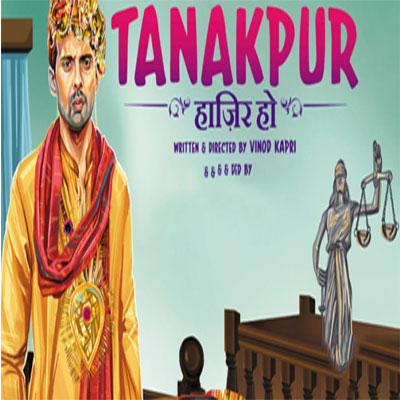
  • ‘Miss Tanakpur Haazir Ho’…Gayee bhens paani mei!

    ‘Miss Tanakpur Haazir Ho’…Gayee bhens paani mei!

    MUMBAI: The genres for film stories have become limited after television took over some of them, such as family dramas, mythological and to some extent, horror.  In a quest to find newer themes away from regular genres, filmmakers have been trying to experiment. While a few of them do find interesting themes that result in films like Dirty Picture, Queen, Vicky Donor and Piku, most come out as a poor spectacle resulting in the ‘No Audience, No Show’ genre. Miss Tanakpur Haazir Ho falls into an entirely new genre called ‘Bizarre.’


    Tanakpur, a small town in UP, has this annual best bhains (buffalo) contest. And the winner is… Annu Kapoor’s bhains, who has come to him as part of dowry from the family of Hrishita Bhatt, his wife. She is crowned Miss Tanakpur. Kapoor is the town head with a sidekick in Ravi Kissen. Kapoor has problems related to sex life and tries various remedies prescribed by a quack he finds at a local fair.


    Kapoor is much older to Hrishita and suspects his wife of having an affair with someone younger. For all such problems and others, the town has a kind of black magic man in Sanjay Mishra who is reputed to have turned a perfectly virile man into a eunuch and vice versa, among other such miracles. Kapoor seeks his help to find who his wife is having an affair with.


    Mishra is a full blown fraud tantric who mumbles some mumbo jumbo and asks his patron to perform weird and filthy rituals. (That’s the maker’s idea of comedy besides being obsessed with human faeces and animal dung. The film is generously peppered with reference to these substances.)


    Finally, Kapoor catches Hrishita’s sympathiser, Rahul Bagga, red-handed with her in his bedroom. Kapoor and his goons beat him to a pulp, with a crowd gathering to witness the scene. But now Kapoor and his men are not sure how to explain this beating of Bagga. Telling everyone that Kapoor’s wife was having an affair with him would ruin Kapoor’s reputation. After all, he was the town head and aspiring for an MLA ticket.


    Kapoor finds a way out. Bagga is accused of raping Kapoor’s bhains. The story gets weirder. With Om Puri as the local cop who is easy to bribe and a vet who is too weak to protest, reports of rape are generated and a case filed. The court case begins with finally the magistrate wanting to interrogate the ‘victim’. In the process, some more poorly conceived comic scenes are force-fitted in the film.


    There is an institution called Khap, active in parts of North India, whose help Kapoor seeks. Khap considers itself above the law. The Khap sits on a judgements on Bagga and issues a diktat that he marry the bhains for his misdeed. The marriage is being solemnised, when the bhains plays the role of a runaway bride, taking to the highway as fast as she could. Having run out of corny ideas, the makers call it quits. There is no climax as such. You are just told that the wrongdoers, Puri, Kapoor, Kissen and Sharma are booked and punished by the law. Bagga and Hrishita live happily ever after.


    With a poor conception, poorer scripting and amateur handling, this purported satire turns into an inane farce. The film has some good capable artistes in Puri, Kapoor, Sharma and Kissen but all are at sea here. Hrishita is in a few scenes and all of them seem to have been taken in one go even before she could change her expressions. Bagga wears a lost look through the film and one can’t blame him for that.


    Miracles don’t happen at the box office and none expected for Miss Tanakpur Haazir Ho.


    Producers: Crossword Films Production, Fox Star Studios’

    Director: Vinod Kapri.

    Cast: Om Puri, Annu Kapoor, Ravi Kissen, Hrishita Bhatt, Rahul Bagga.