Category: Reviews

  • ‘Ghayal Once Again:’ Much mellowed

    ‘Ghayal Once Again:’ Much mellowed

    Ghayal Once Again can be termed as a true sequel as the film connects with Sunny Deol starrer Ghayalreleased in 1990. In that era, a suppressed common man’s outburst against a mighty criminal (Amrish Puri inGhayal) who has the politicians and the system at his command was palatable.

    Sunny is back after serving 14 years in prison. He gets flashbacks of past which Soha Ali Khan, a doctor keeps in control with instant medication. Sunny has now turned a vigilante, runs a newspaper called Satyakam, which publishes real news sans sensationalism. He has a loyal team around him, which shares his spirit and purpose. Sunny is now a much admired person with a great following among youth.

    Om Puri is now a retired cop who has become an RTI activist. Puri has come across some material, which can virtually destroy the tycoon, Narendra Jha, who accumulates wealth through illegal means. Jha has the local home minister and, through him, the entire police force in his pocket. Puri is called for a meeting where an argument ensues and Jha’s drug addict and violent son, Abhilash Kumar, shoots down Puri. This is made to look like a road accident. 

    Unknown to Jha and company the whole shooting incident has been shot on a cell phone of a bunch of students out to take pictures and videos of some rare birds. But, the guardians of the kids know how powerful Jha is and handover the video to him.

    However, one of the girls from this group of four, thought it prudent to make a copy of the video, which they plan to handover to Sunny. But, it seems Jha has the entire city under video surveillance as well as the phones taped of anybody who can harm him. As Sunny and the students decide to meet up, Jha lets loose his foreign mercenaries, no less, on the kids. There is a long chase through the city roads in cars and later through a shopping mall. All beamed live in Jha’s room. But, Sunny reaches in time and saves kid. 

    A lot follows, the students are now kidnapped and kept under vigil at Jha’s fortress like mansion surrounded by Jha’s own army as well as the entire police force of the city. Now it is for Sunny to get them out. And, as Sunny is wont to do, he becomes a one man army, as usual, preferring hand to hand fight against multiple guns.

    The problem with Ghayal Once Again is that it follows the same theme that worked in 1990 when a lot of anti-establish feelings prevailed. Also, Sunny was the leading action hero around as his contemporaries, Anil Kapoor and Jackie Shroff, did varied roles. Now, just about everybody does action films thanks to technology. The story is old-fashioned about one powerful man calling shots in a major metropolis like Mumbai; it does not convince anymore. 

    From the moment film begins till the chase sequence the film holds only to become predictable thereafter. The action scenes become repetitive. Cinematography by veteran Ravi Yadav is competent. Editing wise, the film needed some sharp trimming. Music, having no scope, does not quite work. Performance wise, the Sunny – Soha pair is odd despite their love being silent. Sunny is his usual self doing Ghayal again while Soha has little scope. While the students all do well, Ramesh Deo, Manoj Joshi, Tisca Chopra, and Sachin Khedekar are okay. The villain duo, Jha and Abhilash, is effective. 

    Ghayal Once Again hasn’t had an encouraging opening. It caters to single screen masses mainly of which not many are left.

    Producer: Dharmendra
    Director: Sunny Deol
    Cast: Sunny Deol, Soha Ali Khan, Om Puri, narednra Jha, Manoj Joshi, Tisca Chopra, Sachin Khedekar, Nadira Babbar, Abhilash Kumar

    ‘Sanam Teri Kasam:’ Of unseen villain

    An early cancer as a part of a love story was Dil Ek Mandir, a Meena Kumari, Rajendra Kumar, Rajkumar film. There it was a love triangle. However, the Hollywood hit, Love Story (1970), based on Erich Segal’s novel of the same name, set a trend for star-crossed romances where one of the protagonists is afflicted by cancer. Immediately thereafter in 1971, there followed a film with cancer as the main theme in Hrishikesh Mukherjee’sAnand, though this was not a love story or a triangle. Love Story finally inspired Rajshri’s musical hit, Ankhiyon Ke Jharokhon Se in 1978.

    Hrishikesh Mukherjee’s other foray in this theme, Mili, failed despite a memorable musical score and the reigning stars of the day, Amitabh Bachchan and Jaya Bachchan, in the cast. There may have been a few more films on the theme but none made a mark. 

    In Sanam Teri Kasam, Harshwardhan Rane inherits a flat from one Julie aunty in a building society occupied by creatures from era gone by. No explanation is offered for the deceased aunt’s largesse. Rane is projected as some sort of a stud for he has a new woman in his bed each night and they are Page 3 girls. How, why? 

    Rane is like a 1950s romantic hero. He is never seen making a living. All he does is guzzle alcohol, chase romance and is busy suppressing his past tragedies. He has spent eight years in jail for being accused of a murder at the age of 14. Cinematic liberty allows you to consign a 14 year old to eight years in prison. 

    Luckily for him, there lives a Tamil-Brahmin family in his society, the head of which also lives in 1950 or probably before that. The family has two daughters of which the older one, Mawra Hocane (Mawra Hussain originally) looks like what we call a geek today. She is bespectacled, with a figure like a walking stick, and her father adds to the unpalatable look by rubbing incense stick ash on her forehead. She works as a librarian. 

    To cut a story short, Mawra’s younger sister can’t marry till Mawra does, but there are no takers for her. She promises her sister that she will clear her way and visits Rane at 4 am in the morning to seek his help to get her a makeover from one of his girls who figures as a top rated makeover artist. What follows is a scandal. Mawra is branded for being in a debauch’s house at an unearthly hour. She is disowned by her family! 

    Rane now becomes her caretaker.

    The rest of the film is like a silent movie since none of the characters say what they want to say but say everything else. It is hackneyed to say the list. Mawra is supposed to be a very intelligent girl, well read, but can’t read Rane’s feelings for her. Rane has been with numerous girls but can’t express his love for Hocane. He even works on getting her married to an IIT-IIM guy because that was what her family wanted! 

    Finally, when they realize they are in love, cancer plays the villain. Mawra has limited time to live. Hence, in what has become traditional now, Rane marries her before she dies.

    The script of the film is like a remix thing as is done with music albums. It borrows from a number of films from the past. This is not limited to just the script; direction also follows the beaten path, hugely clichéd. For this film with newcomers with little of known supporting cast, its 155 minute run is not justified and, what is more, makes it feel like never-ending. Dialogue is mundane except on two occasions. With limited locations, the cinematography is average. The one positive with the film is the musical score by Himesh Reshammiya if it can help at all. Editing is non-existent. 

    While Mawra is a perpetual wronged crybaby in the film, Rane refuses to either cry or laugh; he prefers to carry one single expression throughout. Rest in the cast are incidental.

    Sanam Teri Kasam is an insipid movie with scant appeal.

    Producer: Deepak Mukut
    Directors: Radhika Rao, Vinay Sapru
    Cast: Harshvardhan Rane, Mawra Hocane, Murli Sharma, Vijay Raaz, Sudesh Berry

  • ‘Ghayal Once Again:’ Much mellowed

    ‘Ghayal Once Again:’ Much mellowed

    Ghayal Once Again can be termed as a true sequel as the film connects with Sunny Deol starrer Ghayalreleased in 1990. In that era, a suppressed common man’s outburst against a mighty criminal (Amrish Puri inGhayal) who has the politicians and the system at his command was palatable.

    Sunny is back after serving 14 years in prison. He gets flashbacks of past which Soha Ali Khan, a doctor keeps in control with instant medication. Sunny has now turned a vigilante, runs a newspaper called Satyakam, which publishes real news sans sensationalism. He has a loyal team around him, which shares his spirit and purpose. Sunny is now a much admired person with a great following among youth.

    Om Puri is now a retired cop who has become an RTI activist. Puri has come across some material, which can virtually destroy the tycoon, Narendra Jha, who accumulates wealth through illegal means. Jha has the local home minister and, through him, the entire police force in his pocket. Puri is called for a meeting where an argument ensues and Jha’s drug addict and violent son, Abhilash Kumar, shoots down Puri. This is made to look like a road accident. 

    Unknown to Jha and company the whole shooting incident has been shot on a cell phone of a bunch of students out to take pictures and videos of some rare birds. But, the guardians of the kids know how powerful Jha is and handover the video to him.

    However, one of the girls from this group of four, thought it prudent to make a copy of the video, which they plan to handover to Sunny. But, it seems Jha has the entire city under video surveillance as well as the phones taped of anybody who can harm him. As Sunny and the students decide to meet up, Jha lets loose his foreign mercenaries, no less, on the kids. There is a long chase through the city roads in cars and later through a shopping mall. All beamed live in Jha’s room. But, Sunny reaches in time and saves kid. 

    A lot follows, the students are now kidnapped and kept under vigil at Jha’s fortress like mansion surrounded by Jha’s own army as well as the entire police force of the city. Now it is for Sunny to get them out. And, as Sunny is wont to do, he becomes a one man army, as usual, preferring hand to hand fight against multiple guns.

    The problem with Ghayal Once Again is that it follows the same theme that worked in 1990 when a lot of anti-establish feelings prevailed. Also, Sunny was the leading action hero around as his contemporaries, Anil Kapoor and Jackie Shroff, did varied roles. Now, just about everybody does action films thanks to technology. The story is old-fashioned about one powerful man calling shots in a major metropolis like Mumbai; it does not convince anymore. 

    From the moment film begins till the chase sequence the film holds only to become predictable thereafter. The action scenes become repetitive. Cinematography by veteran Ravi Yadav is competent. Editing wise, the film needed some sharp trimming. Music, having no scope, does not quite work. Performance wise, the Sunny – Soha pair is odd despite their love being silent. Sunny is his usual self doing Ghayal again while Soha has little scope. While the students all do well, Ramesh Deo, Manoj Joshi, Tisca Chopra, and Sachin Khedekar are okay. The villain duo, Jha and Abhilash, is effective. 

    Ghayal Once Again hasn’t had an encouraging opening. It caters to single screen masses mainly of which not many are left.

    Producer: Dharmendra
    Director: Sunny Deol
    Cast: Sunny Deol, Soha Ali Khan, Om Puri, narednra Jha, Manoj Joshi, Tisca Chopra, Sachin Khedekar, Nadira Babbar, Abhilash Kumar

    ‘Sanam Teri Kasam:’ Of unseen villain

    An early cancer as a part of a love story was Dil Ek Mandir, a Meena Kumari, Rajendra Kumar, Rajkumar film. There it was a love triangle. However, the Hollywood hit, Love Story (1970), based on Erich Segal’s novel of the same name, set a trend for star-crossed romances where one of the protagonists is afflicted by cancer. Immediately thereafter in 1971, there followed a film with cancer as the main theme in Hrishikesh Mukherjee’sAnand, though this was not a love story or a triangle. Love Story finally inspired Rajshri’s musical hit, Ankhiyon Ke Jharokhon Se in 1978.

    Hrishikesh Mukherjee’s other foray in this theme, Mili, failed despite a memorable musical score and the reigning stars of the day, Amitabh Bachchan and Jaya Bachchan, in the cast. There may have been a few more films on the theme but none made a mark. 

    In Sanam Teri Kasam, Harshwardhan Rane inherits a flat from one Julie aunty in a building society occupied by creatures from era gone by. No explanation is offered for the deceased aunt’s largesse. Rane is projected as some sort of a stud for he has a new woman in his bed each night and they are Page 3 girls. How, why? 

    Rane is like a 1950s romantic hero. He is never seen making a living. All he does is guzzle alcohol, chase romance and is busy suppressing his past tragedies. He has spent eight years in jail for being accused of a murder at the age of 14. Cinematic liberty allows you to consign a 14 year old to eight years in prison. 

    Luckily for him, there lives a Tamil-Brahmin family in his society, the head of which also lives in 1950 or probably before that. The family has two daughters of which the older one, Mawra Hocane (Mawra Hussain originally) looks like what we call a geek today. She is bespectacled, with a figure like a walking stick, and her father adds to the unpalatable look by rubbing incense stick ash on her forehead. She works as a librarian. 

    To cut a story short, Mawra’s younger sister can’t marry till Mawra does, but there are no takers for her. She promises her sister that she will clear her way and visits Rane at 4 am in the morning to seek his help to get her a makeover from one of his girls who figures as a top rated makeover artist. What follows is a scandal. Mawra is branded for being in a debauch’s house at an unearthly hour. She is disowned by her family! 

    Rane now becomes her caretaker.

    The rest of the film is like a silent movie since none of the characters say what they want to say but say everything else. It is hackneyed to say the list. Mawra is supposed to be a very intelligent girl, well read, but can’t read Rane’s feelings for her. Rane has been with numerous girls but can’t express his love for Hocane. He even works on getting her married to an IIT-IIM guy because that was what her family wanted! 

    Finally, when they realize they are in love, cancer plays the villain. Mawra has limited time to live. Hence, in what has become traditional now, Rane marries her before she dies.

    The script of the film is like a remix thing as is done with music albums. It borrows from a number of films from the past. This is not limited to just the script; direction also follows the beaten path, hugely clichéd. For this film with newcomers with little of known supporting cast, its 155 minute run is not justified and, what is more, makes it feel like never-ending. Dialogue is mundane except on two occasions. With limited locations, the cinematography is average. The one positive with the film is the musical score by Himesh Reshammiya if it can help at all. Editing is non-existent. 

    While Mawra is a perpetual wronged crybaby in the film, Rane refuses to either cry or laugh; he prefers to carry one single expression throughout. Rest in the cast are incidental.

    Sanam Teri Kasam is an insipid movie with scant appeal.

    Producer: Deepak Mukut
    Directors: Radhika Rao, Vinay Sapru
    Cast: Harshvardhan Rane, Mawra Hocane, Murli Sharma, Vijay Raaz, Sudesh Berry

  • ‘Mastizaade:’ Sex tragedy!

    ‘Mastizaade:’ Sex tragedy!

    Comedy films in Hindi are bad enough most of the time, but what comes in the name of sex comedy is pathetic. It is all about lewd gestures, vulgar innuendos and a voyeur for the camera. There have been films with partly lewd and suggestive scenes and dialogues but the Mastizaade script aims to be a thesis for doctorate in this genre. Milap Zaveri has been attempting to write sex comedies but this time round, he also decides to direct the film.

    The saleable face or the inspiration for Mastizaade is Sunny Leone or, rather, her background. The makers stretch it a bit as they cast her in a double role of twins. Rest of their assets being same, how do you tell one from the other? One wears skimpy clothes, while the other sports scholarly specs, a red tikka on her forehead and sari. But, she being Sunny Leone too, the blouse is as skimpy as befitting Sunny.

    The sisters run an institution for perverts addicted to sex. The idea is to cure them of this affliction on the face of it but actually the sisters Sunny and Sunny use such guys for their own gratification. The sisters readily find two such sex starved buffoons in Tusshar Kapoor and Vir Das. Both soon prove that if they had any expression or twitching or any movement of muscle, it is their hidden talent; hidden in their underclothes!

    Both fall for one Sunny each. While otherwise they are known to be sex fiends, with Sunnyx2 oozing with sex, they seek romance as in love!

    The problem is that one Sunny wants only sex sans love, the other one is in love with a paraplegic wannabe soldier.

    The rest of the film is about Tusshar and Vir making bananas represent them as well as their aspirations while they see rounded fruits in Sunnyx2.

    The problem is that it’s unimaginative script writing. Even what has been lifted is from PJ department. The 1960s and 1970s English film and even Dada Kondke films entertained better than this one.

    Writing about direction, music, editing etc would be futile. And, to write about performances nigh impossible because no performers are involved in this film.

    Producers: PNC
    Director: Milap Zaveri
    Cast: Tusshar Kapoor, Vir Das, Sunny Leone

    ‘Saala Khadoos:’ Made to prescription

    A pattern has been set for sports related films in India, a pro forma is followed. The format followed by such films is an underdog from poor background, who is oozing with talent, which lies untapped. There is a down and out ex-champ of the sport in whichever sport the film deals with, who spots the talent and decides to hone it. A corrupt and debauch official heading the said sports body. The finale, of course, being the underdog under the aegis of the charged up ex-champ, takes on the best in the world.

    Saala Khadoos, produced in Hindi and Tamil (as Irudhi Suttru meaning Final Round), follows the set pattern.

    R Madhavan is an ex-champion boxer who aspired to win a boxing gold for India. His dream lay unrequited due to internal politics when his boxing gloves were spiked by his own coach, Zakir Hussain, due to which he had to fight blind bout and lose the fight. Madhavan has been appointed the coach of the national women’s boxing team which, Madhavan’s b?te noire, Hussain, heads now. Sparks fly between the two instantly. There is no way the power wielding Hussain would want Madhavan around him.

    Madhavan is accused of molesting his women team members and, as a compromise, transferred to Chennai to coach the local team there. The state team here figures at the bottom of the national ranking and Hussain expects Madhavan to fail in his posting.

    As Madhavan gets down to business and starts disciplining his wards, he is witness to partiality decision as a contender, Mumtaz Sorcar, looks the obvious winner but is declared a loser because her opponent happens to be an official’s daughter. Mumtaz’s sister, Ritika Singh, can’t take this and immediately gets violent and starts punching and felling the jury members. Ritika is the bindaas kind and street smart; she sells fish for earning. Madhavan is impressed by her aggression and the way she throws her punches.

    He has spotted a prospective champ and decides to make her his pupil. She is unwilling but he offers to pay her Rs 500 per day to get her to take up boxing. Besides him, Nassar, his assistant coach, is also convinced the girl has it in her. The training of the team begins with special emphasis on Ritika. Madhavan has a point to prove to Hussain and others.

    To redeem his prestige, Madhavan makes all sorts of sacrifices including financial to the extent of selling his bike. Two human emotions come to play in this situation: While Ritika is infatuated by Madhavan and professes her love to him, her sister Mumtaz starts getting jealous of Ritika. She plans to hurt her hand and Ritika is knocked out of the qualifications.

    Madhavan feels let down when Ritika loses and tells her to get lost. Other predictable things happen including Hussain wanting to seduce Ritika and failing leading to her ouster from team. But, soon there is a major tournament for women on Indian soil. And, Madhavan sees the only hope for the country in Ritika. She makes it to final and slated to face the same Russian who knocked her out earlier.

    The end comes on expected lines.

    Indians are familiar with women’s boxing thanks to Mary Kom and have seen at least one film on woman’s boxing in her bio-pic, Mary Kom. The script is on predictable lines and, hence, does not really touch a viewer as such a film about an underdog should. But, it keeps one engaged. Direction is capable though with a heavy South touch. Music as the songs go, is purely functional. Cinematography is generally good.

    The best thing is the casting, which makes the film convincing and, what’s more, all of them live up to their characters. Ritika’s casting has stories behind it already covered in the media and she tops. Madhavan is a veteran of many films in many languages (also being one of the producers of this film) and puts in his best as a determined sports failure. However, he could have done with a suave look rather than the unshaved rough one he sports. Nassar and Hussain are around for their talent and they are naturals. Others cast mostly from the South are adequate.

    Saala Khadoos aims at a limited patronage and unlimited praise. The opening response is weak and the film faces opposition from India Australia T20 matches on Friday as well as on Sunday thus limiting its prospects to pick up at the box office.

    Producers: Rajkumar Hirani, R Madhavan
    Director: Sudha Kongara Prasad
    Cast: R Madhavan, Ritika Singh, Mumtaz Sorcar, Nassar, Nazir Hussain, Bajinder Kaur, Kaali Venkat, Radha Ravi

  • ‘Mastizaade:’ Sex tragedy!

    ‘Mastizaade:’ Sex tragedy!

    Comedy films in Hindi are bad enough most of the time, but what comes in the name of sex comedy is pathetic. It is all about lewd gestures, vulgar innuendos and a voyeur for the camera. There have been films with partly lewd and suggestive scenes and dialogues but the Mastizaade script aims to be a thesis for doctorate in this genre. Milap Zaveri has been attempting to write sex comedies but this time round, he also decides to direct the film.

    The saleable face or the inspiration for Mastizaade is Sunny Leone or, rather, her background. The makers stretch it a bit as they cast her in a double role of twins. Rest of their assets being same, how do you tell one from the other? One wears skimpy clothes, while the other sports scholarly specs, a red tikka on her forehead and sari. But, she being Sunny Leone too, the blouse is as skimpy as befitting Sunny.

    The sisters run an institution for perverts addicted to sex. The idea is to cure them of this affliction on the face of it but actually the sisters Sunny and Sunny use such guys for their own gratification. The sisters readily find two such sex starved buffoons in Tusshar Kapoor and Vir Das. Both soon prove that if they had any expression or twitching or any movement of muscle, it is their hidden talent; hidden in their underclothes!

    Both fall for one Sunny each. While otherwise they are known to be sex fiends, with Sunnyx2 oozing with sex, they seek romance as in love!

    The problem is that one Sunny wants only sex sans love, the other one is in love with a paraplegic wannabe soldier.

    The rest of the film is about Tusshar and Vir making bananas represent them as well as their aspirations while they see rounded fruits in Sunnyx2.

    The problem is that it’s unimaginative script writing. Even what has been lifted is from PJ department. The 1960s and 1970s English film and even Dada Kondke films entertained better than this one.

    Writing about direction, music, editing etc would be futile. And, to write about performances nigh impossible because no performers are involved in this film.

    Producers: PNC
    Director: Milap Zaveri
    Cast: Tusshar Kapoor, Vir Das, Sunny Leone

    ‘Saala Khadoos:’ Made to prescription

    A pattern has been set for sports related films in India, a pro forma is followed. The format followed by such films is an underdog from poor background, who is oozing with talent, which lies untapped. There is a down and out ex-champ of the sport in whichever sport the film deals with, who spots the talent and decides to hone it. A corrupt and debauch official heading the said sports body. The finale, of course, being the underdog under the aegis of the charged up ex-champ, takes on the best in the world.

    Saala Khadoos, produced in Hindi and Tamil (as Irudhi Suttru meaning Final Round), follows the set pattern.

    R Madhavan is an ex-champion boxer who aspired to win a boxing gold for India. His dream lay unrequited due to internal politics when his boxing gloves were spiked by his own coach, Zakir Hussain, due to which he had to fight blind bout and lose the fight. Madhavan has been appointed the coach of the national women’s boxing team which, Madhavan’s b?te noire, Hussain, heads now. Sparks fly between the two instantly. There is no way the power wielding Hussain would want Madhavan around him.

    Madhavan is accused of molesting his women team members and, as a compromise, transferred to Chennai to coach the local team there. The state team here figures at the bottom of the national ranking and Hussain expects Madhavan to fail in his posting.

    As Madhavan gets down to business and starts disciplining his wards, he is witness to partiality decision as a contender, Mumtaz Sorcar, looks the obvious winner but is declared a loser because her opponent happens to be an official’s daughter. Mumtaz’s sister, Ritika Singh, can’t take this and immediately gets violent and starts punching and felling the jury members. Ritika is the bindaas kind and street smart; she sells fish for earning. Madhavan is impressed by her aggression and the way she throws her punches.

    He has spotted a prospective champ and decides to make her his pupil. She is unwilling but he offers to pay her Rs 500 per day to get her to take up boxing. Besides him, Nassar, his assistant coach, is also convinced the girl has it in her. The training of the team begins with special emphasis on Ritika. Madhavan has a point to prove to Hussain and others.

    To redeem his prestige, Madhavan makes all sorts of sacrifices including financial to the extent of selling his bike. Two human emotions come to play in this situation: While Ritika is infatuated by Madhavan and professes her love to him, her sister Mumtaz starts getting jealous of Ritika. She plans to hurt her hand and Ritika is knocked out of the qualifications.

    Madhavan feels let down when Ritika loses and tells her to get lost. Other predictable things happen including Hussain wanting to seduce Ritika and failing leading to her ouster from team. But, soon there is a major tournament for women on Indian soil. And, Madhavan sees the only hope for the country in Ritika. She makes it to final and slated to face the same Russian who knocked her out earlier.

    The end comes on expected lines.

    Indians are familiar with women’s boxing thanks to Mary Kom and have seen at least one film on woman’s boxing in her bio-pic, Mary Kom. The script is on predictable lines and, hence, does not really touch a viewer as such a film about an underdog should. But, it keeps one engaged. Direction is capable though with a heavy South touch. Music as the songs go, is purely functional. Cinematography is generally good.

    The best thing is the casting, which makes the film convincing and, what’s more, all of them live up to their characters. Ritika’s casting has stories behind it already covered in the media and she tops. Madhavan is a veteran of many films in many languages (also being one of the producers of this film) and puts in his best as a determined sports failure. However, he could have done with a suave look rather than the unshaved rough one he sports. Nassar and Hussain are around for their talent and they are naturals. Others cast mostly from the South are adequate.

    Saala Khadoos aims at a limited patronage and unlimited praise. The opening response is weak and the film faces opposition from India Australia T20 matches on Friday as well as on Sunday thus limiting its prospects to pick up at the box office.

    Producers: Rajkumar Hirani, R Madhavan
    Director: Sudha Kongara Prasad
    Cast: R Madhavan, Ritika Singh, Mumtaz Sorcar, Nassar, Nazir Hussain, Bajinder Kaur, Kaali Venkat, Radha Ravi

  • ‘Airlift:’ A dose of patriotism

    ‘Airlift:’ A dose of patriotism

    Stories are at a premium for film scripts, so are the imaginative script writers and, if there are a few around, the makers are not willing to indulge them at premium. No wonder that more often than not, even our superstars fail to carry a film through.

    In quest of new themes, some makers tried with scripts our people dream about; like bringing Dawood back (D-Day) or like assassinating a Pakistani terror outfit chief (Baby). However, these films did not really convince the film buffs; they were daydreams, after all.

    Airlift, hence, is about a real life massive venture of safeguarding 1.7 lakh Indian expatriates in Kuwait when Iran invaded the country in 1990. Makers in search of real life stories have made films like Who Killed Jessica, Talvar, Manjhi, Pan Singh Tomar, Bhaag Milkha Bhaag etc may confuse the event with the last year’s airlifting/shipping Indians out of Middle East.

    While all above named films have been dramatised for film adaptations, Airlift has taken such a liberty by combining the actions of four protagonists of this 1990 Kuwait operation into one hero in Akshay Kumar.

    Akshay is a successful businessman in Kuwait living with his wife, Nimrat Kaur, and a daughter. He has taken to Kuwait and feels very much at home there; India no more means much to him. That is when his world turns topsy-turvy. The long running feud between Iraq and Kuwait climaxes into Iraq’s invasion of Kuwait. Initially, Akshay as well as other expats think it is another usual threat till they see Iraqi troops demolishing Kuwait and killing the locals at random.

    Fortunately for Akshay and others, India is considered a friendly nation by Iraq and the troops have instructions not to harm Indians. Akshay senses the seriousness of the situation and decides to send away Nimrat and his daughter to England till things settle down. But, while driving through the city, he is captured by soldiers. His driver is shot dead. He is presented in front of the Iraqi army general. Again fortunately for Akshay, the general knows him from one of his trips to Iraq when he was in charge of Akshay’s security. He promises help for a consideration.

    As Akshay visits his office, his staff members look at him expectantly and it soon dawns on him that only he and his family can’t run away leaving his people behind. He settles all his staffers and their families in the office premises and, to his surprise, soon discovers that those who have taken refuge in and around his office don’t all belong to his company.

    The situation around makes him a changed man. From a hardcore, self-centred businessman, he has softened up into a caring person; he takes charge of the Indians who have taken shelter with him and plans on getting them out of Kuwait. His contacts are no use in such a situation, only dollar talk is understood.

    Akshay’s efforts to involve the Indian embassies in Kuwait as well as Iraq fail. So do his attempts to involve the Indian government. The lethargic babus don’t want to take the responsibility while the ministers concerned are not even willing to face the one babu who shows concern and appeals on behalf of the 1.7 lakh Indians. But, it is because of that one babu’s persistence that the minister finally approves action.

    Airlift may come as a new story to the audience who generally is exposed to little besides cross border terrorism. For them, the film is informative with the plus being this is a true account. But, that being the case, the film also has a documentary kind of effect, especially through its first part. Post interval, the film picks up pace as the evacuation drama unfolds and comes up with moments, which stir up patriotism in the viewer. Considering the dry subject, efforts are made to keep the script and narrative as tight and short as possible.

    Direction is generally good sticking to ambience of the region. However, the Iraqi shoulders look shabby and un-Iraqi like. The film has a pleasant musical score and, considering the theme, all songs play in the background. Camera work is apt. Dialogue is sharp. Casting is perfect with Akshay being just the star to invoke patriotism. Nimrat does very well as do others.

    Airlift caters mainly to the elite audience. Its opening is fair. The film, however, should pick up over the weekend with 26 January – Republic Day fervour adding to the patriotic quotient.

    Producers: Bhushan Kumar, Krishan Kumar, Nikhil Advani

    Director: Raja Krishna Menon

    Cast: Akshay Kumar, Nimrat Kaur, Purab Kohli, Prakash Belawadi, Kumud Mishra, Avtar Gill

    ‘Kyaa Kool Hain Hum 3:’ About being fools!

    Kyaa Kool Hain Hum 3 is the third instalment of the Kyaa Kool… series from Balaji Motion Pictures, a sex comedy that has proved lucrative for the makers. The idea is titillation bordering on vulgarity.

    Aftab Shivdasani and Tusshar Kapoor are best friends who are doing things together. Tusshar has a problem with colours, which affects his eyes. The pair usually goofs up and is rendered penniless as well as homeless.

    A friend, Krishna Abhishek, throws them a lifeline and invites them to visit him in Bangkok where he makes porn films. His aides and stars are Claudia Ciesla, Gizele Thakral, Andy Kumar and Danny Sura. Tusshar and Aftab are offered to do porn films, which they are reluctant to do at first. But, they need money badly and that makes them change their minds.

    There has to be something in the name of story to go on so, Tusshar falls in love with Mandana Karimi. Mandana’s father, Darshan Jariwala, however, wants to meet his daughter’s choice along with his family. Where would Tusshar get a family from? Easy! His porn star team comes to his aid. They all have to present themselves as a traditional sanskari family to Jariwala. This is where the film is expected to generate comic situations with its acting challenged cast, some of which has been imported from Bigg Boss show.

    Hindi comedy is usually about gags stolen from here and there and slaps and lewd expressions aided by double meaning dialogue. This film tries to include all of that.

    Uday Ghadge has directed a Marathi film earlier and assisted David Dhawan on a few films. Dhawan’s flair for comedy does not seem to have influenced him. The film is average in all aspects with even songs being of no help.

    Kyaa Kool Hain Hum 3 will find some audience in youth and single screens.

    Producers: Shobha Kapoor, Ekta Kapoor

    Director: Uday Ghadge

    Cast: Tusshar Kapoor, Aftab Shivdasani, Krishna Abhishek, Mandana Karimi, Darshan Jariwala, Gizele Thakral, Claudia Ciesla, Shakti Kapoor

  • ‘Airlift:’ A dose of patriotism

    ‘Airlift:’ A dose of patriotism

    Stories are at a premium for film scripts, so are the imaginative script writers and, if there are a few around, the makers are not willing to indulge them at premium. No wonder that more often than not, even our superstars fail to carry a film through.

    In quest of new themes, some makers tried with scripts our people dream about; like bringing Dawood back (D-Day) or like assassinating a Pakistani terror outfit chief (Baby). However, these films did not really convince the film buffs; they were daydreams, after all.

    Airlift, hence, is about a real life massive venture of safeguarding 1.7 lakh Indian expatriates in Kuwait when Iran invaded the country in 1990. Makers in search of real life stories have made films like Who Killed Jessica, Talvar, Manjhi, Pan Singh Tomar, Bhaag Milkha Bhaag etc may confuse the event with the last year’s airlifting/shipping Indians out of Middle East.

    While all above named films have been dramatised for film adaptations, Airlift has taken such a liberty by combining the actions of four protagonists of this 1990 Kuwait operation into one hero in Akshay Kumar.

    Akshay is a successful businessman in Kuwait living with his wife, Nimrat Kaur, and a daughter. He has taken to Kuwait and feels very much at home there; India no more means much to him. That is when his world turns topsy-turvy. The long running feud between Iraq and Kuwait climaxes into Iraq’s invasion of Kuwait. Initially, Akshay as well as other expats think it is another usual threat till they see Iraqi troops demolishing Kuwait and killing the locals at random.

    Fortunately for Akshay and others, India is considered a friendly nation by Iraq and the troops have instructions not to harm Indians. Akshay senses the seriousness of the situation and decides to send away Nimrat and his daughter to England till things settle down. But, while driving through the city, he is captured by soldiers. His driver is shot dead. He is presented in front of the Iraqi army general. Again fortunately for Akshay, the general knows him from one of his trips to Iraq when he was in charge of Akshay’s security. He promises help for a consideration.

    As Akshay visits his office, his staff members look at him expectantly and it soon dawns on him that only he and his family can’t run away leaving his people behind. He settles all his staffers and their families in the office premises and, to his surprise, soon discovers that those who have taken refuge in and around his office don’t all belong to his company.

    The situation around makes him a changed man. From a hardcore, self-centred businessman, he has softened up into a caring person; he takes charge of the Indians who have taken shelter with him and plans on getting them out of Kuwait. His contacts are no use in such a situation, only dollar talk is understood.

    Akshay’s efforts to involve the Indian embassies in Kuwait as well as Iraq fail. So do his attempts to involve the Indian government. The lethargic babus don’t want to take the responsibility while the ministers concerned are not even willing to face the one babu who shows concern and appeals on behalf of the 1.7 lakh Indians. But, it is because of that one babu’s persistence that the minister finally approves action.

    Airlift may come as a new story to the audience who generally is exposed to little besides cross border terrorism. For them, the film is informative with the plus being this is a true account. But, that being the case, the film also has a documentary kind of effect, especially through its first part. Post interval, the film picks up pace as the evacuation drama unfolds and comes up with moments, which stir up patriotism in the viewer. Considering the dry subject, efforts are made to keep the script and narrative as tight and short as possible.

    Direction is generally good sticking to ambience of the region. However, the Iraqi shoulders look shabby and un-Iraqi like. The film has a pleasant musical score and, considering the theme, all songs play in the background. Camera work is apt. Dialogue is sharp. Casting is perfect with Akshay being just the star to invoke patriotism. Nimrat does very well as do others.

    Airlift caters mainly to the elite audience. Its opening is fair. The film, however, should pick up over the weekend with 26 January – Republic Day fervour adding to the patriotic quotient.

    Producers: Bhushan Kumar, Krishan Kumar, Nikhil Advani

    Director: Raja Krishna Menon

    Cast: Akshay Kumar, Nimrat Kaur, Purab Kohli, Prakash Belawadi, Kumud Mishra, Avtar Gill

    ‘Kyaa Kool Hain Hum 3:’ About being fools!

    Kyaa Kool Hain Hum 3 is the third instalment of the Kyaa Kool… series from Balaji Motion Pictures, a sex comedy that has proved lucrative for the makers. The idea is titillation bordering on vulgarity.

    Aftab Shivdasani and Tusshar Kapoor are best friends who are doing things together. Tusshar has a problem with colours, which affects his eyes. The pair usually goofs up and is rendered penniless as well as homeless.

    A friend, Krishna Abhishek, throws them a lifeline and invites them to visit him in Bangkok where he makes porn films. His aides and stars are Claudia Ciesla, Gizele Thakral, Andy Kumar and Danny Sura. Tusshar and Aftab are offered to do porn films, which they are reluctant to do at first. But, they need money badly and that makes them change their minds.

    There has to be something in the name of story to go on so, Tusshar falls in love with Mandana Karimi. Mandana’s father, Darshan Jariwala, however, wants to meet his daughter’s choice along with his family. Where would Tusshar get a family from? Easy! His porn star team comes to his aid. They all have to present themselves as a traditional sanskari family to Jariwala. This is where the film is expected to generate comic situations with its acting challenged cast, some of which has been imported from Bigg Boss show.

    Hindi comedy is usually about gags stolen from here and there and slaps and lewd expressions aided by double meaning dialogue. This film tries to include all of that.

    Uday Ghadge has directed a Marathi film earlier and assisted David Dhawan on a few films. Dhawan’s flair for comedy does not seem to have influenced him. The film is average in all aspects with even songs being of no help.

    Kyaa Kool Hain Hum 3 will find some audience in youth and single screens.

    Producers: Shobha Kapoor, Ekta Kapoor

    Director: Uday Ghadge

    Cast: Tusshar Kapoor, Aftab Shivdasani, Krishna Abhishek, Mandana Karimi, Darshan Jariwala, Gizele Thakral, Claudia Ciesla, Shakti Kapoor

  • ‘Chalk N Duster:’ Insipid tale

    ‘Chalk N Duster:’ Insipid tale

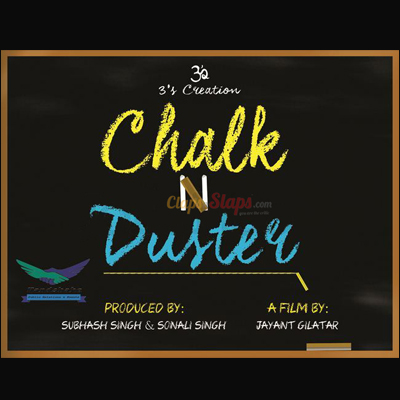
    MUMBAI: Chalk N Duster is an almost all-women game of politics taking place at a school, bearing a traditional old-fashioned name like Kantaben High School. There is a bunch of teachers, dedicated as they can be until an overly ambitious new principal steps in.


    Divya Dutta manipulates her way to the position of the principal of Kantaben High School by ousting Zarina Wahab from the post. From there on, she wants to convert this traditional institution into a much-in-vogue “international school.” The overpriced school would automatically render it unaffordable for poor children making it a school only for the rich. The trustee of the school, Arya Babbar, supports her whims.


    Now Dutta needs to get rid of the current lot of teachers. To achieve her goal, she starts harassing the teachers, changing the rules hoping this would force them to resign. While she harasses the teachers she wants to get rid of, she also rewards those who follow her line with better positions.


    She starts with sacking teachers she does not want. As she sacks veteran teacher Shabana Azmi, there is a reaction but the others know they can’t do anything about it. However, a fellow teacher, Juhi Chawla, takes up the issue and also gets sacked in the bargain.


    Babbar is delighted at the events at his school and also challenges the chairman of a rival school, Jackie Shroff, that his school will become more reputed than his. That boast proves costly for Babbar as Shroff does not take kindly to this dare. He decides to involve the media into the matters of Kantaben High School and soon a reporter, Richa Chadha, exposes the deeds of Babbar and Dutta on national television, no less.


    Chalk N Duster has a horde of talented actors but this badly written and directed film fails to exploit their worth. It needed the duster right when the first draft for the film was penned.


    Chalk N Duster is an insipid film unlikely to attract audience.


    Producer: Amin Surani


    Director: Jayant Gilatar


    Cast: Shabana Azmi, Juhi Chawla, Divya Dutta, Upasna Singh, Girish Karnad, Zarina Wahab, Aarya Babbar, Samir Soni and Adi Irani with special appearances by Rishi Kapoor, Jackie Shroff and Richa Chaddha

  • ‘Wazir:’ Give me Ludo any day!

    ‘Wazir:’ Give me Ludo any day!

    Vidhu Vinod Chopra’s company has some very successful entertainers and they have been huge money-spinners for the banner. To this end, his tie-up with director Rajkumar Hirani has proved to be fruitful. But, left to his own, Chopra likes to indulge in stories of intrigue, the earlier one being Eklavya. This time Chopra is credited with the original story ofWazir. Simply put, it is a story about two persons, Amitabh Bachchan and Farhan Akhtar, affected by the same villain and the way they join forces to avenge the wrong done to them.

    But Chopra does not like to make it so simple. He weaves a web of complications around the script and the characters like the game of chess, which is at the centre of this film. What backfires on the script is that the audience knows who the culprit is while Bachchan and Farhan try to expose him.

    Farhan is out with his wife, Aditi Rao Hydari, and daughter. While Aditi goes to a shop to get some work done; Farhan, waiting for her, spots a dreaded terrorist who, the authorities think, is in Karachi. A dutiful ATS officer that he is, he starts to chase the terrorist’s car. The chase ends abruptly when, after he turns a corner, the terrorists are waiting for him and start shooting at him. Farhan takes a bullet but survives while his daughter falls to a bullet. 

    The happy family of Farhan is shattered. Aditi holds him responsible and wants nothing to do with him anymore. Soon, Farhan learns where the killer of his daughter is. He defies the ATS cadre, which is out to get the convict with instructions to take him alive since he is linked to an influential minister. Farhan’s rage is uncontrollable and he kills the terrorist. 

    As is the norm in Hindi films of suspending honest and brave officers, Farhan too is suspended from the force. Farhan is forlorn and also decides to commit suicide at his daughter’s grave when Bachchan steps in. He gives Farhan time to have a second thought and, purposefully, drops his wallet at the gate of the cemetery. Luring Farhan to come visit his home to return the wallet. 

    Bachchan runs a Bal Bhavan at his home. He is some sort of an expert on chess and teaches small children to play the game. There is another woman around who teaches them the skills of drama. Bachchan has lost his wife and both his legs for being flamboyant. Out on a ride with his wife, he exceeds the speed limit of his car and tragedy ensues. 

    As it turns out, Bachchan’s daughter has been murdered by the same villain, Manav Kaul, who is also responsible for Farhan’s tragedy. Being handicapped, Bachchan needs a brave man with the same determination to finish the wrongdoer. Bachchan starts working on Farhan and while teaching him to play chess, fills his mind with a purpose, which is to kill Kaul. 

    By now, Farhan has grown very fond of Bachchan, who creates a fictitious character called Wazir. Wazir torments Bachchan and hurts him and also promises to kill him. Why Bachchan and why not Farhan himself as the handicapped Bachchan is no threat to anyone while Farhan is the one capable of taking revenge. But, that is Bachchan’s way of emotionally blackmailing Farhan to go out and get the man who killed his daughter.

    Kaul for his part lives a dual life. He is a terrorist who has killed the entire population of his village in Kashmir but using dramatics has emerged as the victim and as a patriot. He has even won elections and is now in a position to call the shots with police. Bachchan adopts all the tricks in the trade to convince Farhan to go after Kaul. Farhan does so. Kaul is at a public rally, surrounded by an army of guards but Farhan makes it look so easy that the audience satisfaction of justice to the villain is lost. 

    The script of the film is like a game of chess for one who is not familiar with the game. The revenge angle is stretched and even it just a little over 100 minutes, the narrative sags. And the director’s fancy for creating rain and shooting in low light most of the time makes the viewing drab. It is the same complaint with cinematography: too much of low light. The film has little scope for songs but is loaded with seven numbers. Editing has no place here for that would have rendered the film to the length of a TV episode. 

    Bachchan makes his presence felt by being loud. His get-up makes him look like a caricature and is quite a put off. Farhan justifies his character to the best of his abilities. Aditi has little to do. Cameos by John Abraham and Neil Nitin Mukesh are okay. Kaul does a fair job despite his stereotypical character. 

    Wazir has nothing for the single screens, and its time at the multiplexes won’t be exciting either. 

    Producer: Vidhu Vinod Chopra

    Director: Bejoy Nambiar

    Cast: Amitabh Bachchan, Farhan Akhtar, Aditi Rao Hydari, Manav Kaul and cameos by John Abraham and Neil Nitin Mukesh

    ‘Chauranga:’ This is not cinema

    Chauranga is one more offering from the National Film Lab organised by NFDC and others, which means it is meant to exploit poverty, class differences and such problems in India and earn glory at various film festivals. This film has been doing the festival circuit since 2014 and has finally come to try to reach the Indian audience.

    Two brothers coming from a backward class family are thick in their brotherhood. While the elder, Riddhi Sen, studies in a school away from his village, the younger, Soham Moitra, whiles away his time hanging around a jamun tree, watching the village strongman’s (Sanjay Suri) daughter passing on her two-wheeler. He has fallen in love with her and is convinced she too loves him because she always spares a smile for him.

    Suri is the village headman by proxy as he takes all the decisions for a voicelessgram panchayat. While the population of the village is purely segregated between upper and lower castes, it does not come in the way of Suri from having a liaison with the mother of these two boys, Tannishtha Chatterjee. Her job is to look after the cowsheds of Suri and that is where their rendezvous takes place. In return, Suri looks after the education of her son. 

    Suri has built a hand pump to solve the village’s water problem. He decides to invite a politician to inaugurate the pump followed by a film show for the entire village. This way, while the whole village is glued to the cinema, he can have his time with Tannishtha in the cowshed.

    From the beginning of the film, there is a naagin slithering around on the screen, protecting her eggs. And during the duo’s rendezvous, she decides to leave her eggs, slithers into the cowshed and bites Tannishtha.

    Earlier, besotted Soham has convinced his educated elder brother to pen a love letter to Suri’s daughter. Doting on his brother, the elder one obliges. It is some lines from a film song, which Suri had heard from the boy on an earlier occasion. That sounds the death knell for the boy. The younger one manages to board a goods train to escape to safety. 

    Having sat through it, it is tough to understand the purpose of such a film. Its theatrical release spells disaster. 

    Producers: Onir, Sanjay Suri

    Director: Bikas Ranjan Mishra

    Cast: Sanjay Suri, Tannishtha Chatterjee, Riddhi Sen, Soham Maitra, Ena Saha

  • ‘Dilwale:’ A fair entertainer

    ‘Dilwale:’ A fair entertainer

    Rohit Shetty and Shah Rukh Khan’s Red Chillies Entertainment join hands again to come up with Dilwale and make what Shetty makes best, an entertainer! 

    Shetty sticks to his proven track of comedy, action, blown-up cars flying high and some romance. To their credit, the makers have used many checks and balances; in script as well as casting. For instance, Khan doing traditional romance would not be readily palatable so his love story is about a past romance rekindled. And, who better than Kajol, his love in the legendary, Dilwale Dulhaniya Le Jaayenge? This has definitely generated interest in people and was also handy to plot the film’s promotion.

    The other balancing move is to also cast a young romantic pair, Varun Dhawan and Kriti Sanon, to cater to the youth, which contribute to a great extent in making such a film successful.

    Khan is the adopted son of don, Vinod Khanna. He is at loggerheads with another don, Kabir Bedi. Both operate out of Bulgaria. They play cat and mouse games, outwitting and stealing each other’s consignments. Khan is the star of Khanna gang and manages to steal a huge consignment of gold belonging to Bedi. The enmity only deepens. 

    On one of his outings with members of his gang following him in various cars, Khan’s car knocks down Kajol. He is charmed and gradually falls in love with her. The song and dance routine follows and soon both are ready to tie the knot. Before that, it is Kajol’s birthday and she wants him to be present. However, he has to ferry the gold he stole from Bedi across the border to Romania. She is upset till he promises to be back in time for her birthday celebrations. But, that is not to be as Khan is attacked while on his mission and injured badly. 

    He recovers. In fact, there are recoveries of all kinds, emotional as well. Khanna readily accepts Khan’s wish to marry Kajol and eventually, so does Bedi. Khanna and Khan are invited over to Bedi’s place. While Khanna is willing to forget the enmity, Bedi has other ideas. He wants to stop the wedding as well as settle the scores by killing his guests. A shoot out follows. While Khan is busy shooting the rookies, Khanna and Bedi shoot each other a la Duel At OK Corral, both shooting at each other from few feet apart. Both die. 

    Kajol steps in as the shootings are over only to see Bedi killed and thinks Khan did it. She shoots at him but Khan is a survivor. 

    Kajol has now left town with her kid sister to tend to her. Khan wants to clear her misunderstanding but she is untraceable. Khan and his two loyals decide to exit the business of don-giri and live a normal life. His men start a restaurant while Khan decides to take up remodeling of cars. The kid brother, who grows up to Dhawan, is brought back from the hostel where he was housed to keep him away from the life of violence.

    It is Dhawan’s time to fall in love. A new migrant in his town from Bengaluru, Sanon, is stalled because her Scooty would not move. She has to rush to the local authorities to seek a license for a restaurant. Dhawan happens to pass by and is ready to help. After that, he stalks her, fills her with lies about his tyrant brother and his pitiable life. Self-pity stories usually work with girls. It works on her too. The couple is in love and it is time to talk to their respective parents/ guardians.

    Khan is invited to Sanon’s house to meet her sister, her guardian. When Khan goes to meet her, there is a shock awaiting him; the sister is none other than Kajol who rejects the proposal for her sister. And, as has been her habit, warns Khan: “Next time I see you, I will kill you.” She always carries a firearm. The film plays like a family drama for a while till the misconceptions of Kajol are cleared and, while Dhawan – Sanon romance gets the green signal to bloom, that of Khan – Kajol is rekindled. 

    It is a usual Shetty script. The events may jump from one to another and from present to past but, on the whole, they keep you entertained. It follows the logic or lack of it of classic Manmohan Desai and David Dhawan films. Shetty is among very few directors who believes in entertainment. His casting is creditable. While the goons and lackeys in his films are also recognised faces, even for small roles he has cast Khanna and Bedi. And, for lighter moments, there are Boman Irani, Johnny Lever, Sanjay Mishra and the likes who all fit the bill aptly. 

    What also works is the music with some popular numbers: the Gherua song is a much played number already, Janam janam and Tujhse pyar… are soothing while Manma emotion jaage… has total youth appeal. In short, the music works for the film.

    Choreography has appeal. Photography captures the pleasant locations well. Editing is rarely satisfying ever and the same applies here.

    As for acting, the Khan – Kajol pairing may not be all that it used to be, but both try their best. Acting wise, both do well. Dhawan is fine in both silly scenes as well as emotional ones, Sanon makes her presence felt. 

    Dilwale is sure to get better opening day as well as the weekend footfalls as its opposition is a different genre film, which is not universally popular in India.

    The film caters to both, the Khan and Kajol fans as well as new, youth following of Dhawan. The fatwa against Khan andDilwale by various groups may affect the film for a day or so, so would the extreme cold wave in the country, especially in the North. However, the film will also enjoy a three week open run including the Christmas and the New Year week until when there is no new release in sight. And by that time the fatwas would have passed their expiry dates.

    Producer: Gauri Khan
    Director: Rohit Shetty
    Cast: Shah Rukh Khan, Kajol, Varun Dhawan, Kriti Sanon, Varun Sharma, Vinod Khana, Kabir Bedi, Johnny Lever, Boman Irani, Mukesh Tiwari, Pankaj Tripathi, Sanjay Mishra

    ‘Bajirao Mastani:’ Insipid grandeur

    For decades, ambitious filmmakers have announced or expressed their desire a film on Bajirao Mastani. Finally, Sanjay Leela Bhansali decides to go ahead with the legend — or was it a folktale? — of the great love story of the brave warrior from Pune, Bajirao Peshwa and Mastani, the valiant daughter of the Rajput ruler of Bundelkhand and his Muslim wife.

    Historical films in India have had poor track record mainly because our history chapters are basically full of losers. Whatever battles the regional rulers fought were usually on the Indian land and never with invaders at borders.

    Some media or PR machines are busy making comparisons between Bajirao Mastani and Mughal-e-Azam. That is sacrilege. A Mughal-e-Azam happens, you cannot set out to make it. Also, Mughal-e-Azam was a fictional love story: Anarkali never existed, she was created, a myth. With Bajirao Mastani, sadly, Bhansali attempts to make a fiction out of a real-life warrior, Bajirao’s account. He takes too many liberties using the disclaimer in the title scroll! 

    The elder Peshwa has passed away, Shahu Chhatrapati of Satara, Mahesh Majrekar, has called his court to decide on the next Peshwa, who will answer to the Shahu Chhatrapati and lead his army. Aditya Pancholi, the Shahu court Prime Minister, is the claimant but Bajirao, played by Ranveer Singh, the son of the late Peshwa, finds more takers in the court. He has to pass a bravery test as well as a general knowledge test. Obviously, he does. Ranveer is the new Peshwa who operates from Pune, annihilating all of Shahu and Maratha’s enemies, mainly Mughal knights. 

    Bajirao is said to have many battles but the film being a love story of Bajirao and Mastani, it deals mainly with one, the attack on Bundlekhand by Mughals. 

    One fine day, a female warrior barges into Bajirao’s abode despite being told that he is too busy to meet her. She fights Bajirao’s guards and is about to subdue them when Bajirao, who has been coolly watching the scene, decides to intervene and neutralises the invading warrior. Floored by Bajirao’s assault, her helmet falls off and that warrior turns out to be, Deepika Padukone aka Mastani, the daughter of the Bundelkhand ruler. She has come to seek help from Bajirao to save her kingdom, which has been surrounded by a Mughal leader. 

    Impressed with her fighting prowess, Bajirao agrees to go along. He takes the invaders of Bundelkhand by surprises and defeats them; Padukone is as much a part of the battle as him. She also saves Bajirao’s life during the attacks. Love has happened! And, it is mutual and it does not matter that Bajirao has a wife, Priyanka Chopra, at home with whom he has been siring children on a regular basis.

    But, Bajirao has gifted his dagger to Padukone, which in Bundelkhand means marital bond! So, she already considers herself married to Bajirao though the same ritual may not be valid in Pune. After convincing her royal parents, she embarks on a trip to her sasural in Pune. 

    Once in Pune, the battles of Bajrao are kept aside for his twin romances: with his wife, Chopra, and his paramour, Padukone. Add to that the palace intrigues, involving Bajirao’s mother, Tanvi Azmi. No way would she accept a girl born out of a Muslim mother as her son’s woman. First, she tries to convert her into a court dancer and later to kill her.

    Bajirao was a rare Brahmin warrior and, in his palace, the writ of the Brahmin priests runs large. Also, Bajirao may be the man of the house, but his mother, Tanvi, rules the palace! Chopra only learns much later of her husband’s indulgence. Initially distanced from Padukone, she is willing to do a song and dance with her when the director connives such a situation! (After all, the similar situation worked in Devdas, so why not try again?)

    Time comes when Bajirao has been dethroned form his Peshwa-ship by Tanvi because of his affair with Padukone. But, soon, there is a threat from the Nizam from Hyderabad to the Shahus and Bajirao is convinced also to take back his job. Things get a bit funny after this. 

    Bajirao plans to invade the Nizam before he does. The Nizam is ready with his 20,000 strong army to invade Shahus, which counts its army in 10,000. Milind Soman, Singh’s advisor, warns him about the inequality about numbers. But, Singh plays a dialogue from some gangster enmity movie: We know we have half their army, Nizam does not! And one thought NIzams were not fools and like all rulers, they too had their spies, known as guptchars, in that era. 

    Next, Singh walks into the Nizam’s camp and gives him a hull (a Marathi slang meaning a false threat), that Shahu’s army of 40,000 is placed right behind Nizam’s army to finish his reign. The Nizam is scared enough to agree to all terms of Bajirao. Those are to not invade Shahus while Bajirao is away invading the Mughal throne in Delhi!  This is really stretching the cinematic liberty. 

    After that side show with Nizam, Singh is back to facing the family hassles as the film gets more banal. 

    Bhansali seems to have bitten more than he can chew with Bajirao Mastani. For one thing, this was always a regional subject and Bhansali has gone ahead and made it more so by using Marathi tunes, Marathi language and many actors identified mainly with Marathi stage or cinema. (A similar trick worked in Ramleela, with him using some Gujarati words and music, but you can’t push your luck forever.)

    Bhansali also takes many liberties and goes ahead with discrepancies and the war scenes are just not appealing. Dialogue is good at places but at other times, it tries to be too deep, which means it is not for the mass. While Bhansali crams the film with songs, none have appeal. His idea of music seems to be gathering crowds without faces for song picturization. Filling the screen is not enough. Photography is okay but shooting to camouflage sets passing for locations forces the makers shoot in low light and that is depressing. Editing is missing. Only plus for the film are the colourful sets and, at times, visuals. 

    Performance wise, two names that stand out are Padukone and Azmi. Padukone is good generally but excels in some scenes. Azmi plays, probably, her first negative role, and is great. Chopra hardly fits the sad second fiddle to not only Singh but also in casting. As for Singh, he is cast in a role too huge for his standing as well as acting abilities. Rest of the cast has no scope as such.

    Bajirao Mastani has had a weak opening, may not appeal to the youth and is rather too costly to be a safe bet at the box office only on the strength of grandeur.

    Producer: Sanjay Leela Bhansali
    Director: Sanjay Leela Bhansali
    Cast: RanveerSingh, Pryanka Chopra, Deepika Padukone, Tanvi Azmi, Milind Soman, Mahesh Manjrekar, Aditya Pancholi

  • ‘The Silent Heroes:’ Childish film for children

    ‘The Silent Heroes:’ Childish film for children

    It seems a nice idea to project differently-abled children in a challenging situation as a film to inspire other children. The Silent Heroes has been written and directed by a Mahesh Bhatt, not “the” veteran filmmaker Mahesh Bhatt.

    Priyanka Panchal along with four others educates deaf and mute students in Uttarakhand. The school is surrounded by the scenic mountains of the Himalayas. Priyanka’s colleagues, for one of whom she has special feelings, become victims of an avalanche while on an expedition in the mountains. He dies leaving his dream of training a bunch of his deaf and mute students into adventurous mountaineers. Priyanka rues both, losing her love as well as his incomplete dream.

    That is when she comes across Maanuv Bhardwaj, who specialises in survival tactics. The local mountaineering academy also gets involved and the project is taken up to train volunteer deaf and mute children for a mountain climbing expedition. It starts with training the kids. But, sadly for the children, Maanuv meets with an accident and is replaced by Simran Deep, a sadist without a cause, who acts bitchy for the sake of it and thinks it is futile to waste time on these children. She derides them all the time. She also makes sure she sets impossible targets for them.

    While she is setting up the climb for children, Simran and her help both fall off a cliff and are rendered inactive. Now the very children she derided and thought good for nothing, use their other gifts they have instead of speech and ability to hear. They tend to her. They use their basic training and carry her to a river to await a stray rafter. But, when no rafter comes along, they use their bedding sheets and empty water bottles to put together a makeshift raft to carry her to the closest place of humanity where she can get medical attention without which she would need amputation of her leg. 

    While the children are carrying her on a raft they created, help is on the way in the form of Maanuv and Priyanka. The raft is coming apart in the heavy current of Gangotri but, things work out eventually.

    This could have been an inspirational film for children. Instead, it is so slack and overly dramatised, that it is tough to sit through the film. The script just never stabilises and carries on painfully. As for direction, it is patchy. There are songs galore in the background, which do not mean anything. Editing is nonexistent. Background music is jarring. Performances are bad to passable.

    The Silent Heroes is a worthless film, which serves no purpose whatsoever.

    Producers: Kamal Birani, Mahesh Bhatt.

    Director: Mahesh Bhatt.

    Cast: Maanuv Bharadwaj, Priyanka Panchal, Mann Bagga, Simran Deep, Nirmal Kumar, TarunBhargav, Gurfareen Bano, Khwaish Gupta, Aashish Chauhan, Jaideep Rawat, SamrennBano, Prakhar Chamoli, Renu singh, ShwetaRawat, Radhika Chauhan, Nikhil Bhargav, Shalini Rawat.