Category: Reviews

  • Houseful 3……Happy hours!

    Houseful 3……Happy hours!

    MUMBAI: Houseful 3 follows Sajid Nadiadwala’s Houseful (2010) and Houseful 2 (2012), both of which saw varying degrees of success. This instalment too follows the same pattern of many characters filling the screen with silly gags and actions that are meant to keep the viewer occupied. In short, it is a leave-your-brain-at-home film that does not require a script.

    Boman Irani is a kind of shipping tycoon based in UK with three daughters, Jacqueline Fernandez, Nargis Fakhri and Lisa Haydon who he assumes to be simple, sanskari girls living according to their names: Ganga, Jamuna and Saraswati. He has some superstition about women in his family marrying because there are instances of bad happenings in the aftermath.

    However, unknown to Boman as well as to each other, all three sisters have a man in their life. These are Akshay Kumar, Abhishek Bachchan and Riteish Deshmukh. These three pretend to be in love but their real aim is to pocket many millions of wealth that vests between these three sisters.

    Boman has sought the help of Chunky Pandey, playing Aakhri Pasta in all the films, who comes dressed as a fortuneteller and predicts that the marriage of each girl bodes ill for Boman, who will die the moment the each sister’s man sets eyes on him, or steps into the house or utters the first word to Boman, respectively.

    For the comedy and buffoonery to happen, most of the characters have to be under one roof. The girls and guys devise a plan. Akshay, an aspiring footballer, comes over on a wheel chair, he is incapable of stepping down or walking so Boman is safe on that count. Abhishek, dreaming of becoming a rapper, enters the house as a mute so there is no question of uttering a word to Boman. Riteish, who is raring to become a formula one driver, pretends to be blind; he can’t set eyes on Boman and hence even the third bad omen is ineffective.

    Now enter three more suitors for these girls in Nikitin Dheer, Sameer Kochhar and Arav Chowdhary. Just out of jail, they are presented as Boman’s choice for the girls. Jackie Shroff enters the scene. An ex-don of Mumbai, Jackie is also just out of jail and decides to meet his underling, Boman in London. When jailed, Jackie had transferred Boman along with all his wealth to London. He also agrees with Boman’s choice of boys.

    For Dheer, Kochhar and Chowdhary, the hitch is that though Boman and Jackie prefer them for the girls, but the girls love Akshay, Abhishek and Riteish. After some more one-upmanship duels between the two groups, the good have to win over the evil. The idea is toraise some laughter and, hence, the battles have to be won with wit, not hand-to-hand fights.

    The film does not have to adhere to a particular script. It resorts to gags to follow a loosely woven story and anything can be turned or twisted at will. On that count, Sajid and Farhad do a fair job. The film has passable musical score despite a number of lyric writers and composers; however, the choreography is executed in an entertaining manner. Photography captures lush London locations very well.

    As for performances, Akshay Kumar, playing one with a split personality, excels in this film with his varied expressions and deadpan timing. Abhishek and Riteish play the perfect foils. Jacqueline, Nargis and Lisa add to the glamour quotient. Boman and Jackie do well. Of the three villains, Nikitin towers over the rest while Kochhar and Chowdhary are okay.

    Houseful 3 is a fair entertainer to hit the cinemas after a long draught. The film caters to all kind of audience and should manage a decent stay at the box office.

    Producer: Sajid Nadiadwala.

    Directors: Sajid, Farhad.

    Cast: Akshay Kumar, Abhishek Bachchan, Riteish Deshmukh, Jacqueline Fernandez, Nargis Fakhri, Lisa Haydon, Boman Irani, Jackie Shroff, Chunky Pandey, Nikitin Dheer, Sameer Kochhar, Arav Chowdhary.

  • Houseful 3……Happy hours!

    Houseful 3……Happy hours!

    MUMBAI: Houseful 3 follows Sajid Nadiadwala’s Houseful (2010) and Houseful 2 (2012), both of which saw varying degrees of success. This instalment too follows the same pattern of many characters filling the screen with silly gags and actions that are meant to keep the viewer occupied. In short, it is a leave-your-brain-at-home film that does not require a script.

    Boman Irani is a kind of shipping tycoon based in UK with three daughters, Jacqueline Fernandez, Nargis Fakhri and Lisa Haydon who he assumes to be simple, sanskari girls living according to their names: Ganga, Jamuna and Saraswati. He has some superstition about women in his family marrying because there are instances of bad happenings in the aftermath.

    However, unknown to Boman as well as to each other, all three sisters have a man in their life. These are Akshay Kumar, Abhishek Bachchan and Riteish Deshmukh. These three pretend to be in love but their real aim is to pocket many millions of wealth that vests between these three sisters.

    Boman has sought the help of Chunky Pandey, playing Aakhri Pasta in all the films, who comes dressed as a fortuneteller and predicts that the marriage of each girl bodes ill for Boman, who will die the moment the each sister’s man sets eyes on him, or steps into the house or utters the first word to Boman, respectively.

    For the comedy and buffoonery to happen, most of the characters have to be under one roof. The girls and guys devise a plan. Akshay, an aspiring footballer, comes over on a wheel chair, he is incapable of stepping down or walking so Boman is safe on that count. Abhishek, dreaming of becoming a rapper, enters the house as a mute so there is no question of uttering a word to Boman. Riteish, who is raring to become a formula one driver, pretends to be blind; he can’t set eyes on Boman and hence even the third bad omen is ineffective.

    Now enter three more suitors for these girls in Nikitin Dheer, Sameer Kochhar and Arav Chowdhary. Just out of jail, they are presented as Boman’s choice for the girls. Jackie Shroff enters the scene. An ex-don of Mumbai, Jackie is also just out of jail and decides to meet his underling, Boman in London. When jailed, Jackie had transferred Boman along with all his wealth to London. He also agrees with Boman’s choice of boys.

    For Dheer, Kochhar and Chowdhary, the hitch is that though Boman and Jackie prefer them for the girls, but the girls love Akshay, Abhishek and Riteish. After some more one-upmanship duels between the two groups, the good have to win over the evil. The idea is toraise some laughter and, hence, the battles have to be won with wit, not hand-to-hand fights.

    The film does not have to adhere to a particular script. It resorts to gags to follow a loosely woven story and anything can be turned or twisted at will. On that count, Sajid and Farhad do a fair job. The film has passable musical score despite a number of lyric writers and composers; however, the choreography is executed in an entertaining manner. Photography captures lush London locations very well.

    As for performances, Akshay Kumar, playing one with a split personality, excels in this film with his varied expressions and deadpan timing. Abhishek and Riteish play the perfect foils. Jacqueline, Nargis and Lisa add to the glamour quotient. Boman and Jackie do well. Of the three villains, Nikitin towers over the rest while Kochhar and Chowdhary are okay.

    Houseful 3 is a fair entertainer to hit the cinemas after a long draught. The film caters to all kind of audience and should manage a decent stay at the box office.

    Producer: Sajid Nadiadwala.

    Directors: Sajid, Farhad.

    Cast: Akshay Kumar, Abhishek Bachchan, Riteish Deshmukh, Jacqueline Fernandez, Nargis Fakhri, Lisa Haydon, Boman Irani, Jackie Shroff, Chunky Pandey, Nikitin Dheer, Sameer Kochhar, Arav Chowdhary.

  • Sarbjit…Insufferable

    Sarbjit…Insufferable

    Wanting an easy way out, the run for biopics continues. The fact that biopics rarely work in India; an odd one which works to an extent, needs to be fictionalized in parts or more. If such films on Gandhi (which had just scrapped through in English original version but failed in its Hindi version) as well as films on Bose, Patel, Nehru, Savarkar, Ambedkar have all passed unnoticed, to think that Sarbjit was the least of a real life story to be adapted for a film! 
    Sarbjit Singh, played by Randeep Hooda, is a farm hand in the village of Bhikhi wind in Punjab near the India Pakistan border. His upbringing has mostly been under the aegis of his older sister, Dalbir Kaur, played by Aishwarya Rai. As he comes of age, he falls for the village belle, Richa Chaddha, and soon becomes the father of two daughters. 

    Fond of wrestling, Hooda is engrossed in the sport one day when Rai watches him from a passing street bus. For whatever reason, she is angry with him. The film or the script does not bother to tell you why for, in a small village, youth do indulge in such harmless sport for pastime. However, Rai decides to punish Hooda, married and father of two, for his indulgence as if he was a school kid. He is banished from house even as he keeps bantering from outside the main door. The scene has been prolonged unnecessarily and makes little sense.

    This is when a friend of Hooda enters the scene and flashes a quarter of alcohol (180ml) at Hooda and both vanish in to nearby fields to share the drinks. And, in no time, both are beyond themselves totally inebriated. Imagine, 90 ml of alcohol each doing that to two Punjabis! Leaving his two-wheeler for his friend to tend to, Hooda decides to amble home. Instead, he ambles into Pakistani territory where the rangers are ready to pounce on him and consign him to a jail. He is branded as an Indian terrorist, Ranjeet Singh, who bombed various locations in Pakistan killing many.

    The treatment meted out to Hooda in a Pakistani jail is inhuman to say the least. On the Indian side, Rai is desperately looking for her brother to no avail. She soon learns that he has landed in a Pakistani jail. There on starts her ordeal and, that of the viewer of this film, as she bangs on every possible door to come to help her get her brother released. She sits on fasts, leads numerous candle light marches (which have become popular in our films more than they happen in life) and these things get repetitive all through the film.

    Rai yells at people all around, may it be in Indian officialdom or in Pakistan jails as if her brother was the only Indian languishing in Pakistani jail and, as if, India did not have any Pakistanis in its prisons. Her approach as shown in the film, lacks logic or normalcy. 
    The film is titled after the so called victim, Sarbjit, but it is all about Rai. She is in each frame as a crusader on a mission to get her brother freed. Neither does she convince the authorities nor the audience with her tirades nor her overacting. 

    To think in its perspective, Sarbjit was not a subject to turn into a film; it is a local story with no identification with all India audiences. It is an inconclusive story where nothing positive comes out in the end. The other mistake was to cast the glamorous Ms Rai as the protagonist who neither looks nor convinces as Sarbjit’s sister, Dalbir Kaur would expected to be. She also lacks the native Punjabi twang as most of the time she mouths Hindi. In fact, Rai, expected to be the star and draw for this film, is its major drawback.

    In this film about Sarbjit, Hooda playing Sarbjit is sidelined as isRicha Chadha, playing his wife. The script is wonky and, at 131 minutes, intolerable. Direction is below par. Editing is poor. Cinematography is fair. Music had no place in this film except for one song in the beginning when Hooda and Chadha romance; the rest of the numbers are forced in. The film’s dialogue lacks spark. Richa, despite a much curtailed secondary role, stands her ground. Hoodagives into poor substance.

    Sarbjit is insufferable. Tax Free tag in a couple of states notwithstanding. 
    Producer: Vshu Bhagnani, Jackey Bhagnanai, Sandeep Singh, Deepshikha Deshmukh, Omung Kumar, KrIshan Kumar, Bhushan Kumar. 

    Director: Omung Kumar.

    Cast: Randeep Hooda, Richa Chadha, Darshan Chadha, Ankita Shrivastav, Shiwani  Saini. 

  • Sarbjit…Insufferable

    Sarbjit…Insufferable

    Wanting an easy way out, the run for biopics continues. The fact that biopics rarely work in India; an odd one which works to an extent, needs to be fictionalized in parts or more. If such films on Gandhi (which had just scrapped through in English original version but failed in its Hindi version) as well as films on Bose, Patel, Nehru, Savarkar, Ambedkar have all passed unnoticed, to think that Sarbjit was the least of a real life story to be adapted for a film! 
    Sarbjit Singh, played by Randeep Hooda, is a farm hand in the village of Bhikhi wind in Punjab near the India Pakistan border. His upbringing has mostly been under the aegis of his older sister, Dalbir Kaur, played by Aishwarya Rai. As he comes of age, he falls for the village belle, Richa Chaddha, and soon becomes the father of two daughters. 

    Fond of wrestling, Hooda is engrossed in the sport one day when Rai watches him from a passing street bus. For whatever reason, she is angry with him. The film or the script does not bother to tell you why for, in a small village, youth do indulge in such harmless sport for pastime. However, Rai decides to punish Hooda, married and father of two, for his indulgence as if he was a school kid. He is banished from house even as he keeps bantering from outside the main door. The scene has been prolonged unnecessarily and makes little sense.

    This is when a friend of Hooda enters the scene and flashes a quarter of alcohol (180ml) at Hooda and both vanish in to nearby fields to share the drinks. And, in no time, both are beyond themselves totally inebriated. Imagine, 90 ml of alcohol each doing that to two Punjabis! Leaving his two-wheeler for his friend to tend to, Hooda decides to amble home. Instead, he ambles into Pakistani territory where the rangers are ready to pounce on him and consign him to a jail. He is branded as an Indian terrorist, Ranjeet Singh, who bombed various locations in Pakistan killing many.

    The treatment meted out to Hooda in a Pakistani jail is inhuman to say the least. On the Indian side, Rai is desperately looking for her brother to no avail. She soon learns that he has landed in a Pakistani jail. There on starts her ordeal and, that of the viewer of this film, as she bangs on every possible door to come to help her get her brother released. She sits on fasts, leads numerous candle light marches (which have become popular in our films more than they happen in life) and these things get repetitive all through the film.

    Rai yells at people all around, may it be in Indian officialdom or in Pakistan jails as if her brother was the only Indian languishing in Pakistani jail and, as if, India did not have any Pakistanis in its prisons. Her approach as shown in the film, lacks logic or normalcy. 
    The film is titled after the so called victim, Sarbjit, but it is all about Rai. She is in each frame as a crusader on a mission to get her brother freed. Neither does she convince the authorities nor the audience with her tirades nor her overacting. 

    To think in its perspective, Sarbjit was not a subject to turn into a film; it is a local story with no identification with all India audiences. It is an inconclusive story where nothing positive comes out in the end. The other mistake was to cast the glamorous Ms Rai as the protagonist who neither looks nor convinces as Sarbjit’s sister, Dalbir Kaur would expected to be. She also lacks the native Punjabi twang as most of the time she mouths Hindi. In fact, Rai, expected to be the star and draw for this film, is its major drawback.

    In this film about Sarbjit, Hooda playing Sarbjit is sidelined as isRicha Chadha, playing his wife. The script is wonky and, at 131 minutes, intolerable. Direction is below par. Editing is poor. Cinematography is fair. Music had no place in this film except for one song in the beginning when Hooda and Chadha romance; the rest of the numbers are forced in. The film’s dialogue lacks spark. Richa, despite a much curtailed secondary role, stands her ground. Hoodagives into poor substance.

    Sarbjit is insufferable. Tax Free tag in a couple of states notwithstanding. 
    Producer: Vshu Bhagnani, Jackey Bhagnanai, Sandeep Singh, Deepshikha Deshmukh, Omung Kumar, KrIshan Kumar, Bhushan Kumar. 

    Director: Omung Kumar.

    Cast: Randeep Hooda, Richa Chadha, Darshan Chadha, Ankita Shrivastav, Shiwani  Saini. 

  • Azhar…Of a fallen idol!..Dear Dad…Its Complicated!

    Azhar…Of a fallen idol!..Dear Dad…Its Complicated!

    MUMBAI: Biographical or sports films are being mademore often in recent times than they ever were. With a dearth of script ideas as well as the writers to deliver, this is an easy way out to keep production lineup running for a studios like Balaji Motion Pictures. This genre facilitates mid-range star cast films at affordable budgets.

    Azhar is one such film from the Balaji stable which mixes the themes of sport as well as a biography and, as a bonus, promises a potential tale to tell which would complete the makers’ requirements.

    The film is said to be based on the life of the mercurial cricketer Mohammad Azharuddin; his cricketing career, his marriage followed by a romance with a film star and the controversy that followed implicating him in a match fixing scandal. However, a disclaimer in the titles belies all such claims as well as denies resemblance to any cricketer dead or alive.It is an account of the rise and fall of a celebrated Indian cricketer on his way to becoming a legend.

    There a great feeling of joy and celebrations in this Muslim household of Hyderabad as the scion to the family is born. The maternal grandfather, Kulbhushan Kharbanda, names the boyAzharuddin, an Arabic word meaning, brilliant, luminous and such. Kharbanda expects Azhar to shine, stand out and to this end, he hands over a cricket bat in the hands of the child. He has taught Emraan some mantras for success in life and also predicted that not only will he play for India but will play 100 test matches.

    Emraan Hashmi playing the protagonist is now grown up having championed the game of cricket at various levels starting from streets. Soon enough, he is selected for the state Ranji Trophy team. Before you realize the scene has changed and jumped several years into future, you seeAzhar playing test cricket for India.

    Azhar makes his debut with a ton and follows it up with two more hundreds in next two tests. He is an overnight sensation so much so that the past masters give him various complementary epitaphs. The next step is inevitable; Azhar is offered the captaincy of the Indian team. This is in a very dramatic filmy manner where, instead of the cricket board calling him to the office to convey the decision, it is done by an official of the board doing it in the middle of an empty stadium making it look morelike a conspiracy than anhonour.

    The rest of the team consists of senior players and the resentment at Azhar’s appointment to lead them is evident. Leading from the front, Azhar is soon in command and is now playing his 99th test match. That is when the bubble bursts as he is accused of match fixing. He is suspended and also found guilty by the CBI. What follows is an 11 year long court battle to clear his name. The board’s lawyer is Lara Dutta, imported from London. Lara has been an ardent Azhar fan all along, but feels betrayed now and fights the case vigorously.

    Azhar, the film, tries to change the deeply embedded perception of people who once idolized the star cricketer. It is not easy to erase their hurt. The script takes recourse to a haphazard narration with past and present overlapping ad nauseam. The direction lets many glitches pass. To claim to have made a film on Azharuddin with a disclaimer does not let one change the facts of the case which dominated the media for long. The only catchy song is the remix of the old time mass hit, Oyeoye…. from Tridev. Even at 131 minutes, the film needs further clipping.

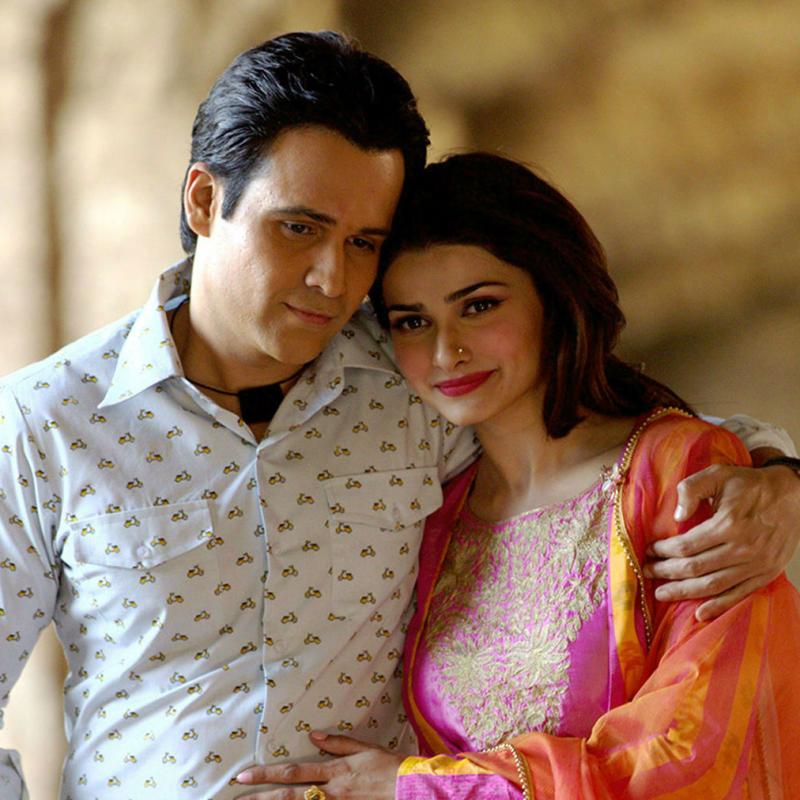
    As for performances, Emraan does his best but, Azhar’s persona is too big to live up to even in a disgraced state. While Prachi Desai is impressive, NargisFakri, playing the second wife, is passable. Lara is okay.  The casting of other cricketers, especially Kapil is laughable. Kunal Roy Kapur saves quite a few scenes as an idiosyncratic defense lawyer.

    Azhar is about a disgraced hero: there may be a few who would watch his tale out of sympathy not as an idol, which is not enough to sustain at the box office.

    Producers: Shobha Kapoor, Ekta Kapoor, Sony Pictures Network.

    Director: Tony D’Souza.

    Cast: Emraan Hashmi, NargisFakhri, Lara Dutta, Gautam Gulati, Manjot Singh, Kunaal Roy Kapur, Rajesh Sharma.

    Dear Dad

    Dear Dad is a father son bonding story. That would not have been fine thinking of a film like Masoom (1983). But, here, the already perfectly bonded family of two children and their loving parents is shattered as the father comes out the closet to declare his homosexual leanings.

    Himanshu Sharma is a 14 year old lad in Delhi living with his father, Arvind Swamy, mother and younger sister. He is ready to go back to hostel in the hill station of Mussorie. The plan is to travel with his friends. But, the father, Arvind, carries a load on his mind and offers to drop Himanshu to Mussorie. It is the coming of age for Himanshu and Swamy wants to first get through to his son’s teen mind presently fed on nude pictures, playing games on his mobile and generally enjoying the stage of life he is in along with his friends. On the drive to Mussorie, while Swamy tries to strike a conversation, the son is immersed in his cell phone.

    On the way to Mussorie, Swamy decides to stop at his parental home. Done with dotting momma, Swamy proceeds to see his father who has lost his speech. For, some reason, Swamy decides to tell his father that he was never interested in women. While his father has lost his speech (also, for no explicable reason, also his expressions!) and cant reply, the son overhears Swamy’s confession.

    The son, Himanshu, is devastated and feels betrayed. He withdraws from his father and all his affection and is in a rebel mode. The son also suspects his father of wanting to spend the night with a TV reality show celebrity, Aman Uppal, who they have given a lift on the way.

    Himanshu has confided in his closest buddy (all closest buddies in films are fat and seem to be jovial; this one fits the stereotypical, too). The friend takes him to a Bengali baba who can turn a homosexual in to a mard again!

    While Himanshu wanted a normal happy family of father, mother and sister living happily, his dream is shattered.

    Quite a few films seem to open the closet midway through the film lately; the recent examples being Kapoor & Sons while another one, Aligarh, was all about same sex attraction.

    Dear Dad is the maker’s film; the audience is less likely to participate. The film follows a script of convenience as things happen because they happen. While the theme is serious, the treatment is casual. The father son patch up is as hurried as the fallout was for after all, a Debonair collecting son should know both sides of a coin!

    What works for the film are the beautiful locales of Uttarkhand as the duo travel from Delhi by road, the scenic beauty has been beautifully captured.  As for the performances, Swamy underplays his being gay and the son, Himanshu, complements this with aggression. Uppal does very well. The rest are incidental.

    Dear Dad will find it tough fit into a slot when it comes to identifying its audience.

    Producers: Shaan Vyas, Ratnakar M.

    Director: TanujBhramar.

    Cast: Arvind Swamy, Himanshu Sharma, Ekavali Khanna, Aman Uppal, BhavikaBhasin.

  • Azhar…Of a fallen idol!..Dear Dad…Its Complicated!

    Azhar…Of a fallen idol!..Dear Dad…Its Complicated!

    MUMBAI: Biographical or sports films are being mademore often in recent times than they ever were. With a dearth of script ideas as well as the writers to deliver, this is an easy way out to keep production lineup running for a studios like Balaji Motion Pictures. This genre facilitates mid-range star cast films at affordable budgets.

    Azhar is one such film from the Balaji stable which mixes the themes of sport as well as a biography and, as a bonus, promises a potential tale to tell which would complete the makers’ requirements.

    The film is said to be based on the life of the mercurial cricketer Mohammad Azharuddin; his cricketing career, his marriage followed by a romance with a film star and the controversy that followed implicating him in a match fixing scandal. However, a disclaimer in the titles belies all such claims as well as denies resemblance to any cricketer dead or alive.It is an account of the rise and fall of a celebrated Indian cricketer on his way to becoming a legend.

    There a great feeling of joy and celebrations in this Muslim household of Hyderabad as the scion to the family is born. The maternal grandfather, Kulbhushan Kharbanda, names the boyAzharuddin, an Arabic word meaning, brilliant, luminous and such. Kharbanda expects Azhar to shine, stand out and to this end, he hands over a cricket bat in the hands of the child. He has taught Emraan some mantras for success in life and also predicted that not only will he play for India but will play 100 test matches.

    Emraan Hashmi playing the protagonist is now grown up having championed the game of cricket at various levels starting from streets. Soon enough, he is selected for the state Ranji Trophy team. Before you realize the scene has changed and jumped several years into future, you seeAzhar playing test cricket for India.

    Azhar makes his debut with a ton and follows it up with two more hundreds in next two tests. He is an overnight sensation so much so that the past masters give him various complementary epitaphs. The next step is inevitable; Azhar is offered the captaincy of the Indian team. This is in a very dramatic filmy manner where, instead of the cricket board calling him to the office to convey the decision, it is done by an official of the board doing it in the middle of an empty stadium making it look morelike a conspiracy than anhonour.

    The rest of the team consists of senior players and the resentment at Azhar’s appointment to lead them is evident. Leading from the front, Azhar is soon in command and is now playing his 99th test match. That is when the bubble bursts as he is accused of match fixing. He is suspended and also found guilty by the CBI. What follows is an 11 year long court battle to clear his name. The board’s lawyer is Lara Dutta, imported from London. Lara has been an ardent Azhar fan all along, but feels betrayed now and fights the case vigorously.

    Azhar, the film, tries to change the deeply embedded perception of people who once idolized the star cricketer. It is not easy to erase their hurt. The script takes recourse to a haphazard narration with past and present overlapping ad nauseam. The direction lets many glitches pass. To claim to have made a film on Azharuddin with a disclaimer does not let one change the facts of the case which dominated the media for long. The only catchy song is the remix of the old time mass hit, Oyeoye…. from Tridev. Even at 131 minutes, the film needs further clipping.

    As for performances, Emraan does his best but, Azhar’s persona is too big to live up to even in a disgraced state. While Prachi Desai is impressive, NargisFakri, playing the second wife, is passable. Lara is okay.  The casting of other cricketers, especially Kapil is laughable. Kunal Roy Kapur saves quite a few scenes as an idiosyncratic defense lawyer.

    Azhar is about a disgraced hero: there may be a few who would watch his tale out of sympathy not as an idol, which is not enough to sustain at the box office.

    Producers: Shobha Kapoor, Ekta Kapoor, Sony Pictures Network.

    Director: Tony D’Souza.

    Cast: Emraan Hashmi, NargisFakhri, Lara Dutta, Gautam Gulati, Manjot Singh, Kunaal Roy Kapur, Rajesh Sharma.

    Dear Dad

    Dear Dad is a father son bonding story. That would not have been fine thinking of a film like Masoom (1983). But, here, the already perfectly bonded family of two children and their loving parents is shattered as the father comes out the closet to declare his homosexual leanings.

    Himanshu Sharma is a 14 year old lad in Delhi living with his father, Arvind Swamy, mother and younger sister. He is ready to go back to hostel in the hill station of Mussorie. The plan is to travel with his friends. But, the father, Arvind, carries a load on his mind and offers to drop Himanshu to Mussorie. It is the coming of age for Himanshu and Swamy wants to first get through to his son’s teen mind presently fed on nude pictures, playing games on his mobile and generally enjoying the stage of life he is in along with his friends. On the drive to Mussorie, while Swamy tries to strike a conversation, the son is immersed in his cell phone.

    On the way to Mussorie, Swamy decides to stop at his parental home. Done with dotting momma, Swamy proceeds to see his father who has lost his speech. For, some reason, Swamy decides to tell his father that he was never interested in women. While his father has lost his speech (also, for no explicable reason, also his expressions!) and cant reply, the son overhears Swamy’s confession.

    The son, Himanshu, is devastated and feels betrayed. He withdraws from his father and all his affection and is in a rebel mode. The son also suspects his father of wanting to spend the night with a TV reality show celebrity, Aman Uppal, who they have given a lift on the way.

    Himanshu has confided in his closest buddy (all closest buddies in films are fat and seem to be jovial; this one fits the stereotypical, too). The friend takes him to a Bengali baba who can turn a homosexual in to a mard again!

    While Himanshu wanted a normal happy family of father, mother and sister living happily, his dream is shattered.

    Quite a few films seem to open the closet midway through the film lately; the recent examples being Kapoor & Sons while another one, Aligarh, was all about same sex attraction.

    Dear Dad is the maker’s film; the audience is less likely to participate. The film follows a script of convenience as things happen because they happen. While the theme is serious, the treatment is casual. The father son patch up is as hurried as the fallout was for after all, a Debonair collecting son should know both sides of a coin!

    What works for the film are the beautiful locales of Uttarkhand as the duo travel from Delhi by road, the scenic beauty has been beautifully captured.  As for the performances, Swamy underplays his being gay and the son, Himanshu, complements this with aggression. Uppal does very well. The rest are incidental.

    Dear Dad will find it tough fit into a slot when it comes to identifying its audience.

    Producers: Shaan Vyas, Ratnakar M.

    Director: TanujBhramar.

    Cast: Arvind Swamy, Himanshu Sharma, Ekavali Khanna, Aman Uppal, BhavikaBhasin.

  • Baaghi: A Rebel For Love – one for the masses; Shortcut Safari is Short cut to suffering

    Baaghi: A Rebel For Love – one for the masses; Shortcut Safari is Short cut to suffering

    Baaghi is an action romance film. Sajid Nadiadwala makes sure his films are entertainers and don’t leave the masses out.  Like all love stories, two guys want the same girl. Since the girl loves only one of them, the other guy becomes the villain in the plot. The film bears similarities to the Indonesian production, The Raid: Redemption and is a remake of the Telugu movie Varsham.

    Tiger Shroff, a Delhi lad, is on his way to Kerala to join a martial arts institution. He is a wayward guy and being sent here to be disciplined. On the train, he meets Shraddha Kapoor who is travelling to meet her grandmother. Both are attracted instantly and, in Kerala, their love blossoms further.

    The master at the institution is an accomplished martial arts exponent. A strict disciplinarian, he is much respected. His son, Sudheer Babu, excels in martial art and uses his might to terrorize people. He sees Shraddha and falls for her and wants to marry her at any cost. Sparks fly between Sudheer and Tiger.

    Shraddha’s father, Sunil Grover, is an opportunist and when offered a bagful of money, he agrees to marry off Shraddha with Sudheer. To separate her from Tiger, he concocts a story which Shraddha believes but is still not willing to marry Sudheer.

    Sudheer’s father, the master of the institution, cautions Sudheer not to come between two lovers and marry where he decides on the girl. Sudheer has no scruples and poisons his farther, there being no other way to get him out of his way. He then shifts his operations to Thailand in a ten storey building. While Shraddha is kept on the top floor, the other nine are like layers of shields for her with armed and qualified fighters.

    Tiger has left Kerala and is living a normal life when Grover approaches him. Shraddha has been abducted and he offers Tiger money to find her. Tiger needs the money for the treatment of a small child he has adopted while living with another student at the Institution.

    Now wasting time to find Sudheer, he enters the ring to fight a no holds barred bout of a fight with a regular winner and knocks him out in one kick. The bout is being watched on a close circuit camera and his plan works. Now, Sudheer’s men are after him.

    After some more fights and chases, Tiger is assumed dead. But, Shraddha is sure he will come to rescue her. And he does. After negotiating the nine floors full of goons, he is finally face to face with Sudheer. He seems to have learnt some secrets of hand to hand combat which Sudheer missed.

    The story is typical and the direction is apt. What makes the film interesting is the fresh casting and action. Considering this is only his second film, the audience response to Tiger’s entry and during action scenes is tremendous. He and petite Shraddha make a good pair. Grover is good in light scenes and as scheming father. Sudheer is menacing enough for Tiger’s winning look hard-fought.

    Considering this is a romantic film, it needed a couple of chartbusters but has only one song, Sab tera…which appeals.  The cinematography is good.

    Baaghi is a single screen entertainer after a long gap, besides having appeal for young viewers and is set to be a decent earner.

    Producer: Sajid Nadiawdwala.

    Director: Sabbir Khan.

    Cast: Tiger Shroff, Shraddha Kapoor, Sudheer Babu, Sunil Grover, Sanjay Mishra.

    Shortcut Safaari..Short cut to suffering

    Amitabha Singh, the producer and cinematographer associated with some award winning films has turned to direction with Shortcut Safaari. His earlier association with a children’s film was Chillar Party as a cinematographer. He worked as a DOP on Khosla Ka Ghosla and was the producer (with NFDC) of the national award winning Gujarati film, The Good Road, India’s nomination to the Oscars. But, direction is another ball game altogether.

    A group of school kids belonging to the nature society of a school are taken on a day out to a nature park to learn firsthand the gift that we have in the form of nature and all that it breeds. The tour done, the kids are divided on return trip in three small vans. The teacher in charge is keener on keeping her date with her beau, ditches her students and hitchhikes on the pillion of her man.

    While the students in two vans depart, the third one takes a little longer with a couple of students arguing over sitting arrangements. When they are on the road finally, the kids see a higher HP car overtake them and their fragile egos incite their driver to overtake that car. The driver hardly seems to have control on his small van but takes the challenge. He takes a shortcut, drives recklessly and lands up in a jungle. His van has bumped into a tree.

    The driver needs help and leaves the kids to find a help in nearby village!! Promising to return soon, he leaves the students alone to fend for themselves. What follows is an ordeal on the viewer. The driver has vanished. The students spend the night in the van but the night is eventful as funny looking, animated hyenas, leopard etc. visit them, dance on their van and vanish! The students, despite their exposure to nature and coming as they do from high end school, think hyenas are dogs and the leopard is a cat! So much for education!!

    The students, fight among themselves, sing and dance and roam the jungle to find a way out. So far, there seems to be not a soul around except a caricature of a leopard. But, as the film progresses, the jungle suddenly seems over populated. There are a couple of buffoons, supposed to provide comic relief, with toy guns who want to kill the sole leopard so that the jungle can be turned into real estate bonanza! Mall and all that!!

    The film flashes Jimmy Shergill as its lead actor and you wonder where he is? Finally, he does show up in a dress weirder than that any self-styled baba ever wore. He seems to be the self-appointed keeper of the forest.

    Shortcut Safaari is a film with no sense for script, let alone on for a film catering to children. The direction matches the script and is full of inconsistencies including the students cast showing varying ages. The jungle life and the few animals depicted are a joke with poor animation. Its songs are good. The editor has no scope here; he could have chopped the whole film if permitted. Some kids act well, some don’t. All others playing parents and teacher are non-actors, nor do they bother to act.

    Shortcut Safaari is a children oriented film from which children are better off kept away.

    Producer: Xebec Films Pvt. Ltd., Kashyap A Shah, Amigos Fin-o- tainment.

    Director: Amitabha Singh.

    Cast: Aashi Rawal, Sharvil Patel, Mann Patel, Deah Tandon, Ugam Khetani, Stuti Dwivedi, Hardil Kanabar, Jimmy Sheirgill.

  • Baaghi: A Rebel For Love – one for the masses; Shortcut Safari is Short cut to suffering

    Baaghi: A Rebel For Love – one for the masses; Shortcut Safari is Short cut to suffering

    Baaghi is an action romance film. Sajid Nadiadwala makes sure his films are entertainers and don’t leave the masses out.  Like all love stories, two guys want the same girl. Since the girl loves only one of them, the other guy becomes the villain in the plot. The film bears similarities to the Indonesian production, The Raid: Redemption and is a remake of the Telugu movie Varsham.

    Tiger Shroff, a Delhi lad, is on his way to Kerala to join a martial arts institution. He is a wayward guy and being sent here to be disciplined. On the train, he meets Shraddha Kapoor who is travelling to meet her grandmother. Both are attracted instantly and, in Kerala, their love blossoms further.

    The master at the institution is an accomplished martial arts exponent. A strict disciplinarian, he is much respected. His son, Sudheer Babu, excels in martial art and uses his might to terrorize people. He sees Shraddha and falls for her and wants to marry her at any cost. Sparks fly between Sudheer and Tiger.

    Shraddha’s father, Sunil Grover, is an opportunist and when offered a bagful of money, he agrees to marry off Shraddha with Sudheer. To separate her from Tiger, he concocts a story which Shraddha believes but is still not willing to marry Sudheer.

    Sudheer’s father, the master of the institution, cautions Sudheer not to come between two lovers and marry where he decides on the girl. Sudheer has no scruples and poisons his farther, there being no other way to get him out of his way. He then shifts his operations to Thailand in a ten storey building. While Shraddha is kept on the top floor, the other nine are like layers of shields for her with armed and qualified fighters.

    Tiger has left Kerala and is living a normal life when Grover approaches him. Shraddha has been abducted and he offers Tiger money to find her. Tiger needs the money for the treatment of a small child he has adopted while living with another student at the Institution.

    Now wasting time to find Sudheer, he enters the ring to fight a no holds barred bout of a fight with a regular winner and knocks him out in one kick. The bout is being watched on a close circuit camera and his plan works. Now, Sudheer’s men are after him.

    After some more fights and chases, Tiger is assumed dead. But, Shraddha is sure he will come to rescue her. And he does. After negotiating the nine floors full of goons, he is finally face to face with Sudheer. He seems to have learnt some secrets of hand to hand combat which Sudheer missed.

    The story is typical and the direction is apt. What makes the film interesting is the fresh casting and action. Considering this is only his second film, the audience response to Tiger’s entry and during action scenes is tremendous. He and petite Shraddha make a good pair. Grover is good in light scenes and as scheming father. Sudheer is menacing enough for Tiger’s winning look hard-fought.

    Considering this is a romantic film, it needed a couple of chartbusters but has only one song, Sab tera…which appeals.  The cinematography is good.

    Baaghi is a single screen entertainer after a long gap, besides having appeal for young viewers and is set to be a decent earner.

    Producer: Sajid Nadiawdwala.

    Director: Sabbir Khan.

    Cast: Tiger Shroff, Shraddha Kapoor, Sudheer Babu, Sunil Grover, Sanjay Mishra.

    Shortcut Safaari..Short cut to suffering

    Amitabha Singh, the producer and cinematographer associated with some award winning films has turned to direction with Shortcut Safaari. His earlier association with a children’s film was Chillar Party as a cinematographer. He worked as a DOP on Khosla Ka Ghosla and was the producer (with NFDC) of the national award winning Gujarati film, The Good Road, India’s nomination to the Oscars. But, direction is another ball game altogether.

    A group of school kids belonging to the nature society of a school are taken on a day out to a nature park to learn firsthand the gift that we have in the form of nature and all that it breeds. The tour done, the kids are divided on return trip in three small vans. The teacher in charge is keener on keeping her date with her beau, ditches her students and hitchhikes on the pillion of her man.

    While the students in two vans depart, the third one takes a little longer with a couple of students arguing over sitting arrangements. When they are on the road finally, the kids see a higher HP car overtake them and their fragile egos incite their driver to overtake that car. The driver hardly seems to have control on his small van but takes the challenge. He takes a shortcut, drives recklessly and lands up in a jungle. His van has bumped into a tree.

    The driver needs help and leaves the kids to find a help in nearby village!! Promising to return soon, he leaves the students alone to fend for themselves. What follows is an ordeal on the viewer. The driver has vanished. The students spend the night in the van but the night is eventful as funny looking, animated hyenas, leopard etc. visit them, dance on their van and vanish! The students, despite their exposure to nature and coming as they do from high end school, think hyenas are dogs and the leopard is a cat! So much for education!!

    The students, fight among themselves, sing and dance and roam the jungle to find a way out. So far, there seems to be not a soul around except a caricature of a leopard. But, as the film progresses, the jungle suddenly seems over populated. There are a couple of buffoons, supposed to provide comic relief, with toy guns who want to kill the sole leopard so that the jungle can be turned into real estate bonanza! Mall and all that!!

    The film flashes Jimmy Shergill as its lead actor and you wonder where he is? Finally, he does show up in a dress weirder than that any self-styled baba ever wore. He seems to be the self-appointed keeper of the forest.

    Shortcut Safaari is a film with no sense for script, let alone on for a film catering to children. The direction matches the script and is full of inconsistencies including the students cast showing varying ages. The jungle life and the few animals depicted are a joke with poor animation. Its songs are good. The editor has no scope here; he could have chopped the whole film if permitted. Some kids act well, some don’t. All others playing parents and teacher are non-actors, nor do they bother to act.

    Shortcut Safaari is a children oriented film from which children are better off kept away.

    Producer: Xebec Films Pvt. Ltd., Kashyap A Shah, Amigos Fin-o- tainment.

    Director: Amitabha Singh.

    Cast: Aashi Rawal, Sharvil Patel, Mann Patel, Deah Tandon, Ugam Khetani, Stuti Dwivedi, Hardil Kanabar, Jimmy Sheirgill.

  • Nil Battey Sannata…A must watch film

    Nil Battey Sannata…A must watch film

    MUMBAI: The title Nil Battey Sannata is a colloquial phrase from UP that denotes a lost cause or total hopelessness and so may not make much sense to the ordinary reader But as you watch the film unwind, you identify not only with the title but also with the honest intent of the film. The film deals with aspirations, determination and education (of a girl child) against all odds. It is also about equations between a single mother and a teenaged daughter as well as between a domestic help and her employers.

    Swara Bhaskar is a widow with great ambitions to properly educate her 15-year-old daughter and see her become a doctor or an engineer or something similar. However, her own hurdle apart from the problem of money is her own daughter Ria who has no inclination towards studies. Her logic is simple: a doctor’s child becomes a doctor and an engineer’s child follows his father’s vocation and she is convinced her future is also slated to become a bai, a domestic servant, like her mother. The girl nurses no great ambitions and knows nothing of her mother’s ambitions for her.

    Ria is fully into films and glued to the TV most of the time. Though she manages to get through classes, mathematics is her major problem and Swara, who calls it ‘mess’, knows that maths could be the hurdle in the way of Ria’s good grades. Swara’s moral support comes from one of her employers, a doctor, Ratna Pathak Shah, and her usually quiet husband. Ratna uses her goodwill to get Ria special discount at a coaching class to improve her maths. It is a Catch-22 situation at such classes. They take only bright students because of whom the institutions add to their reputation. Ria has to get at least 50% in preliminaries to get the benefit.

    Ratna has a suggestion that Swara, who never got a chance to finish her 10th standard, go back to school and not only finish her high school but also learn and help Ria learn and that too from the same school and class that Ria attends. This is the beginning of a conflict between mother and daughter; as the latter would be too embarrassed having her mother in the same class as her!

    Actually, telling more about Nil Battey Sannata would amount to spoiling the pleasure of watching it.

    The film’s triumph is in its writing as the script is well woven. The subtly humorous dialogue adds life to the proceedings. The first-time director Ashwiny Iyer Tiwari does a good job generally but for a couple of glitches related to properties on the set. The songs, though in the background, are peppy. The end, justifiably so, moves from wit to the emotional. The actors in the film live up to their roles. Swara, Ria, Ratna and Pankaj Trivedi (this is among his best), all excel as do the kids playing fellow students. The whole feel about the film is natural.

    Nil Battey Sannata is a must-watch film, especially with kids. This would be the most deserving film for a tax-free tag nationally. (The film has already been exempted from entertainment tax in Delhi and UP.)

    Producers: Anand L Rai, Ajay Rai.

    Director: Ashwiny Iyer Tiwari.

    Cast: Swara Bhaskar, Ria, Ratna Pathak Shah, Pankaj Trivedi.

    Santa Banta Pvt Ltd….Juvenile!

    Santa Banta jokes have been a social media favourite for a long time now. It is late in the day, but someone decided to cash in on the brand equity and make a film using these names. But the makers who took ages to strike the idea cannot be expected to be bright. What’s worse, they take all of 112 minutes to prove that. The film starts with a disclaimer in that it praises the loyalty, patriotism and the valour of Sikhs and then proceeds to make them look like buffoons all along.

    Boman Irani is Santa and Veer Das is Banta, a pair of bumbling Sikhs, as rustic as they come. In other words, they are plain stupid. Their life is about gulping down bottles of alcohol and making fools of themselves. That is when the Indian intelligence agency RAW needs two of its top spooks to go to Suva, Fiji, to solve the mystery of the kidnapping of the country’s High Commissioner there, Ayub Khan.

    The depiction of the intelligence agency is just about as bright as the writers of this film for they don’t know where their star spies, Veeru and Jai, are. The boss, Tinnu Anand, dispatches his subordinate, Vijay Raaz, to Punjab to find them! If that is stupid, so is the whole film.

    This film is planned to be a comedy which starts with day-to-day PJs seen on social media as well as Joke of the Day slots in any print publication. But refusing to use those and be ‘original’, the makers let loose both Boman and Veer without a clue, script or content, to be at their funniest.

    Santa Banta Pvt Ltd has all the so-called comedians on the roster including the great Johnny Lever who can entertain even without a script; and sadly, he fails here too.

    Script, direction, editing, music, performances are tough to find in this film.

    To put it mildly, Santa Banta Pvt Ltd is juvenile stuff.

    Producer: Sheeba Akashdeep, Viacom 18 Motion Pictures.

    Director: Akashdeep Sabir.

    Cast: Boman Irani, Neha Dhupia, Lisa Haydon, Veer Das, Johnny Liver, Ram Kapoor, Sanjay Mishra, Vijay Raaz, Vrajesh Hirjee.

    Laal Rang….This not entertainment.

    There are a lot of new filmmakers wanting to experiment with different themes. Usually, such themes are either the result of experiences from where the makers come or from newspaper reports. Unfortunately, such local subjects don’t succeed in appealing to an all-India audience. Neither the viewers identify with such subjects nor, in most cases, do they care about a regional scandal.

    Laal Rang is about a scandal involving pilferage from blood banks and a blood mafia in Karnal, Haryana, with links to the capital, Delhi as well.  Earlier, there have been headlines about organ mafias, so why not blood mafia as well?

    Akshay Oberoi, the son of a peon in a government hospital, is aspiring to be a pathology lab technician. He gets admission to a two-year diploma course. On campus, he meets Randeep Hooda, also an applicant but mainly a fixer. He gets the list of the candidates admitted before it is put up on the board by seducing the rather lusty woman administrator. He then cons those whose name is already on the list by guaranteeing them admission. He also tries to con Akshay who does not fall for his ploy because he knows his admission has been confirmed.

    This is only the tip of the iceberg. It is only Randeep’s seasonal business, once a year. Randeep actually runs a very well organized blood mafia. His only reason to seek a diploma is to qualify for a job in a government hospital which would make it easy for him to run his blood business by being close to the source.

    Randeep has suddenly grown fond of Akshay after their first encounter. Soon, both become friends, or rather more like guru and chela. Randeep takes Akshay into his fold..Seeing Randeep accumulating monies and his RX100 motorbike worth Rs 30,000 has convinced Akshay that Randeep is rolling in money. He asks to be included in the ‘business.’ Akshay is now the most trusted lieutenant and, in Randeep’s company, he graduates to smoking and drinking. Meanwhile, he is also in love with another student, Pia Bajpai, whom he met on the day of admission to the course.

    Randeep encourages Akshay in his love affair because he is also in love with someone, Meenakshi Dixit, who loves him but won’t marry him because her parents don’t approve of Randeep. Akshay tries to reunite them but these reunions are temporary. This chapter could be done away with as it adds to the film’s length.

    Like in all friendship films, the friends soon turn foes. Akshay’s innocent face and student status comes to his rescue when the police catch up with one of their suppliers. He is offered a bait, either name the leader and go scot-free or end up in jail.

    The problem with Laal Rang is that our audience is by now immune to such subjects. Moreover the wise thing would be to not base such narrations on a local level as few people care. The film hangs between a documentary and a human interest story and, for that the duration of about two and half hours is stretching it much too far. While the idea is noble, the script as well as the direction are scratchy. The good thing about the film is performances by all concerned, including Randeep, Akshay, Meenakshi, Pia, Rajneesh Duggal as well as the supporting cast. Also positive are the musical tracks (though it does not have much relevance in such a film) and the dialogue which pack a punch despite being rustic.

    Laal Rang may have some merits but when it comes to commercial prospects: none whatsoever.

    Producer: Nitika Thakur.

    Director: Syed Ahmad Afzal.

    Cast: Randeep Hooda, Akshay Oberoi, Pia Bajpai, Meenakshi Dixit, Rajneesh Duggal, Jaihind Kumar, Abhimanue Arun.


  • Nil Battey Sannata…A must watch film

    Nil Battey Sannata…A must watch film

    MUMBAI: The title Nil Battey Sannata is a colloquial phrase from UP that denotes a lost cause or total hopelessness and so may not make much sense to the ordinary reader But as you watch the film unwind, you identify not only with the title but also with the honest intent of the film. The film deals with aspirations, determination and education (of a girl child) against all odds. It is also about equations between a single mother and a teenaged daughter as well as between a domestic help and her employers.

    Swara Bhaskar is a widow with great ambitions to properly educate her 15-year-old daughter and see her become a doctor or an engineer or something similar. However, her own hurdle apart from the problem of money is her own daughter Ria who has no inclination towards studies. Her logic is simple: a doctor’s child becomes a doctor and an engineer’s child follows his father’s vocation and she is convinced her future is also slated to become a bai, a domestic servant, like her mother. The girl nurses no great ambitions and knows nothing of her mother’s ambitions for her.

    Ria is fully into films and glued to the TV most of the time. Though she manages to get through classes, mathematics is her major problem and Swara, who calls it ‘mess’, knows that maths could be the hurdle in the way of Ria’s good grades. Swara’s moral support comes from one of her employers, a doctor, Ratna Pathak Shah, and her usually quiet husband. Ratna uses her goodwill to get Ria special discount at a coaching class to improve her maths. It is a Catch-22 situation at such classes. They take only bright students because of whom the institutions add to their reputation. Ria has to get at least 50% in preliminaries to get the benefit.

    Ratna has a suggestion that Swara, who never got a chance to finish her 10th standard, go back to school and not only finish her high school but also learn and help Ria learn and that too from the same school and class that Ria attends. This is the beginning of a conflict between mother and daughter; as the latter would be too embarrassed having her mother in the same class as her!

    Actually, telling more about Nil Battey Sannata would amount to spoiling the pleasure of watching it.

    The film’s triumph is in its writing as the script is well woven. The subtly humorous dialogue adds life to the proceedings. The first-time director Ashwiny Iyer Tiwari does a good job generally but for a couple of glitches related to properties on the set. The songs, though in the background, are peppy. The end, justifiably so, moves from wit to the emotional. The actors in the film live up to their roles. Swara, Ria, Ratna and Pankaj Trivedi (this is among his best), all excel as do the kids playing fellow students. The whole feel about the film is natural.

    Nil Battey Sannata is a must-watch film, especially with kids. This would be the most deserving film for a tax-free tag nationally. (The film has already been exempted from entertainment tax in Delhi and UP.)

    Producers: Anand L Rai, Ajay Rai.

    Director: Ashwiny Iyer Tiwari.

    Cast: Swara Bhaskar, Ria, Ratna Pathak Shah, Pankaj Trivedi.

    Santa Banta Pvt Ltd….Juvenile!

    Santa Banta jokes have been a social media favourite for a long time now. It is late in the day, but someone decided to cash in on the brand equity and make a film using these names. But the makers who took ages to strike the idea cannot be expected to be bright. What’s worse, they take all of 112 minutes to prove that. The film starts with a disclaimer in that it praises the loyalty, patriotism and the valour of Sikhs and then proceeds to make them look like buffoons all along.

    Boman Irani is Santa and Veer Das is Banta, a pair of bumbling Sikhs, as rustic as they come. In other words, they are plain stupid. Their life is about gulping down bottles of alcohol and making fools of themselves. That is when the Indian intelligence agency RAW needs two of its top spooks to go to Suva, Fiji, to solve the mystery of the kidnapping of the country’s High Commissioner there, Ayub Khan.

    The depiction of the intelligence agency is just about as bright as the writers of this film for they don’t know where their star spies, Veeru and Jai, are. The boss, Tinnu Anand, dispatches his subordinate, Vijay Raaz, to Punjab to find them! If that is stupid, so is the whole film.

    This film is planned to be a comedy which starts with day-to-day PJs seen on social media as well as Joke of the Day slots in any print publication. But refusing to use those and be ‘original’, the makers let loose both Boman and Veer without a clue, script or content, to be at their funniest.

    Santa Banta Pvt Ltd has all the so-called comedians on the roster including the great Johnny Lever who can entertain even without a script; and sadly, he fails here too.

    Script, direction, editing, music, performances are tough to find in this film.

    To put it mildly, Santa Banta Pvt Ltd is juvenile stuff.

    Producer: Sheeba Akashdeep, Viacom 18 Motion Pictures.

    Director: Akashdeep Sabir.

    Cast: Boman Irani, Neha Dhupia, Lisa Haydon, Veer Das, Johnny Liver, Ram Kapoor, Sanjay Mishra, Vijay Raaz, Vrajesh Hirjee.

    Laal Rang….This not entertainment.

    There are a lot of new filmmakers wanting to experiment with different themes. Usually, such themes are either the result of experiences from where the makers come or from newspaper reports. Unfortunately, such local subjects don’t succeed in appealing to an all-India audience. Neither the viewers identify with such subjects nor, in most cases, do they care about a regional scandal.

    Laal Rang is about a scandal involving pilferage from blood banks and a blood mafia in Karnal, Haryana, with links to the capital, Delhi as well.  Earlier, there have been headlines about organ mafias, so why not blood mafia as well?

    Akshay Oberoi, the son of a peon in a government hospital, is aspiring to be a pathology lab technician. He gets admission to a two-year diploma course. On campus, he meets Randeep Hooda, also an applicant but mainly a fixer. He gets the list of the candidates admitted before it is put up on the board by seducing the rather lusty woman administrator. He then cons those whose name is already on the list by guaranteeing them admission. He also tries to con Akshay who does not fall for his ploy because he knows his admission has been confirmed.

    This is only the tip of the iceberg. It is only Randeep’s seasonal business, once a year. Randeep actually runs a very well organized blood mafia. His only reason to seek a diploma is to qualify for a job in a government hospital which would make it easy for him to run his blood business by being close to the source.

    Randeep has suddenly grown fond of Akshay after their first encounter. Soon, both become friends, or rather more like guru and chela. Randeep takes Akshay into his fold..Seeing Randeep accumulating monies and his RX100 motorbike worth Rs 30,000 has convinced Akshay that Randeep is rolling in money. He asks to be included in the ‘business.’ Akshay is now the most trusted lieutenant and, in Randeep’s company, he graduates to smoking and drinking. Meanwhile, he is also in love with another student, Pia Bajpai, whom he met on the day of admission to the course.

    Randeep encourages Akshay in his love affair because he is also in love with someone, Meenakshi Dixit, who loves him but won’t marry him because her parents don’t approve of Randeep. Akshay tries to reunite them but these reunions are temporary. This chapter could be done away with as it adds to the film’s length.

    Like in all friendship films, the friends soon turn foes. Akshay’s innocent face and student status comes to his rescue when the police catch up with one of their suppliers. He is offered a bait, either name the leader and go scot-free or end up in jail.

    The problem with Laal Rang is that our audience is by now immune to such subjects. Moreover the wise thing would be to not base such narrations on a local level as few people care. The film hangs between a documentary and a human interest story and, for that the duration of about two and half hours is stretching it much too far. While the idea is noble, the script as well as the direction are scratchy. The good thing about the film is performances by all concerned, including Randeep, Akshay, Meenakshi, Pia, Rajneesh Duggal as well as the supporting cast. Also positive are the musical tracks (though it does not have much relevance in such a film) and the dialogue which pack a punch despite being rustic.

    Laal Rang may have some merits but when it comes to commercial prospects: none whatsoever.

    Producer: Nitika Thakur.

    Director: Syed Ahmad Afzal.

    Cast: Randeep Hooda, Akshay Oberoi, Pia Bajpai, Meenakshi Dixit, Rajneesh Duggal, Jaihind Kumar, Abhimanue Arun.