Category: Reviews

  • Great Grand Masti….Greater disappointment!

    Great Grand Masti….Greater disappointment!

    MUMBAI: Indra Kumar acted in and made a few Gujarati films in the era of tax exemption and subsidy offered by the Gujarat government to promote Gujarati films. Indra’s forte in those days was to thrive on vulgar gestures and double meaning dialogue. It worked because Gujarati films catered mainly to a certain level of audience. He also came to be called the Dada Kondke (the legendary Marathi filmmaker) of Gujarati films. Indra directed some notable films in Hindi with top stars.

    With corporate studios calling shots and stakes gone sky-high, survival for independent filmmakers became impossible. Indra decided to go back to his Kondke style of film making starting with Masti (2004), followed by Grand Masti (2013) to now come up with the third part of his Masti series with Great Grand Masti.

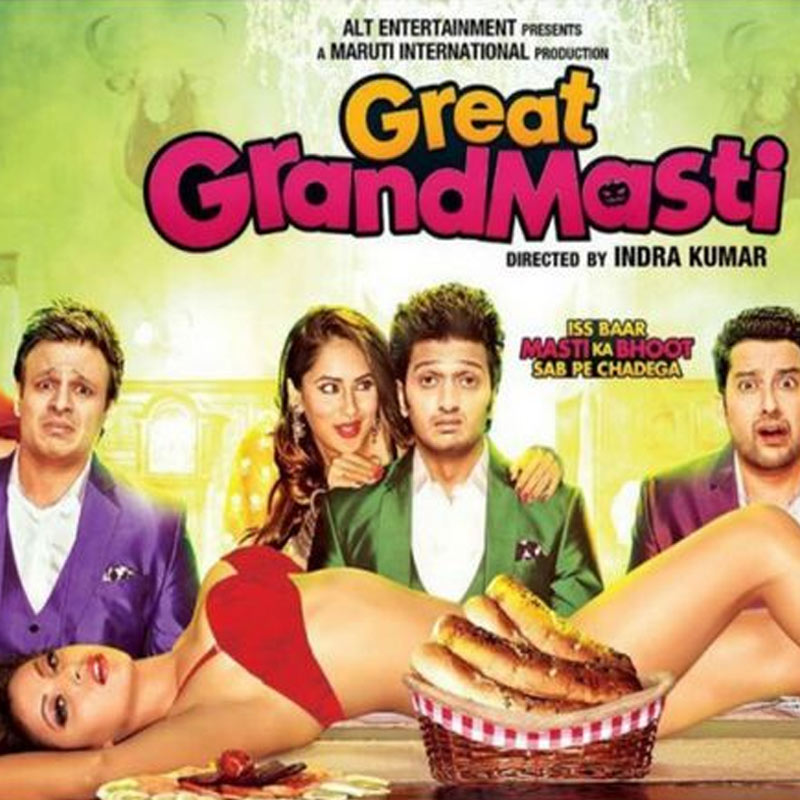
    The Great Grand Masti has the same agenda as its earlier versions which is to weave a comedy around vulgarity. The male and female anatomy is the theme around which the makers plan to play. To this end, Indra lets loose his three generally out of work male characters from his earlier films, Riteish Deshmukh, Aftab Shivdasani and Vivek Oberoi. All that these three have in mind is sex 24×7. It oozes from all their actions.

    All three are married to very revealing and willing girls but all three girls carry excess baggage which keeps the trio from getting anywhere close to their spouses. Since the lads are desperate for sex and their own women are not available to them, they need to look elsewhere. They decide to embark on a village where Riteish has a palatial property to sell.

    The makers think it is time to make this film hattke from the earlier two. So the angle of paranormal is added to consolidate the comedy. This is rare because paranormal on its own has few takers in Hindi films, let alone with a blend of comedy. Last one in memory is late producer-actor Deven Verma’s Bhaago Boot Aaya, inspired from a James Hadley Chase novel, Miss Shumway Waves A Wand. But, to a disastrous results.

    In absence of a script or good gags, Indra lets his three non-actors loose on the screen as they start with trying to seduce the sexy maid, Urvashi Rautela, at the palatial house and, later, to save their lives when they realize that the maid is a ghost waiting to be seduced for the last 50 years! The hide n seek between the guys and ghost is meant to be funny but it is not and falls flat. In its 127 minute duration, the only funny scene the film has is of Viagra aftereffect which, again, has been lifted from Mel Brook’s comedy, History Of The World (1981). And, that too has been killed by stretching it too far.

    The film is a poor specimen of comedy, entertainment or whatever it may be called. Nothing works here. The performers keep to their reputation and don’t act; over two hours of buffoonery is what they resort to.

    The film is poor on all counts and has no hopes at the box office.

    Producers: Shobha Kapoor, Ekta Kapoor, Sameer Nair, Aman Gill, Ashok Thakeria, Sri Adhikari Brothers, Anand Pandit.

    Director: Indra Kumar.

    Cast: Ritesh Deshmukh, Vivek Oberoi, Aftab Shivdasani, Urvashi Rautela, Pooja Bose, Amar Saxena, Sanjay Mishra, Shreyas Talpade.

  • Great Grand Masti….Greater disappointment!

    Great Grand Masti….Greater disappointment!

    MUMBAI: Indra Kumar acted in and made a few Gujarati films in the era of tax exemption and subsidy offered by the Gujarat government to promote Gujarati films. Indra’s forte in those days was to thrive on vulgar gestures and double meaning dialogue. It worked because Gujarati films catered mainly to a certain level of audience. He also came to be called the Dada Kondke (the legendary Marathi filmmaker) of Gujarati films. Indra directed some notable films in Hindi with top stars.

    With corporate studios calling shots and stakes gone sky-high, survival for independent filmmakers became impossible. Indra decided to go back to his Kondke style of film making starting with Masti (2004), followed by Grand Masti (2013) to now come up with the third part of his Masti series with Great Grand Masti.

    The Great Grand Masti has the same agenda as its earlier versions which is to weave a comedy around vulgarity. The male and female anatomy is the theme around which the makers plan to play. To this end, Indra lets loose his three generally out of work male characters from his earlier films, Riteish Deshmukh, Aftab Shivdasani and Vivek Oberoi. All that these three have in mind is sex 24×7. It oozes from all their actions.

    All three are married to very revealing and willing girls but all three girls carry excess baggage which keeps the trio from getting anywhere close to their spouses. Since the lads are desperate for sex and their own women are not available to them, they need to look elsewhere. They decide to embark on a village where Riteish has a palatial property to sell.

    The makers think it is time to make this film hattke from the earlier two. So the angle of paranormal is added to consolidate the comedy. This is rare because paranormal on its own has few takers in Hindi films, let alone with a blend of comedy. Last one in memory is late producer-actor Deven Verma’s Bhaago Boot Aaya, inspired from a James Hadley Chase novel, Miss Shumway Waves A Wand. But, to a disastrous results.

    In absence of a script or good gags, Indra lets his three non-actors loose on the screen as they start with trying to seduce the sexy maid, Urvashi Rautela, at the palatial house and, later, to save their lives when they realize that the maid is a ghost waiting to be seduced for the last 50 years! The hide n seek between the guys and ghost is meant to be funny but it is not and falls flat. In its 127 minute duration, the only funny scene the film has is of Viagra aftereffect which, again, has been lifted from Mel Brook’s comedy, History Of The World (1981). And, that too has been killed by stretching it too far.

    The film is a poor specimen of comedy, entertainment or whatever it may be called. Nothing works here. The performers keep to their reputation and don’t act; over two hours of buffoonery is what they resort to.

    The film is poor on all counts and has no hopes at the box office.

    Producers: Shobha Kapoor, Ekta Kapoor, Sameer Nair, Aman Gill, Ashok Thakeria, Sri Adhikari Brothers, Anand Pandit.

    Director: Indra Kumar.

    Cast: Ritesh Deshmukh, Vivek Oberoi, Aftab Shivdasani, Urvashi Rautela, Pooja Bose, Amar Saxena, Sanjay Mishra, Shreyas Talpade.

  • Shorgul……About nothing….

    Shorgul……About nothing….

    MUMBAI: Providing entertainment to the high priced admission rates paying audience seems to be no more the reason why many producers/ directors make films. That too in a country where each state charges entertainment tax at whim, and, which consists of a major portion of the admission rates.

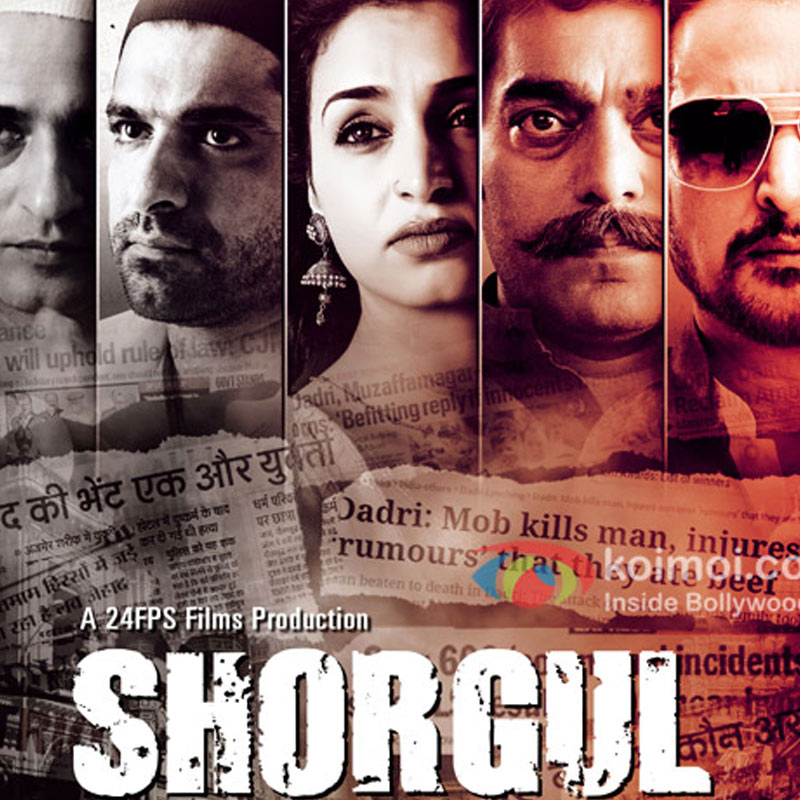
    Shorgul is another film that decides to coincide its content with the incidents that happened in a particular state, UP in this case, driven by communal politics. So the content is the routine say, a piece of local news from any vernacular media like a Hindu- Muslim boy girl romance, statue of a deity found in Muslim’s farm, just about anything that can tilt the balance of harmony between communities. In the process, the film also touches some of the more controversial events of the state.

    A Hindu boy Anirudh Dave and a Muslim girl, SuhaGezen, are neighbours growing together. As they mature, Anirudh has fallen in love with Suha but it is one-sided and Suha treats this just as a friendship and she is soon to be engaged to be married to a Muslim boy, HitenTejwani.
    The town has a gallery of politicians named so as to bear close resemblance to real life active politicians of UP. Jimmy Sherrill is a Hindu politician (modelled after SangeetSom) and member of the assembly. He is the kind armed with fuel and always on a lookout for fire to add to it. On the other side is Narendra Jha (representing Azam Khan). While, there is also a caricature of Amar Singh, Sanjay Suri plays the UP CM MIthilesh Yadav kind of role. While Jimmy and Jha ferment trouble using community card, there is also a saner, balancing factor in town in Ashutosh Rana, father of the lovelorn Hindu boy, Anirudh, who is respected by both the communities.

    This is about as original as the makers get for rest of the events loosely woven together in the name of a political drama.The end is, as is the norm in such a film, about sermonizing, blaming mainly the politicians for muddying up the peace between the two communities. The film has a horde of talented actors in the cast and even as all of them do well, Ashutosh and Hiten stand out.

    As for the commercial for Shorgul, the film promises none.

    Producers: Swatantra Vijay Singh, Vyas Verma.
    Directors: Pranav Kumar Singh, Jitentra Tiwari.
    Cast: Jimmy Shergill, Ashutosh Rana, Narendra Jha, Anirudh Dave, HitenTejwani, Sanjay Suri, Eijaz Khan, SuhaGezen, Neetu Pandey, Hrishitaa Bhatt, Jay Shanker Pandey.

  • Shorgul……About nothing….

    Shorgul……About nothing….

    MUMBAI: Providing entertainment to the high priced admission rates paying audience seems to be no more the reason why many producers/ directors make films. That too in a country where each state charges entertainment tax at whim, and, which consists of a major portion of the admission rates.

    Shorgul is another film that decides to coincide its content with the incidents that happened in a particular state, UP in this case, driven by communal politics. So the content is the routine say, a piece of local news from any vernacular media like a Hindu- Muslim boy girl romance, statue of a deity found in Muslim’s farm, just about anything that can tilt the balance of harmony between communities. In the process, the film also touches some of the more controversial events of the state.

    A Hindu boy Anirudh Dave and a Muslim girl, SuhaGezen, are neighbours growing together. As they mature, Anirudh has fallen in love with Suha but it is one-sided and Suha treats this just as a friendship and she is soon to be engaged to be married to a Muslim boy, HitenTejwani.
    The town has a gallery of politicians named so as to bear close resemblance to real life active politicians of UP. Jimmy Sherrill is a Hindu politician (modelled after SangeetSom) and member of the assembly. He is the kind armed with fuel and always on a lookout for fire to add to it. On the other side is Narendra Jha (representing Azam Khan). While, there is also a caricature of Amar Singh, Sanjay Suri plays the UP CM MIthilesh Yadav kind of role. While Jimmy and Jha ferment trouble using community card, there is also a saner, balancing factor in town in Ashutosh Rana, father of the lovelorn Hindu boy, Anirudh, who is respected by both the communities.

    This is about as original as the makers get for rest of the events loosely woven together in the name of a political drama.The end is, as is the norm in such a film, about sermonizing, blaming mainly the politicians for muddying up the peace between the two communities. The film has a horde of talented actors in the cast and even as all of them do well, Ashutosh and Hiten stand out.

    As for the commercial for Shorgul, the film promises none.

    Producers: Swatantra Vijay Singh, Vyas Verma.
    Directors: Pranav Kumar Singh, Jitentra Tiwari.
    Cast: Jimmy Shergill, Ashutosh Rana, Narendra Jha, Anirudh Dave, HitenTejwani, Sanjay Suri, Eijaz Khan, SuhaGezen, Neetu Pandey, Hrishitaa Bhatt, Jay Shanker Pandey.

  • Raman Raghav 2.0 – a commercial Hara-Kiri; 7 Hours To Go…didn’t go anywhere

    Raman Raghav 2.0 – a commercial Hara-Kiri; 7 Hours To Go…didn’t go anywhere

    MUMBAI: In the 1960s, Mumbai saw a series of crude, merciless killings of mainly footpath dwellers. Those who slept on the sidewalks, were ‘sleeping’ targets for this post-midnight killer. The initial murders took place in 1965-66 and, after a brief hiatus, resumed in 1968. The killer was identified as Raman Raghav though he was also known with many aliases. But the name Raman Raghav stuck owing to the person found guilty and convicted. A biopic on this case was made by director Sriram Raghavan in 1991 as Raman Raghav.

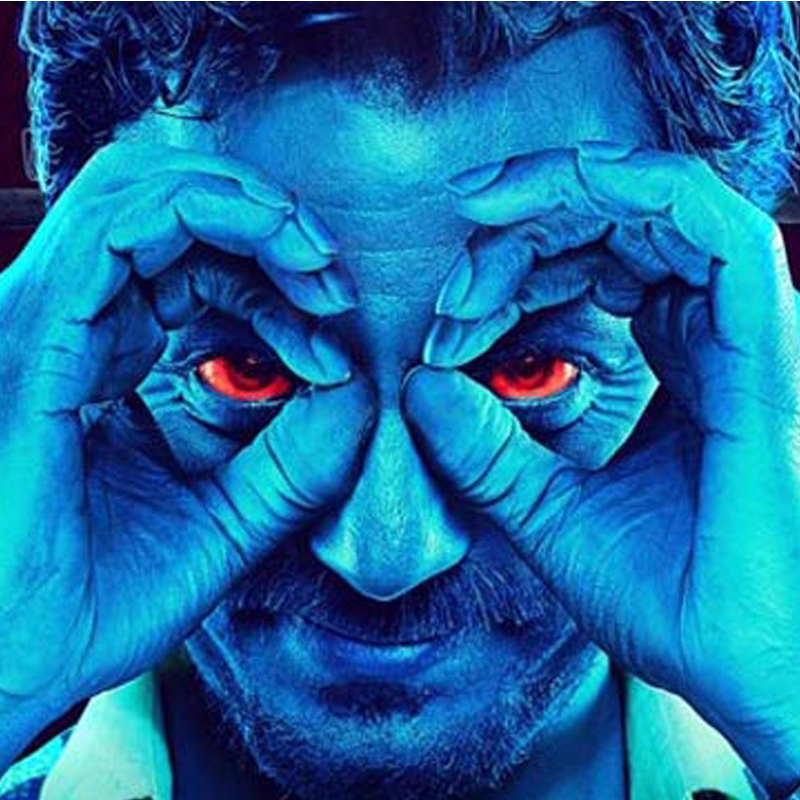
    Raman Raghav 2.0 is a version of the case in Kashyap’s own style and reworks the real life story that happened to make it shocking and dramatic. To this end, he recalls the real life Raman Raghav case and declares: This is not his story. Then he proceeds to tell his own story. The start is with the title of the film where, a la Ram Aur Shyam or, say, Karan Arjun style, Raman is the killer, Nawazuddin Siddiqui, while the name Raghavan refers to Vicky Kaushal, the cop!

    This is a dark film where there are no positive characters; the ambience is the dark filth and poverty filled lanes of Mumbai. There is a serial killer, Ramanna (Nawazuddin) and there is a cop (Kaushal) but, the cop, himself, is just about as sinister as the killer. He is a drug snorting womanizer. Instead of the cop chasing the murderer, often the murderer is chasing him!

    When the film opens, Nawazuddin already has nine killings to his name. He is all that one can get when a number of wasters and sadists are put together. He feels at home in the seediest streets of the city and, in his own way, converses with god.

    As the ‘chor police’ kind of game plays on between Nawazuddin and Kaushal, it is unlike any  other Hollywood or Indian film for here none of the two is clean; it is as if Kaushal wants to better the bad ways of Nawazuddin. And, that is what Nawazuddin tells Kaushik in the final confrontation, that the latter is his better half!

    The film has some shock elements and some gory violence aptly aided by sound effects and graphics. Between Nawazuddin and Kaushal, of course, the former scores. Sadly, few will volunteer to watch the contest.

    The film shows the maker’s competence at making bleak, non-entertainers. While, they may be appreciated by a few critics, they are a commercial hara-kiri.

    Producer: Anurag Kashyap, Vikas BahlVikramaditya MotwaneMadhu Mantena.

    Director: Anurag Kashyap.

    Cast: Nawazuddin SiddiquiVicky KaushalVipin SharmaAmruta SubhashSobhita Dhulipala.

    7 Hours To Go…Not going anywhere!

    The film, 7 Hours To Go, is  small in comparison to big budget action movies. However, the film nurses similar ambitions.

    The film is about a hostage drama taking place in a crowded court of law in a metropolis like Mumbai where the hostage taker gives the police seven hours to sort out the problem.

    Shiv Pandit arrives in Mumbai to meet his fiancé, Natasa Stankovic. He is unable to find her but unwittingly becomes the witness to a murder that takes place and a failed attempt to storm the corporate headquarters of Khemka Towers belonging to the corporate boss Khemka played by Vir Das.

    Now, Pandit has raided the Mumbai Court and taken seven hostages. Pandit blames Das for the murder of his fiancé

    To give the film the glam quotient, the case is handed over to the brave multi martial art ace, ACP, Sandeepa Dhar, with Varun Badola as her aide. They realize that, after all, the suspect, Pandit, seems to be no ordinary person. He carries the tag of a UP Police officer.

    Pandit is actually after Das and his diamonds and manages to get his way.

    The film is a lot of running around with Sandeepa, Varun and a sniper, Kettan Singh, hired by Das to kill Pandit. This running around is done only to promise you a sequel as Sandeepa promises Pandit she will not stop chasing him and will eventually nab him.

    Director Saurabh Varma makes a sincere effort to give the film a taut look, it remains mainly and effort what with the limited budget at his disposal. Performances are okay.

    Producer: Nikita Thakur.

    Director: Saurabh Varma.

    Cast: Shiv PanditSandeepa DharNatasa Stankovic and Varun Badola.

    Rough Book….D for duffers!

    Rough Book is a film on the country’s education system. It aims to highlight advances in the education system, the demands and the pace the institutions have kept up with these. Schools and colleges still continue to impart knowledge at a rapid pace, wanting to beat the semester deadlines rather than for students to imbibe knowledge.

    Like everywhere else, in this institution which the film focuses on, the usual pattern is followed and that is to take periodical tests. This institution has a programme whereby following such tests, it slots its students into four categories. Accordingly, the toppers are assigned to the A Division, the bottom performers get D Division. Also, while the A division gets the top teachers, their grade too goes down as the divisions move from B to C while D Division gets almost rejects.

    This institution, like many in the country, wants to make a reputation of producing only toppers and on that basis, keeps adding to its fee structures. The idea is to let only toppers go for final exams in which event they hold back the D Division.

    That is when the institution gets a new teacher in Physics in Tannishtha Chatterjee, a product of an orphanage run by Suhasini Mulay from where she has imbibed high moral values. She is happily married to an IT officer, Vinay Jain, himself known as a strict and uncorrupt officer. But that myth is soon shattered when Vinay’s own house is raided by his superiors and tons of money is found in, of all the places, Tannishtha’s book case, right behind her books.

    The marriage is over, Tannishtha goes back to the ashram where she is soon convinced to start anew. That is when she joins this institution headed by Kaizaad Kotwal. Like in all such films, the new teacher is welcomed by a ball breaking the window pane of her car, a sign that she is due to deal with some rough students, disillusioned with the system. And, she is assigned the D Division despite her glowing credentials.

    Tannishta soon realizes that these students are at sea because of the education system followed here. They lack in the basics so have remained poor over the years. While she decides to take her teachings back to basics and suspend the current syllabus, Kaizaad decides to make them take an exam. His plan is to set up coaching classes for weak students in the very premises of the institution. The conflict leads to the ouster of Tannishtha.

    The film departs from the usual and charts its own dream story albeit with her taking up the cause of the underdogs against the might of the school. It seems her friends, which include Joy Sengupta, Jayati Bhatia and Deepika Amin, are all expert teachers in different subjects and decide to teach some of the D Division students from home. They train the students for not only school boards but also for IIT-JEE!

    The film deals with the education system with a very simple approach; sadly, there is conflict between schools to churn out toppers and be the highest paid on one side, and the teachers like Tannishtha wanting to change the system. Its script and narration are too simple. The best thing about the film is that it has been shot during mid-monsoon lush locations to make it a visual pleasure. Performances are generally convincing with Tannishtha and Amaan Khan, the student protagonist,   justifying the extensive footage they get.

    Producers: J C Chaudhry, Aakash Chaudhry, Dr Aashish Chaudhry.

    Director: Ananth Narayan Mahadevan.

    Cast: Tannishtha Chatterjee, Amaan Khan, Deepika Amin, Joy Sengupta, Jayati Bhatia, Vinay Jain, Kinjal Rajpriya, Suhasini Mulay, Ram Kapoor.
  • Raman Raghav 2.0 – a commercial Hara-Kiri; 7 Hours To Go…didn’t go anywhere

    Raman Raghav 2.0 – a commercial Hara-Kiri; 7 Hours To Go…didn’t go anywhere

    MUMBAI: In the 1960s, Mumbai saw a series of crude, merciless killings of mainly footpath dwellers. Those who slept on the sidewalks, were ‘sleeping’ targets for this post-midnight killer. The initial murders took place in 1965-66 and, after a brief hiatus, resumed in 1968. The killer was identified as Raman Raghav though he was also known with many aliases. But the name Raman Raghav stuck owing to the person found guilty and convicted. A biopic on this case was made by director Sriram Raghavan in 1991 as Raman Raghav.

    Raman Raghav 2.0 is a version of the case in Kashyap’s own style and reworks the real life story that happened to make it shocking and dramatic. To this end, he recalls the real life Raman Raghav case and declares: This is not his story. Then he proceeds to tell his own story. The start is with the title of the film where, a la Ram Aur Shyam or, say, Karan Arjun style, Raman is the killer, Nawazuddin Siddiqui, while the name Raghavan refers to Vicky Kaushal, the cop!

    This is a dark film where there are no positive characters; the ambience is the dark filth and poverty filled lanes of Mumbai. There is a serial killer, Ramanna (Nawazuddin) and there is a cop (Kaushal) but, the cop, himself, is just about as sinister as the killer. He is a drug snorting womanizer. Instead of the cop chasing the murderer, often the murderer is chasing him!

    When the film opens, Nawazuddin already has nine killings to his name. He is all that one can get when a number of wasters and sadists are put together. He feels at home in the seediest streets of the city and, in his own way, converses with god.

    As the ‘chor police’ kind of game plays on between Nawazuddin and Kaushal, it is unlike any  other Hollywood or Indian film for here none of the two is clean; it is as if Kaushal wants to better the bad ways of Nawazuddin. And, that is what Nawazuddin tells Kaushik in the final confrontation, that the latter is his better half!

    The film has some shock elements and some gory violence aptly aided by sound effects and graphics. Between Nawazuddin and Kaushal, of course, the former scores. Sadly, few will volunteer to watch the contest.

    The film shows the maker’s competence at making bleak, non-entertainers. While, they may be appreciated by a few critics, they are a commercial hara-kiri.

    Producer: Anurag Kashyap, Vikas BahlVikramaditya MotwaneMadhu Mantena.

    Director: Anurag Kashyap.

    Cast: Nawazuddin SiddiquiVicky KaushalVipin SharmaAmruta SubhashSobhita Dhulipala.

    7 Hours To Go…Not going anywhere!

    The film, 7 Hours To Go, is  small in comparison to big budget action movies. However, the film nurses similar ambitions.

    The film is about a hostage drama taking place in a crowded court of law in a metropolis like Mumbai where the hostage taker gives the police seven hours to sort out the problem.

    Shiv Pandit arrives in Mumbai to meet his fiancé, Natasa Stankovic. He is unable to find her but unwittingly becomes the witness to a murder that takes place and a failed attempt to storm the corporate headquarters of Khemka Towers belonging to the corporate boss Khemka played by Vir Das.

    Now, Pandit has raided the Mumbai Court and taken seven hostages. Pandit blames Das for the murder of his fiancé

    To give the film the glam quotient, the case is handed over to the brave multi martial art ace, ACP, Sandeepa Dhar, with Varun Badola as her aide. They realize that, after all, the suspect, Pandit, seems to be no ordinary person. He carries the tag of a UP Police officer.

    Pandit is actually after Das and his diamonds and manages to get his way.

    The film is a lot of running around with Sandeepa, Varun and a sniper, Kettan Singh, hired by Das to kill Pandit. This running around is done only to promise you a sequel as Sandeepa promises Pandit she will not stop chasing him and will eventually nab him.

    Director Saurabh Varma makes a sincere effort to give the film a taut look, it remains mainly and effort what with the limited budget at his disposal. Performances are okay.

    Producer: Nikita Thakur.

    Director: Saurabh Varma.

    Cast: Shiv PanditSandeepa DharNatasa Stankovic and Varun Badola.

    Rough Book….D for duffers!

    Rough Book is a film on the country’s education system. It aims to highlight advances in the education system, the demands and the pace the institutions have kept up with these. Schools and colleges still continue to impart knowledge at a rapid pace, wanting to beat the semester deadlines rather than for students to imbibe knowledge.

    Like everywhere else, in this institution which the film focuses on, the usual pattern is followed and that is to take periodical tests. This institution has a programme whereby following such tests, it slots its students into four categories. Accordingly, the toppers are assigned to the A Division, the bottom performers get D Division. Also, while the A division gets the top teachers, their grade too goes down as the divisions move from B to C while D Division gets almost rejects.

    This institution, like many in the country, wants to make a reputation of producing only toppers and on that basis, keeps adding to its fee structures. The idea is to let only toppers go for final exams in which event they hold back the D Division.

    That is when the institution gets a new teacher in Physics in Tannishtha Chatterjee, a product of an orphanage run by Suhasini Mulay from where she has imbibed high moral values. She is happily married to an IT officer, Vinay Jain, himself known as a strict and uncorrupt officer. But that myth is soon shattered when Vinay’s own house is raided by his superiors and tons of money is found in, of all the places, Tannishtha’s book case, right behind her books.

    The marriage is over, Tannishtha goes back to the ashram where she is soon convinced to start anew. That is when she joins this institution headed by Kaizaad Kotwal. Like in all such films, the new teacher is welcomed by a ball breaking the window pane of her car, a sign that she is due to deal with some rough students, disillusioned with the system. And, she is assigned the D Division despite her glowing credentials.

    Tannishta soon realizes that these students are at sea because of the education system followed here. They lack in the basics so have remained poor over the years. While she decides to take her teachings back to basics and suspend the current syllabus, Kaizaad decides to make them take an exam. His plan is to set up coaching classes for weak students in the very premises of the institution. The conflict leads to the ouster of Tannishtha.

    The film departs from the usual and charts its own dream story albeit with her taking up the cause of the underdogs against the might of the school. It seems her friends, which include Joy Sengupta, Jayati Bhatia and Deepika Amin, are all expert teachers in different subjects and decide to teach some of the D Division students from home. They train the students for not only school boards but also for IIT-JEE!

    The film deals with the education system with a very simple approach; sadly, there is conflict between schools to churn out toppers and be the highest paid on one side, and the teachers like Tannishtha wanting to change the system. Its script and narration are too simple. The best thing about the film is that it has been shot during mid-monsoon lush locations to make it a visual pleasure. Performances are generally convincing with Tannishtha and Amaan Khan, the student protagonist,   justifying the extensive footage they get.

    Producers: J C Chaudhry, Aakash Chaudhry, Dr Aashish Chaudhry.

    Director: Ananth Narayan Mahadevan.

    Cast: Tannishtha Chatterjee, Amaan Khan, Deepika Amin, Joy Sengupta, Jayati Bhatia, Vinay Jain, Kinjal Rajpriya, Suhasini Mulay, Ram Kapoor.
  • Udta Punjab….Rough landing! Dhanak Delightful!

    Udta Punjab….Rough landing! Dhanak Delightful!

    MUMBAI: Much in the news first for its duel with the Central Board of Film Certification (CBFC) and later for the leak of the film on the internet, Udta Punjab puts an end to all the controversy as it hits the cinemas today.

    Has the media glare helped the film as due to this it is said to have got extra promotion? No, because controversies can bring a film into news but can’t add to the content. On the contrary, such a thing can add to expectations. Also, when you watch the film you realize that according to the CBFC norms, 89 cuts offered may be  fewer than the film deserved—it is replete with street-side expletives. The film is almost 90 percent in Punjabi language and the Punjabi way of abusing only makes the abuses sound worse.

    The generous use of foul words and extensive use of Punjabi dialogue may severely limit the film’s prospective audience, especially the women and families.
    The film starts with a funny ‘Believe It Or Nuts’ kind of scene where a discus thrower from Pakistan, wearing a national jersey, throws a package of cocaine into India! The film proceeds to deal with the drug problem in Punjab and limits itself to that. There are no side attractions. All the characters except the few exploiters are victims.

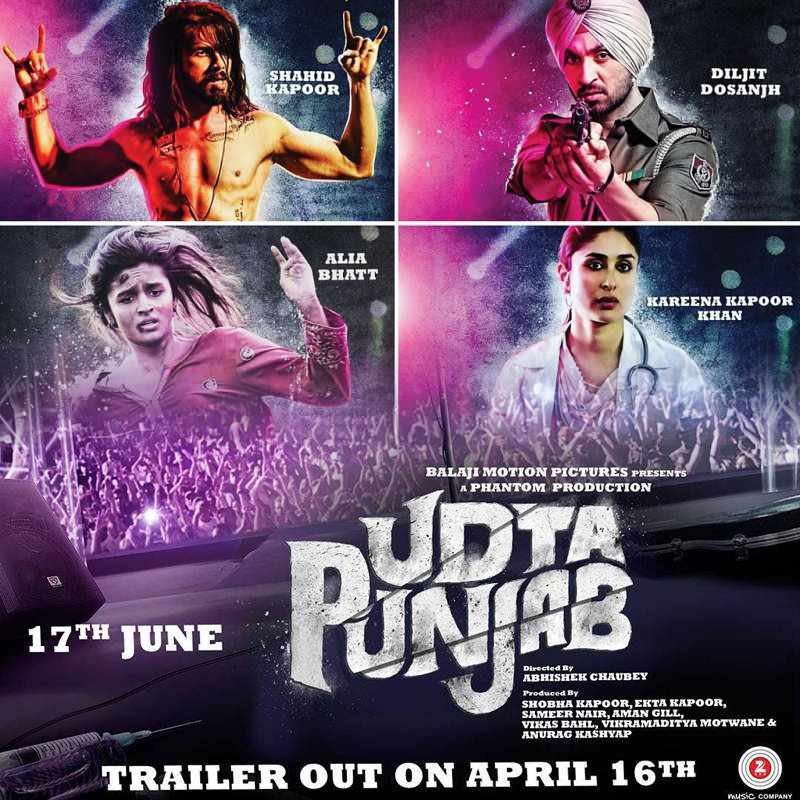
    Shahid Kapoor is a small town Punjab lad who goes off to London and returns as a singing sensation, a pop star. His idea, and that of the makers, is to model him on rock stars in West from 1960s who did Psychedelic rock which was hugely drug induced. There was a phase when rock stars did repulsive things on stage like showing bare bottoms, puking, peeing which seems to have been the inspiration here. The success as well the drugs, both having gone to his head, he considers himself bigger than the system of the state. The result is a week in jail and some eye openers like a teenager inmate having killed his mother for refusing to give him money for drugs.

    Shahid needs no de-addiction, the seven day jail and the mother killer story has put him off drugs. Drugged bodies in various states of stupor are spread across the screen.

    The film moves to the system side of the drug problem. There are cops on one side who are totally on the take and set rates to let the truck filled with drugs pass: this includes Diljit Dosanjh, the Punjabi star making his debut in Hindi films, and there is Kareena Kapoor, attempting to nurse drug addicts to normalcy. Try to cure them is all that Kareena can do as there is no way she can stop the spread of drugs, which involves everybody from politicians to police. But, there is a curious scene where Kareena is distributing sterile disposable syringes moving from home to home; is this her idea of stopping drug abuse?  Conveniently, Dosanjh’s kid brother becomes a victim of drugs. He is on his death bed with Kareena tending to him. That changes Dosanjh for good.

    Shahid, who has projected the drug menace in the first part, now takes a backseat as Dosanjh and Kareena form a team and become investigators. They are convinced that a big name is involved in the drug racket. In the process of investigating, they also get attracted to each other. The investigation and clues usually fall into their laps. Because, Dosanjh may have little intellect but Kareena can weave magic on Google.

    Shahid is due to perform a show. He is not quite sure he can do it without drugs. He has realized he is a fluke and without drugs he is nothing. When egged on to sing by the audience, he vents his frustration, delivers a speech about drugs and when provoked, pees on the audience. His fans-turned-detractors are after him to lynch him and while he is on the run, he comes across Alia Bhatt, also on the run from her captors. She saves him from the goons out to beat him up. Shahid, in search of finding a man in himself, finds one in Alia instead! He goes soft on her.

    Alia is a Bihari laborer, one of thousands who work on the farms of Punjab. But, this one is a smart cookie. A state level hockey player, she gives into circumstances to work in farms away from home. Her captors have taken her back from Shahid, basically a weak man with no courage to fight. He now decides to save her. The forces combine as Shahid and Dosanjh end up at the same place, the villains’ den. The film goes into an abrupt climax.

    In the name of drug abuse in Punjab, Udta Punjab is a grossly crude film. The treatment is like a 1970s film when the drug issue was internationally in limelight. The script takes its own convenient twists and turns. The direction is routine and clichéd with an inclination for abrupt cuts and shifting to new scenes. For a film about a rock star, the music is grossly lacking (all songs are in Punjabi words). The first half lacks pace and needs to be trimmed.

    Performance wise, Alia excels. Totally deglamorized, and having limited exposure, she is a class apart. Shahid mixes up his drug abuser and rock star with lunacy in the first half till he gets more scope later in the film. Dosanjh is natural and looks good too. Kareena puts in a controlled act like a veteran. Satish Kaushik as Shahid’s promoter is formulaic. Prabhjyot Singh is good.
    Udta Punjab has a poor first half but the second half which shows some purpose and humour makes it tolerable. With the opening response being average and  finding the weekend family audience a suspect, the film has just average prospects.
    Producers:  Shobha Kapoor, Ekta Kapoor, Anurag Kashyap, Vikramaditya Motwane, Aman Gill, Vikas Bahl,
    Sameer Nair.
    Director: Abhishek Chaubey.
    Cast: Shahid Kapoor, Kareena Kapoor, Alia Bhatt, Diljit Dosanjh, Satish  Kaushik, Prabhjyot Singh.

    Dhanak

    Dhanak is basically a film aimed at children. What is good about the film is that it is a totally positive, no bad-elements in the story. There are two kids on the loose on the road and the whole world is out to help them, be nice to them. There is no stepmother, there is a benevolent uncle (chacha) and there is this half khaddoos aunty (chachi) who looks after these orphaned children.

    Hetal Gada and Krissh Chhabaria are an orphaned brother and sister in Rajasthan, their parents having died in Pushkar along with 25 others due to a camel stampede. They are now under the care of Vipin Sharma, their dead father’s younger brother and his wife, Gulfam Khan. While Vipin has taken to the kids as his own, Gulfam is restrained; to add to her frustrations is also the fact that she has no child of her own and that her husband, Vipin, is good for nothing. Hence, Gulfam dominates the household. Vipin lets it be that way.

    What adds to the discomfiture of Gulfam is that Krissh is blind. As if to compensate for his blindness, his other faculties like smell, sound and imagination work overtime. His perception is outstanding. Hetal has only one wish, to get her brother’s eyesight restored. She has even set a deadline to do so: her brother’s ninth birthday.

    Vipin loves the kids and even indulges them. He takes them to a touring cinema screening where Hetal spots a poster of Shah Rukh Khan advocating a movement against blindness. As she has already pledged that she would make sure her kid brother’s eyesight is restored before his ninth birthday, she decides to set out to a location in Jaisalmer about 300 kms away to meet Khan who is shooting there. One night, the kids walk out of their uncle’s house to search for Khan.
    It turns into a road movie thereafter as the kids traverse their destination 300 kms away. Their journey is all about anxiety as well as fun. While Hetal is an SRK fan, Krissh is a Salman Bhai fan and their arguments are an utter delight.

    The film is based in Rajasthan and the state’s depiction juxtaposed between its barren deserts and colourful culture is remarkable.

    Hetal and Krissh carry the entire film on their own strength and their lively banter keeps the viewing a pleasant experience. Both excel in performance; while Hetal’s is an emotional character, Krissh is sharp-witted and an exploiter. He gets the best lines, too. Vipin is good in a brief role. The direction is good, adhering to the simple narrative. Dialogue is the mainstay of the film.  The musical score enhances the Rajasthan ambience.
    Dhanak is a fun film, a must-watch: Amen!

    Producers: Manish Mundra, Nagesh Kukunoor, Elahe Hiptoola.
    Director: Nagesh Kukunoor.      •       
    Cast: Hetal Gada, Krissh Chhabbbria, Vipin Sharma, Gulfam Khan.

  • Udta Punjab….Rough landing! Dhanak Delightful!

    Udta Punjab….Rough landing! Dhanak Delightful!

    MUMBAI: Much in the news first for its duel with the Central Board of Film Certification (CBFC) and later for the leak of the film on the internet, Udta Punjab puts an end to all the controversy as it hits the cinemas today.

    Has the media glare helped the film as due to this it is said to have got extra promotion? No, because controversies can bring a film into news but can’t add to the content. On the contrary, such a thing can add to expectations. Also, when you watch the film you realize that according to the CBFC norms, 89 cuts offered may be  fewer than the film deserved—it is replete with street-side expletives. The film is almost 90 percent in Punjabi language and the Punjabi way of abusing only makes the abuses sound worse.

    The generous use of foul words and extensive use of Punjabi dialogue may severely limit the film’s prospective audience, especially the women and families.
    The film starts with a funny ‘Believe It Or Nuts’ kind of scene where a discus thrower from Pakistan, wearing a national jersey, throws a package of cocaine into India! The film proceeds to deal with the drug problem in Punjab and limits itself to that. There are no side attractions. All the characters except the few exploiters are victims.

    Shahid Kapoor is a small town Punjab lad who goes off to London and returns as a singing sensation, a pop star. His idea, and that of the makers, is to model him on rock stars in West from 1960s who did Psychedelic rock which was hugely drug induced. There was a phase when rock stars did repulsive things on stage like showing bare bottoms, puking, peeing which seems to have been the inspiration here. The success as well the drugs, both having gone to his head, he considers himself bigger than the system of the state. The result is a week in jail and some eye openers like a teenager inmate having killed his mother for refusing to give him money for drugs.

    Shahid needs no de-addiction, the seven day jail and the mother killer story has put him off drugs. Drugged bodies in various states of stupor are spread across the screen.

    The film moves to the system side of the drug problem. There are cops on one side who are totally on the take and set rates to let the truck filled with drugs pass: this includes Diljit Dosanjh, the Punjabi star making his debut in Hindi films, and there is Kareena Kapoor, attempting to nurse drug addicts to normalcy. Try to cure them is all that Kareena can do as there is no way she can stop the spread of drugs, which involves everybody from politicians to police. But, there is a curious scene where Kareena is distributing sterile disposable syringes moving from home to home; is this her idea of stopping drug abuse?  Conveniently, Dosanjh’s kid brother becomes a victim of drugs. He is on his death bed with Kareena tending to him. That changes Dosanjh for good.

    Shahid, who has projected the drug menace in the first part, now takes a backseat as Dosanjh and Kareena form a team and become investigators. They are convinced that a big name is involved in the drug racket. In the process of investigating, they also get attracted to each other. The investigation and clues usually fall into their laps. Because, Dosanjh may have little intellect but Kareena can weave magic on Google.

    Shahid is due to perform a show. He is not quite sure he can do it without drugs. He has realized he is a fluke and without drugs he is nothing. When egged on to sing by the audience, he vents his frustration, delivers a speech about drugs and when provoked, pees on the audience. His fans-turned-detractors are after him to lynch him and while he is on the run, he comes across Alia Bhatt, also on the run from her captors. She saves him from the goons out to beat him up. Shahid, in search of finding a man in himself, finds one in Alia instead! He goes soft on her.

    Alia is a Bihari laborer, one of thousands who work on the farms of Punjab. But, this one is a smart cookie. A state level hockey player, she gives into circumstances to work in farms away from home. Her captors have taken her back from Shahid, basically a weak man with no courage to fight. He now decides to save her. The forces combine as Shahid and Dosanjh end up at the same place, the villains’ den. The film goes into an abrupt climax.

    In the name of drug abuse in Punjab, Udta Punjab is a grossly crude film. The treatment is like a 1970s film when the drug issue was internationally in limelight. The script takes its own convenient twists and turns. The direction is routine and clichéd with an inclination for abrupt cuts and shifting to new scenes. For a film about a rock star, the music is grossly lacking (all songs are in Punjabi words). The first half lacks pace and needs to be trimmed.

    Performance wise, Alia excels. Totally deglamorized, and having limited exposure, she is a class apart. Shahid mixes up his drug abuser and rock star with lunacy in the first half till he gets more scope later in the film. Dosanjh is natural and looks good too. Kareena puts in a controlled act like a veteran. Satish Kaushik as Shahid’s promoter is formulaic. Prabhjyot Singh is good.
    Udta Punjab has a poor first half but the second half which shows some purpose and humour makes it tolerable. With the opening response being average and  finding the weekend family audience a suspect, the film has just average prospects.
    Producers:  Shobha Kapoor, Ekta Kapoor, Anurag Kashyap, Vikramaditya Motwane, Aman Gill, Vikas Bahl,
    Sameer Nair.
    Director: Abhishek Chaubey.
    Cast: Shahid Kapoor, Kareena Kapoor, Alia Bhatt, Diljit Dosanjh, Satish  Kaushik, Prabhjyot Singh.

    Dhanak

    Dhanak is basically a film aimed at children. What is good about the film is that it is a totally positive, no bad-elements in the story. There are two kids on the loose on the road and the whole world is out to help them, be nice to them. There is no stepmother, there is a benevolent uncle (chacha) and there is this half khaddoos aunty (chachi) who looks after these orphaned children.

    Hetal Gada and Krissh Chhabaria are an orphaned brother and sister in Rajasthan, their parents having died in Pushkar along with 25 others due to a camel stampede. They are now under the care of Vipin Sharma, their dead father’s younger brother and his wife, Gulfam Khan. While Vipin has taken to the kids as his own, Gulfam is restrained; to add to her frustrations is also the fact that she has no child of her own and that her husband, Vipin, is good for nothing. Hence, Gulfam dominates the household. Vipin lets it be that way.

    What adds to the discomfiture of Gulfam is that Krissh is blind. As if to compensate for his blindness, his other faculties like smell, sound and imagination work overtime. His perception is outstanding. Hetal has only one wish, to get her brother’s eyesight restored. She has even set a deadline to do so: her brother’s ninth birthday.

    Vipin loves the kids and even indulges them. He takes them to a touring cinema screening where Hetal spots a poster of Shah Rukh Khan advocating a movement against blindness. As she has already pledged that she would make sure her kid brother’s eyesight is restored before his ninth birthday, she decides to set out to a location in Jaisalmer about 300 kms away to meet Khan who is shooting there. One night, the kids walk out of their uncle’s house to search for Khan.
    It turns into a road movie thereafter as the kids traverse their destination 300 kms away. Their journey is all about anxiety as well as fun. While Hetal is an SRK fan, Krissh is a Salman Bhai fan and their arguments are an utter delight.

    The film is based in Rajasthan and the state’s depiction juxtaposed between its barren deserts and colourful culture is remarkable.

    Hetal and Krissh carry the entire film on their own strength and their lively banter keeps the viewing a pleasant experience. Both excel in performance; while Hetal’s is an emotional character, Krissh is sharp-witted and an exploiter. He gets the best lines, too. Vipin is good in a brief role. The direction is good, adhering to the simple narrative. Dialogue is the mainstay of the film.  The musical score enhances the Rajasthan ambience.
    Dhanak is a fun film, a must-watch: Amen!

    Producers: Manish Mundra, Nagesh Kukunoor, Elahe Hiptoola.
    Director: Nagesh Kukunoor.      •       
    Cast: Hetal Gada, Krissh Chhabbbria, Vipin Sharma, Gulfam Khan.

  • Te3n disappoints while Do Lafzon Ki Kahani seems never ending!

    Te3n disappoints while Do Lafzon Ki Kahani seems never ending!

    MUMBAI: Sujoy Ghosh has to his credit a score of movies by now. However, the one that is a feather in his cap and gave him recognition was Kahaani, a thriller par excellence with twists and turns lost to Hindi cinema for a long time. Wanting to be comfortable with his actors, Ghosh repeats Amitabh Bachchan, VidyaBalan and Nawazuddin Siddique, all of whom he has worked with earlier. The maker chooses the same genre, detective thriller; only the detectives fail, but the protagonist-turned-detective succeeds. 

    A small boy has been kidnapped in Kolkata. His mother is a heart patient and father serves on the Eastern border and is home only for brief periods.The boy is closest to his maternal grandfather. Now he has gone missing. A ransom is demanded and the police get involved. 

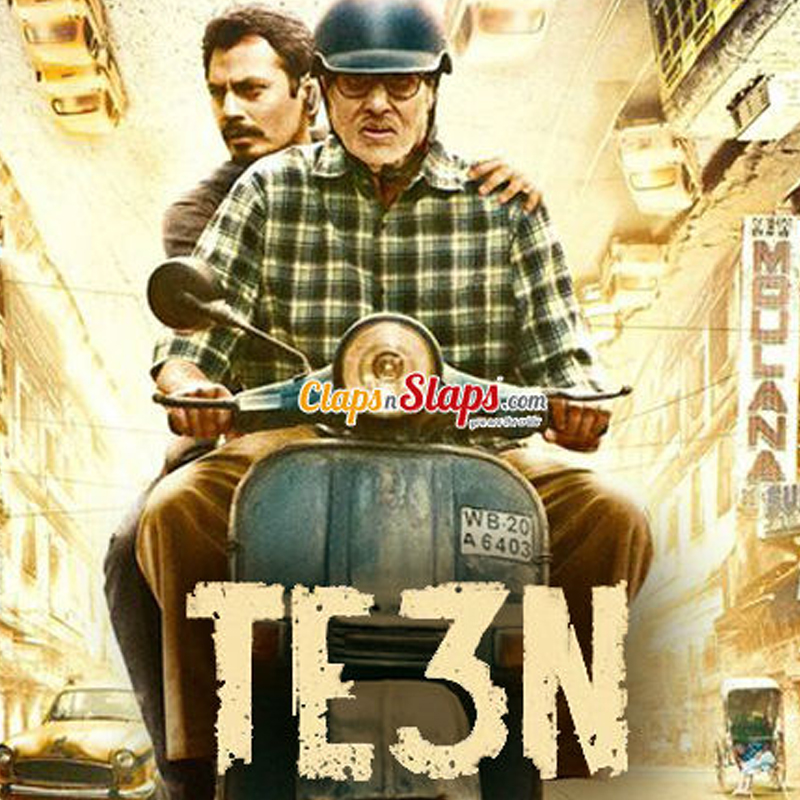
    The cop who is on the case is Vidya Balan. She finds a lot of similarities between this kidnapping and one that happened eight years ago involving the granddaughter of Bachchan. There is a joke about Kolkata that if you leave a rock on a major arterial road of the city, you will still find it in the same spot a decade later. In that case, it is no wonder that Vidya, who handled Bachchan’s case eight years ago, is still around handling the new kidnap case at the same police station. Vidya seeks the help of Nawazuddin, a policeman turned church pastor, who was a part of the investigation eight years back.

    Bachchan has been restless for the last eight years since his granddaughter, left in his care, was kidnapped and found dead. He has either been dormant or ineffective and only seen pleading with the police to solve the case. But he suddenly comes to life. He connects the two kidnappings. 

    So Te3n seems to be about three people’s perspective of a crime, that of the policewoman, Vidya, an ex-policeman turned church pastor, Nawazuddin, and Bachchan. All three have different convictions about what happened eight years back vis-a-vis the current kidnapping. 

    Vidya and Nawazuddin are on different tracks and it is Bachchan who seems to have figured out the angles.

    Te3n, unfortunately, is a grossly contrived script taking liberties galore. Logic has no place here when it comes to convenience of scripting. The maker likes to show the drab, depressing and dilapidated nooks and corners of Kolkata to accentuate his theme which shows the influence of 1940s films. A victim’s pursuit of justice is an interesting idea for a film.That is what made Kahaaani and Badlapur successful.But in the case of Te3n, the thrill is just not there. The first half does not seem to be going anywhere and it is only towards latter parts that the narrative manages to generate some pace only to lead to a tame ending.

    With the script and direction both based on compromises, the film has mainly the performances to count on. Since only Nawazuddin has a role with some sensibility, he does well though his priest costume seems alien. Vidya has nothing to do. Bachchan spends too much energy on looking old and overdoing the old man’s mannerisms. Music has no place here but forced in. Editing needed some crisp cutting. 

    Te3n has poor prospects at the box office.

    Producers: Gulab Singh Tanwar, AnirudhTanwar, Abhijit Ghatak, Deepak Dhar, Ram Mirchandani.
    Director: Ribhu Dasgupta
    Cast: Amitabh Bachchan, Nawazuddin Siddiqui, Vidya Balan, Nassar, Sabyasachi Chakrabarty, Padmavati Rao

    Do Lafzon Ki Kahani…….That seems neverending!

    The flavour of the season with Indian filmmakers to find ‘inspiration’ is Korea; copying or remaking Hollywood films would be a giveaway now since its films get an extensive and simultaneous release in India and the rest of the world. Do Lafzon Ki Kahani is based on the 2011 Korean film – Always. Looking at the film, one wonders why did the producers need to go as far as Korea for inspiration, they could have easily been inspired by any 1960s Hollywood B-grader or an Indian film of the same genre a few years thence. 

    There have been scores of movies where romance blooms between total opposites in stature, nature, character as well as able and disabled. 

    RandeepHooda is a rogue, a rough man, because he has been brought up in an orphanage (that seems to be an unwritten law in Indian film stories to breed such characters). He does three jobs a day because, as he says, he has some obligations to fulfill. But, to who, why, etc., is a mystery which is never revealed. One night, he signs into his third job of the day at a toll plaza or some such thing when a blind girl, Kajal Agarwal, walks in. She is a friend of Hussain chacha, the attendant at the plaza from whom Randeep is talking over. 

    Kajal, though blind, walks miles to the plaza to take in a TV serial with Hussain chacha. She so takes the soap opera to heart that she starts to identify with the lead character of the serial. It happens for a few days that she walks into the cabin to catch the TV serial and Randeep already starts missing her if she is late. By day six, it is romance and promises of togetherness. 
    It is time for her to learn about Randeep’s past. It is all chequered. The orphanage he grew up in was swept away in a river surge. He turned into a street fighter for bounty, but, when deceived once by an opponent pleading to lose a bout on the grounds of humanity, he decided to become a villain and go bashing all and sundry. He also decides never to raise his hands on anybody after an accident caused by him leaves a bitter taste in his mouth. 

    That is when he meets Kajal and his world starts revolving around her. It is love all the way. There is more footage unreeling without the film moving an inch till, in a typical 1960s style, the doctors tell Randeep that Kajal’s eyesight can be restored if a procedurecosting 3 lakhs is done within 15 days.

    Whatever happens thereafter leads to nothing. Some new villains spring up from vacuum and Randeep’s love is put on trial. 

    Do Lafzon KI Kahani spells juvenile, which is to say just everything about it is amateur. The film gets everything wrong from the choice of source material to adapt to the casting. Randeep as a tough man turning a devoted lover, is a misfit?Kajal is mediocre. The chemistry between the lovers just does not happen.The direction is poor to say the least and songs are forced in to no avail. As for editing, this 127 minute film feels like 254 minutes and no editor could have changed that. The rest of the aspects don’t help either. 

    Do Lafzon Ki Kahani is poor fare.

    Producers: Dhiraj Shetty, Avinaash V Rai, Deepak Tijori, Dhaval Jayantilal Gada.
    Director: Deepak Tijori
    Cast: Randeep Hooda, Kajal Agarwal, Mamik, Yuri Suri

  • Te3n disappoints while Do Lafzon Ki Kahani seems never ending!

    Te3n disappoints while Do Lafzon Ki Kahani seems never ending!

    MUMBAI: Sujoy Ghosh has to his credit a score of movies by now. However, the one that is a feather in his cap and gave him recognition was Kahaani, a thriller par excellence with twists and turns lost to Hindi cinema for a long time. Wanting to be comfortable with his actors, Ghosh repeats Amitabh Bachchan, VidyaBalan and Nawazuddin Siddique, all of whom he has worked with earlier. The maker chooses the same genre, detective thriller; only the detectives fail, but the protagonist-turned-detective succeeds. 

    A small boy has been kidnapped in Kolkata. His mother is a heart patient and father serves on the Eastern border and is home only for brief periods.The boy is closest to his maternal grandfather. Now he has gone missing. A ransom is demanded and the police get involved. 

    The cop who is on the case is Vidya Balan. She finds a lot of similarities between this kidnapping and one that happened eight years ago involving the granddaughter of Bachchan. There is a joke about Kolkata that if you leave a rock on a major arterial road of the city, you will still find it in the same spot a decade later. In that case, it is no wonder that Vidya, who handled Bachchan’s case eight years ago, is still around handling the new kidnap case at the same police station. Vidya seeks the help of Nawazuddin, a policeman turned church pastor, who was a part of the investigation eight years back.

    Bachchan has been restless for the last eight years since his granddaughter, left in his care, was kidnapped and found dead. He has either been dormant or ineffective and only seen pleading with the police to solve the case. But he suddenly comes to life. He connects the two kidnappings. 

    So Te3n seems to be about three people’s perspective of a crime, that of the policewoman, Vidya, an ex-policeman turned church pastor, Nawazuddin, and Bachchan. All three have different convictions about what happened eight years back vis-a-vis the current kidnapping. 

    Vidya and Nawazuddin are on different tracks and it is Bachchan who seems to have figured out the angles.

    Te3n, unfortunately, is a grossly contrived script taking liberties galore. Logic has no place here when it comes to convenience of scripting. The maker likes to show the drab, depressing and dilapidated nooks and corners of Kolkata to accentuate his theme which shows the influence of 1940s films. A victim’s pursuit of justice is an interesting idea for a film.That is what made Kahaaani and Badlapur successful.But in the case of Te3n, the thrill is just not there. The first half does not seem to be going anywhere and it is only towards latter parts that the narrative manages to generate some pace only to lead to a tame ending.

    With the script and direction both based on compromises, the film has mainly the performances to count on. Since only Nawazuddin has a role with some sensibility, he does well though his priest costume seems alien. Vidya has nothing to do. Bachchan spends too much energy on looking old and overdoing the old man’s mannerisms. Music has no place here but forced in. Editing needed some crisp cutting. 

    Te3n has poor prospects at the box office.

    Producers: Gulab Singh Tanwar, AnirudhTanwar, Abhijit Ghatak, Deepak Dhar, Ram Mirchandani.
    Director: Ribhu Dasgupta
    Cast: Amitabh Bachchan, Nawazuddin Siddiqui, Vidya Balan, Nassar, Sabyasachi Chakrabarty, Padmavati Rao

    Do Lafzon Ki Kahani…….That seems neverending!

    The flavour of the season with Indian filmmakers to find ‘inspiration’ is Korea; copying or remaking Hollywood films would be a giveaway now since its films get an extensive and simultaneous release in India and the rest of the world. Do Lafzon Ki Kahani is based on the 2011 Korean film – Always. Looking at the film, one wonders why did the producers need to go as far as Korea for inspiration, they could have easily been inspired by any 1960s Hollywood B-grader or an Indian film of the same genre a few years thence. 

    There have been scores of movies where romance blooms between total opposites in stature, nature, character as well as able and disabled. 

    RandeepHooda is a rogue, a rough man, because he has been brought up in an orphanage (that seems to be an unwritten law in Indian film stories to breed such characters). He does three jobs a day because, as he says, he has some obligations to fulfill. But, to who, why, etc., is a mystery which is never revealed. One night, he signs into his third job of the day at a toll plaza or some such thing when a blind girl, Kajal Agarwal, walks in. She is a friend of Hussain chacha, the attendant at the plaza from whom Randeep is talking over. 

    Kajal, though blind, walks miles to the plaza to take in a TV serial with Hussain chacha. She so takes the soap opera to heart that she starts to identify with the lead character of the serial. It happens for a few days that she walks into the cabin to catch the TV serial and Randeep already starts missing her if she is late. By day six, it is romance and promises of togetherness. 
    It is time for her to learn about Randeep’s past. It is all chequered. The orphanage he grew up in was swept away in a river surge. He turned into a street fighter for bounty, but, when deceived once by an opponent pleading to lose a bout on the grounds of humanity, he decided to become a villain and go bashing all and sundry. He also decides never to raise his hands on anybody after an accident caused by him leaves a bitter taste in his mouth. 

    That is when he meets Kajal and his world starts revolving around her. It is love all the way. There is more footage unreeling without the film moving an inch till, in a typical 1960s style, the doctors tell Randeep that Kajal’s eyesight can be restored if a procedurecosting 3 lakhs is done within 15 days.

    Whatever happens thereafter leads to nothing. Some new villains spring up from vacuum and Randeep’s love is put on trial. 

    Do Lafzon KI Kahani spells juvenile, which is to say just everything about it is amateur. The film gets everything wrong from the choice of source material to adapt to the casting. Randeep as a tough man turning a devoted lover, is a misfit?Kajal is mediocre. The chemistry between the lovers just does not happen.The direction is poor to say the least and songs are forced in to no avail. As for editing, this 127 minute film feels like 254 minutes and no editor could have changed that. The rest of the aspects don’t help either. 

    Do Lafzon Ki Kahani is poor fare.

    Producers: Dhiraj Shetty, Avinaash V Rai, Deepak Tijori, Dhaval Jayantilal Gada.
    Director: Deepak Tijori
    Cast: Randeep Hooda, Kajal Agarwal, Mamik, Yuri Suri