Category: Resources

  • TRAI directed not to implement ad cap for music channels

    TRAI directed not to implement ad cap for music channels

    NEW DELHI: The Telecom Regulatory Authority of India (TRAI) was today directed not to take any coercive action against four music television channels with regards to ad cap.

    Telecom Disputes Settlement and Appellate Tribunal (TDSAT) member Kuldip Singh after hearing counsel Kunal Tandon directed the matter to come up for further hearing on 21 October.

    The petitions were filed on behalf of Mastiii (owned by TV Vision, Mumbai), B4U, 9X Media, M Tunes HD and Music Xpress.

    Earlier, TDSAT had accepted a similar petition by the News Broadcasters Association (NBA) which challenged the constitutional validity of the regulations of TRAI enforcing the ad cap. That petition has been listed for hearing on 11 November.

    The Tribunal said while the channels will maintain weekly records of the advertising time per hour on a weekly basis, they will not be required to submit this to the regulator. Unlike the current practice, the records will only be submitted to TDSAT at the time of the hearing of the case.

    At that time, Counsel A J Bhambani for the NBA had said that a delegation of the Indian Broadcasting Foundation (IBF) had submitted a formula to the regulator but that did not preclude the broadcasters from challenging the validity of the regulations.

    He also said that this was only a compromise reached between the broadcasters and the regulator and could not form the basis of penal action since it was not a regulation or legal provision.

  • GSAT-7 Transponders successfully switched on as scheduled

    GSAT-7 Transponders successfully switched on as scheduled

    NEWDELHI: All the 11 communication transponders operating in UHF, S, C and Ku-bands of India’s advanced multiband communication satellite GSAT-7 have been successfully switched on and their performance is found to be normal.

    GSAT-7 is now positioned at its designated orbital slot of 74 deg east longitude in the geostationary orbit and In Orbit Testing (IOT) of the 11 transponders is in progress.

    GSAT-7 was launched from Kourou, French Guyana in the early hours of 30 August and was successfully placed in the Geosynchronous Orbit with an altitude of about 36,000 km above Earth’s surface on 3 September morning, after successfully completing the last of the three orbit-raising maneuvers commanded from ISRO`s Master Control Facility (MCF) at Hassan.

    Earlier in 3 September, the communication antennae of GSAT-7, including the UHF Helix antenna, were deployed successfully. Following this, GSAT-7 was put in its final orbital configuration, stabilised on its three-axis by the momentum wheels.

    The GSAT-7 Satellite was expected to reach its assigned orbital slot of 74 degree east longitude in the Geostationary Orbit within 10 days.

    Based on current availability of hardware and components, the GSLV Vehicle assembly and checkout is expected to be completed at the Vehicle Assembly Building by the first week of December 2013 and the launch could take place by December 2013.

  • TRAI Open House: Aggregators given another week to respond

    TRAI Open House: Aggregators given another week to respond

    NEW DELHI: Television aggregators were today given a period of one week to give any recommendations they may have on the regulations relating to them issued earlier by the Telecom Regulatory Authority of India (TRAI).

    At an Open House that was well-attended, TRAI Chairman Rahul Khullar said any stakeholder wanting to give views in writing may do so within a week.

    Around 200 persons representing all stakeholders were present at the meeting, and put forth their views. While a majority said there was need for regulations, many felt that TRAI needed to fine-tune the regulations. MediaPro CEO Arun Kapoor, Dish TV’s Jawahar Goel, legal representatives of Airtel, Reliance, IndiaCast, apart from cable operators such as Vicki Choudhary, Roop Sharma, Money Oberoi were present at the open house.

    Khullar had TRAI Advisers N Parameswaran and Wasim Ahmed and other senior officials also present in the house.

    According to TRAI spokespersons, the discussions were frank and free and a final view would be taken after written representations are received.

    An aggregator attendee at the open house said that it was apparent from Khullar’s body language that he was not too happy with the state of affairs in the aggregation business today.

    Says he: “Khullar made three or four very important observations. The first is that aggregated bouquets of channels owned by rival bouquets creates a monopoly situation which is not a healthy one and needs to be addressed. Second: he recognised that the networks like Star, Zee, Sun, Network18 own channels across several corporate entities as licence holders and this needs to be considered. Third: smaller broadcasters and networks could face problems in distribution across the vast Indian cable TV landscape and this also should be borne in mind. Finally, he acknowledged that aggregation can help keep prices in check on account of bulk discounting”

    Adds another attendee: “Change is something that Khullar wants to bring in. We expect some change; the clout that aggregators enjoy is not something that the regulator wants to see continuing. He clearly wants aggregators to be brought under control. We are reading the writing on the wall, and we are readying for the change. How we manage this change is something we have to deal with.”

  • TheOneAlliance elevates Makarand Palekar to executive VP – sales & strategy

    TheOneAlliance elevates Makarand Palekar to executive VP – sales & strategy

    MUMBAI: TheOneAlliance (TOA) has elevated Makarand Palekaras to executive VP – sales and strategy for its joint venture network TheOneAlliance – MSMD.

    With over 17 years of multi-brand experience, Makarand in an earlier stint was Sr. VP sales and strategy. His association with MSMD has been for over three years and in his stint with MSMD, Makarand has shown extreme commitment and dedication and played an essential role in shaping the organisation’s prospects. Before joining TheOneAlliance he was heading sales at ESPN-Star Sports since its inception.
    Makarand Palekar looks forward for a challenging role and hopes to live up to the company’s expectations by delivering the business objectives

    Commenting on the promotion TheOneAlliance president Rajesh Kaul said, “It gives me immense pleasure and pride to announce that the board has, very rightly, decided to promote Makarand Palekar to one of the highest levels in the corporate arena. Palekar’s move to the EVP level is a clear indication that he has been instrumental in taking TheOneAlliance to the height where it is today. He has played an important role in growing revenues and contributing to the success for the company.”

    Commenting on his elevation, Makarand Palekar said, “I am extremely delighted that TheOneAlliance-MSMD has given me this opportunity in the new role. I am proud to be associated with the strongest joint venture in the distribution industry which has a bouquet of the premium channels. I am looking forward for a challenging role and hope I can live up to the company’s expectations by delivering the business objectives.”

  • Social Wavelength ropes in Vijay Sankaran as director – digital strategy and planning

    Social Wavelength ropes in Vijay Sankaran as director – digital strategy and planning

    MUMBAI: Social Wavelength, one of India’s largest social media agencies has now brought in Vijay Sankaran to head the Digital Strategy and Planning department.

    Vijay comes in with over two decades of experience in branding, advertising, digital and integrated communications. Earlier, he headed Digital at Edelman PR, and worked on evolving its digital practice and integrating digital into PR. He also brings with him invaluable client side experience, setting up and building global social media initiatives at Nokia Siemens Networks.
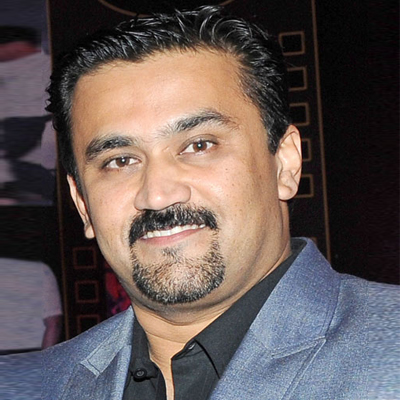
    On his new role, Vijay Sankaran said “I am happy to join Social Wavelength, India’s largest social media agency with a pan India presence. Social is now an approach embracing ATL, BTL, and all of digital and I look forward to working with the leadership team and a great bunch of clients to take the game to the next level.

    On this occasion, Social Wavelength’s Joint CEO Sanjay Mehta said, “We are thrilled to have Vijay Sankaran on board with us now. With the expertise and understanding of the industry that he comes in with, we are sure he will play a very crucial role in the growth of Social Wavelength.

  • I&B ministry’s ad cap succor for broadcasters

    I&B ministry’s ad cap succor for broadcasters

    MUMBAI: On the one hand, the Telecom Regulatory Authority of India (TRAI) is putting the squeeze on broadcasters. On the other, the ministry of information and broadcasting (I&B) is proving to be an angel in disguise all ready to provide it with some succor. At least in the area of the 12 minute cap on advertising per hour allowed on television which TRAI activated earlier this year, and which is to be implemented next month.

    Reports are that the ministry is collecting data from broadcasters to ascertain the loss that they would incur on account of the TRAI-mandated ad cap.  It is then expected to prepare a consultation paper within the next 10 days, say these reports.

     
    Broadcasters – especially news broadcasters – have been yelping about how any reduction in air time would lead to a shriveling of revenues for them; in fact it might make it unviable for them to sustain their operations. Their constant wailing caught the attention of I&B minister Manish Tewari who last month requested the TRAI to post-pone the ad cap to end-2014 to coincide with the inflow of subscription revenues which are expected to accrue to broadcasters post the completion of cable TV digitisation.

    The Telecom Disputes Settlement & Appellate Tribunal (TDSAT) concurred with the news broadcasters’ appeal and put a freeze on the applicability of the ad cap, till their plea was heard on 11 November 2013. General entertainment channels have, however, agreed to comply with TRAI’s directions and have even gone ahead and reduced their commercial advertising air time.

    Says a media observer: “All the players – TRAI, I&B, broadcasters – need to get together to have a road map for the reduction of the ad cap gradually and periodically over time and not in one fell swoop as TRAI has been suggesting. It’s good that the I&B ministry and TDSAT have been supporting the broadcasting sector as far as the ad cap is concerned. It is imperative for its survival.”

  • HC refuses stay on sports telecast ordinance

    HC refuses stay on sports telecast ordinance

    NEW DELHI: The Delhi High Court today refused to stay the operation of the ordinance asking private sports channels to share live feed of cricket and other sports events with public broadcaster Prasar Bharti.

    A division bench headed by Justice Vikramajit Sen adjourned the matter till 15 February for further hearing.

    Senior Counsel Dushyant Dave, appearing for Prasar Bharati, pleaded that the ordinance could only be stayed under extraordinary grounds.

    In any case, he argued, the conditions to share the live feed with the Prasar Bharati was part of the tender documents, and very much known to Nimbus Communications.

    The reply filed by the Government to the petition by Nimbus challenging the Sports Broadcasting (Mandatory Sharing with Prasar Bharti) Ordinance 2007 said it had been made clear to the Board for Control of Cricket in India (BCCI) that any party getting the rights to telecast the matches would have to share the live feed with Doordarshan and All India Radio, the application filed by the government in reply to the private channel contended.

    Additional solicitor general PP Malhotra, appearing for the government, said the petition should be dismissed as it was not the fundamental right of Nimbus, who own Neo Sports channel to monopolise the telecast of cricket matches. In any case, Nimbus should abide by the contract it had signed in February 2006 to share the live feed.

    Terming it as “bad in law”, the petition had said, “The ordinance transgresses the constitutional limits and apart from violating the petitioner’s fundamental rights, it also interferes with the power of the court to review the circular enforcing the private channels to share the feed.”

    On 23 January, in an interim order, the court had allowed Prasar Bharati to download the feed of Nimbus Communications and telecast the India-West Indies ODI series in a delayed transmission of seven minutes on DD and broadcast commentary live on AIR.

    The High Court has decided to merge the hearing of the appeal by Prasar Bharati against this order, and the petition by Nimbus challenging the Ordinance.


  • Trai’ng hard but falling way too short

    Trai’ng hard but falling way too short

    Some like it; some don’t. But there’s no denying that the Telecom Regulatory Authority of India (Trai)-mandated pay channel prices in CAS areas (Rs 5 for all pay channels) is going to stir up much more than just a storm in the proverbial cup.


    It’s like those weekly village markets that are quite popular in India where the refrain is har maal paanch rupaiya mein (every product priced uniformly at Rs 5). The actual price may differ a bit, but the concept adopted by Trai is the same. Reason: low and uniform prices attract buyers.


    Faster the adoption of a technology like CAS, sooner more transparency will come into the Indian broadcast and cable industry, which has been plagued by massive under-declaration by cable ops
    _____****_____

    A low price entry point for a new technology — about which myths abound still for the general public — is certainly a good way of incentivising its quick adoption. And, faster the adoption of a technology like CAS, sooner more transparency will come into the Indian broadcast and cable industry, which has been plagued by massive under-declaration by cable operations and other such ills in the absence of any regulation.


    But in attempting to keep cable TV as a mass service —- which it is, anyway — and having the prices of all pay channels uniform, Trai has forgotten one important aspect of regulatory process: the cost factor while deciding tariff for a service.


    The real boom in the Indian cellular phone market came when players clipped price lines and made the whole process of acquiring a mobile phone connection so cheap and attractive that even a domestic hand found it hard to resist. Who can forget a certain Indian telecom player’s offer of a mobile phone connection with unlimited talk time for a certain period of time and the handset thrown in for Rs 500 under the Monsoon Hungama or monsoon bonanza scheme some time ago?


    Trai, which also oversees the telecom sector, may actually take pride in claiming that it facilitated massive growth in cellular phones in the country. The numbers say it all. There are more cellular phone connections in the country compared to fixed line connections. But broadcast industry cannot crow like its telecom counterpart.


    Though cable TV service, unlike some others like transport (especially capital intensive railway transport), cannot be categorized as a natural monopoly, the cost of putting together that service cannot be overlooked.


    In forcing an entertainment broadcaster to sell its product at a ridiculously low cost, Trai is trying to say Indian consumers don’t appreciate high quality production values.
    _____****_____

    Not as capital intensive as power or transport sectors, cable TV nevertheless does need investments to be made by all stakeholders of the value chain. By presuming that all types of content can be acquired comparatively cheap and revenue generated through volume sales (after all, India now boasts of 68 million C&S homes with all TV homes standing at 110 million), the regulator has highlighted its partial ignorance of how the broadcast business is conducted.


    Imagine the plight of Nimbus, for example, which has bought Indian cricket rights for over $ 600 million hoping that the content would help it to price its proposed channel at a premium. But now it would have no option but to price a pay channel at Rs 5 and look at rejigging the whole business model.


    There is no denying that the programming costs in the sports, movies and entertainment segments are higher than news or infotainment channels segment. In forcing an entertainment broadcaster to sell its product at a ridiculously low cost — when compared to the input costs of aggregating content — Trai, probably, is trying to say that Indian consumers don’t appreciate high quality production values and can be served shoddy work. Class comes with a price tag and the price decided by the regulator is unlikely to encourage quality.


    Could Trai have gone in for differential pricing for some genres of channels? Yes, of course it could have, and displayed a visionary flair in the process.


    But as long as regulators like Trai remain hostage to a government’s whims and fancies, it would always open itself to the criticism of pandering to politicians’ wishes, which are mostly based on populism.


    Still, there is no gainsaying that the last word on this tale is a long way away from being written. And, if the way the currents are flowing are anything to go by, it could well be on this critical point that Trai’s efforts to usher in the CAS era could fall flat!

  • CAS Rollout Could Provide Huge Push for DTH Operators as Well

    In business as in life, timing is everything. And despite all the expected noises from the government (state elections are due in Kolkata after all) and the broadcasters (re-dusting the same arguments against CAS that they offered in 2003), one lot who might not be so peeved by the developments are the DTH operators.


    IF, the CAS Dwitya rollout saga doesn’t get derailed again by the usual suspects, we have quite an interesting proposition that is on offer for the consumer. Tata Sky is quietly preparing its launch schedule and would more than likely advance its timelines if there is a definite direction from the powers that be that CAS is really going to take off.


    In the meantime Dish TV, at present the only existing private sector DTH service provider, would be expected to sort out programming contracts with SET Discovery before that and any and all contentious issues with the Star Network at least by the time Tata Sky launches.


    One could ask why is the CAS rollout timeline critical here? After all DTH retains the advantage of having a national footprint while CAS will be limited to the three metros in the first phase.


    There is of course Chennai, which is already under the CAS regime but that should be kept out of this debate. Why? Because despite SET India CEO Kunal Dasgupta’s comment on “the CAS experience in Chennai not having been a happy one” the fact remains that the biggest reason that set top uptake did not happen was because the channel that is most critical in the Tamil viewer’s scheme of things – Sun TV (and others of its ilk) – is available in the FTA package so there was and still is no compelling enough reason to invest in one.


    Coming back to the main discussion, crucial to our premise is the staggered rollout of the addressable system of transmission of pay channels that had been notified in 2003.


    As per the notification, each of the three metro cities (Delhi, Mumbai, and Kolkata) would be divided into four zones. Within a one-month time frame, in Zone A in each metro, pay channels can be watched only with the use of STBs. From the second month onwards, CAS will take effect in Zone B in each metro. And so it follows in Zone C from the third month onwards and Zone D from the fourth month onwards.


    For the government, there are two choices — implement the court order or appeal. For the purposes of this argument we are going with the implement premise.


    The court instituted deadline for CAS rollout is 10 April. Therefore, the government after due consideration would be expected issue its fresh updated notification on 10 April that within a month all pay channels in Zone A would have to be delivered through a set top i.e deadline for Zone A to be “set top compliant” 10 May. Taking that timeline forward, Zone B’s deadline would be 10 may, Zone C 10 June and Zone D 10 July.


    IF Tata Sky can launch by 10 April then it, along with Dish TV will be able to go to the consumer with their individual offerings as possible alternatives to cable delivered addressability. What is critical here is that the consumer is COMPELLED to take a set top box if he wants to get his daily fix of Star Plus or HBO (whatever the case may be). Since the set top is a given the only issue is which service he / she selects.


    It will all then come down to which of the three alternatives is the best as per consumer understanding. Who offers the best deal, who is perceived as being capable of delivering the best in terms of technological quality and viewer experience at the most competitive cost?


    We believe that of critical importance here will also be the perceptions and prejudices that are attached to the service providers. These issues could well guide choices if all other parameters remain basically the same.


    What we could see is more “sophisticated” Zone A consumers opting for the DTH option while the skew could well be towards the more familiar “cablewallahs” in Zone D for example. Whichever way the skew swings, STBs will move. That ultimately is what all the players in the digital delivery game want.


    A moot point though is this. IF the CAS rollout does go forward as per the Delhi High Court ordered schedule and IF there is a huge uptake of set top boxes (digital cable or DTH), one big loser could potentially be Anil Ambani’s Reliance, which is neither ready with its IPTV nor its DTH offering. Once there are a large number of boxes out in the market, to get consumers to make the switch to something else would take twice the effort.