Category: Resources

  • Best gold jewelry to carry for being the most elegant wedding guest

    Best gold jewelry to carry for being the most elegant wedding guest

    This is the season of the weddings. Everyone around us is getting married and here we are thinking about what to wear in the weddings. Seems shallow? But it isn’t. You can wear a lot of great jewelry at a wedding that will allow you to create a wonderful style statement.

    We have created a list of tips for you that will come in handy if you are looking forward to becoming an elegant wedding guest.

    So, read on . . . 

    A gold necklace:

    This is what is the conventional method of going to a wedding, women just don a necklace and they are good to rock any party. You can find your ideal necklace and just wear it to rock a party. You can find necklaces in various designs and can actually don the one that you think reflects your style in the best manner. It can be a broad necklace with kundan, polkisetc or it can be a simpler one that is sleek and stylish.

    A Gold chain:

    If you are not a necklace person, we would suggest you to go for gold chains instead. You can glam up them as well, it is really  all you need to do is to stack a few gold chains in your neck and you are glammed up. Can it get simpler than this? Your chains can have tiny pendants and charms in them that complement your outfit so that you can rock it without getting into the hassles of putting on a heavy necklace.

    Maang tikka

    Well, Maang tikka is back is vogue and how! You can dress up your wedding look by adding maang tikka, earrings and a gajra and going without the necklace. Trust us, this look is really elegant.

    Rings:

    You can never have enough rings in your closet.  We will suggest you to wear a cocktail ring as it looks really fancy and goes with your wedding look.

    Earrings:

    Let your ears do all the talking at the wedding, it would be amazing to wear your heavy chandbalis or jhumkas that will let you create a wonderful style statement. You can ditch the gold for Rose gold earrings designs that you can find plenty all over the internet. All you need to do is to open your favouritejewlery shopping site and search for Latest gold drop earrings designs and you are good to go!

    Watch:

    An important element that will make you look elegant is a watch. You can wear gold watches in the wedding for a powerful statement.
     
    A sleek bracelet/ bangle

    You can wear your gold bracelet/ ring in the same hand as your watch as it gives away a very powerful style statement.

    So, these are some of the tips in the jewelry section that you can incorporate to look really stylish and elegant as a wedding guest. We really had fun writing these tips for you. We hope you also have fun incorporating these style tips.
     

  • Retirement Planning- The Basics that you need to keep in mind

    Retirement Planning- The Basics that you need to keep in mind

    Retirement planning is extremely important for every individual, irrespective of their career trajectory and financial background. A solid retirement plan is a must to get you through the twilight years without any compromises or financial hurdles. What comes to your mind when you consider the term retirement planning? This is basically the process where you work out your income based goals after retirement and the current steps required for achieving the same.

    Working out the right retirement plan involves first zeroing in on income sources, forecasting future expenditure, sticking to a plan for increasing savings and also the management of risks and assets. The best retirement plans are those which cover future needs including medical care, emergency funds, post-retirement goals like buying a house or taking a vacation and also monthly expenses for the rest of one’s lifetime. You can start planning for retirement at any time in your career but as they say, the earlier the better!

    Delving deeper into retirement planning

    There are several types of retirement plans that are at your fingertips. You should always invest wisely in future retirement schemes, having clear information about the investment channel/avenue, the returns to be expected, market risks and the amount to be invested periodically among other factors. You should carefully plan the corpus that you wish to build for your post-retirement years. This should encompass all your lifestyle preferences including buying property, taking holidays every year, eating out, buying gadgets/appliances, buying something for your children/grand-children, investing in your children’s future, weddings, medical emergencies and so on.

    Putting aside ample funds for the post-retirement years is of crucial importance. You should start investing as early as possible to reap the benefits later on. Planning for retirement should start long before your actual retirement. You should have a proper number in mind after thoroughly analyzing your future needs and also taking future inflation rates into account. Many people say that you require at least Rs. 1-2 crore to enjoy a comfortable retirement. Some say that you should accumulate enough money to sustain yourself on 80% of your monthly income post retirement. Suppose you earn Rs. 12 lakh annually and hence you should be able to sustain yourself on Rs. 9.6 lakh every year. This works out to around Rs. 1.92 crore or roughly Rs. 2 crore for a period of 20 years. Consult financial experts to work out how much you should be saving for retirement.

    Stages of planning your retirement

    There are several stages of life when you should be planning for retirement by investing as per your budget. Here are the key retirement planning stages.

    ●    21-35 years of age- This is the time when probably building a retirement plan or corpus will not be on your mind. However, you should remember that the earlier you start, the more you will benefit from the power of compounding. At this early professional and personal stage, you will have more money to be invested. Compound interest will enable interest earnings on top of interest and the more years you keep at it, the more will be your accumulated savings. Suppose you invest just Rs. 5,000 every month at the age of 25 when you start working. This will be worth at least 3-4 times more if you invest it at this young age rather than if you start investing at the age of 50 or so. This is the power of compounding interest. Check out the right mutual funds or stocks for investments and stay invested for a long time period. This will help you create wealth considerably. Try and invest at least 20-30% of your monthly income for your retirement. Contribute at least the amount deducted by your employer by way of PF.
     
    ●    36-50 years of age- This is the time when your income goes higher but expenses mount as well including the cost of starting a family, repaying higher education debt, home loans, weddings, children’s expenses, car loans and so on. Yet, you should continue saving for retirement. Maintain your original systematic investment plans or other mutual fund investments. Make sure that you and your family are insured both for life and health. Also try and utilize bonuses or surplus funds for investments.

    ●    50-60 years of age- This is the time when your income is at its peak and you have possibly managed to cover a lot of your debt and other liabilities. This is when you should invest all your surplus monthly income into aggressive investments for beefing up your retirement corpus. You already have your home and insurance investments ready. You can now diversify into other mutual funds and stocks, particularly of blue-chip companies if you desire. You can take a few risks, i.e. by investing in high-return funds which are subject to market volatility. This is the decade when you make up in terms of your overall savings.

    Why mutual funds or stocks?

    You should consider mutual funds or stocks for investments tailored to serve you well after your retirement. You must already know that conventional means of investments like bank deposits, real estate and PPF among others, are either constrained by falling rates that will not outstrip inflation or come with long lock-in periods or even liquidity issues. As a result, while you should always have a diversified portfolio with some real estate, some insurance and some conventional investment allocations, remember that to beat inflation, you should carefully invest in stocks and mutual funds. These are avenues which can give you good returns that easily surpass inflation.

    However, you have to stay invested for the long haul and should be ready to suffer minor market blips in the course of time. Be patient and let the corpus accumulate over a period of time. Additionally, do your research and choose the best funds for investments. Always consult the experts like Groww which helps you plan and manage your investments to perfection. The transparent and user-friendly investment platform will enable steady wealth creation for retirement along with all the advice and inputs that you require from expert professionals. Here’s to a healthy retirement kitty!

  • M&E industry appreciate film, Digital India-focussed interim budget 2019

    M&E industry appreciate film, Digital India-focussed interim budget 2019

    MUMBAI: The government today announced the interim budget for 2019 in the parliament and has been gaining a lot of praise from the people for its pro-poor and pro-middle class approach. However, the media and entertainment section received little attention this time. Apart from a slight reference to anti-piracy laws and single-window clearance for ease of shooting films, the budget speech refrained from mentioning the industry.

    However, there is still positivity in the media sector regarding the budget, especially from the entertainment fraternity. Producers Guild of India president Siddharth Roy Kapur said, “We are delighted that the immense contribution of Indian cinema towards employment generation in the country has been acknowledged and applauded in Parliament during the presentation of the Union Budget. The announcement of a single-window clearance mechanism for Indian filmmakers filming within India is a significant step and has the potential to play a huge role in boosting tourism in the country. The amendments in the anti-camcording provisions will support the industry’s growth by curtailing illegal recordings of films in cinema halls and will go a long way towards reducing piracy.”

    Film producer Anand Pandit lauded the interim budget saying, “As a member of the film industry and a producer, I believe that the single window clearance that is being given by the government in this budget to filmmakers is an extremely welcome move. It will make the ease of getting shooting permissions very accessible and a lot less time will be spent in getting the same. I believe this budget looks at filmmakers and the industry as a major force in the country and I congratulate Shri Modiji for his vision in understanding our problems and finding a solution for us. By streamlining the process, producers like me will be able to make films far easier and in shorter amount of time."

    Harkness Screens senior vice president sales and marketing – Asia Preetham Daniel reflected the same sentiments saying, “In relation to entertainment industry, single window clearance for filmmakers is a good move as it will remove the hurdles in content generation.  Anti-piracy initiatives by the government is a big step forward. Moving from smart cities, digital villages will pave way for better penetration of content in all formats. India has an average screen density of 1 screen per population of 155000. Such positive measures in fiscal budget for entertainment industry coming along with GST rates rationalisation for film exhibition sector will certainly add steam and bring impetus to the growth pace of Indian Entertainment Industry. We are now well positioned to see the industry flourishing.”

    BookMyShow appreciated the budget’s recognition of India’s startup ecosystem’s contribution to the economy and the creation of a Digital India in Vision 2030. It also said, “It is probably for the first time in several years that the entertainment industry has been hailed as a force of employment generation. We whole-heartedly support the government’s move to curb piracy through the introduction of the anti-camcording provision in the Cinematography Act. With these measures, we expect the regulatory framework of the entertainment industry to significantly change for the better.”

    The statement further added, “While the Finance Minister has offered incentives to the film industry, it is also worth recognising the huge scope that live entertainment offers, for employment and growth of the Indian economy. We hope that the GST Council along with the government can find solutions to streamline the existing tax structures for this sector as well and bring it below the current rate of 28 per cent, to enable a well-rounded ecosystem.”

    MX Player CEO Karan Bedi said, “The Union Budget’s provision for a single clearance window for Indian filmmakers would come as a welcome and positive step to film producers and movie studios across the country. The amendments in the Anti-Camcording provisions would also complement the industry’s efforts to snub illegal movie recordings in theatres and encourage the consumption of original content.” 

    Viacom18 group CEO and MD Sudhanshu Vats said, “The Hon’ble FM Shri Piyush Goyal has provided a tremendous fillip to the Indian entertainment industry with the provision of single window clearance for films, in the Union Budget 2019. Such policy provisions that seek to enhance ease of doing business will help the ~Rs 156 billion industry grow at a faster clip. I also welcome the move to include anti-camcording provisions as part of the Cinematography Act. This will ensure that in-theatre pirated recordings now become a penal offence and will act as a strong deterrent to piracy.”

    Apart from that, digital agencies are also very positive about the interim budget 2019. The emphasis on Digital India, including conversion of one lakh villages into digital over next five years, by the government in its budget speech has got the hopes high for them.

    Ethinos Digital Marketing MD Siddharth Hegde said, “This is a positive budget from digital perspective and clearly the government is determined not only on delivering on its current promises but also delivering on its promise of a complete digital revolution in India. The 10 point agenda for 2030 and the set up of digital villages are going to drive digital inclusion. The low data costs are going to drive more for the rural population online and we are likely to see an explosion in vernacular content. This is also likely to give marketers an option to have a more measurable pipe to the rural masses. This budget is a great start and we welcome the move by the government."

    Vertoz founder and chairman Hiren Shah mentioned, “The interim budget has laid out a clear vision for the country’s development in the coming decade, and Digital India plays an important role with the government stressing on the development of digital infrastructure and digital economy. Coupled with the government’s vision of converting one lakh villages into digital villages, we will see a deeper penetration of the internet not only in tier II and III markets but also in rural areas. Currently, we have only scratched the surface and the support from the government can help the industry reach its full potential with respect to market penetration.”

    He added, “This will broaden the horizon for digital advertising, and consequently for programmatic advertising, in these markets, thus providing an opportunity to brands and marketers to cater to the customer needs with bespoke products and services.”

    Speaking on the artificial intelligence program that the government has introduced with the budget, Hiren shared, “We are also happy to see artificial intelligence (AI) as a focal part of the budget for Digital India. This support will ensure that AI, supported by big data, will enable the industry to successfully analyse consumer patterns with minimized human intervention. This also brings in the benefits of automation such as more efficiency and faster processing of data for advertising, thus allowing brands to get sales faster and within an effective timeline.”

    White Rivers Media co-founder and CEO Shrenik Gandhi contended, “The interim budget, as expected was short yet powerful. A lakh digital villages will not only strengthen the bottom of the pyramid but also empower them with the digital universe. Rebate in tax slabs is a great move for not only the middle class but also young self-made professionals. Not many budgets empower this section of voters and the same is an applaud-worthy move.”

    TRA CEO N Chandramouli shared an interesting insight into how easing of loans for MSME sector, in turn, will benefit the advertising market. He said, “The 2 per cent interest subvention for MSME is definitely a great thought along with the easing of loans through PSB loans under 59 minutes scheme. Together they will give a boost to the industry which contributes to 69 per cent employment in the country.  This will also boost the adjunct services industry that caters to MSME sectors like advertising, market research, training and public relations which in turn will also have a positive cascade on the services sector.”

  • GST council brings down TV set price to 18% slab

    GST council brings down TV set price to 18% slab

    MUMBAI: At the 31st Goods and Service Tax (GST) council meeting, GST rates on several items have been decided to be brought down from the top 28 per cent slab. Among the items that have been brought down from the 28 per cent slab to 18 per cent include monitors and television up to screen size of 32 inches.
     
    Monitors and television screens along with other items have been brought down from 28 per cent to 18 per cent slab. Now, only the lmuxury and sins goods items will remain in the 28 per cent slab.

    Along with the TV industry, this GST council has brought good news for the film industry too. As per the decision of today’s meet, cinema tickets upto Rs 100 will be brought down to 12 per cent slab from 18 per cent slab and above Rs 100 has been brought down to 18 per cent from 28 per cent.

    According to media reports, Union Finance Minister Arun Jaitley said the new GST rates will be effective from 1 January 2019. He also added that new GST return filing system will come into effect from 1 July next year.

  • Amazon qualifies Mybox’s AVS provider with set-top-box solution

    Amazon qualifies Mybox’s AVS provider with set-top-box solution

    MUMBAI: MyBox Technologies, a Hero Electronix venture, specializing in the research and development and manufacturing of set-top boxes, has announced that it is now an Alexa Voice Service (AVS) solution provider and has collaborated with Amazon.

    The company enables cable and DTH operators to bring Alexa to compatible, pre-existing set-top boxes. Paired with MyBox’s hub and microphone-equipped remote control, customers will have access to Alexa and the ability to control smart home devices, play music, shop for household goods, and more – hands-free.  

    MyBox Technologies MD Amit Kharbanda said, “Becoming one of the first Indian solution providers for the Alexa Voice Service is a matter of great pride and honor for MyBox. Collaborating with Amazon, MyBox’s world-class R&D team has created a set-top box with rich voice functionality. With Alexa now part of the TV environment, MyBox is committed to bringing new voice-forward video experiences to TV viewers.”

  • The List Of Indian TV Serials That Broke Stereotypes

    The List Of Indian TV Serials That Broke Stereotypes

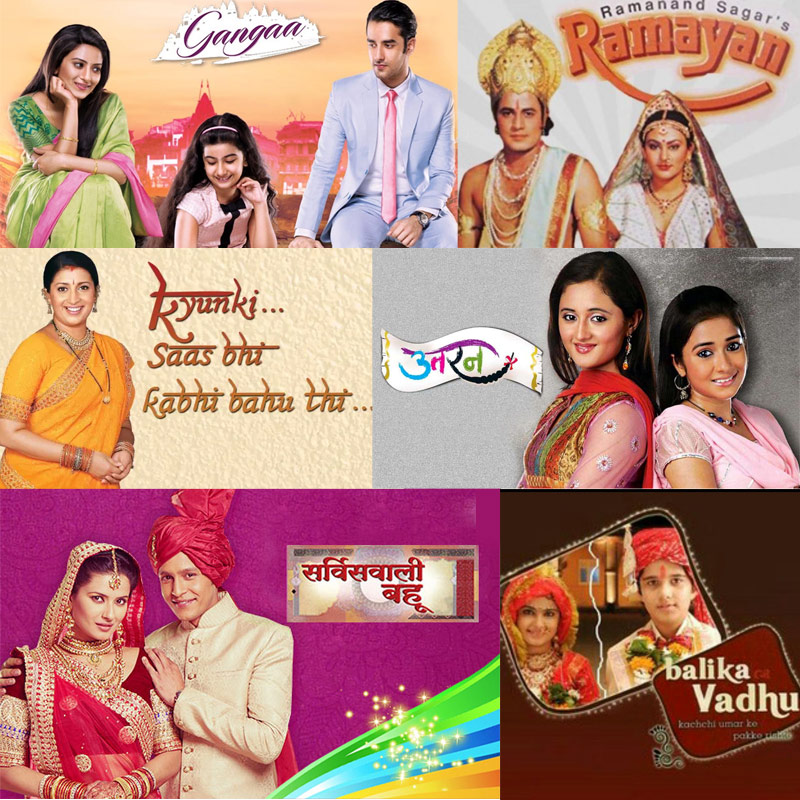
    Since the dawn of the television industry, you all must have seen hundreds of serial dramas. Over the last three decades, serials have been a major part of our daily life. From ‘Ramayana Epic’ to ‘Kyunki Saas Bhi Kabhi Bahu Thi’ to ‘Service Wali Bahu’, everyday family members will sit together in the evening at the dinner table and watch these serials and laugh and cry together. These daily soaps influenced, dominated and established a large part of our society. And there is no doubt in saying that they left their essence to the core of our hearts and minds.

    However, the emerging socialization in the past decade has greatly changed the mindsets of the people of our country. For the better, this has also encouraged our serial directors to deviate from the usual saas-bahu dramas to more social stories, which is both hit among masses and useful to educate new-age India and break stereotypes.

    With the introduction of modern technology, smartphones, online casino, and Netflix we are rarely left with dull moment. Meaningful plots of the TV shows have helped in changing the perceptions of the people who still believed in the items of old faiths, stereotypes, and taboos!

    Here’s the list of Indian TV serials that have broken the stereotypes over the past few years:

    GANGAA

    Gangaa was launched on March 2, 2015 and is still an ongoing TV serial that airs on &TV. This TV series took up the serious issue of child widow custom in India. The plot revolves around Gangaa (played by Ruhana Khanna), a child widow. She has an indomitable will to survive and live her life to the fullest, against all old-age beliefs and norms that society is trying to impose on her. This shows the main aim is to abolish the child widow culture that is still rampant in many parts of the country.

    UTTARAN

    Uttaran debut in December 2008 and we all saw the finale episode of this amazing Indian soap opera in January 2015. This show is about two childhood friends, Ichcha and Tapasya that come from the different strata of society. This TV series showcases how despite the vast difference in their status, these two little girls become the best of friends. However, cut to 10 years we see some jealousy creeping into their relationship due to the entry of some negative characters. However, the initial theme of the show seems to break all the stereotypes regarding friendship and teach us how friendship is about connection and not about social status.

    BALIKA VADHU

    With 2,245 episodes in a span of approximately 8 years, Balika Vadhu swayed the nation from its very beginning. This show's main premise revolves around the still ongoing child marriage in our country. The child groom and bride were played by Avinash Mukherjee and Avika Gor respectively. The story revolves around the two getting married as children, growing up together, and facing difficulties related to child marriage because of their family’s involvement in the process. Through their strong storyline, this shows keeps on throwing across some critical social messages to the audiences. In 2008, the series won the ‘Best Programme With A Social Message’ award at the 8th Indian Telly Awards.

    Service Wali Bahu

    This Indian soap opera was launched in February 2015. The story of this women-centric show revolves around Payal (played by Kratika Sengar), who is a civil engineer, a homemaker and a sole bread-earner of her family. In order to support her in-laws and unemployed husband, she goes out to work. Not only the protagonist is earning bread but is taking care of household and homemaking tasks. This serial shows full support to feminism which also talks about other Indian customs such as the dowry system. Payal’s life has inspired many women in our country and it won’t be wrong to say that it has broken many stereotypes and old norms regarding women.
    These TV serials have changed the way people think and have shattered many stereotypes. And the new open way of thinking will take our country forward.

  • After consistent rise, DTH subscribers fall in  Jan-Mar quarter

    After consistent rise, DTH subscribers fall in Jan-Mar quarter

    MUMBAI: After a consistent upward trend, total active DTH pay-TV subscribers in India dropped slightly during the January-March quarter this year. The overall active subscriber numbers dropped to 67.53 million from 67.56 million.

    Telecom Regulatory Authority of India’s (TRAI) quarterly performance indicator indicated that in 2017, six pay DTH operators had added 4.91 million net pay active subscribers reaching the base of 67.56 million.

    While there were six DTH players earlier, the merger of Dish TV and Videocon d2h reduced the number to five. Following the merger Dish TV has the lion’s share standing at 43 per cent. Tata Sky (25 per cent), Airtel DTH (21 per cent), Sun Direct (10 per cent) and Reliance Digital TV (one per cent) follow the leader with respective shares. Tata Sky’s share has increased but Reliance Digital TV’s share has dropped.

    The quarter had 308 pay channels including 213 SD pay TV channels and 95 HD pay TV channels as reported by 49 broadcasters. Five new pay channels including Zee Cinemalu HD, Zee Telugu HD, Zee Kannada HD, Colors Tamil HD, and Discovery Jeet HD commenced during the quarter ending 31 March 2018.

    Also Read :

    Uplink, downlink issue: TRAI pushes for a liberal regime keeping most existing norms unchanged

    Third Madras high court judge gives TRAI tariff order thumbs up

  • Blackmagic Design makes presence felt at Broadcast Asia

    Blackmagic Design makes presence felt at Broadcast Asia

    MUMBAI: It’s that time of the year again – where the leaders of the industry present the newest and most innovative technologies for film, television and digital advertising under one roof. It’s Broadcast Asia time. All the world’s leading broadcasters have descended on Singapore to keep pace with technology that can help them improve their processes, quality and output.

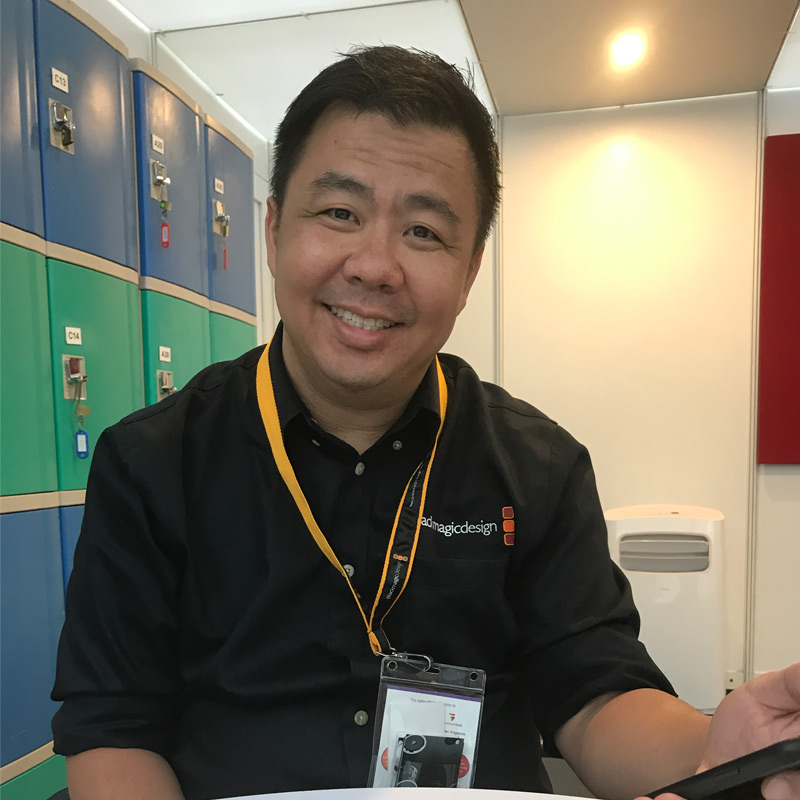
    One of the companies that has made its presence felt at the event is Blackmagic Design, a leading innovator and manufacturer of creative video technology. Blackmagic has created some of the most talked about products in the industry like codecs, professional cameras, Cintel Scanner among others. In order to gain a better perspective on and understanding of the Blackmagic software and hardware, Indiantelevision.com caught up with Blackmagic designs director Richard Lim at the event, excerpts follows.  

    You were saying that you have over 200 products, cameras and other equipments. Tell us more about it? 

    We established ourselves initially as a video capture company I/O card company for post production and since then after several acquisitions of companies, we have now become a full-fledged end-to-end solutions (provider) where we provide equipment and technology for different industries. This could be education, audiovisual, broadcast, production, post production, military, hospitality, simulation – all sorts of industry use our product as long as they need to work with video content, transport video content y,, (switch)  around video content, record video content, post produce video content and we should have technology and products that helps them. By end-to-end we mean that now it is possible to establish an entire facility workflow based on Blackmagic design products and technology. I think thats not one company in the industry that can do it except for us. 

    Basically you work as System Integrator (SI)?

    SI will be our customer, we provide all this to people who actually put together systems and they will serve maybe Doordarshan and Zee TV or any other platform requiring our services.

    Who have been your customer so far on the broadcast side?

    Almost all the tv stations, they are adopting more and more products, Nowadays, you see tv channels setting up faster in India, especially away from first tier cities. Mushrooms of local channels, most of these channels are using our products, mainly because our products are cost effective and reliable and we use the latest technology as well , so they do not suffer a loss of quality and yet they can do the same as any other big tv stations. We are working with traditional and new broadcasters.

    Can you name some broadcasters who are buying your products?

    Zee TV and Doordarshan are using our products. We have two guys is India one for tech and other for sales. Both are based out of Delhi but they are always on the move. We serve India through two distributors, one for the south and other for the west and north west region for the last two years. Most of the times you find that two distributors in a country are enemies of each other but not for us.

    But why would the companies working in North west and south be enemies?

    Because broadcasters don’t do business in one state, they will do project across states which usually tends to cause conflicts of interest. But our guys are collaborating with each other very well.  We also cater to the film making industry as they are kind of costumers who focus on one range of products and cameras.

    Which camera models are doing well for you?

    We have the Blackmagic Ursa Mini Pro, our flagship product for filmmaking. If you pick any of our cameras, it is good enough to make a cinematic movie, yet it is cost effective for you to own the product and technology. The company believes in empowering creativity by democratising technology, so you can own the technology and not rent it. Arri owners mostly rent their cameras. Ditto with Red. The sticker price is way beyond the reach of filmmakers which makes ownership challenging.

    What is your customer base in India?

    We haven’t really counted that but we have a healthy unique sale in India. I will fairly say that we have the most filmmaking cameras in India owned by people not by rental companies. Rental companies don’t like us. Because they cannot make money out of us,. In India, we have customers who don’t maintain equipment and they always cite environment as the culprit. But we also have customers who manage to take care of the equipment very well because they understand the environmental issues. Generally, we have experienced double digit growth in India for many years.

    Which area is stronger for you in India? Is it the north or southern market?

    Generally, the north has always been doing better, but actually not so from the last couple of years. For the last couple of years, the south is doing well for now..

    So is the east is going to explode now for you?

    Yes, absolutely! If you consider the growth rate between India and other south east Asian markets like China and Korea, India is a bit slower but it is getting there. The volume in China is multiple of India. The per capita income in India is far less than China and Korea as people here still have their basic needs to fulfil. 

    Why are your products so expensive in India as compared to Singapore?

    The difference is due to the import duties. Now with the GST rollout, things will become better. Our margins are already negligible. 35 per cent of our prices includes duties and taxes which we pay to the government. The duties are more than margins. We have really done our best to keep the prices as competitive as possible but the fixed rate of the duties makes buying from Singapore more attractive for an average Indian.

    Have you done any end-to-end solutions in the last six years? From pre-production to proaction to post-production?

    Usually we have customers who want to build a studio – like a three camera set up with acquisition (camera system), monitoring (display ssytems), recording, switching, storage, streaming. We have customers who say I am a rental company – I do concerts, I do shows, I do weddings, so we provide them with the whole system for that too. But lately, we are also seeing some post production companies who don’t want to concentrate only on post production but want to work with  ad agencies as well. They usually want to shoot commercials,  music videos, and do postproduction for you as well. . Our products are well equipped to do that as well. Some of our technology users are now moving towards extending more services. Now, if I am an advertising agency, I don’t need to go to several people for a video but I can directly go to an Prasad or  Prime Focus and ask them to shoot something, do post production and distribute it for me.

    Which  products are giving you volumes and value in India?

    As far as our products go, if you would look at  the footprint they have, then our no 1 product is video I/O cards, because we have been selling them for 16 years and they continue to be our bread and butter. We sell a lot of cards to India. of our productsOur cards are the highest sellers for us in India; we have been in cards for 16 years. 

    Convertors are also the bread and butter products which is not very expensive and we sell a lot of them. Displays are also doing well. Also in the last four years has been to make make DaVinci resolve – our color correction and editing tool – more affordable to consumers. At one time, daVinci used to cost $500,000, today it is in the hundreds of dollars only for the full version, whereas the free version has 80 per cent functionality. 

    It’s difficult to tell you which really is our best seller because they are all evenly spread out in terms of customers. 

    How do you market the brand across customers in India? Do you attend trade shows?

    In India, we only attend Broadcast India, but our partners attend local shows. As a company, we do a lot of workshops with our distributors. This year we did two series of workshops for our cameras. Our distributors go and visit the end customers and do various workshops and visits to customers. 

    What about 4K offtake in India… 

    We are probably one of the few companies who have pushed 4K work right from the start. Most of our products are 4K enabled, but priced as HD. The advantage for us in pushing 4K work for last four years is that our staff and our resller channels are fairly familiar with 4K requirements.

    What is the way forward for Blackmagic Design? Do you see more acquisitions happening?

    If we have to look at acquisitions, it has to be the technology that can make the company stronger. We are always on the look out for a good acquisition opportunity. 

    The company was created by three people and we fund it  ourselves from internal accruals. It  started 18 years ago from scratch and it has grown tremendously ever since. The revenue funds the expense of the company and we have good margins. We are a medium sized global company. We  like to focus more on our technology and products to make them  accessible for average consumers – the average creative guy who wants to make great content.

  • PVR & IMAX forge 5 year theatre deal in India

    PVR & IMAX forge 5 year theatre deal in India

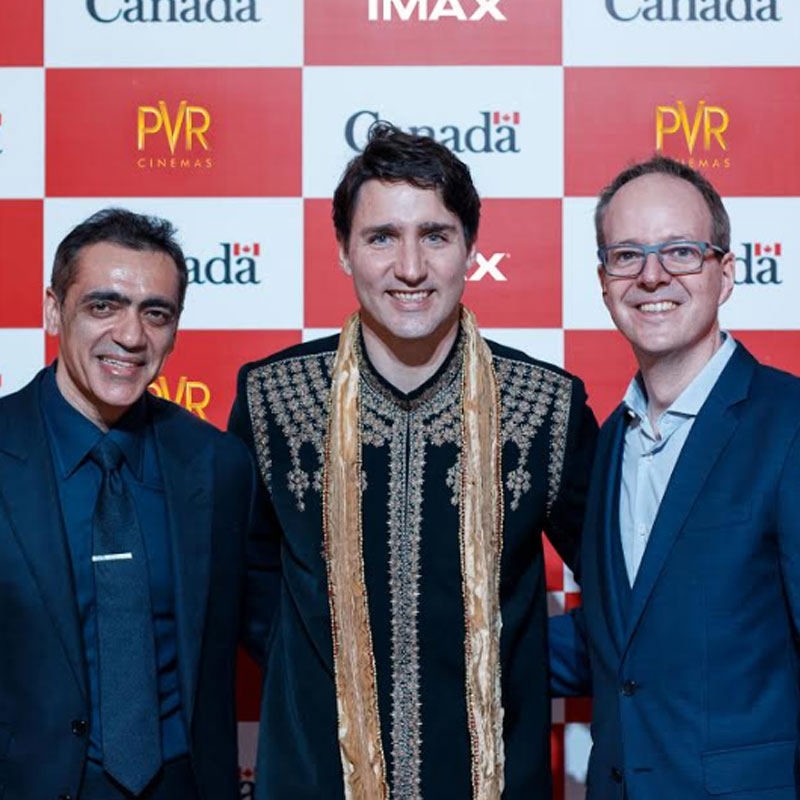
    MUMBAI: At a business briefing to Canadian Prime Minister Justin Trudeau during his first official trip to India, IMAX Corporation and PVR Cinemas announced an agreement for five new IMAX theatres.

    The new screens will be located in major metropolitan markets in a combination of new and existing flagship sites. The agreement brings PVR Cinemas’ total IMAX commitment to 15 theatres and strengthens the exhibitor’s position as IMAX’s largest partner in India.

    PVR managing director and chairman Ajay Bijli mentions, “Our agreement is a direct result of the success of our IMAX box office, which, since 2016, has increased by 50 per cent as the demand for IMAX among moviegoers continues to build. We are delighted to strengthen our longstanding, successful partnership with IMAX, which we view as a competitive advantage to help solidify our leading position in India’s exhibition market.”

    IMAX CEO Richard L Gelfond says, “India is the fourth-largest market by box office and one we view as a long-term growth opportunity. We also continue to re-master more and more Indian movies, and had record-breaking success with Padmaavat earlier this year. We believe these factors, combined with expanding our partnership with India’s top exhibitor PVR, will help set the stage for continued expansion in this important emerging market.”

    In January, IMAX released Viacom18 Motion Pictures’ film Padmaavat, which marked the fourth local-language IMAX Indian film release and the first to be presented in the IMAX 3D format. Padmaavat is now the company’s highest-grossing local Indian release and third highest-grossing IMAX film overall in the country. It expects to announce more Indian IMAX movies for this year.

    PVR operates a cinema circuit of 625 screens at 134 properties in 51 cities with seven IMAX screens in Delhi, Gurugram, Mumbai, Bengaluru and Noida.

    The agreement brings IMAX’s total theatre footprint in India to 31 with 14 currently open and 17 contracted to open.

  • Chilaka’s roller coaster ride from engineering to animation

    Chilaka’s roller coaster ride from engineering to animation

    MUMBAI: Who would have thought that the person holding a master’s degree in computer science from a prestigious US University would commit to the lesser known field of animation and return to his homeland? And yet today, Rajiv Chilaka stands redeemed for a choice he made nearly 17 years ago.

    India’s most successful animation company was the entrepreneurial venture of this man who runs the show with his elder brother Srinivas. The founder and CEO of Green Gold animation, Chilaka moved over from engineering to studying animation at the Academy of Art University, San Francisco in 2000 after giving three gruelling years to a job as a software engineer.

    The inspiration came to him after watching his first animated film – The Jungle Book. It gave rise to a spree of movie and cartoon watching such as Spiderman, Tom and Jerry, etc. Chilaka knew he wasn’t a great artist so he took engineering as a career. The final switch came when, during one of his slow boring days as a librarian, he read Walt Disney’s book where he spoke of the power of entertaining kids and not considering money as a driving force. He decided that if not art, he could at least tell great stories.

    While studying his post graduate degree in the US, Chilaka applied to learn animation but without a scholarship, he had to cough up a whopping $20,000 as fees each semester. His brother refused to lend him money and advised him to finish his masters, work for a few years and give wings to his animation career. Chilaka was convinced.

    When Chilaka broke the news about setting up Green Gold Animation to his family, he instantly got the maternal support but not surprisingly, his father was adamantly against it. Needing his father’s blessings, Chilaka managed to persuade him with the business plan, which he himself felt was a pathetic one.

    He flew back to India and settled in with his parents in their new house, an option his father gave him understanding the difficulty he might face in finding his own accommodation and paying rent initially. With four to five employees, his journey began.

    If today India still lacks great animators, imagine the situation back in 2000. Chilaka says that they had to train everyone who joined. Everything was work, even if it was as simple as a business card or brochure. He even purchased a digital camera to look tech savvy. What he ensured was good quality work at a feasible budget leading to a happy client and no complaints. 
    The company came close to shutting nearly 25 times in the eight years in between. They had worries – expensive orders or unpaid dues and one by one dejected employees started moving out when he couldn’t pay them on time.
    The real tipping point came years later in 2008 when Chhota Bheem first got airtime on Pogo. Ten days before it went on air, Chilaka’s new office was gutted by a fire and a big potential investor developed cold feet while the lenders demanded their dues. “It was a brand new building which we built so luckily no one moved into it. We were going to move in three days later,” Chilaka says. Everything was damaged – the interior, centralised AC office and it was not just the loss of money but also of time and efforts. “But a lot of vendors supported and understood that we were in trouble. Turner didn’t panic and supported us instead,” he adds.

    Recently, Chilaka added another feather to his cap, with the newly launched service studio-Golden Robot Studio with Samir Jain, Chand, Ritesh and Abhishek. “Right now we have 120 team members and we have planned to add another 70-80 people in the team,” he reveals.

    The challenge now was to orient people to the new culture of being self-sufficient and creating original IPs. “It was also difficult for the employees to join a new startup company, but all the employees are happy working here and of course the brand name of Green Gold helped as everyone wanted to work for us,” says a joyful Chilaka.

    His latest home-grown IP shows include Kalari Kids, a show that rediscovers Kalaripayattu, a lost martial art form of Kerala. With the purpose to educate through entertainment, the animation studio is making an exclusive series for Amazon Prime. Green Gold also sealed a deal with Netflix to digitally broadcast Mighty Little Bheem—a spinoff of its popular character Chhota Bheem.

    The series created by Green Gold Animation are Vikram Betal in 2004, Bongo on DD National (2004–2006), Krishna on Cartoon Network (2006–2007), Krishna & Balram – Cartoon Network (2009), Chhota Bheem – Pogo TV (2008), Chorr Police – Disney XD (India) (2009–2012), Mighty Raju – Pogo TV (2011), Luv Kushh – Disney XD (India) (2012–2014), Discovery Kids (India) (2015-2016), Arjun: The Prince of Bali – Disney Channel India (2014–2016) and Kalari Kids.

    In 2018, Green Gold will premiere two theatrical releases – Chhota Bheem Kung Fu Dhamaka and a tentative title for a mythological movie—Mahiravana. Both films are likely to be launched during the summer. Chilaka refused to speak on the other shows which are still in pilot stage.

    For the torchbearer of Indian animation, we hope his pot of gold never runs out!

    Green Gold, Amazon Prime put Kerala martial art on the map
    Green Gold’s golden Mumbai launch