Category: Resources

  • QYOU Media India Selects SpringServe as its primary ad server

    Mumbai : SpringServe, the leading independent TV ad serving platform now part of Magnite has announced that QYOU Media India has selected them as primary ad server. The move comes as QYOU Media India strengthens its focus on providing the highest quality experience for viewers across its premium content library, with an aim to connect more advertisers with viewers.

    QYOU Media India’s Q PLAY entertainment app has a growing presence on Connected TV with channels including – The Q, Q Marathi, The Q Kahaniyan, The Q Comedistaan and Q GameX. The entertainment network’s channels deliver popular digital content from digital creators for young Indian viewers.

    COO, QYOU Media India COO Krishna Menon said “As our business grows across screens and formats, it is necessary for us to align with a technology partner who supports our vision as we continue to scale,”  

    “SpringServe’s advanced ad serving features will enhance our inventory management. We look forward to our partnership with SpringServe as we scale to become a holistic entertainment brand in India.” he added.

    SpringServe’s built-for-video CTV ad serving capabilities provide publishers with enhanced insight, transparency, and control. QYOU Media India will use proprietary SpringServe features to enable more efficient and accurate advertising management for better ad experiences.

    SpringServe international head Leon Siotis said “As competition increases throughout the streaming landscape, the need to deliver a seamless ad experience is crucial to success for many platforms”.

    He added, “QYOU Media India’s adoption of SpringServe will help them more effectively manage advertising and we look forward to supporting them in their efforts to provide a premium experience for consumers.”

  • TAC celebrates the 23rd edition of Emvies in grandeur

    TAC celebrates the 23rd edition of Emvies in grandeur

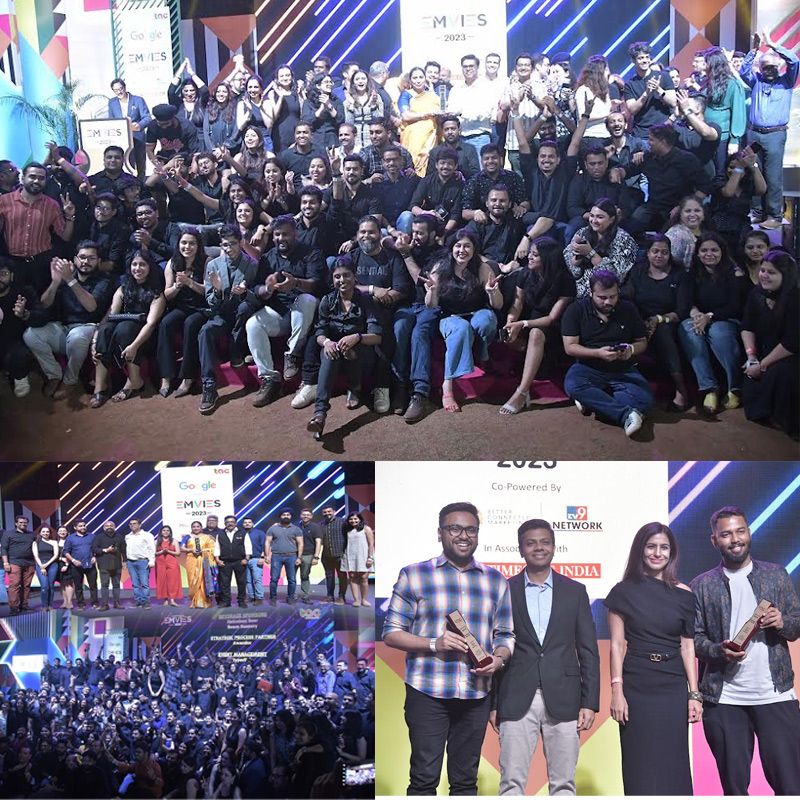
    Mumbai:  The 23rd edition of the coveted EMVIES, presented by Google, co-powered by TV9 NETWORK and MiQ India Commercial, and in association with The Times of India, celebrating strategic, ground-breaking, and high-impact media campaigns by eminent media agencies concluded on 10 March at Taj Lands’ End in Mumbai.

    With a focus on Innovation, Strategy, Research, and seamless Integration, The Advertising Club (TAC), this year, received 1469 entries with around 26 agencies participating in the competition to win the country’s most prestigious media award. More than 1000 professionals from the Media, Marketing, Advertising, and Research fraternities, witnessed 29 Gold and 53 Silver EMVIE trophies being presented to worthy winners in addition to 55 Bronze winners receiving recognition.

    Wavemaker with 630 points was recognized as ‘The Best Media Agency of the Year’ and Mondelez India Foods Pvt. Ltd. was declared as ‘The Best Media Client of the Year’.

    Wavemaker bagged the coveted Grand EMVIE for Mondelez India Foods Pvt. Ltd.’s Cadbury Celebrations’ Not Just a Cadbury Ad – 2.

    Mindshare with 340 points stood second and EssenceMediacom with 100 points stood third.

    The Diversity Equality & Inclusion (DE&I) award presented by Google was awarded to Kinnect for Bausch & Lomb’s How Bausch + Lomb’s – #LookOfLove advocated for unbiased and unprejudiced love.

    Times of India group president & The Advertising Club president Partha Sinha said, “It is great to see this kind of energy at the EMVIEs. Each entry received was deserving and we encourage our industry folks to keep up this quality, which is par excellence. Many of the entries are of global standards and worthy of international acclaim. Many congratulations to all the winners for creating a mark at the Oscars’ of media awards once again.”

    EMVIE’s Committee chairperson Aditya Swamy said, “It is very exciting and encouraging to know that each year, the quality of entries received only surpasses the previous editions of EMVIEs. Big congratulations to all the winners. We urge them to continue to put their best work forward and keep raising the bar.”

  • Zoo Media Acquires The Starter Labs to Strengthen its D2C Capabilities

    Mumbai: The Zoo Media network, India’s independent agency network has announced its acquisition of the marketing agency, The Starter Labs. The network founded by Pratik Gupta and Suveer Bajaj comprises the digital agency FoxyMoron and 10 other agency brands specializing in boutique services ranging from video solutions to influencer marketing amongst others. The network services brands like Netflix, P&G, Youtube, Kellogg’s, P&G, amongst other marquee brands in India.

    The strategic acquisition is expected to strengthen Zoo Media’s D2C capabilities amongst consumer brands in India and is also aligned with Zoo Media’s accelerated global growth strategy, set to be announced later this year.

    The Starter Labs is a D2C marketing agency, founded by Kartik Khanna and Rehan Dadachanji in 2016. Since its inception, the agency has grown to a team size of 60 and has worked with over 250 brands like Cosco, Bummer, Pahadi Local, Captain Zack, Book My Show, Cartoon Network, DSP Mutual Fund with D2C Strategy; Media Solutions; Growth Marketing; Performance Marketing; Content Solutions; Marketplace Solutions; Technology Solutions; Creator Solutions; Business Intelligence; Customer Retention Solutions and Integrated Search Solutions. The founders will continue to function as managing partners and their employees will operate from Zoo Media offices across Mumbai, Bengaluru, and Gurgaon.

    Speaking on the acquisition Bajaj said, “With Indian startups having raised 42 billion in 2021 across industries, this acquisition is a massive opportunity for us to leverage the consumer brand ecosystem and to partner with founders across industries at the early stage of their business life cycle. We are delighted to have great partners in The Starter Labs and welcome the entire team to Zoo.”

    Dadachanji made no secret about the agency’s goals, “Our mission at The Starter Labs is to be India’s number one D2C marketing company, and our acquisition by Zoo Media helps accelerate that by several years.”

    His business partner Khanna, expanded on that, “Our philosophy has always been to work alongside brands as partners in order to impact brands’ bottom line through various stages of their life cycle. The acquisition gives us the ability to use Zoo Media Network’s big brand thinking for growth hungry brands in order to set them up for sustainable scalability.”

    Media Contact:

    drishti@alphabetmedia.in
    nikita@alphabetmedia.in

  • Ogilvy partners with Kotex Omnigel, Limca & Fevicol

    Mumbai: The 83 edition of Kila Raipur Rural Olympics commenced on Friday February 3, 2023 and with it rolls out a host of activity by Ogilvy India for some of Ogilvy’s client brands such as Omnigel, Limca Sportz, Fevicol and Kotex.

    With more reach and growth being the single minded agenda for all marketers, a recent study conducted by the NCAER, rural India, highlights the opportunity of targeting 720 million consumers across 627,000 villages.   

    With approximately 69% of the population still residing in rural areas, this is the next big phase for growth that marketers are seeking penetration and building affinity with rural consumers. And companies looking to target these markets need to develop appropriate products, sales, business models & most importantly marketing efforts suited to these markets.  

    Keeping this opportunity & need in mind, Ogilvy India rolled out rural focussed work rooted in culture. One such example has been the work done by Ogilvy India at the Kila Raipur Rural Olympics 2023 in Punjab, India possibly the biggest Rural Sports Festival of this scale in the world. Initiated in 1933, this sporting event is annually held in the winters around early February. The event takes place at the Grewal Sports Stadium in Kila Raipur village. Competitors and participants range from teenagers to elders and it attracts the attention of huge crowds of tourists and sports lovers worldwide.  

    The organising team was looking for meaningful partnerships with brands that could work with their teams to enrich as well as create a delightful experience of the games. Ogilvy’s branded content & activation wing set up a small core unit at Kila Raipur in September 2022 to work with the local team and identify areas where brands could play a role.  

    Back in our offices across India, they took stock of brands that had purpose and rural consumers in their DNA and reached out to clients like Pidilite, Coca Cola, Cipla and others with ideas in direct response to the direction received from the Rural Olympics management.    

    Currently, there are four distinct activities happening on ground.   

    1. Kotex #PeriodofChange Relay Race: Kotex India, a brand that stands for change, has organised a first-of-its-kind Relay Race at Kila Raipur Sports Festival. In the race, 4 teams of young girls will pass an open pad instead of the usual baton, creating India’s most disruptive period conversation yet.  

    2. Omnigel Rahat Dal: Omnigel’s on ground presence and various pain relief and management facilities such as Physiotherapy booths, massage chairs, stretching segments, nurses, paramedics, first aid kits, ambulance, amongst other provisions, is helping athletes realise their full potential while avoiding any unnecessary injuries.  

    3. Limca Sportz #RukkMatt Menu: To sample Limca Sportz, a sports hydration drink with lemon, glucose and electrolytes, a unique menu is curated wherein currency is replaced with physical activities like squats, lunges, burpees, push ups etc to get the free drink.    

    4. Fevicol Chipku Chair:  Keeping in line with Fevicol’s quirky tonality, the brand makes a new mark here. Among the many other interesting sports at the event, a very unique game ensues outside the field of play, in the stadium’s spectator stands. The battle for a seat among the many spectators gathered. Fevicol takes a crack at this unique problem by deploying several human OOH within the spectators to lend a quirky solution to this problem. How? With Fevicol’s very own brand promise Ek Mazboot Jod.

    It is not just the idea but also the unique execution of each idea that makes an impact when conveying the brand message for each of these brands.

  • Omnicom Media Group launches the OMNI Auto ROI Vault for optimised investment planning

    Omnicom Media Group launches the OMNI Auto ROI Vault for optimised investment planning

    Mumbai: Omnicom Media Group (OMG) India has launched the OMNI Auto ROI Vault, a market-leading and powerful repository spanning 500+ econometric models built on Omnicom Media Group’s extensive ROI-based approach and industry-leading work with automobile clients in India and around the world.

    OMNI is Omnicom Group’s people-based precision marketing and insights platform, developed to uncover and define tailored consumer experiences at scale across creative, media, CRM, and other Omnicom practise areas. With the launch of the Auto ROI Vault, OMNI now allows for the ability to precisely curate investment planning and channel plans for both short-term and long-term payoffs for auto brands. Teams at Omnicom Media Group’s agencies – OMD and PHD – can calibrate and optimise investment plans and effective budget allocation based on the revenue potential of media spends.

    As part of the agency’s focus on the impact of media spending on revenue, and thus long-term business growth, the Auto ROI Vault enables global automotive players to make nuanced decisions—a step above many traditional industry frameworks, and one that shines a light on unlocking true revenue potential and sustainable growth. Omnicom Media Group continues to prioritise data-driven attribution, and the auto category is just the beginning. More categories are on the way in the near future.

    OMG manages over 34 per cent of the Indian auto industry’s media mandate, owing to its dominant market share in the auto category.

    In a market that is constantly changing, combined with increased competition, marketers must now analyse metrics such as lead generation, conversion, sales, and more. Businesses must adapt and evolve, as well as be able to precisely adjust media budgets, to enable a rigorous marketing strategy focused on the big picture –  revenue. Traditional methods of estimating and setting media budgets, such as using a combination of share of market/share of voice ratios or advertising to sales ratios, can be difficult to obtain an accurate picture of the impact of marketing efforts on business functions such as customer service, sales, and overall revenue impact, which is where the ROI Vault comes in.

    Featuring a collection of 500+ models curated specifically for auto OEMs across 20+ markets, with India being one of the key emerging markets featured in it, the OMNI Auto ROI vault empowers clients to reach the desired revenue objective by allocating budget wisely across various channels, benchmarking categories to measure the performance, and predicting models for future sales and revenue – thereby enabling them to focus on the eventual business generated and not just interim media variables.

    Omnicom Media Group India CEO Kartik Sharma said, “OMG’s data-led approach delivers on our ambitions of exceeding the needs of our clients, being their most trusted partner on their journey of transformation, and being able to uncover business-led insights with a tangible impact on revenue growth. With the OMNI Auto ROI Vault’s marketing orchestration capabilities, we are primed to help brands see the effectiveness of media planning as a long-term investment rather than approaching it as yet another cost incurred. With it in our arsenal, we are uniquely positioned to focus on revenue-driven Omnicom Media Group – India | company confidential outcomes for our clients and further deliver on our promise of our transparent and client-centric approach to brand building.”

  • Full stack developer: The next big thing in technology?

    Full stack developer: The next big thing in technology?

    Presently, full stack developer has emerged to be a highly sought career alternative worldwide. Companies are hiring full stack developers in huge numbers. A Full Stack Developer must possess a vivid knowledge of the front end, version control, the back end, debugging, database management, operating system, and system design. Therefore, the demand for full-stack developers is increasing because of their inclusive technical knowledge in various fields.

    What is Full Stack Development?

    Full Stack Development is an end-to-end application software development. This software development encompasses a front end as well as a back end. The user interface is the main part of the front end, while the back end comprises application workflows as well as business reasoning.

    What is the next big thing in technology?

    Technology is expanding at an unbelievable rate. Every business is using technology to elevate its offerings. The usage of technology was different before the pandemic. However, after the recent pandemic, the usage of technology in full-stack development has changed. In this article, we are going to discuss those contemporary trends.

    1. Artificial Intelligence (AI)
    Realising the importance of confidentiality of business and data, companies have started to adopt Artificial Intelligence. AI is considered to be the next-generation technology. And it has already entered the commercial market around the world. It has become essential for full-stack developers to master AI. An Artificial Intelligence expert will contribute to the development and growth of the company. AI specialists will also be able to comprehend customers’ requirements and behaviours.

    2. Blockchain
    Blockchain has mushroomed enormously in recent years. Various companies are opting for and investing in blockchain. This technology simplifies monetary transactions of companies. Hence, it is highly recommended for a full-stack developer to acquire proficiency in blockchain. Then the specialist can look after the transfer of money, government transaction, digital currency transaction and land transaction.

    3. Machine Learning (ML)
    Companies have ultimately understood the worth of Machine Learning. Thereafter, this technology has seen a spike in its growth. Machine Learning procedures can analyse data from previous experiences and can improvise its predictions and decisions. Hence, a Full-stack developer must know Machine Learning to bag the benefits and opportunities for his company.

    4. Code Development
    One of the latest trends is low code-development. Coding a program is a slow process. Therefore low-code development was invented. This code does not require complicated coding and offers logical understanding. It helps the customers to understand the software and customise it according to their requirements. Low code development helps in digital transformation and the development of complicated industrial solutions.

    5. Programming Language
    Learning Computer Language or Programming Language is extremely important for a Full-stack developer. All applications and web pages are developed with the help of Programming Languages. One of the most popular Computer Languages is JavaScript. This language is extremely easy and flexible to use.

    6. Mixed Reality
    Mixed Reality is one of the recent inventions. It has opened many unimaginable opportunities with the passing years. It was only possible because there was an incredible improvement in computer vision, input system, graphics and visualisation techniques. Mixed reality includes two main parts: Virtual Reality and Augmented Reality. This technology mixes real and natural environments and creates an absolute virtual environment. This gives users an out-of-the-world experience. This is generally used in the commercial, health care and, gaming sectors.

    Conclusion

    A career in Full-stack development is quite lucrative. This is because of the high remuneration and job availability. If you are willing to commence a career as a Full-stack developer, then get yourself enrolled in a Full-stack developer course. Join the online courses offered by Imarticus to explore and bag more opportunities.


  • What Can You Do With a Master of Arts Degree?

    What Can You Do With a Master of Arts Degree?

    Master of Arts, popularly known as MA is a 2 years long post graduate programme that candidates can pursue after completing their graduation. Numerous colleges and universities across India and abroad offer the degree in numerous specializations. Some of the most sought after courses in MA include MA English, MA History, MA Political Science, MA Economics etc.

    Admission to MA is done based on merit as well as performance in popular entrance exams like CUET, TISSET etc. After completing MA, aspirants can either go for higher studies or start working. Candidates can explore employment opportunities in various industries including education, entertainment, business and media among others. Read on to find out about opportunities after a Master of Arts Degree.

    Master of Arts Highlights

    Captured below are the highlights of Master of Arts Degree:

    Particulars

    Details

    Name of Course

    Master of Arts

    Abbreviation

    MA

    Course Duration

    Two years

    Eligibility Criteria

    Graduation with at least 50% aggregate marks or its equivalent CGPA from a recognized University

    Examination Type

    Semester type

    Entrance Exam

    CUET, TISSNET, PU CET etc.

    Average Course Fee

    INR 8,000- INR 1,00,000 per annum

    Average Salary

    INR 3,20,000- INR 7,00,000

    Job Profiles

    Teacher, Copy Editor, Consultant, HR Manager, Content Writer, Executive Assistant, Data Analyst, School Counsellor, Assistant Editor etc.

    Popular MA Courses Offered in India

    There are multiple MA courses available in India. Some of the most popular ones are listed below along with their respective fee range and possible career prospects:

    Top MA Courses

    Average Course Fee (Annual)

    Relevant Career Profiles

    MA English

    INR 40,000 – INR 50,000

    Content Writer, Translator, Editor, Journalist, Teacher

    MA History

    INR 10,000- INR 50,000

    Historian, Researcher, Archivist, Teacher, Archeologist

    MA Economics

    INR 20,000 – INR 50,000

    Economist, Market Research Analyst, Teacher, Credit Analyst, Statistician, Financial Advisor

    MA Political Science

    INR 20,000 – INR 80,000

    Political Scientist, Consumer Advocate, State Legislator, City Administrator, Community Service Manager, Political Analyst

    MA Philosophy

    INR 10,000- INR 1,00,000

    Archivist, Administrator, Researcher, Insurance Underwriter, Social Worker

    MA Geography

    INR 10,000- INR 1,00,000

    Agriculture Specialist, Teacher, Researcher, Forest Manager, Geographer, Demographer

    MA Hindi

    INR 20,000 – INR 80,000

    Content Writer, Translator, Editor, Journalist, Teacher

    MA Psychology

    INR 10,000- INR 95,000

    School Psychologist, Teacher, Health Psychologist, Industrial Psychologist, Counseling Psychologist

    MA Education

    INR 5,000 to INR 80,000

    Program Manager, Teacher, Program Coordinator, Administrative Manager, Research Scientist, Administrative Officer

    Master of Arts Top Colleges in India

    Provided below is a list of top MA colleges in India:

    College Name

    Location

    Course Fees (Total)

    Lady Shree Ram College

    Delhi

    Rs 17,976

    St. Xavier’s College

    Mumbai

    Rs. 51,000 to Rs. 75,000 (per semester)

    Miranda House

    Delhi

    Rs 13,330 to Rs. 17,030

    Hindu College

    Delhi

    Rs 12,307

    Presidency University

    Kolkata

    Rs. 4,400

    Hansraj College

    Delhi

    Rs 12,307

    Kamla Nehru College For Women

    Delhi

    Rs 7999

    Christ University

    Bangalore

    Rs. 34,000 to Rs. 1,40,000

    Jesus and Mary College

    Delhi

    Rs. 12,823

    Fergusson College

    Pune

    Rs. 14,000 to Rs. 65,000

    Master of Arts as a Career

    Candidates can explore various job opportunities after Master of Arts. They are offered options depending on the discipline they have studied, their skill set, knowledge and aptitude. In the initial stages, the average salary is around INR 3,00,000 to INR 7,00,000. However, it increases with time and work experience.

    Check out some of the highly popular job profiles after Master of Arts and their respective salaries below.

    Job Profiles

    Average Salary (Annual)

    Content Writer

    INR 2,87,000

    Human resource manager

    INR 7,94,000

    Journalist

    INR 3,46,000

    Teacher

    INR 5,00,000

    Social Worker

    INR 3,88,000

    Consultant

    INR 5,50,000

    Assistant Professor

    INR 4,00,000

    Master of Arts Degree Employment Areas

    Given below are the employment areas where candidates can

    • Education
    • Human services
    • Journalism
    • Entertainment
    • Law
    • Health Care
    • Medical Science
    • Business

    Skills Required for Jobs After Master of Arts

    MA requires extensive research and willpower. After completing the course, candidates are required to possess the following key skills to ace the professional world:

    • Problem-solving skills and Analytical thinking
    • Good communication skills
    • Time management skills
    • Curiosity
    • Organizational skills
    • Interpersonal skills
    • Focus

    Higher Education After Master of Arts

    Not only jobs, aspirants can also go for higher education after MA. They can pursue courses like M.Phil or Ph.D. In order to get shortlisted for aforementioned degrees, students are required to crack required entrance exams. There is no merit based selection for these courses.

    Apart from choosing the traditional corporate jobs, they can also start preparing for government exams like State PCS, UPSC etc. based on their field of study.


  • Factors that Contribute to Business Loan Application Rejection

    Factors that Contribute to Business Loan Application Rejection

    One of the many things that businesses don’t want to confront is rejection, whether it’s for a new project or business financing. However, financial institutions are extra cautious when conducting credit appraisals. They consider a number of factors before approving your loan application.

    As a result, if you don’t want to find yourself in a loan refusal situation, keep the following points in mind.

    1. Poor credit report

    One of the primary reasons for business loan rejection is poor credit history. Financial institutions first assess your credit report when you apply for a loan. They look at how many existing debts you have and how much you are paying in EMIs. They also verify if any previous EMIs have been missed. In case of any negative recordings on your report, the lender will reject your application.

    However, there are several circumstances in which a bad credit record is not your fault. For example, sometimes financial institutions forget to send the loan closure report to the credit bureaus. In such circumstances, your best solution is to contact your lender and request that the disparity is resolved. You can also send the credit bureau a rectification mail along with supporting papers like a no-objection certificate (NOC)

    2. Poor cash flow

    Cash flow is a measure of your company’s liquidity. It informs lenders about the amount of cash you have on hand and in the bank. One of the numerous issues that lenders cannot ignore is a lack of liquidity. Assume you require funds in the range of Rs 25 lakhs. Your company’s financials indicate a healthy profit, but your cash flow displays a negative amount. In this case, it is assumed that either your business expenses are excessive or you are wasting money on things that aren’t necessary.

    To improve the cash flow in your company, you can consider taking the following measures.

    ● Sell off any assets that are no longer relevant to your business.

    ● Instead of purchasing new machinery or office space, consider leasing.

    ● Launching new products will help you increase your revenue.

    ● Revise the price of your existing products.

    3. Lack of business plan

    Financial institutions ask you to present a well-detailed business plan when you apply for a business loan. They want to know about your projected sales, expansion plans, and revenue projections for the next five years, among other things. Some financial institutions also ask for financial statements. Thus, try to get your balance sheet and profit and loss statement audited by a chartered accountant if possible.

    You may also seek guidance from business advisors or have a documented company plan reviewed by them to make the application process move more smoothly.

    4. Multiple loan applications

    The requirements for funds in business might arise at any time. And if you don’t plan ahead of time, you can miss out on a fantastic opportunity. However, to obtain funds quickly, one of the most common mistakes made by businesses is to apply for a loan with many lenders at the same time without waiting for any lender to approve or disapprove.

    Submitting multiple applications at the same time gives the lender an impression that you are a desperate borrower. Thus, resulting in a loan application rejection.

    5. Start-ups

    Financial institutions are hesitant to lend to start-up companies. The reason is that such businesses have no prior business credit history. They also lack financial information that would allow a lender to assess their company’s viability. As such, if you have just started your business, you are left with a handful of financing options, of which a few are listed below.

    ● You may raise funds from private equity firms, venture capitalists, or angel investors.

    ● If you want to start a business in addition to your full-time employment, the best option is to apply for a personal loan.

    ● You can also choose from a variety of government loan programmes on the market.

    ● If nothing else works out, consider utilising your savings or enlisting the assistance of your friends or relatives. You may also want to explore forming a partnership firm, as your business partner may be willing to invest a significant amount of money in your company.

    6. High risks business

    There are various businesses whose performance relies upon the country’s economic conditions, government policies, etc. There are also a few businesses that boom only in a specific season. Financial institutions consider such businesses risky and do not grant loans to them.

    Assume when there is a complete lockdown in the country and gyms and other public amenities were closed. In such situations, do you think the lender will approve you for a loan? The answer is a big NO. And if they do, they will charge a hefty business loan interest rate to mitigate the potential risks.

    To conclude:

    Now that you are aware of the factors that influence the approval of your business loan, you can proceed with your application. Remember, avoiding the above blunders can help you get funds at an affordable business loan interest rate.

  • How to turn writing into a habit

    How to turn writing into a habit

    The problem with modernity is that we threw out the baby with the bathwater. Horrified by the excess and savagery of the past, we decided to place a stigma on what is seen as old. The word “wisdom” is rarely used in its literal sense or taken literally.

    The problem of disciplining yourself and getting better at a craft is not new. It has been with us since the start, and sadly, the modern world tends to view things backward. A classic understanding of discipline is rooted in much more truth than the recent pop-psych self-help advice industry.

    How to write every day? Well, you have to develop a habit.

    Aristotle’s advice

    As mentioned, we decided to throw out the baby with the bathwater at some point. So, we intuitively think that getting better at dieting, working out, or writing is all about motivation. After all, “motivation coaching” and motivation videos are a multi-million (if not billion) dollar industry.

    Developing good writing habits is no different from any other habit formation.

    Relying on motivation is a terrible idea. It is an emotion, just like any other. And similar to all other emotions, it is unpredictable and tough to maintain. Just try it for yourself: pick an emotion or a state of mind, and try to have it consistently.

    We all fall into this trap. Due to a documentary or a YouTube video, we swear to ourselves that we will lose weight, start writing, or learn to play the piano. The passion and fire burn within us as we start, but then fade away after a few days.

    Ever since the ancient world, people understood that men are creatures of routine, reflex, and instinct. To quote Aristotle: “ Excellence is a habit.”

    There is nothing inherently wrong with chasing that motivational high, but we have to understand that it is fleeting. The essence of maturity is learning to do things when you do not feel like it.

    At first, the “pain” of forcing yourself to write daily will be significant. But with time, a habit will form. To put things simply: to get good at writing you have to practice daily writing. And to write daily, a habit must be burned into both your body and mind.

    Did you ever notice how hard it is to kick a bad habit? Well, the opposite is also true. Good habits also tend to stick around if they are hard-wired into your mind. People who are used to working out feel bad if they have to skip a week. Ex-military people still make their beds, iron their shirts, and sit with their backs straight.

    To some extent, you are a programmable creature. Every culture was aware of this fact and used it to its advantage.

    Beware of Dopamine extremes

    Writing every day is a commitment. But it does not necessarily have to be very unpleasant.

    Try to do the following experiment: eat a strawberry. Tastes good, right?

    Now, eat a piece of cake, then eat a strawberry after. The very same strawberry now tastes extremely sour. Why is that?

    Well, your taste buds adjusted themselves to the extremely sweet cake piece. Compared to the diabetes-inducing cake, the mildly-sweet strawberry tasted like a lemon.

    This long analogy is important because the very same thing happens to your emotions. Your body is designed to produce pleasure during every small victory.
    Making your bed, going for a run, eating a healthy meal, or just seeing someone smiling at you should give you a hit of feel-good juice inside your head. Finishing a page should normally give you a small rush of satisfaction.

    Basically, modern people live in a type of luxury that would make pharaohs blush. Every TV program, commercial, video game, movie, or song is designed to produce as much pleasure as possible.

    Your brain is so drenched in pleasure chemicals, that you develop a very high tolerance for pleasure. To use our analogy, you can’t taste the strawberry (writing) because you’re eating 5 pounds of extra-sweet cake.

    Going on a dopamine detox for a few weeks will help you not just with writing time, but any other type of discipline. Try to stay away from extreme and artificial sources of pleasure such as substance abuse or digital entertainment.

    Daily writing tips and motivational videos are fine, but without discipline, your writing habit will be neglected just like your gym routine or guitar lessons.

    This is why many modern people are always in a funk or a foul mood. Normal daily things and the resulting pleasure are dulled, so we feel like we have to drag ourselves to do anything. The motivation centers of the brain are fried.

    Third-parties

    If you do not want to become a writer and just want to pass a class, you can buy a research paper for college on the internet. Some sites specialize in selling papers of all types, from CVs to Cover and essays.

    Finding the best writing service for you is not that hard. But you should only consider this option if you don’t intend on becoming a good writer long-term. Having someone else do your work will spare you from some discomfort, but you are short-changing yourself in the long run.

    Conclusion

    Emotions are great for short bursts of creativity. However, it is not uncommon for people to go through half a dozen states per day, so you cannot rely on these bursts for consistent mastery of a craft like writing.

    An ideal game plan would be to use the motivation to get started and practice daily until a habit or reflex is formed. If you find yourself consistently burdened by having to write, consider cutting out the more intense pleasures from your life, at least for a while to re-calibrate your hyper-stimulated pleasure centers.

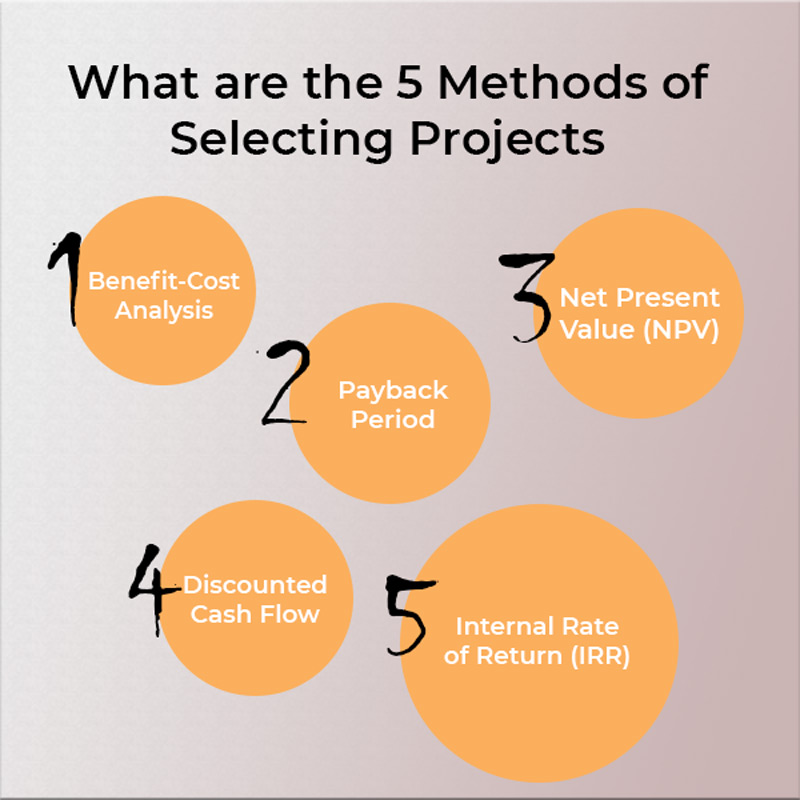
  • What are the 5 Methods of Selecting Projects?

    What are the 5 Methods of Selecting Projects?

    An organization has many interesting and challenging projects to work on, and it needs proper management for delivering the project on time and within budget. This is where project selection comes in, as it is about picking the right project at the right time for the organization.

    The project selection methods for project managers offer a set of time-tested techniques based on sound logical reasoning to choose a project. These offer the best chances of success and filter out undesirable projects with a very low likelihood of success. It is an important concept for practicing project managers and aspirants preparing for the PMP exam.

    In this article, we will understand project selection and the key methods to select a project.

    What is Project Selection?

    •    Project selection is assessing projects to ensure that they align with the organization’s strategic objective and deliver maximum performance.
    •    This process helps to choose projects based on a prioritized hierarchy.
    •    All project selection methods are based on two criteria: Benefits and Feasibility.
    •    “Benefit” refers to all the positive outcomes that include all the reasons to take the project. It includes anything from economic gain to social and cultural significance.
    •    “Feasibility” refers to the chances of the project being a success. This process takes time and a lot of research but also clarifies the project selection.

    There are several methods to select a project, depending on the main objective that needs to be fulfilled. There are 2 approaches to selecting a project: the Mathematical approach (Constrained Optimised Method) and the Comparative approach (Benefit Measurement Method).

    In the sections below, we’ll be looking at the 5 kinds of comparative approaches, as they are more popular.

    1.    Benefit-Cost Analysis

    •    This method is used to discover the most cost-effective way to execute a project by estimating the costs along with benefits associated with a particular project.
    •    It is a simple ratio where we compare the project’s benefits to its initial cost.
    •    The projects with a higher Benefit-Cost Ratio or lower Cost-Benefit Ratio are generally chosen over others.
    •    This method is strictly for projects where we are concerned with money.

    For Example:

    •    Suppose we have a project that generates $1,25,000 worth of benefits and costs $50,000, then the ratio would be 2.5 (can also be written as 5.2).
    •    This indicates that the organization will receive 2.5 units of benefit for every 1 unit of the cost they will incur.

    2.    Payback Period

    •    It is the basic project selection method in which the time frame required to repay the investment cost is calculated.
    •    Here we are concerned with the time taken to recover the initial expenses by neglecting the other factors like the time value of money, risks involved, etc.
    •    When this method is used to select the project, we’ll always look for the project with the shortest payback period.

    Example:

    •    Suppose we have a project that costs $1 million, generating a revenue of $1,00,000 per annum. The payback period, in such a case, will be 10 years.
    •    If we have another project that costs $1 million and generates a revenue of $2 million per annum, the payback period will be 5 years.
    •    So, if the primary focus is to repay the initial investment, we always want to select the one with a lower payback period.

    You can learn more about project selection methods through Simplilearn online education.

    3.    Discounted Cash Flow

    •    In this method, we take inflation into account. This means that today’s money isn’t going to have the same value in the future. For example, $50,000 won’t have the same value ten years from now.
    •    Therefore, it is important to consider the discounted cash flow when calculating the investment cost and ROI of any potential project.

    4.    Net Present Value (NPV)

    •    The Net Present Value refers to the difference between the project’s current value of cash inflow and the current value of cash outflow.
    •    The NPV is always positive, and the project with the higher NPV is preferred.
    •    It is better to choose NPV over the payback period as it considers the future value of money.
    •    However, this isn’t a method for figuring out the discounted value for the present value calculation, and also it does not provide a picture of profit or loss.

    5.    Internal Rate of Return (IRR)

    •    This method is used when we are trying to calculate the interest rate to get our net present value to zero.
    •    The net present value will be zero when the present value of outflow is equal to the present value of inflow.
    •    IRR is used for selecting the project with the best profitability; thus, the project with the higher IRR is chosen.
    •    IRR should not be used exclusively to judge the worth of a project, as the project with a lower IRR might have a higher NPV, assuming there is no capital constraint. The project with a higher NPV should be selected as it will increase the shareholder’s profit.

    Process of Project Selection

    The projects are properly evaluated based on the economic models mentioned above, and then they are finalized through any of the following processes.

    •    Scoring Model – Here the project selection committee will prepare a list of project criteria and score each of them according to their relevance, importance, and priority. Then a list of projects from best to worst is created and the top most project will likely be the one more beneficial and feasible to take.
    •    Peer Review – Here the project managers are asked for their views on what they think about which project will be more beneficial for the organization.
    •    Murder Board – Here we’ll have a panel with the people within the organization, who will do everything they can to poke holes in the argument, i.e., they will keep on questioning why the organization thinks that a particular project is the best to go for.

    Project selection may seem simple, but it requires a lot of techniques and research to choose the best project. The project managers should be well versed with all these methods to be a helpful asset to the organization.