Category: Jobs

  • The impact of the gig economy on the Indian workforce

    The impact of the gig economy on the Indian workforce

    The gig economy has emerged as a transformative force in India, fundamentally altering the way people work, how businesses operate, and the structure of employment itself. Characterized by short-term contracts, freelance work, and flexible working hours, the gig economy provides an alternative to traditional full-time employment, and it is reshaping the Indian workforce at an unprecedented scale.

    With the proliferation of digital platforms like Uber, Zomato, Swiggy, and Upwork, the gig economy is rapidly expanding, offering a range of opportunities across various industries. While it presents significant advantages like flexibility and income potential for workers, it also raises concerns about job security, benefits, and long-term financial stability. As India positions itself as a major player in the global economy, understanding the impact of the gig economy on its workforce is crucial for the country’s socio-economic development.

    Rise of the gig economy in India

    India, with its large and young labor force, has witnessed an exponential rise in gig work over the past decade. According to a report by the Boston Consulting Group, around 15 million people were engaged in gig work in India as of 2022. This number is expected to grow substantially as more individuals opt for freelance and contract-based work over conventional employment.

    Several factors have contributed to the growth of the gig economy in India. The rapid penetration of smartphones and internet connectivity has made it easier for people to access digital platforms that connect gig workers with employers. Moreover, changing attitudes toward work, especially among millennials and Gen Z, have led to a preference for flexibility, autonomy, and the ability to work on multiple projects rather than committing to a single employer.

    Additionally, the COVID-19 pandemic accelerated the gig economy’s growth, as many traditional businesses were forced to adapt to remote work and embrace a more flexible workforce. Companies, especially in sectors like food delivery, e-commerce, and IT services, turned to gig workers to meet demand surges, further driving the shift towards non-traditional employment.

    Benefits of the gig economy for workers

    One of the primary attractions of the gig economy is the flexibility it offers. Workers have the freedom to choose when, where, and how much they want to work, which is especially appealing to those who value work-life balance. This model also provides opportunities for individuals to explore diverse skill sets, take on multiple roles, and earn income from different sources, all without being tied to a full-time job.

    For many people, the gig economy serves as a means to earn supplemental income, whether they are students, homemakers, or professionals looking for extra work. In regions with limited full-time job opportunities, gig work allows individuals to tap into the global market and secure freelance projects, reducing regional employment disparities.

    Furthermore, the gig economy has been instrumental in promoting entrepreneurship, especially among the youth. Many young workers are now able to start their own businesses, offer specialised services, or work as consultants, thanks to the ease with which they can connect with clients through digital platforms.

    Challenges for gig workers

    Despite its advantages, the gig economy presents several challenges, particularly around income stability and job security. Gig workers often lack access to essential benefits such as health insurance, pensions, and paid leave, which are standard in traditional employment. The absence of a formal employment contract can leave gig workers vulnerable to exploitation, with low pay, irregular hours, and limited bargaining power.

    Income volatility is another significant concern. While some gig workers can earn a substantial income, many face unpredictable earnings due to fluctuations in demand or competition with other freelancers. This uncertainty can make it difficult for workers to plan for long-term financial goals or manage their expenses effectively.

    Additionally, the lack of social security benefits like provident fund contributions or access to unemployment insurance means that gig workers are left unprotected in times of crisis. This was evident during the COVID-19 pandemic, where many gig workers lost their income due to restrictions on movement, with limited government support to fall back on.

    Impact on the broader workforce

    The gig economy’s rise is also influencing traditional employment models in India. Companies are increasingly adopting hybrid workforce models, where they rely on a mix of full-time employees and gig workers to achieve greater operational flexibility. While this may lead to cost savings for businesses, it also raises concerns about the future of full-time jobs and the growing casualisation of labor.

    On a larger scale, the gig economy is contributing to changes in labor policies and regulations in India. The government has recognized the need to provide gig workers with some level of social security and has introduced schemes like the Code on Social Security, 2020, which includes provisions for gig and platform workers. However, the effective implementation of such policies remains a challenge.

    Conclusion

    The gig economy offers both opportunities and challenges for the Indian workforce. While it provides workers with flexibility, autonomy, and access to new income streams, it also raises concerns about job security, benefits, and income stability. As the gig economy continues to expand, it will be essential for policymakers, businesses, and workers to find a balance that ensures both flexibility and protection for gig workers. By addressing these challenges, India can harness the potential of the gig economy while safeguarding the rights and well-being of its workforce.

    The article has been authored by Judge India president and Judge Group, global delivery, Abhishek Agarwal.

  • Malignant work culture: A universal struggle

    Malignant work culture: A universal struggle

    Mumbai: Monday mornings often carry a heavy weight, especially for salaried and general working class people. They rise early and navigate through the chaotic crowd to catch a train, spend the day at the office and return home in the evening, often with little time left for relaxation or enjoyment. The cycle repeats day after day, leaving little room for anything beyond the grind of work.

    Many people feel that after years of education, studying for 13 to 15 years and landing a job that pays only a meagre salary feels like a scam. Adding more insult to injury is the expectation to give 100% in a pernicious work culture that often normalises late nights and overwork. As working conditions worsen, employees find themselves grappling with alienation and a sense of nihilism, as their efforts contribute to tasks that offer little real satisfaction.

    In our digital age, social media has become a platform for venting frustrations about corporate life. Office memes and comments on these posts reveal a collective discontent, with many individuals sharing their experiences of challenging manager-worker relationships and the anxiety surrounding salary increments. The normalisation of poor working conditions elicits both laughter and anger, reflecting the heartbreak of doing mundane tasks that feel devoid of meaning.


    A post shared by Sneha Bhowmik (@who.z_she_)


    A post shared by Jesse Pinkman (@tittyverse)


    The recent tragic case of Anna Sebastian Perayil, an employee at Ernst & Young, highlights the serious toll of work-related stress, raising important questions about workplace culture. Companies claiming to be the “best places to work” have faced scrutiny,  as a Gallup report from 2024 found that only 14 per cent of surveyed Indian employees reported thriving in their roles, compared to 34 per cent globally. Employment conditions in India remain troubling, marked by stagnant wages, increasing self-employment among women, and a higher proportion of unpaid family labour among youth.

    Marching Sheep founder Sonica Aron says, “Work related stress and burnout are a symptom and it’s time we address the root cause. High tolerance for toxic work culture, poor managerial capability, carewashing are issues that need to be addressed systematically. And these are issues not specific to any one industry or geography, they pervade the entire corporate culture. Companies forget that it is people who drive performance, productivity, innovation and growth, and not taking care of people is not an option.”

    Sonica rightfully mentioned that identifying the root cause is a highly trivial aspect since topics such as these only highlights the problems, the data, statistics which is indeed pretty much important, but doesn’t really emphasis on why such a situation is in the first place. In this article, we will explore the root causes of these dismal working conditions.

    The push for better working environments seems logical, but it deludes us into thinking that companies genuinely care about their employees’ well-being. In reality, the premature deaths of workers under harsh conditions can be seen as beneficial for corporations. If the capitalist society is truly rewarding for employees, the working class would not be facing the dire situations they currently endure.

    From a materialist perspective, the production and reproduction of life are the ultimate determinants of history. Under capitalism, companies extract profit from this life until it no longer produces value. From the moment we enter this system, we face vulnerabilities related to housing, food and health. Without selling our labour, we risk falling into crises.

    For instance, a factory owner can only profit if they pay labourers less than the true value of their work. The surplus value (extra money created by the workers/employees during their working hours) generated is retained by the owner, who reinvests it in the business to increase efficiency and further exploit workers. As a result, employees receive less than what is necessary for a decent quality of life, leading to exhaustion and health issues. This decline renders them less useful to their employers, who view them as replaceable resources.

    A disturbing implication of this system is that the sooner a worker is unable to perform, the quicker they can be replaced. Companies show little interest in enhancing the lifespan or well-being of their employees, as this would require investing in their needs rather than maximising profits. Thus, the argument for better working conditions contradicts the very foundations of this system.

    This is the reason why we are unable to witness any empathy shown by the companies when such unfortunate incidents happen. The case of Anna Sebastian Perayil at Ernst & Young is not an isolated incident; such tragedies are becoming increasingly common and is a global phenomenon. Even those who glorify “hustle culture” are often kept in a delusion that primarily benefits companies. In these critical times, workers should advocate for stricter labour laws to reduce working hours, form unions, and improve their overall conditions. It’s essential to challenge the exploitative dynamics at play and fight for a workplace that values human life and dignity over mere profit.

  • Apple’s success in India shows manufacturing as key to employment: Ashish Dhawan

    Apple’s success in India shows manufacturing as key to employment: Ashish Dhawan

    Mumbai: The Convergence Foundation (TCF) founder-CEO Ashish Dhawan emphasised India’s success in electronics manufacturing as a clear sign of the country’s potential to boost job creation. Dhawan highlighted Apple’s rapid expansion in India, with its 29th factory being established in the country in just two to three years.

    “Many doubted India’s capability in manufacturing, questioning our productivity. But Apple’s success shows we can make it happen. This should instill confidence in India’s capacity for large-scale electronics production,” Dhawan stated.

    He urged stakeholders to view this success as a step toward addressing India’s labour-intensive exports gap, stressing the country’s demographic advantages and lower labour costs compared to China. However, he cautioned that significant reforms are still needed, particularly around reducing regulatory hurdles, improving ease of doing business, and investing in infrastructure.

    Dhawan stressed the importance of tying manufacturing growth to job creation. In a conversation with Foundation for Economic Development (FED) founder-director Rahul Ahluwalia, he pointed out that while sectors like automobile manufacturing have become more capital-intensive, industries like electronics assembly and apparel can create more jobs, which is critical for India today.

    “The government’s role in enhancing competitiveness has been vital,” Dhawan said, crediting both central and state governments for their efforts to improve labour and land policies. “Business leaders are calling for competitiveness, and the government is responding.”

    Dhawan also urged India to set its sights on matching the success of East Asian economies like South Korea, Taiwan, and Vietnam. He cited Uttar Pradesh as an example, pointing out the stark difference in exports between the state and Vietnam, despite UP’s much larger population. Dhawan called for a strategic push to capture the world market in labour-intensive sectors, comparing India’s performance with East Asian benchmarks.

    Dhawan further advocated for India to become the world’s skills hub. He pointed out that India already leads in global remittances, receiving $120 billion annually, and projected this could grow to $300 billion if India strategically sends more skilled workers abroad.

    He also called for government-to-government arrangements to facilitate temporary work visas in OECD countries, where 50 million jobs are expected to open up over the next two decades. India, Dhawan argued, is well-positioned to supply skilled labour in sectors like healthcare, domestic services, and more.

  • Hyundai India creates jobs for 403 ITI and polytechnic students across 9 states

    Hyundai India creates jobs for 403 ITI and polytechnic students across 9 states

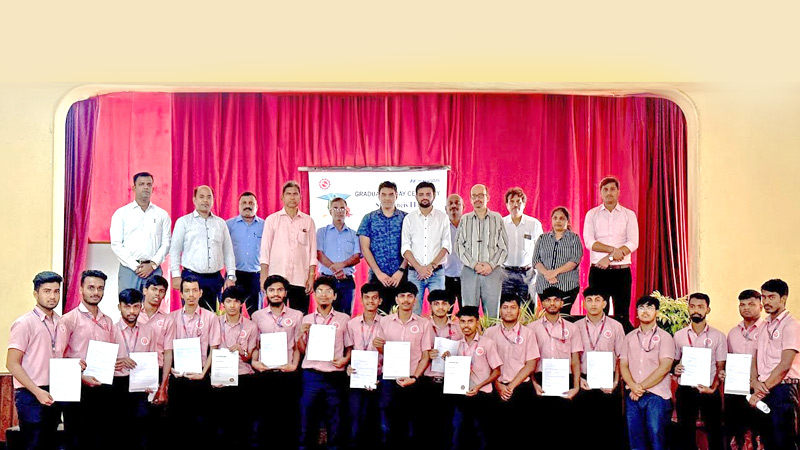
    Mumbai: Hyundai Motor India Ltd (HMIL) announced employment opportunities for 403 students from ITIs and polytechnic institutes across nine Indian states, at its dealer network. HMIL offers a special skill development program at ITIs and polytechnic institutes and further helps students get meaningful employment opportunities in its wide network of dealers. The recent recruitment drive was conducted across Assam, Arunachal  Pradesh, Tamil Nadu, Maharashtra, Telangana, West Bengal, Uttar Pradesh, Uttarakhand and Gujarat.

    Committed to Hyundai’s global vision of ‘Progress for Humanity’, HMIL aims to enrich lives empower the dreams of India’s youth and build a better Bharat. Through this initiative, HMIL  helps create an ecosystem for students ensuring industry-ready skill development, exposure to the latest technologies, on-the-job training, and employment opportunities after the course.

    Commenting on the graduation day celebration, HMIL whole-time director and  COO Tarun Garg said, “HMIL is committed to India and we take pride in supporting the Government of India’s ‘Skill India’ initiative. The recent program ensures that students are trained in the latest technologies and they are ready to contribute from day one of their jobs. HMIL plans to  train more youth across the country, so as to help them earn a respectable livelihood.”

    HMIL has a tie-up with 76 government ITIs and polytechnic institutes. As part of the program,  Hyundai Motor India Foundation (HMIF), the CSR arm of HMIL has invested in improving the tie-up facilities by fulfilling various needs of the institutes to ensure that students receive the necessary resources, quality education and the much-needed exposure to the latest technology.  Additionally, HMIL has been providing study material on the latest advancements in the automotive industry and automobile technology, alongside on-the-job training to students, intending to upskill and enhance their skillsets.

  • ZELIO Ebikes to strengthen team with 50 new hires by 2024 end

    ZELIO Ebikes to strengthen team with 50 new hires by 2024 end

    Mumbai: ZELIO Ebikes, a leading EV two-wheeler startup, has announced an ambitious hiring initiative to expand its workforce by the end of 2024. Currently employing 125 team members, the company plans to add 50 more, bringing the total to an impressive 175. This strategic effort highlights ZELIO Ebikes’ dedication to enhancing market presence and boosting operational efficiency.

    The primary focus of this hiring drive will be on expanding the sales department and hiring receptionists, critical roles that will support ZELIO’s ambitious growth plans. The specific positions being targeted in this hiring spree include area sales manager and regional manager. These roles will be pivotal in driving the company’s market expansion, particularly across key regions. The hiring will cover multiple locations, with two-wheeler sales positions available in Bihar, Maharashtra, Chhattisgarh, Madhya Pradesh, and Jharkhand, and three-wheeler sales positions open in Bihar. As part of its commitment to fostering diversity and inclusion, the company is also keen to balance its gender ratio.

    Commenting on the hiring initiative, ZELIO Ebikes co-founder and MD Kunal Arya said, “We are thrilled to announce our plan to hire 50 new employees by the end of this year. This expansion of our team is a vital step in our journey towards becoming a leading player in the competitive EV market. By attracting fresh talent, we are not only augmenting our operational capabilities but also infusing our organisation with diverse expertise and perspectives, which will catalyse innovation and propel our growth trajectory.”

    He further emphasised, “We are unwavering in our commitment to cultivating a dynamic and inclusive work environment that empowers our employees to thrive and make invaluable contributions towards ZELIO’s mission of championing a sustainable future. We eagerly anticipate welcoming these new team members into the ZELIO family and are confident that their contributions will be instrumental in driving our collective success.”

    Notably, this hiring comes at a time when the EV two-wheeler brand recently launched the GRACY series, which includes the GRACYi, GRACY Pro, and GRACY+ models, with prices ranging from Rs 59,273 to 83,073 ex-showroom. Subsequently, ZELIO launched the X-Men scooters, priced from Rs 64,543 to Rs 87,573 ex-showroom to expand its product portfolio and cater to a wider audience. These recent product launches demonstrate ZELIO’s dedication to innovation and meeting the diverse needs of its valued customer base.

    ZELIO Ebikes invites interested candidates with relevant experience to apply for these exciting opportunities and contribute to the company’s mission of driving a sustainable future. Candidates can connect with the recruitment team at: recruitment@zelioebikes.com or 8168342740.

  • Volunteerism as a career path: How community service can lead to professional opportunities

    Volunteerism as a career path: How community service can lead to professional opportunities

    Volunteerism has long been a noble pursuit, driven by a desire to make a positive impact on society. However, in recent years, it has also emerged as a powerful tool for career exploration and professional development. As the job market becomes increasingly competitive, individuals are seeking innovative ways to gain valuable experience, develop transferable skills, and stand out from the crowd. Volunteering offers a unique opportunity to do just that, providing a platform for individuals to explore their interests, build their resumes, and ultimately, advance their careers.

    The current landscape of volunteerism

    Volunteerism has experienced a significant surge in popularity in recent years, with millions of individuals dedicating their time and skills to various causes around the world. According to a recent study, the global volunteer workforce is estimated to be around 1 billion people, contributing an estimated $400 billion to the global economy annually. This remarkable statistic underscores the immense impact that volunteers have on communities and organisations worldwide.

    One of the most notable trends in the world of volunteerism is the rise of virtual volunteering. The COVID-19 pandemic has accelerated the adoption of online platforms for volunteer engagement, allowing individuals to contribute remotely and break down geographical barriers. This trend has opened up new opportunities for those who were previously unable to volunteer due to physical constraints or distance, and it is expected to continue growing in the future.

    Skills-based volunteering: Leveraging expertise for impact

    As the demand for more impactful and efficient volunteering experiences grows, organisations are increasingly seeking volunteers with specific expertise. Skills-based volunteering allows individuals to apply their professional skills to solve complex problems and contribute to social causes effectively. This trend aligns with the desire for volunteers to make a tangible difference in the world while also developing their own skills and experience.

    One example of skills-based volunteering in action is the work of Media4Change, a platform that connects professionals who want to donate their marketing and communication skills with non-profit organisations in need. Through Media4Change, a social media expert in the United States can help a non-profit in India develop their social media strategy and train their staff remotely, utilising their unique skills to create a meaningful impact of volunteerism.

    Volunteerism as a career exploration tool

    Volunteering offers a unique opportunity for individuals to explore potential career paths and gain valuable experience in their field of interest. By strategically choosing volunteer opportunities based on their interests, values, and skills, individuals can use volunteerism as a way to test out different career options and acquire skills related to specific types of employment.

    One powerful example of volunteerism as a career exploration tool is the work of the Universal Civil Service Program in Italy. Through this program, young people have the opportunity to participate in voluntary work, gaining exposure to diverse situations that challenge them in new ways and help increase self-confidence, improve problem-solving abilities, develop a range of communication skills, and improve their ability to work with other people.

    The future of volunteerism: Trends and predictions

    As we look towards the future of volunteerism, it’s clear that the landscape will continue to evolve and adapt to the changing needs of society. One trend that is expected to gain momentum is the increasing emphasis on diversity and inclusion in volunteer engagement. Organisations are actively working to ensure that volunteer opportunities are accessible to individuals of all backgrounds, abilities, and age groups, reflecting a commitment to representative and equitable volunteer engagement.

    Another trend that is likely to shape the future of volunteerism is the rise of corporate volunteering programs. Many companies are recognising the importance of corporate social responsibility (CSR) and are establishing structured volunteering programs for their employees. As more companies encourage and incentivise their workforce to engage in volunteer work, it’s expected that the impact of corporate volunteerism will continue to grow.

    Conclusion

    In conclusion, volunteerism is a powerful tool for career exploration and professional development, offering individuals the opportunity to gain valuable experience, develop transferable skills, and make a positive impact on society. As the job market becomes increasingly competitive, volunteerism provides a unique advantage, helping individuals to stand out from the crowd and demonstrate their commitment to making a difference.

    As we look towards the future, it’s clear that volunteerism will continue to evolve and adapt to the changing needs of society. From the rise of virtual volunteering and skills-based volunteering to the increasing emphasis on diversity and inclusion, the landscape of volunteerism is poised for growth and innovation. By embracing these trends and harnessing the power of technology, volunteers and organisations alike can create a more just, equitable, and connected world.

    The article has been authored by Bhumi Sr. manager, marcomms Neha Singal.
     

  • Naukri.com launches Naukri Campus

    Naukri.com launches Naukri Campus

    Mumbai: Naukri.com, a job recruitment platform, has launched Naukri Campus, a career platform exclusively for college students. It aims to bring students closer to the most relevant career opportunities and help corporates find the most suitable students, thereby promoting employability. With a mission to empower the next generation of professionals, Naukri Campus aims to bridge the gap between academia and industry, offering students a seamless transition into the professional world. It has already attracted an impressive 1.5 million students from approximately 20,000 colleges across India.

    InfoEdge CMO Sumeet Singh shared, “Naukri Campus is a platform by Naukri.com for college students. It aims to make them career-ready by providing the right resources while they are in college. Our vision is to give more and more opportunities to students and make them ready for the professional world that lies ahead.”

    All India NCAT (Naukri Campus Aptitude Test), an initiative of Naukri Campus, will offer students a chance to showcase their talent, compete with their peers, and gain corporate exposure via internships. Scheduled for 6th and 7th April, this national-level aptitude test promises an enriching experience for students seeking to jumpstart their careers. The top performers of All-India NCAT, will get cash prizes of Rs 10 lacs and students in the range of 99 percentile and above will be eligible for paid internships with companies such as Mu Sigma, Newgen, Godrej, Asper, Zenith Solutions, Protiviti, naukri.com, Coding Ninjas, Jeevansathi, 99 acres, hirist.tech and many more.

    “Naukri.com has been instrumental in shaping successful careers for millions of professionals over the years. We now want to extend this impact to students as well. With the launch of Naukri Campus, we’re bridging the gap between academia and industry, offering students a seamless transition into the professional realm. All-India NCAT is just the beginning – we’re excited with the prospect of profound impact of Naukri Campus on students’ career trajectories.” said Naukri.com chief business officer Dr Pawan Goyal.

  • Indeed launches media networks for tech roles in India

    Indeed launches media networks for tech roles in India

    Mumbai: Indeed, a global matching and hiring platform announced the launch of Specialist Media Networks in India, to help employers hire for competitive and hard-to-fill job roles. These industry-specific networks enable employers to reach more candidates with specific, in-demand skills through targeted advertising.

    Tech Network, the first of Indeed’s specialist media networks, is focused on enabling employers with more options to target and reach qualified candidates in the technology sector. In the last year, ‘technical lead’ was one of the hardest-to-fill tech job roles in India. Similarly, job positions such as ‘JavaScript developer’, ‘senior .NET developer’, and ‘senior technology analyst’, are also proving to be hard to fill. This is largely due to the limited talent pool with the right skill set who would be interested in niche tech roles. Tech Network allows employers to target jobseekers where they engage most, to attract the right talent in the competitive tech sector. By opting into Tech Network when sponsoring a job on Indeed, employers can attract millions of qualified technology professionals in a competitive hiring landscape – all within their usual Indeed Ads workflow.

    “In today’s rapidly changing job market, the demand for skilled talent is high in India. We are committed to simplifying the hiring process for Indian employers by providing them with new and efficient ways to fill critical roles more quickly and connect with highly qualified candidates who possess the specific skills they need. Our goal is to streamline the hiring process and make it easier for employers to find the right talent.” said Indeed senior product director Abhishek Dhasmana. “Our new solution provides employers with more options to target and reach qualified candidates, whether they’re actively job searching or passively open to new opportunities. This is just the beginning, based on the need and demand from other sectors, Indeed will launch other Specialist Media Networks.”

    Indeed has already collaborated with top tech platforms to distribute an employer’s job ads across more than 50 technology-specific sites, globally such as Stack Overflow, Amply, and HackerNoon. These sites receive over 500M total monthly visitors, providing additional visibility to an employer’s job ads. Employers using this network to hire are already receiving a significant rise in relevant applications, a 4.1X increase in relevant applications from skilled candidates.

    This product launch is in line with Indeed’s commitment to better support the needs of employers and job seekers in India. In the near future, Indeed plans to strengthen its targeting and matching capabilities and launch new AI-powered products to help employers hire more easily and quickly, streamlining recruitment across industries.  

  • Best Jobs For Indians In the USA

    Best Jobs For Indians In the USA

    Everyone, no matter where he is, wishes to live a better life. The United States is a popular destination for international students, particularly Indians pursuing higher education since it offers a diverse range of work prospects in addition to a world-class education.

    Among the highest-paying careers in the United States include those in the trucking sector, medical, computer technology, marketing, economics, construction, and law.

    However, if you only want to work there, all you have to do is get a USDOT registration and start trucking. It is one of the highest-paying jobs in the US.

    Aside from transportation, jobs in marketing, sales, and business managers are predicted to expand at a quick pace of 15% from 2022 to 2030, nearly matching the average wage for all professions.

    Here are some of the highest-paying jobs in the US.

    Trucking

    Truck drivers in the United States have the finest pay. It is among the most lucrative jobs. It’s also difficult because it entails a lot of driving and long-range travels, as well as lengthy overnights and other things. However, if you are prepared to take on this task, you may make a significant amount of money.

    With a trucking career, you can expect not just a decent compensation, but also a variety of bonuses and incentives that will keep you motivated. Other advantages of working as a truck driver include flexibility. Many well-known transportation and logistics firms in the United States are now offering flexible work hours in exchange for a high income.

    Psychiatrists

    Psychiatrists help those who are suffering from mental diseases. They frequently encounter people who are depressed or anxious, or who are abusing drugs. A degree is required in pre-medical studies and four years of clinical school are required to get to be a psychiatrist. After that, he’ll have to go through a three- to five-year residency program before being allowed to work independently.

    For a variety of reasons, it is one of the greatest employment opportunities for Indians in the United States. Private practice psychiatrists supplied their perks. Psychiatrists who were paid a salary enjoyed paid vacations and travels, as well as health retirement savings schemes.

    There has been a significant focus on psychological health in society as a whole. Given the current state of the globe, this could not be more true. This emphasizes the importance of psychiatry and the necessity for psychiatrists.

    Marketing

    The Indian market is huge with millions of brands to conquer. This interests the US-based companies that tend to open their offshore companies in India. But before that, they need to understand what drives the customers in such countries and how to advertise in them. This is why companies in the US are now hiring Indian marketing managers.

    People in advertising professions work on all aspects of a company’s marketing operations, including research, development, and coordination. More specialized fields, such as consumer research, innovative branding, public affairs, and event organizing.

    It is one of the highest paying jobs and depending on their performance and the venture in which they operate, these individuals may be eligible for rewards, bonuses, incentives, and even revenue sharing. As a result, even for a newcomer to this profession, the pay scale will be competitive, which is one of the primary advantages that has made this one of the most popular career alternatives in recent years.

    Final Thoughts

    The above-mentioned jobs are among the highest-paying jobs for Indians in the US, however, one can also go for a little investment and open his or her grocery store or drive a taxi. It is important to know the market before you decide what to do with your career.