Category: Research

  • Synopsis of  Travel & Tourism Advertising on TV during Jan – Dec 2013

    Synopsis of Travel & Tourism Advertising on TV during Jan – Dec 2013

    Highlights:

    Travel & Tourism Advertising accounted for 78% growth during Jan – Dec 2013 in comparison with Jan – Dec 2012

    Travel & Tourism Advertising was at peak during the last quarter i.e. Oct – Dec 2013 with 41% share of overall category advertising during Jan – Dec 2013

    Ministry of Tourism of the top advertiser within Travel & Tourism Sector during Jan -Dec 2013 on TV followed by Earls Tourism Limited

    Note:

    The analysis is based on Ad Volume in Seconds

    Travel & Tourism Advertising accounted for 78% growth during Jan – Dec 2013 in comparison with Jan – Dec 2012

    Travel & Tourism Advertising was at peak during the last quarter i.e. Oct – Dec 2013 with 41% share of overall category advertising during Jan – Dec 2013

    Travel and Tourism Advertising also witnessed growth during Quarter 3 in comparison with Quarter 1 & 2

    Ministry of Tourism of the top advertiser within Travel & Tourism Sector during Jan -Dec 2013 on TV followed by Pearls Tourism Limited


    Ashvini Khandekar

    Manager – Communications

    TAM Media Research Pvt. Ltd

    9th Floor, Hincon House (Tower B)

    247 Park, LBS Marg,

    Vikhroli (West)

    Mumbai – 400 083

    India

    Tel: +91 22 66531213

    E-mail: ashvini.khandekar@tamindia.com

    Website: www.tamindia.com

  • Nielsen’s seven-step Media Compass

    Nielsen’s seven-step Media Compass

    MUMBAI: Imagine spending all your time and effort on a project, which doesn’t even give a chance for a second glance? Well, this is what is happening in case of advertising, as per Nielsen’s insights.


    The research goes on to say that in the highly volatile market today, marketers face tough competition to make a customer choose a certain brand out of many available to them.  In India, marketers spend over $5 billion each year out of which up to 30 per cent i.e. $1.5 billion is wasted as it misses its mark.


    One might look at various media landscapes to reach out to its TG but the report says that the fragmented media landscape isn’t helping anyone. According to it, companies are finding it progressively difficult to capture mind share in the segments they serve.


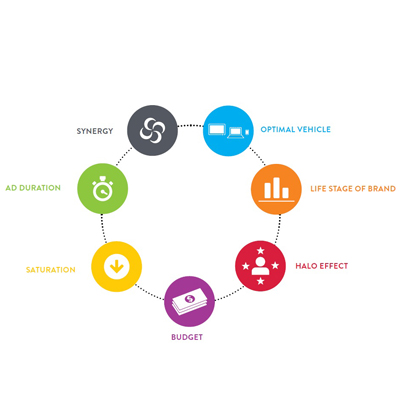
    To make things easier and to guide marketers on their budget allocations to increase their returns on investment, Nielsen has developed a seven-step framework to help them battle today’s challenges.


    The framework, christened as media compass, shares uncommon ways in which one can optimise seven steps that helps determine a marketer’s choice of media, timing of exposure and the size of investment. While every brand has its own unique dynamics, the research agency designed the framework to provide clear guidance for any brand. The framework is based on nearly 1,100 studies across 98 categories carried out globally in the area of marketing mix.


    Choosing the optimal media mix


    Marketing spend varies across industries and regions depending on where messaging resonates most with consumers, so evaluate current ROI for your brands across media platforms.


    Supporting new brands beyond early launch


    Adequate support for a new launch is required even in the second year of the launch in order to generate incremental trials and ensure repeat purchase behaviour. Ideally a new product should be thought of as ‘New’ for two years.


    Maximising the halo effect


    Advertising drives volume for the brand being directly promoted. However, such advertising may also drive volume for a sister brand if there is a connection between the two brands in the consumer’s mind. Such indirect effects are called Halo Advertising Effects, contrary to what one might expect, the halo effect from parents to the portfolio is much lower than the halo effect from extensions to the parent. Shifting a larger portion of the media support to extensions would result in higher total impact for the portfolio.


    Brand budgets – incorporate sponsorship for building equity


    Bigger budget brands can afford higher levels of advertising spend. If the budget allows, they should consider sponsorships as part of their media plans. Gross Rating Points (GRPs) spent on sponsored programmes, or impact GRPs, generate very high sales volume, and are generally three times as effective as regular GRPs. However, there’s a high cost involved in sponsorships. Brands with smaller budgets should maximise efficacy of their spends by executing within optimal GRP ranges, considering shorter length copy and ensuring good copy quality.


    The flighting opportunity


    The economic principle of diminishing returns exists in media planning too. The volume response due to TV advertising is not linear, and shows a pattern of diminishing returns beyond a certain point, leaving considerable scope for GRP optimisation.


    Timing it right


    Longer-duration ads are needed to convey a new or complex message, while shorter ones can suffice as reminder messages. The most critical question for the marketer therefore is – which parts of the copy can be cut out, and which parts are essential to the message?


    Synergy


    Synergy is the improved effectiveness of various drivers when executed together. A study conducted to test synergies between ATL & BTL activities among 25 categories revealed that a vast majority of companies do not integrate their ATL and BTL efforts. The 20 per cent companies who do integrate ATL and BTL efforts witnessed about 5-8 per cent extra sales growth. Integrate your marketing and sales efforts to benefit from synergies.

  • Esha Media Research sees surge in demand of Railway Budget 2014 news clips

    Esha Media Research sees surge in demand of Railway Budget 2014 news clips

    KOLKATA: As the Union Railway Minister Sadananda Gowda started presenting his maiden Rail Budget in Lok Sabha on 8 July, Esha Media Research, a media monitoring and research company, saw an increase in inquiries, seeking news clips of the Railway Budget.


    The enquiries were for news clips in parts or as a whole from different stakeholders and interested parties across the ecosystem including big information technology (IT) companies and foreign direct investors (FDIs). The BJP-led government has mooted railway digitisation and foreign investment to improve the country’s railway system.


    Esha Media Research says that it currently monitors 140 channels across the nation in all languages. “We are tracking the entire railway budget and also certain areas like IT, FDI, freights in parts,” Esha Media Research managing director R S Iyer informed indiantelevision.com.


    “Tracking for railways is more as compared to last year,” Iyer said. “Apart from business houses, we are also receiving inquiries from media agencies tracking the economic content,” he added. Without mentioning the names of the clients and agencies, he revealed that there are some forums across the world that are interested to know and analyse the seriousness of the Prime Minister Narendra Modi-led BJP government.


    “We have been tracking from morning all the government interviews across channels, and they will continue to take place till the end of prime time today, maybe until 11pm. We have also started uploading the files,” Iyer informed.


    Gowda, during his budget presentation, said that his Ministry would seek cabinet approval for allowing foreign direct investment in the state-owned network, but passenger services would be excluded.


    The Railway Minister proposed work stations in select trains as a pilot project this year apart from offering technology for automatic closing of doors both in main line and suburban sections.


    He also said that the e-ticketing mechanism would be strengthened to allow 120,000 simultaneous bookings. The proposed overhaul of the e-ticketing system would support 7,200 tickets per minute as against the current 2,000 tickets per minute


    The budget also talked about the expansion scope of online booking, including streamlining of booking on mobiles, and providing Wi-Fi in A1 and A category stations and in select trains. E-procurement would be made compulsory for procurements worth Rs 25 lakh and more said Gowda.


    “Overall the budget was crisp and concise and the government played safe by not hiking the fare on the day of the budget but two weeks before it,” said a financial expert.


    Stock markets have not reacted very favourably to the railway budget-the BSE closed 562 points down at 4pm today as compared to the its pre-opening at 9am. The NSE CNX Nifty index also closed 2.11 per cent lower than its opening today.

  • Chrome Data: Not much gain in week 27

    Chrome Data: Not much gain in week 27

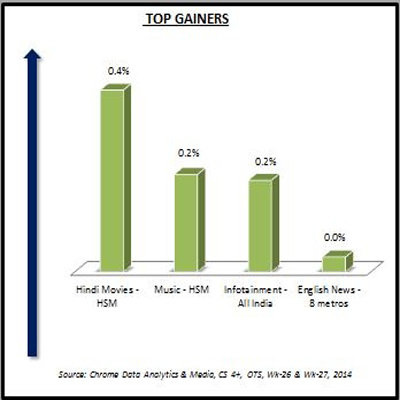
    MUMBAI: As per Chrome Data Analytics & Media which collates opportunity to see (OTS), week 27 didn’t see any gain.


    Hindi Movies in the Hindi speaking markets (HSM) rose marginally by 0.4 per cent. Sony Max continued its successful run with 95.9 per cent OTS.


    Music channels in the HSM and Infotainment channels across India gained 0.2 per cent. Sony Mix with 88.3 per cent OTS and National Geographic Channel with 86.2 per cent OTS gained in their respective genres.


    However, a lot of genres did see downsize. English Entertainment channels in the eight metros saw the maximum fall of 2.3 per cent. AXN with 70.1 per cent OTS reigned in the genre.


    English movies in eight metros and sports channels across India saw a drop of 1.9 per cent. Movies Now with 75.1 per cent OTS and Ten Sports with 76.1 per cent OTS were at top, respectively.


    Business News dropped 1.8 per cent in the eight metros. Zee Business with 77.5 per cent OTS was the topper of the category.

  • Synopsis of oral hygiene sector advertising on TV during Jan – Dec 2013

    Synopsis of oral hygiene sector advertising on TV during Jan – Dec 2013

    Highlights:

    •    Oral Hygiene Sector Advertising on TV accounted for 29% growth during Jan – Dec 2013 in comparison with Jan – Dec 2012


    •    Tooth Paste is the highly advertised category within Oral Hygiene Sector Advertising on TV during Jan – Dec 2013


    Note:

    • The analysis is based on Ad Volume in Seconds


    • Oral Hygiene Sector Advertising on TV accounted for 29% growth during Jan – Dec 2013 in comparison with Jan – Dec 2012


    • Tooth Paste is the highly advertised category within Oral Hygiene Sector Advertising on TV during Jan – Dec 2013

    • Tooth Brush advertising contributed to 13% of Oral Hygiene Sector Advertising on TV during Jan – Dec 2013


    • Colgate Palmolive India Ltd was the top advertiser within Oral Hygiene Sector Advertising during Jan – Dec 2013


    Ashvini Khandekar
    Manager – Communications
    TAM Media Research Pvt. Ltd
    9th Floor, Hincon House (Tower B)
    247 Park, LBS Marg,
    Vikhroli (West)
    Mumbai – 400 083
    India
    Tel: +91 22 66531213
    E-mail: ashvini.khandekar@tamindia.com
    Website: www.tamindia.com

  • Advertising on mobiles in US shows marked increase

    Advertising on mobiles in US shows marked increase

    NEW DELHI: The mobile appears to be leading the increase in media ad spending this year, at least in the United States.


    Total ad investments will jump 5.3 per cent from last year to reach $180.12 billion in 2014, according to eMarketer, which tracks such spending. 

    Mobile will lead this year’s rise in total U.S. media ad spending, and advertisers will spend 83 per cent more on tablets and smartphones than they did in 2013 — an increase of just over $8 billion.


    By the end of this year, mobile will represent nearly 10 per cent of all media ad spending, surpassing newspapers, magazines and radio for the first time to become the third-largest individual advertising venue, only trailing TV and desktops/laptops, projects the company. 

    Though investments in TV advertising will rise just 3.3 per cent, advertisers will spend $2.19 billion more on the medium than they did in 2013, making it the second-leading category in terms of year-over-year dollar growth, according to eMarketer. 

    The surge on mobile advertising is attributed to the fact that consumers are spending more time with their devices, an average of two hours 51 minutes per day this year, compared to two hours 19 minutes the year before. 

    Google and Facebook lead the top American digital ad-selling companies. The category will represent 18.2 per cent of total media ad spending this year, eMarketer projects.


    Google alone accounts for more than 10 per cent of all advertising spending in the U.S, and in 2016, together Google and Facebook will take a 15 per cent share of the $200 billion total media advertising market.

  • Marginal fall in telecast of news in US local TV Channels in 2013, shows study

    Marginal fall in telecast of news in US local TV Channels in 2013, shows study

    NEW DELHI: Even as television news channels in India are showing a rise, the actual amount of news content is dropping. A study shows that the average amount of news on local television in the US dropped slightly in 2013 from the year before – down 6 minutes after a 6 minute drop a year ago. 


    The number of TV stations producing local news actually went up by two this year to 719 stations. However weakly, that reverses an eight year trend of fewer newsrooms. Those 719 TV stations run news on those and another 307 stations; a record total of 1,026 stations running local news.


    But the latest Radio Television Digital News Association (RTDNA)/Hofstra University Annual Survey found the median remained at 5 hours per weekday, and both average and median remained the same for both Saturday and Sunday. The RTDNA/Hofstra University Survey was conducted in the fourth quarter of 2013 among all 1,659 operating, non-satellite television stations. Valid responses came from 1,300 television stations (78.4 per cent). Some data sets (for example, the number of TV stations originating local news, getting it from others and women TV news directors) are based on a complete census and are not projected from a smaller sample.  

    Generally, the bigger the market and the bigger the news staff, the more news a station is likely to run, according to Bob Papper who is emeritus distinguished professor of journalism at Hofstra University and has worked extensively in radio and TV news. This research was supported by the Lawrence Herbert School of Communication at Hofstra University and the RTDNA.

    Overall, the numbers are almost identical to a year earlier. The overall average slid by 0.1 per weekday (6 minutes), although the median remained exactly the same. So did both Saturday and Sunday. The biggest markets cut back slightly; the middle markets, 26 to 150, rose slightly or stayed the same; the smallest markets, 151+, fell.  Fox affiliates and PBS affiliates were most likely to cut back.

    A clear trend is developing, said Pepper who has conducted this study for the twentieth year. Last year, the percentage increasing news dropped by four points from the year before.  This year, the drop is almost five points. That downward trend is most pronounced in both the largest and smallest markets, according to a report on the website of the National Association of Broadcasters. 

    There was a 10 point drop, overall, in the percentage of stations adding a newscast in the last year — which follows on the heels of a 6 point drop the year before. The drop was most pronounced in top 25 markets, which fell by 23 points from the year before. Those adding newscasts spread them surprisingly evenly across several time periods. Late news additions (which include 9 pm in Central and Mountain time) led the way, with a number of those newscasts being added to stations other than the news department’s own air. Right behind that was Saturday and/or Sunday morning. Almost at the same level were various weekday morning newscasts, especially 4:30 am, and early evening newscasts, especially at 5 pm.


    The percentage of stations cutting a newscast dropped by half from a year ago.  What few cuts that were made were scattered across all day parts.
     

    Stations neither adding nor cutting a newscast rose by 11 points from 2012 — and 24 points in the top 25 markets.


    The amount of news planned has turned into a pretty reasonable predictor of future behavior.  A year ago, the overall numbers weren’t much different from the year before that, but I noted two key differences.  First, “other commercial” stations were much more likely to say they expected to increase news, and top 25 market news directors were a lot less likely to expect the amount of news would increase.  Both of those things took place between last year and this.

  • India fourth most economically confident country: Ipsos Study

    India fourth most economically confident country: Ipsos Study

    MUMBAI: Little did anyone know that the Modi sarkar that had vowed to boost growth, control inflation and restore investor confidence will actually work wonders at such a short span.


    According to the study conducted by Ipsos, India’s economic confidence has got a major boost primarily due to a landslide victory of the business-friendly government led by Narendra Modi.


    ‘Ipsos Economic Pulse of the World’ survey reports that the country’s economic confidence shot up by six points to 66 per cent in May 2014 compared to April 2014, making it the fourth most economically confident country in the world after Saudi Arabia, Germany and China.


    Indians are the most optimistic people in the world and are very confident of good time coming soon. For the very first time India (60 per cent) tops the list of countries whose citizens expect that its economy will be stronger in next half year. Marginally less than a half of Indian citizens (43 per cent) believe their local economy which impacts their personal finance is good, a significant rise of five points.


    “All the data points in the Ipsos report indicate that India’s economic confidence has shot up substantially, which is also corroborated by the fact that India’s current account deficit has significantly eased, the currency has stabilised, inflation has substantially pulled back, stock market had a dream run so far and corporate earnings are improving,” said Ipsos CEO Mick Gordon in India.


    “However, recent high food inflation, conflict in oil-producing Iraq and the fear of a below normal monsoon is big challenge for the new government,” added Gordon.


    The online ‘Ipsos Economic Pulse of the World’ survey was conducted in May 2014 among 19,242 people in 25 countries. For the results of the survey herein, a total sample of 19,242 adults aged 18-64 in US and Canada, and aged 16-64 in all other countries, were interviewed between 1 and 15 April 2014.


    For a second month in a row, the average global economic assessment of national economies surveyed in 25 countries remains unchanged as 39 per cent of global citizens rate their national economies to be good.


    Although down two points since last round, Saudi Arabia (87 per cent) is in the lead once again, with Germany (75 per cent), China (66 per cent), India (66 per cent), Canada (65 per cent), Sweden (64 per cent) and Indonesia (59 per cent) following behind. European countries dominate the bottom of the global average: France (9 per cent), Italy (9 per cent), Spain (10 per cent), Romania (10 per cent), Hungary (18 per cent) and Argentina (18 per cent).


    Countries with the greatest improvements in this wave: South Africa (28 per cent, 10points), Indonesia (59 per cent, 9 points), Russia (58 per cent, 8points), India (66 per cent, 6points), Great Britain (43 per cent, 6points), Poland (31 per cent, 6points) and Belgium (42 per cent, 2points).


    Countries with the greatest declines: Australia (53 per cent, -7pts), Hungary (18 per cent, -6pts), Brazil (20 per cent, -6pts), South Korea (19 per cent, -4pts), Sweden (64 per cent, -2pts), Saudi Arabia (87 per cent, -2pts) and China (66 per cent, -2pts).


    Up three points since last sounding, Saudi Arabia (67 per cent) leads the local economy assessment which impacts their personal finance, followed by Germany (55 per cent), Sweden (51 per cent), China (48 per cent), India (43 per cent), Canada (42 per cent), and Indonesia (39 per cent). Ranked the lowest in this measure this month is Italy (9 per cent), followed by Spain (11 per cent), Romania (12 per cent), Hungary (13 per cent), France (13 per cent), Japan (14 per cent) and Argentina (15 per cent).


    New leader emerges, as for the first time India (60 per cent) tops the list of countries that predict their local economies will be stronger in the next six months. The rest of the highest-ranking countries are: Brazil (56 per cent), Saudi Arabia (53 per cent), Indonesia (50 per cent), China (39 per cent), Mexico (31 per cent) and Argentina (31 per cent). Only 6 per cent of those in France expect their future local economies will be “stronger” in the next half year, followed by South Africa (11 per cent), South Korea (13 per cent), Hungary (14 per cent) and Japan (14 per cent).
  • Esha Media Research to go overseas

    Esha Media Research to go overseas

    KOLKATA: After monitoring over 140 channels in regional languages broadcast across the country, Esha Media Research, a media monitoring and research company, is gearing up to track the overseas television channels.


    The wish to monitor TV channels in the foreign countries like Singapore, Malaysia among others comes at a time when the corporate clients of research firm have expanded their work base in those countries.


    “Most of our corporate clients do not have access to local TV channels in the other countries. With information being the critical aspect for the clients, we will start monitoring overseas television channel,” said Esha Media Research managing director RS Iyer.


    It is learnt that the company is evaluating both the options of either having its own base or tie-up with the agencies in those countries.


    When being asked about the revenue model the company is looking at, the company believes that it will see that it gets an opportunity to monitor at least 15-20 minutes of clipping per week. “We will see the RoI (return of investment) should be good at Singapore and Malaysia,” he adds.


    indiantelevision.com has already reported that the media company plans to increase the monitoring to 200 channels in the country, in the near future.


    “The monitoring is done using state of- the-art equipment that allows it to record, retrieve, transcribe, translate, and deliver reports in formats ranging from CD and DVD to immediate uploads via FTP or a customized web page. This enables the client to log in, access and also news of their interest, anytime, anywhere,” he adds further.

  • Ormax Xpressive: Get ready for facial coding

    Ormax Xpressive: Get ready for facial coding

    MUMBAI: Expressions say it all, and researchers for long now have been reading people’s faces to know it all. A smile, a frown, a grin and many more can’t hide the real feelings. Keeping this in mind, researchers are now using facial coding to investigate how viewers react and behave towards TV shows.


    In India, Ormax Media which has launched various products to help the Media & Entertainment industry has launched a new one – Ormax Xpressive. The newest variant from the house is an automated face coding based content testing tool. It is powered by RealEyes, a Europe-based outfit who are a global thought leader in this technology.


     “Using Xpressive, Indian companies can test video content ranging from five seconds to 50 minutes. Unlike regular research, where consumers are shown the video and then asked a series of questions, this technology captures real behavourial data. It measures the second-by-second response of the audience. TV channels can use it for promo testing and pilot testing, while movies can use it for trailer testing,” highlights Ormax Media CEO Shailesh Kapoor.


    What was the thought process behind launching the product, Kapoor says, “Ad testing and video content testing is a common need in the Indian M&E industry. The nature of the industry is such that there is rarely any time to do such studies, because the results are needed within 1-2 days. Ormax Xpressive gives real-time responses, and hence, is highly relevant to the industry.”


    Also, since it is based on real response and not claimed response, its output is more credible. “The level of detailing facial coding data can reveal is extraordinary, as you get a second-by-second response, not just an overall response. We believe use of technology for better and more effective consumer research is important, and Ormax Xpressive is an example of our belief,” adds Kapoor.


    The media insights firm piloted the product in India in February 2014 for which the technology comes from RealEyes who has a team of scientists dedicated to the best interpretation of the facial response data. “Culturally, India and the West are different, and the expression of emotions can vary. Hence, India benchmarks are critical to build. We bring in that value, as well as the ability to interpret the findings given our strong understanding of the media and entertainment consumers in India,” points out Kapoor.


    The beauty of the technology is that it does not require any gadgetry. It is entirely over the webcam. Respondents watch the video and their facial expressions and captured via the webcam and then analysed in the backend by the facial coding software. Results are ready within 10 minutes.


    The six basic emotions measured are happy, sad, scared, confused, disgusted and surprised. Then, there are derived parameters, the most important one of which is engagement, which measures the overall engagement levels of the content. All parameters are measured at a second-to-second level, and can be seen by demographic cuts, such as market, age, gender and SEC. Ormax Xpressive studies can be done in two ways: a test link can be sent to respondents who can take the test via their webcam, or a Central Location Testing is conducted, where respondents are invited to a venue and administered the test there via a webcam-enabled computer.


    The media insights firm is targeting all media and entertainment companies, who have video content for the new product. It will be used by TV channels and film studios.


    However, there are a few media analysts who believe that though it is a good initiative and has its merits, there might be a few demerits attached with it as well. For instance, they believe that the state of mind of the respondent will play an important role in a person’s facial expressions. “Today, social media listening is more important. How well this product will help the industry, we will have to wait and watch,” says a media observer.


    Another media analyst agrees and adds, “The results will be subjective and hence, cannot be depended upon solely. If it compliments other parameters then it will definitely be put to a good use.”


    As for the future, the firm believes that the importance of research will only continue to grow as the market evolves. Technology will play a role in improving the output of research and making it more reliable and actionable. “Technology should not be used for the sake of using technology, but for a better output,” concludes Kapoor.