Category: TRAI

  • TRAI adamant on 23 August deadline in Kolkata, blackout to follow

    TRAI adamant on 23 August deadline in Kolkata, blackout to follow

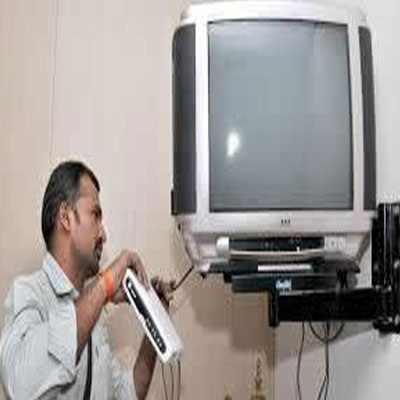
    KOLKATA: With the Telecom Regulatory Authority of India (TRAI) strictly adhering to the 23 August deadline for collection of the customer application forms (CAFs) to help in the implementation of Digital Addressable Cable TV Systems (DAS), 50 per cent of the 30 lakh cable television consumers of the Kolkata metropolis area, might see their television sets going blank.

    Till 3:00 pm on Friday, CAFs for around 45 per cent of the cable consumers had been completed, a TRAI official told indiantelevisioin.com. “By midnight we expect the details of around 50 per cent consumers,” the official added.

    However top placed industry sources said that a 14 member team from the TRAI office is likely to come to Kolkata on 26 August (Monday), to decide the fate of the customers who have not yet filled the forms with required details. “This simply proves that MSOs will not be asked to disconnect the TV subscribers,” he said.

    It should be noted that the broadcasting regulator had set a deadline of 23 August for cable TV viewers here for filling up the CAFs including choice of channels in the subscriber management system some 40 days ago and failing which services would be stopped, it notified not once but many a times, added the TRAI official. “In fact we had two meetings with MSOs in the last one month,” he further stated.

    “In this weekend the MSOs and operators will work harder and try to feed in as much details as they can,” said people associated with the cable industry.

    Manthan Broadband Services which has more than 6.5 lakh to seven lakh subscribers has managed to collect around 35 per cent of its CAFs. “We will abide by the law. South Kolkata has done well as compared to North and Central Kolkata in terms of form submission,” said Manthan Broadband Services director Sudip Ghosh.

    “However, we expect to receive more such details on coming Saturday and Sunday,” added Ghosh.
    While SitiCable which has set up around 11.5 lakh digital addressable systems here has achived 60 per cent collection of forms and is optimistic of reaching the 70 per cent mark by midnight.

    SitiCable director (Kolkata) Suresh Sethia informed that the MSOs have received a new format from TRAI and the MSOs have been asked to send the details to the regulator on an everyday basis. “Details like number of boxes switched off, number of boxes reactivated and CAFs received,” should be filed everyday said Sethia.

    While a Hathway Cable and Datacom official stated till 3:00 pm, they had received details of more than 57 per cent customers and will be looking at 80 per cent by tonight. “We will act as per the instruction of TRAI,” he said.

    TRAI member R K Arnold who was in Kolkata recently said: “We are not going to extend the deadline beyond 23 August. In this if subscriber details including channel preference is not done, his connection is liable to be disconnected.”

    Kolkata remains to be the last metro where DAS is yet to be implemented.

    Will TRAI ask the MSOs in Kolkata to disconnect the non complying subscribers from 24 August, if the subscriber data is not updated?

    If TRAI wanted the MSOs to switch off the TV connections, it would have informed the players by now but it seems that people will get some breathing space for some hours to complete the mandate, said an analyst.

    Even if the TV screens go blank, it can be connected in two hours to three hours, after the customers send all the details via their cable operators, concluded a MSO.

  • WB UDM Firhad Hakim pleads TRAI to extend deadline for CAFs

    WB UDM Firhad Hakim pleads TRAI to extend deadline for CAFs

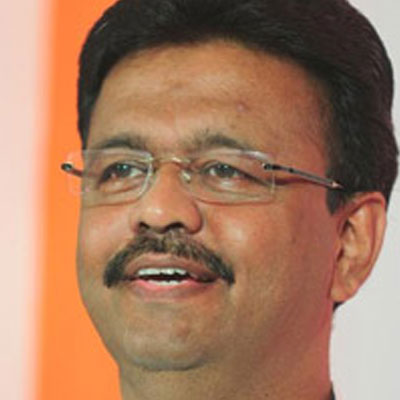
    KOLKATA: First it was Information and Broadcasting Minister Manish Tewari who appealed to the Telecom Regulatory Authority of India (TRAI) to delay implementation of ad cap for news channels till the completion of digitisation, and now it is the West Bengal Urban Development Minister Firhad Hakim who has appealed to the regulator to extend the deadline for customer application forms (CAFs) submission.

    Firhad Hakim has appealed to the regulator to extend the deadline for implementation of SMS rollout

    The request has come after TRAI confirmed last week that it will strictly adhere to the 23 August cut-off-date. “If subscriber details including channel preference is not done within this deadline, the operator’s connection is liable to be disconnected,” informed TRAI member R K Arnold.

    “After interacting with both the local cable operators (LCOs) and multi system operators (MSOs) at the ground level, we found that most of them are not aware about the registration work which they are mandated to do. TRAI before taking such decisions must spread awareness. I have spoken to the chief secretary to extend the deadline,” said Hakim exclusively to indiantelevision.com today.

    Hakim also said that TRAI must have an elaborate publicity campaign to inform the operators on the procedures involved. “How can TRAI ask the operators to disconnect its services without updating the operators about the whole process of CAFs,” he questions.

    Cable Operators Digitalisation Committee of the Association of Cable Operators convener Swapan Chowdhury informed, “So far only 30-35 per cent of cable consumers in the Kolkata Metropolitan Area have completed the form. It is not possible to meet the 23 August deadline.”

    TRAI officials who were in Kolkata last week said, “If not done within the set deadline, we will take action according to law,” said Arnold.

    Kolkata remains to be the last metro where DAS is yet to be implemented. Manthan Broadband Services director Sudip Ghosh when contacted said, “We will abide by the law and we are working towards meeting the deadline day and night.”

    While Hathway Cable managing director and CEO Jagdish Kumar G Pillai said the company is focused towards meeting the deadline.

    A MSO on the condition of anonymity said, “In the digitisation process, installation of set top boxes and offering of the channels account to more than 85-90 per cent of the work and remaining 10 per cent is clerical job which is letting the consumers to choose the channels. The LCOs have all the details of the customers, and now they just need to go and ask the customers to choose the package they want to go for. All this process will hardly take 10 minutes.”

    Can the cable operators breathe a sigh of relief after the appeal made by Hakim for the extension of deadline? Doesn’t seem like it is too easy to please TRAI, but they can only hope.

  • TRAI warns Kolkata MSOs to meet the 23 August deadline

    TRAI warns Kolkata MSOs to meet the 23 August deadline

    NEW DELHI: The Telecom Regulatory Authority of India (TRAI) has expressed serious concern over the slow progress in filling up of consumer details in Kolkata despite a deadline of 23 August for subscriber application forms (CAF).

    After a meeting in Kolkata with multi-system operators who are required to update their subscriber management system for supplying signals to cable operators, TRAI said only around 30 per cent of the subscriber information was available with the MSOs. The meeting was addressed by N Parameswaram, Principal Advisor (Broadcasting) in TRAI.

    ‘This situation is totally unacceptable and alarming’, a press note signed by Parameswaram said, adding that all MSOs have been asked to initiate immediate steps to remedy the situation.

    He said TRAI may be forced to take penal action against MSOs/ local cable operators in case the deadline is not met.

    While requesting subscribers to cooperate, he said that MSOs would have no option but to switch off signals to those subscribers who have not given complete CAFs by 23 August.

    Furthermore, he said MSOs who do not switch off the signals to offending subscribers would be in breach of the law.

  • About 300,000 illegal telemarketing companies axed by TRAI

    About 300,000 illegal telemarketing companies axed by TRAI

    NEW DELHI: A total of about 300,000 telephone connections of un-registered telemarketers have been disconnected by the Access Service Providers and the name and address of 25,295 such subscribers have been put into the blacklist.

    Minister of State for Communications and Information Technology Milind Deora told Parliament that this follows concerted action taken by the Telecom Regulatory Authority of India (TRAI).

    TRAI issued the Telecom Commercial Communications Customer Preference (Twelfth Amendment) Regulation on 23 May this year. This regulation provides for disconnection of all the telecom resources of subscribers sending unsolicited calls/SMSs, blacklisting of the name and address of such subscribers for two years, disconnection of telecom resources to such subscriber by the other service providers within twenty four hours of blacklisting of such subscriber. No telecom resources shall be allotted to such blacklisted subscriber by any Access Provider for two years.

    Through the Telecom Commercial Communications Customer Preference Regulation, 2010 TRAI has laid down a revised framework for addressing Unsolicited Commercial Communications (UCC) and these regulations came into force with effect from 27 September 2011. TRAI has also issued various amendments to these regulations and a number of directions to make the regulatory framework more effective.

    The Minister said complaints related to unauthorised telemarketing activity from un-registered telemarketers (who are not registered with TRAI), had increased during the last one year.

    To make the framework more effective an amendment to the Telecom Commercial Communications Customer Preference Regulation (Tenth Amendment) has been issued by TRAI on 5 November last year to further control the unsolicited commercial communications, especially relating to commercial SMS from unregistered telemarketers. One of the key provision of this regulation includes restricting unregistered telemarketers from sending bulk promotional SMSs using software applications.

    Through this regulation TRAI has mandated the Access Service Providers to put in place a solution, which will ensure that no commercial SMSs are sent having same or similar characters or strings or variants from any source or number. The solution will ensure that no more than 200 SMSs with such similar ‘signature’ are sent in an hour. 

  • Telemarketers penalised by TRAI for various violations

    Telemarketers penalised by TRAI for various violations

    NEW DELHI: Fifteen telemarketers have been blacklisted while another 245 have been issued notices by the Telecom Regulatory Authority of India for unwanted calls and text messages.

    The regulator has also deducted Rs 1.36 crore security deposit for violations of various norms. TRAI, which had implemented Telecom Commercial Communications Customer Preference Regulations from 27 September 2011, had laid down that telemarketers have to deposit some amount to their service provider as security deposit.

    The 15 telemarketers have been blacklisted from 27 September 2011 till 25 June this year, and the deduction of security deposit is for violations from 27 September 2011 to 30 July 2013.
    There is a provision of deduction from Rs 25,000 to Rs 2.5 lakh in case of violation by telemarketers under the regulations. Telemarketers are required to register with TRAI in order to send commercial communications to telecom consumers.

    Subscribers who have registered with the National Customer Preference Registry, earlier known as ‘Do Not Call Registry’ are not supposed to receive commercial communications.

    A different set of numbers starting with ’70’ were issued to telemarketers to help unregistered subscribers identify commercial calls and decide whether to accept or reject them. But TRAI has come across instances when the commercial communication was not sent by the registered telemarketers.

  • TRAI attempts to rein in TV channel aggregators in new consultation paper

    TRAI attempts to rein in TV channel aggregators in new consultation paper

    NEW DELHI: It has been saying it will bring some order to the TV channel aggregation and distribution business. And the Telecom Regulatory Authority of India (TRAI) is now showing that it means what it has been saying.

    It today issued a consultation paper attempting to regulate the distribution of television channels from broadcaster to platform operators and discipline the distributors (aggregators). The paper involves amendments to the Tariff and Interconnection orders, and Register of Interconnect Regulations, and so TRAI has given stakeholders time till 27 August to send in their comments.

    The essence of these is that it wants to clip the immense clout that the four main aggregators MediaPro Enterprises (distributes 75 channels), IndiaCast UTV Media Distribution (distributes 35 channels), Sun Distribution Services and MSM Discovery (distributeing 30 channels each) have on the TV ecosystem in India.

    The main points of the consultation paper are that:

    * Broadcasters and not the authorised distribution agency shall publish the reference interconnect offers (RIO) and enter into interconnection agreements with the distribution platform operators.

    * If a broadcaster appoints a person as its distribution agent, it shall ensure that –

    a) The authorised distribution agent does not change the composition of the bouquet formed by the broadcaster while providing it to the distributors of TV channels.

    b) The authorised distribution agent does not bundle bouquet or channels of the broadcasters with the bouquet or channels of other broadcasters. In other words, in case the authorised distribution agency represents more than one broadcaster, they shall not link offerings of broadcasters they represent.

    c) While acting as an authorised distribution agent, such person acts for, on behalf and in the name of the broadcaster.

    The regulator has also proposed that it will give broadcasters three months to rework the RIOs and to enter into fresh interconnect agreements and filing the same with it.

    Based on the above, it has issued several orders under which it has chosen to amend earlier orders issued by it.

    These include:

    * The Telecommunication (Broadcasting & Cable) Services (Fourth) (Addressable Systems) Tariff (Third Amendment) Order 2013 to amend The Telecommunication (Broadcasting & Cable) Services (Fourth) (Addressable Systems) Tariff Order 2010 (1 of 2010)

    * The Telecommunication (Broadcasting & Cable) Services (Second) Tariff (Tenth Amendment) Order 2013 to amend The Telecommunication (Broadcasting & Cable) Services (Second) Tariff Order 2004 (6 of 2004)

    * The Telecommunication (Broadcasting & Cable Services) Interconnection (Seventh Amendment) Regulations 2013 to amend The Telecommunication (Broadcasting & Cable Services) Interconnection Regulation 2004 (13 of 2004).

    * The Telecommunication (Broadcasting & Cable Services) Interconnection (Digital Addressable Cable Television Systems) (Second Amendment) Regulations 2013 to amend The Telecommunication (Broadcasting & Cable Services) Interconnection (Digital Addressable Cable Television Systems) Regulations 2012 (9 of 2012).

    * The Register of Interconnect Agreements (Broadcasting & Cable Services) (Fifth Amendment) Regulations 2013 to amend The Register of Interconnect Agreements (Broadcasting & Cable Services) Regulation 2004 (15 of 2004)

    Background to TRAI’s attempt to regulate Aggregators

    In the paper, the TRAI says that broadcasters, MSOs, cable operators, DTH, HITS and IPTV operators are recognised as entities in the policy guidelines and regulatory framework of the Ministry and TRAI respectively. Aggregators have not been specifically defined anywhere; neither in the law or the statutory rules, nor in the regulatory framework for the broadcasting and cable TV services sector.

    As on date there are around 233 pay channels (including HD and advertisement-free channels) offered by 59 pay broadcasters. These channels are distributed by 30 broadcasters/aggregators/ agents of broadcasters.

    In the broadcasting and cable TV sector, TV channels are distributed by the broadcasters themselves or through their authorised distribution agencies to the distribution platforms viz cable TV, DTH, IPTV, HITS etc. Many such agencies operate as authorised agents (aggregators) for more than one broadcaster. After obtaining the distribution rights from one or more broadcasters, such distribution agencies form bouquets, many of which also consist of channels of one or more broadcasters. They publish Reference Interconnect Offers (RIOs), negotiate the rates for these bouquets/channels with operators of various distribution platforms and enter into interconnection agreement(s) with them.

    As on date, the distribution business of around 73 per cent of the total pay TV market, including high definition (HD) TV channels, is controlled by a few authorised distribution agencies. These channels include almost all the popular pay TV channels. These authorised distribution agencies wield substantial negotiating power which can be, and is, often misused leading to several market distortions.

    Explaining its move, TRAI said the business of distribution of TV channels from the broadcaster to the consumer has two levels:

    i) Bulk or wholesale level – wherein the distribution platform operator obtains the TV channels from the broadcasters, and ii) Retail level – where the distribution platform operator offers these channels to the consumers, either directly or through the last mile operator.

    Even as TRAI was in the process of reviewing the regulatory framework for broadcasters and their authorised agencies, the Information and Broadcasting Ministry said there have been several complaints from Multi system operators (MSOs) about the modus operandi of such entities, e.g. it has been highlighted that MSOs are forced to subscribe to certain packages. Concerns have been vehemently voiced by various MSOs and LCOs regarding the monopolistic practices of such major authorised distribution agencies of broadcasters, in view of their control over a large number of popular channels.

    The MSOs have complained that the aggregators have abused their market power by forcing them to accept all the channels of the aggregator, fixed fee deals, charging based on the entire subscriber base and not as per actual uptake of channels, insisting on minimum guarantee and other unreasonable terms and conditions.

    The TRAI further adds, in the consultation paper, that in the absence of any regulatory framework for the aggregators (including possible restrictions on the authorised agencies), they started to bundle channels of more than one broadcaster and form bouquets. These bouquets, having popular channels of a number of broadcasters, provided a better marketing proposition. These bouquets grew larger and larger with time, as the aggregator started to piggy back more and more channels, especially those having lesser standalone market values.

  • TRAI releases consultation paper on “Valuation and Reserve Price of Spectrum”

    TRAI releases consultation paper on “Valuation and Reserve Price of Spectrum”

    NEW DELHI: The Telecom Regulatory Authority of India (TRAI) on 23 July released a consultation paper on “Valuation and Reserve Price of Spectrum”.

    On 10 July 2013 the Department of Telecommunications (DoT) sought the TRAI’s recommendations on the applicable reserve price for the auction of spectrum in 800 MHz, 900 MHz and 1800 MHz bands. In this context, TRAI has issued this consultation paper raising specific issues for consideration of stakeholders. The key issues raised in the consultation paper are quantum of spectrum to be auctioned, eligibility for participation, roll-out obligations, methods to be used for valuation and estimation of reserve price of spectrum, review of spectrum usage charges and spectrum trading.

    Written comments on the issues raised in the consultation paper are invited from the stakeholders by 14 August 2013 and counter-comments by 21 August 2013 by the regulator. 

    Stakeholders have been requested to send their comments by the due dates as there is an urgency to complete the consultation process. In its reference, the DoT has stated that, in light of the Honourable Supreme Courts’s directive, TRAI may consider an expedited process; hence there will be no further extension of timelines.

    This is also an advance notice that open house discussion on the consultation paper will be held on 26 August 2013 in New Delhi.

  • ‘Cas is here to stay’ : Nripendra Misra – Trai chairperson

    ‘Cas is here to stay’ : Nripendra Misra – Trai chairperson

    Nripendra Misra is a suave IAS officer with a reputation of being completely above board, and perhaps lacking the ‘guile‘ that puts many others in the topmost slots of the bureaucracy, fellow officials say of him in a positive sense. After the first initial setback for Conditional Access System in 2003, it was during Misra‘s tenure that Cas was enforced in parts of Mumbai, Kolkata and Delhi. And it was war… MSOs had to be readied, LCOs trained to shift to higher technology, broadcasters‘ resistance to be broken down by assuaging their fears and yet, the court order had to be implemented within the deadline: 31 December 2006.

    It could not have been a pleasant task. Amidst all this, Misra and his dedicated but small team is going about handling one of the noisiest of industries in the country, issuing consultation papers, and ushering in new technologies.

    Misra took his stand on various contentious issues during an interview with indiantelevision.com‘s Sujit Chakraborty.

    Excerpts:

    It has been nine months since Cas was implemented in parts of Kolkata, Mumbai and Delhi, after Chennai was brought under Cas. Towards the beginning there were uncertainties, and some people even opposed Cas. So today, what is your assessment of Cas? Is it a success or a failure in numerical terms?
    Well, we never had a target in terms of penetration percentages. It was left to the subscriber who wanted to opt for choice, whether he wanted pay channels or FTAs and which are the ones he wanted. The latest numbers tell me that about six lakh (600,000) homes have opted for Cas in the mandated areas.

    That is out of a universe of around 1.6 million cable homes…?
    Yes, so that is about 30 per cent of subscribers. Then you have also a similar facility in DTH, which has also been accepted by many. In Kolkata particularly, the response has been poor because most of the popular channels are FTAs. So if the criterion is in terms of numbers, I think it has been a very satisfactory performance.

    But it is not the number that is important. Unfortunately, we are always missing the true substance when attempting to evaluate Cas.

    What is it we are trying to do? We are trying to set up a mode of digital transmission, which is more efficient and more accommodative. It is the global practice. Analogue is gradually getting out of the scene, and so we have to make a beginning. That was made into a kind of a pilot in these four areas.

    Today you have a choice, you have DTH and you have Cas. Tomorrow you may have HITS… which is another option. You have voluntary Cas. So a beginning has been made, a seed has been sown, which must someday fructify in terms of an all India feature. Success has to be measured in terms of whether it is a trendsetter or not, and not in terms of how many people have opted for it or not.

    So would you say that the target of becoming a trendsetter has been achieved?
    Oh yes! It is perhaps a watershed in that in the broadcasting industry, digital transmission has begun.

    But one main area that remains disturbing is the quality of service, which in many parts of the mandatory Cas zones remains highly dissatisfactory. Lots people are not getting the channels they have opted and paid for.
    Firstly, I do not want to defend the quality of service, and there are problems of channels being discontinued. But it is not just at the level of local cable operator. I think somewhere down the line, the MSO also has to take his role seriously. Unlike in non-Cas areas, the role of the broadcaster and MSO in implementing Cas is far more important than that of the LCO. So, if these things have happened, they have happened because of the inadequacy of the functioning of MSOs.

    When it started in January, we wanted to take a very liberal view. We did not want to enforce all the regulatory provisions in the first four or five months. They wanted time so that the consumer preference could be registered, and we gave them enough time. The subscriber register that has to be maintained was not complete to the extent we wanted. Therefore billing got delayed, payments also got delayed… subscribers have also not made payments. But we have made it clear that come 1st of July, we are not going to forgive anyone.

    But how do you enforce this, as it has clearly not happened in many places till now?
    There are three ways of how to enforce this. First is the awareness of the consumer. There is a quality of service regulation in the Cas area which is operational. Therefore the subscribers must reach to and judge the performance of the MSOs and cable operators. There are great details in the regulation about the kind of rebate that has to be given if the channels are not coming, or how much time it should take which kind of interruption, what should be the response time for the MSOs… these are all standardised and fixed.

    Broadcasters have been cooperative in rolling out Cas, despite serious reservations about the Rs 5 channel price

    But that brings us to a moot point…. The consumer is not truly aware and also does not seem to care about implementing his rights?
    It takes time…

    So you are saying that MSOs are primarily responsible for QoS, so where have they failed? Because there are lots of complaints about failure across the board.
    The MSOs initially were perhaps not ready with the level of demand. That has settled down, STBs have been imported and they are in plenty today. The second stage was to get the reference of the subscribers. Now, I know and it is correct to say that the MSO representatives have gone to the homes four or five times, asking the subscribers to fill up the forms. But the gentleman says, you have come at the wrong time, that he will have to consult his family.

    But gradually, that too has ceased to be a problem. Ninety percent of the subscriber registers have been completed and the choice is now there. Now the stage is where the subscribers must know what their right is. That is, the manual of practice of the MSOs must be made available to the subscribers. That manual of practice in most of the cases is not available. The contractual conveyance, that we have between us signed a contract, and this is our right, that message is still not being passed on, which is reflecting in the lack of awareness.

    Broadcasters have been extremely cooperative in rolling out Cas, despite serious reservations about the RS 5 channel price, and all the Reference Interconnect Offers are in place.

    So what have you told the MSOs about this?
    We have conveyed to them that look, we shall view very seriously if there are defaults. We have written to the state governments, because they are the enforcement machinery.

    So what is holding back the extension of Cas in the three metros?
    The Central government wanted us to report back on this, we have sent that report, we have said it will take six to eight months‘ time to implement after notification of the extension. But then the state governments said that it is better to evaluate before extending Cas. We on our own without waiting for such instructions have engaged some outside agency to advice us on the level of implementation.

    Has that audit been completed?
    It will take another two months, we are expecting the reports by the end of October or beginning of November.

    So it will further delay Cas extension by that much time?
    Well this has nothing to do with Cas extension, this is something we are doing independently, and as far as the government goes, they can extend Cas, and we have just said that it would take six months from the day of notification to implement the extension. It is for the government to take a view when they wish to notify.

    Resistance to Cas had been from the broadcasters, but even from the grassroots level, due to privileges of piracy and under declaration, there had been resistance from the cable operators as well, so have the realised that this is the business model of the future?
    I think they have realised this more than anybody else. Today there is demand from many, many parts of India that they be given the permission for implementing voluntary Cas.
    Like Ortel and Sristi in Orissa and West Bengal?
    Ortel is one, then Pune is another, and there is demand from Bangalore, Mumbai and many other places. Some have in fact gone ahead with the implementation of voluntary Cas. So what the LCOs know very well is that the competition from DTH is very strong. The LCOs thus know that of they have to remain in the industry, two or three things are required.

    First, investment is required, which is not come if the industry is so disorganised as it is today. Second, they know that there has to be some regulatory provisions to give stability, which will ensure certain amicable relations between them the broadcasters and the MSOs. So to answer your question as to why they are not implementing voluntary Cas, perhaps for that some regulatory initiative is required.

    Now, for that the expert committee had been set up, and it has suggested that voluntary Cas be rolled out in 55 cities and towns. But they have also said that you have got to have a regulatory regime for at least one year. Even for voluntary Cas, certain things are important, like Standard Interconnection Offer, what should be the connectivity, what should be the revenue sharing formula. So these are the issues we are looking at, and we are going to put up the paper on voluntary Cas.

    “Fixing of channel pricing in non-Cas is a challenge, but we shall come out with something that meets the expectations of both the high and low income groups”

    When is that likely?
    Oh any day, we are working on HITS and next is the paper on voluntary Cas.
    The consultancy paper on HITS is already out?
    Yes, but we have to now recommend the terms and conditions of licensing provisions to the ministry of Information & Broadcasting. Even the voluntary Cas paper is also in the pubic domain, and so we have to now concretise our views. And then specifics like what are the regulatory issues, what are the areas in which facilitation is required… perhaps some technical training is required, and the go ahead.
    But voluntary Cas would mean that channel prices will be dictated by the broadcasters and subscribers may suffer?
    Let‘s see. Voluntary Cas does not mean it cannot be regulated, and as such I do not have any views on the subject now.
    It follows that even in voluntary Cas you could regulate prices?
    If it requires so in the case of DTH I can regulate prices. In fact, there has been some judicial expectations on this, when TDSAT in one of its judgments asked that if channel price is regulated in Cas, why it is not there in DTH? We had our reasons, it is an infant industry, we wanted DTH to grow.
    But then Cas is also an infant system?
    The difference is that DTH is a new initiative, and I am of the view that there should be minimal regulation. Cas was a shift from the old cable industry.
    The cable industry has been insisting on a level playing field and they are pointing out to the IPTV and DTH consultation papers as proof that Trai is not creating that level playing field. And in Trai‘s own meetings on Cas in Kolkata and other places, LCOs and MSOs have accuse Trai of siding with broadcasters?
    There was never such an accusation. You may have been told so, but never, never has a single cable operator said that Trai is favouring broadcasters. It is all a matter of which platform you are utilising. You fix the price at RS 5, and someone will say, it is against broadcasters. If you do not do that, they will say you are favouring the broadcasters. There is a bogey being raised that in many of the countries channel prices are fixed. The truth of the matter is channel prices have not been fixed in a majority of the countries. And majority means, more than 90 per cent of the countries.
    So there, prices have panned out according to market pull and push?
    Of course.
    So how much time do you think we will need for market forces to create prices that are compatible with the pockets of the average consumer, who are the vast majority, that is, when would deregulation start and prices shape up as per market forces?
    It is already there, because in non-Cas it is already there according to the market forces. I haven‘t regulated prices there. The prices have been fixed by the cable operators and the subscribers. In 2004 when there was such a noise, there was an order on freezing the prices. You know that order was an interim measure. The ideal situation, which is there in our consultation paper, is it should go to forbearance. And I think that the day is not very far. The moment there is healthy competition and prices should be put on forbearance.

    There is the issue of price freeze versus price cap?
    That I won‘t answer because we have not issued the regulation on that so far.

    It is important for the cable industry to grow and I am not a great votary for centralised economic activity, or vertical integration, so franchise should be the mode.

    Is it in the offing?
    Yes, the next thing for the non-Cas areas.
    In recent meetings the ministry of broadcasting has said that content control in IPTV is not in their domain because that platform is under the ministry of telecom. Despite that Trai has said that it is I&B which should control content in IPTV, so do you think you have usurped some of the government‘s prerogatives?
    No, not all. It is a viewpoint. I can‘t say anything on content regulation, who will or who will not do. It is not within my powers. It is simply this, that we are of the view that the control of all content of all broadcasting and on all technological platform is best done by the broadcasting ministry. It is just a view point.
    So what are the forthcoming issues in the cable or rather the video-related industry?
    Well after introducing digitisation in non-Cas, there will be the issue of pricing. Then the other issue will be also of the structure of the cable operators. Can we contribute to their organisational strength? This comes from the understanding that there is the issue of investment, because we know there is an opportunity.
    But that investment with such small players would not be possible, so what does one do to ensure investment?
    In some manner it has to be there. Whether in the franchise mode, or through takeovers, or vertical integration. But I think that in countries such as India, perhaps there will be a role for everybody. I am not a great votary for a centralised form of economic activity. So it is better that we perhaps have a relationship in which franchise is the mode and there is mutually shared revenue principles.
  • Trai pitches for duty slash on STB components, seeks removal of entertainment tax on cable TV


    NEW DELHI: The Telecom Regulatory Authority of India (Trai) has take up the demands of stakeholders in the broadcasting industry and recommended to the Finance Ministry that there is a need for tax rationalisation. The chief amongst which is abolishing of customs duty on import of components for the local manufacture of STBs.

    MSO sources tell indiantelevison.com that Trai has suggested to the ministry that it should ensure a level playing field in the interest of digitalisation of cable television, which has seen increased demand after the rollout of Cas.

    For the benefit of the consumers, Trai has also suggested that Entertainment Tax be abolished from the cable TV sector.


    Trai has argued, as the MSOs had desired, that this is the only industry in which both service tax and entertainment tax are levied, the latter going to the state governments, and suggested that instead of the extra entertainment tax burden, there should be evolved a system of sharing a part of the service tax with the state governments.

    These sources say also that Trai has for the first time written to the government of the reports the industry has been filing since the middle of January this year, that after Cas rollout, the interest in digitalised TV has vastly increased, and Trai says that there are requests from areas not covered under mandatory Cas for the same system being introduced.

    The issues were discussed in a roundtable between Trai, the MSOs and other stakeholders earlier this month.

    Trai has written to the government, sources requesting anonymity tell indiantelevision.com, that the stakeholders desire rationalisation of tax structure, because greater convergence in broadcast and telecommunication technologies in the near future would result in the distinction between the two services getting increasingly blurred.


    Hence the need for a level playing field, which in turn could not be brought about without required rationalisation of taxation in the two sectors.

    Trai feels that the current additional customs duty of 4 per cent on components of set top boxes and associated items like viewing cards should be abolished, just as has been done for the components and parts of cellular phones and mobile phones.

    The Trai wishlist sent to the MoF, sources say, recommends the complete removal of basic customs duty on imported digital headend equipment from the present 12.5 per cent, to improve penetration in the country as a whole.

    Trai says this is quite in line with the abolition of duty on import of STBs done in 2006.

    The MSOs say that they had desired that though excise duty is currently levied on the transaction value of STBs, which are sold as packaged commodity, in the same manner as mobile phones, televisions and cameras, but wherever required manufacturers may be given the option for the scheme on which excise duty is levied on the basis of MRP, with an abatement of 40 per cent.

    Presently, this is applicable to other packaged commodities, and Trai has sent this as part of the recommendation to the ministry as well.

    In consonance with the wishes of the MSOs and other stakeholders, Trai has also suggested that the telecom department has demanded reduction of excise duty on telecom equipment to 8 per cent, and this same should be applicable to manufacture of STBs.

    The stakeholders had told Trai that this would be necessary because with greater convergence of technologies, it would be tough to distinguish between the services.

    There is another tricky issue on excise duty. MSOs say that the premises of the subscriber where the set top box is deployed should be treated as the extended premises of the service provider and the STBs at the premises of the subscriber be treated as the possession of the service provider.

    This would enable them to avail a set-off of excise duty paid, against its service tax liability.

  • Hearings continue in Trai rulings validity case

    Hearings continue in Trai rulings validity case

    NEW DELHI: The hearing on the constitutional aspects of the ongoing case on whether Trai can at all fix tariffs for pay channels continued today.

    Set Discovery counsel Afpi Chinay argued that there is no law in the country that allows the operations of broadcasters to be regulated. Chinay said that neither the Telecom Regulatory Authority of Indian act nor the Cable TV act has any provision for regulating the content providers, and the orders fixing tariff were thus automatically against the laws.

    This is a case of violation of freedom or speech and expression under Article 19 1 A of the Constitution, Chinay said. He challenged the proviso to section 21 K of the Trai act which originally said that the government could at a later date include any other service under the head of ‘telecom services’ but that would not include the broadcasters. He said that the amendment of the Act in 2000 gave the Trai the powers to regulate, but this did not apply to them as they were neither licensees nor service providers under the meaning of the Act.

    Chinay also challenged the Rules as amended on July 31, 2006, which gave the government the power to regulate and fix tariff.

    Chinay held that the Cable TV Act does not have this provision, and it says that though the government could control prices of the ‘basic tier’ only, that is, the free-to-air channels, it could not do the same for the pay channels.

    Chinay held that the rules cannot take over the Act under which they exist, hence the fixing of tariff under such rules were not acceptable.

    The hearing is to continue tomorrow. The original case had been filed by Star in 2005 and later, Sony joined issue, filing a separate appeal in 2006. The HC is hearing the range of cases under this new petition (No. 16913 of 2006), which is now being treated as the main petition.

    The contention of the broadcasters is that Trai or Cable TV act does not have regulatory powers whatever, so far as the pay channels are concerned, hence any order issued on this by Trai stands automatically struck down. Earlier, Soli Sorabjee had appeared for Sony and had placed his preliminary argument.