Category: TRAI

  • Industry speaks on cable monopoly

    Industry speaks on cable monopoly

    MUMBAI: The Telecom Regulatory Authority of India (TRAI) is now looking at ensuring a level playing field for both the multi system operators (MSOs) and the local cable operators (LCOs). The regulator on 26 November came out with a recommendation paper which put a cap of 50 per cent on MSOs stake in any state. The recommendation paper aims at curbing the monopoly of MSOs.

    “Currently there are no restrictions on the area of operation and accumulation of interest in terms of market share in a city, district, state or country by MSOs. It has been observed in some states that a single entity has, over a period of time, acquired ‘control’ of several MSOs and LCOs, virtually monopolising cable TV distribution in that market. Cases of market dominance by MSOs have been reported at various forums. Such monopolies/market dominance in the TV channel distribution market are not in the best interest of consumers and may have serious implications in terms of competition, pricing, quality of service and the efficient growth of the TV channel distribution market,” states the recommendation paper.

    The regulator has now recommended that market dominance should be determined based on market share in terms of the number of active subscribers of MSOs in the relevant market. To evaluate the level of competition or market concentration in a relevant market, the Herfindahl–Hirschman Index (HHI) should be used. The TRAI has also recommended that the threshold value for any individual/ ‘group’ entity contribution to the market, HHI should be not more than 2500.

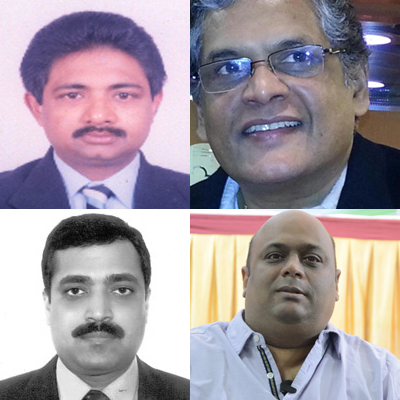
    ABS 7 Star CMD Atul Saraf

    “We welcome the recommendation paper. If one has to see, there is monopoly of one or two players in few states like Punjab, UP etc. I feel 50 per cent is also huge; it should be reduced to 25 per cent to give a level playing field. The recommendation paper if implemented will give quality service to customers,” says ABS 7 Star CMD Atul Saraf.  

    According to Hathway Cable & Datacom MD and CEO Jagdish Kumar G. Pillai, the MSO, by definition, does not have a market share of more than 50 per cent. “We are not impacted by this. And then it is just a recommendation paper. What will be interesting is how the regulator will ascertain the percentage of one’s operation till the country is fully digitised. It is impossible to know one’s percentage share in the analogue phase,” says Pillai.

    He adds, “It will impact some MSOs that are dominant players in few states.”

    Hathway Cable & Datacom MD and CEO Jagdish Kumar G. Pillai

    The recommendation paper states that MSOs that currently have more than 50 per cent stake in any state need not reduce their share, but cannot get into any further mergers and acquisition (M&A). “By this, the regulator has ensured that the MSOs are also not affected,” informs Pillai.

    Through the recommendation paper, TRAI wants to ensure that there is no dominance of any player and that there is a level playing field for the LCOs, MSOs and the broadcaster.  

    The TRAI is laying down the rules for the future. “One never knows about the future in terms of technology and also the methods used by the MSOs to operate. The regulator has to think not for a couple of years, but 10-20 years down the line. The recommendation paper ensures that the LMOs and the MSOs on pan-India basis can co-exist and function rationally,” opines Maharashtra Cable Operators Federation president Arvind Prabhoo.

    Maharashtra Cable Operators Federation president Arvind Prabhoo

    The 50 per cent cap will ensure excellent quality service, healthy competition and also keep costs in check. “The 50 per cent stake is still high, the regulator should keep the cap at 30-40 per cent,” he says. 

    According to Prabhoo, it is a progressive move by TRAI. “The authority is ensuring that there is no monopoly – vertical or horizontal and at the same time, is also ensuring that the LMOs have a choice. The LMOs welcome the move,” he states.

    Ortel Communications president and CEO Bibhu Prasad Rath says, “As I understand, the authority, through this recommendation, is trying to restrict the building up of the market share by any individual /group entity through M&A/control of an entity over many MSOs and LCOs. This does not apply to us because of our differentiated business model being independent and expanding directly through last mile connectivity without going through any M&A or control of other MSO/LCOs.”

    Rath thinks that a 50 per cent market share in a state for any MSO will be fair from a competition perspective. “So we do not see much problem in this. However, we believe that the market share should always be calculated by combining cable TV and DTH together as both aim to serve the same set of customers. The regulator has dismissed this argument which we think is unfair,” exults Rath.

    Ortel Communications president and CEO Bibhu Prasad Rath

    Rath also opines that any such regulation can be implemented smoothly when digitisation is fully put into practice. “In an analogue era, it is not practical to implement this. We hope the MIB will take care of these issues before notifying the same,” he states.

    GTPL COO Shaji Mathews says that the monopoly guidelines have their origins from the analogue era when broadcasters had complained to the TRAI. Says he: “It was an issue which was faced by the broadcasters due to dearth of space on cable networks then; it is being addressed at a time when the country is moving towards digitization.”

    Mathews feel that the recommendation paper doesn’t address two key points — one, when the cable networks join hands to fight against the broadcasters and two, when the broadcaster joins hands with a particular cable network to help them monopolise. “Both these issues which are the root cause to monopoly have not been addressed in the recommendation paper,” says Mathews.

    Mathews also points out that though the recommendation discourages monopoly, it encourages those cable operators who are related to broadcasters to grow their base in areas where they until now had no base. “For the viewer to get good service and for the cable operators to exist and also run a profitable business, there needs to be a transparent and non-discriminatory system. The regulator needs to bring laws for content players,” concludes Mathews.

    TRAI recommendations on monopoly or market dominance in cable TV services
  • TRAI gives DTH players more time

    TRAI gives DTH players more time

    MUMBAI: The DTH players now have time until 5 December to furnish their views on the supplementary consultation paper on ‘Issues related to new DTH licences.’ The earlier deadline set by the Telecom Regulatory Authority of India (TRAI) for submitting views and comments was 25 November.


    It was on 14 November that the consultation paper was released by the TRAI.  The date  extension  has been given in keeping with the request of the stakeholders.  The regulator though has made it clear that no further extensions will be entertained.


    It is to be noted that the supplementary consultation paper was released as a follow up to the consultation paper it had issued on 1 October on issue/extension of DTH licences at the behest of the Ministry of Information and Broadcasting (I&B).


    The points raised in the supplementary consultation paper were:   Cross-holdings and control between a DTH licencee, broadcasting entities and TV channel distribution entities; Interoperability of DTH STBs; Licence fee and Migration fee.


    Stakeholders can send the comments in electronic form to TRAI advisor Wasi Ahmad.

  • TRAI issues supplementary consultation paper on DTH licensing

    TRAI issues supplementary consultation paper on DTH licensing

    MUMBAI: The Telecom Regulatory Authority of India (TRAI) issued a supplementary consultation paper on issues related to new DTH licences late 14 November evening.

    This follows up the consultation paper it had issued on 1 October on issue/extension of DTH licences at the behest of the Ministry of Information and Broadcasting (I&B).

    The new consultation paper seeks to get the views of industry stakeholders on the comprehensive review of the provisions in the existing DTH guidelines it is seeking to undertake.

    Among those are:

    Cross-holdings and control between a DTH licencee, broadcasting entities and TV channel distribution entities.

     
    It is seeking to modify clause 1.4 of the DTH guidelines from “The licencee shall not allow broadcasting companies and/or cable network companies to collectively hold 20 per cent of the total paid up equity in its company at any time during the licence period” to “the licencee shall not allow any entity controlling broadcasting and/or any TV channel distribution operator to control it…”

    Clause 1.5 is proposed to be changed from “The licencee company  not to hold or own more than 20 per cent equity share in a broadcasting and/or cable networking company”  to “any entity controlling the licencee should not control any broadcasting and/or any TV channel distribution operator.”

    The term TV channel distribution operator covers operators of cable TV, DTH, HITS, and IPTV.
    The consultation paper has defined what “control” can mean:

    *A company owns 20 per cent of another firm directly or indirectly though associate companies, subsidiaries and/or relatives

    * De jure control through having not less than 50 per cent of voting rights in second company; appointing 50 per cent of the members of the board of directors; controlling the management of affairs through decision-making in strategic affairs of the second company and appointment of key personnel.

    * Exercises de facto control by being a party to agreements, contracts or understandings…that enable it to control business decisions in the second company.

    The TRAI has said that if one were to go with this definition of control, then amendments will have to be made to laws relating to cable TV operators, broadcasters, HITS operators and some DTH operators will have to be given time to comply with the new provisions.
    Interoperability of DTH STBs

    The TRAI has stated that Clause 7.1 of the guidelines is open to interpretation. It states: “The open architecture (non-proprietary) set top box which will ensure technical compatibility and effective interoperability amongst different DTH providers shall have such specifications as laid down by the government from time to time.”

     
    It has emphasised that this could be modified to put the onus on the Bureau of Indian Standards and the government shall ensure that “the BIS specifications are based on open architecture and should incorporate the latest technological developments with respect to interoperability of DTH STBs taking into account its practicality as well as international experience.”

    Additionally, it states that “the BIS specifications should clearly specify the contours of interoperability between the STBs based on different technological standards.”

    Finally, it has pointed out that the licence conditions should be amended to mandate compliance to BIS specifications for the STB to be offered to all new subscribers within a suitable period of say six months.”

    Licence Fee:

    It has recommended that the licence fee and the definition of adjusted gross revenues (AGR) for the DTH sector be aligned with that specified in the Unified Licence. And that the licence fee may be charged at eight per cent of AGR. The AGR could be calculated “by excluding service tax on provision of service tax and sales tax actually paid to the government if gross revenue had included components of sales tax and service tax.”

    Under the current guidelines, DTH licencees have to pay an initial non-refundable entry fee of Rs 10 crore before the issue of the letter of intent by the licensor, and an annual fee of 10 per cent of its gross revenue in the particular financial year after the issue of the wireless operational licence by the WPC. The TRAI had in 2004 recommended that this be reduced by two per cent on AGR, and later to six per cent of gross revenues in 2008.

    Migration Fee:

    It has recommended an imposition of an entry fee on existing and new DTH operators moving to the unified licence regime. Existing operators should be given a rebate commensurate to the value of the licence for the remaining licence period, and that may be termed as the migration fee. The rebate could be calculated.

    The TRAI has asked stakeholders to give their views on the recommendations issued today by 25 November. Stakeholders also have to give their recommendations on the consultation paper dated 1 October 2013.

  • TRAI meets MCOF’s Prabhoo on LMO issues

    TRAI meets MCOF’s Prabhoo on LMO issues

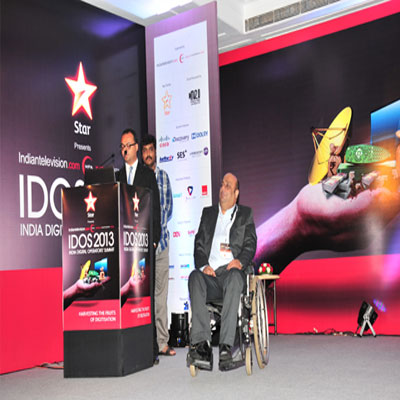
    MUMBAI: It was at indiantelevision.com & MPA’s (Media Partners Asia) India Digital Operators Summit (IDOS) that Mumbai-based cable TV heavyweight and MCOF (Maharashtra Cable Operators Federation) president Arvind Prabhoo first presented to India’s cable, DTH, regulatory and broadcast leaders the local cable TV operators’ perspective. Everyone was impressed including Telecom Regulatory Authority of India (TRAI)’s advisor N. Parameswaran, who said the regulatory body would like him to come and present at its headquarters in Delhi.

    The wheelchair bound Prabhoo did exactly that three days ago on 6 November when he presented the LMO’s viewpoint once again before the TRAI’s N Parmeshwaran, Wasi Ahmed, S K Singhal and G S Kesarwani.

    Prabhoo once again highlighted the issues that are bothering the LMOs and the role they can play in phase III and phase IV of digitisation.

    “There is a crisis in DAS I and II areas regarding LMO-MSO relationship,” says Prabhoo, adding that it was important to address the problems. Prabhoo has told TRAI that his major concern was the MSO-LMO-subscriber relationship. Subscribers belong to LMOs who collect money from them and give it to the MSOs who in turn pass it on to broadcasters. However, the MSOs believe that subscribers belong to them and not to the LMOs.

    Prabhoo also raised the issue of uneven pricing of packages in cities like Mumbai. He wants all MSOs to have similar packages so that it is convenient for a subscriber to migrate and that will even make money collection easier. At the same time, clarity on a-la-carte channels is missing even today.

    He also brought to fore the issue regarding the ownership of set top boxes (STBs). He thinks it is a big bone of contention. “On one hand, customers think they own the STBs, while the MSOs think that STBs are their property,” he remarks. “This disallows customers from migrating from one provider to another using the same STB when he shifts to a new place with a new provider and if he does, the LCO is held responsible for it. Because of this, many subscribers are shifting from cable to DTH, as it seems to be more convenient.”

    Since there’s no fixed revenue sharing deal between the MSOs and LMOs, Prabhoo came up with few solutions. He suggested that for an FTA (Free to Air) channel the sharing between MSO and LMO can be 20:80, while for pay channels it can be 75:25.

    He also suggested that the price of a STB can be reduced and a free basic broadband service be given to communicate by mail. Another suggestion was to rename the LMOs as Horizontal Connectivity Provider Agency (HCPA).

    Prabhoo also brought to TRAI’s notice the issue of entertainment tax. The 42B licenses of LMOs have not been renewed since two to three years and yet the tax is being collected from them. TRAI seemed to be unaware about the issue and has told to get in touch with the chief secretary of Maharashtra soon. They also said that as a regulator they had done everything they could.
    “There needs to be more interaction between LMO, MSO, broadcaster and TRAI if we need a proactive solution to address all our concerns,” concludes Prabhoo.

  • Marginal growth in broadband connectivity between August and September 2013

    Marginal growth in broadband connectivity between August and September 2013

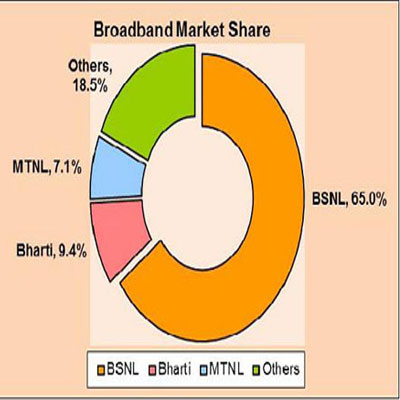
    NEW DELHI: The total broadband subscriber base increased from 15.28 million at the end of August to 15.36 million at the end of September 2013, thus showing a monthly growth of 0.52 per cent.

    The yearly growth in broadband subscribers is 1.90 per cent during the last one year (September 2012 to September 2013).

    As on 30 September, there are 158 internet service providers (ISPs) which are providing broadband services in the country. 

    Out of these, 95 ISPs have provided broadband subscription data for the month of September 2013, for the rest of the ISPs data from previous month has been retained.

    The top five ISPs in terms of market share (based on subscriber base) are: BSNL (9.98 million), Bharti Airtel (1.44 million), MTNL (1.10 million), Hathway (0.37 million) and You Broadband (0.33 million).

  • EU welcomes India’s decision to open telecom to FDI, concern about in-house testing

    EU welcomes India’s decision to open telecom to FDI, concern about in-house testing

    NEW DELHI: The European Union has noted with satisfaction India’s recent decision not to use security as justification for domestic manufacturing preference policies in telecom and electronic goods; and not to extend restrictive measures to private procurement (e.g. of telecom operators as licensees for radio spectrum).


    The EU has also supported India’s decision to open up the telecom sector to foreign direct investment (foreign ownership had been limited to 74 per cent).


    During a meeting of the EU-India Joint ICT Working Group met in Brussels, EU expressed concerns about mandatory ‘in country’ testing and certification of telecom network elements by Indian labs and demanded that mutual recognition for example under the Common Criteria Recognition Arrangement (CCRA) should be accepted. India has also mandated compulsory registration of 15 groups of consumer electronics products in order to comply with Indian product safety standards.


    It was decided at the meeting that two sub-groups will be established: one on Market Access and ICT Manufacturing (lead: EU) and another on internet security (lead: India) which should focus on matters of network and information security and provide input to EU-India Cyber Security Consultations.


    Both sides highlighted the crucial role ICT research and innovation can play in tackling the economic and societal challenges of our time, and agreed to deepen cooperation in this area. Interest was expressed particularly in the areas of e-Infrastructures, High Performance Computing, Cloud Computing, Wireless Broadband Communications, Internet of Things, and Electronics. Cooperation was proposed, inter alia on standardisation and interoperability matters, for which follow-up is envisaged.


    The Indian delegation was referred to the High Level Dialogue on Migration and Mobility as the “one-stop shop” where concerns regarding the ease of mobility of Indian IT professionals could be addressed.


    India’s request for “data adequacy status” under the EU data protection legislation (which is of high importance for Indian services and business process outsourcing businesses), will need to be addressed to an expert group of national data protection authorities, which is ready to meet with Indian representatives in order to advance the dialogue.


    The EU delegation was led by Gerard de Graaf, Director, DG Connect, and the Indian side by Raj Kumar Goyal, Joint Secretary for International Cooperation in the Department of Electronics and Information Technology, within the Ministry of Communications and Information Technology.


    DigitalEurope had hosted the EU-India ICT Industry Dialogue, where leading industry experts from Europe and India met with delegations of the Government of India (Department of Electronics and Information Technology) and of the EU (European Commission – DG Connect and European External Action Service). There was a unanimous call by both Indian and European participants for global approaches and global solutions.

  • TRAI should reconsider Spectrum Trading, says DoT

    TRAI should reconsider Spectrum Trading, says DoT

        
    NEW DELHI: A Department of Telecommunications (DoT) committee has for the present turned down any proposal to permit spectrum trading.

    In a report to the Telecom Commission, this Committee has however admitted that this finds place in the National Telecom Policy (2012). It has said there is need for a more holistic view on the matter to prevent ‘some unintended consequences’.

    It feels that the Telecom Regulatory Authority of India (TRAI) should be asked to give a detailed recommendation in this regard. At present, only right-to-usage of spectrum is auctioned and the legal framework under which it can be treated as transferable and tradable in whole or part needs to be prepared, the Committee added.

    According to the report, any Presidential Reference on this issue should be in conformity with the Supreme Court order in the 2G spectrum allocation case.

    The Committee says there is need for assessment of market sale of spectrum. This would assume more importance in merger and acquisition (M&A) cases, for assessment of the fair value of spectrum, where the entire business might be taken over as a going concern along with the spectrum, without separate determination of the price. It should also have provisions to curb fly-by-night operators entering for only trading benefits.

    Earlier, the DoT had sought TRAI’s views on the conditions and timing for allowing trading of what got through auction, the quantity for trading by an operator, revenue payable and the legal, regulatory and technical framework. This followed a recommendation by Planning Commission Deputy Chairman Montek Singh Ahluwalia to Communications and Information Technology minister Kapil Sibal to allow trading of spectrum. The matter was also discussed in a meeting of the Empowered Group of Ministers (EGoM) on telecom headed by Finance Minister P Chidambaram.

    The DoT committee has said TRAI should reconsider sharing of spectrum. Guidelines are to be finalised for the sharing of spectrum in accordance with the TRAI suggestion on a spectrum management and licencing framework. However, the present recommendation for a flat spectrum usage charge would impact the previous recommendation, it felt.

  • TRAI issues DTH licensing consultation paper; Dish TV given extension

    TRAI issues DTH licensing consultation paper; Dish TV given extension

    NEW DELHI : Currently, India has six pay DTH operators, apart from the free-to-air DD Direct Plus operated by Doordarshan. Dish TV, was the first DTH licencee which got the wireless operating licence (WOL) for starting its DTH services on 1 October 2003. The other five DTH operators got the WOLs during 2006 to 2008. Dish TV’s licence was due to expire on 30 September 2013. The DTH Guidelines are silent on the course of action to be adopted after expiry of the 10 year licence period.


    As the time left before the due date of expiry of the licence period for the first licencee (Dish TV) was ‘simply not sufficient for TRAI to follow the due consultation process,’ it suggested some interim measures on 11 September to the Minister for the protection of the interests of consumers and keeping in view the large subscriber base of the said licencee.


    It was suggested that, in the interim, the Ministry may consider allowing Dish TV to continue its operations/services on the existing terms and conditions subject to Dish TV renewing the existing bank guarantee and a suitable undertaking that once the final policy in this regard is laid down by the government, the said DTH operator will comply with that policy for the interim period also. Any financial obligations arising from the change in policy shall also be honoured.


    The existing DTH Guidelines provide for the issue of a licence for 10 years. They do not explicitly provide for an extension or a renewal, implying that at the end of the 10-year period of validity, the licence expires.


    TRAI has noted that ‘starting a DTH business entails a huge investment of resources. It would, therefore, be a reasonable expectation on the part of DTH licencees that, on the expiry of the initial 10 year licence, they would be eligible to apply for issue of a new licence so that they can continue their business.’


    DTH broadcasting services were opened up in the country in 2001. On 15 March 2001, the government issued the ‘Guidelines for obtaining licence for providing Direct-to-Home (DTH) broadcasting service in India’ (hereinafter referred to as ‘DTH Guidelines’). These guidelines prescribe the eligibility criteria, the procedure for obtaining the licence to set up and operate DTH services in India, and the basic terms and conditions/obligations reposed in the operators.


    After a company applies for a licence, the Ministry obtains the security clearance from the Home Ministry and clearance for usage of satellite from the Department of Space. Once the clearances are obtained, the player is asked to pay the entry fee of Rs 10 crore. On payment of the entry fee, the Ministry communicates its intent to the applicant to issue a licence, after which it needs to approach the Wireless Planning and Coordination (WPC) for Standing Advisory Committee for Frequency Allocation (SACFA) clearance. Once the SACFA clearance is obtained, the company has to give a bank guarantee of Rs 40 crore and sign the licence agreement with the Ministry.


    After this, the company has to apply to WPC for obtaining the WOL. The duration of the DTH licence is 10 years from the date of issue of the WOL. Licences to establish, maintain and operate the DTH platform are granted under Section 4 of the Indian Telegraph Act 1885, and the Indian Wireless Telegraphy Act, 1933.

  • Radio City Super Singer returns with Season V

    Radio City Super Singer returns with Season V

    MUMBAI: FM Bole Toh Radio City is back with Season 5 of Radio City Super Singer across India. Taking off from the super success last year, this time Radio City Super Singer assumes a scale larger than ever before.The winner gets felicitated with a prize money of Rs. 1 Lakh and a break with popular music directors across India. The mega talent hunt rolled out carpets on the 8th of September, across India.

    Radio City Super Singer is one of the biggest celebrations of music on an FM radio platform. For the first time, Radio City introduces a WAP site, where participants can upload their audio clips through a simple log-in (http://myradiocity.in) from any mobile phone. Other than this, interested contestants can avail of any of the traditional avenues of auditioning. They can either come and audition at our studios or upload / record voice clips on the Super Singer Tab on our Facebook page. The other options include the on-ground auditions (malls & colleges) & IVRS.

    The auditions are followed by short listing a few contestants who have an edge over the others. Rough edges will be polished off, as the shortlisted few get trained by musical geniuses. The final five across each city will fight it out for the title of ‘Radio City Super Singer’.

    Speaking about Radio City Super Singer, Ms. Apurva Purohit, CEO, Radio City 91.1 FM, says, “Radio City Super Singer started as an experiment & was the first ever talent hunt by a radio station. Through the years it has grown in stature & size to carve a niche & become one of the most awaited engagement activities. Last year we had over 80000 enthusiastic singers across the country registering & auditioning with us. The aim has always been to discover the amazing singing talent from across the country and provide a platform that befits the talent. By the sheer number of touch points we create, we reach out to people like no other property does. Moreover, this is the only singing talent hunt show in India that runs in 5 languages (Hindi, Telugu, Tamil, Kannada & Marathi) at the same time. The overwhelming success of the previous years not only justifies our aim but also makes us want to scale newer heights.”

    Radio City Super Singer has emerged as an incubator of talent through the years, bringing India’s latent talent to the limelight. This year, our winners get a head-start in the music industry, with the opportunity to work with eminent music directors across India. Additionally, they get featured on ‘Freedom Hour’ – an hour dedicated to unplugged music on Radio City. Radio City Super Singer wraps up on the last week of September.

    Radio City Super Singer pits singers of contemporary music across a cross-section of genres, to compete against each other.. Through the years, the talent hunt has carved out a fan-base of its own. This time, it just gets bigger and better.

    Stay tuned to Radio City 91.1 FM to get more updates on Radio city Super Singer, This year the hunt for the best voice takes place across Mumbai, Delhi, Bangalore, Chennai, Lucknow, Hyderabad, Pune, Jaipur, Baroda, Surat, Ahmednagar, Nagpur, Vizag, Coimbatore. Also log on to www.facebook.com/radiocityindia.

  • “We are hoping for a fair share of revenue in a digitised ecosystem”

    “We are hoping for a fair share of revenue in a digitised ecosystem”

    Cable TV digitisation has forced the entire television ecosystem to come face to face with some gut-wrenching changes. Each one of the players has come under the scathing gaze of either the ministry of information and broadcasting or the telecom regulator, the Telecom Regulatory Authority of India (TRAI). Some have even got a rap on their knuckles as the powers that be continue to work overtime on evolving a rickety old cable TV landscape into one capable of delivering top of the line world class digital services.

    Earlier this month, it was the aggregators that came under the scanner of TRAI which sent out a consultation paper which tries to reduce their importance in a digitised cable TV India. TRAI has said that aggregators tend to misuse the clout they have and need to have their wings clipped.

    The One Alliance, a  Discovery India-MSM joint venture which distributes 28 channels to the 30,000 or so cable operators nationally is one of the aggregators whose future and existence many are questioning.  But its president Rajesh Kaul, a scarred veteran of many a cable TV battle,  is hopeful things will get sorted out and work out well for him and others of his ilk such as MediaPro and IndiaCast.

    Even as The One Alliance has been celebrating the completion of 11 years of being in business, Kaul was busy preparing his responses to be presented to the regulator before the scheduled 27 August deadline. He still found some time to speak to Indiantelevision.com’s Seema Singh on trends in carriage and placement fees, the TRAI consultation paper and all things cable TV. Excerpts:

    Do you see the aggregators become more relevant or less in the coming years? Why or why not?

    We will be as relevant as we are right now. We are a very important link in the chain of the entire television ecosystem. We just hope that with digitisation we will get a fair share of revenue which we haven’t got for so many years.

    What is your take on the TRAI consultation paper, which if implemented will cut down on the aggregator’s clout?

    We are evaluating the entire paper for which we need to file replies.

    TRAI in all its open houses and interaction with stakeholders has maintained that the era of regulation should go now and that they want to deregulate. So the consultation paper came as a surprise. On one hand they talk of deregulation, while on the other they put us under more regulations.

    May be the regulators need some clarification on the same and we are working on it. I am unsure of the intensity of the complaints put by the MSOs. 

    All through we have been following the TRAI and Information & Broadcasting Ministry (MIB) guidelines, with not a single case of deviation.

    There are close to 700 channels today and this has led to huge competition. The situation is such that no one channel can behave unreasonably with an MSO or with consumers. We all need eyeballs from our consumers. The competition ensures that the channels’ content and rate is good. We have to ensure that everything is as per market dynamics so that they are more liked and watched. This is the age we should be talking of forbearance rather than regulation.

    As per the TRAI regulation we are supposed to offer our channels on a la carte rate as well and this is available to the MSOs. In this country, there is a ‘must provide’ for all broadcasters, according to which not a single channel can say “No”  to an MSO for providing the channel to them.  But the MSO has the option to not subscribe to our channels. Since all the channels are on a la carte rate as well, there is no question of forcing them to subscribe to our bouquet.

    Another point that needs mentioning is that the broadcasters have not been getting a fair share of revenue in subscription. We thought with digitisation things will change. We have been a very good stakeholder in this entire process and done all that the regulator wanted us to do, be it doing quick deals to help MSOs sell the set top boxes or curbing our ambitions to make profits.  We hope that we will bear the fruit of being responsible stakeholders in this entire stretch one day.

    TRAI had even in the past come up with such consultation papers, but always heard us and I am hopeful they will listen to us even in this case. We are going to them to present our thought process. May be some wrong impression and feedback has gone to them, our duty is to explain to the regulator.

    The second phase of DAS will conclude soon. Any problems that you faced in this switch? What is the percentage growth in revenue in phase two as compared to phase one?

    We are still waiting for a transparent system. With digitisation the consumer can chose what they want, and pay for it. This transparency has not come out so far. We are still not getting reports from the MSOs and do not know who is watching what. These are the bottlenecks that we face.

    We were looking at ambitious numbers when digitisation kicked off. We didn’t get that in the first phase. Also as responsible stakeholders we curbed our ambitions then because we knew it would be difficult to expect a huge jump in the beginning. We supported the MSOs, which is what the regulator wanted us to do.

    But with the completion of phase II, we should be inching towards that fair share, which should be around 35 to 40 per cent of the on-ground subscription revenue collected. This should happen by April 2014. Channels cannot survive only on ad sales, subscription money is a very important revenue stream for broadcasters, but unfortunately it hasn’t so far happened in India.

    Another problem that the broadcasters face is the high carriage fees. In an analogue system, due to capacity constraint, broadcasters had to pay huge carriage fees. But now with digitisation there is no question of any capacity constraint, so why have carriage fees?

    How are you playing out the carriage fee market? Will the carriage fees come down? How much has this come down, pre- and post-DAS?

     In the next three years there should be no carriage fees. Though carriage fees  have come down post DAS, we still have been paying some placement fees to support the MSOs as they make their transition. But, with the completion of digitisation, even this should go down.  I expect carriage and placement fees to disappear over the next two to three years. While these were expected to go down further by phase II of digitisation, it has only been to the extent of about 25 per cent.

    Earlier the subscription revenue share we (read: broadcasters) were getting from the cable TV ecosystem was about 10-15 per cent. Now it has gone up to maybe to 20 per cent on the overall. Some broadcasters may have got 25 per cent but others may have got lower amounts of the digital dividend.  Many of the channels don’t get any subscription revenues because in the analogue environment they could not afford to have that as a part of their business model. With digitisation all this could change.

    Do you plan to add more channels in the bouquet? What was your strategy to ensure that you had Times Network in your bouquet, when other news channels were walking out of the bouquet?

    We are not market shopping for channels and we are not desperate. Only if tomorrow we come across something good, we will think of adding it to our bouquet.

    We added Times Television Network to our bouquet this year. It was a mutual decision between the two of us. They fitted in our profile and also they wanted to be a part of our network. They are a premium channel and they deserve suitable revenues considering their performance and we at The One Alliance are working to get them those revenues.

    We are in the process of concluding deals for Times with other MSOs. We have finished with Hathway, GTPL, and some other MSOs. And more are coming.

    You had a dispute with Hathway going on for some time? How is that progressing?

    There were many issues like are bound to happen in the cable TV business and yes one of these issues was the one we had with Hathway. And one of the issues – amongst the many issues – we had with Hathway was The Times network, which we have been distributing. But we amicably resolved all the issues with Hathway this evening. And the One Alliance bouquet of channels should have come back on all of Hathway networks by this evening. (26 August).

    It’s been 11 years in the business, how has the journey been so far?

    The journey has been fantastic. While we started with three or four channels now we have a bouquet of 28 channels, with extremely powerful and premium channels. We have various genres, we have a solid name and repututation. It has a journey which has had  more ups than downs.


    Unfortunately, even with the IPL being the biggest sporting property in this country, we have not been able to monetise it well due to under declaration. But, now we have aggressive plans to monetise it for the next season..

    What are the key pointers that set The One Alliance apart from other aggregators? As compared to others aggregators you have less channels, is that a limitation. How do you see things going ahead?

    We are the most stable joint venture (JV) in the industry. All the other aggregators are just a couple of years old. Our partners are very much involved and keen to ensure that the stability continues. For us the quality of the channel is important. We have never been in the race of having 50-60 channels in our bouquet. 

    We have channels from different genres in our bouquet and most of them are amongst the top two or three ranking in their respective genres. There are many more who want to be a part of One Alliance, because they trust the JV. Also our dealings are very transparent. We can add two to three channels at any given time, but our policy doesn’t allow us to do that. We have always believed in quality and so want to have premium channels in our bouquet.

    Today we are the strongest, despite having 28 channels. Also we are the only one having a sports channel in our bouquet unlike the others. Considering we have most genres covered in the bouquet, I don’t see any limitation. Our revenue is far higher than the others.

    Are you selective about the channels you take in the bouquet? What are the criteria that a channel needs to fulfill to be a part of The One Alliance bouquet?

    The channel and the company backing the channel should have similar kind of values and ambitions like ours. We also look at the channels’ performance, which we understand on the basis of the weekly television viewership ratings.

    What is the reach of the bouquet and which is the largest channel in the bouquet?  

    We currently have 28 channels from different genres in our bouquet. Sony Entertainment has the largest reach and, during IPL, Sony Max gets the largest reach.
    IPL is the biggest sporting property that we have. What is interesting is that though most sporting properties are a simulcast with Doordarshan, IPL is the one property which is exclusive on Max. This makes it the most important property in the sporting channel world and we have it.

    We are present almost across the country. We would be there in around 90 per cent of the towns, which have cable and satellite, but through DTH our reach is 100 per cent. Close to some 6,000 cable networks across the country carry our channels. 

    What is the current strength of the organisation?

    One Alliance employs 125 people with offices in Delhi, Bengaluru, Kolkata, Indore and Mumbai. Apart from this, we also have a strong distribution network with distributors in Rajkot,  Pune, Ahmedabad, Guwahati, Patna, Ranchi and Lucknow among others. Like this we have offices in 60 cities. The distributors have their own employees. So, if we take a cumulative strength, we have around 350 people working for us.

    The major revenue for The One Alliance is dependent on IPL. So till how long will IPL be with Sony Max? How do you maintain subscription post IPL and also with so many controversies surrounding IPL, how will you deal with it?

     Unfortunately, even with IPL being the biggest sporting property in this country, we have not been able to monetise it well due to under declaration. But, now we have aggressive plans to monetise it for the next season.

    What are the future plans for The One Alliance?

    We have to lead the change and ensure that everybody gets their fair share.