Category: TRAI

  • TRAI blames MSOs and LCOs for delay in DAS implementation

    TRAI blames MSOs and LCOs for delay in DAS implementation

    MUMBAI: The Telecom Regulatory Authority of India (TRAI) has come up with certain amendments to the Standards of Quality of Service (digital addressable cable TV systems) (amendment) regulation 2012 (12 of 2012). The regulation has laid down norms for billing of subscribers in digital addressable system (DAS) areas.


    It says that even after coming up with the QoS regulation, it kept receiving several complaints from subscribers about not getting proper bill and receipt. Subsequently, the regulator issued a direction in December 2013 directing MSOs to offer prepaid and postpaid payment options, generate bills and issue receipts.


    It also made a team consisting of representatives from TRAI and the Broadcast Engineers Consultant India Limited (BECIL) to inspect the head-end and subscriber management system (SMS) of MSOs in Delhi. During the inspection it noticed non-compliance by cable operators. Some cable ops are not offering prepaid option of payment while those who did offer, didn’t give an option of electronic payment.


    It again issued a direction on 27 May 2014 to ensure bill delivery either by hand, post or e-mail, within 45 days of the direction to provide online payment option in its SMS, electronic acknowledgement to subscribers on payment. MSOs and LCOs are still delaying implementation of the same.


    Since no details are being inserted in the SMS, it is hampering the transparency of financial transactions between MSOs and LCOs thereby affecting smooth implementation of DAS.


    TRAI states that ‘in the absence of proper billing and accounting of receipts, there is a distinct possibility of loss of revenue accruable to government’.


    Due to all these reasons, the regulator feels that financial disincentives should be levied on non-compliant MSOs and LCOS, similar to how it happens in the telecom field where this action has yielded result.


    For non-compliance of issuing bills, a disincentive of not exceeding Rs 20 per subscriber will be levied on the MSO and/or its linked cable operator and for the second time, penalty would be Rs 50. For non-compliance of regulations, Rs 100 will be penalised on each MSO for each contravention. If the MSO and LCO have entered into an agreement, both of them will be penalised for faults while in the case of no deal being signed, only the MSO is liable to pay.


    The regulator says that the MSO may offer multiple denomination schemes for recharging, with an expectation that monthly recharge schemes would be one of the options.


    Another amendment that has been suggested is to ensure that bills have service tax registration number and entertainment tax registration number of either the MSO or the linked cable operator.


    However, before imposing penalties, TRAI will give opportunities to the concerned MSO or LCO to represent its case.


    The amendment, when approved, will come into effect 30 days from the date of publication and will be called Standards of Quality of Service  (digital addressable cable TV systems) (amendment) Regulations 2014.


    Stakeholders can provide comments before 8 September.


    Click here for the press release
     

    Click here for the amendment

  • TRAI seeks views on penalties for non-compliant MSOs and LCOs in DAS areas

    TRAI seeks views on penalties for non-compliant MSOs and LCOs in DAS areas

    MUMBAI: Days after the news of new deadlines being set for phase III and IV of digital addressable system (DAS) was known, the Telecom Regulatory Authority of India (TRAI) has decided to straighten up the multi system operators (MSO) and local cable operators (LCOs) who are turning up their noses regarding billing in the first two phases.


    TRAI has come out with a notice inviting stakeholders to give their inputs regarding penalties to be imposed on non-compliant MSOs and LCOs. It says that it has received several complaints from DAS subscribers that they weren’t getting either the bill or the receipt of payment for their TV subscription services.


    Therefore, in order to protect the interest of consumers, ensure transparent business practices and promote efficiency, it is proposing to amend the regulation to incorporate provisions of levying financial disincentives on such MSOs and LCOs. TRAI is also seeking to amend the Standards of Quality and Service (digital addressable cable TV systems) Regulations 2012 (12 of  2012) dated 14 May 2012.


    The regulation lays down quality of service norms to be adhered to by the service providers, providing cable TV services through DAS.


    TRAI seeks comments from stakeholders on the draft regulation by 8 September to sksinghal@trai.gov.in.

  • Pay for content and not channel say broadcaster legal counsels

    Pay for content and not channel say broadcaster legal counsels

    MUMBAI: Regulation in India, unlike the US, is very static. Not only this, any regulation that comes out, does not address the future, but the past. New technology is proving to be a remarkable challenge, not only for the industry, but for the regulators as well.


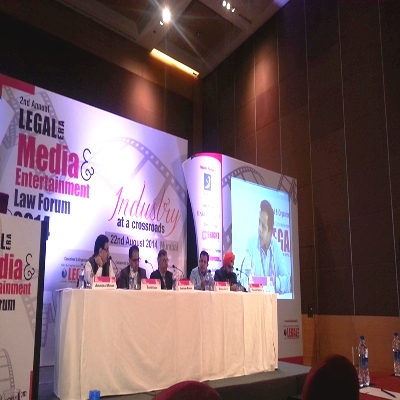
    These were the major points of discussion at the 2nd Legal Era Media & Entertainment Law Forum, where legal counsels for various broadcasters, emphasised on how the regulatory regime in India is very backward. A normal broadcaster today has to go through the tedious task of applying to the Ministry of Information and Technology (MIB), Department of Space (DoS) and WPC approvals. As per statistics, at present approximately 800 files for channel licence is pending with the MIB and some 600 with the DoS.


    Stressing on the rise of technology, Zee Entertainment Enterprises Limited (Zeel) director corporate Amitabh Kumar said that by the year 2020 linear transmission of channels will be replaced by video on demand (VoD). Kumar also stressed on the need for change in the way licences are given to broadcasters. “The broadcasters’ licence should have provision for VoD, VOIP etc. There should also be a provision, as per which the licence services should be allowed to expand, with no entry fee. The regulatory body must have scope for widening the ambit of services for lifetime,” opined Kumar.


    For Kumar, the regulators need to be pro-active rather than reactive to the new technology advancements.


    Content consumption is undergoing change. “Content cannot be controlled, it can be self regulated, which is working beautifully,” informed Viacom 18 Media group general counsel Sujeet Jain. He also brought to the fore how the functioning of Broadcast Content Complaints Council (BCCC) had forced even the I&B to retract from interfering in the content. “Government should completely take its hands off content,” he added.


    Agreeing with Jain was Singh and Singh Law Firm LLP partner Tejveer Bhatia who said that tariff of the VoD content should not be regulated. “If consumer is demanding a particular kind of content, the media industry should have the freedom to decide the tariff. There cannot be a benchmark on the demanded content,” informed Bhatia.


    According to Star India president and general counsel, legal and regulatory affairs Deepak Jacob the quality of content is directly proportional to the money spent on it. “If we want to produce high quality content for linear TV, there is cost that is attached to it. While in the past 15 years, the ARPUs have remained flat at Rs 150 to Rs 200 and the broadcasters’ fair share of this has also remained the same, the content cost has increased 20 times. So Rs 1 lakh per episode expense, 15 years ago, has today gone up to Rs 15 lakh to Rs 20 lakh per episode,” informed Jacob.


    Jacob also questioned the whole ‘must provide’ clause that was introduced by the Telecom Regulatory Authority of India (TRAI). “All this will kill broadcasters. What is the incentive that a broadcaster is getting for creating content for mobile devices or other platforms?” questions Jacob.


    Another important point raised during the panel discussion was that unlike in the US and UK, where channels are sold as events, in India, this arrangement doesn’t exist. “We should be moving towards a regime, where consumers can subscribe to events and not channels. And the subscription should allow one to view the content not only on TV but mobile, tablet or computer also. Content, not channel should be highlighted and consumers should be able to pay for content,” said Kumar.


    According to Jain, while with change in technology, the format and consumption pattern of the content will change, but the content will remain the same.  “The regulation has to incorporate this aspect and there should be a level playing field,” he opined.


    The panelists also suggested that a lot of licencing should go away and what the government should really look at, while moving towards convergence is providing ease of access. “The Prime Minister is talking about making broadband available across the country, but for this access will be needed,” said Jain.  He also highlighted the need for strict laws against piracy. “Taxation needs to be rationalised in order to give fillip to the sector. That apart, ministries will have to merge so that entire ecosystem can merge,” opined Jain.


    The session also touched upon the issue of carriage fees and if there was any end to it. According to Jacob, while carriage fee, which is an artificially created monster needs to vanish, placement fee is something which will not cease to exist. “Placement is an individual choice that broadcasters make. It will be unfair of broadcasters to expect a certain number of LCN, without incentivising the MSO,” he concluded. 

  • Appreciable increase in broadband subscribers between May and June this year

    Appreciable increase in broadband subscribers between May and June this year

    NEW DELHI: As compared to marginal increases in the previous months, broadband subscribers grew by 5.35 per cent between May and June this year, according to the Telecom Regulatory Authority of India (TRAI).


    The total number of subscribers went up from 65.33 million to 68.83 million in all segments: wired subscribers, mobile device users (phones + dongles) and fixed wireless (wi-fi, wi-max, point-to-point radio and VSAT).


    Unlike previous months, the largest change of 6.93 per cent was seen in the mobile segment, while there was a change of 2.51 per cent in the fixed wireless category and only 0.13 per cent in the wired subscribers.


    The top five broadband service providers constitute 84.98 per cent market share of total broadband subscribers at the end of June. They are BSNL (18.53 million), Bharti (14.76 million), Vodafone (10.30 million), Idea Cellular (8.78 million) and Reliance Communications Group (6.11 million). TRAI said that the wireless subscribers with less than 1MB data usage in a month are not considered as internet/broadband subscribers by Reliance and Idea.


    The top five wired broadband service providers are BSNL (9.98 million), Bharti (1.39 million), MTNL (1.13 million), Beam Telecom (0.40 million) and YOU Broadband (0.39 million).


    The top five wireless broadband service providers are Bharti (13.38 million), Vodafone (10.30 million), Idea Cellular (8.78 million), BSNL (8.55 million) and Reliance Communications Group (6.00 Million).


    In telecom, private operators hold 89.85 per cent of the wireless subscriber market share whereas the public-sector operators BSNL and MTNL hold only 10.15 per cent market share.

  • TRAI paper on broadband next month

    TRAI paper on broadband next month

    MUMBAI: The Telecom Regulatory Authority of India (TRAI) will come out with a comprehensive consultation paper on broadband next month. It will invite views of public on issues related to roll out of broadband in the country.


    Inaugurating the “Eighth Mobile India Summit: Broadband Highway-Driving India’s Growth” organised by Assocham, TRAI chairman Rahul Khullar said, “The authority has been working on broadband issues, and hopefully, we will come out with a paper on broadband, may be by the end of next month.” He also admitted that India’s progress in terms of broadband has been very limited and disappointing.


    “Of 1.8 lakh kilometres (kms) cable that has been ordered 15,000 has been delivered which is just about eight per cent, of six lakh kms for ducting actual achievement is about 2,000 kms which is about 0.3 per cent, the optical fibre cable pulled is about 250 kms which is less than 0.05 per cent of the target and all this has been achieved in past two years,” he added.


    He further stressed the need for targeted approach to achieve broadband policy objectives. He also focused on the scope to use available private infrastructure in conjunction with already existing public infrastructure


    TRAI is also planning to issue a consultation paper soon to discuss regulatory framework around Over-the-top (OTT) players like WhatsApp, Skype, Viber, WeChat etc.


    The OTT players facilitate free calls and messaging services, making it affordable for consumers to use them. Telecom subscribers are required to pay only internet charges to their operators for using OTT services.


    The authority had recently organised a seminar on ‘Regulatory Framework for OTT Services’ with the aim to provide a platform for exchanging views on key issues related to OTT and also rejected the proposal put forward by telcos to charge popular apps.

  • TRAI releases recommendations on media ownership

    TRAI releases recommendations on media ownership

    MUMBAI: The Telecom Regulatory Authority of India (TRAI) has released the much awaited recommendations on media ownership.


    Here are the highlights of the recommendation paper:

    – The news and current affairs genre will be most important and relevant genre in the product market for formulating cross media ownership rules.

    – The relevant geographic market should be defined in terms of the language and the state in which the language is spoken majorly.

    – A combination of  reach and volume of  consumption  metrics should  be used for  computing market shares for  the  television segment. For calculating market shares, the GRP of a channel should be compared with the sum of the GRP ratings of all channels in the market and the market share of an entity would be the sum of the market shares of all channels controlled by it.

    – The    Herfindahl   Hirschman   Index   (HHI)    be    adopted   to    measure concentration in  a media segment in a relevant market.

    – The   cross-media  ownership  rules  be   reviewed three  years  after  the announcement of  the   rules by  the   licensor and  once every   three years thereafter. The  existing entities in  the  media sector which are  in  breach of  the  rules, should be  given  a maximum period of  one  year to  comply with  the  rules.

    – Mergers and  Acquisitions (M&A) in the   media sector will  be  permitted only  to the  extent that the  rule based on  HHI is not  breached.

    As far as vertical integration is concerned, the TRAI sticks to the ones given in the ‘Recommendations on Issues related to  New DTH Licenses’

    The regulator states that six years have passed without any concrete action on its recommendations of 2008 and 2012. It suggests that these be looked at as well.

    – The     entities   (political  bodies,   religious   bodies,   urban,    local, panchayati raj,  and other publicly funded bodies, and Central and state government ministries, departments, companies, undertakings, joint ventures and government-funded entities and affiliates to be barred from entry into broadcasting and TV channel distribution sectors.


    – That in  case permission to  any such  organisations have already been granted an appropriate exit  route is to be provided;

    – That the arm’s length relationship between Prasar Bharati and the government  be   further  strengthened and  that  such measures should ensure  functional independence and  autonomy of  Prasar Bharati

    – That  pending enactment of  any new   legislation  on   broadcasting, specified disqualifications for  the  entities in  (a) above from  entering into broadcasting and/ or TV channel distribution activities should be  implemented  through  executive decision  by  incorporating the disqualifications    into     rules,  regulations and  guidelines as necessary.

    – Even  surrogates of the entities listed above should be  barred from  entry into  broadcasting and TV channel distribution sectors.


    “Advertorials”, or  for  that matter any  content which is paid   for,  a clear disclaimer should be mandated, to  be printed in  bold  letters, stating that the  succeeding content has been   paid   for.  Placing such a disclaimer in fine print will not suffice. Action on advertorials and other material which is paid  for may  be taken immediately.


    On grounds of the inherent conflict of interest, ownership restrictions on corporates entering the media should be seriously considered by the Government and the  regulator. This may entail restricting the  amount  of equity holding/ loans by a corporate in  a media company, viz.,  to comply with  provisions relating to control.

    Editorial   independence   must    be     ensured   through   a   regulatory framework.

    With respect to a ‘media regulator’ it recommends the following:


    – Government should not  regulate the  media


    – There should be single regulatory authority for TV and print mediums


    – The regulatory  body  should  consist  of   eminent  persons  from different walks of life, including the  media. It should be manned predominantly by eminent non-media persons;


    – The  appointments to  the  regulatory body  should be done through a just, fair,  transparent and impartial process;


    – The “media regulator” shall inter alia entertain complaints on “paid news”; “private treaties”; issues related to editorial independence; etc,  investigate the complaints and shall have the power to impose and enforce an appropriate regime of penalties.

    The  Authority also recommends that a commission, perhaps headed by  a retired Supreme Court Judge,  be  set up to  comprehensively examine the various issues relating  to   the  media, including the  role   and  performance of  various existing institutions,  and  the   way   forward.  


    Click here for the recommendation paper

  • Your WhatsApp could cost you, soon

    Your WhatsApp could cost you, soon

    MUMBAI: Telecom operators are worried with the increasing number of over the top (OTT) services that are using their bandwidth to provide share audio, video and text. Therefore, the Telecom Regulatory Authority of India (TRAI) decided to pacify everyone with a seminar to discuss the issue.


    The telecom industry claims that it is suffering huge losses due to platforms such as Skype, Whatsapp and Viber that provide similar services at no cost but the internet service charge. PTI reports Cellular Operators Association of India director general TV Ramachandran stating during the seminar, “We want some kind of regulatory help to get a level-playing field. There are so many regulations binding on us but the same don’t exist for OTT players. We can do a lot more if level-playing field is given to us.”


    According to data by PricewaterhouseCoopers managing consultant Neeraj Kataria, Skype usage is costing the telecom industry around $36 billion a year globally.


    On the other hand, when WhatsApp picked up speed in the country, several other such services such as Hike, Line, WeChat, Snapchat etc also emerged to eat a share of the pie.


    Ramachandran also shared his concern that OTT services can switch calls over the web outside India but telecom ops have to pay interconnect charges.


    Association of Unified Telecom Service Providers of India (AUSPI) president CS Rao said that OTT service providers have no rule regarding quality of service and consumer commitment. “If 20 per cent of our customers start using OTT service then burden on network will increase $55 per subscriber,’ he added.


    A report in Business Today states that telcos currently are losing around Rs 5000 crore per year due to these OTT services that will cross Rs 16,400 crore in next two years.


    On the other hand, Internet and Mobile Association of India president Subho Roy stated that TRAI should keep out of it since it is a business to business issue. But the TRAI secretary Sudhir Gupta is reported to have said that the purpose of the seminar is not to see if OTT services are cutting into telecom operators’ revenue but whether there is a need for regulating such service or not.


    Amid all this, Facebook India has also joined the Cellular Operators Association of India to ‘focus on mobile technology, access and its continued desire to work in collaboration with the industry to increase connectivity.’


  • TRAI wants to know if methods used for earlier spectrum auctions need change

    TRAI wants to know if methods used for earlier spectrum auctions need change

    NEW DELHI: The Telecom Regulatory Authority of India (TRAI) wants to know from stakeholders if additional spectrum in contiguous form in the 900 MHz and 1800 MHz band should be made available and whether only contiguous blocks of minimum 5 MHz spectrum should be put for auction.


    In a consultation paper on Valuation and Reserve Price of Spectrum: Licences expiring in 2015–16 issued today, TRAI has also asked what the block size should be to auction the spectrum in (a) 900 MHz band and (b) 1800 MHz band.


    The paper, which poses several questions for stakeholders, has to be replied to by 8 September with counter-comments if any by 15 September, after which an Open House would be held on the issue on 22 September in Delhi.


    The paper has been issued following a query by the Department of Telecommunications in April this year.


    Stakeholders have been asked to give views on what should the minimum quantum of spectrum in the 900 MHz and 1800 MHz band that (a) a new entrant and (b) an existing licensee should be required to bid for.


    It also wants to know if the licensee whose licences are due for expiry in 2015 and 2016 should be treated as an existing licensee or as a new entrant and should the valuation exercise for 1800 MHz spectrum be undertaken afresh for all the 22 LSAs.


    TRAI wants to know if the prices revealed in the February 2014 auction for 1800 MHz spectrum auction be taken as the value of 1800 MHz spectrum for the forthcoming auction in the respective LSA, and whether it would be appropriate to index it for the time gap (even if this is less than one year) between the auction held in February 2014 and forthcoming auction.


    The regulator wants to know the criteria for defining a ‘market clearing price’ and whether the valuation of spectrum and determination of reserve price should be done only for those LSAs where market clearing price was not achieved for 1800 MHz spectrum in February 2014 auction.


    Should the auction determined price for LSAs where market clearing price was achieved in February 2014 be taken as equal to the value of spectrum and should the market determined price be taken as the value of spectrum in all LSAs, TRAI wants to know.  


    It also wants to know the value of spectrum in the LSAs where market clearing price was not achieved by correlating the sale prices achieved in similar LSAs where market clearing price was achieved with known relevant variables.


    Should the value of spectrum in 1800 MHz band be assessed on the basis of producer surplus on account of additional spectrum, and is there any need for a change/revision of any of the assumptions adopted by the Authority in producer surplus, asks TRAI.


    It also wants to know whether the revenue surplus approach should be used to arrive at the value of 1800 MHz spectrum and should the values contained in the report of 8 February 2011 for spectrum up to 6.2 MHz be incorporated after indexation in the calculation of the average value of the 1800 MHz spectrum in the current exercise.


    Would it be appropriate to value 1800 MHz spectrum as the simple mean of the values thrown up in all the approaches and should the value of 900 MHz spectrum be derived on the basis of the value of 1800 MHz spectrum using technical efficiency factors (1.5 times and 2 times), it wants to know.


    Can there be any other method that could be used for arriving at the valuation of the 900 MHz spectrum, it asks. 

  • Just over 37 million of the 65 million DTH subscribers active: TRAI

    Just over 37 million of the 65 million DTH subscribers active: TRAI

    NEW DELHI: The six private direct-to-home (DTH) operators were serving a total of 64.82 million registered subscribers at the end of the first quarter of the calendar year 2014.

    However, the number of active subscribers was 37.19 million, according to a report by the Telecom Regulatory Authority of India (TRAI).

    Apart from this, a large number of subscribers are served by Doordarshan’s DTH service.

    A total of 187 satellite television channels were encrypted (pay) out of the total 793 permitted by the Information and Broadcasting Ministry at the end of the first quarter ending March 2014. The number of pay channels is as reported by the broadcasters for which the rates have been taken on record.

    The maximum number of TV channels being carried by any of the reported MSOs was 387 in DAS areas, whereas the maximum number of channels carried is 100 in conventional analogue form.

    Apart from All India Radio, there are 242 private FM Radio stations in operation at the quarter ending March 2014. The status of operationalised private FM Radio stations is listed on the website of the I and B Ministry.

    The total number of internet subscribers has increased from 238.71 million at the end of December 2013 to 251.59 million at the end of March 2014, showing a quarterly growth of 5.4 per cent. Of these, the wired internet subscribers are 18.50 million and wireless internet subscribers are 233.09 million.

    The number of broadband internet subscribers increased from 55.2 million at the end of December 2013 to 60.87 million at the end of March 2014, showing a quarterly growth of 10.28 per cent.

    The number of narrowband internet subscribers increased from 183.51 million at the end of December 2013 to 190.72 million at the end of March 2014 with quarterly growth of 3.93 per cent.


  • TRAI to hold seminar on OTT with stakeholders in the capital

    TRAI to hold seminar on OTT with stakeholders in the capital

    NEW DELHI: A seminar is being organised by the Telecom Regulatory Authority of India (TRAI) in the capital to exchange views on key issues related to over the top (OTT) service.


    The seminar titled ‘Regulatory Framework for OTT Services’ will provide a platform for discussing key issues relating to OTT such as new developments in OTT, impact of OTT on telecom service providers (TSPs) and their counter measures, legal and regulatory framework for OTT.


    The meet will be held on 5 August at the PHD Chamber of Commerce in south Delhi. Eminent experts in this field and representative from the industry will take part in the seminar.